Bars & Parties
A prom-inent affair
Queer dance helps gays replace high school injustices with fun memories
(DC Agenda video by Steve Fox)
Ebone Bell did the whole prom thing in 1999 when she was an 18-year-old senior at Sherwood High School in Olney, Md. But she wasn’t out yet and went with a guy to conform to societal expectations and the whole evening just felt off.
“I was going through the motions,” the 28-year-old lesbian says. “I had the whole long hair, nails, long dress, makeup and everything. And I’d even say I had a good time because I was with my friends. But I didn’t have that monumental rite of passage that it’s supposed to be. I was obviously battling something and I guess I kind of knew then.”
Nobody can go back in time, of course, but local LGBT people can find prom nightmare redemption in Saturday’s fourth annual Capital Queer Prom, which runs from 7 to 10:30 p.m. at the Almas Temple (1315 K St., N.W.). Tickets are $50 per individual through today (www.capitalqueerprom.com). Bell, a local party and events promoter, got the idea watching a teen movie with a de rigueur prom scene. She’d heard of similar events for gays on college campuses and realized she could adapt it to a broader forum.
She was right. She started in 2005 with a women’s only event. It sold out with about 200 people boarding the Spirit of Washington on the waterfront. The next year she opened it up to men and it grew to nearly 300. The real marker of success, though, she says, is the money that’s raised each year for local LGBT non-profits. The Women’s Collective, Wanda’s Will and One in Ten were the recipients the first three years. This year it’s the Wanda Alston House, D.C.’s transitional home for homeless LGBT youth, managed by Transgender Health Empowerment.
“We look for groups that don’t get as much funding or promotional help as some of the bigger non-profits,” Bell says. “The Wanda Alston House lost some funding last year and it’s a shame, it really is. It’s the only place like it in this area so we really want to do our part to help it as much as possible. Even if you don’t go to prom, please go online and make a donation to the Wanda Alston House.”
Proceeds come from sponsors and ticket sales but mostly from a silent auction. Queer Prom has raised about $2,000 for each of its charities in previous years, a figure Bell hopes to exceed this year. Miller Lite is the event’s sole corporate sponsor but many locals have made donations.
A new dimension this year is Queer Prom’s Casino Royale theme. Metro Casinos is bringing gambling paraphernalia to the party and attendees can play poker, blackjack, roulette and craps. Fake money and chips will be used to play and each ticket comes with $500 worth of chips. Additional chips can be purchased reasonably for real money — it’s meant to be more fun than high stakes and Bell says prom goers who don’t know the games can learn at the event.
“I just thought it sounded like something unique and different that hadn’t been done before in the LGBT community,” she says.
And though drinking and gambling are antithetical to high school prom, Bell does have more traditional elements planned. A prom court and king and queen — who could be of either gender in either category — will be named again this year.
Tia Terchila, a local activist and drag king who performs as Rusty Nutz, was named prom king last year, in part for her extensive volunteer efforts. She says the honor meant more than it might appear to on the surface.
“It totally had a deeper meaning,” Terchila says. “It really made my entire year. It was really special and made me feel good and made me want to keep helping others.”
Terchila, who graduated from Albuquerque’s Cibola High School in 1998, was out in high school but still sorting through identity issues and didn’t feel comfortable going to prom with a girl so she stayed home.
“I had a girlfriend but I didn’t know how to properly identify myself back then at prom. I was nervous. I didn’t want to wear a dress or a suit. I didn’t know who I was. If I was a girl, if I was a boy, if it mattered. Why I think prom is cool now, for those of us who didn’t get to experience prom in the open way we wanted to, we can dress how we want to dress and not be judged. It’s fun without the pressure of high school.”
Liz Steggemann, an Alexandria, Va., lesbian, also skipped her high school prom. She heard about Queer Prom last year through some of her friends at Burgundy Crescent Volunteers and offered to help.
“I had never been to my prom,” she says. “I just thought, ‘OK, whatever,’ and I got over that, but when my friends told me about Queer Prom, I thought, ‘Oh, that sounds fun. Why not?'”
She went last year with a friend and says it was an incredible evening.
“I had an awesome time,” she says. “I don’t think I would have had that much fun at my high school prom. I wasn’t really interested in it and I couldn’t see what everybody was so excited about.”
Last year Steggemann wore a black and blue pinstripe suit with a white dress shirt and rainbow tie. She has another suit chosen for this year.
Bell says the event is formal but attendees don’t have to feel any pressure to spend a lot of money.
“It’s a gay prom so I expect all kinds of creativity,” Bell says. Suits or tuxes if you want. Some go all out in big gorgeous ball gowns. It’s what prom means to you. Some think it’s a little black dress and that’s fine. But at the end of the day, it’s no jeans or sneakers.”



Bars & Parties
Lesbian Bar Project co-founder: purity politics could destroy our remaining spaces
Last Ditch’s decision to lift its mask requirement for one night a week has sparked intra-queer controversy
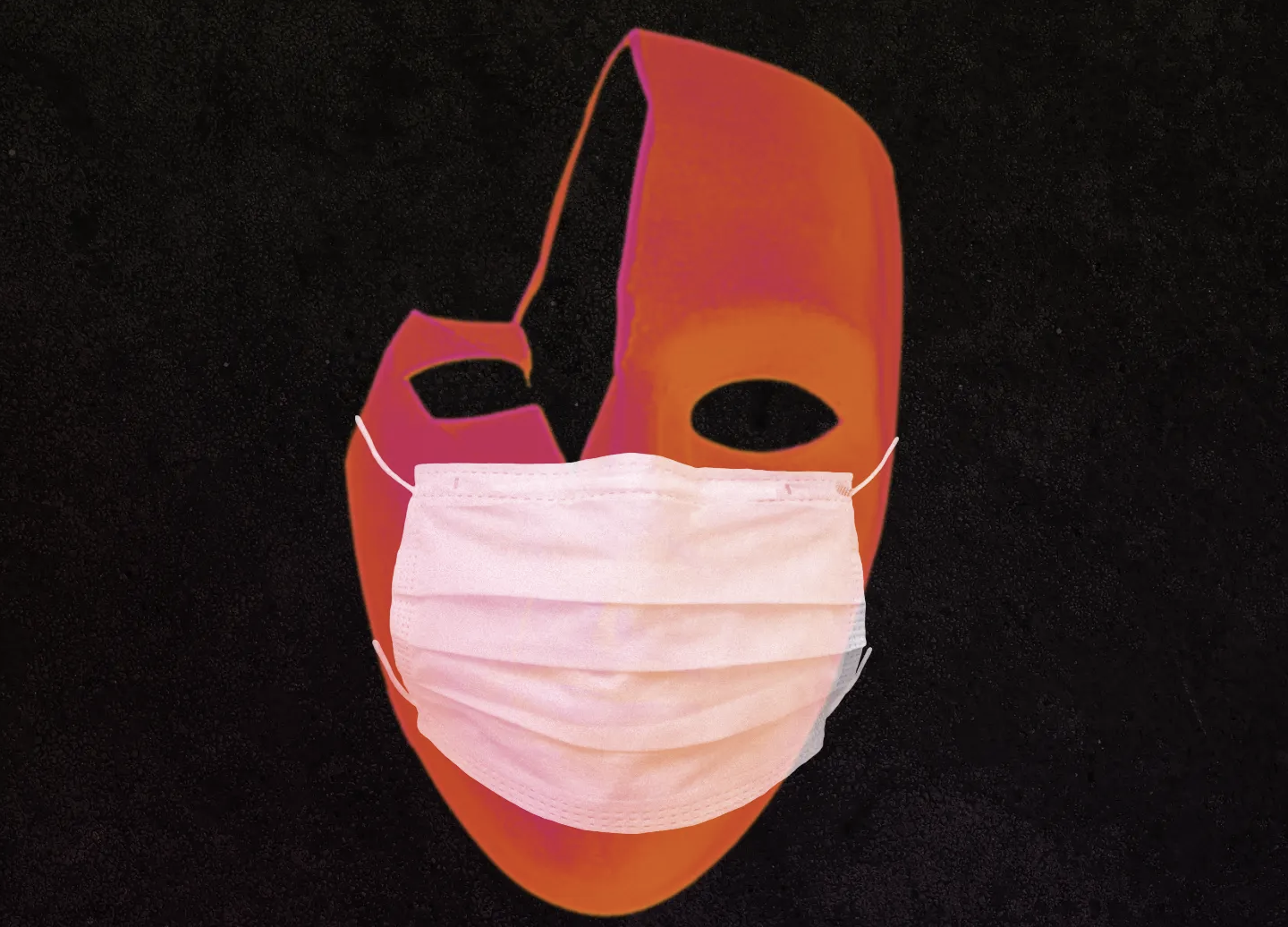
Uncloseted Media published this story on Sept. 29
By ERICA ROSE and THE LESBIAN BAR PROJECT | As a professional lesbian and Massachusetts native, I’ve recently been asked by a lot of folks what I think about the saga unfolding at Last Ditch. The now-viral story, first reported by the Boston Globe, centers on a Western Massachusetts lesbian bar that lifted its mask requirement for one night a week to help drum up business.
The decision ignited an intra-queer controversy that has been feasted on by media outlets across the political spectrum — from the New York Post to LGBTQ Nation — and is even reportedly being eyed for a Hollywood adaptation. Apparently nothing is more entertaining than a bunch of lesbians and queers fighting with each other over KN-95s.
What has been lost in all of the chatter and media coverage is the very real possibility that Last Ditch, which just opened in April 2025, will have to close its doors. The venue’s one remaining founder, Jackie Matellian, revealed in a community Zoom meeting that she’s working four jobs, is now solely responsible for the bar’s $50,000 business loan and is struggling to keep up with the bills. So as we laugh about the controversy’s similarity to a “Portlandia” skit and how one of the bar’s founders left to enroll in clown school, we forget that yet another lesbian bar is facing an existential crisis — and this time the call is coming from inside the house.
In 2020, my friend Elina Street and I created The Lesbian Bar Project, an Emmy-, Webby- and GLAAD Media Award-winning docuseries and initiative that tells the stories of lesbian queer bars around the world. We were moved to act because at the time there were only an estimated 16 lesbian bars in the United States, and the pandemic threatened to bring that number down even further.
There are now more sapphic bars than there were just before the pandemic — about 36 of them in total — but this is down from approximately 200 in 1980. Maybe that doesn’t mean much to you, but for the millions of sapphics living in the U.S., this number is calamitous.
As the world laughs at lesbians and sapphics, I want to take a second and tell you what I feel when I walk into one of these bars, which are all unique and irreplaceable in their own way: I feel seen.
Sometimes I think Cubbyhole in New York City’s West Village neighborhood knew I was gay before I did. When I walked in there for the first time, before I was even out, I was transfixed by the colorful array of tchotchkes hanging from the ceiling and how the women standing next to me were completely unafraid to express their desire for one another. I knew the minute I was ready to come out, I had a home. I also felt the joy of a new couple falling in love at Seattle’s Wildrose, the quiet confidence of a short king lining up her shot at the pool table at Ginger’s in Brooklyn and the kick of cayenne pepper in Julie Mabry’s crawfish at Houston’s Pearl Bar.
Lesbian bars don’t just serve lesbians; they serve queer folks across the spectrum, including bisexual, pansexual and trans people. As Elina and I traveled across the U.S. and Europe and to parts of Latin America to document the bar owners, staff and patrons that make up the ecosystems of these spaces, we also became uniquely acquainted with the factors that threaten their existence: gentrification, wage gaps, sexism, environmental disasters, gun violence, rising insurance premiums and political administrations working to annihilate queer people and their families.
Lesbian bar owners, like all leaders and entrepreneurs, are imperfect. There have been significant issues over the years at lesbian bars: employee harassment, racism, lack of accessibility, sexual assault and transphobia. All bar owners should be held accountable and should listen to their communities to evolve into safer and more equitable spaces. I also acknowledge my privilege: I am able-bodied, white, cis and from a family system that loves me for who I am. Not everyone has that.
Queer people, especially trans and bisexual people, are suffering from disproportionately high levels of depression, and our mental health system isn’t equipped to support them. Immunocompromised people and long COVID are real, and many of my friends are suffering to this day. The people with the least safety net are often the ones for whom a bar closing costs the most. And yet, as we’re seeing with Last Ditch, the queer community often lashes out at each other. It’s also the mainstream media taking the internal conflict and making a mockery out of it, distracting from the real possibility that this bar could close due to financial pressures. A bar that many people loved and needed is facing extinction. Perhaps it’s safer to dissent with one another than with the larger forces trying to eradicate us, but in doing so, we risk destroying the few spaces we have left.
Due to the constraints of purity politics — some in good faith, some not so much — lesbian bar owners, almost all of whom are queer women themselves, are forced to be everything for everyone, similarly to how women are forced to be everything for everyone. By asking these bars to uphold impossible standards — standards very few other third spaces are asked to consider — we all end up losing.
I want to move as a community toward dialogue, compassionate dissent and collaboration to make our spaces better with the goal of keeping them OPEN and thriving, rather than destroying them from the inside with expectations that are arguably unattainable.
While I have your attention — for this fleeting second of the news cycle — may I urge us to spearhead a way to keep these small businesses afloat without attacking our own community along the way? Bar owners are left with an impasse: They want to be community-centered, but they also have to make money to keep their doors open. Sometimes they might make business decisions that don’t work for everyone — and that’s partly because different patrons have different priorities and want different things — but these owners deserve the opportunity for productive dialogue. We have to work with them and with each other to keep our spaces open, to keep them growing.
Lesbian bars raised me into the queer woman I am today. One thing I think about as I reflect on the six years of work we’ve done to document these spaces is that shared, unspoken language I have with a stranger the moment we both walk into one of these bars: the nod, the ease, the not having to explain ourselves. I don’t want to lose that, and neither should you.
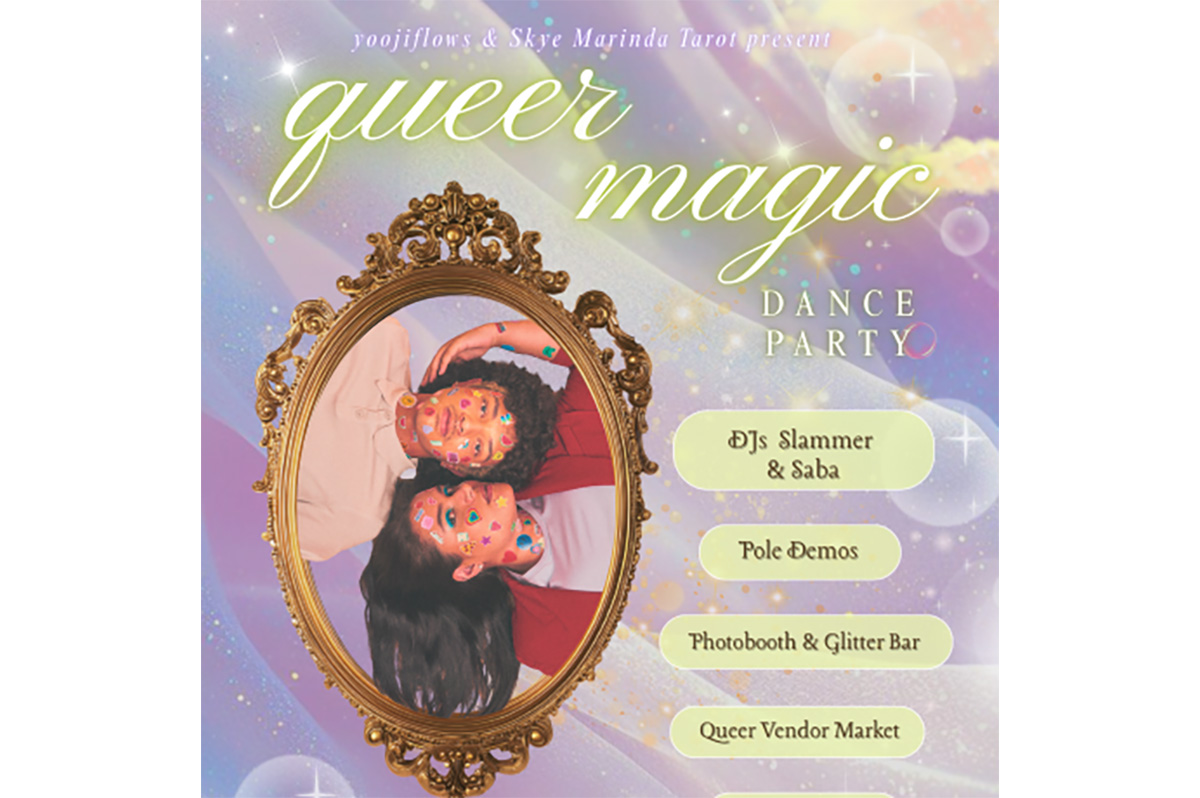
Celebrate the start of Pride month at the Queer Magic Dance Party at the Black Cat on Saturday, June 6. Doors open at 9 p.m.
There will be pole performances and demonstrations, a free photo booth with glitter bar, a queer vendor market, tarot readings by Skye Marinda Tarot, a drag performance by Sapphica, and dancing to a blend of smooth R&B, Afrobeats, hip-hop and pop by Slammer & Saba. Tickets are $20 at the door or $15 (plus fees) in advance, purchased here.
Bars & Parties
Here’s where to watch ‘RuPaul’s Drag Race’ with fellow fans
Entertainers TrevHER and Grey host event with live performance

Spark Social Events will host “Ru Paul’s Drag Race S18 Watch Party Hosted by Local Drag Queens” on Friday, Jan. 23 at 8 p.m.
Drag entertainers TrevHER and Grey will provide commentary and make live predictions on who’s staying and who’s going home. Stick around after the show for a live drag performance. The watch party will take place on a heated outdoor patio and cozy indoor space.
This event is free and more details are available on Eventbrite.

Lula, Flávio Bolsonaro to face off in second round of Brazilian presidential election

The financial realities facing LGBTQ+ first-time buyers

‘Merrily’ is for Sondheim super fans, the uninitiated, and anyone in between

Engrossing ‘Tip Toe’ delivers tension and an ominous warning

Eliot Glazer’s new book an engaging collection of essays

Meet the LGBTQ candidates running for U.S. House, Senate

Ana Brnabić becomes world’s first openly lesbian head of state

Vote now! Best Of LGBTQ DC readers’ choice awards

Gay Va. couple hopeful voters will enshrine marriage equality in state constitution

Victory Fund board investigates former staffers’ allegations against CEO Evan Low
-

 2026 Midterm Elections4 days ago
Meet the LGBTQ candidates running for U.S. House, Senate
-
Serbia5 days ago
Ana Brnabić becomes world’s first openly lesbian head of state
-
Arts & Entertainment4 days ago
Vote now! Best Of LGBTQ DC readers’ choice awards
-
Virginia4 days ago
Gay Va. couple hopeful voters will enshrine marriage equality in state constitution