National
‘Don’t Ask’ repeal faces delay, uncertainty
Gates warns Congress not to act; protesters arrested for third time at White House

Supporters of repealing ‘Don’t Ask, Don’t Tell’ have turned up the heat on President Obama in recent weeks. Sunday’s White House protest marked the third time in two months that activists were arrested while demanding action on repeal. (Washington Blade photo by Michael Key)
In the wake of Defense Secretary Robert Gates advising Congress to delay taking action to overturn “Don’t Ask, Don’t Tell,” LGBT advocates remain committed to pushing for repeal this year, but have expressed differing opinions on the best way forward.
In an April 30 letter to House Armed Services Committee Chairman Ike Skelton (D-Mo.), Gates says “in the strongest possible terms” that the Department of Defense must be allowed to conduct its review of lifting the ban on open service before Congress takes “any legislative action.” The report is due to be completed Dec. 1.
Gates says “a critical element” of the review is engaging the armed forces and military families and noted that those in service “must be afforded” the opportunity to share “concerns, insights and suggestions” about the proposed change.
“Therefore, I strongly oppose any legislation that seeks to change this policy prior to the completion of this vital engagement process,” Gates says. “Further, I hope Congress will not do so, as it would send a very damaging message to our men and women in uniform that in essence their views, concerns, and perspectives do not matter on an issue with such a direct impact and consequence for them and their families.”
In a statement responding to the letter, Shin Inouye, a White House spokesperson, said President Obama’s commitment to repealing the ban on service “is unequivocal,” but noted the White House is on board with delaying implementation of repeal.
“That’s why we’ve said that the implementation of any congressional repeal will be delayed until the DOD study of how best to implement that repeal is completed,” he said.
The White House didn’t respond to the Blade’s request to clarify whether this statement rules out an endorsement from Obama on including repeal as part of the upcoming Defense authorization bill or whether the president supports a vote in Congress now to repeal the gay ban, as long as implementation is delayed until 2011.
The impact of the two statements on the effort to achieve legislative repeal of “Don’t Ask, Don’t Tell” this year remains unclear. Some experts previously said repeal was only one or two votes short on the Senate Armed Services Committee, but that may change following Gates’ request for a delay.
David Smith, vice president of programs for the Human Rights Campaign, said repeal remains possible this year.
“We think it should and can happen this year, and that is what we are fighting for,” Smith said. “We continue to work with both the House and the Senate.”
Smith said HRC continues to lobby the White House for support in the effort to repeal “Don’t Ask, Don’t Tell.”
He added the grassroots work and lobbying that HRC is pursuing in six states — Florida, Indiana, Massachusetts, Nebraska, Virginia and West Virginia — would be an important part of the path toward winning the votes necessary for repeal.
In anticipation of the defense authorization bill markup in the Senate Armed Services Committee on May 24, the work is intended to influence key senators on the panel who are uncommitted on repeal: Sen. Bill Nelson (D-Fla.), Sen. Evan Bayh (D-Ind.), Sen. Scott Brown (R-Mass.), Sen. Ben Nelson (D-Neb.), Sen. Jim Webb (D-Va.) and Sen. Robert Byrd (D-W.Va.).
“The key is the votes and we think we’re close and we think that, at the end of the day, we’ll have those votes, and that’s what we continue to work for,” Smith said.
Aubrey Sarvis, executive director of the Servicemembers Legal Defense Network, said the best way to make repeal happen following the publication of the Gates letter is working with repeal advocates on Capitol Hill.
“We strongly believe repeal can happen, but this will require the president to lead the way at this critical hour,” Sarvis said. “To put it bluntly, we need his voice and help now.”
Some Hill supporters of repeal are staying mum following publication of the Gates letter and the White House statement. The office of Senate Armed Services Committee Chairman Carl Levin (D-Mich.) declined to comment on the letter, and the office of Sen. Joseph Lieberman (I-Conn.) didn’t respond to the Blade’s request for comment.
Rep. Patrick Murphy (D-Pa.), the sponsor of repeal legislation in the House, was quoted in an interview with The Advocate this week as saying he was “blindsided” by the Gates letter, but still plans to pursue repeal this year.
“That’s my job — to make sure that we repeal this policy,” he said. “After my three years in Washington, I think when folks tell you to walk away, that’s usually a sign that you’re getting close.”
In the letter, Gates said he was responding to an April 28 inquiry from Skelton, who opposes “Don’t Ask, Don’t Tell” repeal at this time. Skelton’s inquiry and Gates’ letter come on the heels of an announcement from House Speaker Nancy Pelosi (D-Calif.) that she plans to hold a vote on “Don’t Ask, Don’t Tell” repeal this year in her chamber.
“It is the speaker’s intention that a vote will be taken this year on [‘Don’t Ask, Don’t Tell’] in the House,” Drew Hammill, a Pelosi spokesperson, told the Blade last week.
In response to a subsequent Blade inquiry about Gates’ letter, Hammill said April 30 that Pelosi’s position was unchanged, although he used slightly different language.
“The speaker maintains her hope to repeal this discriminatory policy this year,” Hammill said.
Separately, Pelosi issued a statement calling for a moratorium on discharges of gay service members.
“We all look forward to the report on the review of the ‘Don’t Ask, Don’t Tell’ policy by the Defense Department,” she said. “In the meantime, the administration should immediately place a moratorium on dismissals under this policy until the review has been completed and Congress has acted.”
Disappointment with President Obama’s lack of support for a vote on “Don’t Ask, Don’t Tell” this year led around 300 protesters to rally at the White House on Sunday.
Former Democratic National Committee Chairman Howard Dean made a surprise appearance at the rally as six protesters were arrested after they handcuffed themselves to the White House gates.
The rally, a collaborative effort of GetEqual and Queer Rising, was aimed to move President Obama to call on Congress to include repeal of the ban on gays serving openly in the armed forces as part of upcoming Defense Department budget legislation.
People at the rally carried signs reading, “Study: Navy has some bigots — Duh!” and “Mr. Obama, What’s the hold up?”
At one point, demonstrators chanted, “What do we want? Full equality! When do we want it? Now!” They also shouted, “Shame on Obama! Shame on your silence!”
Speaking before attendees, Dean said an end to “Don’t Ask, Don’t Tell” is necessary because it robs the U.S. military of crucial personnel, such as Arabic translators.
“We can’t afford to lose any talented people, and to kick talented people out of the military because they happen to be gay or lesbian makes no sense at all,” he said.
The six protesters who handcuffed themselves to the White House gates Sunday were Anne Tischer of Rochester, N.Y.; Mark Reed of Dallas; and Alan Bounville, Nora Camp, Iana DiBona and Natasha Dillon, all of New York City.
As they handcuffed themselves, protesters chanted, “I am somebody, and I deserve full equality.”
Led by Lt. Dan Choi, who was previously arrested twice for handcuffing himself to the White House fence, the crowd shouted out the Pledge of Allegiance to the six people handcuffed to the fence. After reciting the last line of “With liberty and justice for all,” attendees repeated the refrain, “For all! For all!”
After the six demonstrators were arrested, Paul Yandura, an organizer with GetEqual, said they were charged with misdemeanor failure to obey a lawful order. He noted that each paid a fine of $100 and their cases are now closed.
Those attending the rally said they joined the event to show their frustration with Obama and his approach toward “Don’t Ask, Don’t Tell.”
Erika Knepp of Annapolis, Md., said it’s “absolutely ridiculous” that Obama hasn’t called for repeal this year.
“He was voted on making promises, and that’s all it’s come to,” she said. “We had the National Equality March to make him promise to keep his promises, and there’s been nothing so far, and it makes me very angry.”
Also expressing anger at the rally over Obama’s handling of the issue was a gay Army Reserve Office Training Corps student at Georgetown University, who spoke to the Blade on the condition of anonymity to avoid being expelled under “Don’t Ask, Don’t Tell.”
The student said he felt Obama “betrayed” him because the president has not fulfilled his campaign promise to repeal “Don’t Ask, Don’t Tell.”
“When he said that, I was really relieved, knowing that I might be able to come out without having to lie all the time to my peers,” said the student. “But after learning that the White House is not following through on that, it’s actually disappointing.”
Many repeal advocates now see a delayed implementation bill as the best chance for overturning the law this year.
Such a measure would technically meet the standards set forth in the White House statement, which said “the implementation of any congressional repeal will be delayed until the DOD study of how best to implement that repeal is completed.”
HRC’s Smith called delayed implementation an “essential” component of any bill that would pass this year.
“I believe that the work of the working group likely needs to be completed before repeal can be implemented, but it still can be executed this year and implemented over a period of time based on the working group recommendations,” he said.
Sarvis said SLDN has supported the approach of delayed implementation before in what he called a “60-60-60” plan for repeal.
“We delay repeal of [‘Don’t Ask, Don’t Tell’] for 180 days after the president signs the defense bill to ensure a timely transition to open service and an orderly implementation,” he said.
Under the plan, Gates would retain authority for discharges immediately upon the legislation’s passage. An estimated 60 days later, the Pentagon working group would make its recommendations on Dec. 1. After an additional 60 days passes, the Defense Department could issue guidelines on implementing open service, and 60 days later, the services can issue their own regulations.
The issue of whether the White House would support delayed implementation legislation came up during a panel discussion on May 1 at the Equality Forum, an annual LGBT summit in Philadelphia.
Brian Bond, LGBT liaison for the White House, sidestepped a question about whether the Obama administration would support passing delayed implementation legislation.
When the letter came up during a panel discussion highlighting LGBT officials in the White House, Bond read a prepared White House statement saying Obama’s commitment to repealing “Don’t Ask, Don’t Tell” is “unequivocal,” but that the president wants to wait on implementing repeal until the Pentagon completes its study of the law.
“If change were easy, we wouldn’t be having to have this fight right now,” Bond said. “I think that letter is a good example of how this is going to be a fight and a challenge.”
In response to the statement, Washington Blade Editor Kevin Naff, who was on the panel with Bond, asked whether repeal supporters could infer that the president supports a congressional vote for repeal “as long as the implementation is delayed until after December.”
Bond didn’t say whether the White House supports such a move, but noted an endorsement of such a proposal is part of an “ongoing discussion.”
“I think that’s an ongoing discussion right now,” Bond said. “Again, there are several camps here trying to figure out — don’t forget, at the end of the day, it is Congress that will repeal ‘Don’t Ask, Don’t Tell,’ not us.”
Bond said the president is committed to his campaign promise to repeal “Don’t Ask, Don’t Tell” and that Obama has made clear “on any number of times that we are working on this.”
“It’s not going to be easy,” Bond said. “It’s going to messy. It was about this same time last year that my phone was blowing up and my e-mails were blowing up that we’re not going to get hate crimes done. So, I guess what I would say to you is the president has not changed his position.”
But Bond’s comments didn’t appease some on the panel, who expressed disappointment with Obama’s work on LGBT issues in the nearly 18 months that he’s been in the White House.
Panel moderator Jarrett Barrios, president of the Gay & Lesbian Alliance Against Defamation, noted a growing impatience in the LGBT community with Obama.
“We are impatient and, I think, a lot of the folks out there are impatient,” he said. “Whether it was the ‘fierce advocate’ speech, or whether it was the campaign, we heard a little bit more zeal than we feel right now.”
In a subsequent panel, Choi had stern words for the president on the issue and gave him a D-minus for his handling of LGBT issues.
“I’m absolutely dissatisfied by the thinking of the entire administration that hundreds of soldiers [losing] their jobs this year is not as important as a handful of Democrats who might lose their jobs,” Choi said.




Pennsylvania
Pa. House passes bill to codify marriage equality in state law
Governor supports gay state Rep. Malcolm Kenyatta’s measure

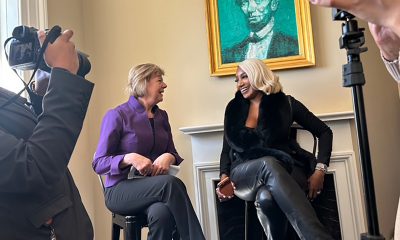
The Pennsylvania House of Representatives on Wednesday passed a bill that would codify marriage equality in state law.
House Bill 1800 passed by a 127-72 vote margin. Twenty-six Republicans voted for the measure.
The Republican-controlled Pennsylvania Senate will now consider the bill that state Rep. Malcolm Kenyatta (D-Philadelphia), who is the first openly gay person of color elected to the state’s General Assembly, introduced. Democratic Gov. Josh Shapiro supports the measure.
“Here in Pennsylvania, we believe in your freedom to marry who you love,” said Shapiro on Wednesday. “Today, the House has stepped up to protect that right.”
BREAKING: The Pennsylvania House just passed @RepKenyatta's bill to codify marriage equality into law in PA — and they did it with broad bipartisan support.
— Governor Josh Shapiro (@GovernorShapiro) March 25, 2026
Here in Pennsylvania, we believe in your freedom to marry who you love. Today, the House has stepped up to protect that…
Florida
DeSantis signs emergency bill that restores Fla. ADAP funding
Temporary funds to last through June 30
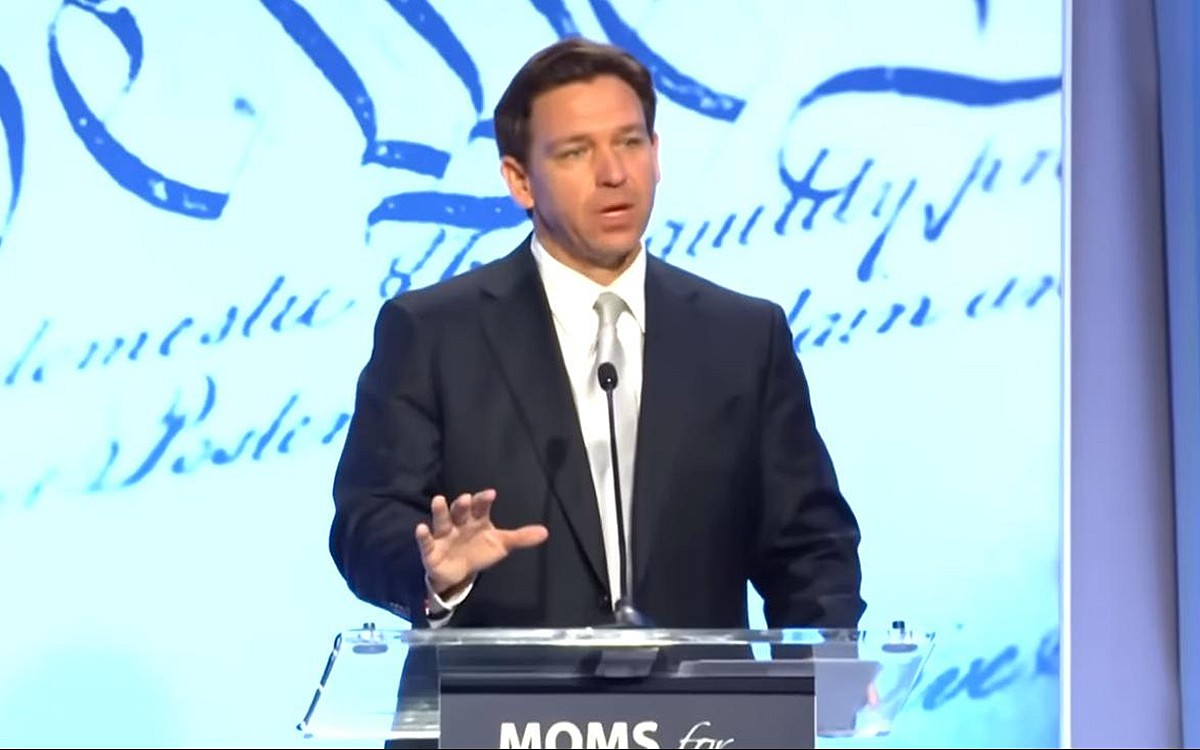
After the Florida Department of Health made huge cuts to the AIDS Drug Assistance Program in January, Republican Gov. Ron DeSantis has signed emergency legislation restoring HIV access to more than 12,000 Floridians.
Two months ago, as the Washington Blade reported, the Sunshine State cut the vast majority of those in ADAP by shifting the income levels required for eligibility — without following standard procedure when changing government policy outside of legislative or executive action.
The bill, signed by DeSantis on Tuesday, passed both chambers of the Florida Legislature unanimously and appropriates $30.9 million in emergency bridge funding through June 30, 2026. It restores Florida’s ADAP income eligibility to 400 percent of the Federal Poverty Level — the level it was prior to the January cuts. The legislation also requires the FDOH to submit detailed monthly financial reports to legislative leadership beginning April 1.
Under the old policy, eligibility would have been limited to those making no more than 130 percent of the federal poverty level, or $20,345 per year.
“For 10 weeks, 12,000 Floridians living with HIV did not know if they could fill their next prescription. Today, they can,” Esteban Wood, director of advocacy and legislative affairs at AIDS Healthcare Foundation, said in a statement.
The detailed reports now required to be sent to legislative leadership must include all federal revenues and expenditures, including manufacturer rebates; enrollment figures by county and insurance status; prescription utilization by drug class; and any projected funding shortfalls. This is the first time the Legislature has required this level of financial transparency from the program.
DeSantis signed the legislation one day after a Leon County Circuit Court judge denied AIDS Healthcare Foundation’s request for an injunction to block the significant changes the DeSantis administration is making to the program, which it claims faces a $120 million shortfall for calendar year 2026.
AIDS Healthcare Foundation, a national organization focused on protecting and expanding HIV healthcare access and prevention methods, filed a lawsuit over the change in eligibility, arguing the Florida Department of Health did not follow the laid out path for formally changing policy and was acting outside established procedures.
Typically, altering eligibility for a statewide program requires either legislative action or adherence to a multistep rule-making process, including: publishing a Notice of Proposed Rule; providing a statement of estimated regulatory costs; allowing public comment; holding hearings if requested; responding to challenges; and formally adopting the rule. According to AIDS Healthcare Foundation, none of these steps occurred.
The long-term structure of ADAP will be determined by the 2026–2027 fiscal year state budget, something that lawmakers have until June 30 to finish.
Federal Government
Markwayne Mullin confirmed as next DHS secretary
Okla. senator to succeed Kristi Noem
The U.S. Senate confirmed Markwayne Mullin as the next secretary of Homeland Security on Monday, as the agency continues to grapple with what lawmakers have described as a “never-ending” funding standoff, with Democrats attempting to withhold funding from one of the nation’s largest and most costly agencies.
Mullin — a Republican senator from Oklahoma, former mixed martial arts fighter, and plumbing business owner — was confirmed in a 54–45 vote. Two Democrats — U.S. Sens. John Fetterman (D-Pa.) and Martin Heinrich (D-N.M.) — sided with Republicans in supporting his confirmation.
The new agency head is expected to follow the policy direction set by President Donald Trump, emphasizing stricter immigration enforcement. This includes proposals to support immigration agents at polling sites and to cut funding to so-called “sanctuary cities.”
Mullin replaces Kristi Noem, who was fired earlier this month following a widely scrutinized 2-day congressional hearing on Capitol Hill.
During the hearing, Noem faced intense questioning over her response to several crises, including the fatal shooting of two American citizens in Minneapolis by U.S. Immigration and Customs Enforcement agents, a $220 million border security advertising campaign that featured her on horseback near Mount Rushmore amid one of the largest federal workforce reductions in U.S. history, and the federal response to major natural disasters such as the July 2025 Texas floods and Hurricane Helene in 2024.
Noem had previously drawn criticism for a series of policy decisions in South Dakota that broadly focused on restricting the rights of LGBTQ individuals. In 2023, she signed House Bill 1080, banning gender-affirming medical care for transgender minors. She also signed legislation and executive orders restricting trans athletes’ participation in women’s sports, as well as the state’s “Religious Freedom Restoration Act,” which critics argued enabled discrimination against LGBTQ individuals. Additionally, the state canceled contracts related to LGBTQ support services — including suicide prevention and health care navigation programs‚ and later agreed to a $300,000 settlement with trans advocacy group, The Transformation Project.
Despite her removal from DHS, Noem will remain in the Trump-Vance administration as a special envoy for the “Shield of the Americas,” an initiative aimed at promoting U.S. influence in the Western Hemisphere, including efforts to counter cartel networks, reduce Chinese influence, and manage migration.
The new head of DHS has served in Congress since 2013, in both houses of the federal legislature. While in the Senate and a member of the Health, Education, Labor, and Pensions (HELP) Committee, Mullin has been a vocal critic of policies aimed at expanding LGBTQ inclusion. He led a group of lawmakers in urging the Administration for Community Living to reverse a rule requiring states to prioritize Older Americans Act services based on sexual orientation and gender identity, arguing the policy could have unintended consequences.
Mullin also makes history as the first Native American — and a citizen of the Cherokee Nation — to lead the Department of Homeland Security. He was also among the 147 Republicans who voted to overturn the 2020 presidential election results despite no evidence of widespread fraud, and was present in the U.S. House of Representatives chamber on Jan. 6.

‘No Kings’ protests set for D.C.

Border to border: modern slavery and human trafficking in refugee movements across East Africa

New IOC policy bans trans women from Olympics

Introducing the Torchbearers Awards honoring queer, trans women and nonbinary people

Pa. House passes bill to codify marriage equality in state law

PHOTOS: Capital Stonewall Democrats 50th anniversary

‘Inherit the Wind’ isn’t about science vs. religion, but the right to think

Small is beautiful: subcompact SUVs

Polish court rules country must recognize same-sex marriages from EU states

Capital Stonewall Democrats 50th anniversary gala draws sold out crowd
-

 Photos4 days ago
PHOTOS: Capital Stonewall Democrats 50th anniversary
-
Theater5 days ago
‘Inherit the Wind’ isn’t about science vs. religion, but the right to think
-
Autos5 days ago
Small is beautiful: subcompact SUVs
-
Poland4 days ago
Polish court rules country must recognize same-sex marriages from EU states