Local
Rapper Wale appears at Black Pride, apologizes
Booking agent fired for ‘miscommunication’
In an unexpected turn of events, rapper Wale appeared for a brief performance at Sunday’s D.C. Black Pride festival and apologized for an earlier decision to cancel his scheduled booking as the event’s lead entertainer.
The nationally recognized rapper and D.C. native told Black Pride organizers through a spokesperson May 28 that his decision to cancel his appearance for Sunday’s festival at the Washington Convention Center was due to a “miscommunication” on the part of one of his agents.
“The one thing I stand for is hip-hop music, and hip-hop music knows no race, no color, no age, no gender, no sexual orientation — none of that,” he told a cheering crowd after arriving on the festival stage.
“So the most important thing about it is the music, and it makes the people happy. That’s why we’re here.
“But I will say sometimes in this business you’re aligned with people who don’t understand that and don’t necessarily have the same beliefs as you do. And I apologize for not having my best foot forward … and I’m going to do better, as we all do.
“Every day we’ve got to do better. So I apologize on behalf of my team for not being the way they are supposed to be. Now with that said, can we have some fun right now?”
In response, people in the audience shouted, “Yea!”
Wale’s appearance was followed by J. Holiday, an R&B singer who was booked after Wale’s announcement that he had cancelled his appearance at Black Pride.
Holiday said he was pleased to be performing at the event and welcomed his fans from the LGBT community.
Earlier in the day, other local entertainers performed at the festival as several dozen local and national LGBT organizations and various commercial vendors interacted with attendees in booths set up in the convention center’s large exhibit hall, where the festival was held.
Among those attending the event was D.C. City Council Chairman Vincent Gray (D-At Large), who is challenging Mayor Adrian Fenty in the September Democratic primary. Fenty did not attend the event, but his Office of LGBT Affairs set up a festival booth.
Other officials to attend were Council members Kwame Brown (D-At Large), who is running for Gray’s Council chairman seat, and Harry Thomas (D-Ward 5). Council members Phil Mendelson (D-At Large), David Catania (I-At Large), and Jim Graham (D-Ward 1) attended a separate reception May 28 kicking off Black Pride weekend.
Longtime participants in the event noted that attendance was down this year compared to previous Black Pride festivals.
Earl Fowlkes, a board member and spokesperson for Black Pride, said the drop in attendance might have been due to the economic downturn, which likely made it harder for people to attend from throughout the mid-Atlantic region. Out-of-town participants have long made up a large percentage of D.C. Black Pride’s crowds.
Fowlkes, who is president of the International Association of Black Prides, said the recent trend of holding Black Pride festivals in other cities, including Atlanta, also was a factor in the lower attendance at D.C.’s event. D.C. was the first U.S. city to hold a Black Pride celebration.
Wale had initially been billed as the lead entertainer at the 20th annual D.C. Black Pride Legacy Festival & Wellness Expo.
But Fowlkes said event organizers were startled last month when they received two e-mails from Wale’s agent, one saying the rapper had to cancel due to “family obligations,” and another saying he didn’t know Black Pride was a gay-related event when he agreed to appear.
According to Fowlkes, Black Pride organizers made it clear from the start that Black Pride is an LGBT event and most of the attendees would be LGBT people.
“Black Pride now believes that as a result of failed communications between the booking agent and the artist, Wale was booked for an event after notifying management that he would be taking a few weeks off to focus on family issues,” says a statement Black Pride organizers released May 28.
“D.C. Black Pride regrets that these communications (or lack thereof) resulted in the community perception that the artist did not appreciate nor want to perform for his gay and lesbian fans,” says the statement. “The principal agent responsible for the miscommunication has been terminated.”
Upon learning that Wale had cancelled his appearance at Black Pride, organizers arranged for Holiday to replace Wale as the headliner performer. Holiday took to Black Pride’s stage after Wale delivered his remarks to the crowd and performed two songs.
As planned after the mix-up surrounding Wale’s appearance, Holiday gave a full performance as the day’s lead entertainer, including some of his songs that rose to the top of the Billboard Top 100 Chart.
Wale became a nationally recognized rapper in 2006, when his song “Dig Dug (Shake It)” led to his record company contracts and appearances on MTV.
“It was very apparent that Wale was sincere about wanting to clear up any misconceptions that he was homophobic,” said Jimma Elliott-Stevens, a D.C. Black Pride board member and attorney who represented Black Pride in its negotiations with Wale’s representatives.
“This experience was very important for the LGBT community as it showed that we will not be invisible within and outside the black community,” said Fowlkes.





Baltimore
Transgender woman killed in Barclay community mourned by friends, advocates
Sophie Lee shot to death on Friday morning
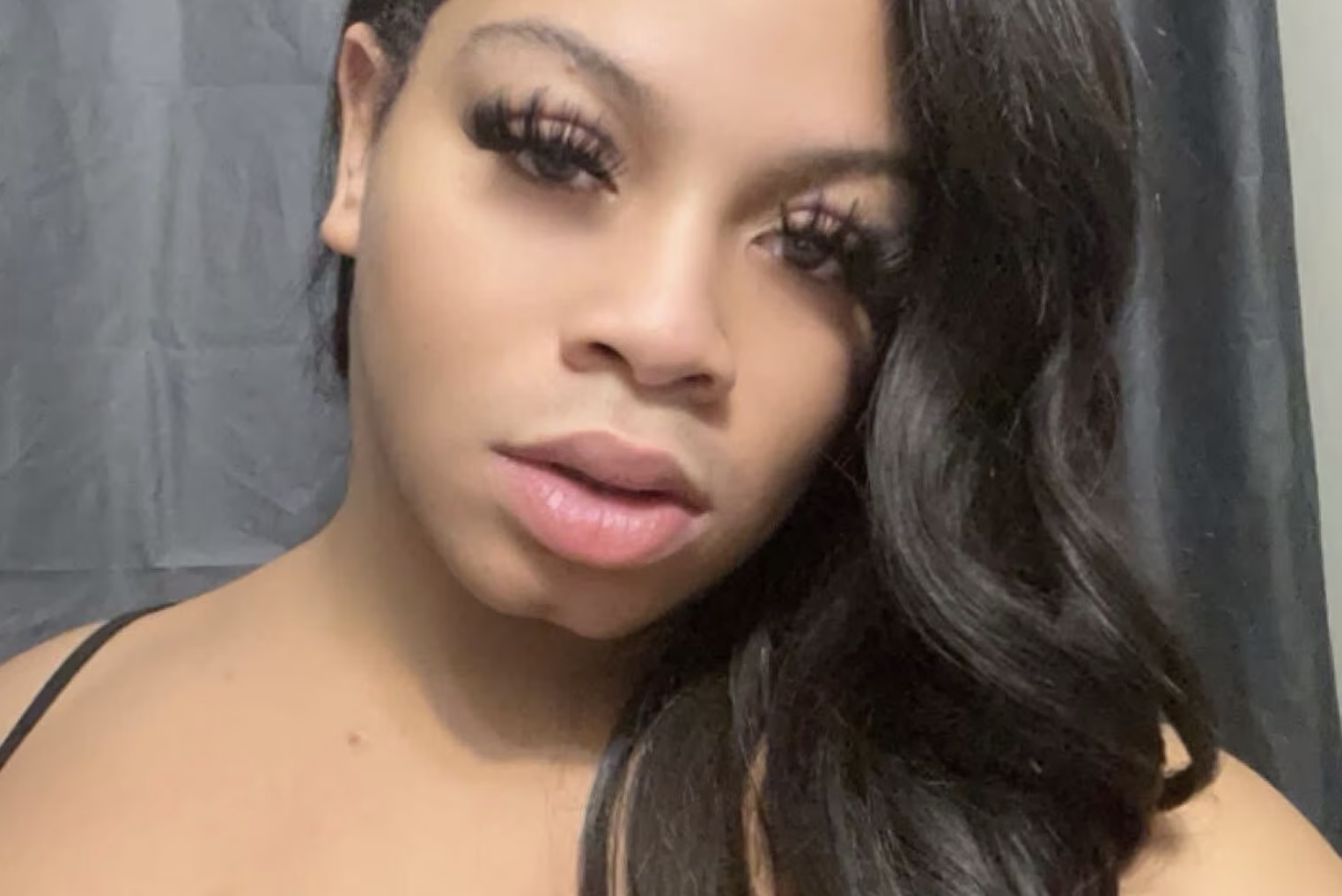
By DARREONNA DAVIS | Denise Johnson imagined spending Sunday with her daughter, Sophie Lee, eating crabs at the park. Instead, she stood on a Barclay street corner Sunday evening surrounded by nearly 100 people who came to remember her daughter, a transgender woman who was fatally shot there Friday.
The 27-year-old woman was found in the 2400 block of North Calvert Street around 1:15 a.m. Friday, Baltimore Police said in a news release.
Lindsey Eldridge, a police department spokesperson, said it’s unclear if her identity had anything to do with her death and the investigation is ongoing.
The rest of this article can be read on the Baltimore Banner’s website.

The Comings & Goings column is about sharing the professional successes of our community. We want to recognize those landing new jobs, new clients for their business, joining boards of organizations and other achievements. Please share your successes with us at [email protected].
The Comings & Goings column also invites LGBTQ+ college students to share their successes with us. If you have been elected to a student government position, landed an exciting internship, or are graduating and beginning your career with a new job, let us know so we can share your success.
Congratulations to Jaime Christopher Pierce on their appointment to serve as a member of the Virginia Governor’s LGBTQ+ Advisory Board. Pierce was sworn in on Sept. 3 by Greg Parks, clerk of the Alexandria Circuit Court.
Pierce currently serves as vice chair of the Alexandria City LGBTQIA+ Task Force and as a member of the Alexandria Pride planning committee. They previously served on the board of directors of Equality Virginia.
Upon being sworn in, Pierce said, “Public service has been a central part of my life for more than 30 years, and this appointment gives me an opportunity to serve the Commonwealth in a different and very personal way. My career has allowed me to work with people and communities throughout Virginia, and I hope to bring that experience, along with my own lived experience and my involvement in the LGBTQ+ community, to the work of the Board.” They added, “Having Greg administer the oath makes the occasion even more meaningful because of his own historic role as Virginia’s first openly gay elected circuit court clerk.”
Pierce also serves as Circuit Court Services Manager for the Department of Judicial Services, at the Office of the Executive Secretary of the Supreme Court of Virginia. They began their career in Virginia’s judiciary in 1994 as a deputy clerk with the Virginia Beach Circuit Court and have since held several professional and leadership positions within the court system. Pierce is a member of the National Association for Court Management (NACM) and the Mid-Atlantic Association for Court Management. At the national level, Pierce participated in the workgroup that developed the National Association for Court Management’s Diversity, Equity, and Inclusion Guide, a resource designed to help court professionals advance inclusive practices and strengthen access, fairness and belonging within the justice system.
Pierce earned a degree in Criminal Justice from Liberty University, and a certificate in Paralegal Studies from Norfolk State University.
Maryland
Md. groups receive state grants to fight hate crimes
Pride Center of Maryland among recipients
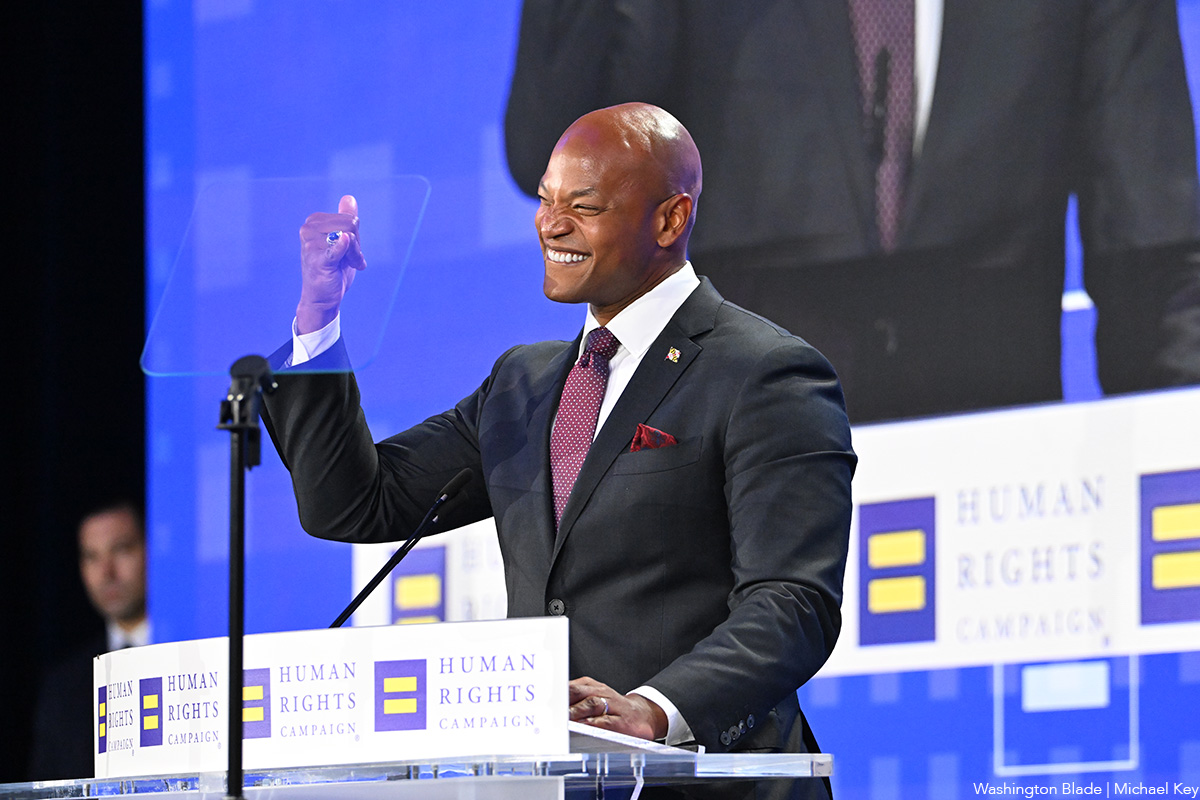
Maryland Gov. Wes Moore and the Governor’s Office of Crime Prevention and Policy are awarding a total of $10 million in grants in the 2027 fiscal year to nonprofit organizations that work to prevent hate crimes in the state.
The funds will be used to support those who feel targeted or discriminated against because of their race, religion, sexual orientation, gender identity, or disability status.
The Pride Center of Maryland is among the recipients. Churches, synagogues, mosques, and LGBTQ organizations are all eligible to receive grants
“The safety and security of all Marylanders is my top priority, so we are drawing a hard line because we have no tolerance for hate,” said Moore, according to media reports. “We are committed to protecting and ensuring safe and sacred spaces stay that way by investing in non-profit organizations, houses of worship, and community centers to protect and honor every community that makes our state so diverse and special.”
“Protection Against Hate Crime funding has strengthened the Pride Center of Maryland’s ability to protect, educate, and support the communities we serve … at a time of heightened concern associated with the Trump administration’s anti-LGBTQ/SGL (same-gender-loving) policies and pressures,” Pride Center of Maryland CEO Cleo Manago said. “PAHC funding helps us do more than improve physical security — it strengthens our community’s knowledge, preparedness, connection to resources, and ability to respond to hate with greater awareness and support.”
Maryland’s hate crimes law includes both sexual orientation and gender identity. The state’s nondiscrimination statute is also LGBTQ-inclusive.

New Hungarian government to scrap anti-LGBTQ adoption law

Fashion icon Bob Mackie dead at 87

Transgender woman killed in Barclay community mourned by friends, advocates

Dozens detained after Turkish authorities raid LGBTQ groups, businesses

PHOTOS: SMYAL Fall Brunch

How Dolly became a folk saint for Appalachian queers

Remembering the LGBTQ heroes of 9/11 terrorist attacks

Historiography with heart

Ind. prosecutor declines to press charges over false Buttigieg child welfare complaint

LGBTQ Military Happy Hour set for Sept. 15
-

 Arts & Entertainment5 days ago
How Dolly became a folk saint for Appalachian queers
-
National5 days ago
Remembering the LGBTQ heroes of 9/11 terrorist attacks
-
Books5 days ago
Historiography with heart
-
Politics4 days ago
Ind. prosecutor declines to press charges over false Buttigieg child welfare complaint