Colombia
Gay Venezuelan man who fled to Colombia uncertain about homeland’s future
Heberth Aguirre left Maracaibo in 2018

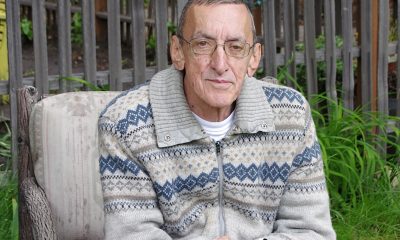
BOGOTÁ, Colombia — A gay Venezuelan man who has lived in Colombia since 2018 says he feels uncertain about his homeland’s future after the U.S. seized now former Venezuelan President Nicolás Maduro.
“On one hand I can feel happy, but on the other hand I feel very concerned,” Heberth Aguirre told the Washington Blade on Tuesday during an interview at a shopping mall in Bogotá, the Colombian capital.
Aguirre, 35, is from Maracaibo, Venezuela’s second-largest city that is the heart of the country’s oil industry.
He developed cultural and art initiatives for the Zulia State government.
“Little by little, I suddenly became involved in politics because, in a way, you had to be involved,” recalled Aguirre. “It was necessary to be involved because the regime often said so.”
“I basically felt like I was working for the citizens, but with this deeply ingrained rule we had to be on their side, on the side of the Maduro and (former President Hugo) Chávez regime,” he added.
Maduro in 2013 became Venezuela’s president after Chávez died.
“There are things I don’t support about the regime,” Aguirre told the Blade. “There are other things that were nice in theory, but it turned out that they didn’t work when we put them into practice.”
Aguirre noted the Maduro government implemented “a lot of laws.” He also said he and other LGBTQ Venezuelans didn’t “have any kind of guarantee for our lives in general.”
“That also exposed you in a way,” said Aguirre. “You felt somewhat protected by working with them (the government), but it wasn’t entirely true.”
Aguirre, 35, studied graphic design at the University of Zulia in Maracaibo. He said he eventually withdrew after soldiers, members of Venezuela’s Bolivarian National Guard, and police officers opened fire on students.
“That happened many times, to the point where I said I couldn’t keep risking my life,” Aguirre told the Blade. “It hurt me to see what was happening, and it hurt me to have lost my place at the university.”
Venezuela’s economic crisis and increased insecurity prompted Aguirre to leave the country in 2018. He entered Colombia at the Simón Bolívar Bridge near the city of Cúcuta in the country’s Norte de Santander Province.
“If you thought differently, they (the Venezuelan government) would come after you or make you disappear, and nobody would do anything about it,” said Aguirre in response to the Blade’s question about why he left Venezuela.
The Simón Bolívar Bridge on the Colombia-Venezuela border on May 14, 2019. (Washington Blade video by Michael K. Lavers)
Aguirre spoke with the Blade three days after American forces seized Maduro and his wife, Cilia Flores, at their home in Caracas, the Venezuelan capital, during an overnight operation.
The Venezuelan National Assembly on Sunday swore in Delcy Rodríguez, who was Maduro’s vice president, as the country’s acting president. Maduro and Flores on Monday pleaded not guilty to federal drug charges in New York.
President Donald Trump on Tuesday in a Truth Social post said Venezuela’s interim authorities “will be turning over between 30 and 50 million barrels of high quality, sanctioned oil, to the United States of America.”
“This oil will be sold at its market price, and that money will be controlled by me, as president of the United States of America, to ensure it is used to benefit the people of Venezuela and the United States,” wrote Trump.
Trump on Sunday suggested the U.S. will target Colombian President Gustavo Petro, a former Bogotá mayor and senator who was once a member of the M-19 guerrilla movement that disbanded in the 1990s.
Petro has urged Colombians to take to the streets on Wednesday and “defend national sovereignty.” Claudia López, a former senator who would become the country’s first female and first lesbian president if she wins Colombia’s presidential election that will take place later this year, is among those who criticized Trump’s comments.
“Let’s be clear: Trump doesn’t care about the humanitarian aspect,” said Aguirre when the Blade asked him about Trump. “We can’t portray him as Venezuela’s savior.”
Meanwhile, Aguirre said his relatives in Maracaibo remain afraid of what will happen in the wake of Maduro’s ouster.
“My family is honestly keeping quiet,” he said. “They don’t post anything online. They don’t go out to participate in marches or celebrations.”
“Imagine them being at the epicenter, in the eye of the hurricane,” added Aguirre. “They are right in the middle of all the problems, so it’s perfectly understandable that they don’t want to say anything.”
‘I never in my life thought I would have to emigrate’
Aguirre has built a new life in Bogotá.
He founded Mesa Distrital LGBTIQ+ de Jóvenes y Estudiantes, a group that works with migrants from Venezuela and other countries and internally placed Colombians, during the COVID-19 pandemic. Aguirre told the Blade he launched the group “with the need to contribute to the general population, not just in Colombia.”
Aguirre met his husband, an American from California, at a Bogotá church in December 2020 during a Christmas event that SDA Kinship Colombia, an LGBTQ group, organized. A Utah judge virtually officiated their wedding on July 12, 2024.
“I love Colombia, I love Bogotá,” said Aguirre. “I love everything I’ve experienced because I feel it has helped me grow.”
He once again stressed he does not know what a post-Maduro Venezuela will look like.
“As a Venezuelan, I experienced the wonders of that country,” said Aguirre. “I never in my life thought I would have to emigrate.”
The Colombian government’s Permiso por Protección Temporal program allows Aguirre and other Venezuelans who have sought refuge in Colombia to live in the country for up to 10 years. Aguirre reiterated his love for Colombia, but he told the Blade that he would like to return to Venezuela and help rebuild the country.
“I wish this would be over in five years, that we could return to our country, that we could go back and even return with more skills acquired abroad,” Aguirre told the Blade. “Many of us received training. Many of us studied a lot. We connected with organizations that formed networks, which enriched us as individuals and as professionals.”
“Returning would be wonderful,” he added. “What we’ve built abroad will almost certainly serve to enrich the country.”


Colombia
Colombia withdraws from Equal Rights Coalition
International LGBTQ group ‘not a priority’ for country’s new government
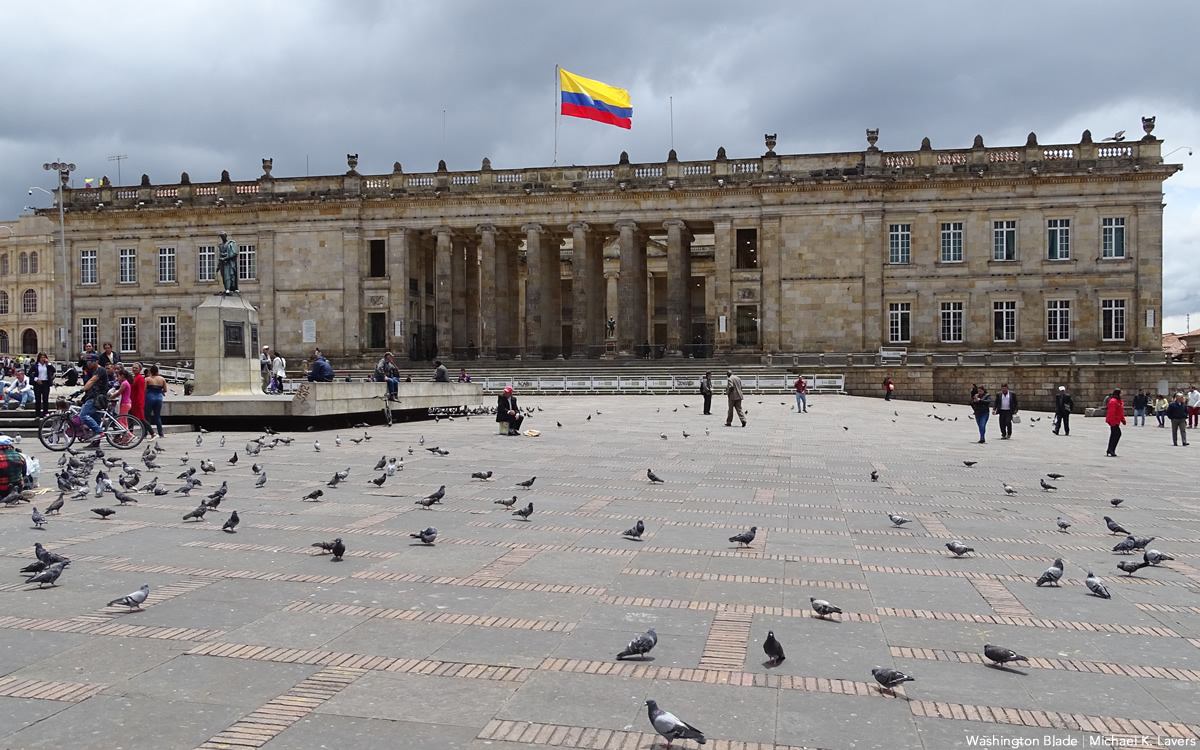
Colombia last week withdrew from a coalition of more than 40 countries that pledges to champion LGBTQ and intersex rights.
The Bogotá Post, an English-language news website in the Colombian capital, reported the country officially withdrew from the Equal Rights Coalition on Sept. 17.
The Equal Rights Coalition formed in 2016.
The group’s current members are Albania, Argentina, Australia, Austria, Belgium, Brazil, Canada, Cabo Verde, Chile, Costa Rica, Cyprus, the Czech Republic, Denmark, Ecuador, Estonia, Finland, France, Germany, Greece, Iceland, Ireland, Israel, Italy, Lithuania, Luxembourg, Malta, Mexico, Montenegro, Netherlands, New Zealand, North Macedonia, Norway, Portugal, Serbia, Slovenia, Spain, Sweden, Switzerland, Thailand, Ukraine, the U.K., and Uruguay. Civil society organizations from Colombia and dozens of other countries, including the U.S., work with the Equal Rights Coalition.
Colombia had co-chaired the group alongside Spain.
The decision to withdraw from the Equal Rights Coalition took place less than two months after far-right Colombian President Abelardo de la Espriella took office.
El Páis, a Spanish newspaper, reported Colombian Vice Minister for Consular and Migration Affairs Pedro Agustín Roa said the Equal Rights Coalition “is not a priority” for his government and the country’s participation in it was “something from a previous government.”
Caribe Afirmativo is a Colombian LGBTQ advocacy group that works with the Equal Rights Coalition. Wilson Castañeda, its director, criticized his country’s withdrawal from it.
Colombia
Abelardo de la Espriella elected Colombia’s next president
Far-right lawyer has pledged to end ‘gender ideology’ in the country
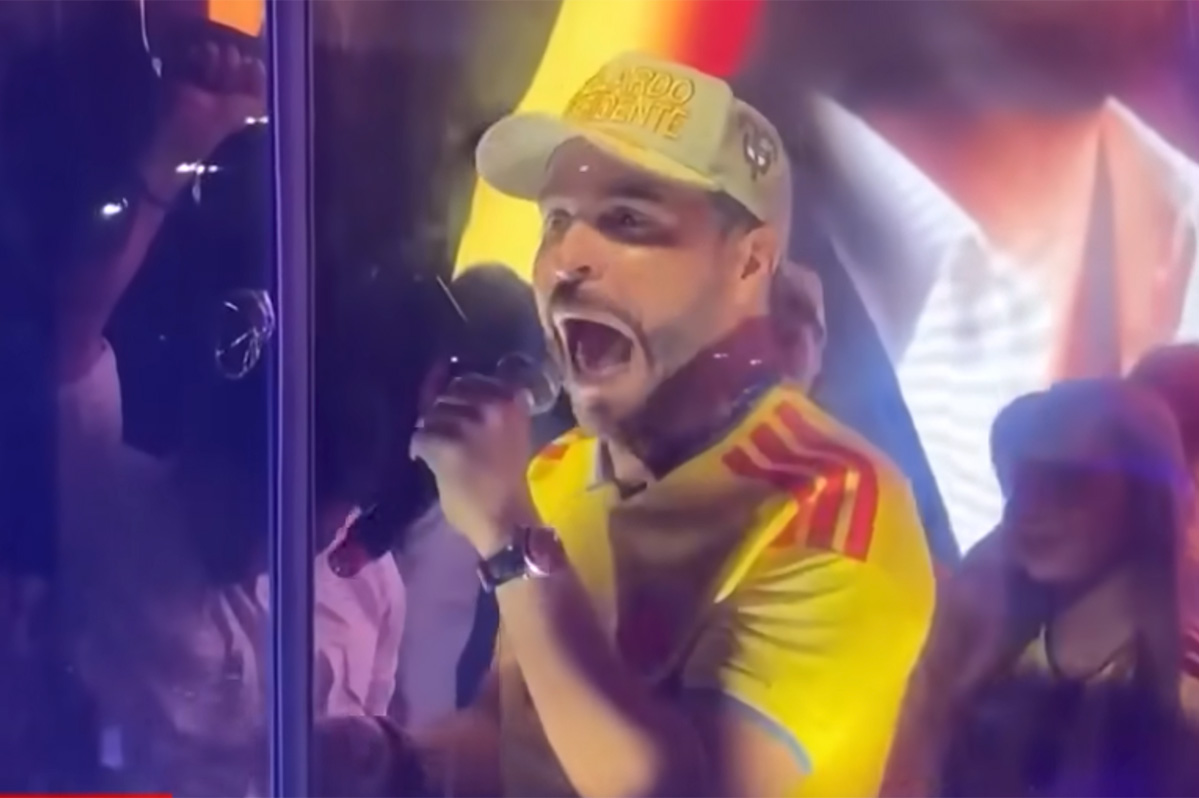
Abelardo de la Espriella on Sunday narrowly defeated Iván Cepeda in the second round of Colombia’s presidential election.
De la Espriella, a far-right lawyer who has praised U.S. President Donald Trump and Salvadoran President Nayib Bukele, beat Sen. Iván Cepeda, a member of outgoing President Gustavo Petro’s Historic Pact party, by a 49.7-48.7 percent margin. De la Espriella will take office on Aug. 7.
Secretary of State Marco Rubio on Sunday spoke with De la Espriella, who has pledged to end so-called “gender ideology” in Colombia, and congratulated him on his victory.
“This result reflects the will of the Colombian people and their commitment to democracy,” said State Department spokesperson Tommy Piggott in a statement. “The Trump administration looks forward to working closely with his incoming administration to advance our bilateral and regional security cooperation, end illegal immigration to the United States, and strengthen the economic ties between our two countries. Through our close bilateral cooperation, and under the leadership of President-elect De la Espriella, Colombia’s best days are ahead.”
The election’s first round took place on June 1.
Former Bogotá Mayor Claudia López, a centrist who ran as an independent, finished fifth. She would have become Colombia’s first female and first lesbian president if she had won the election.
De la Espriella and Cepeda faced off in the runoff because neither received a majority of votes in the first round.
Colombia
Claudia López comes up short in Colombian presidential election
Former Bogotá mayor would have been country’s first lesbian head of government
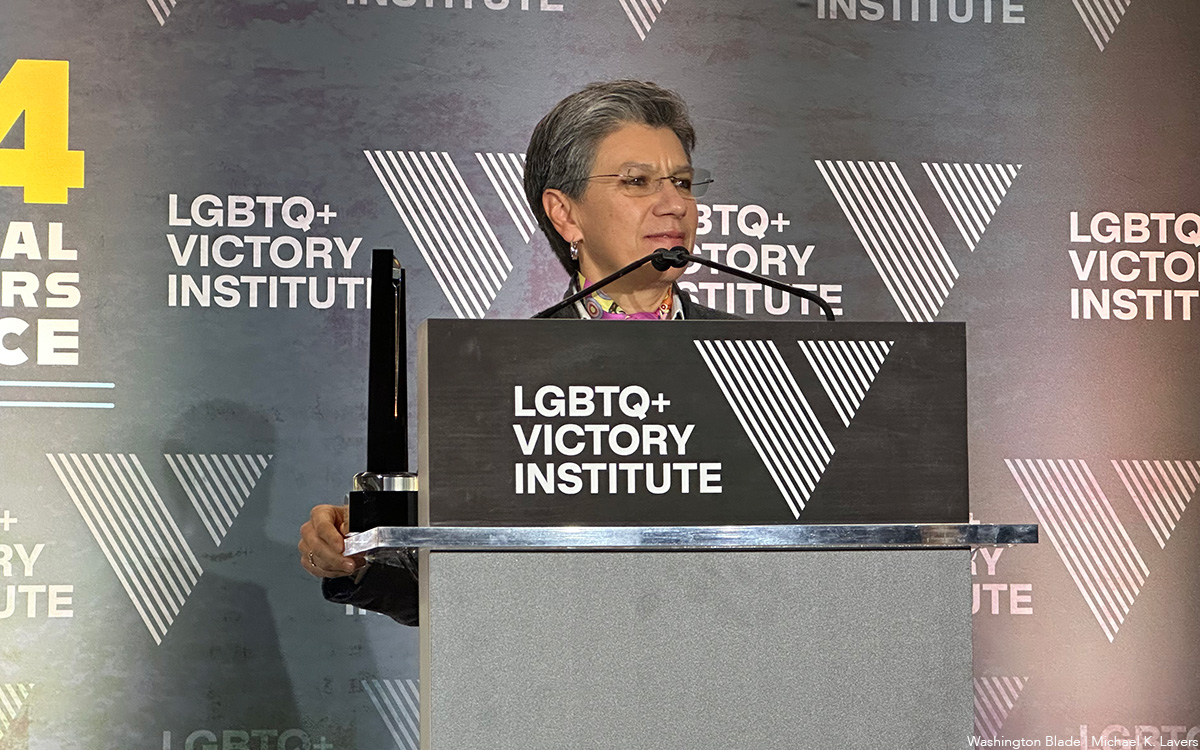
Former Bogotá Mayor Claudia López on Sunday finished fifth in the first round of Colombia’s presidential election.
López, a centrist who ran as an independent, received 225,517 votes. This figure is .95 percent of the total votes cast.
López was the Colombian capital’s mayor from 2020-2023. She was a member of the Colombian Senate from 2014-2018. López, whose wife is outgoing Colombian Sen. Angélica Lozano, would have become the country’s first female and first lesbian president if she would have won the election.
The LGBTQ+ Victory Institute honored López in D.C. in 2024.
“We need to listen to each other again, we need to have a coffee with each other again, we need to touch each other’s skin,” she told the Washington Blade during an interview. She hadn’t yet declared her candidacy, and did not specifically discuss her plans to run.
Runoff to take place June 21
Abrelardo de la Espriella, a far-right lawyer who has praised U.S. President Donald Trump and Salvadoran President Nayib Bukele, on Sunday finished first with 43.74 percent of the vote. Senator Iván Cepeda, a member of outgoing President Gustavo Petro’s Historic Pact party, came in second with 40.9 percent of the vote.
Neither men received a majority of votes. A runoff between them will take place on June 21.

Annie Andrews denounces trans athletes after Trump targets her

On Republican Long Island, gay Democrat Chris Gallant bets on public service over politics

Report: LGBTQ exclusion costs Japanese economy billions a year

Center for Black Equity honors leaders, activists at BE. Gala

In ‘The Lost Brontë,’ a complicated lie can lead to danger

U.S. int’l trade negotiator, consultant James Bedore dies at 82

Campaign urges Virginia High School League to reverse stance on trans athletes

Calif. GOP gubernatorial candidate ad ‘disgusting attempt to exploit lesbian intimacy’

Center Arts Gallery celebrates 10 years with reception, auction

Trump, Netanyahu, and Putin are all war criminals
-

 Obituary4 days ago
U.S. int’l trade negotiator, consultant James Bedore dies at 82
-
Virginia4 days ago
Campaign urges Virginia High School League to reverse stance on trans athletes
-
California4 days ago
Calif. GOP gubernatorial candidate ad ‘disgusting attempt to exploit lesbian intimacy’
-
Commentary4 days ago
Center Arts Gallery celebrates 10 years with reception, auction