Colombia
Claudia López mum on whether she will run for president of Colombia
LGBTQ+ Victory Institute honored former Bogotá mayor in D.C.

Former Bogotá Mayor Claudia López on Saturday did not specifically discuss the growing speculation over whether she will run for president of Colombia in 2026 when she spoke at the LGBTQ+ Victory Institute’s annual International LGBTQ Leaders Conference in D.C. and with the Washington Blade.
“In a week I am going to return to Colombia and I’m coming back with a very, very punctual task,” she said in a speech she gave after the Victory Institute inducted her into its LGBTQ+ Political Hall of Fame at the JW Marriott. “Democracy in the world in general needs emotional reconnection.”
López, 54, was a student protest movement leader, journalist, and political scientist before she entered politics.
She returned to Colombia in 2013 after she earned her PhD in political science at Columbia University.
López in her speech said Juan Francisco “Kiko” Gomez, a former governor of La Guajíra Department in northern Colombia, threatened to assassinate her because she wrote about his ties to criminal gangs. A Bogotá judge in 2017 convicted Gómez of ordering members of a paramilitary group to kill former Barrancas Mayor Yandra Brito, her husband, and bodyguard and sentenced him to 55 years in prison.
López in 2014 returned to Colombia, and ran for the country’s Senate as a member of the center-left Green Alliance party after she recovered from breast cancer. López won after a 10-week campaign that cost $80,000.
“I was the only woman, the only LGBTQ member of my caucus,” she said in her speech. “Of course I had the honor, but also the responsibility to represent them particularly well, [and] of course all the citizens who trust me and all the citizens of Colombia.”
“Once you are elected, you are elected to represent equally and faithfully all of the people, not only your own people,” added López.
López in 2018 was her party’s candidate to succeed then-President Juan Manuel Santos when he left office. López in 2019 became the first woman and first lesbian elected mayor of Bogotá, the Colombian capital and the country’s largest city.
“This of course speaks incredibly well of my city,” she said in her speech.
López took office on Jan. 1, 2020, less than a month after she married her wife, Colombian Sen. Angélica Lozano. (López was not out when she was elected to the Senate.) Lozano was with López at the Victory Institute conference.
López’s term ended on Dec. 31, 2023. She will return to Colombia once her Advanced Leadership Fellowship at Harvard University ends this month.
“I ended my mayorship,” López told the Blade. “It has been, of course, the honor of my life to be the first female mayor of my city. It was an absolutely beautiful job, but very challenging.”
“I needed a year of rest, of relaxation, and I was fortunate to receive a Harvard scholarship this year,” she added.
López during the interview called for an end to polarization and reiterated her support for democracy.
“We need to listen to each other again, we need to have a coffee with each other again, we need to touch each other’s skin,” she said.
López said parties, candidates, and their political coalitions in Colombia and around the world need to “listen, reconnect, and organize with people” at the grassroots. López also told the Blade there is a “global crisis of democracy.”
“Each country has its own contexts and challenges, but it seems to me that there is a common element there,” she said.
“So, I return to Colombia rested, grateful after a year of reflection, with proposals in mind, but determined to dedicate time to what I consider the most important work for democracy at this time, which is to reconnect from the grassroots,” added López.
‘I know what love and education can do for any person’
López took office less than three months before the COVID-19 pandemic began.
“We were full of hope, ready to go to offer a new social and environmental contract for Bogotá society for the 21st century,” she said. “But a couple of (months) after being sworn into office, the pandemic of COVID-19 came.”
Unemployment and poverty rates soared in Bogotá during the pandemic, and the city’s residents had less access to health care and other basic services.
López noted her administration in response to the pandemic offered scholarships to young people, supported businesses, and increased funding of the city’s social services. López also said her administration implemented Latin America’s first city-based care system for female care givers, and build three more LGBTQ community centers in poor and working-class neighborhoods.
“I know what love and education can do for any person,” she said.
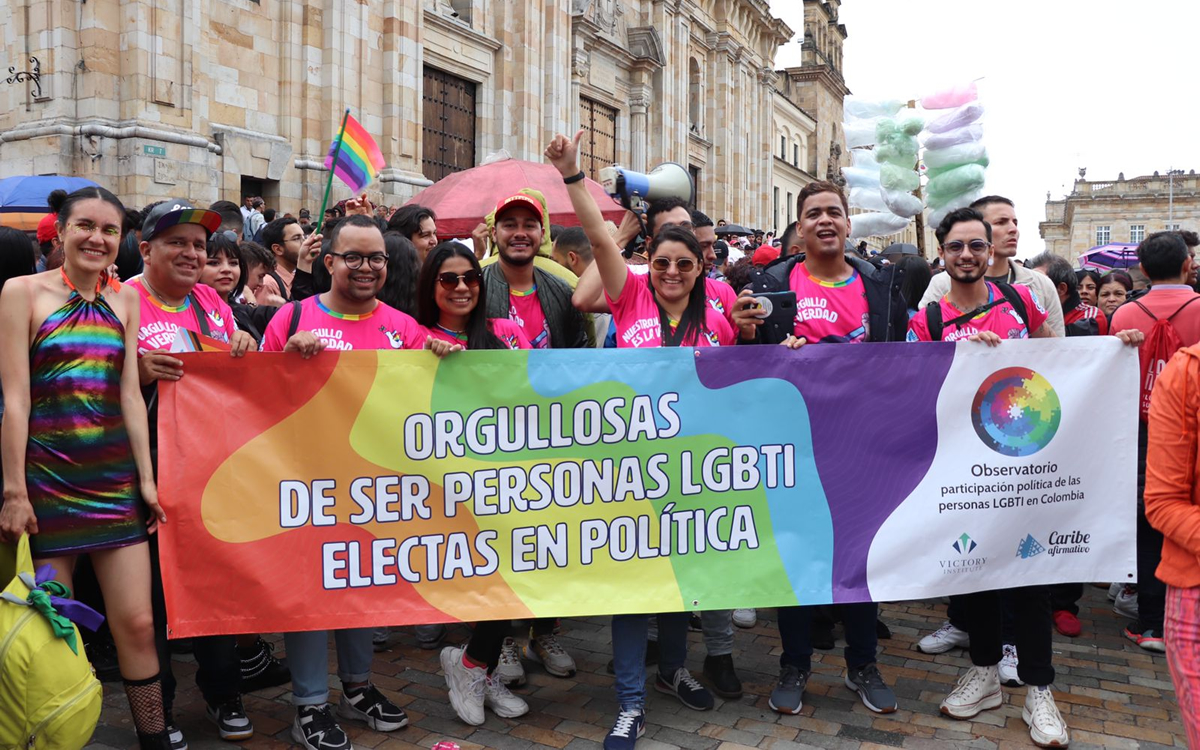
The U.N. Refugee Agency says upwards of three million Venezuelans are now in Colombia.
Then-Colombian President Iván Duque in February 2021 announced Venezuelan migrants who register with the country’s government will be legally recognized.
Former Bogotá Mayor Gustavo Petro, a former senator who was once a member of the M-19 guerrilla movement that disbanded in the 1990s, succeeded Duque as president on Aug. 7, 2022. Colombia and Venezuela restored diplomatic ties less than a month later.
Venezuela’s National Electoral Council on July 28 declared President Nicolás Maduro the winner of the country’s disputed presidential election. Tamara Adrián, the country’s first transgender congresswoman who ran in the presidential primary earlier this year, are among those who denounced voting irregularities.
WPLG, a South Florida television station, on March 16, 2021, reported López sparked controversy after she told reporters there have been “some very violent acts from Venezuelans.”
“First they murder, and then they steal,” she said. “We need guarantees for Colombians.”
López made the comments after a Venezuelan migrant murdered a Colombian police officer in Bogotá.
“The problem is not migration from Venezuela,” López told the Blade in response to a question about Venezuela. “The problem is authoritarianism in Venezuela and you have to keep the focus on it.”
“The problem is what it is: It is not the migrants, it is in Maduro, it is in the dictatorship, it is in authoritarianism.”
More than 200,000 people died in the war between the Colombian government and the Revolutionary Armed Forces of Colombia that began in 1962.
Santos and the Revolutionary Armed Forces of Colombia Commander Rodrigo “Timochenko” Londoño on Sept 26, 2016, signed an LGBTQ-inclusive peace agreement. Colombian voters a few days later narrowly rejected it a referendum that took place against the backdrop of anti-LGBTQ rhetoric from religious and conservative groups.
Santos and Londoño less than two months later signed a second peace agreement, which also contains LGBTQ-specific references.
López described herself as “a person totally committed to the peace process.” She added, however, she has “a bit of a bad taste in my mouth now that I look back.”
“The peace process with the FARC, which was to demobilize the FARC, period, certainly tried to have and had a gender focus, of course a diversity focus, a focus on human rights for all victims, and certainly (the) many LGBT victims who had been victims of FARC recruitment, abuse, stigmatization, etc.,” López told the Blade. “So, in some sense, or in many senses, having that gender and diversity perspective was a way of recognizing the victims of our community.”
She noted opponents lied about the LGBTQ-specific provisions “to deceive and delegitimize the peace agreement.”
“It is not about making anything invisible, or even downplaying anything, but rather about being much more strategic in understanding that we do not want our flags and causes to be exposed in a way that ends up being a boomerang for our own community,” López added. “So, I say that is why it is a disappointment, because I think it is a lesson. At least for me, it made me think and it makes me think, and I have said it openly since then, that we have to be much more careful and much more, above all, strategic, in how we raise our flags so that they really do not only have symbolic, but real advances and so that in no case do they become a boomerang against ourselves.”
‘I know how you feel’
López during the interview praised the recent elections of Mexican President Claudia Sheinbaum, Uruguayan Vice President Beatriz Argimón, and other women in Latin America. She also expressed sympathy with LGBTQ Americans who are concerned about the incoming Trump-Vance administration.
“I know how you feel,” said López in her speech. “I’ve been there when we lost the peace referendum in 2016. I’ve been there when three candidates who represented independent, new alternatives in Colombia, and policies were killed by mafia groups in 1990. I’ve been there when a mafia cartel was able to fund and elect a president for all of us. I’ve been there when paramilitary groups were able to support and elect another president in Colombia.”
“I know how obscure and difficult and challenging and painful democratic times are, but we cannot (back) democracy only when we win,” she added. “It’s precisely when things are challenging, when we suffer defeats that are painful, that we need to attach to our democratic and humanistic values and principles.”





Colombia
Colombia withdraws from Equal Rights Coalition
International LGBTQ group ‘not a priority’ for country’s new government
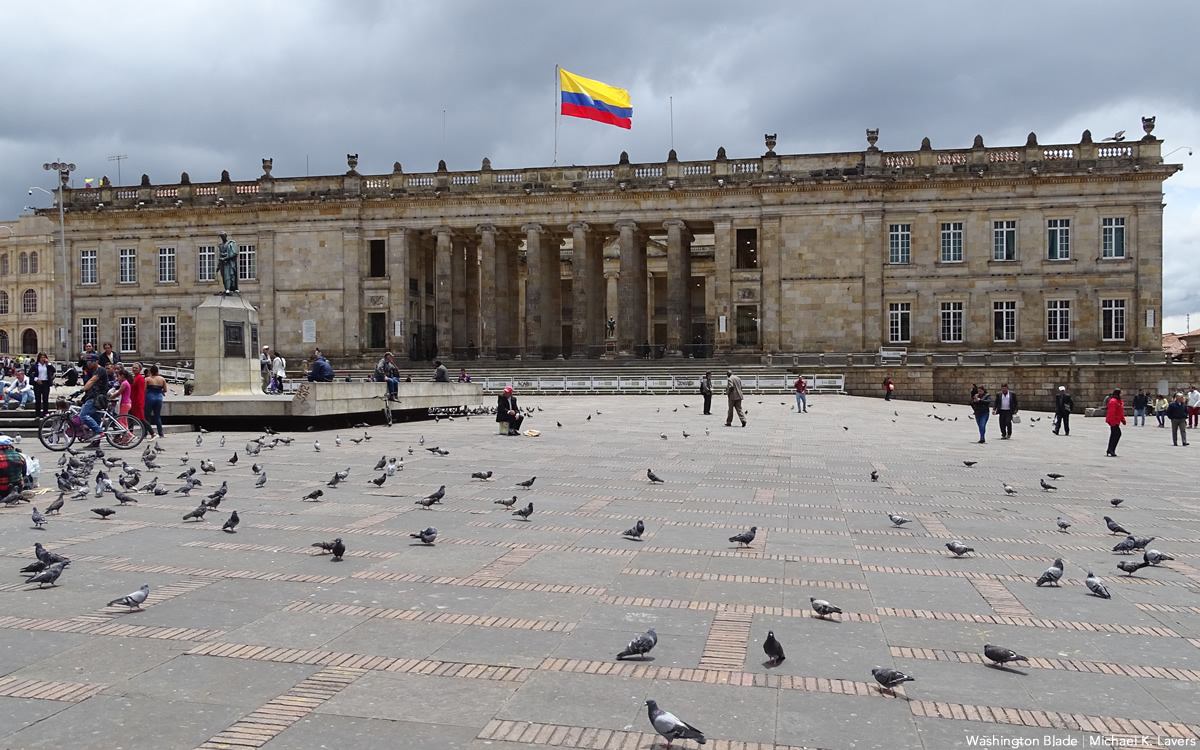
Colombia last week withdrew from a coalition of more than 40 countries that pledges to champion LGBTQ and intersex rights.
The Bogotá Post, an English-language news website in the Colombian capital, reported the country officially withdrew from the Equal Rights Coalition on Sept. 17.
The Equal Rights Coalition formed in 2016.
The group’s current members are Albania, Argentina, Australia, Austria, Belgium, Brazil, Canada, Cabo Verde, Chile, Costa Rica, Cyprus, the Czech Republic, Denmark, Ecuador, Estonia, Finland, France, Germany, Greece, Iceland, Ireland, Israel, Italy, Lithuania, Luxembourg, Malta, Mexico, Montenegro, Netherlands, New Zealand, North Macedonia, Norway, Portugal, Serbia, Slovenia, Spain, Sweden, Switzerland, Thailand, Ukraine, the U.K., and Uruguay. Civil society organizations from Colombia and dozens of other countries, including the U.S., work with the Equal Rights Coalition.
Colombia had co-chaired the group alongside Spain.
The decision to withdraw from the Equal Rights Coalition took place less than two months after far-right Colombian President Abelardo de la Espriella took office.
El Páis, a Spanish newspaper, reported Colombian Vice Minister for Consular and Migration Affairs Pedro Agustín Roa said the Equal Rights Coalition “is not a priority” for his government and the country’s participation in it was “something from a previous government.”
Caribe Afirmativo is a Colombian LGBTQ advocacy group that works with the Equal Rights Coalition. Wilson Castañeda, its director, criticized his country’s withdrawal from it.
Colombia
Abelardo de la Espriella elected Colombia’s next president
Far-right lawyer has pledged to end ‘gender ideology’ in the country
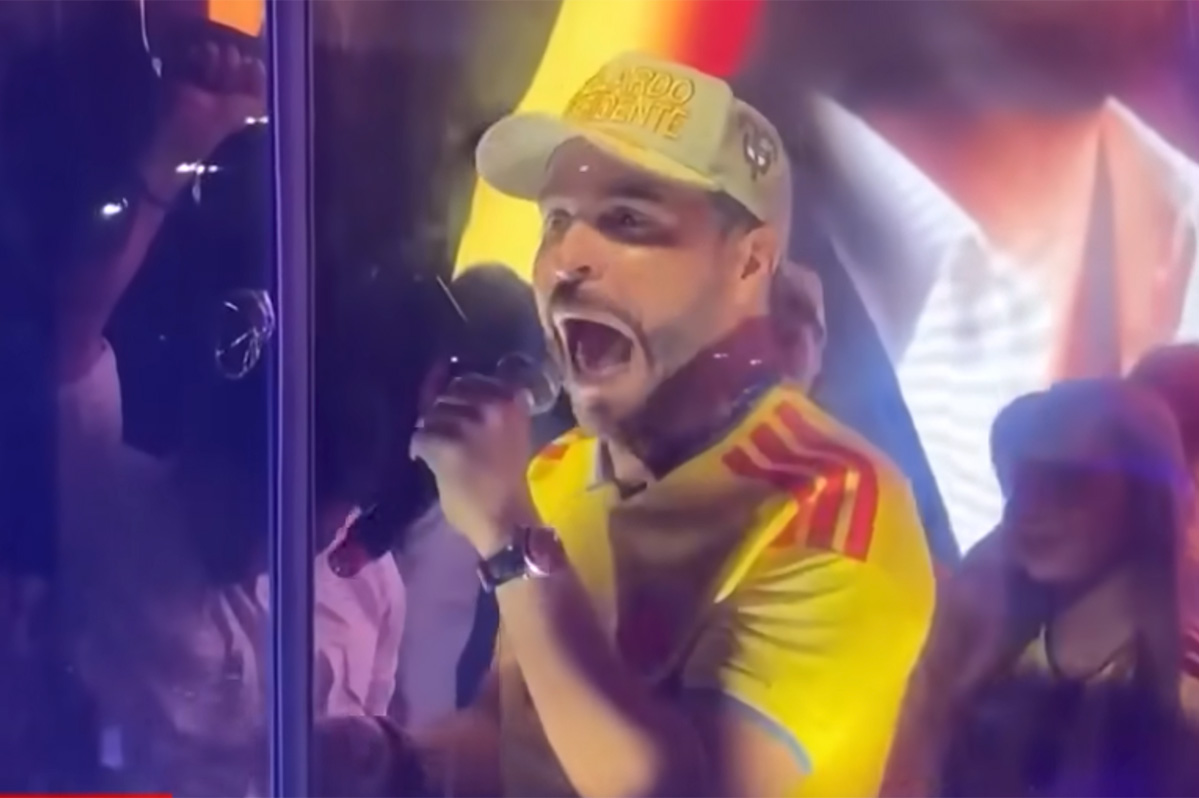
Abelardo de la Espriella on Sunday narrowly defeated Iván Cepeda in the second round of Colombia’s presidential election.
De la Espriella, a far-right lawyer who has praised U.S. President Donald Trump and Salvadoran President Nayib Bukele, beat Sen. Iván Cepeda, a member of outgoing President Gustavo Petro’s Historic Pact party, by a 49.7-48.7 percent margin. De la Espriella will take office on Aug. 7.
Secretary of State Marco Rubio on Sunday spoke with De la Espriella, who has pledged to end so-called “gender ideology” in Colombia, and congratulated him on his victory.
“This result reflects the will of the Colombian people and their commitment to democracy,” said State Department spokesperson Tommy Piggott in a statement. “The Trump administration looks forward to working closely with his incoming administration to advance our bilateral and regional security cooperation, end illegal immigration to the United States, and strengthen the economic ties between our two countries. Through our close bilateral cooperation, and under the leadership of President-elect De la Espriella, Colombia’s best days are ahead.”
The election’s first round took place on June 1.
Former Bogotá Mayor Claudia López, a centrist who ran as an independent, finished fifth. She would have become Colombia’s first female and first lesbian president if she had won the election.
De la Espriella and Cepeda faced off in the runoff because neither received a majority of votes in the first round.
Colombia
Claudia López comes up short in Colombian presidential election
Former Bogotá mayor would have been country’s first lesbian head of government
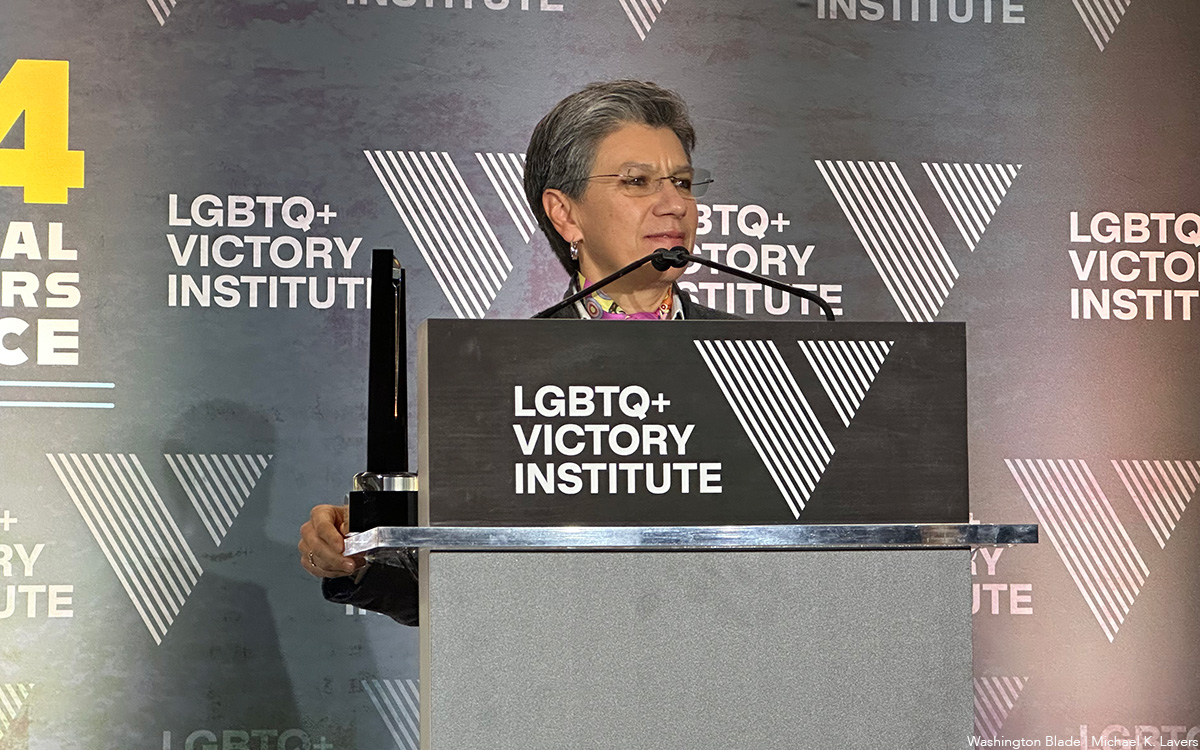
Former Bogotá Mayor Claudia López on Sunday finished fifth in the first round of Colombia’s presidential election.
López, a centrist who ran as an independent, received 225,517 votes. This figure is .95 percent of the total votes cast.
López was the Colombian capital’s mayor from 2020-2023. She was a member of the Colombian Senate from 2014-2018. López, whose wife is outgoing Colombian Sen. Angélica Lozano, would have become the country’s first female and first lesbian president if she would have won the election.
The LGBTQ+ Victory Institute honored López in D.C. in 2024.
“We need to listen to each other again, we need to have a coffee with each other again, we need to touch each other’s skin,” she told the Washington Blade during an interview. She hadn’t yet declared her candidacy, and did not specifically discuss her plans to run.
Runoff to take place June 21
Abrelardo de la Espriella, a far-right lawyer who has praised U.S. President Donald Trump and Salvadoran President Nayib Bukele, on Sunday finished first with 43.74 percent of the vote. Senator Iván Cepeda, a member of outgoing President Gustavo Petro’s Historic Pact party, came in second with 40.9 percent of the vote.
Neither men received a majority of votes. A runoff between them will take place on June 21.

In ‘The Lost Brontë,’ a complicated lie can lead to danger

CAMP Rehoboth Block Party returns Oct. 18

Essential queer horror classics for Halloween

Solidarity beyond the parade: the actual cost of Pride

Physician: addiction doesn’t always look the way you think it does

Bessent says Trump chose him for his qualifications, not his sexuality

10 years later, we still can’t shake Barry Jenkins’s ‘Moonlight’

‘Some Like It Hot’ a wild ride at renovated Bernard Family Theatre

D.C.’s LGBTQ homeless facilities face possible hit from Trump funding cuts

Trump uses anti-trans slur against Democratic Senate candidate
-

 Federal Government5 days ago
Bessent says Trump chose him for his qualifications, not his sexuality
-
Movies4 days ago
10 years later, we still can’t shake Barry Jenkins’s ‘Moonlight’
-
Theater4 days ago
‘Some Like It Hot’ a wild ride at renovated Bernard Family Theatre
-
District of Columbia4 days ago
D.C.’s LGBTQ homeless facilities face possible hit from Trump funding cuts