National
Gay diplomat presses LGBT issues at int’l conference
Guest focuses on hate crimes, Pride celebrations in remarks


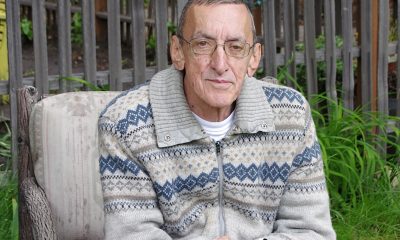
Michael Guest, former U.S. ambassador to Romania, headed a delegation during the human rights portion of an annual conference for the Organization for Security & Cooperation in Europe. (Blade photo by Michael Key)
A gay diplomat led a U.S. delegation at an international conference earlier this month that touched on the importance of LGBT rights as a human rights issue.
Michael Guest, former U.S. ambassador to Romania, headed a delegation of about 25 U.S. diplomats during the human rights portion of an annual review conference for the Organization for Security & Cooperation in Europe. The review conference took place between Sept. 30 and Oct. 8 in Warsaw, Poland.
The Warsaw Review Conference was a primer engagement for trans-Atlantic countries to discuss human rights principles — including hate crimes against LGBT people and the freedom to association to have Pride celebrations across the globe — in anticipation of a later OSCE summit that this year is set to take place in December in Astana, Kazakhstan.
In an interview with the Washington Blade, Guest said that his sexual orientation made his designation as head of the delegation representational of the Obama administration’s stated principle that international LGBT rights are human rights.
“I also think that it made an impact with other delegations,” Guest added. “It was clearly a prominent feature of my biography, so there were a number of delegation members that come and it’s representative in their eyes as a sense of progress that an openly gay man would be appointed.”
Still, Guest said he thinks his 26-year service as a diplomat was the primary reason he was selected for the position and noted that during much of his career he focused on OSCE policy.
“I dealt with it at the time when all these changes were happening in Europe in 1989, 1990 and 1991 and when most of the commitments on fundamental freedoms and human rights were signed by the newly independent countries of the former Soviet Union and the new democracies of Central and Eastern Europe,” he said.
Guest attained notoriety in 2007 when he retired from the State Department in protest because it didn’t offer certain benefits — such as security training and free medical care — to the same-sex partners of Foreign Service officers. The situation has since been rectified by Secretary of State Hillary Clinton.
Mark Bromley, chair of the Council for Global Equality, which took part in the review conference as an non-governmental organization, said the selection of an out gay man to lead the U.S. delegation was significant because previous administrations have been reluctant to incorporate LGBT issues in foreign policy.
“The United States in the past has been reluctant to address LGBT concerns within this forum,” Bromley said. “I think the fact that they selected Michael Guest as someone who is openly gay and works with organizations that promote issues on the basis of sexual orientation and gender identity was an important statement.”
The OSCE was established in 1975 after 35 trans-Atlantic countries, including the United States and the Soviet Union, signed the Helsinki Accords and agreed to take part in annual meetings. During the Cold War, the OSCE served as a forum where the United States could raise human rights and security issues with Warsaw Pact countries.
But Guest said the tone of the conference has changed since the collapse of the Soviet Union in 1991 to become less of an East-West dialogue and more of a pan-Atlantic conversation.
“It’s an opportunity to look at what has been done and is being done on human rights issues ranging from migration to freedoms of assembly and freedom of religion, to human trafficking, to capital punishment, to gender balance to hate crimes and intolerance — the whole range of human rights related issues,” Guest said.
During the course of the discussion on human rights, Guest impressed upon the 56 participating states in the conference the importance of inclusion of LGBT rights as human rights issues.
The former ambassador mentioned LGBT issues during his opening statement at the conference’s plenary session, including bias-motivated violence against LGBT people and the right to freedom of association at Pride celebrations. Such activities in Eastern Europe, where the conference took place, are often the targets of hostility and violence.
Guest lamented human rights abuses such as “when civil society assemblies are denied permits on spurious grounds, or police allow bigots to attack Gay Pride parades.” The former ambassador also acknowledged the United States has more to accomplish on human rights issues because “equality under the law continues to elude those of us who are gay or transgender.”
During a later discussion, Guest also appealed to governments in attendance to implement hate crimes protections measures and recalled his own personal experience as the victim of bias-motivated violence.
After a hostile non-governmental organization equated homosexuality to pedophilia and necrophilia at the end of the meeting, Guest responded that the connection was offensive and such inflammatory allegations can be responsible for hate crimes.
Guest told the Blade he raised LGBT issues during the conference because he believes they should be brought up in any comprehensive discussion of human rights.
“We raised it in questions of freedom to assembly, freedom of association and in the course of the discussions on hate crimes and tolerance,” he said. “We had some good news stories to tell from the standpoint of the United States, such as the passage of the Matthew Shepard Act and the overall trend in hate crimes going down, but the negative, of course, being that the reported number of LGBT hate crimes and hate crimes against immigrants has, in fact, gone up.”
LGBT issues were also raised by non-governmental institutions at the conference, including the Council for Global Equality.
Bromley delivered a statement at the conference on behalf of his organization — as well as two European international LGBT right groups — that called for passage of hate crimes protections in other countries as well as the decriminalization of sodomy.
Emphasizing the importance of accurate documentation and effective prosecution of bias-motivated violence against LGBT people, Bromley said hate crimes won’t go away as long as countries have anti-gay statutes on the books.
“As a first step, we call on all participating states in the OSCE region to remove any laws that continue to criminalize homosexual conduct or identity or the public dissemination of scientifically supported information on homosexuality and sexual health,” Bromley said.
Bromley told the Blade that discussion of LGBT rights at the conference was significant because the U.S. delegation had only begun to bring up such issues last year after the start of the Obama administration.
“We’re very pleased to see that level of emphasis from the head of the delegation, but a number of other governments also spoke to the issue, so it’s certainly gaining ground and giving additional attention to LGBT hate crimes,” Bromley said.
The delegations from other countries and other non-governmental organizations at the conference responded to the U.S. delegation’s promotion of LGBT rights in varied ways. Guest said the session in which he spoke personally about hate crimes issues caused delegations from other countries to take note.
“It was a very quiet session,” Guest said. “People were listening very quietly, and a lot of people did respond specifically to what I said including non-governmental organizations. A number of delegations told us afterwards — either to me directly or others on the team — how that more personal approach really had resonated with them.”
Guest said a representative from the Catholic Church in Vatican City was among those that approached him afterward and mentioned that talking about hate crimes in a personal manner was “a way that we could build bridges.”
But Guest said the outcome was different for discussions of freedom of association and the right to hold Pride celebrations. The former ambassador speculated these talks made less of an impact on the delegation because they had already come up at last year’s conference.
“I think it’s just that because Gay Pride issues have come up before, there were some delegations that maybe expected it and maybe didn’t really reflect as much as might otherwise be the case,” Guest said.
So-called “ex-gay” groups and other organizations hostile to LGBT rights were also present.
Bromley said Redeemed Lives, a Christian ministry, spoke out at the conference about bias-motivated violence against “ex-gay” people for giving up what the ministry called a “homosexual lifestyle.”
“That was somewhat alarming to see a strong showing of ex-gay activists who were waving issues that were, as far as I know, not legitimate concerns,” Bromley said. “I don’t doubt that there could be violence directed at ex-gay individuals, but I never heard of any reports to that effect.”
Reparative therapy programs that seek to change sexual orientation have been widely discredited by major medical and psychiatric associations around the world.
A spokesperson for Redeemed Lives deferred comment to a statement the organization made at the conference, which was published on the OSCE website. In the statement, Mario Bergner, director of Redeemed Lives, stresses the importance passing legislation to protect the free speech of Christian academics and clerics to “teach the sexual morality of their faith traditions” so that they can help those with “unwanted sexual desires.”
“Such people include Christians with sexual addictions for whom freedom means living free of internet pornography, Christians with compulsive sexual behaviours for whom freedom is fidelity in marriage, and Christians, like myself, with unwanted same sex attractions for whom freedom is the self emancipation that comes through effective pastoral care or psychological treatment for homosexuality,” Berger said.
Bromley said the organization’s concern about hate crimes against people who identify as “ex-gay” is ironic because the Matthew Shepard Act already protects them.
“It would actually be covered under our current hate crime law because it would still be violence on the basis of sexual orientation,” Bromley said.
But the conference nonetheless provided a forum to discuss international LGBT rights as a human rights issue.
Guest noted progress was made at the conference, although he said more work is needed.
“I think there are moments like that where you feel that you are making headway in getting people to understand that these are issues that governments have to take seriously,” Guest said. “And then, there are other times where it seems to go right past — certainly on some the freedom of association things.”





National
Man charged in Mall of America shooting plot inspired by Pulse massacre: report
Suspect exchanged hundreds of messages, pledged loyalty to ISIS
The U.S. Department of Justice charged Sheikhdoon Abdullahi Mohamud, 18, of Richfield, Minn., on Oct. 7 with one count of knowingly receiving a firearm and ammunition in order to commit a federal crime of terrorism. Mohamud allegedly planned to carry out a mass-casualty attack in support of ISIS, inspired in part by the Pulse nightclub massacre that took place on June 12, 2016 when then-29-year-old Omar Mateen murdered 49 people and wounded 58 – one of the deadliest mass shootings in U.S. history, and the deadliest targeting the LGBTQ+ community.
According to a DOJ statement release, Mohamud was arrested on Oct. 6 by the FBI, which had arranged to sell him an AK-47 assault rifle, magazines, and ammunition through an undercover FBI employee. Mohamud was arrested shortly after paying $600 in cash and taking possession of those items; he reaffirmed his intention to shoot people at the Mall of America during the transaction.
“Mohamud allegedly sought to carry out a mass-casualty shooting at the Mall of America, expressing a desire to emulate some of the most horrific ISIS-inspired attacks in the United States, including the atrocities at Pulse Nightclub and 2025 New Year’s Day attack in New Orleans,” said Assistant Attorney General for National Security John A. Eisenberg in the statement by the DOJ. “The National Security Division will continue to work closely with the FBI and Joint Terrorism Task Force to track down and prosecute ISIS-inspired terrorists in the United States.”
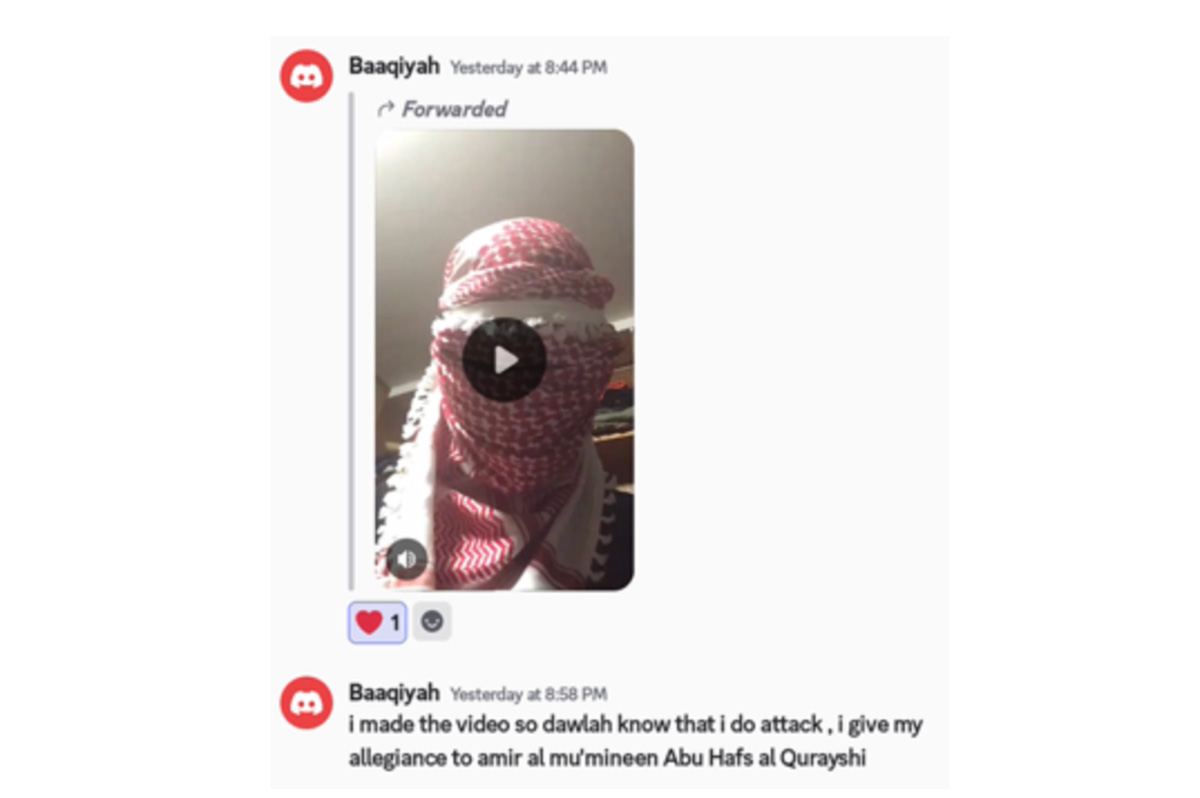
According to the complaint, beginning on or about December 2024, Mohamud had exchanged hundreds of messages through multiple social media and messaging apps with a confidential source, and expressed a desire to travel to Somalia to join a designated foreign terrorist organization to fight on their behalf.
The defendant stated many times that if he was unable to travel overseas because of a lack of funds, he planned to carry out a mass-casualty event in Minnesota in support of ISIS.
According to the DOJ, “In July 2026, Mohamud sent messages discussing his intent to carry out a mass-casualty shooting attack at the Mall of America because he claimed it was owned by Jews. He wrote that [he] wanted to kill 30 to 60 people so no one would go there.”
“During the course of his communications, Mohamud stated that he wanted to commit an attack similar to those of the Pulse Nightclub mass-shooting in Orlando, the Bondi Beach mass-shooting in Australia, and the New Year’s Day vehicle-ramming attack in New Orleans.”
This case is being prosecuted by Trial Attorney Ryan White of the National Security Division’s Counterterrorism Section and Assistant U.S. Attorney Benjamin Bejar for the District of Minnesota.
California
Calif. GOP gubernatorial candidate ad ‘disgusting attempt to exploit lesbian intimacy’
Activists, anti-LGBTQ religious leaders criticized Steve Hilton spot

Two women sit on a bed, a Pride flag hanging behind them. One is nervous; the other tells her to be calm and that she’ll do “all the work.” The music swells. The two hold hands and — fill out a ballot voting for Steve Hilton?
This is the new advertisement from the Hilton gubernatorial campaign that is drawing rebuke from both sides of the aisle, but for very different reasons.
Jorge Reyes Salinas, the communications director at Equality California, said the ad was an insult to the queer community.
“This ad is a disgusting attempt to exploit lesbian intimacy for political attention,” he said. The advertisement plays on media tropes that Salinas says “reduce lesbian and bisexual women … to sexual entertainment,” rather than showing them as well-rounded characters. “Any group of the LGBTQ+ community deserves the same dignity and respect as everyone else,” he said.
The ad is truly hyper-sexualized. It ends with one woman telling the other, “Now lick it.” The two pause and stare before she reveals an envelope to send the ballot, and large text pops up saying, “Just try it!”
Salinas characterized the ad as a desperate attempt to get attention from a candidate who is trailing far behind in the polls in heavily Democratic California. The Democratic candidate Xavier Becerra, who is endorsed by Equality California, holds a 25-point lead over Hilton according to recent polling by the UC Berkeley Institute of Governmental Studies.
Conservatives have also criticized the ad.
Influential evangelical Pastor Jack Hibbs thought the ad was distasteful and said, “lesbianism among college girls and some high school girls that right now is an actual pandemic of social ill.” Republican attorney general candidate Michael Gates said it undermines “the sanctity of the relationship between parents and their children.” This criticism is rather confusing because although the ad features two relatively young women, they both appear to be adults, not minors.
“The comments from Pastor Jack Hibbs should be criticized because there is nothing wrong with two women being attracted to each other,” Salinas said. “We’re calling out the ad’s stereotypes, while also rejecting the homophobia in the response to it … by other Republicans.”
The backlash from Hilton’s own party and supporters shows that an advertisement full of queer innuendo was ill-considered, considering the national GOP’s attacks on LGBTQ people in recent years. Hilton himself has been campaigning against transgender girls and women competing in school sports and using locker rooms that correspond with their gender identity. This context might be why Hilton’s political base responded to the ad just as poorly as the liberal voters he was attempting to court.
Hilton says the ad is part of a new series rolling out before Election Day, showing stereotypical California liberal archetypes voting for Hilton. He claims these ads are authentically filmed with real actors, as opposed to being A.I. generated, like many of his previous ads. One other advertisement has been released so far by the campaign showing a man at a spiritual retreat also being swayed to vote for Hilton, although it is notably absent of sexual innuendo.
Caleb Kaufman is a California Local News Fellow placed with the Los Angeles Blade. The California Local News Fellowship is a state-funded initiative to support and strengthen local news reporting. Learn more about it at fellowships.journalism.berkeley.edu/cafellows.
2026 Midterm Elections
Trump uses anti-trans slur against Democratic Senate candidate
President mocked Annie Andrews

President Donald Trump used an anti-trans slur against Democratic South Carolina Senate candidate Annie Andrews on Monday as he sought to rally support for Republicans in the state’s Senate race.
In a post on Truth Social, Trump attacked Andrews three times, referring to her as “trannie” while promoting U.S. Sen. Darline Graham (R-S.C.)’s campaign.
Andrews is running against Graham for a Senate seat in the solidly Republican state.
Earlier this year, Graham was specially appointed to the seat following the death of her brother, Lindsey Graham, who represented South Carolina in the Senate from 2003 to 2026.
Andrews, the Democratic nominee from the state, is a pediatrician that lives in Charleston with her three children. She told NBC News that she will “work with anyone to put South Carolina first.”
“As a mom and a pediatrician, I’m in this race to fight for my patients, my three kids, and South Carolina,” Andrews said, adding that “lowering costs and making life better for families across our state is going to take all of us working together.”
Andrews used the attention from the president’s attack to emphasize what she described as a focus on policy issues rather than the culture wars that have dominated much of the political debate.
“If you care more about your bills than the politics in Washington, this campaign is for you,” she added.
Trump’s remarks have drawn criticism from leaders on both sides of the aisle.
Senate Minority Leader Chuck Schumer (D-N.Y.) condemned Trump’s words Monday night on social media, calling his attacks on Andrews “despicable.”
“Annie Andrews is a mom and pediatrician who’s always put her community first — and she’s exactly who South Carolina needs representing them in the Senate,” Schumer said on X.
Former South Carolina Gov. David Beasley, a Republican, also criticized the president’s attack on Andrews, urging voters to “reject politics based on division and hate.”
“This is abhorrent. Elections don’t have to be about cruelty and lies. South Carolina deserves better,” Beasley wrote Monday night on X.
South Carolina has not elected a Democratic senator in nearly three decades.
Andrews’s campaign website does not mention her positions on LGBTQ issues.
The Washington Blade reached out to Andrews’s campaign for comment on Trump’s attack and her positions on transgender rights but did not hear back by time of publication.

Annie Andrews denounces trans athletes after Trump targets her

On Republican Long Island, gay Democrat Chris Gallant bets on public service over politics

Report: LGBTQ exclusion costs Japanese economy billions a year

Center for Black Equity honors leaders, activists at BE. Gala

In ‘The Lost Brontë,’ a complicated lie can lead to danger

U.S. int’l trade negotiator, consultant James Bedore dies at 82

Campaign urges Virginia High School League to reverse stance on trans athletes

Calif. GOP gubernatorial candidate ad ‘disgusting attempt to exploit lesbian intimacy’

Center Arts Gallery celebrates 10 years with reception, auction

Trump, Netanyahu, and Putin are all war criminals
-

 Obituary4 days ago
U.S. int’l trade negotiator, consultant James Bedore dies at 82
-
Virginia4 days ago
Campaign urges Virginia High School League to reverse stance on trans athletes
-
California4 days ago
Calif. GOP gubernatorial candidate ad ‘disgusting attempt to exploit lesbian intimacy’
-
Commentary4 days ago
Center Arts Gallery celebrates 10 years with reception, auction