Local
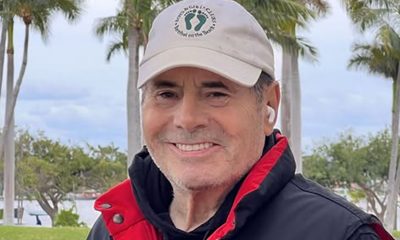
Jeff Coudriet dies at 48
Long-time D.C. gay activist succumbs to lung cancer

Jeff Coudriet, a local gay rights leader who worked as a congressional staff member before serving in various positions with the D.C. government, died Saturday in Washington following a year-long struggle with lung cancer. He was 48.
Coudriet is credited with playing a key role in efforts to repeal D.C.’s sodomy law and to pass the city’s first domestic partners law during his tenure as president of the Gay & Lesbian Activists Alliance from 1992 to 1995.
Following his stint as GLAA president, Coudriet served as president of the Gertrude Stein Democratic Club, the city’s largest LGBT political group.
Coudriet was a native of Endicott, N.Y. He graduated from New York’s Cornell University before joining the Washington staff of Rep. Maurice Hinchey (D-N.Y.) from 1993 to 1999. He later served on the staff of D.C. Council member Sharon Ambrose (D-Ward 6), where, among other things, he helped Ambrose draft sweeping legislation to overhaul the city’s liquor law.
In 1996, the city’s Democratic Party leaders appointed Coudriet to represent the District on the Electoral College in connection with that year’s presidential election.
He joined the staff of D.C. Council member Jack Evans (D-Ward 2) in 2001 and served there until 2004, when he left to take a position with the city’s Alcoholic Beverage Regulation Administration. Coudriet returned to Evans’ staff in 2007 to become clerk of the Council’s Committee on Finance and Revenue, which Evans chairs.
He remained on Evans’ staff until the time of his death.
“It is impossible to put into words the contributions Jeff made to our city and its residents,” Evans said. “My staff and I share the grief and extend our condolences to Jeff’s family and friends, and deeply mourn his passing.”
D.C. Council Chair Kwame Brown (D-At-Large) said he was deeply sadened upon learning of Coudriet’s passing.
“He was a true public servant who dedicated his career to improving the lives of District residents,” Brown said. “Jeff will be sorely missed, and his absence from the halls of the Wilson Building will be felt by many.”
News of Coudriet’s death stunned many of the city’s LGBT and civil rights activists, who worked closely with him on LGBT and other city-related issues for more than 20 years.
“Jeff’s insider knowledge of the District finances was invaluable to Shaw on many occasions, when funding needed to be identified for important projects,” said Alex Padro, a gay activist and Advisory Neighborhood Commissioner representing the city’s Shaw neighborhood.
In messages posted on a memorial site that Coudriet’s brother set up on Coudriet’s Facebook page, many of his friends and those who worked with him on various issues said he was known as a helpful and considerate person with a wry sense of humor. Others said he was always respectful when expressing disagreement with them on government and political issues.
“While he led the gay Democrats, I led the gay Republicans in town,” said Carl Schmid, former president of the D.C. Log Cabin Republicans group.
“Party differences never got in the way of a true gentleman because we were always fighting for the same goal,” Schmid said. “I wish so many others were like him. He will be greatly missed.”
Bob Dardano, a Stein Club member who worked with Coudriet on LGBT issues in the 1990s, said of Coudriet, “He was a passionate advocate of his beliefs and did it all with professionalism and a sense of humor.”
Coudriet, a long-time smoker, was diagnosed last spring about a year after he’d quit smoking. He was candid about his treatments and progress on his Facebook page and, for a time, was doing well.
A memorial service fhas been scheduled for Wednesday, Feb. 16 at 11 a.m. at Foundry United Methodist Church (1500 16th St., N.W.) in Washington, D.C. All are welcome. A funeral service will also be held on Saturday at 1 p.m. at Our Lady of Good Counsel Church, 701 West Main St., in Endicott, New York.





Rehoboth Beach
Rehoboth’s Blue Moon sold; new owners to preserve LGBTQ legacy
‘They don’t want to change a thing’
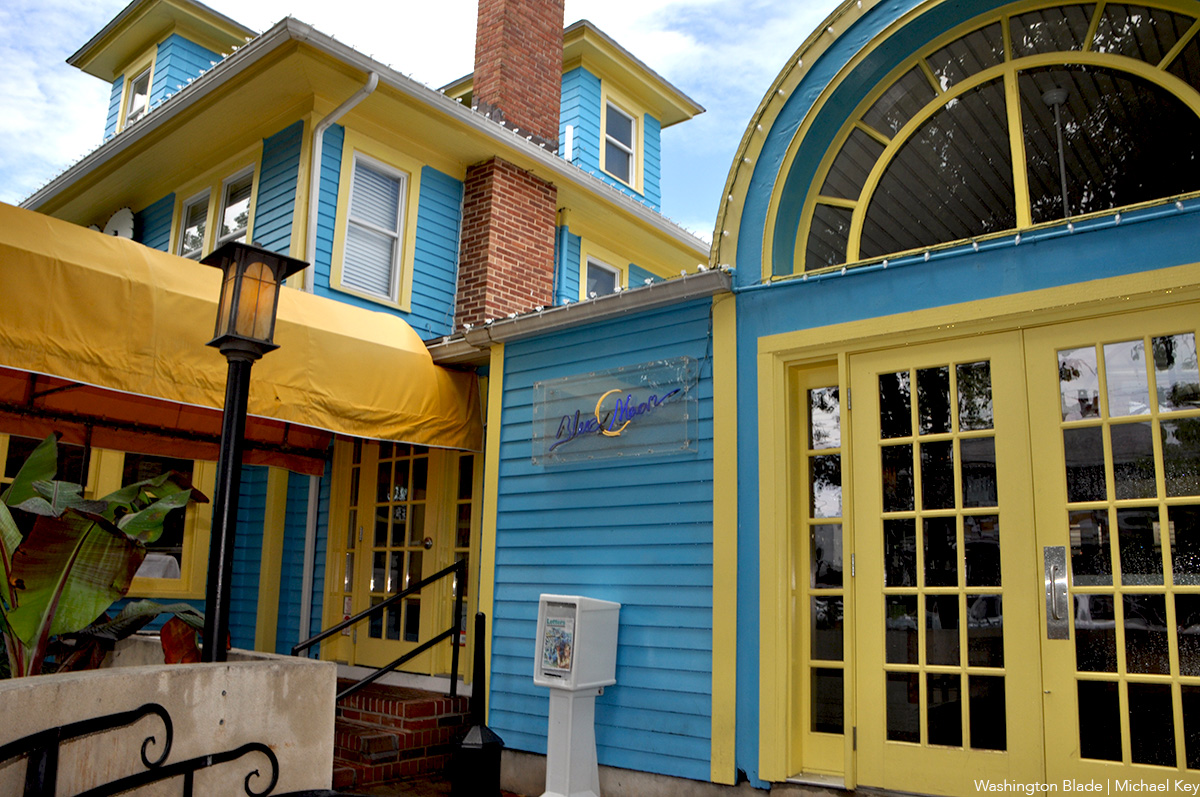
The iconic Blue Moon restaurant and bar in Rehoboth Beach, Del., has been sold to new owners who have pledged to keep it an LGBTQ-affirming space, according to longtime owner Tim Ragan.
Ragan and his partner Randy Haney sold the Blue Moon to Dale Lomas and Mike Subrick, owners of Atlantic Liquors on Route 1.
“They don’t want to change a thing,” Ragan said. “They’re local people, they live here. Dale worked his first job at Dolle’s.”
Ragan and Haney did not sell the business, only the real estate. The deal includes a 10-year lease with renewal options under which Ragan and Haney will continue to operate the Moon. He noted that the couple could opt to sell the business at any time.
“It’s going really well so I’m not in any hurry,” Ragan told the Blade. “It’s hard to run a business and manage a property that’s 120 years old — now someone else has to fix the air conditioning. Our responsibility will be to run the business.”
Ragan offered reassurances that the Moon will continue to be a gay-friendly destination.
“Dale’s comment was that Rehoboth has been good to us and we just want to give back. The Moon is part of Rehoboth’s history and we want to preserve that.”
He said there are no immediate changes planned for the structure, apart from a new roof in the atrium that was damaged in a hail storm. Ragan noted that the property comes with several apartment rental licenses that they have never exercised and the new owners may decide to rent those out.
The Blue Moon business, at 35 Baltimore Ave., dates to 1981 and is an integral part of Rehoboth’s LGBTQ community, hosting countless entertainment events, drag shows, and more over 45 years. Local residents have celebrated birthdays, anniversaries, weddings, and other special occasions in the acclaimed restaurant.
The two buildings associated with the sale were listed by Carrie Lingo at 35 Baltimore Ave., and include an apartment, the front restaurant (6,600 square feet with three floors and a basement), and a secondary building (roughly 1,800 square feet on two floors). They were listed for $4.5 million. The bar and restaurant business were being sold separately.
But then, earlier this year, the Blue Moon real estate listing turned up on the Sussex County Sheriff’s Office auction site. The auction was slated for Tuesday, April 21 but hours before the sale, the listing changed to “active under contract” indicating that a buyer had been found but the sale was not yet final.
Ragan said the issue was the parties couldn’t resolve how much was owed due to a disagreement with the bank. “We didn’t owe $3 million,” he said. “We said we’re not paying any more until we sell.”
The sale contract was written five months ago. It took three attorneys to get a payoff amount agreed to by the bank, he added.
“No one wanted to buy both things. We now have a longterm lease. We couldn’t be happier.”
Delaware
Rep. Sarah McBride reflects on first year in Congress amid political backlash
The Blade sat down with the Delaware Congresswoman to discuss her first year in office as her team gears up for the midterms
Delaware is widely known for its firsts. It’s the first state to ratify the U.S. Constitution, the first to join the Union, and the first to decide that no sales tax would be levied on its citizens.
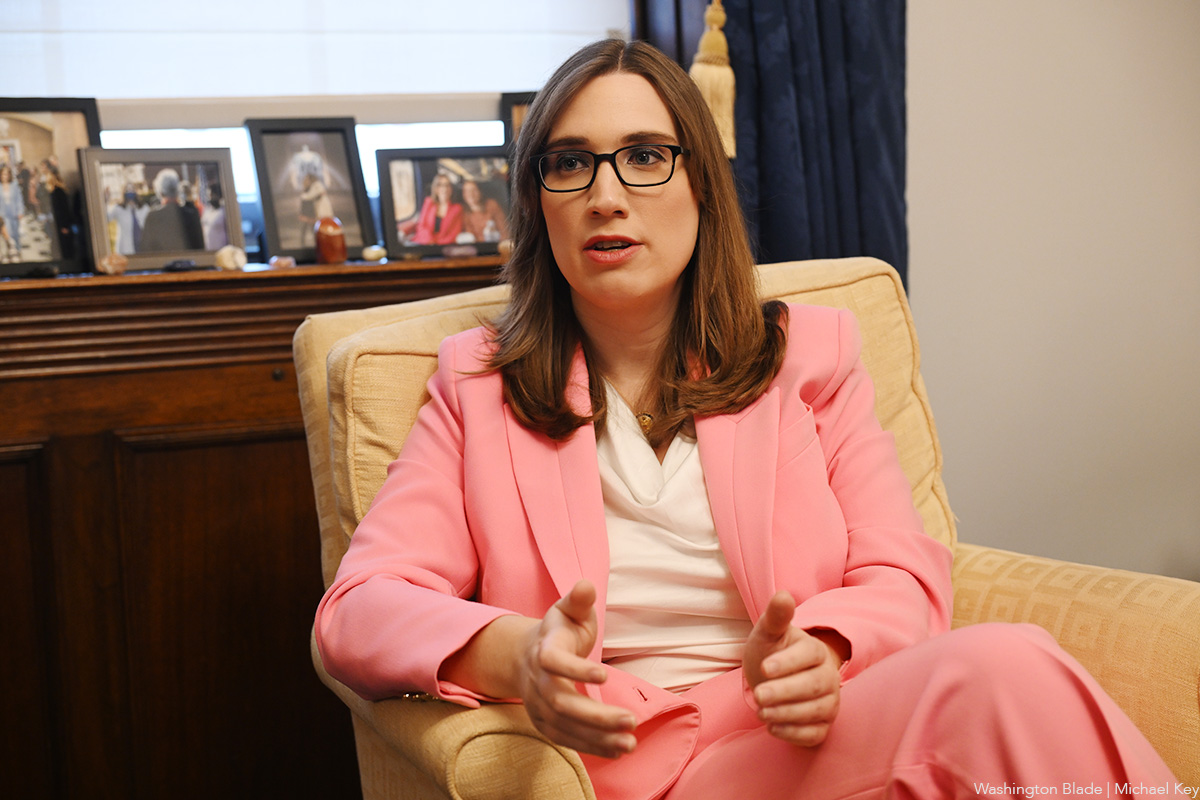
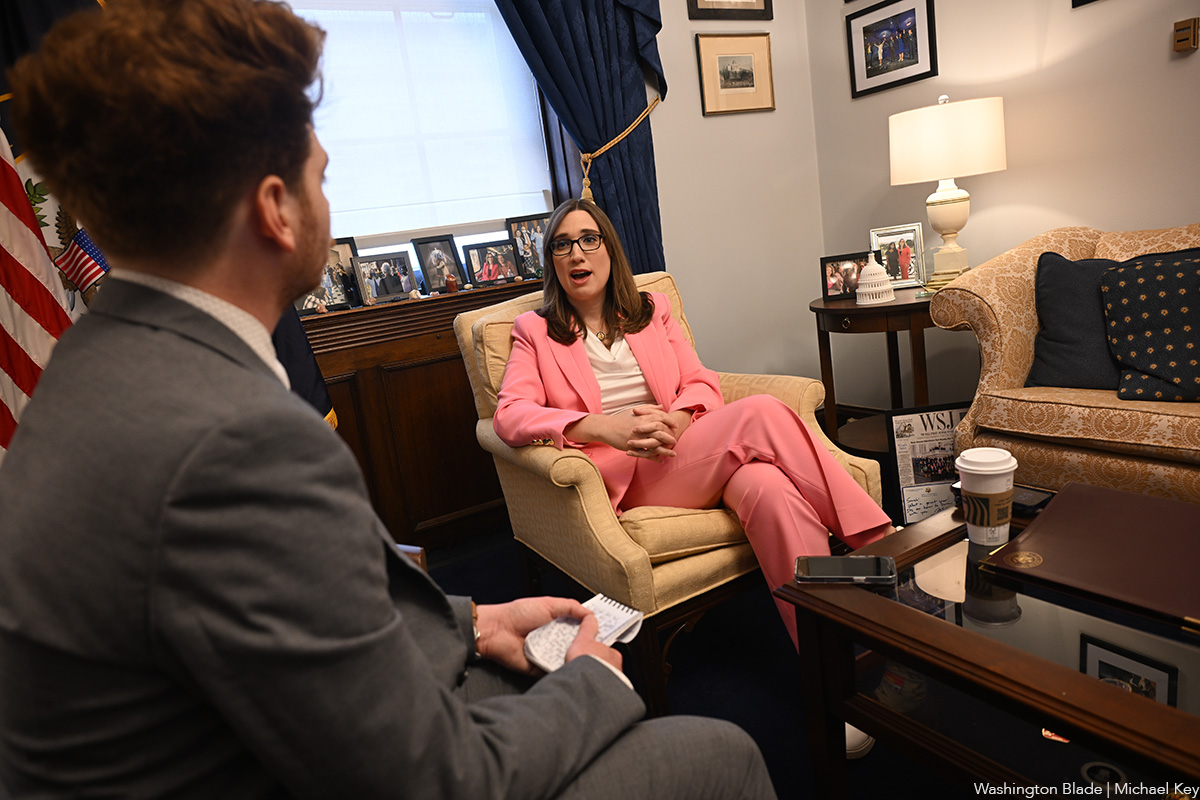
Another historic first to come from Delaware is Sarah McBride. McBride is the first and only transgender member of Congress. The Blade sat down for an exclusive interview with the congresswoman to discuss a wide array of topics — from the Trump administration’s attacks on transgender service members to her current obsession with the reality TV show “The Traitors” — as well as her legislative work, which has already made her one of the busier members of her freshman class.
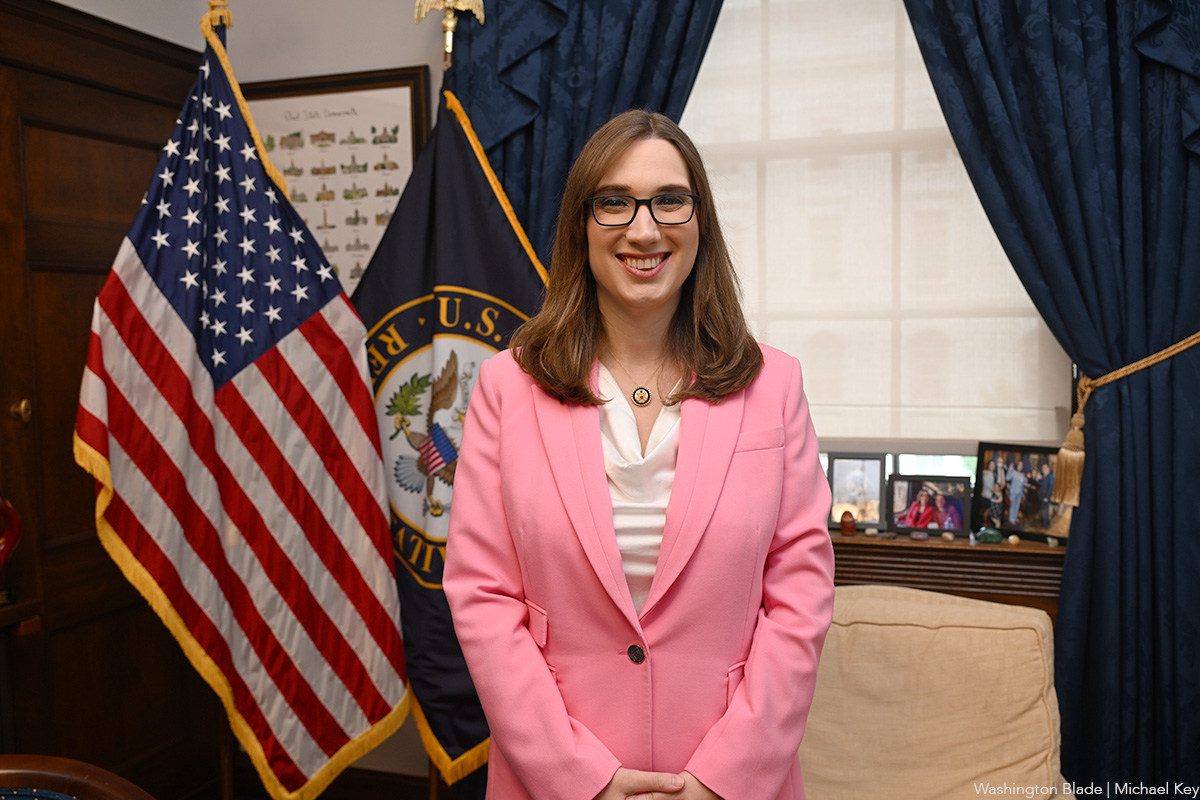
Her office in the Longworth House Office Building reflects the nuances of her political identity: deeply serious policymaking paired with an unmistakable sense of personality. Photographs of McBride with friends, family, and political heroes line the walls. A windowsill is filled with crystals. A “Bridgerton” pillow sits on her office couch — small artifacts that soften the institutional weight of Capitol Hill without diminishing it.
When asked how she was feeling more than a year into her first term, McBride acknowledged the climate she was elected into — marked by what she described as toxicity and division under Trump-era politics — but explained that she remains energized by the work ahead.
“I am more energized and motivated now than I was a year and a half ago,” said McBride from her Longworth office. “I’m also more hopeful than I was when I first started here. It was a couple of weeks before Donald Trump was sworn in – the chaos, the cruelty, and the fear was pretty pronounced.”
That sense of hope, she made clear, is not necessarily shaped by the noise inside Congress—including attacks from colleagues like Rep. Nancy Mace (R-S.C.) and Rep. Keith Self (R-Texas)— but instead by what she sees from the constituents she represents back home.
“I have seen the goodness of my neighbors, the goodness of people across Delaware who remind me, day in and day out, that the division and the toxicity we see online are not actually representative of real life. That social media can impact real life, but it’s not representative of it, and that is, for me, incredibly comforting, and I think, a profound reminder that we can still have conversations across disagreement, we can still persuade people, and we can still grow our ranks.”
That belief — that persuasion is still possible — serves as the through line for how McBride views both her role in Congress and the broader political moment. It also frames her sharp criticism of the Trump-Vance administration, which she argues is rooted less in governance than in destruction.
“Donald Trump is not a conservative, he is not a traditional Republican. Trump wants to destroy. His billionaire donors want to destroy. They thrive in a culture of cynicism. They want to destroy our attention span and mine what little remains for parts. They want to destroy jobs and health care so they can consolidate power for themselves, and in this moment, they want to destroy the international moral order so that the strong can plunder the weak.”
Still, she argues, that approach may be backfiring politically, something she says has only strengthened her sense of optimism.
“We have seen public opinion turn against the cruelty and incompetence of this administration, we’ve seen outrage and rightful opposition. One of the things that I feared early on was that this administration’s momentum would only grow, but instead what we’ve seen is that the cult of personality has begun to break. A growing and very large majority of Americans oppose what they’re seeing from this administration, and that is hope inducing for me. But beyond all of that, I am more motivated because of the change that I’ve been able to witness here in this office and on behalf of my constituents.”
That motivation is not abstract. It is measured in casework, legislative negotiations, and tangible dollars flowing back to Delaware. Alongside broader efforts, McBride co-sponsored the bipartisan “Equal Opportunity for All Investors Act” (H.R. 3339), which passed the House unanimously in 2025 while referred to the Committee on Banking, Housing, and Urban Affairs. The legislation broadened access to investment opportunities by allowing individuals to qualify as accredited investors based on expertise rather than wealth alone.
“Our office has returned roughly $5 million to individual Delawareans and secured roughly $150 million in critical investments for Delaware. I’ve been able to introduce more bipartisan bills here in Congress than any other freshman, and we’ve been able to prevent every single anti-trans bill or major provision from becoming law. That is something that I don’t know that I would have believed was possible, but it’s been a byproduct of the strategy that we have undertaken. In short, what I’ve seen is that we can still win hearts and minds and that you can still deliver for people here in Congress.”
That emphasis on strategy over spectacle defines much of McBride’s approach to politics. It also informs how she navigates her identity as the first openly transgender member of Congress. While her presence carries symbolic weight, she resists the idea that symbolism alone is sufficient.
“No single person can be the voice of any one community, certainly not a community as diverse as the entirety of the LGBT community. I believe that part of my responsibility as a trans person who has the privilege of serving here is to guarantee that while I may be a first, I’m not the last. One of the reasons why anti-trans politics has been so successful is because the right wing has characterized trans people, and one of the greatest things that I can contribute is helping to diversify the public’s understanding of who trans people are. That does far more to change the public’s perception and political dynamics than anything else that I could do.”
Much of that work, she emphasized, happens away from cameras and headlines. It’s an approach that has at times drawn criticism from some LGBTQ advocates who favor more confrontational tactics, but one she frames as essential to long-term change.
“In a social media age, we perceive advocacy to look like one very loud thing, but a lot of my work is also behind the scenes. Speaking out and posting a clip is not the only way to advocate for people; in fact, it’s often the avenue of last resort if you actually want to deliver results. Despite a campaign that spent $200 million in anti-trans ads and an administration obsessed with trans people, not a single anti-trans bill or provision has become law. That’s not by coincidence, it’s by hard work and a strategic approach to defending the LGBTQ community.”
That same discipline carries into how she handles political attacks and public scrutiny.
“When you are a first, people will be out in force to try to bait you into fights to prove that people like you don’t belong. If you respond to provocations, they will turn you into a caricature and say you’re the aggressor. My job is to be a proud Delawarean and a damn good legislator, and the rest will follow from that. When you don’t take the bait, you protect your ability to deliver results.”
That approach has helped her build unlikely alliances across the aisle.
“I made it clear that I was willing to work with anyone if we could find common ground to help my constituents. As a byproduct, a number of my Republican colleagues came up to me and said welcome to Congress and let’s find opportunities to work together. That has resulted in me being able to introduce more bipartisan bills than any other freshman. We’ve been able to secure investments and pass legislation that opens up more capital to entrepreneurs from underrepresented backgrounds.”
Looking ahead to the midterms, McBride is both cautious and pragmatic.
“I feel cautiously optimistic that if the election were held today, that Democrats would win a majority in the House, but the problem is that the election is not held today. Republicans will be out in force with a boatload of money and will continue to try to use people like me as a political wedge issue. We have to meet all voters where they are and keep our eyes focused on the universal needs that our constituents have. It’s going to require us to have a big tent from our left to our right so that we can meet this moment.”
“We should not put anything by the Republicans; they will seek to suppress the vote and undermine the will of the people. That reinforces the need for us to win by such a margin that our win is too big to contest. It’s going to require us to reach voters who didn’t vote for us and compete in places we have written off. If the stakes are as high as we say they are, then we need all of the help that we can get.”
Her focus on long-term party-building is equally central to her vision — one that would be willing to take a leadership position on if given the chance.
“I’m really grateful that our leadership has offered me opportunities to have my voice heard and to represent the caucus. I am eager to find any opportunity to elevate the voices of my constituents and contribute. My background was in communications, and I believe our party can find new ways to communicate with voters. Our caucus is going to be the tip of the spear in helping to rebrand our party and build a governing majority.”
“We need to deliver universal child care, a higher minimum wage, Medicare for all who want it, and millions of new homes. Winning the next election is not the end; we have to continue building toward a durable majority. I’m eager to contribute to that vision in any way that my caucus sees fit. That includes potentially serving in leadership if that’s where I can be most helpful.”
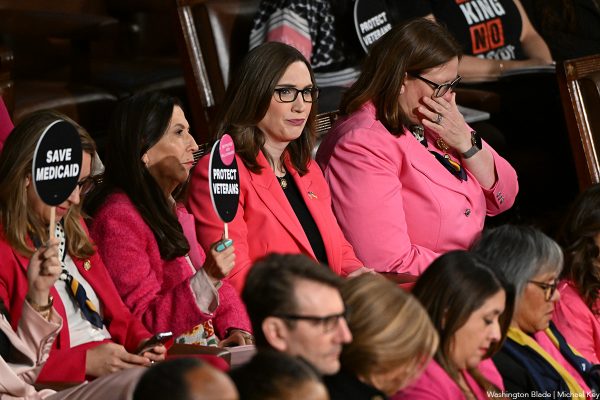
On foreign policy, she is equally direct. The ongoing war with Iran was something she, as a member of the House Foreign Affairs Committee, is not only familiar with but completely opposed to.
“The war is illegal, but it’s also stupid, and it is a catastrophe for the United States. [The Trump administration] has not achieved any of their stated goals, and everything that has been destroyed can be rebuilt. Iran now has more leverage globally, including control of the Strait of Hormuz. This war raised costs, lost lives, and achieved what was already achieved a decade ago without any of that.”
That frustration echoes in what she hears from voters at home.
“Delawareans are pissed, and they’re pissed because this president promised he would end wars and lower costs. He has broken both of those promises, costs are higher and there are more wars. They are facing higher costs when they were already struggling, and they see that his policies have made that crisis worse. People across this country are angry that those promises were broken.”
Concerns about political violence and digital radicalization also weigh heavily on her. Last week’s attack at the White House Correspondents’ Dinner is one instance of politically motivated violence continuing to fester and instill fear in the American political sphere.
“I was horrified when I heard that there were shots fired, and the rising tide of political violence is a cancer for our democracy. Social media is radicalizing people and fostering misinformation and conspiracy theories. When people see a world where everyone is either 100% with them or against them, they begin to believe persuasion is impossible. That is fertile ground for violent extremists and it is unsustainable for democracy.”
“Democracy requires faith in other people’s capacity to change, and when that belief is lost, peaceful politics breaks down. People are not as divided as the algorithms make it seem, and most people are good and decent. We can tap people’s better angels, but we have to be willing to be in conversation with them. You cannot tell me that change is impossible, I have seen it and lived it.”
That belief underpins her support for regulating social media platforms, though she is careful to stress that policy alone is insufficient. The congresswoman constantly faces threats, repulsive comments, and detestable words from people on her social media channels for her identity alone.
“There’s no question that we need regulation of social media platforms, social media is the 21st century big tobacco. Whether it’s liability, age limits, or transparency of algorithms, there are a host of solutions we need to pursue. But policy solutions alone will not solve this problem. We have to get offline and have conversations in person.”
“When we have conversations in person, we realize we have much more in common than we think. We are currently having political conversations in the most toxic place possible, online. That has to change if we want to sustain democracy. You will come away more hopeful when you engage with people face to face.”

Her LGBTQ priorities remain anchored in policy and humanism— something she references repeatedly.
“I helped draft the Equality Act and I would love to see it become law. In the nearer term, we should prioritize reversing the ban on transgender troops. These are decorated service members who have been fired for no other reason than their gender identity. They deserve to be treated with dignity and fairness and judged on their merits.”
She continued at length about the transgender service members removed under Executive Order 14183, emphasizing both their service and their erasure.
“These are individuals who are not just qualified, but more than qualified, who have been decorated service members, who have received promotions with unanimous and unqualified endorsement by their superior officers who have been fired from service to this country for no other reason than their gender identity. And I believe in this moment… there is no more effective representation of our community than the transgender service members who have put their lives on the line to serve this country and who have been treated with nothing but disrespect from this administration. They deserve to be treated with dignity and fairness and judged on their merits.”
Even in partisan fights, she returns to her guiding principle of discipline and restraint.
“Sometimes in politics you have to throw a punch with grace. Republicans initiated a mid-decade redistricting effort to gerrymander and pad their majority. They expected Democrats to fold, but those days are over. We fought back and we’re not going to let them steal elections in advance.”
When the conversation turns to how she maintains balance amid the chaos of national politics, McBride returns to unexpected sources of grounding — television, pop culture, and humor.
“I’ve watched every season of ‘The Traitors,’” she said.
When asked if she would ever take a trip to the Scottish Highlands to visit Alan Cumming’s castle, she said it would have to be after her work is done in Congress.
“If I was ever on ‘The Traitors,’ I would never be able to be a traitor. I would get too nervous and overwhelmed. I would have to be a faithful. But I think if there is a future where I am on that show, it will be after I’m in elected office.”
And through it all, she draws parallels between reality television and political life itself.
“If you want to understand how many in Congress work, the best tutorial is ‘The Real Housewives’ … There are people whose sole purpose is to get attention… If you throw wine back, they will just keep coming back for more … I’m not going to allow someone to get attention at my expense … I think all you need to understand is [Capitol Hill] is like an episode of ‘Real Housewives.’”
Still, for McBride, even amid the spectacle of Washington, the focus ultimately returns home.
“I am excited for beach season and I love Rehoboth and Baltimore Avenue,” she says. “It is the professional privilege of my lifetime to represent Delaware. I represent a district that is urban, suburban, and rural, and I get to see the full diversity of this country every day. Delaware shows that a different kind of politics is possible.”
District of Columbia
U.S. Attorney’s Office fails to reinstate hate crime charge in anti-gay assault

The Office of the U.S. Attorney for D.C., which prosecutes criminal cases in the District, has decided not to reinstate a hate crime designation filed by D.C. police against a man arrested in February for allegedly assaulting a gay man while using “homophobic slurs.”
After prosecutors with the U.S. Attorney’s Office initially dropped the hate crime designation filed by police shortly after the alleged attacker was arrested on Feb. 7, a spokesperson for the office told the Washington Blade the case was still under investigation, and additional charges could be filed.
“We continue to investigate this matter and make no mistake: should the evidence call for further charges, we will not hesitate to charge them,” a statement released by the office in February said.
But D.C. Superior Court records show the case against defendant Dean Edmundson, 26, of Germantown, Md., who is now charged with Simple Assault without a hate crime designation, is scheduled to go to trial on Aug. 18.
The U.S. Attorney’s Office this week did not immediately respond to a message from the Blade asking why it chose not to reinstate the hate crime designation.
An affidavit in support of the arrest filed in court by D.C. police appears to support the charge of a hate crime designation. It says the incident occurred around 7:45 p.m. on Feb. 7 at the intersection of 14th and Q Streets, N.W., which is near two D.C. gay bars.
“The victim stated that they refused to High-Five Defendant Edmundson, which, upon that happening, Defendant Edmundson started walking behind both the victim and witness, calling the victim bald, ugly, and gay,” the arrest affidavit states.
“The victim stated that upon being called that, Defendant Edmundson pushed the victim with both hands, shoving them, causing the victim to feel the force of the push,” the affidavit says, adding, “The victim stated that they felt offended and that they were also gay.”
Under D.C.’s Bias Related Crimes Act of 1989, penalties for crimes motivated by prejudice and hate against individuals based on race, religion, sexual orientation, gender identity disability, and homelessness can be enhanced by a judge upon conviction by one and a half times greater than the penalty of the underlying crime.

European Parliament backs EU-wide conversion therapy ban

The felon’s gang can’t get their story straight

Advocacy groups issue US travel advisory ahead of World Cup

Rehoboth’s Blue Moon sold; new owners to preserve LGBTQ legacy

Filipino HIV/AIDS group questions US, Philippines health agreement

BREAKING NEWS: Shots fired at the White House Correspondents’ Dinner

An acting legend meets his match in ‘The Christophers’

World premiere of ‘Everything, Devoured’ oozes queer energy
From red carpet to chaos: A first-person narrative of the WHCD shooting

House Republicans push nationwide ‘Don’t Say Gay’ bill
-

 National5 days ago
BREAKING NEWS: Shots fired at the White House Correspondents’ Dinner
-
Movies5 days ago
An acting legend meets his match in ‘The Christophers’
-
Theater4 days ago
World premiere of ‘Everything, Devoured’ oozes queer energy
-
The White House3 days ago
From red carpet to chaos: A first-person narrative of the WHCD shooting