National
Protesters gather to support Manning
Gay service member accused in Wikileaks scandal; Quantico demonstration held
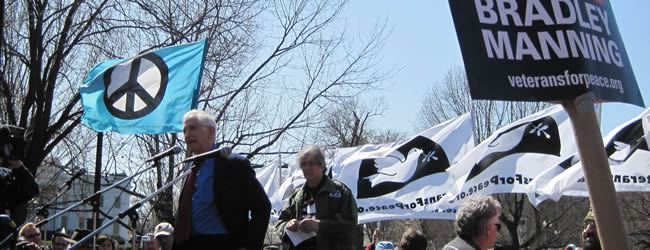
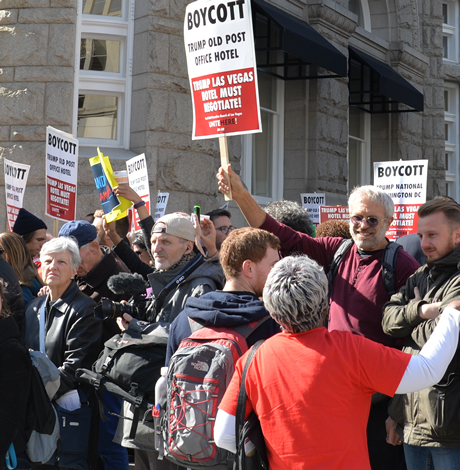
Several hundred protesters gathered Sunday at Quantico, where PFC Bradley Manning is being held in connection with the Wikileaks scandal. This photo was taken at an earlier demonstration demanding Manning’s release at the White House. (Photo by Diane Perlman)
There were many memorable images from last Sunday’s protest aimed at calling attention to the plight of a gay service member accused of treason by the federal government, but two images stood out above all others.
The line of riot police, hooded with glass visors and carrying truncheons and heavy shields, standing silent at first, shoulder to shoulder, buffed out with padded body armor, flanked by other riot police with lunging dogs, and other hulking men carrying automatic weapons, and even an armored Humvee, its engine running, and the full line now several hundred strong.
The other image appeared peaceful. A line of demonstrators walking forward, toward the police, linking their arms also, but singing while walking down Virginia Route 1, not carrying weapons but bouquets, to deliver flowers to the foot of the Iwo Jima monument there, the replica statue at the gates of the Quantico Marine Corps Base.
MORE IN THE BLADE: SUPPORTERS WORTY ABOUT TORTURE IN BRADLEY MANNING DETENTION
That’s where PFC Bradley Manning has been held in solitary confinement for eight months in pre-trial detention, waiting for the charges against him to be presented, including one carrying the death penalty. Manning is the accused whistleblower, the alleged source of the explosive Wikileaks revelations from secret documents released by Julian Assange, that detail case after case of alleged U.S. government misconduct.
Manning, a gay man, is accused of “aiding the enemy,” and has been “tortured” while in custody, according to his attorney, in an alleged attempt to wring a confession from him. A court martial could lead to life in prison or possibly execution.
About 500 protesters chanting “Free Bradley Manning” had met several hours earlier on a muddy field a few hundred yards away from the monument and the gate, now both walled off by police barriers to prevent the crowd from entering the base.
It began as demonstrations usually do, with a raised platform, and microphones and speakers, amid banners and placards. Speakers included Marine Corps veteran and famed Vietnam War-era whistleblower Daniel Ellsberg, who released to Richard Nixon’s great embarrassment the Pentagon Papers; retired Marine Corps Captain David McMichael, now 83 but still ramrod straight, whose last post was as a company commander at Quantico; Army Colonel, retired after 29 years in uniform, and former State Department official, Ann Wright; and Manning’s close personal friend, David House, an expert on information economics, who met Manning in January 2010 at an open-house meeting of a group of computer technology enthusiasts at Boston University.
Manning’s arrest as a suspect accused of handing over 250,000 U.S. diplomatic cables to Wikileaks, came in May 2010 when he had returned to his duty station as an Army intelligence analyst stationed with a combat team near Baghdad. Those charges came in July last year, updated this month with further charges including the capital one of “aiding the enemy.” The first of the Wikileaks cables were published in February 2010, with newspapers including the New York Times publishing the rest from November onward.
Manning has never said he was the source for the documents, written by 250 embassies and consulates in 180 countries, which had been downloaded from SIPRNet, the classified State Department computer deposit for diplomatic cables. But he is alleged to have contacted a former computer hacker, Adrian Lamo, and sent him several encrypted e-mails and then chatted with Lamo online. Lamo later told the FBI that Manning had basically said that he was the Wikileaks source.
Those documents included military war logs and documents from both the Iraq and Afghanistan wars as well as the so-called “Collateral Murder” video, shot from a U.S. military Apache helicopter gunship in July 2007 of an airstrike and published by Wikileaks in April 2010, showing the deaths of civilians including two journalists for the Reuters news agency.
Below are excerpts from some of Sunday’s speeches.
ELLSBERG:
“I feel shame as a Marine myself that members of the Marine Corps are torturing Bradley Manning by keeping him in solitary confinement 23 hours a day, and sometimes forcing him to sleep naked and stand in the nude for inspection …
“President Obama could stop that with one phone call,” continued the 72-year-old Ellsberg, as cries from the crowd of “yes, he can” echoed among other shouts of “shame.”
While saying that the burden of proof is on the authorities to prove that Manning passed the classified documents to Wikileaks, something Manning hasn’t admitted, Ellsberg declared of Manning that “if he did do what he’s charged with, then Bradley Manning is an American hero,” noting of himself, that “while this may sound self-serving or boastful, but I was the Bradley Manning of my day … I was called a traitor, as he is, and Bradley Manning is no more of a traitor than I was, and he’s not, and I’m not!”
McMICHAEL:
“Thank you all for being here, this has become a notorious event and cause celebre around the world.” He then expressed his personal “outrage at the way the prosecution of Bradley Manning is being conducted, and the harsh conditions in which he is being held, so severe as to violate both U.S. and international law, and you could call it torture.”
McMicheal read further from his letter to the president about Manning that “the lesser evil is not a good enough reason to support you again,” and that in 2012 he would, though “a loyal Democrat,” oppose Obama for re-election.
WRIGHT:
“I’m horrified at how a member of the U.S. military is being treated, right here at Quantico, and we want this stuff to stop! Let’s get Bradley Manning fair treatment while he’s in pre-trial detention, so he can get an honest trial, and he should be treated with respect” until his trial, instead of with “cruel and unusual punishment.”
HOUSE:
“It’s stuff like this that gives Bradley Manning hope, and when I tell him there are people like you in the ‘transparency’ movement, his eyes light up. If he’s guilty of the things he’s charged with, if he’s the man who released the Wikileaks documents, I consider him a hero of the highest order … and he is not an exception, as a whistleblower, but he is a herald of things to come. … I hope Barack Obama is listening to this!”
Later, House told the Blade that Manning “considers himself to be a very ethical person and an American patriot,” and that “he’s a very humble, intelligent and kind individual.”
After the speakers finished and the rally ended, an event orchestrated beforehand with police authorities, including those from the Virginia State Police and the Prince William County Police, allowed six activists, including Ellsberg, McMichael and Wright, to pass through police barriers, cross Route 1, and approach the Iwo Jima statue. However, they were kept back from entering Marine Corps Base property and were forced to toss their bouquets of red and white carnations through an opening onto the base of the statue.
Then they sat down, in the middle of the highway, and then, at the mournful sound of a bugler, the assembled crowd burst through the barriers and thronged onto the highway joining the six, and many of them also sat down. And for two hours the chants and songs and prayers were heard, until finally, after the protesters refused to vacate the intersection, the police moved in and arrested one by one about 30 of those still seated, including Ellsberg and Wright, on misdemeanor charges of unlawful assembly, and impeding access to the road.
Marine Col. Thomas V. Johnson, a spokesperson for the base, said access to the Iwo Jima memorial was denied because protest activity is not permitted on base grounds. But he also said that, “we’re pleased that people were able to express their First Amendment rights in a manner that did not infringe upon base property.”
National
Man charged in Mall of America shooting plot inspired by Pulse massacre: report
Suspect exchanged hundreds of messages, pledged loyalty to ISIS
The U.S. Department of Justice charged Sheikhdoon Abdullahi Mohamud, 18, of Richfield, Minn., on Oct. 7 with one count of knowingly receiving a firearm and ammunition in order to commit a federal crime of terrorism. Mohamud allegedly planned to carry out a mass-casualty attack in support of ISIS, inspired in part by the Pulse nightclub massacre that took place on June 12, 2016 when then-29-year-old Omar Mateen murdered 49 people and wounded 58 – one of the deadliest mass shootings in U.S. history, and the deadliest targeting the LGBTQ+ community.
According to a DOJ statement release, Mohamud was arrested on Oct. 6 by the FBI, which had arranged to sell him an AK-47 assault rifle, magazines, and ammunition through an undercover FBI employee. Mohamud was arrested shortly after paying $600 in cash and taking possession of those items; he reaffirmed his intention to shoot people at the Mall of America during the transaction.
“Mohamud allegedly sought to carry out a mass-casualty shooting at the Mall of America, expressing a desire to emulate some of the most horrific ISIS-inspired attacks in the United States, including the atrocities at Pulse Nightclub and 2025 New Year’s Day attack in New Orleans,” said Assistant Attorney General for National Security John A. Eisenberg in the statement by the DOJ. “The National Security Division will continue to work closely with the FBI and Joint Terrorism Task Force to track down and prosecute ISIS-inspired terrorists in the United States.”
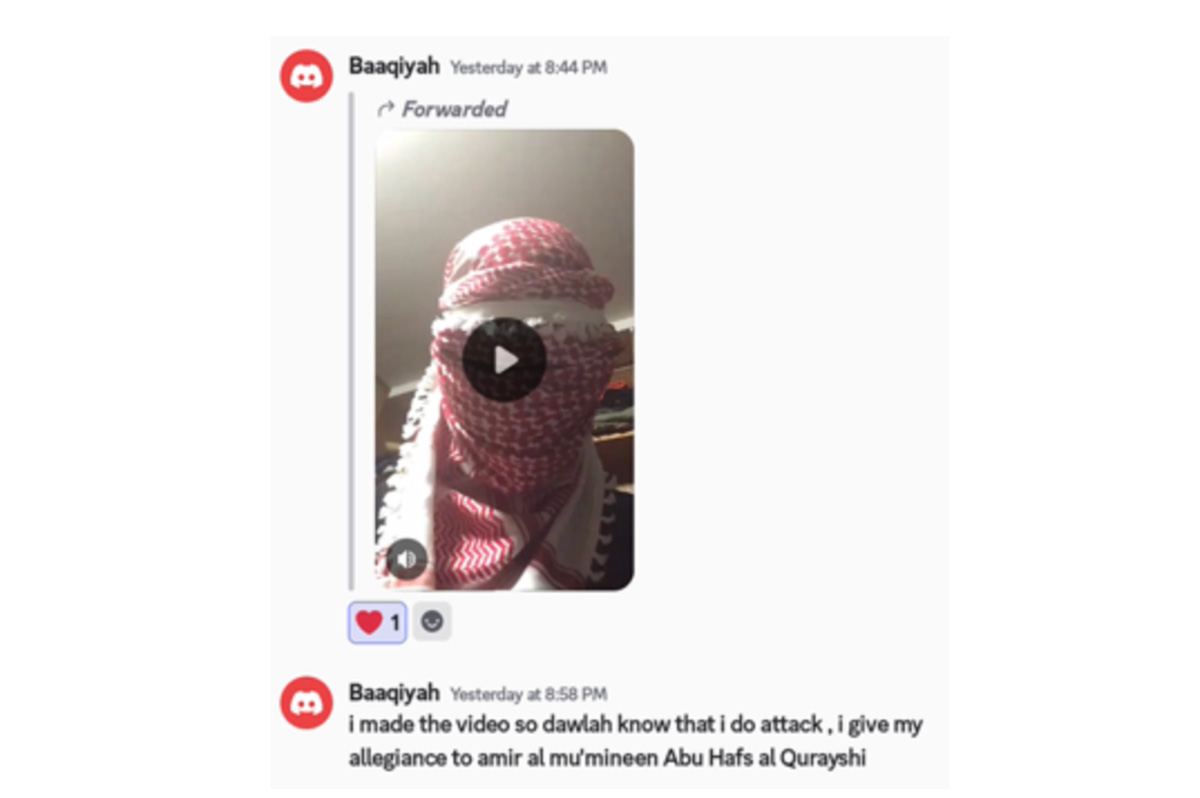
According to the complaint, beginning on or about December 2024, Mohamud had exchanged hundreds of messages through multiple social media and messaging apps with a confidential source, and expressed a desire to travel to Somalia to join a designated foreign terrorist organization to fight on their behalf.
The defendant stated many times that if he was unable to travel overseas because of a lack of funds, he planned to carry out a mass-casualty event in Minnesota in support of ISIS.
According to the DOJ, “In July 2026, Mohamud sent messages discussing his intent to carry out a mass-casualty shooting attack at the Mall of America because he claimed it was owned by Jews. He wrote that [he] wanted to kill 30 to 60 people so no one would go there.”
“During the course of his communications, Mohamud stated that he wanted to commit an attack similar to those of the Pulse Nightclub mass-shooting in Orlando, the Bondi Beach mass-shooting in Australia, and the New Year’s Day vehicle-ramming attack in New Orleans.”
This case is being prosecuted by Trial Attorney Ryan White of the National Security Division’s Counterterrorism Section and Assistant U.S. Attorney Benjamin Bejar for the District of Minnesota.
California
Calif. GOP gubernatorial candidate ad ‘disgusting attempt to exploit lesbian intimacy’
Activists, anti-LGBTQ religious leaders criticized Steve Hilton spot
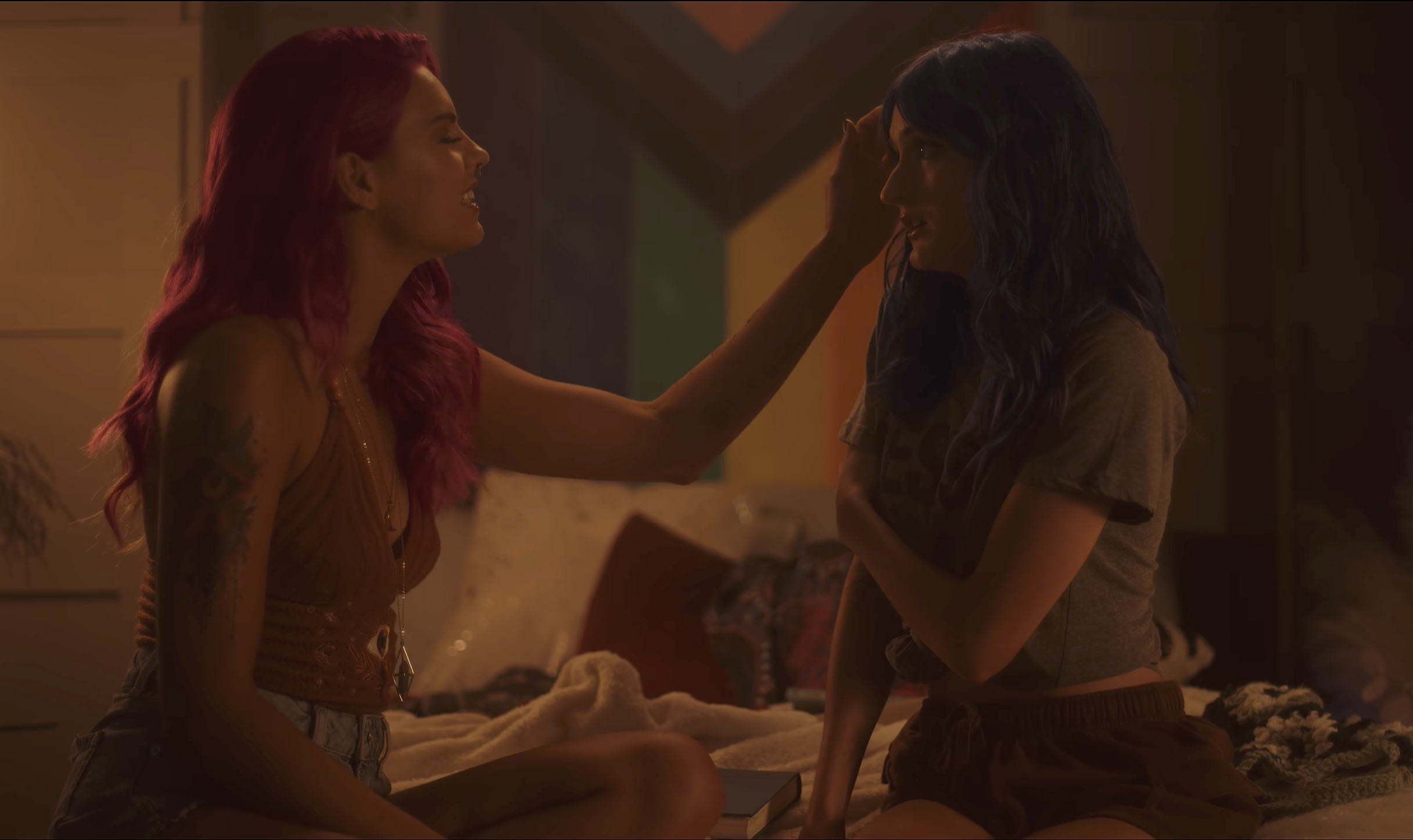
Two women sit on a bed, a Pride flag hanging behind them. One is nervous; the other tells her to be calm and that she’ll do “all the work.” The music swells. The two hold hands and — fill out a ballot voting for Steve Hilton?
This is the new advertisement from the Hilton gubernatorial campaign that is drawing rebuke from both sides of the aisle, but for very different reasons.
Jorge Reyes Salinas, the communications director at Equality California, said the ad was an insult to the queer community.
“This ad is a disgusting attempt to exploit lesbian intimacy for political attention,” he said. The advertisement plays on media tropes that Salinas says “reduce lesbian and bisexual women … to sexual entertainment,” rather than showing them as well-rounded characters. “Any group of the LGBTQ+ community deserves the same dignity and respect as everyone else,” he said.
The ad is truly hyper-sexualized. It ends with one woman telling the other, “Now lick it.” The two pause and stare before she reveals an envelope to send the ballot, and large text pops up saying, “Just try it!”
Salinas characterized the ad as a desperate attempt to get attention from a candidate who is trailing far behind in the polls in heavily Democratic California. The Democratic candidate Xavier Becerra, who is endorsed by Equality California, holds a 25-point lead over Hilton according to recent polling by the UC Berkeley Institute of Governmental Studies.
Conservatives have also criticized the ad.
Influential evangelical Pastor Jack Hibbs thought the ad was distasteful and said, “lesbianism among college girls and some high school girls that right now is an actual pandemic of social ill.” Republican attorney general candidate Michael Gates said it undermines “the sanctity of the relationship between parents and their children.” This criticism is rather confusing because although the ad features two relatively young women, they both appear to be adults, not minors.
“The comments from Pastor Jack Hibbs should be criticized because there is nothing wrong with two women being attracted to each other,” Salinas said. “We’re calling out the ad’s stereotypes, while also rejecting the homophobia in the response to it … by other Republicans.”
The backlash from Hilton’s own party and supporters shows that an advertisement full of queer innuendo was ill-considered, considering the national GOP’s attacks on LGBTQ people in recent years. Hilton himself has been campaigning against transgender girls and women competing in school sports and using locker rooms that correspond with their gender identity. This context might be why Hilton’s political base responded to the ad just as poorly as the liberal voters he was attempting to court.
Hilton says the ad is part of a new series rolling out before Election Day, showing stereotypical California liberal archetypes voting for Hilton. He claims these ads are authentically filmed with real actors, as opposed to being A.I. generated, like many of his previous ads. One other advertisement has been released so far by the campaign showing a man at a spiritual retreat also being swayed to vote for Hilton, although it is notably absent of sexual innuendo.
Caleb Kaufman is a California Local News Fellow placed with the Los Angeles Blade. The California Local News Fellowship is a state-funded initiative to support and strengthen local news reporting. Learn more about it at fellowships.journalism.berkeley.edu/cafellows.
2026 Midterm Elections
Trump uses anti-trans slur against Democratic Senate candidate
President mocked Annie Andrews

President Donald Trump used an anti-trans slur against Democratic South Carolina Senate candidate Annie Andrews on Monday as he sought to rally support for Republicans in the state’s Senate race.
In a post on Truth Social, Trump attacked Andrews three times, referring to her as “trannie” while promoting U.S. Sen. Darline Graham (R-S.C.)’s campaign.
Andrews is running against Graham for a Senate seat in the solidly Republican state.
Earlier this year, Graham was specially appointed to the seat following the death of her brother, Lindsey Graham, who represented South Carolina in the Senate from 2003 to 2026.
Andrews, the Democratic nominee from the state, is a pediatrician that lives in Charleston with her three children. She told NBC News that she will “work with anyone to put South Carolina first.”
“As a mom and a pediatrician, I’m in this race to fight for my patients, my three kids, and South Carolina,” Andrews said, adding that “lowering costs and making life better for families across our state is going to take all of us working together.”
Andrews used the attention from the president’s attack to emphasize what she described as a focus on policy issues rather than the culture wars that have dominated much of the political debate.
“If you care more about your bills than the politics in Washington, this campaign is for you,” she added.
Trump’s remarks have drawn criticism from leaders on both sides of the aisle.
Senate Minority Leader Chuck Schumer (D-N.Y.) condemned Trump’s words Monday night on social media, calling his attacks on Andrews “despicable.”
“Annie Andrews is a mom and pediatrician who’s always put her community first — and she’s exactly who South Carolina needs representing them in the Senate,” Schumer said on X.
Former South Carolina Gov. David Beasley, a Republican, also criticized the president’s attack on Andrews, urging voters to “reject politics based on division and hate.”
“This is abhorrent. Elections don’t have to be about cruelty and lies. South Carolina deserves better,” Beasley wrote Monday night on X.
South Carolina has not elected a Democratic senator in nearly three decades.
Andrews’s campaign website does not mention her positions on LGBTQ issues.
The Washington Blade reached out to Andrews’s campaign for comment on Trump’s attack and her positions on transgender rights but did not hear back by time of publication.

Essential queer horror classics for Halloween

Solidarity beyond the parade: the actual cost of Pride

Physician: addiction doesn’t always look the way you think it does

Calendar: October 9-15

ICC unseals arrest warrants for Taliban officials accused of persecuting LGBTQ people, women

Alianza para la Inclusión fortalece la defensa de derechos LGBTQ en Centroamérica

The facts about Victory Fund’s investigation and the path forward

In Ga., 2 trans candidates believe voters are ready for them

Bessent says Trump chose him for his qualifications, not his sexuality

‘Some Like It Hot’ a wild ride at renovated Bernard Family Theatre
-

 Central America4 days ago
Alianza para la Inclusión fortalece la defensa de derechos LGBTQ en Centroamérica
-
Opinions4 days ago
The facts about Victory Fund’s investigation and the path forward
-
Georgia4 days ago
In Ga., 2 trans candidates believe voters are ready for them
-
Federal Government4 days ago
Bessent says Trump chose him for his qualifications, not his sexuality