Local
Kameny’s death is local LGBT story of the year
Activists, public officials mourn loss of pioneering figure

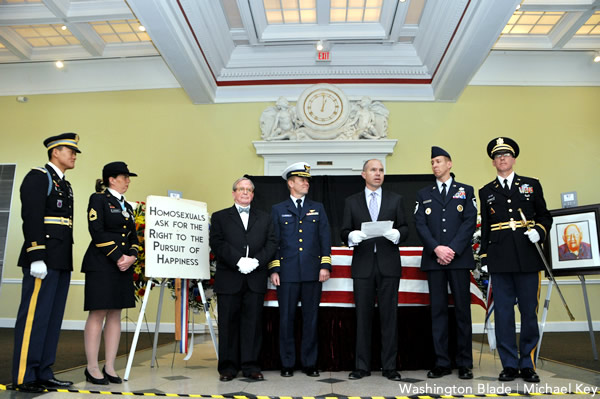
Activist Frank Kameny died on Oct. 11, which is National Coming Out Day. (Washington Blade file photo by Michael Key)
Local and national public officials joined D.C.’s LGBT community in remembering the life and accomplishments of veteran gay rights leader Frank Kameny at memorial events this fall following Kameny’s death in Washington on Oct. 11.
Kameny, 86, is credited with being one of the leading strategists for the early gay rights movement beginning at least a decade before the 1969 Stonewall Riots in New York’s Greenwich Village, which historians consider the starting point for the modern LGBT rights movement.
LGBT movement leaders who knew Kameny say he laid the groundwork for the movement to advance following the Stonewall Riots and going forward, playing a pivotal role in advancing the cause of LGBT equality over a period of 50 years.
“Frank Kameny is one of the most significant figures in the history of the American gay rights movement,” said D.C. Mayor Vincent Gray at a Nov. 3 memorial viewing for Kameny at the city’s Carnegie Library building.
Gray was joined at the memorial viewing by several members of the D.C. City Council, including gay Council members David Catania (I-At-Large) and Jim Graham (D-Ward 1); D.C. Police Chief Cathy Lanier and D.C. Congressional Delegate Eleanor Holmes Norton (D).
A gay Air Force sergeant and four gay military veterans in full dress uniform, including gay former Army Lt. Dan Choi, joined Catania and Graham as pallbearers, carrying an American flag-draped coffin bearing Kameny’s remains into the building’s ceremonial atrium.
Organizers of the ceremony, led by local activists and Kameny friends Bob Witeck and Charles Frances, said the flag-draped coffin honored Kameny, among other things, for his service in the Army in World War II, where he served in combat in Europe.

Year In Review: 2011
Among other accomplishments, activists said Kameny became the first known gay person to publicly challenge an act of anti-gay discrimination when he sued the federal government for firing him from his job in 1957 as a civilian astronomer with the U.S. Army Map Service because of his sexual orientation.
After losing his case in the lower courts, Kameny set yet another precedent by bringing the first known gay-related case before the U.S. Supreme Court. The high court upheld a lower court ruling against Kameny and refused to take his case on the merits.
But in a 61-page legal brief petitioning the court to take the case, which Kameny wrote, he pulled together what some gay historians consider a gay rights manifesto that became the underpinning of the LGBT rights movement for years to come.
In a second memorial for Kameny held Nov. 15 at the Cannon House Office Building on Capitol Hill, several public officials, including members of Congress and an Obama administration official, cited Kameny’s role as a national civil rights figure.
“His life cleared the path that I and countless others followed into public service,” said John Berry, director of the U.S. Office of Personnel Management, who in 2009 became the Obama administration’s highest-level openly gay appointee.
“His unrelenting and unceasing fight for gay rights enabled other Americans to step out of the closet and into the full light of equality,” Berry told the gathering. “But most importantly, his long battle and eventual triumphs show the miracles that one person wrought upon the world.”
Kameny’s friends and colleagues said they were saddened over his passing but uplifted in knowing that Kameny lived to see many of the LGBT rights initiatives he fought for come to fruition, including an apology by the government, more than 50 years later, for its decision to fire him.
Kameny also lived to see the Library of Congress acquire more than 50,000 documents from his gay rights-related papers collection; the Smithsonian Institution’s American History Museum acquire and display picket signs he and his fellow activists carried in gay rights protests in the 1960s; the D.C. government’s naming a section of 17th Street, N.W., near Dupont Circle as Frank Kameny Way; and a decision by city officials to designate Kameny’s house as an historic landmark.
Arrangements are being made for a burial service for Kameny’s ashes at D.C.’s historic Congressional Cemetery in the spring.




Maryland
Md. Commission on LGBTQIA+ Affairs released updated student recommendations
LGBTQ students report higher rates of bullying, suicide
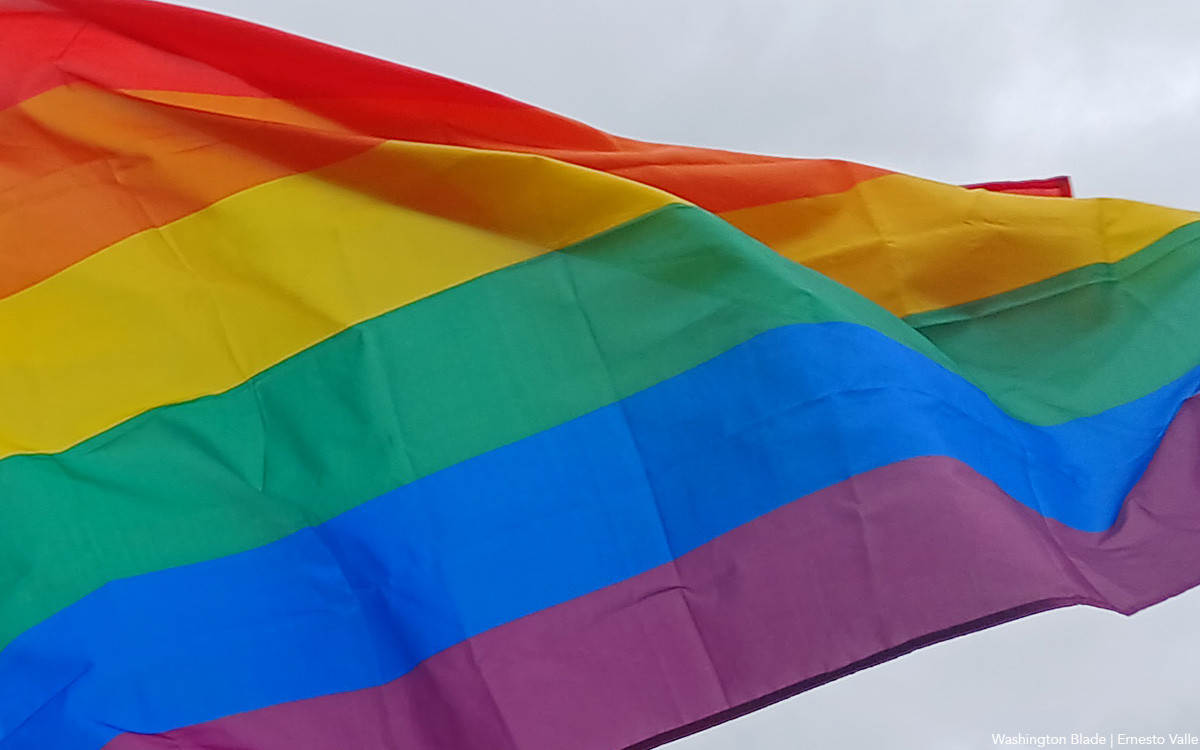
The Maryland Commission on LGBTQIA+ Affairs has released updated recommendations on how the state’s schools can support LGBTQ students.
The updated 16-page document outlines eight “actionable recommendations” for Maryland schools, supplemented with data and links to additional resources. The recommendations are:
- Developing and passing a uniform statewide and comprehensive policy aimed at protecting “transgender, nonbinary, and gender expansive students” against discrimination. The recommendation lists minimum requirements for the policy to address: name, pronoun usage, and restroom access.
- Requiring all educators to receive training about the specific needs of LGBTQ students, by trained facilitators. The training’s “core competencies” include instruction on terminology, data, and support for students.
- Implementing LGBTQ-inclusive curricula and preventing book bans. The report highlights a “comprehensive sexual education curriculum” as specifically important in the overall education curriculum. It also states the curriculum will “provide all students with life-saving information about how to protect themselves and others in sexual and romantic situations.”
- Establishing Gender Sexuality Alliances “at all schools and in all grade levels.” This recommendation includes measures on how to adequately establish effective GSAs, such as campaign advertising, and official state resources that outline how to establish and maintain a GSA.
- Providing resources to students’ family members and supporters. This recommendation proposes partnering with local education agencies to provide “culturally responsive, LGBTQIA+ affirming family engagement initiatives.”
- Collecting statewide data on LGBTQ youth. The data on Maryland’s LGBTQ youth population is sparse and non-exhaustive, and this recommendation seeks to collect information to inform policy and programming across the state for LGBTQ youth.
- Hiring a full-time team at the Maryland Department of Education that focuses on LGBTQ student achievement. These employees would have specific duties that include “advising on local and state, and federal policy” as well as developing the LGBTQ curriculum, and organizing the data and family resources.
- Promoting and ensuring awareness of the 2024 guidelines to support LGBTQ students.
The commission has 21 members, with elections every year, and open volunteer positions. It was created in 2021 and amended in 2023 to add more members.
The Governor’s Office of Communication says the commission’s goal is “to serve LGBTQIA+ Marylanders by galvanizing community voices, researching and addressing challenges, and advocating for policies to advance equity and inclusion.”
The commission is tasked with coming up with yearly recommendations. This year’s aim “to ensure that every child can learn in a safe, inclusive, and supportive environment.”
The Human Rights Campaign’s most recent report on LGBTQ youth revealed that 46.1 percent of LGBTQ youth felt unsafe in some school settings. Those numbers are higher for transgender students, with 54.9 percent of them saying they feel unsafe in school.
Maryland’s High School Youth Risk Behavior Survey reveals a disparity in mental health issues and concerns among students who identify as LGBTQ, compared to those who are heterosexual. LGBTQ students report higher rates of bullying, feelings of hopelessness, and suicidal thoughts. Nearly 36 percent of LGBTQ students report they have a suicide plan, and 26.7 percent of respondents say they have attempted to die by suicide.
The commission’s recommendations seek to combat the mental health crisis among the state’s LGBTQ students. They are also a call for local and state governments to work towards implementing them.
Virginia
Va. lawmakers consider partial restoration of Ryan White funds
State Department of Health in 2025 cut $20 million from Part B program
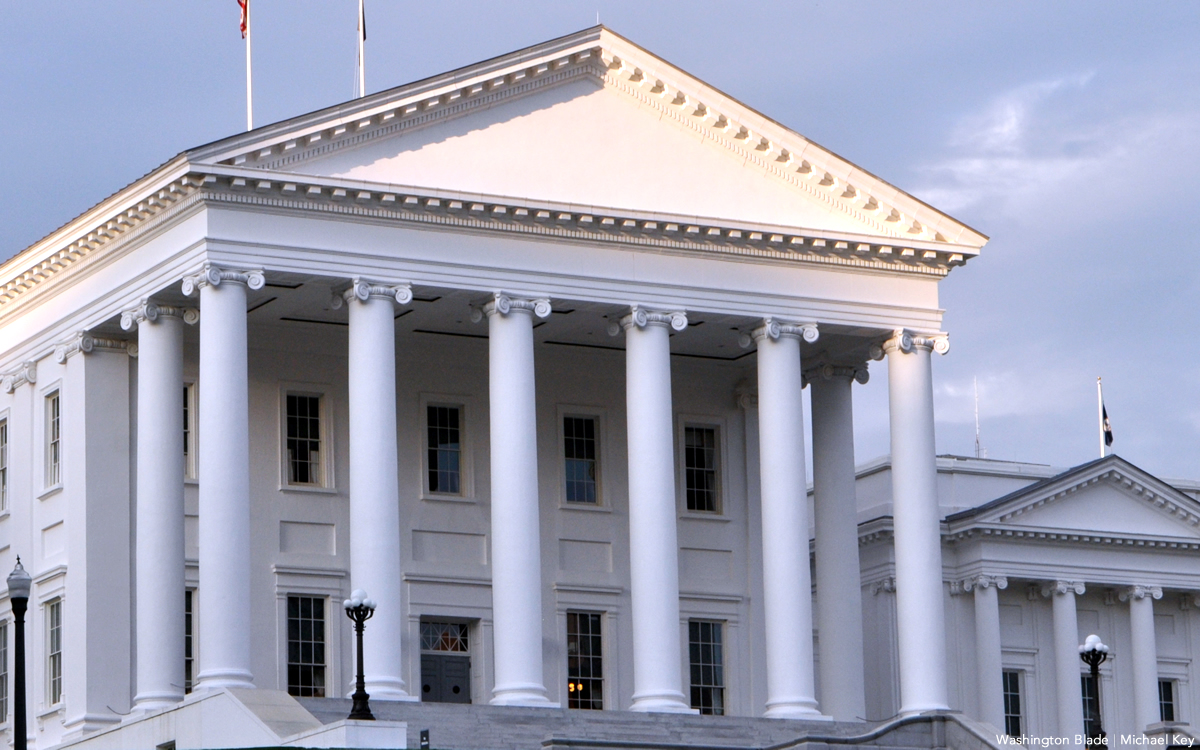
The Virginia General Assembly is considering the partial restoration of HIV funding that the state’s Department of Health cut last year.
The Department of Health in 2025 cut $20 million — or 67 percent of total funding — from the Ryan White Part B program.
The funding cuts started with the Trump-Vance administration passing budget cuts to federal HIV screening and protection programs. Rebate issues between the Virginia Department of Health and the company that provides HIV medications began.
Advocates say the funding cuts have disproportionately impacted lower-income people.
The Ryan White HIV/AIDS Program, a federal program started in 1990, provides medical services, public education, and essential services. Part B offers 21 services, seven of which remained funded after the budget cuts.
Equality Virginia notes “in 2025, a 67 percent reduction severely destabilized HIV services across the commonwealth.”
Virginia lawmakers have approved two bills — House Bill 30 and Senate Bill 30 — that would partially restore the funding. The Ryan White cuts remain a concern among community members.
Both chambers of the General Assembly must review their proposed changes before lawmakers can adopt the bills.
“While these amendments aren’t a full restoration of what community-based organizations lost, this marks a critical step toward stabilizing care for thousands of Virginians living with HIV,” said Equality Virginia Executive Director Narissa Rahaman. “Equality Virginia plans to continue their contact with lawmakers and delegates through the conference and up until the passing of the budget.”
“We appreciate lawmakers from both sides of the aisle who recognized the urgency of this moment and will work to ensure funding remains in the final version signed by the governor,” added Rahaman.
District of Columbia
D.C. Black Pride theme, performers announced at ‘Speakeasy’
Durand Bernarr to headline 2026 programming
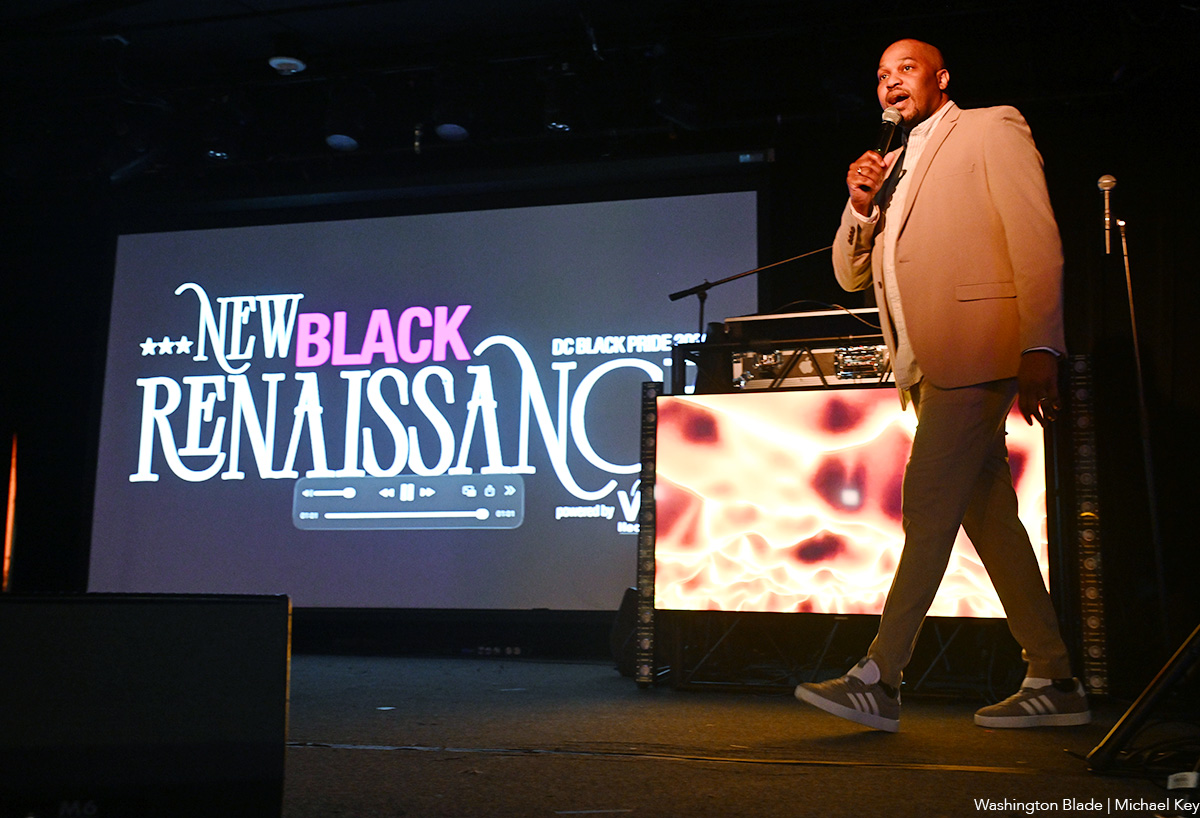
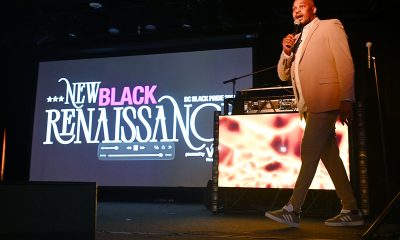
The Center for Black Equity held its 2026 DC Black Pride Theme Reveal event at Union Stage on Monday. The evening, a “Speakeasy Happy Hour,” was hosted by Anthony Oakes and featured performances by Lolita Leopard and Keith Angelo. The Center for Black Equity organizes DC Black Pride.
Kenya Hutton, Center for Black Equity president and CEO, spoke following the performances by Leopard and Angelo. Hutton announced this year’s theme for DC Black Pride: “New Black Renaissance.”
Performers for 2026 DC Black Pride were announced to be Bang Garcon, Be Steadwell, Jay Columbus, Bennu Byrd, Rue Pratt and Akeem Woods.
Singer-songwriter Durand Bernarr was announced as the headliner for the 2026 festivities. Bernerr gave brief remarks through a video played on the screen at the stage.
DC Black Pride is scheduled for May 22-25. For more information on DC Black Pride, visit dcblackpride.org.

Liza Minnelli makes surprise appearance at GLAAD Media Awards

Fla. Senate passes ‘Anti-Diversity’ bill that could repeal local LGBTQ protections

Capital Pride must be transparent about sexual misconduct investigation

Ugandan activist named Charles F. Kettering Foundation fellow

13 HIV/AIDS activists arrested on Capitol Hill

Arlington LGBTQ bar Freddie’s celebrates 25th anniversary

Supreme Court deals blow to trans student privacy protections

D.C. Black Pride theme, performers announced at ‘Speakeasy’

Why innovation matters for Black health

Peter Thiel’s expanding power — and his overlap with Jeffrey Epstein
-

 Virginia5 days ago
Arlington LGBTQ bar Freddie’s celebrates 25th anniversary
-
National4 days ago
Supreme Court deals blow to trans student privacy protections
-
District of Columbia4 days ago
D.C. Black Pride theme, performers announced at ‘Speakeasy’
-
Opinions3 days ago
Why innovation matters for Black health