Arts & Entertainment
A literary ‘Miracle’
Radical therapist profiled in exceptional novel

‘Tuesday Night Miracles’
By Kris Radish
Bantam Books
$15.00/487 pages
You were pretty sure your head was going to explode.
Oh, that’s right. You were mad – so mad that you couldn’t see straight, that anger was buzzing in your ears, that your blood was running a NASCAR lap around your insides. You were seeing red and three other colors, angry enough that you were afraid of yourself there for a minute.
 Fortunately, you calmed down before you did something rash but in the new novel “Tuesday Night Miracles” by Kris Radish, four women weren’t so lucky.
On the eve of her retirement, Dr. Olivia Bayer was given a gift of sorts.
For years, Livie had wanted to do something bold and radical with her therapy groups, something that had never been done before. On the eve of her retirement, she was finally given permission and four color-coded folders, each representing a woman with a life in shambles.
It was no surprise that Kit Ferranti’s code was green, since envy played such a part in her childhood.
Reeling from the death of her mother, Kit had reacted strongly to her family’s usual taunting. She should have been used to it. It’d been happening since she was born, but this time, Kit snapped. She grabbed a broken wine bottle and went after her brother, Mike.
A red code fit Jane Castoria well.
Jane enjoyed a high-powered career as a Realtor for Chicago’s ritziest properties. She was powerful, smart, and always impeccably dressed. So when she attacked a colleague with one of her stiletto-heeled shoes, even that was apt.
Blue – the code of serenity – was all wrong for Grace Collins.
A single mother and busy doctor, Grace had been trying for years to hold a million things together but the problems were piling up. It was no surprise, then, that Grace lost her composure one night and rammed into her daughter’s boyfriend’s car.
Latecomer Leah Hetzer lived life under a black cloud, so a black code was fitting.
Sweet, gentle Leah married young and had two children that she adored and protected from their abusive father. So how could anyone explain the night she lost control and smacked her kids?
Dr. Bayer was given a gift on the eve of her retirement.
It’d take a miracle for it to work…
Despite that this book very badly needed proofreading, there are so many wonderful things about “Tuesday Night Miracles” that I don’t know where to begin.
Character development seems to be one of author Kris Radish’s strengths, and she uses it to the utmost. The women in this book are complex and interesting and, even as they admit their abundance of failings, they’re likeable. You almost wish they were real.
Radish employs wry humor with a light touch here, and she includes details that are believable and tantalizingly possible. These things kept me reading and they kept me loving this novel.
If your book group is looking for their next something, you should schedule this title now. For you, “Tuesday Night Miracles” is dynamite.

The Capital Pride Alliance presented the 2026 Capital Pride Honors at “The Audacity Brunch: In Full Fuchsia” at the Four Seasons Hotel Washington, D.C. on Sunday, June 7.
(Washington Blade photos by Landon Shackelford)


Out & About
Congressional Cemetery hosts Gays & Graves
Daylong Pride celebration blends history, remembrance, art and community

Historic Congressional Cemetery will host the second annual “Gays & Graves: A Big Gay Festival” on Sunday, June 14 at 11 a.m.
The event will feature pioneering activist Randy Wicker, the Gay Men’s Chorus of Washington, and new public art installations and programs celebrating LGBTQ+ history. Gays & Graves is an official partner event of Capital Pride 2026.
This event is a daylong Pride celebration blending history, remembrance, art and community. Visitors can shop from LGBTQ+ and allied artists and makers, experience performances and interactive installations, and engage with programs exploring LGBTQ+ history and lived experience.
For more details, visit the cemetery’s website.
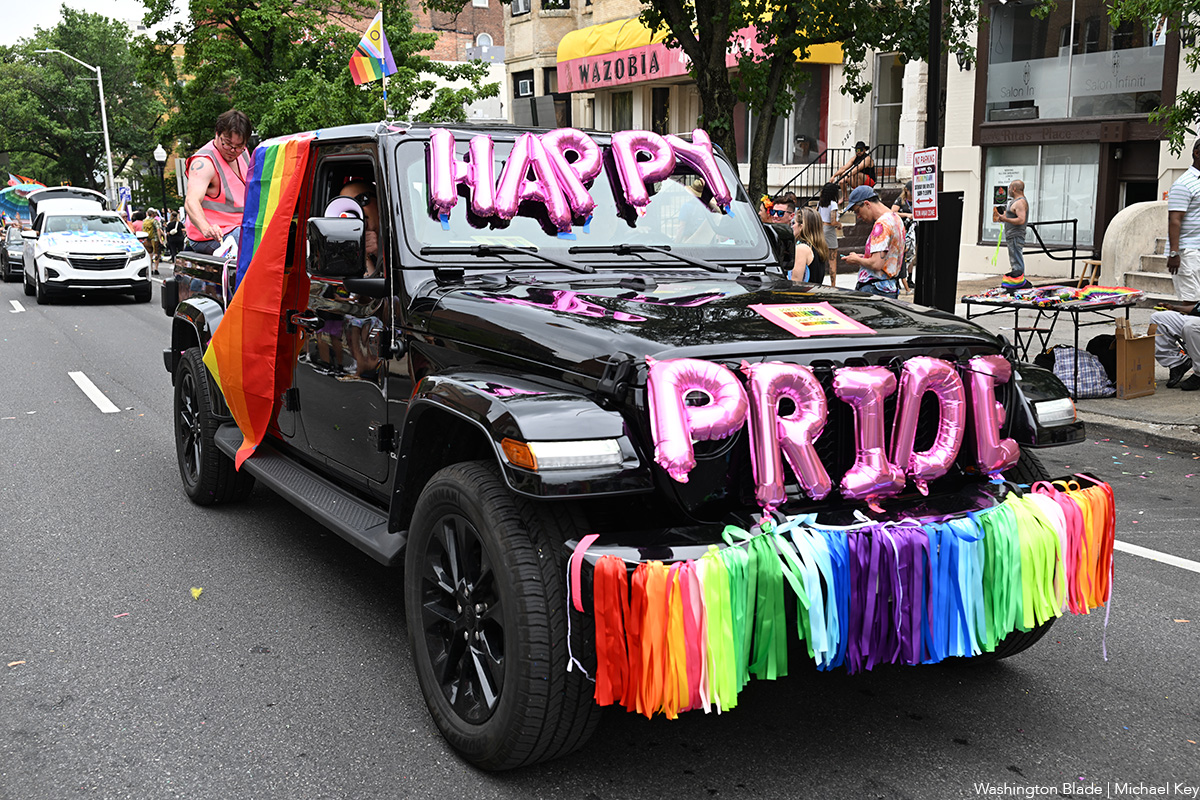
Baltimore Pride is underway, taking place from June 8-14.
The Pride Parade will be on Saturday, June 13 at 12 p.m. at Charles Street & North Avenue, followed by the Pride Block Party at 1 p.m. at Druid Hill Park. And then the Pride Festival will be held on Sunday, June 14 at 12 p.m. at Druid Hill Park.
There will be an array of additional events including: a fashion show, a “Suits and Sneakers” reception and a 5k race, among many other events.
For more details, visit Baltimore Pride’s website.

PHOTOS: The Audacity Brunch

D.C. Council approves expanded grant funding for Mayor’s Office of LGBTQ Affairs

Congressional Cemetery hosts Gays & Graves

Baltimore Pride is here

Calendar: June 12-18

EXCLUSIVE: Pelosi reflects on four decades of LGBTQ advocacy

David Archuleta, Monroe Alise named D.C. Pride parade marshals

D.C. prepares to party as Pride celebrations kick off Saturday

PHOTOS: Fairfax City Pride

Blade editor inducted into D.C. Society of Professional Journalists Hall of Fame
-

 Congress4 days ago
EXCLUSIVE: Pelosi reflects on four decades of LGBTQ advocacy
-
District of Columbia5 days ago
David Archuleta, Monroe Alise named D.C. Pride parade marshals
-
a&e features5 days ago
D.C. prepares to party as Pride celebrations kick off Saturday
-
Photos4 days ago
PHOTOS: Fairfax City Pride