National
U.S. in midst of ‘genocidal process against trans people’: study
Attacks rooted in Nazi ideology’s views on gender

Earlier this week, the Lemkin Institute for Genocide Prevention and Human Security issued a haunting warning. Dr. Elisa von Joeden-Forgey, president of the Lemkin Institute, stated that the U.S. is in the “early-to-mid stages of a genocidal process against trans and nonbinary and intersex people.” Dr. Gregory Santon, former president of the International Association of Genocide Scholars, flags “a hardening of categories” surrounding gender in a “totalitarian” way.
Stanton argues that this is rooted in Nazi ideology’s surrounding gender — this same regime that killed many LGBTQIA individuals in the name of a natural “binary.” As Von Joeden-Forgey said, the queer community, alongside other “minority groups, tends to be a kind of canary in the coal mine.”
In his first year in office, Trump and his Cabinet’s anti-trans rhetoric has only intensified, with a report released late September by journalist Ken Klippenstein in which national security officers leaked that the FBI is planning to classify trans people as “extremists.” By classifying trans people as “Nihilistic Violent Extremists,” far-right groups would have more “political (and media) cover,” as Abby Monteil reports for them, for anti-trans violence and legislation.
While the news is terrifying, it’s not unprecedented – the fight against trans rights and classification of trans people as violent extremists was included in Project 2025, and in the past several weeks, far-right leaders’ transphobic campaign has expanded: boycotting Netflix to pressure the platform to remove trans characters, leveraging anti-trans attack ads in the Virginia governor’s race and banning professors from acknowledging that trans people exist. In fact last month, two Republican members of Congress called for the institutionalization of trans people.
It’s a dangerous escalation of transphobic violence that the Human Rights Campaign has classified as an epidemic. According to an Everytown for Gun Safety report published in 2020, the number of trans people murdered in the U.S. almost doubled between 2017 and 2021. According to data released by the Gun Safety report from February 2024, 34 percent of gun homicides of trans, nonbinary, and gender expansive people remain unsolved.
As Tori Cooper, director of Community Engagement for the Transgender Justice Initiative for the Human Rights Campaign Foundation, this violence serves a purpose. “The hate toward transgender and gender expansive community members is fueled by disinformation, rhetoric and ideology that treats our community as political pawns ignoring the fact that we reserve the opportunity to live our lives full without fear of harm or death,” Cooper said.
“The genocidal process,” Von Joeden-Forgey said, “is really about destroying identities, destroying groups through all sorts of means.” And just like the Nazi regime, former genocide researcher Haley Brown said, the Trump administration is fueling conspiracy theories surrounding “cultural Marixsm” — the claim that leftists, feminists, Marxists, and queer people are trying to destroy western civilization. This term, Brown states, was borrowed directly from the Nazi’s conspiracies surrounding “Cultural Bolshevism.”
As Brown explains, historians are just beginning to research the Nazis’ anti-trans violence, but what they are finding reveals a terrifying pattern wherein trans people are stripped of their identification documents, arrested and assaulted, and outright killed.
Before World War II, Germany – especially Berlin – was a hub for transgender communities and culture. In 1919, Dr. Magnus Hirschfield, a Jewish gay sexologist and doctor, founded the Institut für Sexualwissenschaft, the Institute for Sexual Science. The Institute was groundbreaking for offering some of the first modern gender-affirming healthcare, with a trans-affirming clinic and performing some of the first gender-affirming surgeries in the 1930s for trans women Dora Richter and Lili Elbe.
Researchers at the institute coined the term “trassexualism” in 1923, which while outdated now, was the first modern term that Dr. Hirschfield used when working with Berlin police to acquire “transvestite passes” for his patients to help them avoid arrest under public nuisance and decency laws. During the Weimar Republic, trans people could also change their names although their options were limited. In Berlin, queer press flourished after World War I along with a number of clubs welcoming gay, lesbian and trans clientele, including Eldorado, which featured trans performers on stage.
But as Hitler rose to power, trans people were targeted. In 1933, Nazi youth and members of the Sturmabteilung ransacked the institute, stealing and burning books – one of the first book burnings of the Nazi regime. German police stopped recognizing the “transvestite” passes and issuing new ones, and under Paragraph 175, which criminalized sexual relationships with men, trans women (who were misgendered by the police) were arrested and sent to concentration camps.
As the Lemkin Intsitute for Genocide Prevention and Human Security wrote in a statement:
“The Nazis, like other genocidal groups, believed that national strength and existential
power could only be achieved through an imposition of a strict gender binary within the racially pure ‘national community.’ A fundamentalist gender binary was a key feature of Nazi racial politics and genocide.”
History professor Laurie Marhoefer wrote for The Conversation that while trans people were targeted, there was not extensive discussion of them by the regime. But there was evidence of the transphobia behind the regime’s violence, specifically in Hermann Ferdinand Voss’s 1938 book “Ein Beitrag zum Problem des Transvestitismus.”Voss noted that during the Nazi regime, trans people could and were arrested and sent to concentration camps where they underwent forced medical experimentation (including conversion therapy and castration) and died in the gas chambers.
While there is growing recognition that gay, bisexual, and lesbian individuals were targeted during the Holocaust, few know about the trans genocide through which trans individuals were arrested, underwent forced castration and conversion therapy, and were outright killed alongside gay, lesbian, disabled and Jewish individuals in concentration camps. Historians are just beginning to undertake this research, writes Marhoefer, and to delve further into the complex racial hierarchies that affected how trans people were treated.
As Zavier Nunn writes for Past & Present, trans people of “Aryan” racial status and those not considered to be homosexuals were sometimes spared from the worst violence and outright murder. Depending on their skills, they could even be considered for rehabilitation into the Volksgemeinschaft, or Nazi utopian community. As Nunn highlights, trans violence was much more nuanced and individualized and should be explored separately from violence against gay and lesbian individuals during the Holocaust.
Marhoefer’s research of violence against trans women, as recorded in police files (as is the persecution of gay and lesbian individuals), is groundbreaking but rare. He gave a talk at the Museum of Jewish Heritage in 2023, shortly after a 2022 civil lawsuit about denial that trans people were victims of the Holocaust. The German court recognized that trans people were victimized and killed by the Nazi regime, but in the United States, there is still a hesitancy by the wider LGBTQ community and leftist groups to acknowledge that we are living during a time of anti-trans violence, that trans people are being used as political scapegoats in order to distract from real problems of accountability and transparency around government policy.
As anti-trans legislation escalates, it’s important to remember and call out how trans violence is not only a feminist issue, it’s a human rights one as well. While Shannon Fyfe argues that the current campaigns against trans people may not fit the traditional legal definition of a genocide, the destruction and denial of life saving care, access to public spaces, and escalating violence is still immensely devastating.
Kaamya Sharma also notes that the term “genocide” has deep geo-political implications. As she explained, “western organisations are, historically and today, apathetic to the actual lives of people in the Global South, and put moral posturing above Brown and Black lives,” so the choice to use “genocide” is a loaded one. But as the Lemkin Institute for Genocide Prevention and Human Security writes in the same statement: “The ideological constructs of transgender women promoted by gender critical ideologues are particularly genocidal. They share many features in common with other, better known, genocidal ideologies. Transgender women are represented as stealth border crosses who seek to defile the purity of cisgender women, much as Tutsi women were viewed in Hutu Power ideology and Jewish men in Nazi antisemitism.”
Trans people are not extremists, nor are they grooming children or threatening the fabric of American identity – they are human beings for whom (like all of us) gender affirming care is lifesaving. As we remember the trans lives lost decades ago and those lost this year to transphobic violence, knowing this history is the only way to stop its rewriting.



National
Man charged in Mall of America shooting plot inspired by Pulse massacre: report
Suspect exchanged hundreds of messages, pledged loyalty to ISIS
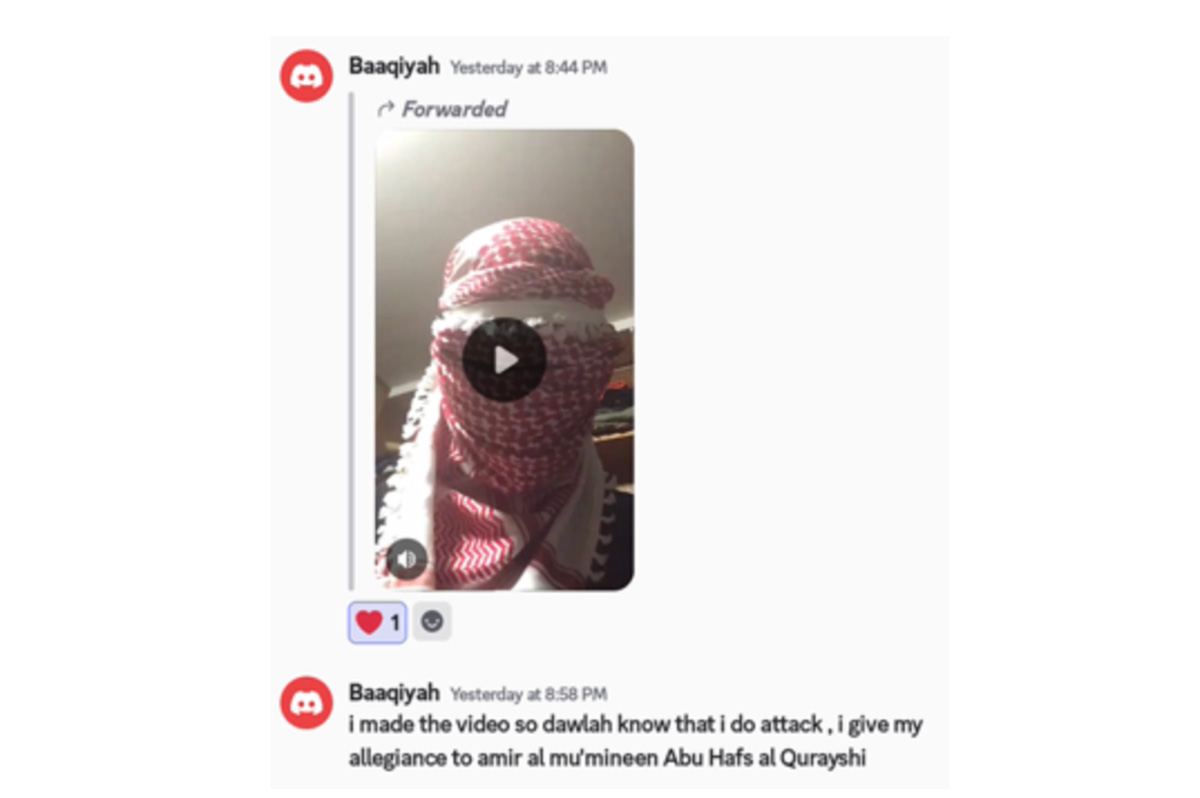
The U.S. Department of Justice charged Sheikhdoon Abdullahi Mohamud, 18, of Richfield, Minn., on Oct. 7 with one count of knowingly receiving a firearm and ammunition in order to commit a federal crime of terrorism. Mohamud allegedly planned to carry out a mass-casualty attack in support of ISIS, inspired in part by the Pulse nightclub massacre that took place on June 12, 2016 when then-29-year-old Omar Mateen murdered 49 people and wounded 58 – one of the deadliest mass shootings in U.S. history, and the deadliest targeting the LGBTQ+ community.
According to a DOJ statement release, Mohamud was arrested on Oct. 6 by the FBI, which had arranged to sell him an AK-47 assault rifle, magazines, and ammunition through an undercover FBI employee. Mohamud was arrested shortly after paying $600 in cash and taking possession of those items; he reaffirmed his intention to shoot people at the Mall of America during the transaction.
“Mohamud allegedly sought to carry out a mass-casualty shooting at the Mall of America, expressing a desire to emulate some of the most horrific ISIS-inspired attacks in the United States, including the atrocities at Pulse Nightclub and 2025 New Year’s Day attack in New Orleans,” said Assistant Attorney General for National Security John A. Eisenberg in the statement by the DOJ. “The National Security Division will continue to work closely with the FBI and Joint Terrorism Task Force to track down and prosecute ISIS-inspired terrorists in the United States.”
According to the complaint, beginning on or about December 2024, Mohamud had exchanged hundreds of messages through multiple social media and messaging apps with a confidential source, and expressed a desire to travel to Somalia to join a designated foreign terrorist organization to fight on their behalf.
The defendant stated many times that if he was unable to travel overseas because of a lack of funds, he planned to carry out a mass-casualty event in Minnesota in support of ISIS.
According to the DOJ, “In July 2026, Mohamud sent messages discussing his intent to carry out a mass-casualty shooting attack at the Mall of America because he claimed it was owned by Jews. He wrote that [he] wanted to kill 30 to 60 people so no one would go there.”
“During the course of his communications, Mohamud stated that he wanted to commit an attack similar to those of the Pulse Nightclub mass-shooting in Orlando, the Bondi Beach mass-shooting in Australia, and the New Year’s Day vehicle-ramming attack in New Orleans.”
This case is being prosecuted by Trial Attorney Ryan White of the National Security Division’s Counterterrorism Section and Assistant U.S. Attorney Benjamin Bejar for the District of Minnesota.
California
Calif. GOP gubernatorial candidate ad ‘disgusting attempt to exploit lesbian intimacy’
Activists, anti-LGBTQ religious leaders criticized Steve Hilton spot

Two women sit on a bed, a Pride flag hanging behind them. One is nervous; the other tells her to be calm and that she’ll do “all the work.” The music swells. The two hold hands and — fill out a ballot voting for Steve Hilton?
This is the new advertisement from the Hilton gubernatorial campaign that is drawing rebuke from both sides of the aisle, but for very different reasons.
Jorge Reyes Salinas, the communications director at Equality California, said the ad was an insult to the queer community.
“This ad is a disgusting attempt to exploit lesbian intimacy for political attention,” he said. The advertisement plays on media tropes that Salinas says “reduce lesbian and bisexual women … to sexual entertainment,” rather than showing them as well-rounded characters. “Any group of the LGBTQ+ community deserves the same dignity and respect as everyone else,” he said.
The ad is truly hyper-sexualized. It ends with one woman telling the other, “Now lick it.” The two pause and stare before she reveals an envelope to send the ballot, and large text pops up saying, “Just try it!”
Salinas characterized the ad as a desperate attempt to get attention from a candidate who is trailing far behind in the polls in heavily Democratic California. The Democratic candidate Xavier Becerra, who is endorsed by Equality California, holds a 25-point lead over Hilton according to recent polling by the UC Berkeley Institute of Governmental Studies.
Conservatives have also criticized the ad.
Influential evangelical Pastor Jack Hibbs thought the ad was distasteful and said, “lesbianism among college girls and some high school girls that right now is an actual pandemic of social ill.” Republican attorney general candidate Michael Gates said it undermines “the sanctity of the relationship between parents and their children.” This criticism is rather confusing because although the ad features two relatively young women, they both appear to be adults, not minors.
“The comments from Pastor Jack Hibbs should be criticized because there is nothing wrong with two women being attracted to each other,” Salinas said. “We’re calling out the ad’s stereotypes, while also rejecting the homophobia in the response to it … by other Republicans.”
The backlash from Hilton’s own party and supporters shows that an advertisement full of queer innuendo was ill-considered, considering the national GOP’s attacks on LGBTQ people in recent years. Hilton himself has been campaigning against transgender girls and women competing in school sports and using locker rooms that correspond with their gender identity. This context might be why Hilton’s political base responded to the ad just as poorly as the liberal voters he was attempting to court.
Hilton says the ad is part of a new series rolling out before Election Day, showing stereotypical California liberal archetypes voting for Hilton. He claims these ads are authentically filmed with real actors, as opposed to being A.I. generated, like many of his previous ads. One other advertisement has been released so far by the campaign showing a man at a spiritual retreat also being swayed to vote for Hilton, although it is notably absent of sexual innuendo.
Caleb Kaufman is a California Local News Fellow placed with the Los Angeles Blade. The California Local News Fellowship is a state-funded initiative to support and strengthen local news reporting. Learn more about it at fellowships.journalism.berkeley.edu/cafellows.
2026 Midterm Elections
Trump uses anti-trans slur against Democratic Senate candidate
President mocked Annie Andrews

President Donald Trump used an anti-trans slur against Democratic South Carolina Senate candidate Annie Andrews on Monday as he sought to rally support for Republicans in the state’s Senate race.
In a post on Truth Social, Trump attacked Andrews three times, referring to her as “trannie” while promoting U.S. Sen. Darline Graham (R-S.C.)’s campaign.
Andrews is running against Graham for a Senate seat in the solidly Republican state.
Earlier this year, Graham was specially appointed to the seat following the death of her brother, Lindsey Graham, who represented South Carolina in the Senate from 2003 to 2026.
Andrews, the Democratic nominee from the state, is a pediatrician that lives in Charleston with her three children. She told NBC News that she will “work with anyone to put South Carolina first.”
“As a mom and a pediatrician, I’m in this race to fight for my patients, my three kids, and South Carolina,” Andrews said, adding that “lowering costs and making life better for families across our state is going to take all of us working together.”
Andrews used the attention from the president’s attack to emphasize what she described as a focus on policy issues rather than the culture wars that have dominated much of the political debate.
“If you care more about your bills than the politics in Washington, this campaign is for you,” she added.
Trump’s remarks have drawn criticism from leaders on both sides of the aisle.
Senate Minority Leader Chuck Schumer (D-N.Y.) condemned Trump’s words Monday night on social media, calling his attacks on Andrews “despicable.”
“Annie Andrews is a mom and pediatrician who’s always put her community first — and she’s exactly who South Carolina needs representing them in the Senate,” Schumer said on X.
Former South Carolina Gov. David Beasley, a Republican, also criticized the president’s attack on Andrews, urging voters to “reject politics based on division and hate.”
“This is abhorrent. Elections don’t have to be about cruelty and lies. South Carolina deserves better,” Beasley wrote Monday night on X.
South Carolina has not elected a Democratic senator in nearly three decades.
Andrews’s campaign website does not mention her positions on LGBTQ issues.
The Washington Blade reached out to Andrews’s campaign for comment on Trump’s attack and her positions on transgender rights but did not hear back by time of publication.

Physician: addiction doesn’t always look the way you think it does

Calendar: October 9-15

ICC unseals arrest warrants for Taliban officials accused of persecuting LGBTQ people, women

Bet Mishpachah participates in D.C. Oct. 7 commemoration ceremony

Man charged in Mall of America shooting plot inspired by Pulse massacre: report

PHOTOS: Winchester Pride

Evan Low is not the leader the Victory Fund needs at this moment

Transgender woman elected to Brazilian Chamber of Deputies

Bowser, Office of LGBTQ Affairs announce LGBTQ+ History Month events

Alianza para la Inclusión fortalece la defensa de derechos LGBTQ en Centroamérica
-

 Photos5 days ago
PHOTOS: Winchester Pride
-
Opinions5 days ago
Evan Low is not the leader the Victory Fund needs at this moment
-
Brazil5 days ago
Transgender woman elected to Brazilian Chamber of Deputies
-
District of Columbia5 days ago
Bowser, Office of LGBTQ Affairs announce LGBTQ+ History Month events