Connect with us

Arts & Entertainment

Queery: John Moletress

The theater visionary answers 20 gay questions

Published

on

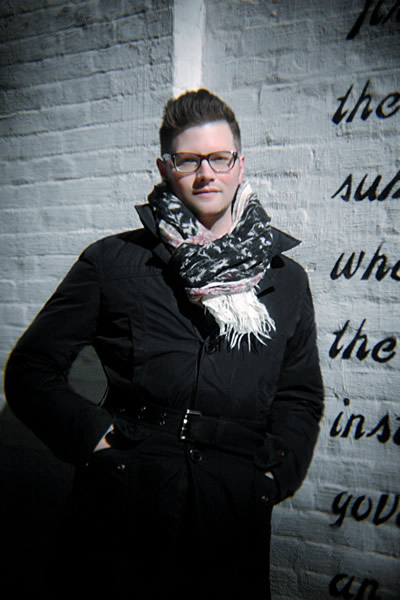
John Moletress (Image courtesy the subject)

Local theater regulars know former actor John Moletress’s name. But like many creative types, he’s grown restless and is pursuing new artistic vistas. Last summer he started force/collision, an interdisciplinary performance ensemble based in Washington. It kicked off with a piece called “Collapsing Silence” at the Source Theatre. Next month his company will unveil “The Nautical Yards,” a 60-minute site-specific show at the Washington Navy Yard that will tell of two lovers separated by war and sea.

“I think it’s important that we create a large script between the arts and work more holistically,” the 34-year-old Pottsgrove, Pa., native says. “I’ve worked in traditional theater forms, been in lots of plays and musicals, but when we band together it opens up the door to explore different forums and takes us into the next generation of making art together.”

Moletress says some of the traditional forms feel somewhat exhausted to him.

“When you run out of a way to tell a story by speaking it, I think there are other ways to do it,” he says. “Like with dance … when you run out of words, there’s a certain collective memory our body has that we can share with movement. Our bodies become storehouses for our memories.”

Moletress studied acting in college, both in Allentown, Pa., and during graduate school at the University of Tennessee. He spent two years in London in the ‘90s studying acting and modern dance and worked in regional theaters around New York City where he lived in the early ‘00s. He came to Washington in 2008 after two years working as an artistic director at a company in Pennsylvania. In 2009, he started Factory 449, a Helen Hayes-winning project from which he’s since parted ways. Force/collision (force-collision.org) was started with a grant he got through Source Theatre.

Moletress lives in D.C.’s Navy Yard area and enjoys reading — “I have hundreds of books in my apartment” — and decoupage in his free time. (Photo courtesy Moletress)

How long have you been out and who was the hardest person to tell?

Pretty much since high school. Before the Grindr phenomena, we had AOL chat rooms. It was a fun little platform for meeting other high school guys who were for the most part, not out. I can’ t say I really made the choice to come out, so much as outed myself with a crumpled up page ripped from an International Male catalogue I left in my pants pocket. My mother was doing laundry that day. I don’t think she was really surprised, given that my early obsessions included Cheryl Tiegs workout videos and musical theater.

Who’s your LGBT hero?           

Christopher Isherwood.

What’s Washington’s best nightspot, past or present?

Does my couch count? Honestly, wherever my friends are. I adore them.

Describe your dream wedding.

No, thank you. Although if I ever found myself wearing a white dress, I’d most likely be standing on a cliff somewhere on the Galway coast of Ireland, contemplating two choices.

What non-LGBT issue are you most passionate about?           

Genocide and reconciliation. My friend, Erik Ehn, is a playwright who founded an annual conference to investigate theatre on this subject. He writes about collective trauma. I’ll be directing the premiere of his new play “Shape” which infuses the stories of blacks in 1900 Ambrose Park with the 1921 Tulsa Race Riot.

What historical outcome would you change?

This is a challenging question. I believe we are where and who we are because of our histories. I would negotiate peace and dialogue before violence.

What’s been the most memorable pop culture moment of your lifetime?            

Manic Panic hair dye and Siouxsie Sioux on high school Sundays with like-minded outcasts.

On what do you insist?

Pausing and breathing. Oh, and Diet Pepsi.

What was your last Facebook post or Tweet?

@soulographiedesignmeetings at The New Schoolpic.twitter.com

If your life were a book, what would the title be?           

I’d have to look to Jackie Collins for inspiration. Perhaps, “The World Is Full of Married Men” or “Lady Boss.”

If science discovered a way to change sexual orientation, what would you do?           

Either run screaming or mount Tom Brady.

What do you believe in beyond the physical world?           

Connectivity. Universal law. Energy and frequency. Love.

What’s your advice for LGBT movement leaders?

Persevere. Trust your instincts. If one door closes, open another.

What would you walk across hot coals for?           

My friends. To have seen Velvet Underground perform live.

What LGBT stereotype annoys you most?

I’m sure I pretty much fit all of them at one point or another. However, I wish we could all be more open to the possibilities of gender duality. Regardless of whether people think I swing more toward my feminine or my masculine side, nothing turns me off more than men who state they are “straight acting” when they like to play leap frog with other men.

What’ s your favorite LGBT movie?

“Mommie Dearest.” The gay man’ s guide to opera acting and OCD.

What’s the most overrated social custom?           

Utensils.

What trophy or prize do you most covet?           

Bjork’s Polar Music Prize. I wish I could be as brilliant as her.

What do you wish you’d known at 18?           

That I was going to live past 25. I certainly didn’t behave that way.

Why Washington?

I’m attracted to the sizzle of American politics. The Hill staffers are cute, too. I dated one for a while. Moreover, this IS a theater town and the resources here for my profession are overwhelming. Source Theatre/Cultural Development Corporation has played an integral part in getting my work seen. I owe a lot to them, especially Jenny McConnell Frederick.



Advertisement
FUND LGBTQ JOURNALISM
SIGN UP FOR E-BLAST

Movies

Few openly queer nominees land Oscar nominations

‘Sinners’ and ‘One Battle After Another’ lead the pack

Published

on

This year’s Oscar nominees feature very few openly queer actors or creatives, with “KPop Demon Hunters,” “Come See Me in the Good Light,” and “Elio” bringing some much-needed representation to the field.

“KPop Demon Hunters,” which quickly became a worldwide sensation after releasing on Netflix last June, was nominated for best animated feature film and best original song for “Golden,” the chart-topping hit co-written by openly queer songwriter Mark Sonnenblick. “Come See Me in the Good Light,” a film following the late Andrea Gibson and their wife, Megan Falley, was nominated in the best documentary feature category. Finally, Pixar’s “Elio” (co-directed by openly queer filmmaker Adrian Molina) was nominated for best animated feature film alongside “Zootopia 2,” “Arco,” and “Little Amélie or the Character of Rain.”

Ethan Hawke did manage to land a best actor nomination for his work in Richard Linklater’s “Blue Moon,” a biopic that follows a fatal night in Lorenz Hart’s life as he reckons with losing his creative partner, Richard Rodgers. Robert Kaplow was also nominated for best original screenplay for penning the script. Amy Madigan, as expected, was recognized in the best supporting actress category for her work in “Weapons,” bringing celebrated gay icon Aunt Gladys to the Oscar stage.

While “Wicked: For Good” was significantly underperforming throughout the season, with Cynthia Erivo missing key nominations and the film falling squarely out of the best picture race early on, most pundits expected the film to still receive some recognition in craft categories. But in perhaps the biggest shock of Oscar nomination morning, “For Good” received zero nominations — not even for costume design or production design, the two categories in which the first film won just last year. Clearly, there was “Wicked” fatigue across the board.

There was also reasonable hope that Eva Victor’s acclaimed directorial debut, “Sorry, Baby,” would land a best original screenplay nod, especially after Julia Roberts shouted out Victor during the recent Golden Globes (which aired the day before Oscar voting started). A24, the studio that distributed “Sorry, Baby” in the U.S., clearly prioritized campaigns for “Marty Supreme” (to much success) and Rose Byrne in “If I Had Legs I’d Kick You,” leaving “Sorry, Baby” the indie darling that couldn’t quite crack the Oscar race.

However, with the Film Independent Spirit Awards taking place on Feb. 15, queer films like “Sorry, Baby,” “Peter Hujar’s Day,” and “Twinless” will finally get their time to shine. Maybe these films were just underseen, or not given a big enough PR push, but regardless, it’s unfortunate that the Academy couldn’t make room for just one of these when “Emilia Pérez” managed 13 nominations last year.

Continue Reading

a&e features

MISTR’s Tristan Schukraft on evolution of HIV prevention

From ACT UP to apps, embracing stigma-free care

Published

on

Tristan Schukraft (Photo courtesy of Schukraft)

It was not too long ago that an HIV diagnosis was read as a death sentence. In its earlier decades, the HIV/AIDS crisis was synonymous with fear and loss, steeped in stigma. Over recent years, open conversation and science have come together to combat this stigma while proactively paving the way for life-saving treatments and preventive measures like PrEP. Now, in 2026, with discreet and modern platforms that meet people where they’re at in their lives, HIV prevention has evolved from hushed words of warning into something far more sex-positive and accessible. Game-changing services like MISTR are a testament to this shift, showing our community that healthcare doesn’t have to feel clinical or shaming to work. It can be empowering and, dare I say,  celebratory.

Few people embody this evolution quite like Tristan Schukraft, founder of MISTR. With one hand in healthcare and the other high-fiving through queer nightlife, Schukraft gets that, from the bar to the bedroom and beyond,  prevention happens in person and in real life. His approach has helped turn PrEP, DoxyPEP, and testing into normalized parts of our daily queer life, reaching hundreds of thousands of people across the US.

In our conversation, Schukraft shares candidly about stigma, policy, and why the future of sexual health depends on keeping it real.

BLADE: You have one hand in healthcare and the other in nightlife and queer spaces. Can you share with us how these two spheres impact and inform each other? How do they impact and inform you? 

SCHUKRAFT: Honestly, for me, they’ve never been separate. Nightlife and queer spaces are where people meet, date, hook up, fall in love, and make friends. That’s real life. Being in queer spaces all the time keeps me grounded and reminds me who we’re building MISTR for. 

BLADE: MISTR markets sexual health in a sex-positive, stigma-free fashion. Can you share with us how you measure the impact of this approach? 

SCHUKRAFT: This year, we held the first-ever National PrEP Day.  Dua Lipa performed, and Cardi B was there.  After the event, Cardi B went on her Instagram live to encourage people to sign up for PrEP.  

When you make sexual health stigma-free and sex positive, people talk about it. We see it in how people use the platform. When 700,000 people are willing to sign up, get tested, start PrEP, and add things like DoxyPEP, that tells us we’ve made it feel safe and normal instead of scary or awkward. And then we see it in the results. Since we expanded DoxyPEP, STI positivity among our patients dropped by half.  

BLADE: How have you seen the conversation of sexual health in our LGBTQ+ community change in mainstream culture in recent years? 

SCHUKRAFT: Ten years ago, nobody was casually talking about PrEP, and if they did, it likely referenced one being a Truvada whore. Now it’s part of the culture. Popstars like Troye Sivan post pictures of their daily PrEP pill on social media. Cardi B goes on Instagram Live telling people to get on PrEP.  

For many sexually active gay men, taking PrEP is simply part of the gay experience.  For people in more remote areas, it might not be as talked about. Particularly in rural or more conservative places, MISTR can be a life-changing option. No awkward visits to the family doctor or the local pharmacy where everybody knows your business. It’s all done discreetly online and shipped straight to your door. 

BLADE: You have publicly argued that cuts to government HIV prevention funding are of high risk. Would you please elaborate for us on what those budget decisions mean on an individual level? 

SCHUKRAFT: It means real people fall through the cracks. Someone doesn’t get tested. Someone waits too long to start PrEP. Someone finds out they’re HIV-positive later than they should have. Community clinics will be the hardest hit, especially those in underserved communities. The good news is that MISTR is ready to help people who might lose their access to care. All you need to do is sign up at mistr.com, and it’s totally free with or without insurance. 

BLADE: From your (and MISTR’s) perspective, how do these funding cuts threaten ongoing efforts to end the HIV epidemic? 

SCHUKRAFT: For the first time, we have all the tools to end HIV. If everybody who is HIV negative is taking PrEP and everyone HIV+ is virally suppressed, we can end all new HIV transmissions in the United States.  We have everything we need today.  All we need is to get more people on PrEP. Cutting funding risks losing that momentum. Ending HIV requires scale and consistency. Every time funding gets cut, you lose momentum, trust, and infrastructure, and rebuilding that takes years. 

HIV transmissions don’t pause because budgets change. 

BLADE: In our current climate of decreased federal investment, what role do you feel private healthcare and business should play in sexual health? 

SCHUKRAFT: With reports that the current administration is considering cuts to HIV and prevention funding,  we face a moment of reckoning. At the same time, some employers are seeking to exclude PrEP and HIV prevention from their coverage on religious freedom grounds. If these challenges succeed, and if federal funding is slashed, the consequences for public health will be devastating. But this is where the private sector must step up to fill the gap, bridge divides, and deliver results. 

Businesses have the power and platform to normalize HIV prevention and drive measurable outcomes. At MISTR, we see firsthand what’s possible: since introducing DoxyPEP, STI positivity rates among our patients have been cut in half. But it’s not just about medication. It’s about messaging.  

Our sex-positive, stigma-free marketing speaks directly to our community, making sexual health part of everyday life. No awkward doctor visits, no needles, no paperwork — just free online PrEP and STI testing, prescribed by real physicians and delivered to your door. That kind of impact could grow exponentially if more employers embraced this approach and made HIV prevention part of their employee wellness programs. 

Employers, this is your call to action. Start by making sure your health plans cover PrEP and DoxyPEP. Partner with platforms like MISTR to give employees private, stigma-free access to care. Offer on-site testing. Talk openly about sexual health, not just during Pride, but every day of the year. This is not political — this is about protecting lives, strengthening communities, and building a healthier, more productive workforce. Because healthy employees aren’t just good for public health — they’re good for business. 

When the private sector steps up, outcomes improve. And when businesses align with platforms like MISTR, scaling impact isn’t just possible — it’s happening. 

BLADE: Has MISTR experienced any direct effects from these recent shifts in public health funding? 

SCHUKRAFT: MISTR’s unique model is totally free for patients with or without insurance, and we don’t cost the government or taxpayers a penny. We are scaling up our efforts to reach people who might be losing their access or care. 

BLADE: What would be your message to policymakers who are considering further cuts to HIV/AIDS programs? 

SCHUKRAFT: During his first term, President Donald Trump committed unprecedented resources to the Ending the HIV Epidemic initiative here at home. Bipartisan support has shown what’s possible when bold leadership meets smart strategy. To policymakers: I urge you to reconsider any cuts to HIV prevention funding. This is not the time to pull back. It’s the time to push forward. Ending HIV is within reach — but only if government, private industry, and community organizations stand together. 

BLADE: What is one perhaps overlooked win from last year that impacted you on a personal level? 

SCHUKRAFT: Seeing our STI positivity rate drop by half after expanding DoxyPEP. 

BLADE: Looking at the year ahead, what are MISTR’s most significant priorities for sexual health in 2026? 

SCHUKRAFT: Expanding access, especially in the South and in communities that still get left out. Rolling out injectable PrEP. And just continuing to make sexual healthcare easier and more normal. 

Continue Reading

Photos

PHOTOS: Mr. Mid-Atlantic Leather 2026

Gage Ryder wins annual competition

Published

on

Gage Ryder, center, wins the title of Mr. Mid-Atlantic Leather 2026 in a competition at the Hyatt Regency Capitol Hill in Washington, D.C. on Sunday, Jan. 18. (Washington Blade photo by Michael Key)

The 2026 Mr. Mid-Atlantic Leather competition was held at the Hyatt Regency Capitol Hill on Sunday. Seven contestants vied for the title and Gage Ryder was named the winner.

(Washington Blade photo by Michael Key)

Continue Reading

Popular