National
Kerry seeks to aid lesbian bi-national couple
With expiration of student visa, woman faces deportation to Pakistan

Sen. John Kerry (D-Mass.) is seeking to aid a married lesbian couple in his state by asking the Department of Homeland Security to take administrative action to ensure the foreign national in the relationship won’t be deported to Pakistan.
In a redacted letter dated March 27 and obtained last week by the Washington Blade, Kerry asks Secretary of Homeland Security Janet Napolitano to hold in abeyance the I-130 marriage-based green card petition for the couple until the Defense of Marriage Act is overturned either by Congress or the courts.
“I know that you and I both believe that every family is worthy of recognition and respect, and that no family should be torn apart based on a discriminatory law,” Kerry writes. “Abeyance will allow this remarkable young couple to move forward with their dream of building a life together at home in Massachusetts.”

Gloria (right) and Jackie could be faced with separation if their green card application isn't placed in abeyance. (Photo courtesy Stop the Deportations)
The couple is using their first names only, Gloria, a Pakistani national, and Jackie, who are both 24 and reside together in Beverly, Mass. The two met as roommates in college in 2008 and their shared Christian faith brought them closer. After falling in love, they married in Massachusetts in October.
But Gloria’s student visa expired after she could no longer afford tuition and had to stop attending school last year, ending her legal status in the country and putting her in a situation where she could be deported to Pakistan.
In March, Jackie filed a marriage-based green card petition to sponsor Gloria for residency in the United States. U.S. Citizenship & Immigration Services has yet to make a decision on the petition, but it will likely be denied unless it’s held in abeyance because DOMA prohibits federal recognition of same-sex marriage.
Their attorney, Lavi Soloway, co-founder of Stop the Deportations and partner at Masliah & Soloway, redacted their last names in the letter he gave to the Blade, saying he did so at their request out of concern for their safety and safety of family members overseas. He also declined to disclose the school they both attended.
Recalling that the Obama administration has determined DOMA was unconstitutional and stopped defending the anti-gay law in court, Kerry writes this announcement last year left many same-sex couples “wondering how that will apply to their pending cases” and enables an opportunity for action.
“Among those harmed by the discrimination enshrined in law by DOMA are many of my constituents in Massachusetts who face separation from husbands, wives, grandparents, grandchildren, extended family, colleagues and community,” the senator says.
Kerry writes that the case of Gloria and Jackie “clearly justifies” action because of the potentially harsh treatment Gloria would face if sent back to Pakistan. Homosexuality is a crime punishable by jail time there and Christians have been known to face persecution in the country.
“She is certain that if she is forced to return to Pakistan, her life will be in danger, not only because of her sexual orientation and her marriage to a United States citizen, but for religious reasons as well,” Kerry writes.
It’s not the first time Kerry has asked the Obama administration to take action to stop the separation of bi-national same-sex couples. In April 2011, Kerry led a group of 12 senators who signed a letter to Justice Department and Department of Homeland Security asking that the marriage-based green card petitions for these couples be held in abeyance.
In a phone interview, Gloria said she and her spouse “feel very frustrated” they face this situation that wouldn’t be before them if they were an opposite-sex couple. She said she believes the effort will be worthwhile if “some positive outcome could come out of all this work that we’re putting into it.”
Additionally, Gloria said she dreads the prospect of having to return to Pakistan and face persecution because of her religious beliefs and sexual orientation.
“That would be just a devastating situation,” Gloria said. “We don’t even want to think about it. We have built our lives together here in America and our home is here. Our friends and family, and everything that we’ve built together is here.”
In a statement, Jackie also expressed frustration that DOMA precludes her from protecting her spouse and that the Obama administration hasn’t yet taken action to protect married bi-national couples.
“It hurts, as an American, to think that my government causes me and my wife so much distress by allowing DOMA to do so much harm,” Jackie said. “It is not what I expected of President Obama; I expected more. My wife and I met in college over three and half years [ago] and plan to continue building our lives together. Part of our future will now be this fight for full equality.”
Jackie added that coming out publicly with their story wasn’t an easy decision because they fear it may mean backlash for Gloria’s family in Pakistan — as well as for Gloria if she’s forced to return to the country.
“But we will not stand by helpless while our marriage is treated as nothing by the federal government,” Jackie said. “I know that our president in his heart does not want to do harm to our marriage, and I am disappointed that he’s letting this happen when he has the power to stop it.”
Soloway said the president’s opposition to DOMA should be “matched with deeds,” and that halting the denial of marriage-based green card petitions would be consistent with the administration’s stated belief that same-sex couples shouldn’t be forced to make a choice between staying together and staying in the country.
“The president has an opportunity to develop policy that protects all LGBT families impacted by DOMA,” Soloway said. “He must now act to save Jackie and Gloria and thousands of lesbian and gay bi-national couples who, just like them, want nothing more than to be able to live their lives in peace.”
LGBT rights supporters have repeatedly asked the Obama administration to hold the marriage-based green cards for bi-national same-sex couples in abeyance on several occasions, and each time, officials have responded that they’ll continue to enforce DOMA while it’s on the books.
According to The Advocate, LGBT groups met with White House officials in January to discuss the possibility of putting the green cards in abeyance and administration officials told the advocates that such action wouldn’t be taken.
Peter Boogard, a DHS spokesperson, expressed a similar sentiment when asked by the Blade to comment on the Kerry letter.
“DHS responds directly to members of Congress, not through the media,” Boogard said. “Pursuant to the attorney general’s guidance, the Defense of Marriage Act remains in effect and the executive branch, including the Department of Homeland Security, will continue to enforce it unless and until Congress repeals it, or there is a final judicial determination that it is unconstitutional.”
While the administration hasn’t taken action to hold the marriage-based green card applications in abeyance, it has said it would include bi-national same-sex couples as part of an effort announced in August to take low-priority cases out of the deportation pipeline by granting them prosecutorial discretion.
The criteria for being taken out of the deportation pipeline include a person’s ties and contributions to their community and family relationships, and administration officials have said these criteria are inclusive of LGBT families and same-sex couples. An informed source said individuals whose I-130 is denied because of DOMA typically don’t receive a notice to appear for deportation hearings in court, unless there are additional derogatory factors.
But Soloway said whether Gloria will be placed into deportation proceedings is hardly the point if her green card application is denied because she’s “vulnerable to deportation every day.”
“She can be placed into proceedings simply because her immigration status as a foreign student has lapsed,” Soloway said. “Her school was required to report her to Immigration Services when she was no longer enrolled as a student. Every night, Jackie and Gloria go to sleep not knowing if their luck will run out. Will tomorrow be the day on which Gloria comes into contact with an overzealous police officer who stops and questions her and takes her into custody when her immigration status is discovered?”
Soloway also said holding the green card application in abeyance is the only way for Gloria to remain in legal status to enable her to hold a job or maintain a valid driver’s license.
“She cannot support herself and build a stable and secure future with Jackie as any other married couple would,” Soloway said. “She is trapped and can never leave the country because if she does she will be prohibited from returning. This untenable situation is the result of DOMA, and would be mitigated if their green card case were simply held in abeyance.”




National
At Alliance Defending Freedom’s summit, church and state are one
House Speaker Mike Johnson (R-La.) among speakers

Uncloseted Media published this article on July 23.
By SPENCER MACNAUGHTON | Earlier this month, hundreds of people filled a conference room in San Diego. These included Speaker of the House Mike Johnson, Assistant Secretary of Health Admiral Brian Christine, OpenAI executive Dean Ball, and the attorneys general of West Virginia and Idaho.
They all came together for Alliance Defending Freedom’s 2026 Summit. The Christian legal group, also a Southern Poverty Law Center-designated anti-LGBTQ hate group, described the event as a “gathering of leaders from many different spheres, including law, public policy, media, business, education, and Christian leadership.”
Johnson — who has said that “homosexual relationships are inherently unnatural and … society cannot give its stamp of approval to such a dangerous lifestyle” — was a featured speaker.
In his speech, he seemed unconcerned with the separation of church and state: “It is so encouraging to Kelly and I to be among friends and fellow warriors for this cause and people who understand that God is not done with America yet. … ADF’s on the very tip of the spear, front line, defending those very truths and keeping the door open for the spread of the Gospel. This is our moment. I’m telling you, I believe the next season … is going to be the greatest season of this ministry since its inception.”
That ministry is one that has espoused aggressively anti-LGBTQ views since its inception in the early 1990s. It was co-founded by a group of evangelical men, including Alan Sears, who co-authored a book called “The Homosexual Agenda: Exposing the Principal Threat to Religious Freedom Today.” Since then, ADF has opposed gay marriage and supported bans on gay sex and on gender-affirming care for minors.
After helping overturn Roe v. Wade, ADF lawyers have led key victories at the Supreme Court. In 303 Creative v. Elenis, SCOTUS ruled that a website designer could refuse service to gay weddings. And this year they convinced the Court to overturn Colorado’s ban on conversion therapy and to uphold state laws in West Virginia and Idaho that ban trans girls from playing on girls’ sports teams.
At the summit, ADF President Kristen Waggoner, who has promoted conversion therapists and consistently misgenders trans people, interviewed these states’ attorneys general.
“The lawyers who were defending women’s sports were among the best I’ve ever seen in my entire life,” West Virginia Attorney General JB McCuskey told Waggoner.
Similar to Johnson, Trump’s Assistant Secretary of Health Christine showed his commitment to governing based on conservative Christianity. He gave a Bible-thumping speech against gender transition and trans healthcare, saying that it “contradicts … the deeper moral order that is woven into creation itself. For Genesis 1:27 informs us that God created man in his own image. … Male and female” He also said the “complementary relationship between man and woman is divine” and advocated for youth with gender dysphoria to receive care from a pastor.
All of these remarks from politicians made me think of the interview I published earlier this week with Pete Hegseth’s pastor, Doug Wilson. He wants a Christian theocracy in America and told me that: both the perpetrator and the victim should be disciplined in some cases of marital rape; that transgender people are “sad;” that execution is justifiable for certain homosexual acts; and that gay sex should be illegal.
The ADF Summit is glossy and polished. And while its messaging may be less explicit than Pastor Wilson’s, the track record of the organizations shows they have the exact same desires. They’re just deeply strategic in what they say and when and how they say it.
I believe the political power players who attended this year’s summit know this. They know they are endorsing an organization whose members have essentially called for the illegalization of most — if not all ‚ forms of queer behavior and presentation.
In the last few years, these perspectives have become increasingly embedded in the highest rooms of the federal government and they have been effective in stripping away LGBTQ rights. Wilson, who just installed a full-time pastor in Washington to lead services, says there are 10 to 20 government officials who align with his church’s ideology.
It is vital for Americans to keep their eyes wide open to the ultimate goal of groups like ADF: to create a United States that leaves LGBTQ people without rights and that pushes us back in the closet.
Puerto Rico
LGBTQ ‘human rights crisis is unfolding in Puerto Rico’
Activist spoke at Congressional Hispanic Caucus briefing in D.C. on July 15
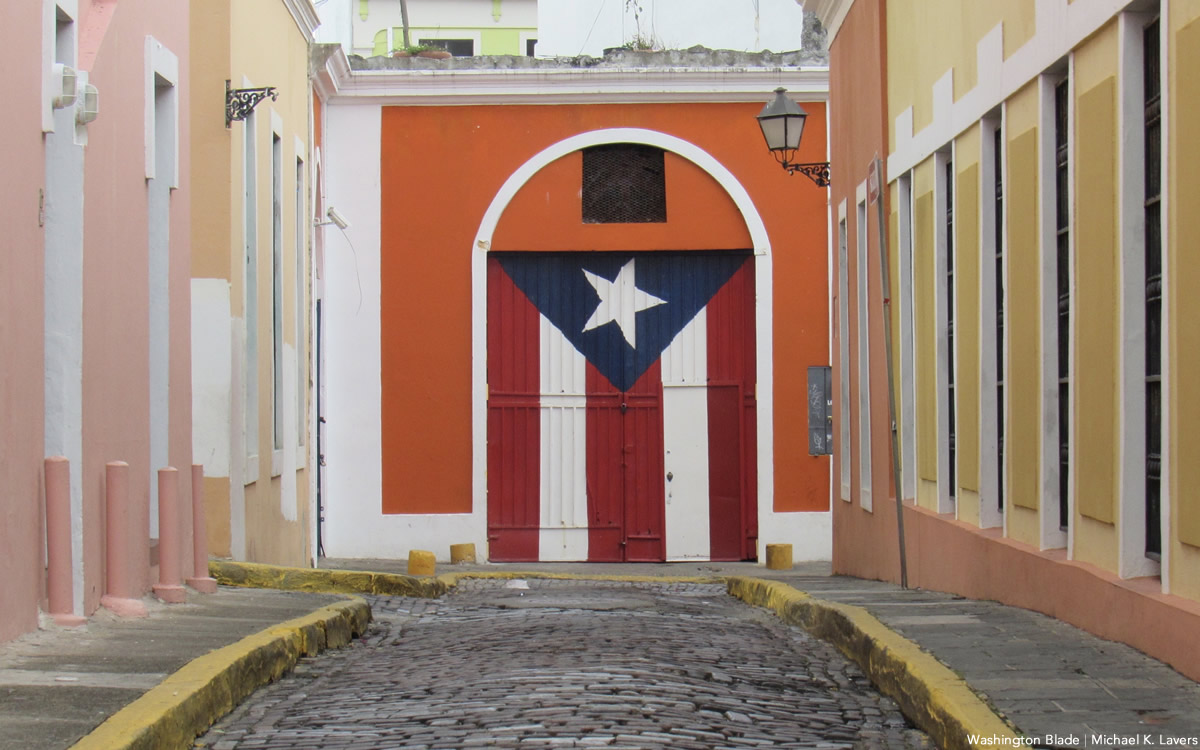
An activist from Puerto Rico who spoke at a Congressional Hispanic Caucus briefing last week in D.C. said anti-LGBTQ laws and policies have left the LGBTQ community in the U.S. commonwealth even more vulnerable.
“A human rights crisis is unfolding in Puerto Rico — one that disproportionately affects LGBT+ people, particularly transgender and nonbinary Puerto Ricans,” said True Self Foundation Executive Director Miguel Vázquez-Rivera.
The True Self Foundation and LatinoJustice PRLDEF participated in the briefing that took place on July 15.
Vázquez-Rivera during the briefing highlighted several anti-LGBTQ laws and policies that have been implemented since Gov. Jenniffer González took office in January 2025. These include Law 63-2025, which prohibits gender-affirming healthcare for anyone under 21, and Law 26-2026, which prohibits the University of Puerto Rico and other “government facilities” from installing “mixed or gender-neutral multi-occupancy restrooms.”
“The legislation aims to strengthen public safety standards while ensuring that no individual is subjected to unlawful discrimination,” noted the Puerto Rico Federal Affairs Administration on Feb. 25 in a press release after González signed it.
González, a Republican who is a member of the pro-statehood New Progressive Party, was Puerto Rico’s resident commissioner in the U.S. House of Representatives before she became governor. González supports President Donald Trump.
Vázquez-Rivera during the briefing highlighted anti-LGBTQ measures that have been introduced in the Puerto Rico Legislative Assembly. These include House Bill 164, which would prohibit transgender athletes from school sports teams that correspond with their gender identity, and House Bill 131, which would allow faith-based adoption agencies to deny services to same-sex couples.
“The overwhelming scientific evidence is clear: children raised by same-sex parents do just as well as those raised by different-sex parents,” said Vázquez-Rivera. “What matters is not the gender or the sexual orientation of the parents; but the presence of love, stability, and support.”
Trump upon taking office for a second time on Jan. 20, 2025, signed his “Defending Women from Gender Identity Extremism and Restoring Biological Truth to the Federal Government” executive order. Among its provisions is the federal government’s recognition of two genders: male and female.
Vázquez-Rivera noted “other proposals” in Puerto Rico “would recognize only ‘biological sex’ in government documents, prohibit inclusive language throughout public institutions, continue challenging recognition of nonbinary identities, and reverse protections for LGBT+ students previously adopted by the University of Puerto Rico.”
“The challenges facing LGBT+ Puerto Ricans cannot be viewed as isolated debates about healthcare, sports, bathrooms, or language,” said Vázquez-Rivera. “They are part of a much larger picture.”
“Puerto Rico is already confronting poverty, disaster recovery, healthcare shortages, and economic instability,” he added. “When discrimination is added to these realities, existing inequities become even deeper. Mental health worsens. Families are displaced. Communities become more vulnerable.”
Vázquez-Rivera further stressed “these issues are interconnected, and our response must be as well.” He also urged the LGBTQ rights movement to do more to support — and fund — advocacy efforts in Puerto Rico.
“Ultimately, this is not about granting special rights,” said Vázquez-Rivera. “It is about ensuring that more than three million American citizens living in Puerto Rico have the same opportunity to live healthy, safe, and dignified lives as every other American.”
The Puerto Rican government has not responded to the Washington Blade’s request for comment.
North Carolina
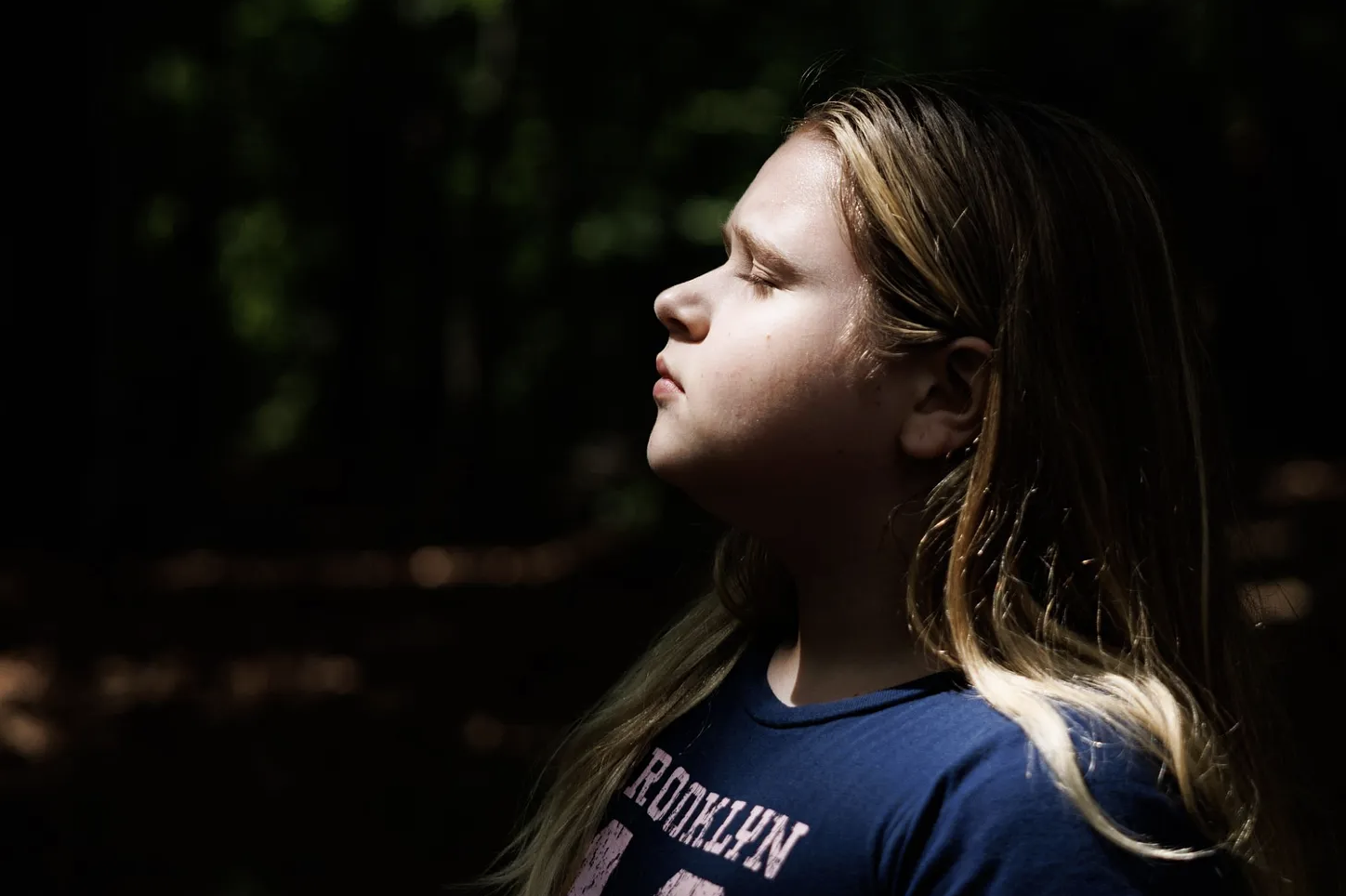
In the middle of the Bible Belt, a summer camp lets trans kids exhale
Adulthood feels possible at Transcending Adolescence
Uncloseted Media published this article on July 18.
By SAM DONNDELINGER | On a June night in rural North Carolina, dozens of campers sat around the fire as a counselor asked them to close their eyes.
“Picture a place where you feel completely safe,” they were told. “Think about what it looks like and how it feels, what you can hear, smell, and taste.”
When they were invited to share what they had imagined, one camper described sitting in a circle with other trans people. It was dark. Trees surrounded them. Mosquitoes buzzed.
“‘That place is here, and this is the place where I feel safe,’” Jacob Hofheimer, one of the camp’s founders, recalled the camper saying. “It got all of us.”
For many of the 8- to 17-year-olds who attend Transcending Adolescence, the weeklong summer camp offers a reprieve from the calculations they have to make in their day-to-day lives: Who knows they are trans? Who can be trusted? Which bathroom can they legally use?
At a time when 40 percent of transgender and nonbinary youth seriously considered attempting suicide in the past year, and 90 percent of LGBTQ youth reported that recent anti-LGBTQ laws, policies, and debates cause them stress or anxiety, those questions never disappear. But at this camp, young people are given space to ask them openly and to a community that understands why they need to.
“It really made me smile knowing that there’s a lot of people out there like me,” Ruby, a 12-year-old camper, told Uncloseted Media. “I’m putting myself out there, I’m being myself and no one judges me.”
Origins
Transcending Adolescence was founded in 2019 by Jacob and his wife Chrissy Hofheimer. The trans married couple wanted to create a camp for queer kids in America’s South, where affirming resources can be difficult to find.
Surrounded by thick woods and the backdrop of the Appalachian Mountains, campers swim, tie-dye shirts, complete ropes courses, roast marshmallows and perform in shows. They also gather for conversations about healthy relationships, medical care, legal rights, bathroom anxiety, coming out, misgendering, depression, substance use, and self-esteem.
“A huge part of it is that every single person there is trans or gender diverse, including the staff,” says Rory Sowers, a 19-year-old junior counselor from Florida. “That’s just something that you don’t get to experience a lot, especially as a young trans person.”
Sowers first attended Transcending Adolescence as a camper during its inaugural year in 2021. He returned three times before becoming a junior counselor.
“There’s so much that trans folks have to worry about just going about their day-to-day lives, especially living in the South,” Sowers says. “I was able to come into myself a lot more when I didn’t have all of those anxieties on my back.”
A place to be ‘just Ruby’
For 12-year-old Ruby, pre-camp anxiety was intense.
When she attended camp in June of last year, it was the first time traveling to another state without her parents.
“I was nervous about having someone there not really understanding me … and not really accepting me,” says Ruby, whose name has been changed to protect her privacy.
Outside camp, Ruby worries about how other people perceive her, according to her mom, Kate, whose name has also been changed. She says her daughter has to consider a litany of questions cis kids don’t have to worry about: “‘What if someone finds out? Are they looking at me? Do I look the part?’ … All these thoughts go through her head every single day.”
Before camp, Ruby had been struggling so intensely that her family had questioned whether it might feel easier for her “not to be who she was,” Kate says. Ruby had faced bullying in school, prompting her family to withdraw her and homeschool her for the remainder of fifth grade.
“I couldn’t really go anywhere without picking [at] myself because I was anxious,” Ruby says.
But when she arrived at camp, a lot of Ruby’s anxiety subsided. She didn’t have to introduce herself through the lens of being trans. She could just be herself: a funny, theatrical, outgoing 12-year-old who likes Beyoncé, improvises rap battles, and wants to be in the center of dance shows.
“She can just go there and just be [Ruby],” Kate says. “[Being trans] is only a little piece of her. There’s so much more to her, and she’s able to do that for the whole week. … It was completely life-changing for her.”
Research suggests that spaces like Transcending Adolescence can have powerful mental health effects.
Young people tend to fare better when they feel they belong and have access to peers and adults who understand them. In one small study from 2021, participants of a six-day LGBTQ summer camp reported increased resilience, self-esteem and quality of life. Focus groups indicated that transgender and nonbinary campers found an affirming environment that offered social opportunities they had been unable to find elsewhere.
Though this environment can be transformative, it’s intimidating at first for some. Jacob remembers asking one camper from Texas his pronouns during medical check-in, and the boy responding that he used “guy pronouns” because he “was a guy.”
Jacob recalled him being closed off and leery of the “hippie-dippy nonsense.”
But on the second-to-last night, Jacob overheard him speaking with a fellow camper.
“‘When I first came here, I thought that I was a disgusting, mutilated pig and an alien, and nobody would ever love me because I’m trans,’” Jacob recalls the camper saying. “‘And now I know that being trans doesn’t make me disgusting. It’s actually a beautiful thing.’”
He later texted Jacob to say the camp had given him confidence during the school year.
“‘Half the time, I forget that I’m trans,’” Jacob remembers him writing. “‘I’m just a guy. I’m just me.’”
“Finding places where you literally see yourself and can be seen by others for who you are is important during adolescence. It’s a human need,” Stephen Russell, professor of social and family dynamics at Arizona State University, told Uncloseted Media. “For trans youth, especially those who may not feel fully accepted at school, at home or in their faith communities, a camp where their identity isn’t something they have to navigate or defend, but is simply centered as part of who they are, can be transformative.”
Filling the gaps
The Hofheimers know that these spaces can transform the mental health of trans youth because they experienced it firsthand when they met while working as lifeguards at a summer camp for young queer people in New Hampshire.
The camp was doing important work, Jacob says, but many of its attendees came from privileged families in New England and other parts of the country where affirming programs were more accessible. Far fewer came from places such as Florida, Georgia, and Texas.
That’s why, for the location of the camp, they intentionally chose North Carolina, a state that has laws on the books that exclude trans girls from participating in sports, restrict the instruction of LGBTQ topics in schools and ban gender-affirming care for trans youth.
“Access is really, really important,” Chrissy says, adding that while the camp costs $1,975 for the week, they offer robust financial aid, including a $1,500 “no questions asked” subsidized rate for families who can’t afford it.
At the camp, the staff educates campers about anti-trans laws, coming out, and how to have conversations with their doctors about gender-affirming care.
“The kids want to talk about this stuff,” Jacob says. “That was the gap that we identified.”
For Chrissy, baking education into the camp’s programming is personal: When she was transitioning as a young adult, accessing informed medical care was difficult. During consultations, doctors either quoted prices she could not afford or refused to treat her. One told her that they did not “put boobs on men.”
Desperate to change her chest, Chrissy turned to a friend who had undergone illegal silicone injections without an apparent complication. She received what she believed were similar injections in Florida.
But the substance wasn’t silicone, she says, and it hardened and became intertwined with her breast tissue. Seventeen years later, Chrissy underwent a double mastectomy to fix the damage.
This experience became one of the driving forces behind the camp’s educational work.
“Accurate information might have changed the course of my life,” Chrissy says.
To provide information that breaks out of the TikTok and Reddit misinformation bubble many campers exist in at home, Chrissy and Jacob bring in experts and host nightly fireside chats.
Each night, campers gather around for structured conversations about the nuances of being trans. They talk about coping with misgendering, managing bathroom anxiety, identifying red and green flags in relationships, asking for help, and caring for their mental health.
Jacob, who is a certified nurse practitioner, helps answer questions about gender-affirming care. A trans attorney explains policies affecting campers in different states and separates the practical effects of those laws from incomplete information and political fearmongering.
“It made me think about the people who I tell I am trans to and what I have to do to make sure I feel comfortable telling them,” Ruby says. “It let me think about all these questions I had but didn’t really know how to ask.”
Building what comes next
Chrissy hopes the results from the camp’s program will eventually be replicated across the country.
For now, roughly 30 campers come together for one week each summer. Some arrive unhappy about being sent to camp. But by the final day, Sowers says, those same campers are often crying because they do not want to leave.
They return home to the same schools, states, and political climates where they have to decide when it is safe to disclose their identities and how to respond when someone does not understand them.
But at camp, Ruby, among the other campers, found a weeklong respite and saw trans adults who were not merely surviving but building careers, relationships, and communities.
“After the camp, I really haven’t been talking about how I feel insecure that I’m trans,” Ruby says. “I can’t wait to go back and see the people I met and [meet] new friends.”

1 dead, 15 injured when van drives into crowd at Berlin Pride

‘Into the Grey’ unites Cavill, Gyllenhaal for thrills and gay love

Winsome Earle-Sears launches campaign against Va. marriage equality amendment

Calendar: July 24-30

Pentagon says hormones make trans troops unfit but gives them to men

Tickets on sale for chef Patrick O’Connell’s book launch event

Remembering Victoria Cruz, Stonewall veteran and beloved trans activist

In the middle of the Bible Belt, a summer camp lets trans kids exhale

Polish president vetoes same-sex relationship recognition bills

LGBTQ ‘human rights crisis is unfolding in Puerto Rico’
-

 a&e features5 days ago
Tickets on sale for chef Patrick O’Connell’s book launch event
-
National5 days ago
Remembering Victoria Cruz, Stonewall veteran and beloved trans activist
-
North Carolina4 days ago
In the middle of the Bible Belt, a summer camp lets trans kids exhale
-
Poland4 days ago
Polish president vetoes same-sex relationship recognition bills