Arts & Entertainment
Catching up with Kristine W.
Dance diva playing blossoms, Town Saturday
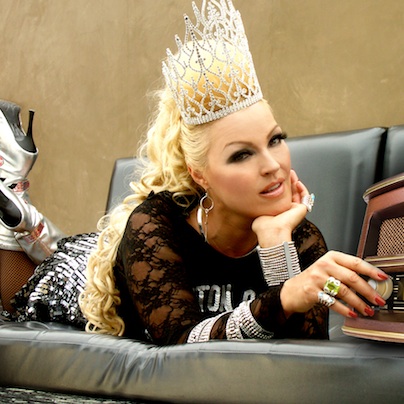
Kristine W.
Town Danceboutique
2009 8th Street, NW
Doors — 10 p.m.
Performance — midnight
Cover — $8 before 11; $12 after
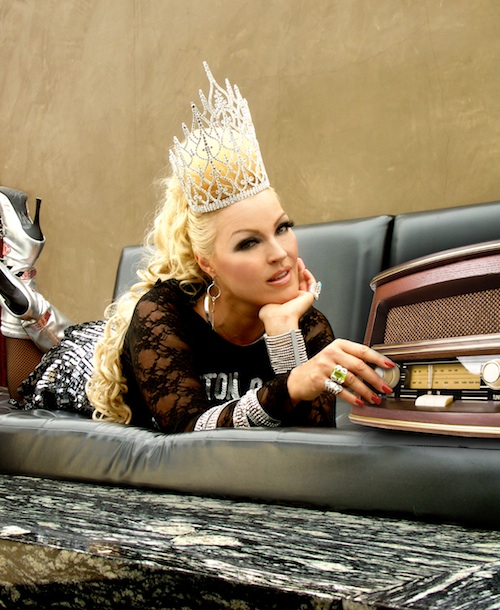
Dance diva Kristine W. has two D.C. engagements slated for Saturday (Photo courtesy Project Publicity)
It’s 11 a.m. on a recent weekday in Burbank, Calif., and Kristine W. is in a happy mood — she just got measured for alterations for a dress she’s going to wear this weekend for one of her D.C. performances.
“It’s a relief,” she says en route to a rehearsal. “You have to have something great to wear in a parade. We just left the costume shop where they fitted it. Sometimes that’s the biggest challenge — finding something to wear.”
The dance diva who’s famous for having scored a whopping 16 No. 1 hits on the Billboard Hot Dance Club chart over a 20-year recording career, has two gigs slated for D.C. this weekend — she’ll perform in a cherry blossom parade then Saturday night around midnight she’ll do a 20-minute mini-set at Town. Though she’s only briefly cracked the Hot 100, she trails only Madonna and Beyonce as the top dance charter for the ‘00s and has had more consecutive dance No. 1s than any other artist.
She’s looking forward to returning to Town, she says.
“It’s an amazing club and Ed (Bailey) is a great guy. And you know, it’s a real club, it’s the real deal. Some clubs are very put on but this is Town, a real club with real chill DJs.”
The dancing queen is a bit of an enigma — she’s vague on personal details though she’s talked publicly about being a Washington state native and a cancer survivor. She admits to being “in a relationship at the moment,” but declines to elaborate. She has “a couple of very cool kids,” a girl and a boy, 11 and 12.
“They’re in school and having a great time. My girl plays the violin and my boy is a guitar player and a great golfer.” Kristine has lived in Las Vegas for about 18 years. She says it’s a great home base though she’s on the road “at least” 60 percent of the year on average.
She’s been successful at continuing her chart success despite the rampant music industry changes over the last several years. Kristine says her performances fuel her recording efforts. Her last album, a jazz project that had several remixed singles, did well and led to some cabaret gigs for her. Next up is a mostly new album — eight new songs and four hits in newly remixed versions for a project slated to drop in early June.
Despite all the high-concept photography and sonic production, Kristine says she lives a mostly low-key life when she’s not working.
“I don’t live a flashy life and I mostly put everything back into my music. My shows have subsidized my music. I put everything into promotion, pay my graphic artist, my project manager, then my livelihood comes from my live shows.”
Kristine gives mostly succinct answers during a 20-minute phone chat, but a question about her earliest gay influences inspires a story.
“The choir director at our church was gay but nobody ever talked about it,” she says. “There’s no way he would have come out but he was one of my best friends. My mom would pretend to be his girlfriend and all four of us — my dad had died when we were little, we were like 2, 3, 4 or 5 when he died — but he stepped in and because I was so crazy about music, he really had an influence on me. So he taught sixth grade and had this award-winning children’s choir, and my mom was like we totally get it that you could not say anything, it would ruin his career, but then later they were naming a school after him. He died of cancer when I was like 13. He would love it now that I have such a gay following with my music. I’m pretty sure he probably died of AIDS but back then everybody just said it was cancer.”
Later Kristine had a vocal coach who was gay. She credits him and solid operatic voice lessons in high school with her musical chops. Though she doesn’t sing classical music anymore, she says the training informed her precision.
“There was no room for anything flat or sharp,” she says. “That was not on the program. You hit the note dead on.”
Unfortunately she says there’s no trophy or plaque that comes when you get a Billboard chart topper. The magazine does, however, do an article on the single which she saves and frames.
And why is dance music so popular with gays? After all, she should know after staking out her career in the genre, no?
“Because it’s uplifting and happy,” she says. “It’s just like medicine for the soul.”





Sports
New IOC policy bans trans women from Olympics
New regulation to be in effect at 2028 summer games in Los Angeles
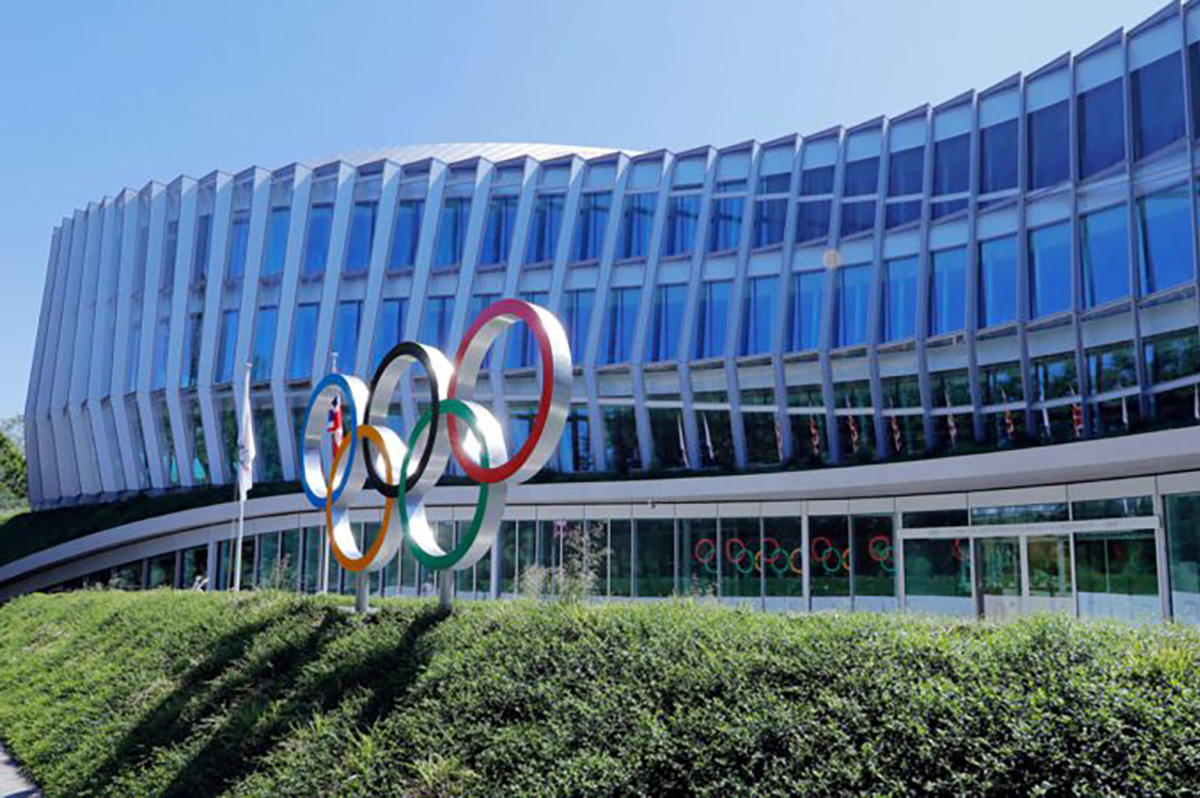
The International Olympic Committee on Thursday announced it will not allow transgender women from competing in female events at the Olympics.
“For all disciplines on the Sports Program of an IOC event, including individual and team sports, eligibility for any Female Category is limited to biological females,” reads the new policy.
The policy states “eligibility for the Female Category is to be determined in the first instance by SRY Gene screening to detect the absence or presence of the SRY Gene.”
“On the basis of the scientific evidence, the IOC considers that the SRY (sex-determining Region Y) Gene is fixed throughout life and represents highly accurate evidence that an athlete has experienced or will experience male sex development,” it reads. “Furthermore, the IOC considers that SRY Gene screening via saliva, cheek swab or blood sample is unintrusive compared to other possible methods. Athletes who screen negative for the SRY gene permanently satisfy this policy’s eligibility criteria for competition in the Female Category.”
The policy states the test “will be a once-in-a-lifetime test” unless “there is reason to believe a negative reading is in error.”
The new regulation will be in place for the 2028 Summer Olympics in Los Angeles.
“I understand that this a very sensitive topic,” said IOC President Kirsty Coventry on Thursday in a video. “As a former athlete, I passionately believe in the rights of all Olympians to take part in fair competition.”
“The policy that we have announced is based on science and it has been led by medical experts with the best interests of athletes at its heart. The scientific evidence is very clear: male chromosomes give performance advances in sport that rely on strength, power, or endurance,” she added. “At the Olympic Games, even the smallest margins can be the difference between victory and defeat. So, it is absolutely clear that it would not be fair for biological males to compete in the female category. In addition, in some sports it would simply not be safe.”
(Video courtesy of the IOC)
Laurel Hubbard, a weightlifter from New Zealand, in 2021 became the first trans woman to compete at the Olympics.
Imane Khelif, an Algerian boxer, won a gold medal at the 2024 Summer Olympics in Paris. Khelif later sued JK Rowling and Elon Musk for cyberstalking after they questioned her gender identity.
Ellis Lundholm, a mogul skier from Sweden, this year became the first openly trans athlete to compete in any Winter Olympics when he participated in Milan Cortina Winter Olympics in Italy.
President Donald Trump in February 2025 issued an executive order that bans trans women and girls from female sports teams in the U.S.
The U.S. Olympic and Paralympic Committee last July banned trans women from competing in female sporting events. Republican lawmakers have demanded the IOC ban trans athletes from women’s athletic competitions.
“I’m grateful the Olympics finally embraced the common sense policy that women’s sports are for women, not for men,” said U.S. Sen. Tom Cotton (R-Ark.) on X.
An IOC spokesperson on Thursday referred the Washington Blade to the press release that announced the new policy.
a&e features
Introducing the Torchbearers Awards honoring queer, trans women and nonbinary people
Meet the Legends and Illuminators lighting new paths
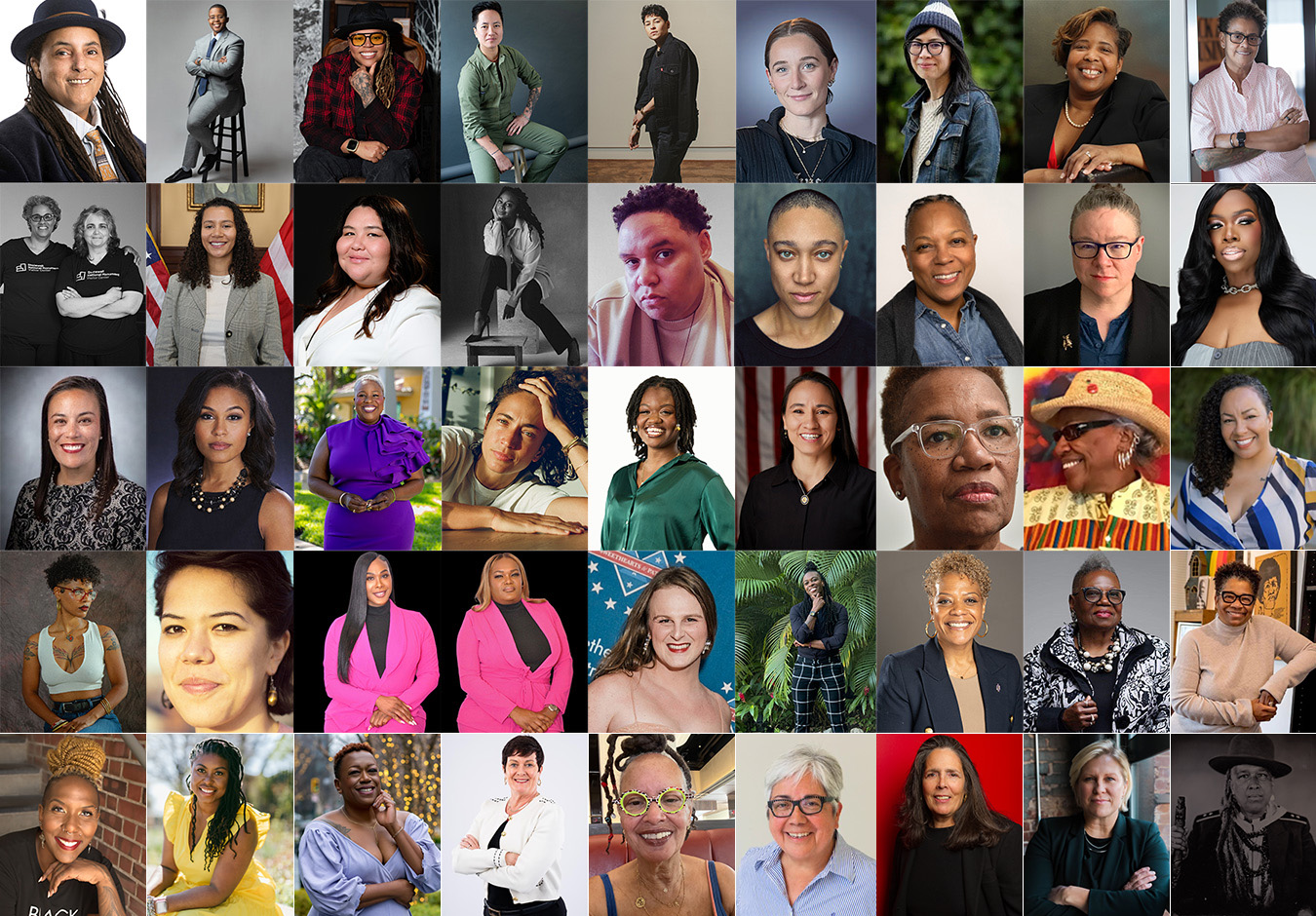
The Torchbearers Awards are more than recognition—they are a continuation of legacy. They honor the quiet architects of progress in our community: those who organize, advocate, build, and protect, often without fanfare but always with purpose. Rooted in a belief in intentional recognition, this honor names those who carry our movements forward—those who make room for others, who remind us that change is both generational and generative. In a time marked by uncertainty and challenge, these leaders push forward with courage, clarity, and an unwavering commitment to expanding opportunity and equity.
This year’s honorees reflect the full breadth of our community, spanning generations, backgrounds, identities, and industries. From Legends, with decades of leadership and having created pathways for others, to Illuminators, who are lighting new paths with creativity and innovation, each Torchbearer represents the power of intergenerational leadership and the strength found in our diversity. They are organizers, advocates, artists, policy leaders, healers, and changemakers whose lived experiences shape a shared vision for equity and liberation.
This award is our love letter to queer and trans women and nonbinary people who carry the flame when it would be easier to let it dim. To those who consistently show up, who use their voice and visibility and stand firm, often without recognition, so that others may live more freely and fully. The Torchbearers Awards celebrates not just what has been done, but the enduring spirit, responsibility, and collective care that ensure the work continues, and that the flame is always passed forward.
Co-Creators of the Torchbearers Awards: Shannon Alston, June Crenshaw, Heidi Ellis
Torchbearers Awards Advisory Board: Aditi Hardikar, Lesley Bryant, Jasmine Wilson-Bryant, Stephen Rutgers

ILLUMINATOR AWARDEES
- Representative Sharice Davids (she/her), (D, KS-03)
— U.S. House of Representatives - Greisa Martinez Rosas (she/her/ella)
— Executive Director, United We Dream - Paola Ramos (she/her)
— Journalist & Correspondent - Meagan A. Fitzgerald (she/her)
— Journalist & Correspondent - Jessica L. Lewis (she/her)
— Founder / Producer, Play Play DC - Savannah Wade (she/her)
— Founder, OAR Agency - Suhad Babaa (she/her)
— Filmmaker/ Former Executive Director of Just Vision - Ashlee Davis (she/her)
— Global Head of Inclusive Outcomes, Ancestry - Jazmine Hughes (she/her)
— Journalist and Former Editor at New York Times Magazine - Queen Adesuyi (she/they)
— Policy Advisor & Organizer, ReFrame Health & Justice - Michele Rayner, Esq. (she/her)
— Civil Rights Attorney, State Representative (Florida House of Representatives) - Gaby Vincent (she/her)
— Sports/Cultural Commentator and Community Leader - Jenny Nguyen (she/her)
— Founder & Owner, The Sports Bra - Denice Frohman (she/her)
— Independent Artist, Poet / Performer - Vida Rangel (she/her)
— Founder, Our Trans Capital - Roxanne Anderson (they/them)
— Executive Director, Our Space - Ann Marie Gothard (she/her)
— Co-Founder & President, Pride Live (Stonewall National Monument Visitor Center) - Diana Rodriques (she/her)
— Co-Founder & CEO, Pride Live (Stonewall National Monument Visitor Center) - Wendi Cooper (she/her)
— Founder / Executive Director, Transcending Women - Toya Matthews (she/her)
— City of San Antonio, Texas - Mayor Gina Ortiz Jones (she/her)
— Sports/Cultural Commentator and Community Leader - Charity Blackwell (she/her)
— Poet, LGBTQ Advocate & Community Leader - Wilhelmina Indermaur (she/her)
— Director of Communications, Tyler Clementi Foundation - Em Chadwick (she/her)
— CMO, For Them & Autostraddle - Kylo Freeman (they/he)
— CEO, For Them & Autostraddle
LEGEND AWARDEES
- Sheila Alexander-Reid (she/her)
— Executive Director, PHL Diversity, Philadelphia Convention & Visitors Bureau - Cassandra Cantave Burton (she/her)
— Interim Director of Thought Leadership & Senior Research Advisor, AARP - leigh h. mosley (she/her)
— Photographer / Educator, PhotoFlo Photography - Jenn M. Jackson, PhD (they/them)
— Assistant Professor of Political Science; Author & Columnist, Syracuse University - Jordyn White (she/her)
— COO, Washington Prodigy / VP of Leadership Development & Research, HRC Foundation - AJ Hikes (they/them)
— Deputy Executive Director, ACLU - RaeShanda Lias (she/her)
— Digital Creator, RL Lockhart - Donna Payne-Hardy (she/her)
— Educator, EEO Specialist, Former Leader at the Human Rights Campaign - Courtney R. Snowden (she/her)
— Principal, Blueprint Strategy Group - Gaye Adegbalola (she/her)
— Musician & Activist, Musician / Inductee of the Blues Hall of Fame - Cheryl A. Head (she/her)
— Independent Author, Novelist (Crime Fiction) - Letitia Gomez (she/her)
— The American LGBTQ+ Museum, Formerly of Voto Latino - Lynne Brown (she/her)
— Publisher, Washington Blade - Shay Franco-Clausen (She/Her/Ella/Queen)
— Political Strategist and Organizer - Melissa L. Bradley (she/her)
— Founder & Managing Partner, New Majority Ventures - Meghann Burke (she/her)
— Executive Director, NWSL Players Association - Victoria Kirby York, MPA (she/they)
— Director of Public Policy & Programs, National Black Justice Coalition - Joli Angel Robinson (she/her)
— CEO, Center on Halsted - Jeannine Frisby LaRue (she/her)
— CEO, Moxie Strategies - Alice Wu (she/her)
— Film Director (Saving Face, The Half of It) / Screenwriter - Storme Webber (she/her)
— Interdisciplinary Artist / Educator, University of Washington - Kim Stone
— CEO of the Washington Spirit, Washington Spirit - Mickalene Thomas
— American Visual Artist, Mickalene Thomas Studio - Erika Lorshbough (any/they/she)
— Executive Director, interACT - J. Gia Loving (she/ella)
— Co-Executive Director, GSA Network
Celebrity News
D.C. goes gaga for Gaga
Bisexual icon brought ‘The Mayhem Ball’ tour to Washington this week

Lady Gaga this week took D.C. by storm.
The bisexual icon and LGBTQ rights champion brought “The Mayhem Ball” tour to Capital One Arena on Monday and Tuesday.
“Abracadabra,” “Paparazzi,” “Applause,” and “Bad Romance” are among the songs Lady Gaga performed during the 2 1/2-hour long concert. Lady Gaga also celebrated her many queer fans.
“You are precious to us,” she said on Tuesday night before she performed “Born This Way.”

‘No Kings’ protests set for D.C.

Border to border: modern slavery and human trafficking in refugee movements across East Africa

New IOC policy bans trans women from Olympics

Introducing the Torchbearers Awards honoring queer, trans women and nonbinary people

Pa. House passes bill to codify marriage equality in state law

PHOTOS: Capital Stonewall Democrats 50th anniversary

‘Inherit the Wind’ isn’t about science vs. religion, but the right to think

Small is beautiful: subcompact SUVs

Polish court rules country must recognize same-sex marriages from EU states

Capital Stonewall Democrats 50th anniversary gala draws sold out crowd
-

 Photos3 days ago
PHOTOS: Capital Stonewall Democrats 50th anniversary
-
Theater4 days ago
‘Inherit the Wind’ isn’t about science vs. religion, but the right to think
-
Autos4 days ago
Small is beautiful: subcompact SUVs
-
Poland3 days ago
Polish court rules country must recognize same-sex marriages from EU states