Health
Pharmacies accuse D.C. of threatening AIDS drug program
Health director says HIV patients will get drugs on time
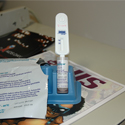

A decision by the D.C. Department of Health to terminate its contract with a local pharmacy chain that has administered the city’s AIDS Drug Assistance Program, or ADAP, could prevent patients who rely on the program from refilling their prescriptions after July 1. (Photo by Dvortygirl via Wikimedia)
A representative of at least 15 D.C. pharmacies dispensing prescription drugs for low income people with HIV and AIDS and the director of the city’s Department of Health gave conflicting views this week on whether patients’ ability to refill their prescriptions for life-saving AIDS drugs will be disrupted beginning July 1.
A decision by DOH to terminate its contract with the local pharmacy chain Care Pharmacies that has administered the city’s AIDS Drug Assistance Program, or ADAP, was expected to prompt an as yet undetermined number of pharmacies to discontinue serving ADAP patients, potentially preventing the patients from obtaining the drugs when their current prescriptions run out, according to pharmacist Michael Kim, owner of Grubbs Pharmacy.
“This is going to be an absolute disaster,” said pharmacist Tamara Foreman, a member of the D.C. Board of Pharmacies, an independent entity that advises the city on pharmacy related matters.
“The patients are not being notified,” said Foreman, who also serves on the board of a non-profit organization that advocates on behalf of pharmacy patients. “They are being told to anticipate a gap in service, but they’re not being told where to go if their pharmacy stops filling their prescription.”
Dr. Mohammad Akhter, director of the DOH, and Dr. Gregory Pappas, director of DOH’s HIV/AIDS, Hepatitis, Sexually Transmitted Disease, and Tuberculosis Administration (HAHSTA), strongly dispute that assessment. Both told the Blade that no ADAP patients will be adversely impacted by the pharmacy related changes DOH is putting in place.
“We are providing the patients with a 60-day supply of drugs during the transition period,” Akhter told the Blade on Wednesday at a news conference on the release of the city’s 2011 Annual Report on its efforts to combat HIV/AIDS.
“I can tell you that no patients will be harmed in any way,” said Akhter.
He said DOH recently decided to postpone for one month the implementation of the revamped ADAP pharmacy program.
But he and Pappas declined to disclose how many pharmacies involved in the existing ADAP program operated by Care Pharmacies and how many others have opted to join the revised program to be operated directly by DOH.
Some AIDS activists, including Patricia Hawkins, a former Whitman-Walker Health official and member of the D.C.-area HIV Planning Council, have expressed concern that patients’ ability to refill their ADAP prescriptions could be jeopardized if too few pharmacies agree to be part of the new DOH pharmacy network.
Kim said Grubbs planned to stop serving ADAP patients beginning July 1, when the new city-administered program was originally scheduled to go into effect. Kim couldn’t be immediately reached to determine whether Grubbs would continue filling ADAP prescriptions for another month following DOH’s decision to postpone the new program.
Kim indicated in an earlier interview that DOH might postpone implementation of the new program, but said DOH had not informed Care Pharmacies that it planned to do so.
He and others familiar with the ADAP program said they were told by the city that a list of the participating pharmacies in the new program would be released on June 15.
The city didn’t release such a list on that date, prompting pharmacists and activists to fear that too few pharmacies would join the new system to adequately serve ADAP patients in need of prescriptions.
Kim said Grubbs, which is believed to have processed the largest number of ADAP prescriptions in D.C. over the past decade, isn’t signing up for the city’s revamped program because the DOH has cut in half its reimbursement payment for ADAP drug prescriptions and plans to keep the lower payment in place for the next five years.
He said the lower payment makes it too costly for Grubb and other pharmacies to process ADAP prescriptions. He acknowledged that Care Pharmacies currently collects the reimbursement for the prescriptions from the city, takes a cut to cover its own administrative costs and disburses the remaining amount of about $7 per prescription to the other pharmacies in the current program. The city was expected to dispense the reimbursement directly to each pharmacy under the new system.
ADAP, a joint federal-state program, was created under the Ryan White AIDS Care Act in the early 1990s as a means of providing life-saving AIDS drugs to low-income patients as well as symptom-free people with HIV who don’t have private health insurance coverage and can’t afford to pay for the drugs.
Many of the HIV medications, such as anti-retroviral drugs, cost between $1,000 to as much as $2,000 for a one-month prescription, AIDS advocacy groups familiar with ADAP have said.
A staffer with the city’s AIDS administration, who isn’t authorized to speak to the media, said DOH chose to set up its own network of local pharmacies to process ADAP drug prescriptions rather than renew Care Pharmacies’ contract to “expand the options” for patients.
The staffer said DOH wanted to bring in more pharmacies and different types of pharmacies, including those providing mail order services, into the ADAP network beyond the 24 that have been participating under the Care Pharmacies network.
Kim, who serves on the Care Pharmacies board of directors, said that in addition to about 24 pharmacies that are part of the Care Pharmacies franchise, several unaffiliated pharmacies were part of Care’s ADAP network. Among them was Whitman-Walker Health, the city’s largest private AIDS services provider, which has its own in-house pharmacy. Others included the AIDS Healthcare Foundation, a worldwide AIDS care provider that has an in-house pharmacy in its D.C. office; and Safeway supermarket stores, which also have in-house pharmacies.
Foreman said the non-profit group CMS Health Initiative, with which she is affiliated, has provided quality control training and supervision under a city contract to ensure that D.C. pharmacies dispensing ADAP drugs meet the city’s requirements under the ADAP program operated by Care Pharmacies.
She said that in order to be approved by the city to dispense ADAP drugs, a pharmacy is required to provide patient counseling and a series of other patient-related services, including checks to make sure patients remain compliant with their drug regimen and don’t drop out of the program, placing their health at risk. She said all pharmacies in the program must provide free delivery service to patients.
Foreman and Kim also noted that under rules established by the D.C. DOH, pharmacies participating in the city’s ADAP program are reimbursed under a drug “replenishment” system. The system, which saved money for the city, requires the pharmacies to pay wholesale pharmaceutical supplies the first month’s prescription for all new patients. The city then replenishes the pharmacies with supplies of drugs for all subsequent prescriptions.
Kim said the system requires a pharmacy to pay out of pocket for the first prescription, which could come to between $1,000 and $2,000. He said he now fears that the expected fewer number of pharmacies that join the city’s in-house network will be hit by dozens of patients dropped from the pharmacies like Grubb’s, that choose not to join the new network.
“They could be facing an initial payment of $40,000 in a single month,” Kim said. “Many of them just can’t absorb that. They are small, independent pharmacies.”
One city government source, speaking on condition of anonymity, said Care Pharmacy and its representatives were exaggerating the potential harm the changes will have on patients because the city has ended what the source called a “sweetheart deal” for Care Pharmacies.
Kim disputes claims by sources from the DOH that the new city-operated network will include improved services and options over and above the Care Pharmacies contract.
“Basically, in my opinion, it’s all about money,” he said. “They feel that they are paying too much for the ADAP program. If you look at their program, they just took the current program that’s being run by Care Pharmacies and then they put it out and stamped it with their name and they cut the reimbursement in half. And that’s it,” he said.
“So if they say they’ve improved the program somewhat that’s a flat out lie because they haven’t done anything to the program except cut the reimbursement in half.
He said the current per-prescription reimbursement to Care Pharmacies is $20.50. DOH has invited pharmacies to apply to be accepted into the new program for a reimbursement of $10.50, he said.
“I can tell you that $10.50 was the rate that was given to us about 10 years ago,” Kim said. “It just doesn’t cover the costs.”
Whitman-Walker and AIDS Healthcare Foundation are among the local pharmacy providers that have signed up to be part of the new city ADAP network, representatives of the two organizations said.
Jerame Zelner, regional director of AIDS Healthcare Foundation’s pharmacies, said AHF is “very concerned” that many ADAP patients in D.C. will be unable to refill their prescriptions if a large number of local pharmacies that once participated in the program don’t join the new city network.
“We are taking steps to step in and help,” he said, noting that AHF, with a multi-million dollar budget, has the financial cushion to absorb the cost of a first month’s supply of drugs that other smaller pharmacies may not have.
AIDS Healthcare Foundation’s offices and pharmacy are located at 2141 K St., N.W., Suite 606. Zelner said that AHA, like all pharmacies participating in the current and soon-to-be started ADAP pharmacy network, provides fill delivery services for prescription drugs.
Hawkins of the HIV Planning Council said the Council is also concerned about patients not being able to fill prescriptions during the transition into the new program.
“No one from the city has told us how many pharmacies are dropping out and how many will be joining the new system,” she said. She said the Planning Council would be taking up the issue at an executive committee meeting on June 21.
Don Blanchon, Whitman-Walker’s executive director, said he doesn’t believe patients will suffer under the new system and said Whitman-Walker looks forward to its participation in the new program.
According to Blanchon, a decision during the past few years by the city to transfer many of its ADAP patients to the city’s Medicaid program has significantly decreased the number of remaining ADAP patients.
“There are currently around 500 ADAP patients and Whitman-Walker has 400 of them,” he said.
He said he doesn’t think city pharmacies should have a problem dispensing prescription drugs to the remaining 100.



Cannabis Culture
LGBTQ people, weed, and mental health: what you need to know
Community uses marijuana at much higher rates than general population

Uncloseted Media published this story on May 7.
By SPENCER MACNAUGHTON | In 2025, the global cannabis market size was valued at nearly $103 billion. By 2034, that number is expected to explode by roughly 1,400 percent to more than $1.43 trillion.
In short, as an increasing number of countries legalize marijuana use, everyone is starting to consume a lot more weed. And LGBTQ people tend to use cannabis at much higher rates than the general population. One study found that 55 percent of lesbian and 45 percent of gay young adults use marijuana, compared to about 33 percent and 37 percent, respectively, of their straight counterparts.
As LGBTQ people face a mental health crisis, the mainstream stereotypes that depict weed as an antidote for anxiety, panic and depression aren’t painting the full picture. And that could be exacerbating the mental health struggles so many queer people, and especially youth, face.
Here’s what the research demonstrates about marijuana and its effects on mental health:
- Multiple studies suggest a link between marijuana use and an increased risk of mental health disorders, including schizophrenia, depression and anxiety in individuals who are genetically predisposed.
- One study found that daily marijuana use, especially among younger people, makes some individuals seven times more likely to develop psychosis.
The increase in higher-potency strains of marijuana could pose unknown risks. In 1995, the average content of Tetrahydrocannabinol (THC) in confiscated marijuana was less than 4 percent. In 2022, it was more than 16 percent. Researchers don’t know the full extent of the impact that these higher concentrations can have on mental health and especially on younger people whose brains are still developing.
- A systematic review of studies published between 2013 and 2025 found damning results for the mental health of young cannabis users:
They were 51 percent more likely to experience depression, 58 percent more likely to experience anxiety, between 50 and 65 percent more likely to experience suicidal ideation and 80 to 87 percent more likely to have attempted suicide.
- While the above stats paint a grim picture, there is also some research that suggests benefits of cannabis use:
- A 2025 systematic review found that “medicinal” weed showed some efficacy in relieving withdrawal symptoms of opioid use disorder. THC use has been associated with improvement of post-traumatic stress disorder symptoms, bipolar symptoms and sleep quality.
- Other studies found that THC administered in a controlled setting was associated with a decrease of symptoms and adverse effects for a range of mental health disorders, including schizophrenia, psychotic symptoms, and anorexia nervosa.
Beyond what we pulled from academia, there is an astounding lack of information about the interplay between weed and mental health. As we dive deeper into Mental Health Awareness Month, I hope advocacy organizations, influencers and news outlets ramp up their coverage of this important topic that affects the countless LGBTQ weed smokers, many of whom are already struggling.
Health
UPDATED: Trans-led HIV clinic in Portsmouth struggles amid funding cuts
As states across the U.S. cut funding for HIV care this small clinic in Va, is still fighting

Two years ago, Nyonna Byers, a transgender woman from Portsmouth, Va., founded Ending Transmission of Sexual Infections (ETSI) Health Clinic to support a community she saw struggling with rising HIV rates. Now, as costs continue to climb and funding for HIV healthcare initiatives is being cut across the United States, Byers says her transgender identity has made it harder to secure the financial support her clinic needs to survive.
Portsmouth, with just under 100,000 people, is right across the Elizabeth River from Norfolk.
“We’re an HIV-led organization here in Portsmouth, providing services throughout the Hampton Roads area,” Byers told the Blade. “As a trans-led organization—with me as the founder and executive director—I’ve received a lot of rejection when it comes to funding. That’s one of the main reasons why we’re struggling to keep the clinic open. Without funding, we can’t provide HIV treatment or care, and then we’re just a theoretical organization—we can’t be impactful in the community we serve.”
She said the data clearly shows a need for increased investment in HIV care in Portsmouth, but the response from leadership has not matched the urgency of the crisis.
“Portsmouth is one of the smallest cities with one of the highest HIV rates, and there are very few HIV-led organizations or clinics here. The need is urgent, but the response doesn’t match it. We’re doing the work on the ground, but we’re not getting the support to sustain it. That disconnect is what’s hurting people the most.”
That need, Byers explained, continues to grow as ETSI struggles to meet the financial demands of the life-saving work it provides.
Portsmouth has one of the highest HIV prevalence rates in Virginia, with roughly 736.9 cases per 100,000 people—a rate that exceeds both state and national averages.
“Leaders like the mayor and city council don’t focus on public health or social health. They focus more on development—building the city up physically—rather than investing in the health of the people. I’ve applied for funding multiple times and been denied. Every time I’ve asked for resources, I’ve been turned away.”
When asked why, Byers said the answer felt clear to her.
“I honestly believe I was denied funding because I’m trans. I told the mayor I was going to go public with it, because it’s not fair. We’re on the ground doing the work to end HIV, and we’re still not getting the support we need. That’s not just frustrating—it’s harmful.”
While she said local support has been lacking, Byers noted that the state has stepped in—though the funding still falls short of what is needed to sustain the clinic long term.
ETSI Health Clinic was included as a recipient of funding in the Virginia 2027–2028 Senate budget, receiving $50,000 per year from the Virginia General Fund. Byers specifically credited State Sen. Lillie Louise Lucas with helping secure that funding, which she said did not come from city leadership.
Byers shared that she has given up a lot to keep ETSI afloat, but the costs just keep coming.
“I’ve worked a lot of contracts—jobs paying $30 to $40 an hour—and poured that money into my clinic. But the downside is that I’m struggling personally. I’ve lost cars, I’ve lost a house—I’ve lost a lot to keep this clinic going. This work has cost me almost everything.”
She added that the impact of federal policy shifts is also being felt locally. As the Trump-Vance administration continues to roll back what it has described as unnecessary “DEI” spending, Byers said those decisions are affecting clinics like hers.
There was a time when the clinic was able to receive funding from Sentara Cares, the philanthropic program of Sentara Health, a not-for-profit healthcare system based in Virginia and North Carolina, but now they can’t.
“We had funding from Sentara Cares for three years, and it helped keep us going. Then when DEI initiatives started getting rolled back, that funding stopped. I was told directly that because of federal policy changes, they couldn’t fund the clinic. I broke down during that meeting, because it felt like they were really saying they couldn’t support us because of who we are.”
That lack of funding is compounded by broader gaps in healthcare access in the region. Portsmouth—the ninth most populous city in Virginia—does not have a hospital.
“There’s very limited access to care in Portsmouth. We don’t even have a hospital—people have to be transported to Norfolk. We’ve had high rates of syphilis, and the health department is only open a few days a week. A lot of people don’t trust it, and that leaves entire communities without care.”
Byers made it clear that this is more than a passion project for her—it is her life’s calling, and she would do nearly anything to keep it going.
“To be honest, I would go back to sex work before I let my clinic close. This is something I built from the ground up. I built this clinic with money I earned myself. I’m not going to let it disappear without a fight.”
She also pointed to gaps in education and outreach, which she says exacerbate HIV rates despite the availability of preventive measures.
“There’s almost no marketing or education about PrEP in the Hampton Roads area. If you go to places like D.C. or Atlanta, you see billboards and campaigns—but here, you don’t see anything. If people don’t see it, they don’t know about it. That lack of awareness is putting people at risk.”
It is also a deeply personal fight, she explained.
“I’ve lost friends to HIV. People say you can’t die from HIV anymore, but you can if you’re not in care. I’ve seen it firsthand, and that’s what motivates me to keep going. HIV doesn’t have to be a death sentence—but without support, it can become one.”
The Blade reached out to Portsmouth Mayor Shannon E. Glover for comment.
Glover disputed Byers’ claims that her clinic was treated unfairly, including her allegation that her transgender identity played a role in funding decisions.
“There’s no issue with Miss—with her and her organization. We have been in discussion, and quite frankly, the claims that she made as it relates to ‘we’re not treating her equitably and fairly because of her [being] transgender’ that is totally untrue,” Glover told the Blade via phone call. “I’ve talked to Miss Nyonna on a number of occasions, and that is categorically not true.”
Glover added that the city provides funding to various organizations and said he had directed Byers to seek support elsewhere.
“So I’m not understanding what her issues are,” he said. “But in any event, you know, we have funding that we provide to organizations. I’ve recommended other organizations to her. I’ve recommended that she go to the state where they have more flexibility with their budget and they could help her. So that’s what I’m prepared to tell you today. I’m not going to answer any questions. I just wanted to respond that her claim that we are mistreating her, not treating her fair, is totally untrue.”
To donate to ETSI, visit their donation page at ESTIhcvas.org/donate
Health
Housewives head to Capitol Hill to promote PrEP coverage
Bravo’s Real Housewives stars to lobby lawmakers for expanded PrEP access.

Stars from Bravo’s hit franchise “The Real Housewives” are heading to Capitol Hill next week to advocate for expanded access to HIV prevention and treatment.
On March 18, several well-known cast members — including NeNe Leakes, Phaedra Parks, Candiace Dillard Bassett, Erika Jayne, Luann de Lesseps, Melissa Gorga, and Marysol Patton — will travel to D.C. to participate in an advocacy event aimed at increasing awareness and coverage for pre-exposure prophylaxis, commonly known as PrEP.
The event, dubbed “Housewives on the Hill,” is being organized by MISTR, the nation’s largest telehealth platform focused on sexual health. The group’s founder and CEO, Tristan Schukraft, will join the reality television stars as they meet with lawmakers and legislative staff to discuss the importance of maintaining and expanding access to HIV prevention tools.
PrEP is a medication regimen that can, if taken properly, reduce the risk of contracting HIV through sex by up to 99 percent according to public health officials. Advocates say wider access to the medication — including through insurance coverage and telehealth services — is critical to reducing new HIV infections across the United States.
During their day on Capitol Hill, the Housewives are expected to meet with members of Congress and participate in conversations about federal policies affecting HIV prevention and treatment. Organizers say the reality stars will also share personal reflections about the continued impact of HIV on communities across the country and the importance of keeping prevention resources accessible.
The “Housewives on the Hill” event aims to use the cultural influence of the Bravo stars to spotlight HIV prevention efforts and encourage lawmakers to protect and expand access to lifesaving medication and treatment options. Organizers say the goal is simple: ensure that more Americans can access the tools they need to prevent HIV and maintain their sexual health.

A case of retaliation, not stalking

PHOTOS: Equality Prince William Pride

D.C. Black Pride set for Memorial Day Weekend

Anti-LGBTQ commentator Tyler O’Neil to testify in Southern Poverty Law Center probe

Texas Children’s Hospital reaches $10 million settlement with DOJ over gender-affirming care

This year’s IDAHOBiT to highlight democracy

HIV Vaccine Awareness Day set for May 18

‘The Inheritance’ is most-nominated at this year’s Helen Hayes Awards

Calendar: May 15-21