National
Veteran gay Dem to head LGBT caucus at convention
Stafford to attend 10th party confab
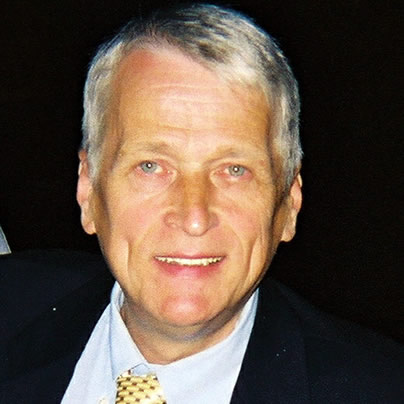
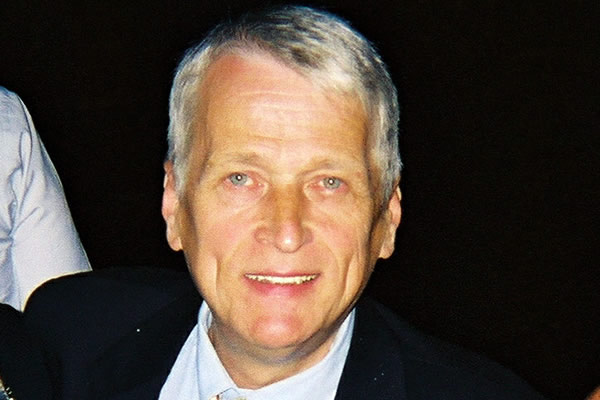
Rick Stafford (photo courtesy of Stafford)
When nearly 500 LGBT delegates attending the Democratic National Convention hold their first caucus meeting in Charlotte, N.C., next Tuesday, veteran gay Democratic activist Rick Stafford of Minnesota will pound the gavel to call the meeting to order.
Stafford, 60, has been credited with playing a lead role in lobbying, cajoling, and nudging the Democratic Party to take a strong stand on LGBT rights and to change its delegate selection rules and policies to reach out to minorities, especially LGBT people, resulting in a dramatic increase in the number of LGBT delegates.
“This will be my tenth convention,” he told the Blade. “I was out for nine of them.”
He said he kept his sexual orientation confidential during his first Democratic Convention in Miami in 1972, when the Democrats nominated George McGovern for president. He had been selected to attend as a page at a time when he lived in a small town in rural Minnesota.
“There were just a few openly gay delegates,” he said. “You could fit them all in a phone booth.”
Since that time, Stafford has played an increasingly prominent role in Democratic Party politics, both locally and nationally, according to party activists who know him.
With the exception of the 1976 convention, which nominated Jimmy Carter and his vice presidential running mate Walter Mondale of Minnesota, Stafford said he has attended every Democratic Convention since then.
In 1992, Minnesota Democrats elected Stafford as chair of the state party, making him the first out gay person to win election to chair either of the two major parties in a state.
Since the 1990s Stafford has served at various times as a member of the Democratic National Committee. He currently chairs the DNC’s LGBT Americans Caucus.
Gay Democratic activist Kurt Vorndran of D.C., who has worked with Stafford on LGBT party related issues since the 1980s, said Stafford worked “relentlessly” both behind the scenes and through official DNC channels to push the party into requiring the state parties to set goals for recruiting LGBT people, along with other minorities, to become delegates to the Democratic conventions.
“He has served as a member of the party and convention rules committees,” Vorndran said. “He made sure the rule had outreach policies for the LGBT community. Thanks to his hard work and the work of others, for the first time, every single state may have at least one gay or LGBT delegate.”
Stafford said one of the most memorable conventions he attended was in 1984 in San Francisco, when fellow Minnesotan Walter Mondale was nominated for president and selected U.S. Rep. Geraldine Ferraro (D-N.Y.) as the nation’s first female vice presidential candidate for a major political party.
Working with then gay Democratic activist Tom Chorton of D.C., who became the leader of the nation’s first national gay Democratic Party organization, Stafford said he used his Minnesota connections to arrange meetings and phone conversations shortly before the start of the convention with high-level Mondale campaign officials, including Joan Mondale, the candidate’s wife.
As a result of those efforts, according to Stafford, the Mondale campaign put out the word to the convention platform committee that the campaign would support proposed language in the platform calling for federal legislation to ban discrimination based on sexual orientation.
“This led to the first formal recognition of gays by the party,” Stafford said.
With the exception of what he calls a few setbacks and “bumps in the road” the strength of the party’s platform on LGBT issues and the presence of LGBT people increased in every Democratic convention since that time, Stafford said.
Asked what the main objective for the convention’s LGBT caucus will be at the 2012 convention in Charlotte, Stafford said it will be to pull out all the stops to facilitate the re-election of Barack Obama as president.
“The goal is to celebrate what this administration has given us and our community,” he said.
“And just look at the things we’ll be celebrating. The Matthew Shepard Hate Crimes Prevention Act, the repeal of ‘Don’t Ask, Don’t Tell,’ the Ryan White HIV Treatment Extension Act and a national AIDS strategy, the lifting of the HIV entry ban, the federal housing programs that ban discrimination on sexual orientation and gender identity throughout the federal government.”
He fired off many other actions he considers “highly significant” LGBT-related accomplishments by the Obama administration, including the large number of LGBT people appointed to high-level administration jobs.
Stafford said that as a staunch adherent of the Democratic Party’s liberal-progressive wing, he sometimes finds himself playing the role of pragmatist. He said that role has already surfaced this week, when he counseled LGBT delegates not to engage in a floor protest against the controversial appearance at the convention of Roman Catholic Cardinal Timothy Dolan of New York and former GOP Florida Gov. Charlie Crist, who is backing Obama’s re-election bid. Dolan is scheduled to give the closing prayer at both the GOP and Democratic conventions.
LGBT activists last year denounced Dolan for taking a lead role in opposing New York State’s same-sex marriage law, which the state legislature passed. Activists in Florida have criticized Crist for not being more supportive on LGBT rights.
“I was a rabble rouser,” said Stafford. “But we knew about timing, when it’s the best time to pick and choose your battles. It’s just sheer stupidity when we’re even thinking about a negative protest when we have so much to celebrate.”


Federal Government
Trump budget targets ‘gender extremism’
Proposed spending package would target ‘leftist’ political ideologies
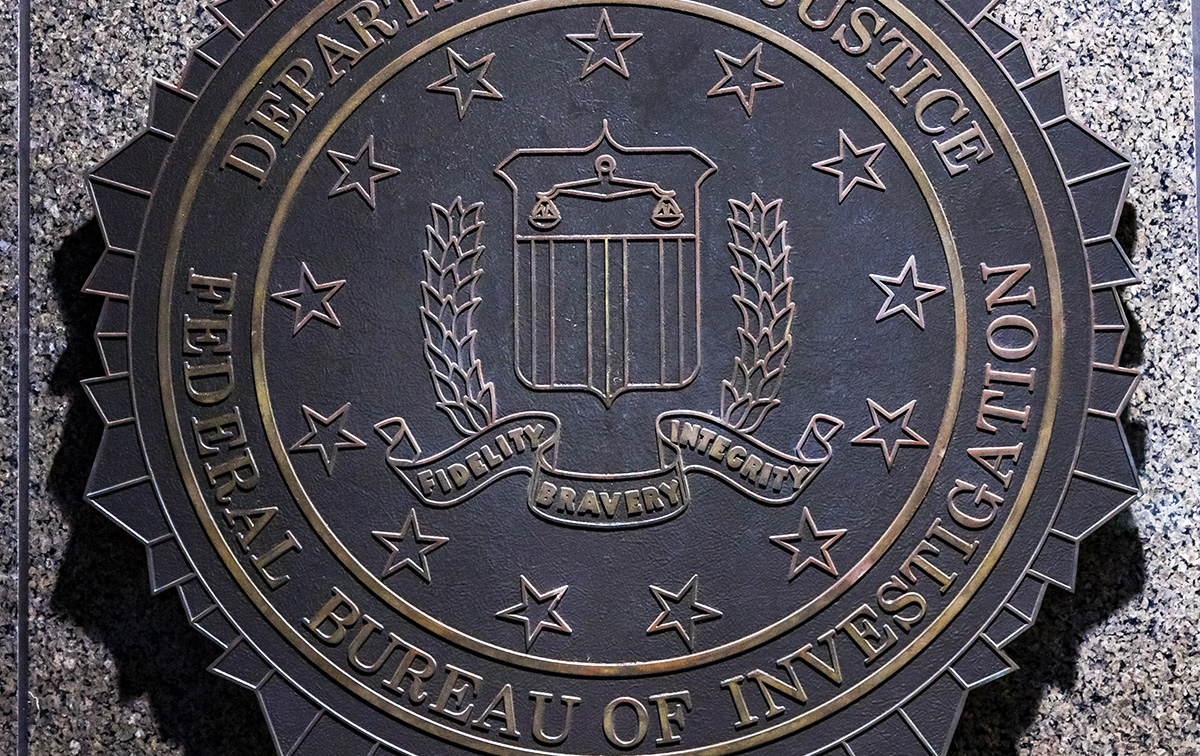
The White House submitted its 2027 budget request to Congress last month, outlining a push for the Federal Bureau of Investigation to “proactively” target what it describes as “extremism” related to gender — raising concerns about the potential for law enforcement to target LGBTQ people.
The Trump-Vance administration’s 2027 budget request, submitted to Congress on April 4, proposes a dramatic increase in national security and law enforcement spending, while reducing foreign aid and restructuring multiple domestic security programs. In total, the administration is requesting $2.16 trillion in discretionary budget authority (including mandatory resources), a 15.3 percent increase over the 2026 proposal.
Central to the proposal is the creation of a new “NSPM-7 Joint Mission Center,” a direct follow-up to the September 2025 National Security Presidential Memorandum 7 (NSPM-7). The directive instructs the Justice Department, the FBI, and other national security agencies to combat what the administration defines as “political violence in America,” effectively reshaping the Joint Terrorism Task Force network to focus on “leftist” political ideologies, according to reporting by independent journalist Ken Klippenstein.
The American Civil Liberties Union has characterized NSPM-7 as a way for President Donald Trump to intimidate his political enemies.
In a press release following the memorandum, Hina Shamsi, director of the ACLU’s National Security Project, said, “President Trump has launched yet another effort to investigate and intimidate his critics,” and had described the move as an “intimidation tactic against those standing up for human rights and civil liberties.”
The proposed mission center would include personnel from 10 federal agencies tasked with targeting “domestic terrorists” associated with a wide range of ideologies. Among them is what the administration labels “extremism” related to gender, alongside categories such as “anti-Americanism,” “anti-capitalism,” “anti-Christianity,” and “support for the overthrow of the U.S. government.” The document also cites “hostility toward those who hold traditional American views” on family, religion, and morality — language LGBTQ advocates have increasingly warned could be used to frame queer and transgender rights movements as ideological threats.
The mission center is one component of a proposed $166 million increase in the FBI’s counterterrorism budget.
In total, the FBI would receive $12.5 billion for salaries and expenses under the proposal, a $1.9 billion increase. Planned investments include unmanned aerial systems operations and counter-drone capabilities, counterterrorism efforts, and security preparations for the 2028 Summer Olympics in Los Angeles. The budget also cites 67,000 FBI arrests since Jan. 20, 2026, which it describes as a 197 percent increase from the prior year.
When Congress passed the USA PATRIOT Act in 2001, it also enacted 18 U.S.C. § 2331(5), which defines domestic terrorism as activities involving acts dangerous to human life that violate criminal laws and are intended to intimidate or coerce civilians or influence government policy through violence. That statutory definition has not changed.
However, federal agencies have historically categorized domestic terrorism threats into groups such as racially or ethnically motivated violent extremism, anti-government or anti-authority violent extremism, and other threats, including those tied to bias based on religion, gender, or sexual orientation.
The language in the budget suggests a shift in how those categories are interpreted and applied — particularly by explicitly linking “extremism” to gender and to perceived opposition to “traditional” views — without any corresponding change to federal law. Only Congress has the power to change the definition of domestic terrorism by passing legislation.
The budget document states:
“DT lone offenders will continue to pose significant detection and disruption challenges because of their capacity for independent radicalization to violence, ability to mobilize discretely, and access to firearms. Additionally, in recent years, heinous assassinations and other acts of political violence in the United States have dramatically increased. Commonly, this violent conduct relates to views associated with anti-Americanism, anti-capitalism, and anti-Christianity; support for the overthrow of the U.S. government; extremism on migration, race, and gender; and hostility toward those who hold traditional American views on family, religion, and morality.”
This language echoes earlier actions by the Trump-Vance administration targeting trans people.
On the first day of his second term, President Trump signed Executive Order 14168, titled “Defending Women from Gender Ideology Extremism and Restoring Biological Truth to the Federal Government.”
The order establishes a strict binary definition of sex and withdraws federal recognition of trans people.
“It is the policy of the United States to recognize two sexes, male and female,” the order states. “‘Sex’ shall refer to an individual’s immutable biological classification as either male or female. ‘Sex’ is not a synonym for and does not include the concept of ‘gender identity.’”
Appropriations committees in both chambers are expected to begin hearings in the coming weeks.
Puerto Rico
The ‘X’ returns to court
1st Circuit hears case over legal recognition of nonbinary Puerto Ricans

Eight months ago, I wrote about this issue at a time when it had not yet reached the judicial level it faces today. Back then, the conversation moved through administrative decisions, public debate, and political resistance. It was unresolved, but it had not yet reached this point.
That has now changed.
Lambda Legal appeared before the 1st U.S. Court of Appeals in Boston, urging the court to uphold a lower court ruling that requires the government of Puerto Rico to issue birth certificates that accurately reflect the identities of nonbinary individuals. The appeal follows a district court decision that found the denial of such recognition to be a violation of the U.S. Constitution.
This marks a turning point. The issue is no longer theoretical. A court has already determined that unequal treatment exists.
The argument presented by the plaintiffs is grounded in Puerto Rico’s own legal framework. Identity birth certificates are not static historical records. They are functional documents used in everyday life. They are required to access employment, education, and essential services. Their purpose is practical, not symbolic.
Within that framework, the exclusion of nonbinary individuals does not stem from a legal limitation. Puerto Rico already allows gender marker corrections on birth certificates for transgender individuals under the precedent established in Arroyo Gonzalez v. Rosselló Nevares. In addition, the current Civil Code recognizes the existence of identity documents that reflect a person’s lived identity beyond the original birth record.
The issue lies in how the law is applied.
Recognition is granted within specific categories, while those who do not identify within that binary structure remain excluded. That exclusion is now at the center of this case.
Lambda Legal’s position is straightforward. Requiring individuals to carry documents that do not reflect who they are forces them into misrepresentation in essential aspects of daily life. This creates practical barriers, exposes them to scrutiny, and places them in a constant state of vulnerability.
The plaintiffs, who were born in Puerto Rico, have made clear that access to accurate identification is not symbolic. It is a basic condition for moving through the world without contradiction imposed by the state.
The fact that this case is now being addressed in the federal court system adds another layer of significance. This is not a pending policy discussion or a legislative proposal. It is a constitutional question. The analysis is not about political preference, but about rights and equal protection under the law.
This case does not exist in isolation.
It unfolds within a broader context in which debates over identity and rights have increasingly been shaped by the growing influence of conservative perspectives in public policy, both in the United States and in Puerto Rico. At the local level, this influence has been reflected in legislative discussions where religious arguments have begun to intersect with decisions that should be grounded in constitutional principles. That intersection creates tension around the separation of church and state and has direct consequences for access to rights.
Recognizing this context is not an attack on faith or religious practice. It is an acknowledgment that when certain perspectives move into the realm of public authority, they can shape outcomes that affect specific communities.
From within Puerto Rico, this is not a distant debate. It is a lived reality. It is present in the difficulty of presenting identification that does not match one’s identity, and in the consequences that follow in workplaces, schools, and government spaces.
The progression of this case introduces the possibility of change within the applicable legal framework. Not because it resolves every tension surrounding the issue, but because it establishes a legal examination of a practice that has long operated under exclusion.
Eight months ago, the conversation centered on ongoing developments. Today, there is already a judicial finding that identifies a violation of rights. What remains is whether that finding will be upheld on appeal.
That process does not guarantee an immediate outcome, but it shifts the ground.
The debate is no longer theoretical.
It is now before the courts.
National
LGBTQ community explores arming up during heated political times
Interest in gun ownership has increased since Donald Trump returned to office
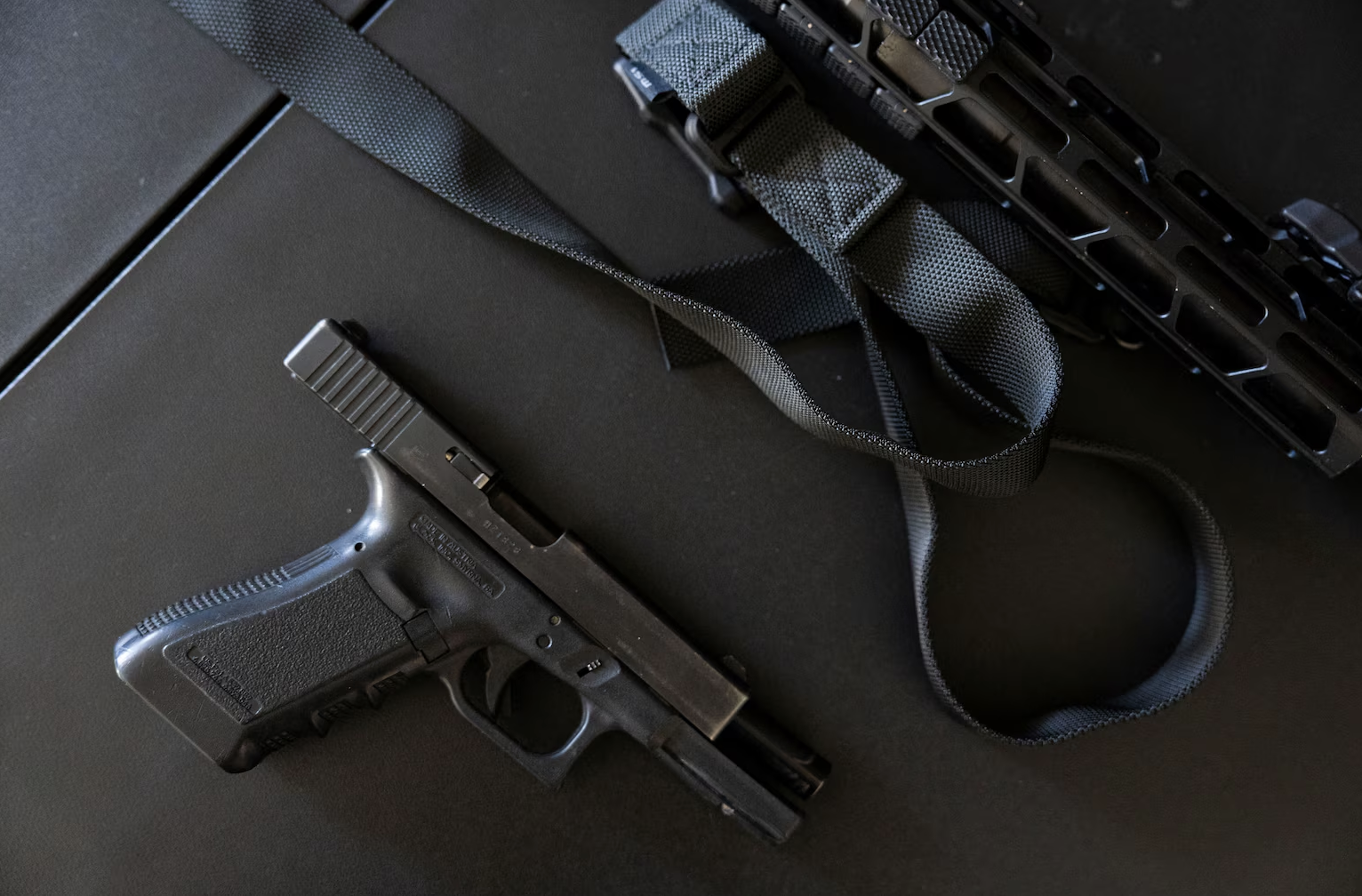
By JOHN-JOHN WILLIAMS IV | As the child of a father who hunted, Vera Snively shied away from firearms, influenced by her mother’s aversion to guns.
Now, the 18-year-old Westminster electrician goes to the shooting range at least once a month. She owns a rifle and a shotgun, and plans to get a handgun when she turns 21.
“I want to be able to defend my community, especially being in political spaces and queer spaces,” said Snively, a trans woman. “It’s just having that extra line of safety, having that extra peace of mind would be important to me.”
Snively is among what some say is a growing number of LGBTQ gun owners across the United States. Gun rights organizations and advocates say interest in gun ownership appears to have increased in that community since President Donald Trump returned to the White House last year.
The rest of this article can be read on the Baltimore Banner’s website.

Trump budget targets ‘gender extremism’

Susan Lucci on love, loss, and ‘All My Children’

How to navigate shifting tenant expectations

Viktor Orbán ousted in Hungarian elections

Minimal version of ‘Streetcar Named Desire’ heading to Dupont Underground
Tenn. lawmakers pass transgender “watch list” bill

LGBTQ groups condemn Trump’s threat to destroy Iranian civilization

Report: Grenell wants Russian ambassadorship

Cuba bajo presión y sin respuestas