Local
Activists rally for gay minister facing eviction
Faith Temple pastor opened home of 24 years for Bible study, church events
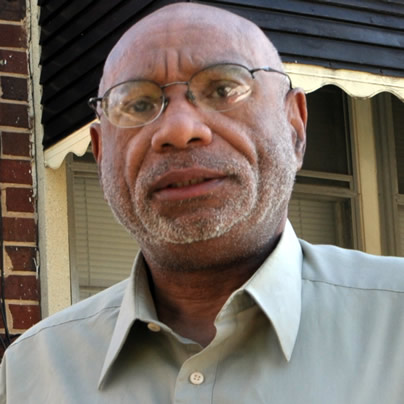
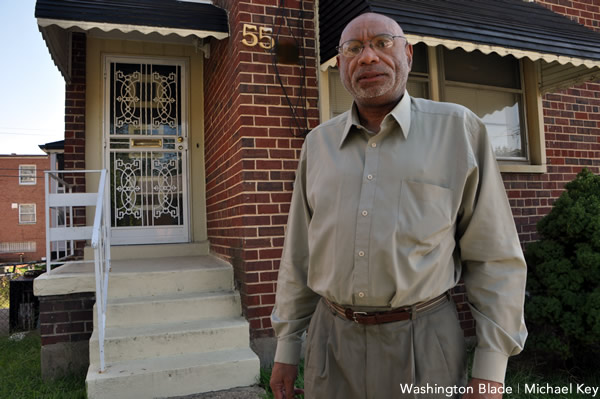
Faith Temple pastor Robert Michael Vanzant opened his home of 24 years for Bible study, church events, but now he may lose that home. (Washington Blade photo by Michael Key)
Rev. Robert Michael Vanzant, 59, the outreach pastor for D.C.’s Faith Temple, a Christian church with a special outreach to the African-American LGBT community, says he’s doing his “very best” to keep his spirits up at a time of need.
His Northeast Washington home of 24 years is in foreclosure and the Bank of America, which holds the mortgage, is taking steps to have him evicted.
“I’ve spent my entire life serving God and my community,” Vanzant said in an open letter to the bank that he released last week. “When I became disabled and my income dropped, I reached out and asked for a modification so that I could continue to pay my mortgage. You denied my request and set me up for foreclosure and eviction.”
Last week, friends and associates at Faith Temple joined the D.C. anti-foreclosure group Occupy Our Homes in staging a protest demonstration on his behalf outside the Bank of America’s loan office on U Street, N.W., just off 14th Street.
The protest organizers say Bank of America appears to have violated a city law that requires lenders to enter into a mediation process with borrowers who have fallen behind on their mortgage.
An official with the city agency that administers the mediation program said its intent is to determine whether a borrower is qualified for one of nearly a dozen federal programs that encourage and in some cases pay lenders to modify the terms of a mortgage to lower the monthly payments and enable a mortgage holder to keep the home.
Vanzant has served as a pastor at Faith Temple since the church was founded in 1982. He said he moved into his house on the 5500 block of 5th Street, N.E., in 1988 as a tenant before buying the semi-detached townhouse in 2003 from his landlord.
Isaiah Poole, a longtime member of the church and friend of Vanzant’s, said Vanzant has long opened his house for church functions, including Bible study classes. Poole said Vanzant also has opened his home as a shelter for people in need.
Vanzant told the Blade his problems began in 2008 when he became disabled due to illness and was later approved for disability status. He said that although he was no longer able to keep his full-time day job with the Metro transit agency, for the next year and a half he managed to continue making his mortgage payments through a disability insurance policy he had and later through Social Security disability benefits.
“I called the bank in early 2009 and said my income was going to change soon and I needed to talk about streamlining my mortgage,” he said. According to Vanzant, bank officials told him there were no mortgage assistance programs available for people who were current on their payments.
He said he next contacted several mortgage counseling organizations that promoted themselves as experts in helping people at risk for foreclosure. One of the organizations advised him to withhold his mortgage payments and place the money in a savings or escrow account, with the intent of working out a mortgage modification plan with the bank at a later date.
“And so that’s what I did,” he said.
But by early 2010, Bank of America began foreclosure proceedings and refused to discuss any mortgage adjustment options that had been widely publicized in the media and by the Obama administration.
“I received something from the law office that was representing the bank that they were foreclosing,” he said. “At the same time I received a notice from the Landlord-Tenant Court from the bank’s lawyer about an eviction.”
Added Vanzant, “That’s when she [the bank’s lawyer] told me, ‘They don’t want to talk to you. They won’t have anything to do with you. They don’t have anything to say to you.’”
Mike Haack, an organizer for Occupy Our Homes and one of the leaders of the protest demonstration last week, said the group plans further protests if Bank of America doesn’t demonstrate a good faith effort to work out a way for Vanzant to save his home.
“We feel the bank can take steps to allow him to keep his house,” Haack said. “The Reverend is an asset to the community.”
Vanzant, who was being treated at Howard University Hospital at the time of the Sept. 6 protest, said a representative of the bank called him at the hospital that same day, leading him to believe that the protest may have “alerted” the bank to his plight.
“I told them I couldn’t talk to them at that time because I was under medical treatment,” he told the Blade. “I said I would like to talk to them the next week.”
He said the bank’s representative called again last Friday and he arranged to speak with the representative this week.
“I’m trying to arrange for some legal representation before I talk to them,” he said. “I’ve made mistakes in the past and have had what my friends say was some bad advice” by organizations he paid to help during the past two years.
Brian Sullivan, a spokesperson for the U.S. Department of Housing and Urban Development, which administers the federal government’s mortgage assistance programs, said HUD strongly urges consumers not to pay anyone for so-called mortgage assistance services. He said HUD has a long list of HUD-approved mortgage counseling organizations and all of them offer their services for free.
He said Vanzant would likely qualify for a mortgage modification program, but a final determination on his qualifications would depend on the specific status of his mortgage, such as whether it is associated with federally linked agencies like Fannie Mae and Freddie Mac or the Federal Housing Administration (FHA).
“He has to provide all of this information to whoever he selects to help him get through this process,” Sullivan said.


District of Columbia
Blade welcomes fall intern
Alexis McLean is student at University of North Florida
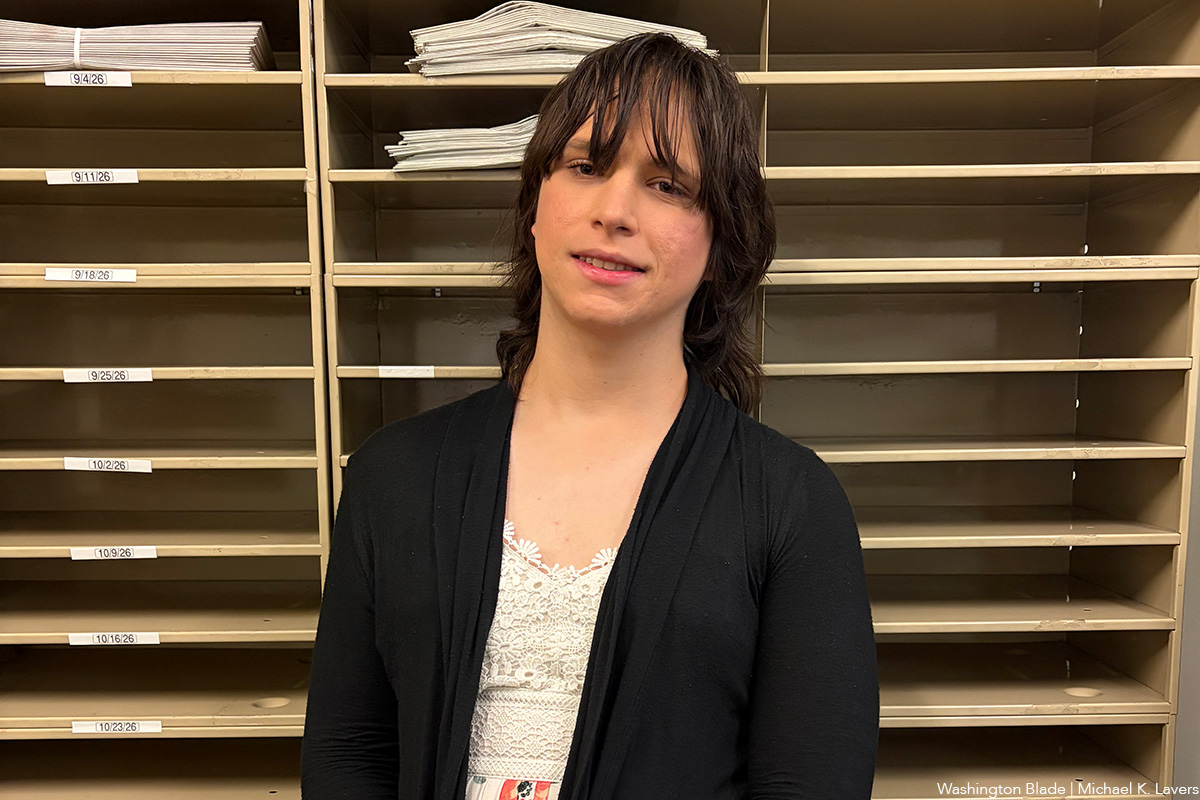
The Washington Blade this week welcomed Alexis McLean as its fall intern.
Alexis is studying political science at the University of North Florida in Jacksonville, Fla. She is interning with the Blade as part of a continued partnership with the Washington Center.
“I am looking forward to spending my time in the fall with the Washington Blade, as this is a new experience for me,” said Alexis. “I have not experienced any journalist jobs in the past so this would be my first time, and I am excited to better my writing and communications skills with this internship.”
Alexis’s internship with the Blade ends in early December.
Rehoboth Beach
SUNFESTIVAL takes center stage as Rehoboth Beach closes out summer
Labor Day Weekend bustling with events, including David Archuleta performance

Labor Day Weekend marks the unofficial end of summer in Rehoboth Beach, but there will be no shortage of LGBTQ events, with CAMP Rehoboth’s annual SUNFESTIVAL taking over town this weekend.
Thursday (9/3)
Get your Labor Day Weekend started early Thursday night with happy hour from 5-7 p.m. at Diego’s Bar & Nightclub, followed by Naughtee Bingo hosted by Magnolia Applebottom at 8:30 p.m.
After bingo, the party continues with Dancing at Diego’s from 9 p.m. to 1:30 a.m.
Aqua Bar & Grill will also kick off its Labor Day Weekend festivities Thursday with a DJ spinning from 9 p.m.-1 a.m.
Friday (9/4)
The weekend ramps up Friday night at Aqua, where DJ Matt Bailer will keep the dance floor moving from 9 p.m.-1 a.m.
Over at Diego’s, DJ Steve Sidewalk will then take over Diego’s for Freedom Friday from 9 p.m.-1:30 a.m.
Saturday (9/5)
The main event of the weekend arrives Saturday with the opening night of CAMP Rehoboth’s SUNFESTIVAL.
Billed as the ultimate party to close out the summer, SUNFESTIVAL has become one of Rehoboth’s signature Labor Day Weekend events. The annual celebration sells out each year, with proceeds benefiting CAMP Rehoboth.
Doors open at 6:30 p.m. with refreshments available at the cash bar while attendees are invited to socialize and find their seats.
Saturday night will feature local singer Ashley Williams as the opening performer, followed by headliner David Archuleta. The event will also feature a live auction.
Back across town Saturday, Aqua will continue its Labor Day Weekend DJ lineup from 9 p.m. to 1 a.m.
Diego’s will also have plenty happening, with ‘Splash Party’ hosted by Magnolia Applebottom at 5 p.m., followed by a Saturday Dance Party with Brett Oosterhaus from 9 p.m.- 1:30 a.m.
The Blue Moon hosts its popular Legends Show at 9 p.m. It’s an all-live singing show by the Blue Moon cast of celebrity impersonators.
Etienne Pilon has taken Rehoboth by storm this summer. Check out the talented singer/pianist at The Pines from 7-10 p.m.
Sunday (9/6)
Sunday’s SUNFESTIVAL event will shift the focus to the dance floor, with globally renowned DJs Robbie Leslie and James Anthony scheduled to perform. Doors open at 7 p.m., with dancing continuing until 1 a.m.
On Sunday, Aqua will throw its annual White Party, with DJs spinning from 9 p.m.-1 a.m. Guests are encouraged to dress in white for the holiday weekend celebration.
Diego’s will host its Sunday High T-Dance with Pamala Stanley at 5 p.m. Later that evening, DJ Tannr will be spinning at 9 p.m.
John Flynn is on the piano from 6-8 p.m. at the Blue Moon.
Monday (9/7)
The final day of Labor Day Weekend brings one last chance to hit the dance floor before summer officially winds down.
Aqua will close out its five-day Labor Day Weekend celebration with DJ Biff from 3-7 p.m.
Maryland
Anne Arundel schools now need parent permission to call trans students by preferred names
Conservative groups challenged system’s policy
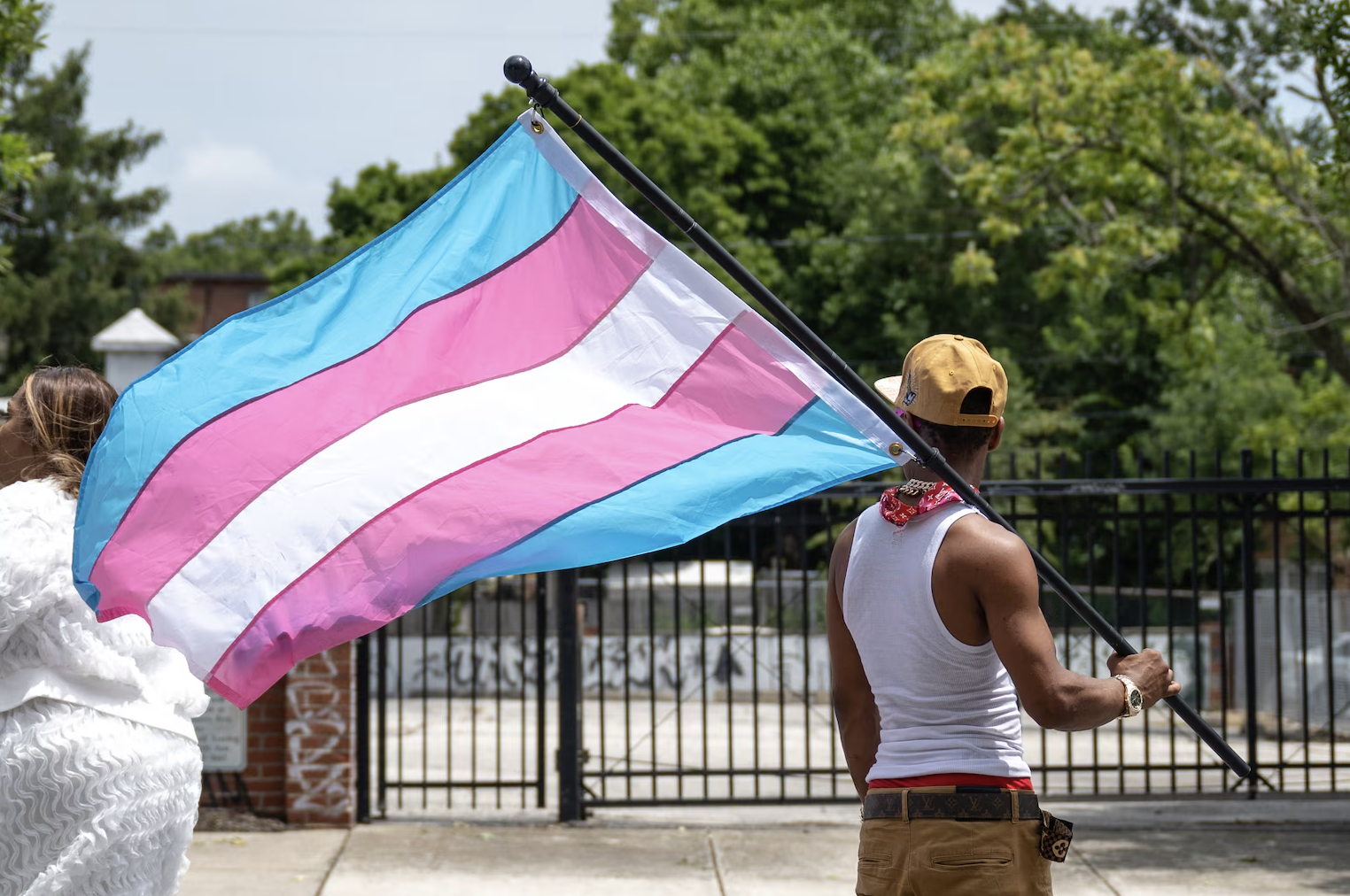
By JESSICA CALEFATI | Anne Arundel County Public Schools staff cannot use transgender students’ preferred names if their parents oppose it, according to an internal document reviewed by the Banner, a change that comes after conservative groups challenged the school system’s approach to gender identity.
Teachers union president Kristina Korona told members in an Aug. 20 email that the new guidance undermines district policy on acceptance and inclusivity and “will begin harming affected students immediately.”
Previously, the district didn’t require parental permission to use a high school student’s chosen name and pronouns corresponding to their gender identity, the internal document says. Now it does. The change comes as parents challenge the suburban school system’s gender identity policy and regulation in court and the Trump-Vance administration threatens the district’s funding.
The rest of this article can be found on the Baltimore Banner’s website.

Pentagon expands testosterone screening as trans troops face hormone therapy restrictions

Calendar: September 4-10

Swiss government backs nationwide conversion therapy ban

Gloria Steinem dies at 92

The mastery of love

Poland begins to legally recognize same-sex marriages from other countries

HRC president campaigns for Chris Pappas in NH

We’re getting married but our parents object

Prominent French activist attacked outside Paris bar