National
Black pastor against same-sex marriage admits NOM connection
Owens says Obama betrayed civil rights movement
Black clergy members decried President Obama’s endorsement of same-sex marriage during a news conference on Friday as a betrayal of the black civil rights movement as they admitted limited financial ties to the anti-gay National Organization for Marriage.
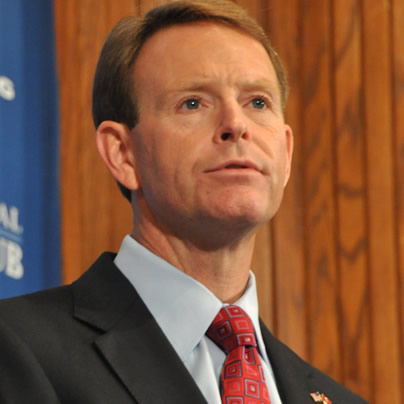
Rev. William Owens, founder and president of the Coalition of African-American Pastors, held the conference standing along with a group of nearly 30 black religious leaders as part of the organization’s annual leadership summit, which this year took place at the Hyatt Regency in Arlington, Va.
“The president sold us out,” Owens said. “He is in the White House because of the civil rights movement and mainly because of the African-American community, who voted for him 97 percent to be president. He sold us out for money — no other way. The African-American community represents 13 percent of the population, the gay and lesbian community represents three percent. So it wasn’t for the votes; it was for the money. I called him Judas then, and I call him Judas now.”
Saying Obama was elected on the backs of slave laborers and the civil rights movement, Owens said any president who would be first black man in office and endorse same-sex marriage deserves to be kicked out. Later, under questioning from reporters, Owens said his organization wasn’t making an endorsement of any candidate in the election.
In the wake of internal documents from NOM leaked earlier this year, Owens was asked by CNN’s Dan Merica about having a connection with the anti-gay group. The pastor confirmed the anti-gay group compensates him.
“They pay my salary,” Owens said. “My wife … has an earned doctorate from Vanderbilt University and I have three degrees, we make a combined salary of $20,000 a year because they were kind enough to pick us up, because we did not have funds, and they said we can put you in the budget for $20,000. So we are in relationship with them and I’m very proud of it.”
Internal memos leaked earlier this year revealed the organization planned to divide blacks and gays within the Democratic Party using same-sex marriage as a “wedge” issue. Owens defended NOM against any wrongdoing.
“I read that; I know of the story,” Owens said. “But I work with the National Organization for Marriage and I’ll defend them, I will defend them, I will defend them. I don’t know what they said; I wasn’t there. But I know their hearts.”
In a follow-up question from CNN on whether he’s a tool for message, Owens replied, “I’m nobody’s tool. Bill Owens is nobody’s tool. They’ve never tried to use me as a tool. They have helped me because I asked for it. I went to them. They didn’t come to me. I went to them and asked them to help us because we needed help. I’m nobody’s tool.”
The news conference was held in coordination with NOM, but no one directly affiliated with the organization was before or near the podium. Brian Brown, NOM’s president, stood in the back the room as the news conference proceeded. Asked by the Washington Blade why Brown was absent from the podium, Owens said the conference was an opportunity to show that his organization is “black-led.”
Speaking with the Blade after the news conference, Brown denied that Owens’ motives for speaking at the news conference were financially based, but acknowledged his organization had donated to Owens about $20,000.
“It’s ridiculous,” Brown said. “Rev. Owens was already doing what was doing before he came to us and asked us for help. Obviously, as a coalition, we’re going to help as many partners as possible. The Human Rights Campaign does the same thing. But these folks were already out there. I’ve seen Bishop Owens at a number of rallies; we’ve worked together in the past and was already doing his thing before NOM ever got involved.”
The conference happened at the exact time as a news conference took place at the National Press Club in D.C. where other black clergy members — including Rev. Al Sharpton — spoke favorably about same-sex marriage and the need to uphold the same-sex marriage law at the ballot in November.
Asked by a reporter about Sharpton and whether good people of faith can disagree, Owens replied, “Of course, good people of faith, but I don’t think they’re disagreeing from a faith position. I wonder if they have any. … They faith in something, but I don’t believe it’s God.”
Michael Cole-Schwartz, a Human Rights Campaign spokesperson, drew on the opposing conference at the National Press Club as evidence that the conference from the NOM-sponsored organization doesn’t reflect the views of black Americans.
“NOM continues to divide American along racial lines but the fact of the matter is that a growing coalition of Americans of all identities are coming to the conclusion that there’s no good reason to exclude gay and lesbian couples from marriage,” Cole-Schwartz said. “The array of African-American ministers speaking out for marriage equality in Maryland today is proof positive of the turning tide.”
During the news conference, Owens said he’s spoken out against same-sex marriage in every state for several years where it’s come to the ballot and announced a campaign starting in North Carolina on Oct. 7 where he would travel swing states in the presidential election — including Ohio, Virginia and Pennsylvania — to talk about limiting marriage to one man, one woman.
“In every state where it has been on the ballot, the African-American community has voted way ahead of the other population standing for marriage between a man and a woman,” Owens said. “Certain politicians have taken it on themselves to decide that it’s OK, it’s already for a man to marry a man and a woman to marry a woman, and we disagree, and we stand and we fight for what the Bible says.”
For Proposition 8, exit polls showed black California residents voted at a higher rate than other groups in favor of the measure, but those numbers have been refuted by reports that followed. While Owens touted the importance of the black civil rights movement, according to a report in The Huffington Post, little evidence exists suggesting he had a role in those efforts.
Pastors who were before the podium tied their to same-sex marriage to the economic challenges facing black people in the United States, which has been shown endure higher employment and lower education than others during the recession facing the economy.
Bishop David Hall, prelate of the First Jurisdiction of Western Tennessee and pastor of the Temple Church God of Christ, warned that “marriage and human sexuality should not be subject to or governed by the whims and feelings of special interest groups or politicians” while later speaking out against the economic plight of black Americans.
“The moral principles which represent God have been denigrated by political philosophies, special interest and weakened metaphors,” Hall said. “The godly morality has been replaced by political expediency. CAAP is tired of status quo and the statistical evidence that places blacks at the bottom. Blacks suffer from the lowest educational opportunities, highest recidivism, highest out of marriage pregnancies, etc. It is time for a revival. We need change in our homes, communities and institutions.”
Others who spoke at the news conference against same-sex marriage included Alveda King, the niece of the civil right leaders Martin Luther King, Jr.; and Lewis Ford, brother to former U.S. House Rep. Harold Ford of Tennessee; and Rev. Dean Nelson, vice chair of the Frederick Douglass Foundation.
Pastor Stephen Broden, a Republican who once ran against incumbent Rep. Eddie Bernice Johnson (D-Texas), expressed concerned about the legalization of same-sex marriage for what he said was taking the country away from its religious roots.
“The definition of marriage is under assault by cultural progressive ideologues,” Broden said. “Make no mistake about it — this is an attempt to flip our nation away from its Judeo-Christian heritage and replace it with a godless paradigm that sourced in human secularism. These people seek to dispossess this nation of its Judeo-Christian values, and what we are witnessing is a titanic clash between two world views: the godless human secularism against Judeo-Christian Christianity. We can not, we must not sit quietly and allow these ideologues to determine our values.”
The Washington Blade noted the case of Loving v. Virginia, which allowed interracial marriage in the country, is often considered parallel to the efforts to legalize same-sex marriage, but Owens denied any similarities.
“There is no parallels because it was a racist scene; America was racist,” Owens said. “I had white friends when they first stated integration, and they were truly good people, and we were laughing, we were talking, but when they were around other white people, they’d acted like didn’t know me. So it was racist. This has nothing to do with race.”
Puerto Rico
The ‘X’ returns to court
1st Circuit hears case over legal recognition of nonbinary Puerto Ricans

Eight months ago, I wrote about this issue at a time when it had not yet reached the judicial level it faces today. Back then, the conversation moved through administrative decisions, public debate, and political resistance. It was unresolved, but it had not yet reached this point.
That has now changed.
Lambda Legal appeared before the 1st U.S. Court of Appeals in Boston, urging the court to uphold a lower court ruling that requires the government of Puerto Rico to issue birth certificates that accurately reflect the identities of nonbinary individuals. The appeal follows a district court decision that found the denial of such recognition to be a violation of the U.S. Constitution.
This marks a turning point. The issue is no longer theoretical. A court has already determined that unequal treatment exists.
The argument presented by the plaintiffs is grounded in Puerto Rico’s own legal framework. Identity birth certificates are not static historical records. They are functional documents used in everyday life. They are required to access employment, education, and essential services. Their purpose is practical, not symbolic.
Within that framework, the exclusion of nonbinary individuals does not stem from a legal limitation. Puerto Rico already allows gender marker corrections on birth certificates for transgender individuals under the precedent established in Arroyo Gonzalez v. Rosselló Nevares. In addition, the current Civil Code recognizes the existence of identity documents that reflect a person’s lived identity beyond the original birth record.
The issue lies in how the law is applied.
Recognition is granted within specific categories, while those who do not identify within that binary structure remain excluded. That exclusion is now at the center of this case.
Lambda Legal’s position is straightforward. Requiring individuals to carry documents that do not reflect who they are forces them into misrepresentation in essential aspects of daily life. This creates practical barriers, exposes them to scrutiny, and places them in a constant state of vulnerability.
The plaintiffs, who were born in Puerto Rico, have made clear that access to accurate identification is not symbolic. It is a basic condition for moving through the world without contradiction imposed by the state.
The fact that this case is now being addressed in the federal court system adds another layer of significance. This is not a pending policy discussion or a legislative proposal. It is a constitutional question. The analysis is not about political preference, but about rights and equal protection under the law.
This case does not exist in isolation.
It unfolds within a broader context in which debates over identity and rights have increasingly been shaped by the growing influence of conservative perspectives in public policy, both in the United States and in Puerto Rico. At the local level, this influence has been reflected in legislative discussions where religious arguments have begun to intersect with decisions that should be grounded in constitutional principles. That intersection creates tension around the separation of church and state and has direct consequences for access to rights.
Recognizing this context is not an attack on faith or religious practice. It is an acknowledgment that when certain perspectives move into the realm of public authority, they can shape outcomes that affect specific communities.
From within Puerto Rico, this is not a distant debate. It is a lived reality. It is present in the difficulty of presenting identification that does not match one’s identity, and in the consequences that follow in workplaces, schools, and government spaces.
The progression of this case introduces the possibility of change within the applicable legal framework. Not because it resolves every tension surrounding the issue, but because it establishes a legal examination of a practice that has long operated under exclusion.
Eight months ago, the conversation centered on ongoing developments. Today, there is already a judicial finding that identifies a violation of rights. What remains is whether that finding will be upheld on appeal.
That process does not guarantee an immediate outcome, but it shifts the ground.
The debate is no longer theoretical.
It is now before the courts.
National
LGBTQ community explores arming up during heated political times
Interest in gun ownership has increased since Donald Trump returned to office

By JOHN-JOHN WILLIAMS IV | As the child of a father who hunted, Vera Snively shied away from firearms, influenced by her mother’s aversion to guns.
Now, the 18-year-old Westminster electrician goes to the shooting range at least once a month. She owns a rifle and a shotgun, and plans to get a handgun when she turns 21.
“I want to be able to defend my community, especially being in political spaces and queer spaces,” said Snively, a trans woman. “It’s just having that extra line of safety, having that extra peace of mind would be important to me.”
Snively is among what some say is a growing number of LGBTQ gun owners across the United States. Gun rights organizations and advocates say interest in gun ownership appears to have increased in that community since President Donald Trump returned to the White House last year.
The rest of this article can be read on the Baltimore Banner’s website.
Tennessee
Tenn. lawmakers pass transgender “watch list” bill
State Senate to consider measure on Wednesday
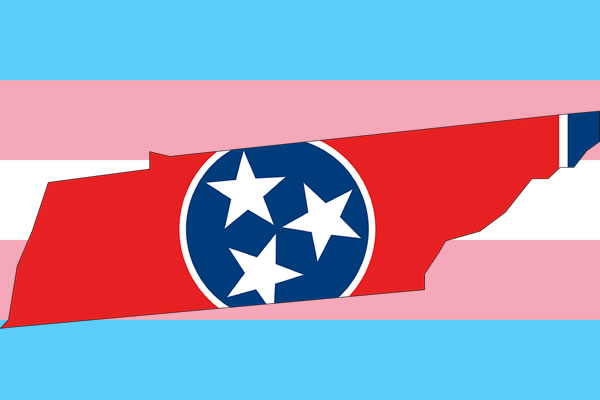
The Tennessee House of Representatives passed a bill last week to create a transgender “watch list” that also pushes detransition medical treatment. The state Senate will consider it on Wednesday.
House Bill 754/State Bill 676 has been deemed “ugly” by LGBTQ advocates and criticized by healthcare information litigators as a major privacy concern.
The bill would require “gender clinics accepting funds from this state to perform gender transition procedures to also perform detransition procedures; requires insurance entities providing coverage of gender transition procedures to also cover detransition procedures; requires certain gender clinics and insurance entities to report information regarding detransition procedures to the department of health.”
It would require that any gender-affirming care-providing clinics share the date, age, and sex of patients; any drugs prescribed (dosage, frequency, duration, and method administered); the state and county; the name, contact information, and medical specialty of the healthcare professional who prescribed the treatment; and any past medical history related to “neurological, behavioral, or mental health conditions.” It would also mandate additional information if surgical intervention is prescribed, including details on which healthcare professional made a referral and when.
HB 0754 would also require the state to produce a “comprehensive annual statistical report,” with all collected data shared with the heads of the legislature and the legislative librarian, and eventually published online for public access.
The bill also reframes detransitioning as a major focus of gender-affirming healthcare — despite studies showing that the number of trans people who detransition is statistically quite low, around 13 percent, and is often the result of external pressures (such as discrimination or family) rather than an issue with their gender identity.
This legislation stands in sharp contrast to federal protections restricting what healthcare information can be shared. In 1996, Congress passed the Health Insurance Portability and Accountability Act, or HIPAA, requiring protections for all “individually identifiable health information,” including medical records, conversations, billing information, and other patient data.
Margaret Riley, professor of law, public health sciences, and public policy at the University of Virginia, has written about similar efforts at the federal level, noting the Trump-Vance administration’s push to subpoena multiple hospitals’ records of gender-affirming care for trans patients despite no claims — or proof — that a crime was committed.
It has “sown fear and concern, both among people whose information is sought and among the doctors and other providers who offer such care. Some health providers have reportedly decided to no longer provide gender-affirming care to minors as a result of the inquiries, even in states where that care is legal.” She wrote in an article on the Conversation, where she goes further, pointing out that the push, mostly from conservative members of the government, are pushing extracting this private information “while giving no inkling of any alleged crimes that may have been committed.”
State Rep. Jeremy Faison (R-Cosby), the bill’s sponsor, said in a press conference two weeks ago that he has met dozens of individuals who sought to transition genders and ultimately detransitioned. In committee, an individual testified in support of the bill, claiming that while insurance paid for gender-affirming care, detransition care was not covered.
“I believe that we as a society are going to look back on this time that really burst out in 2014 and think, ‘Dear God, What were we thinking? This was as dumb as frontal lobotomies,’” Faison said of gender-affirming care. “I think we’re going to look back on society one day and think that.”
Jennifer Levi, GLAD Law’s senior director of Transgender and Queer Rights, shared with PBS last year that legislation like this changes the entire concept of HIPAA rights for trans Americans in ways that are invasive and unnecessary.
“It turns doctor-patient confidentiality into government surveillance,” Levi said, later emphasizing this will cause fewer people to seek out the care that they need. “It’s chilling.”
The Washington Blade reached out to the American Civil Liberties Union of Tennessee, which shared this statement from Executive Director Miriam Nemeth:
“HB 754/SB 676 continues the ugly legacy of Tennessee legislators’ attacks on the lives of transgender Tennesseans. Most Tennesseans, regardless of political views, oppose government databases tracking medical decisions made between patients and their doctors. The same should be true here. The state does not threaten to end the livelihood of doctors and fine them $150,000 for safeguarding the sensitive information of people with diabetes, depression, cancer, or other conditions. Trans people and intersex people deserve the same safety, privacy, and equal treatment under the law as everyone else.”

Calendar: April 10-16

BLUF leather social set for April 10 in Rehoboth

Celebrations of life planned for Sean Bartel

The ‘X’ returns to court

LGBTQ community explores arming up during heated political times

Risking it all for love during World War II

D.C. is the place for the Democratic Socialists of America

PHOTOS: The Bonnet Ball

Key lifestyle changes can help patients cope with diabetes