Opinions
We can’t afford to fall off ‘fiscal cliff’
Everyone has a stake in striking a budget deal

The importance of a budget deal and potential implications of not reaching one are very real to many in the LGBT community. Whether you own a business; are receiving government assistance in one form or another; are involved in the theater; a healthcare non-profit; work for a food bank; live with or care about fighting HIV/AIDS at home or across the world; or want to guarantee your civil and human rights, you have a stake in the results of keeping the nation from falling off the “fiscal cliff.”
The outcome of the negotiations between the president and Congress and what the president is able to accomplish in this lame duck session will set the stage for what President Obama will be able to do in his second term. The success he has in reaching his goals in the budget fight will portend what he will be able to do to accomplish and move forward the issues crucial to the coalition who helped elect him, including women, Latinos, African Americans and the LGBT community.
We all have things we want the president to do. They include the LGBT community wanting him to take an active role in passing an inclusive ENDA and signing an executive order banning discrimination in government contracting. The Latino community wants him to fight for a fair and far-reaching immigration bill and women look to him to continue to support their ability to control their own healthcare and protect with Supreme Court appointments Roe v. Wade. But as history tells us the first crucial battles of a second term set the tone for the rest of it.
So while we want him to move on our issues we first need to join with a broad coalition to pressure Congress to accept that this election really did make a difference and was not the status-quo election some would like to believe. We need to fight so that any budget agreement ensures the long-term viability of Medicare and Social Security and that education and research funding are protected and that programs like Ryan White continue to exist and are adequately funded. We need to maintain the focus, however small it is, on arts funding where so many earn their living and we need to protect funding to fight HIV/AIDS across the world.
Supporting these programs doesn’t mean no compromise and we need to accept that the president will have to make some in order to protect funding for those programs. We need to accept that there has to be a concerted effort to cut the debt but that must include added revenue so we all have to put pressure on Congress to support the president when he asks the wealthy to pay a little more and let them know our votes in 2014 will reflect that. As a coalition we are stronger than the Tea Party and if some in Congress are afraid to face them in an election they should understand they have to be more concerned with us. We need to make Congress understand that those who underestimated our strength in the last election shouldn’t do it again.
We need to demonstrate how wrong Paul Ryan was when he blamed his party’s loss on a big “urban” vote as if they didn’t understand what they voted for. That big “urban” vote will continue to come out and vote against Ryan and his policies because they oppose them and if Republicans ever want a chance to make inroads in that vote they will have to change what they stand for. We need to show Congress that it wasn’t the “gifts” as Mitt Romney calls them that lost him the election but rather it was the policies he espoused.
We need to join together and spend the lame duck session fighting for a shared goal — the fiscal solvency of the nation. That solvency must be reached based on the terms under which President Obama won the election. If obstructionists in Congress don’t want to lose many more seats in 2014 they must understand they have to compromise because we support the president and his policies.
We need to go door-to-door, friend-to-friend, and family member-to-family member and ask them all to call their congressperson and tell them we believe that fairness is what this is about and that the president’s plan for keeping us from falling of the “fiscal cliff” is the right one.


Opinions
ROSENSTEIN: Vote McDuffie for mayor of D.C.
A pledge to fight antisemitism, Islamophobia, homophobia

Kenyan McDuffie is the right person to lead our city forward in these difficult times. We are different from other cities, and Kenyan understands that. We don’t have a state to bail us out, and we don’t control all our own destiny. We are 700,000 strong, who don’t have a vote in Congress, don’t control our courts, or our national guard. We have Home Rule, but it’s not absolute. Congress kept the right to review our legislation and budget.
Recently, we found out how destructive that is. So, we need a mayor who will fight for our rights, all of our rights. The rights of immigrants, Latinos, the LGBTQ community, Black residents, women, Asians; all whose rights may still be at risk. Kenyan will fight for full statehood but understands the tightrope the D.C. mayor must walk to keep us from losing more control.
McDuffie said, “leadership is measured by delivering results, not rhetoric.” From his days as a union mail carrier, serving D.C. neighborhoods door-to-door, to his work as a civil rights attorney in President Obama’s Department of Justice, to his service as a citywide lawmaker, he has approached every challenge with the same values: stand up for working people, fix broken systems, and demand accountability from those in power.
As he has committed to, “focusing on delivering what matters most to D.C. families: lowering the cost of living, expanding opportunity in every ward, and strengthening public safety with a government that answers to all D.C.” Kenyan believes every resident deserves to live in a safe and affordable home recognizing housing remains one of the largest costs for D.C. families. On the Council he authored laws expanding the supply of affordable housing, helped direct hundreds of millions of dollars to preserve and build more affordable homes across the city. As mayor he is committed to expanded home purchase and down payment assistance programs for first-time homebuyers, and District employees. Providing additional resources for housing providers to preserve and expand existing affordable housing stock, while overseeing the responsible use of taxpayer dollars dedicated to building more. He is committed to creating more family-sized units in affordable housing developments to prevent displacement of longtime residents and ensuring families of all sizes have access to safe, affordable, homes. He will streamline the process for regulatory approvals prioritizing growth, and modernize zoning to increase supply, and lower per-unit construction costs.
Kenyan is committed to expanding access to childcare and early learning, recognizing D.C. families face the highest childcare costs in the nation. He understands affordability begins at birth, which is why he helped secure funding for birth-to-three, and early learning providers. He knows strong early childhood systems support both parents’ workforce participation, and children’s long-term success. As mayor, Kenyan will expand the Local Child Tax Credit to help families cover childcare costs. He will provide incentives to employers to help expand their employees’ childcare benefits, and repurpose District-owned space, to reduce providers’ costs and expand subsidized care in neighborhoods that have been historically underserved and neglected. He supports more mixed-use project development incorporating family amenities, including childcare centers. He will secure updated zoning to allow more high-quality home-based and neighborhood childcare options. Kenyan will work to provide more District-supported early learning, and out-of-school-time programs. Programs that will consider working family schedules, including non-traditional hours.
Kenyan has always supported strong public traditional and charter schools, both essential to our children’s success, and to a thriving, inclusive, D.C. economy. He secured millions each year for school and recreation center modernizations, nonprofit youth sports programs, and ensured our children are able to have safe passage to and from school and recreational activities. He supports Career and Technical Education (CTE) programs, which better align with workforce needs, industry demand, and good-paying career opportunities. He will expand access to these programs for students in every ward. As mayor, Kenyan is committed to expanding access to reliable out-of-school-time programming across all wards, strengthening literacy, classroom quality, and responsible technology integration in vocational training, CTE programs, and career academies for high-demand sector jobs. He is committed to programs to reduce chronic absenteeism with measurable public dashboards, and full access for children who need appropriate special education, mental health, and school health services. He believes while preparing students for college, schools must also help them prepare for good-paying careers should they choose not to go to college. Kenyan understands all this must happen if we are to close the large racial wealth gap in our city.
Kenyan understands how dependent our city is on its “Arts, Culture, Nightlife, Sports, and Entertainment Economy” and will work to reinvigorate all of those sectors, making sure our residents are fully prepared for jobs in each of them.
Kenyan McDuffie is best able to defend Home Rule and shield residents from harmful federal overreach. As a Council member, he always stood strong for civil rights and local autonomy. He understands how Donald Trump and the Republican Congress, have repeatedly interfered in our self-governance. As a former prosecutor, and civil rights trial attorney, Kenyan is ready to fight for all D.C. and has said he will make clear on Day One: “Enough is Enough.” He understands how to do this without putting us in more jeopardy. He has said he will issue a day-one directive ending MPD cooperation with ICE. He will make sure there is a civil right-to-counsel protection program for immigrant families. He will bolster the Mayor’s Office of Legal Counsel for constitutional challenges, working closely with the District’s Attorney General. He will strengthen the mayor’s office with regard to federal advocacy efforts, to fight for statehood. Until we win that fight Kenyan will work to expand legislative and budget autonomy and defend home rule. Kenyan has authored pioneering laws that reformed D.C.’s juvenile justice system, created a public health framework for violence prevention and intervention, and improved police accountability. His record demonstrates accountability and opportunity go hand in hand. He will work to right-size MPD through smart recruitment, home purchase assistance, and he will invest in community safety programs. He will expand the cadet program to build a pipeline of D.C. residents who want to go into law enforcement. He will work to modernize the 911 and 311 systems for faster response and transparency. And he will add more neighborhood-based prevention pilots to take an “All hands-on deck” approach to crime.
For all these reasons and more, I support Kenyan McDuffie. One of those more, is his response to the growing antisemitism, Islamophobia, transphobia, and homophobia, in the country. Kenyan said, “Leadership matters in moments like this. As your next mayor, I will bring people together across all lines of difference. I will engage with every community in this city, especially when it is not easy, or politically convenient. Washington must be a city where every resident — regardless of faith, race, gender, or identity — feels safe, respected, and heard.” That is the kind of city I want Washington, D.C. to be, and why I urge everyone to cast their vote for Kenyan McDuffie for Mayor.
Peter Rosenstein is a longtime LGBTQ rights and Democratic Party activist.
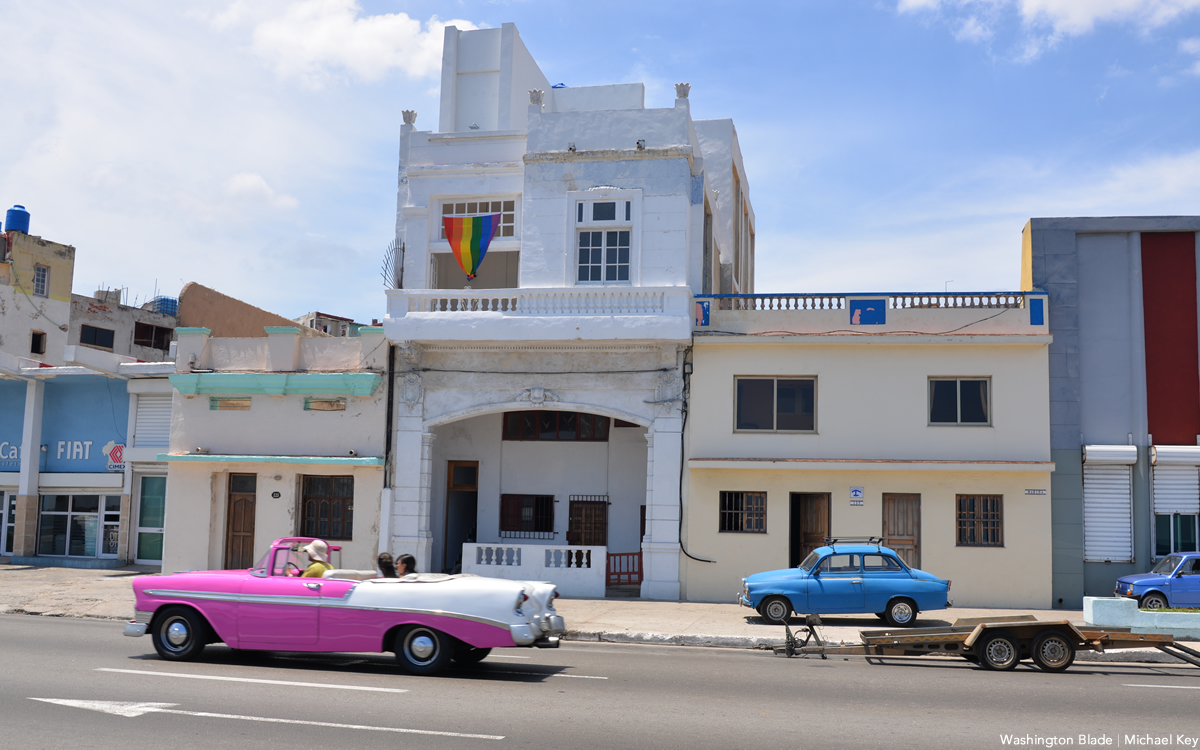
Tensions between the U.S. and Cuba are rising again. This is not new, but the current moment feels different. Recent measures from Washington aim to further restrict the Cuban government’s financial channels, limit its sources of revenue, and apply pressure to key sectors of the economy. This is not symbolic. It is a deliberate policy.
From the U.S. perspective, the message is clear. The goal is to force change that has not happened in more than six decades. There is also a domestic political dimension, shaped by sectors of the Cuban exile community that have long demanded a tougher stance. All of this is part of the landscape.
But that is only one side.
On the Cuban side, the response follows a familiar script. The government speaks of external aggression, economic warfare, and a tightening embargo. Each new measure becomes an opportunity to reinforce that narrative and close ranks. There is no room for public self-criticism. The blame always points outward.
Meanwhile, life on the island follows a different logic.
The energy crisis Cuba is facing today did not begin with these recent measures. It has been building for years. The electrical system is deteriorated, poorly maintained, and increasingly unreliable. Blackouts are not new. What has changed is how severe and how constant they have become.
For years, oil entered Cuba, especially from Venezuela. There were supply agreements. There were resources. And yet, the daily life of ordinary Cubans did not improve. Electricity remained unstable. Fuel was rationed. Transportation was still a daily struggle.
So the question is not new.
If the oil was there, why didn’t anything change?
Where did those resources go?
Where is the money that was generated?
Today, restrictions on oil are often presented as the main cause of the current crisis. They are not. They make an already fragile situation worse, but they do not fully explain it.
There is a deeper, longer story that cannot be ignored.
The same applies to Cuba’s international medical missions.
For years, they were presented as acts of solidarity. And in many cases, they were. Cuban doctors worked in difficult conditions, saving lives and supporting health systems abroad. That is real.
But they also functioned as one of the Cuban state’s main sources of income.
Many of these professionals did not receive the full salary for their work. A significant portion was retained by the government. In some cases, they had little or no control over the money they generated.
And there is a harsher reality.
If a doctor chose not to return to Cuba, that income often did not reach their family. It was withheld.
Today, several countries are reevaluating or canceling these agreements. Once again, the official response is to point outward. But the same question remains.
Is this the loss of international cooperation, or the collapse of a system built on control over its own professionals?
Inside Cuba, the conversation sounds very different.
People are not speaking in geopolitical terms. They are talking about survival. About getting through the day. About blackouts, food shortages, transportation problems, and a life that keeps getting harder.
Some see the new U.S. measures as a form of pressure that could lead to change. Not because they want more hardship, but because they feel the system does not change on its own. There is a deep sense of stagnation.
But that sense of expectation exists alongside a harsh reality.
Sanctions do not hit decision-makers first. They hit ordinary people. The ones standing in line. The ones losing food during power outages. The ones who cannot move because there is no fuel.
That is the contradiction.
The Cuban government calls for international solidarity. And it receives it. Countries send aid. Organizations mobilize. Public voices defend the island.
But another question is also present.
Does that aid actually reach the people?
The lack of transparency in how resources are distributed is part of the problem. Because this is not only about what enters the country, but about what actually reaches those who need it.
Reducing Cuba’s reality to a dispute between two governments avoids the core issue.
There are shared responsibilities, but they are not equal.
The U.S. exerts external pressure with real economic consequences. That cannot be denied. But inside Cuba, there is a system that has had decades to reform, to respond, to open, and it has not done so.
That part cannot continue to be ignored.
I write this as a Cuban. From what I lived. From what I know. From the people who are still there trying to make it through each day.
Because at the end of the day, beyond what governments say or decide, the reality is something else.
Cuba today is under more pressure, yes. But it has also spent years carrying problems that no one has seriously confronted.
And as long as that remains the case, it does not matter what comes from outside. The problem is still inside.
Opinions
D.C. is the place for the Democratic Socialists of America
Our endorsed candidates hold their affiliation as a badge of honor
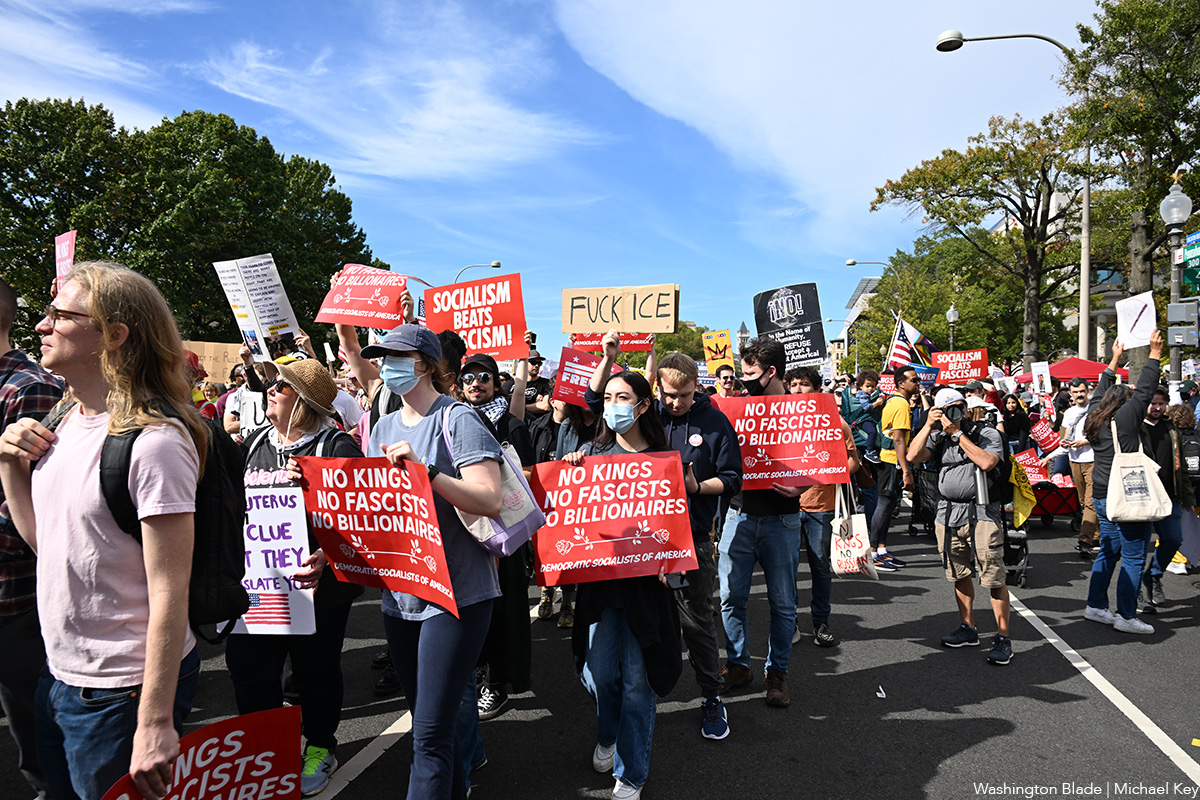
D.C. is the place for the Democratic Socialists of America (DSA). We believe in a District where everyone can live a happy and dignified life. That means housing, healthcare, transit, education, and safety are treated as guarantees rather than privileges reserved for the wealthy and well-connected.
Our endorsed candidates do not hide what they believe. They engage in the democratic process openly, explain their politics clearly, and ask their fellow members to spend long nights and weekends doing the hard work of campaigning. And as the last six years of local elections have shown, including three successful D.C. Council campaigns and the overwhelming passage of Initiative 82, D.C. voters are often a great deal more interested in the endorsement of Metro DC DSA than in the handwringing of the Washington Post editorial board.
That is what makes Peter Rosenstein’s April 2 op-ed in the Blade so revealing. His piece was not just wrong. It was smug, unserious, and politically disconnected from the actual lives of queer people in this city. Worse, he used the platform of our local LGBTQ outlet to disregard Palestinian humanity while scolding democratic socialists for refusing to join him in that moral failure. Put plainly, Rosenstein has been publishing crank op-eds for years, and this one was no exception.
My name is Hayden Gise. I am a transgender, lesbian, Jewish, Democratic Socialist, and I am a union organizer. I do not speak on behalf of the national DSA organization, the local chapter, or any campaign. But I will not sit quietly while Rosenstein wraps himself in the mantle of queer Jewishness to sell the lie that anti-Zionism is antisemitism.
He packages that lie in the same kind of pinkwashing rhetoric used by Benjamin Netanyahu, who mocked solidarity with Palestinians by saying, “Some of these protesters hold up signs proclaiming ‘Gays for Gaza.’ They might as well hold up signs saying ‘Chickens for KFC.’” Rosenstein’s liberal Zionism is not thoughtful, brave, or nuanced. It is just a more polished way of telling Palestinians their lives matter less and telling queer people we should be grateful for the empire so long as it flies a rainbow flag. Which, by the way, is showing itself to be a losing strategy.
The ongoing genocide in Gaza is not some tragic deviation from the history of an otherwise peaceful Israel. The Nakba was the mass expulsion and displacement of Palestinians during Israel’s establishment in 1947–49, when hundreds of thousands were driven from their homes. My Jewish values tell me that is wrong. Rosenstein’s politics treat anti-Zionist Jews like me as illegible. No serious person should treat that accusation as an argument.
But the deeper problem with Rosenstein’s piece is that he has no real understanding of why Democratic Socialism resonates here. For queer people in D.C., Democratic Socialism is not an abstract theory. It is rent that does not consume half your paycheck, a union on your job, childcare you can actually afford, public transit that works, and a city where working-class Black and brown queer people are not displaced so developers and donors can cash in. Queer politics is not only about recognition. It is also about whether ordinary people can afford to survive.
That is why D.C. is fertile ground for Democratic Socialism. In the race for mayor, one of the leading candidates is Kenyan McDuffie, whose campaign already looks like a focus-grouped merger of Andrew Cuomo’s slogan and Donald Trump’s graphic design instincts, backed by big business interests and the super PAC money that follows them. The other has the endorsement of the major labor unions in the District. Who has a cohesive vision to make D.C. more affordable and childcare universal. Who puts people over profit and human rights over political expediency. Our next mayor, and our first Democratic Socialist Mayor: Janeese Lewis George.
D.C. is exactly the kind of city where Democratic Socialism should grow: working-class, queer, tenant-heavy, union-minded, and tired of being told that dignity is too expensive. Which side are you on? I know what side the queer people of the District of Columbia will be on.
Hayden Gise is a union organizer in Washington, D.C.
Peter Rosenstein responds:
I am responding to a column by Hayden Gise who says in her column she is a transgender, lesbian, Jewish, Democratic Socialist, and supports having the Democratic Socialists of America (DSA) in Washington, D.C. She is definitely as entitled to her view on this, as I am to mine. However, I was surprised she clearly felt it important in her column to attack me personally, without even knowing me.
What she didn’t do is respond to the issues in the DSA platform I have a problem with and I asked candidates endorsed by the DSA to respond to. Are they for the abolition of the State of Israel? What is their definition of a Zionist? What is their definition of antisemitism? Will they meet with Zionist organizations? Do they support BDS? The DSA is also clear no person can be a member of a local DSA without being a member of the national organization.
Just so Gisa has a better idea of who I am she should know: I was a teacher and a union member. I worked for the most progressive member of Congress at the time, Bella S. Abzug (D-N.Y.), and supported her when she introduced the Equality Act in 1974, to protect the rights of the LGBTQ community, and have fought for its passage ever since. I have spent a lifetime fighting for civil rights, women’s rights, disability rights, and LGBTQ rights. I have no idea what Hayden Gise’s background is, or what her history of working for the causes she espouses is. But I would be happy to meet with her to find out. She should know, I take a backseat to no one in the work I have done over my life fighting for equality, including economic equality, for all. So, I will not attack her, as I don’t know her, and contrary to her, don’t personally attack people I don’t know much about.
I have, and will continue to attack, what the government of Israel is doing to the Palestinian people, and now to those in Lebanon and Iran. I will also attack the government of my own country, and the felon in the White House, and his sycophants in Congress, for what they are doing to our own people, and people around the world, and will continue to work hard to change things.
However, I will also continue to stand for a two-state solution with the continued existence of the State of Israel, calling for a different government in Israel. I also strongly support the Palestinian people and believe they must have the right to their own free state.

Trump’s war threats trigger rare 25th Amendment discussion

A Sondheim masterpiece ‘Merrily’ rolls onto Netflix

ROSENSTEIN: Vote McDuffie for mayor of D.C.

New book celebrates 1970s dance music icons

Report: Grenell wants Russian ambassadorship

Risking it all for love during World War II

PHOTOS: The Bonnet Ball

D.C. is the place for the Democratic Socialists of America

Key lifestyle changes can help patients cope with diabetes