National
R.I. House approves same-sex marriage bill
The measure passed by a 51-19 vote margin
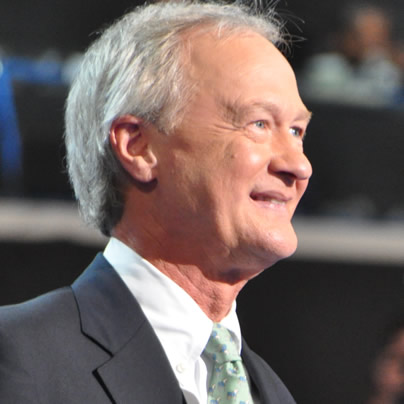
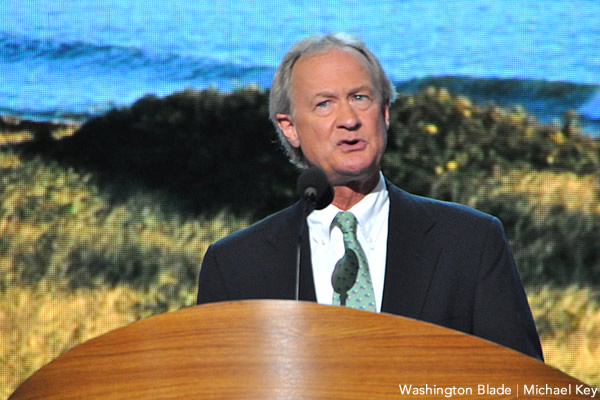
Rhode Island Gov. Lincoln Chafee (Washington Blade file photo by Michael Key)
The Rhode Island House of Representatives on Thursday overwhelmingly approved a bill that would allow gays and lesbians to marry in the state.
The 51-19 vote came after lawmakers on both sides of the issue debated the measure for more than an hour.
“This bill is so important,” state Rep. Arthur Handy (D-Cranston,) who introduced the proposal. “It is one of the most important things we’re going to do, and it’s historic.”
Deputy Majority Leader Arthur Corvese (D-North Providence) is among those who spoke against the bill. He described the measure as “an irrevocable societal game-changer” that would redefine the definition of marriage.
“Marriage is also significantly the biological unit of the family, promoting the well-being of children, providing them with a framework of identity and responsibility, creating a stable marital order and through this order sustaining a civil society,” Corvese said. “By redefining marriage, by breaking and disregarding the present parameters, you are not only destabilizing the marital order and by extension civil society, you are opening the door to further redefinition.”
State Rep. John Edwards (D-Portsmouth/Tiverton) countered.
“This will be a game-changer, but I believe it is a game-changer that will make things better for our state and it will allow all those people right now who truly love each other to enter the same contract that I or my wife and most of the people in this room currently enjoy,” he said. “This is not a religious issue. This is not about the natural order. It is strictly a civil rights issue.”
State Rep. Maria Cimini (D-Providence) discussed how she and her husband tied the knot in the Rhode Island capital less than three years ago.
“He and I went with a check for $34 to Providence City Hall,” she said. “No one raised an eye brow. No one flinched. We filled out a form and I was able to get married. And yet my family members — my aunts who have been together for over 20 years have had to spend a lot of money to protect their assets, even though their love and their commitment is greater than I’ve known at this point being in such a new relationship. We have colleagues in this room who have spent decades with their partners, with their husbands. They have had to leave this state to commit to [each other.]”
Gay state Rep. Frank Ferri (D-Warwick) noted he and his partner, Tony Carparco, will celebrate their 32nd anniversary in August as he emotionally spoke in support of the bill.
“You can define marriage any way you want,” Ferri said. “We’ve had a marriage for 32 years.”
The vote comes two days after the House Judiciary Committee unanimously approved the measure.
Senate President M. Teresa Paiva Weed (D-Newport) remains opposed to marriage rights for same-sex couples, but she has pledged she would allow a vote on the proposal in the Senate Judiciary Committee once the House approves it.
Rhode Island remains the only New England state without a same-sex marriage law. Governor Lincoln Chafee told the Washington Blade during an interview earlier this month that he feels nuptials for gays and lesbians are “long overdue” in the Ocean State.
“There are certain legislative votes that can fairly be characterized as ‘historic,'” he said in a statement after the House approved the bill. “The Rhode Island House of Representatives’ overwhelming passage of marriage equality legislation is one such vote.”
Ray Sullivan, campaign director for Rhode Islanders United for Marriage, agreed.
“Today is a proud and historic day,” he said. “For the first time, the Rhode Island House of Representatives has affirmed that all families in our state should have access to the unique protection and recognition that only civil marriage provides.”
Handy echoed Sullivan’s sentiments after the vote.
“This issue is about fairness and allowing all Rhode Islanders to have equal access to the rights and responsibilities that come with marriage, but marriage is about so much more than legal protections,” he said. “My wife and I have been married since 1997, and as we’ve worked together to raise our son, the value of having a committed, strong family has become more apparent to us over time. All Rhode Islanders deserve to enjoy that security and support, and deserve to have their family recognized as equal to others. It feels good to see how far we’ve come in Rhode Island toward valuing all families, and I know we are close to the day when marriage equality becomes law here.”
The Rhode Island chapter of the National Organization for Marriage and the Roman Catholic Diocese of Providence are among the groups that remain opposed to any effort to extend nuptials to gays and lesbians in the Ocean State.
“Today’s vote by the House of Representatives undermines the common good of our state and strikes against the very foundation of our culture,” the Rhode Island Catholic Conference said in a statement that also referred to the state’s nearly 10 percent unemployment rate and the plight of those without homes during the cold spell that brought single digit temperatures to the region earlier this week. “Unfortunately, this bill redefines marriage and fails to protect the religious liberties of many faith communities and individuals of conscience who believe that marriage is a union of one man and one woman. As witnessed in other states, those who support traditional marriage will most likely be punished by costly lawsuits and cultural persecution.”

Federal Government
Trump budget targets ‘gender extremism’
Proposed spending package would target ‘leftist’ political ideologies
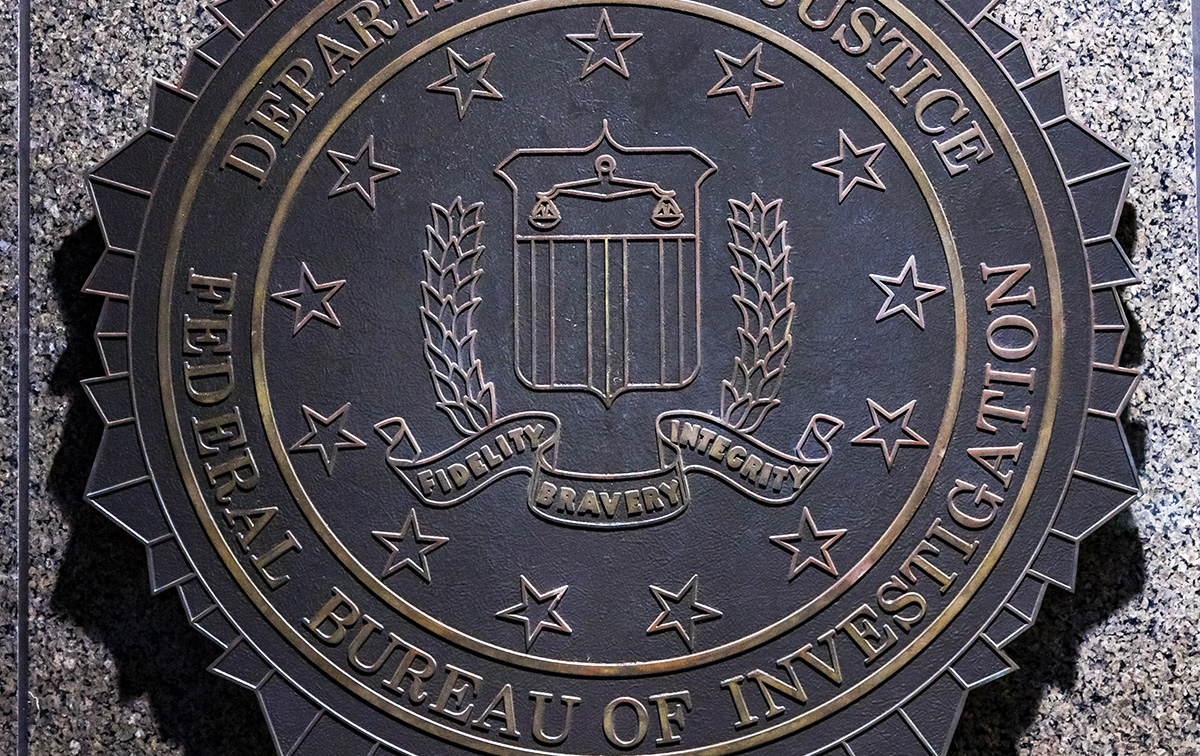
The White House submitted its 2027 budget request to Congress last month, outlining a push for the Federal Bureau of Investigation to “proactively” target what it describes as “extremism” related to gender — raising concerns about the potential for law enforcement to target LGBTQ people.
The Trump-Vance administration’s 2027 budget request, submitted to Congress on April 4, proposes a dramatic increase in national security and law enforcement spending, while reducing foreign aid and restructuring multiple domestic security programs. In total, the administration is requesting $2.16 trillion in discretionary budget authority (including mandatory resources), a 15.3 percent increase over the 2026 proposal.
Central to the proposal is the creation of a new “NSPM-7 Joint Mission Center,” a direct follow-up to the September 2025 National Security Presidential Memorandum 7 (NSPM-7). The directive instructs the Justice Department, the FBI, and other national security agencies to combat what the administration defines as “political violence in America,” effectively reshaping the Joint Terrorism Task Force network to focus on “leftist” political ideologies, according to reporting by independent journalist Ken Klippenstein.
The American Civil Liberties Union has characterized NSPM-7 as a way for President Donald Trump to intimidate his political enemies.
In a press release following the memorandum, Hina Shamsi, director of the ACLU’s National Security Project, said, “President Trump has launched yet another effort to investigate and intimidate his critics,” and had described the move as an “intimidation tactic against those standing up for human rights and civil liberties.”
The proposed mission center would include personnel from 10 federal agencies tasked with targeting “domestic terrorists” associated with a wide range of ideologies. Among them is what the administration labels “extremism” related to gender, alongside categories such as “anti-Americanism,” “anti-capitalism,” “anti-Christianity,” and “support for the overthrow of the U.S. government.” The document also cites “hostility toward those who hold traditional American views” on family, religion, and morality — language LGBTQ advocates have increasingly warned could be used to frame queer and transgender rights movements as ideological threats.
The mission center is one component of a proposed $166 million increase in the FBI’s counterterrorism budget.
In total, the FBI would receive $12.5 billion for salaries and expenses under the proposal, a $1.9 billion increase. Planned investments include unmanned aerial systems operations and counter-drone capabilities, counterterrorism efforts, and security preparations for the 2028 Summer Olympics in Los Angeles. The budget also cites 67,000 FBI arrests since Jan. 20, 2026, which it describes as a 197 percent increase from the prior year.
When Congress passed the USA PATRIOT Act in 2001, it also enacted 18 U.S.C. § 2331(5), which defines domestic terrorism as activities involving acts dangerous to human life that violate criminal laws and are intended to intimidate or coerce civilians or influence government policy through violence. That statutory definition has not changed.
However, federal agencies have historically categorized domestic terrorism threats into groups such as racially or ethnically motivated violent extremism, anti-government or anti-authority violent extremism, and other threats, including those tied to bias based on religion, gender, or sexual orientation.
The language in the budget suggests a shift in how those categories are interpreted and applied — particularly by explicitly linking “extremism” to gender and to perceived opposition to “traditional” views — without any corresponding change to federal law. Only Congress has the power to change the definition of domestic terrorism by passing legislation.
The budget document states:
“DT lone offenders will continue to pose significant detection and disruption challenges because of their capacity for independent radicalization to violence, ability to mobilize discretely, and access to firearms. Additionally, in recent years, heinous assassinations and other acts of political violence in the United States have dramatically increased. Commonly, this violent conduct relates to views associated with anti-Americanism, anti-capitalism, and anti-Christianity; support for the overthrow of the U.S. government; extremism on migration, race, and gender; and hostility toward those who hold traditional American views on family, religion, and morality.”
This language echoes earlier actions by the Trump-Vance administration targeting trans people.
On the first day of his second term, President Trump signed Executive Order 14168, titled “Defending Women from Gender Ideology Extremism and Restoring Biological Truth to the Federal Government.”
The order establishes a strict binary definition of sex and withdraws federal recognition of trans people.
“It is the policy of the United States to recognize two sexes, male and female,” the order states. “‘Sex’ shall refer to an individual’s immutable biological classification as either male or female. ‘Sex’ is not a synonym for and does not include the concept of ‘gender identity.’”
Appropriations committees in both chambers are expected to begin hearings in the coming weeks.
Puerto Rico
The ‘X’ returns to court
1st Circuit hears case over legal recognition of nonbinary Puerto Ricans

Eight months ago, I wrote about this issue at a time when it had not yet reached the judicial level it faces today. Back then, the conversation moved through administrative decisions, public debate, and political resistance. It was unresolved, but it had not yet reached this point.
That has now changed.
Lambda Legal appeared before the 1st U.S. Court of Appeals in Boston, urging the court to uphold a lower court ruling that requires the government of Puerto Rico to issue birth certificates that accurately reflect the identities of nonbinary individuals. The appeal follows a district court decision that found the denial of such recognition to be a violation of the U.S. Constitution.
This marks a turning point. The issue is no longer theoretical. A court has already determined that unequal treatment exists.
The argument presented by the plaintiffs is grounded in Puerto Rico’s own legal framework. Identity birth certificates are not static historical records. They are functional documents used in everyday life. They are required to access employment, education, and essential services. Their purpose is practical, not symbolic.
Within that framework, the exclusion of nonbinary individuals does not stem from a legal limitation. Puerto Rico already allows gender marker corrections on birth certificates for transgender individuals under the precedent established in Arroyo Gonzalez v. Rosselló Nevares. In addition, the current Civil Code recognizes the existence of identity documents that reflect a person’s lived identity beyond the original birth record.
The issue lies in how the law is applied.
Recognition is granted within specific categories, while those who do not identify within that binary structure remain excluded. That exclusion is now at the center of this case.
Lambda Legal’s position is straightforward. Requiring individuals to carry documents that do not reflect who they are forces them into misrepresentation in essential aspects of daily life. This creates practical barriers, exposes them to scrutiny, and places them in a constant state of vulnerability.
The plaintiffs, who were born in Puerto Rico, have made clear that access to accurate identification is not symbolic. It is a basic condition for moving through the world without contradiction imposed by the state.
The fact that this case is now being addressed in the federal court system adds another layer of significance. This is not a pending policy discussion or a legislative proposal. It is a constitutional question. The analysis is not about political preference, but about rights and equal protection under the law.
This case does not exist in isolation.
It unfolds within a broader context in which debates over identity and rights have increasingly been shaped by the growing influence of conservative perspectives in public policy, both in the United States and in Puerto Rico. At the local level, this influence has been reflected in legislative discussions where religious arguments have begun to intersect with decisions that should be grounded in constitutional principles. That intersection creates tension around the separation of church and state and has direct consequences for access to rights.
Recognizing this context is not an attack on faith or religious practice. It is an acknowledgment that when certain perspectives move into the realm of public authority, they can shape outcomes that affect specific communities.
From within Puerto Rico, this is not a distant debate. It is a lived reality. It is present in the difficulty of presenting identification that does not match one’s identity, and in the consequences that follow in workplaces, schools, and government spaces.
The progression of this case introduces the possibility of change within the applicable legal framework. Not because it resolves every tension surrounding the issue, but because it establishes a legal examination of a practice that has long operated under exclusion.
Eight months ago, the conversation centered on ongoing developments. Today, there is already a judicial finding that identifies a violation of rights. What remains is whether that finding will be upheld on appeal.
That process does not guarantee an immediate outcome, but it shifts the ground.
The debate is no longer theoretical.
It is now before the courts.
National
LGBTQ community explores arming up during heated political times
Interest in gun ownership has increased since Donald Trump returned to office

By JOHN-JOHN WILLIAMS IV | As the child of a father who hunted, Vera Snively shied away from firearms, influenced by her mother’s aversion to guns.
Now, the 18-year-old Westminster electrician goes to the shooting range at least once a month. She owns a rifle and a shotgun, and plans to get a handgun when she turns 21.
“I want to be able to defend my community, especially being in political spaces and queer spaces,” said Snively, a trans woman. “It’s just having that extra line of safety, having that extra peace of mind would be important to me.”
Snively is among what some say is a growing number of LGBTQ gun owners across the United States. Gun rights organizations and advocates say interest in gun ownership appears to have increased in that community since President Donald Trump returned to the White House last year.
The rest of this article can be read on the Baltimore Banner’s website.

Sri Lankan government withdraws support for LGBTQ tourism initiative

In an act of artistic defiance, Baltimore Center Stage stays focused on DEI

Trump budget targets ‘gender extremism’

Susan Lucci on love, loss, and ‘All My Children’

How to navigate shifting tenant expectations

Trump’s war threats trigger rare 25th Amendment discussion

New book celebrates 1970s dance music icons

ROSENSTEIN: Vote McDuffie for mayor of D.C.

A Sondheim masterpiece ‘Merrily’ rolls onto Netflix