Living
Queery: Matt Lewis
The Team D.C. board member answers 20 gay questions
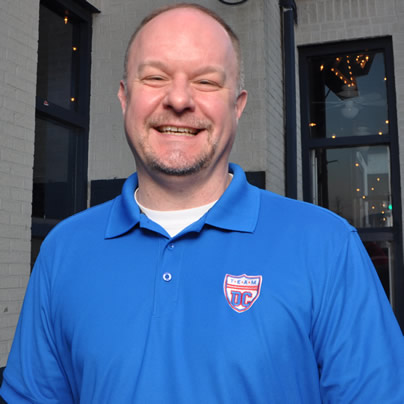
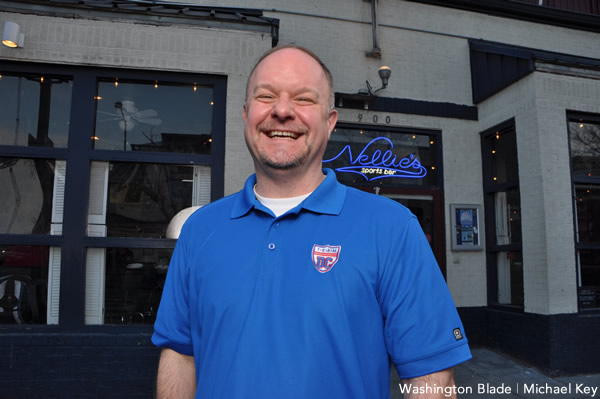
Matt Lewis (Washington Blade photo by Michael Key)
Matt Lewis is a big sports fan. He’s rooting for the Ravens for the Super Bowl both for the local connection and for “Brendon’s [Ayanbadejo] strong advocacy.”
And he just got elected to start a second term on the board of Team D.C. where he oversees the organization’s ever-flourishing “Night Out” series. The next installment — “Night Out at the Wizards” is Feb. 8 at the Verizon Center (tickets are $20; details at teamdcsports.com). Although other cities such as San Francisco and New York have isolated “gay nights” with their various sports teams, Lewis says none are as large or cross-branded as Team D.C.’s series.
“I think it says a lot about how society is viewing us as a community,” Lewis, a 43-year-old federal civil rights attorney with the U.S. Patent and Trademark Office in Alexandria, says. “It really shows that we’re everywhere — in the NFL, on Broadway, in Main Street America.”
Lewis, originally from Wilmington, N.C., came to Washington eight years ago after a 10-year relationship ended “on amicable terms.” His family had moved here (his mother and sister are attorneys and live in Capitol Hill), so he joined them. He’s been in his current job only since June after almost six years with another federal agency. He lives with his partner of six months in Arlington, whom he declines to name, and says they “just recently became engaged.”
Lewis enjoys watching college and pro basketball, football and baseball in his free time in addition to politics and volunteering. He accepted his current job with a mind toward achieving a better “work/life balance.” He enjoys relaxing with “a nice glass of wine on the couch after hitting the gym.”
How long have you been out and who was the hardest person to tell?
I have been out for over 20 years. The hardest person to tell was my mother but only for about three seconds. I knew how she would react but there is that brief period of uncertainty when you finally say the words. Everybody goes through that three-to-five second period in their own way in which they use the actual word “gay.” I was fortunate to have a family that loves me overall for who I am as a person.
Who’s your LGBT hero?
I actually don’t have a particular person but rather the millions of Americans and people around the world, who get up every day and fight for equality, justice, inclusion and the basic civil rights that all people deserve, gay, straight or otherwise.
What’s Washington’s best nightspot, past or present?
The best nightspot currently I think is Nellie’s. Doug and his crew do a great job to make everyone feel at home and have a good time.
Describe your dream wedding.
Something that is simple, small, intimate and memorable.
What non-LGBT issue are you most passionate about?
I am not sure that there are any actual non-LGBT issues in the world today, as we face every issue that all people, this nation and the world face. We all face health care, civil and human rights, tax, economic and environmental issues just to name a few.
What historical outcome would you change?
That’s a tough one. I think that I would change the assassinations of Martin Luther King, Jr. or President John F. Kennedy. Both men had so much potential to do so much good beyond what they had already done in their short lives.
What’s been the most memorable pop culture moment of your lifetime?
It’s a tie I think. Seeing U2 and Elton John in concert. They both put on a great show.
On what do you insist?
Honesty, sincerity and communication.
What was your last Facebook post or Tweet?
“Let’s Go Caps!”
If your life were a book, what would the title be?
“Lessons that I have learned along the path …”
If science discovered a way to change sexual orientation, what would you do?
I would not change anything. I am the way God made me and I am blessed to be healthy and alive. He doesn’t make mistakes you know?
What do you believe in beyond the physical world?
As a Christian and Episcopalian, I believe in a heaven surrounded by all those who have gone before me.
What’s your advice for LGBT movement leaders?
Keep up the good fight knowing that Rome was not built in a day and that despite the hardships and setbacks, our day will come. We will obtain full equality in this country and elsewhere. It’s only a matter of time!
What would you walk across hot coals for?
My partner and my family, plain and simple.
What LGBT stereotype annoys you most?
That gay men are weak, not masculine, and can’t play or like sports. That lesbians are all “butch” and cannot be feminine. So untrue on both accounts.
What’s your favorite LGBT movie?
“Philadelphia.” It’s the movie I saw the night that I came out to my mother and sister.
What’s the most overrated social custom?
I would have to say Rehoboth Beach. Being from Coastal North Carolina, I know Rehoboth is way overpriced.
What trophy or prize do you most covet?
Probably my law license. A lot of blood, sweat and tears went into getting that piece of paper.
What do you wish you’d known at 18?
To look at the bigger picture. Don’t lose the forest for the trees.
Why Washington?
Why not? Family, friends, great political, social, sports and cultural activities not to mention the great restaurants. Where else can you witness Newt Gingrich and his wife hotly contesting which pair or New Balance shoes she should purchase?





Real Estate
Factors to consider when hiring an interior designer
It’s essential to have confidence in the professionals you engage

(StatePoint) Ready to redesign your home? Whether you have only a vague notion of how you want your spaces to look or a very specific vision, relying on the expertise of a professional can help you bring your dream home to life. Before choosing and hiring an interior designer, though, be sure to take the following factors into consideration:
Style: Identify your style. Is it boho chic? Industrial? Maximalist? Many designers have their own signature look and preferences. It’s best to understand what vibe you want first, then search for a designer who aligns with that style.
Past client projects: One of the best ways to know whether a particular designer is the right fit for you is to review their past client projects. Ask to see their portfolio or review their finished projects on their website or socials. Also, take a look at reviews and testimonials to ensure their previous customers walked away satisfied with a job well done.
Budget: Communicate your budget in advance of work to confirm that you and your designer are on the same page financially. Your decorator will need this ballpark figure to get a handle on the scope of the project and to make design decisions accordingly. You should also use this conversation to understand their rates so you can decide whether you want to move forward.
Preferred vendors: It’s important that the interior designer you choose has preferred vendors that they work with. These are partners they’ve built strong relationships with that provide the same first-rate experience they do, and have streamlined processes in place. “A home renovation has so many moving parts. That’s why we try to take the hassle out of the process for designers and homeowners alike,” says Katie Zess, senior marketing manager and director of Renewal by Andersen’s Interior Designer Loyalty Program.
Through the loyalty program, the full-service window and door replacement division of Andersen Corporation offers their program members exclusive access and rewards, including a “designer discount” they can share with their clients. Renewal by Andersen also offers designers a dedicated point of contact to ensure a smooth process that’s customized for your project from start to finish. To learn more, visit renewalbyandersen.com.
Before you begin your home renovation, it’s essential to have confidence in the professionals you hire. Be sure your interior designer has fostered partnerships that will streamline your redesign, and that their goals and budget aligns with yours.
Real Estate
The LGBTQ real estate map is being redrawn
Affordability, higher mortgage rates reshaping where we choose to call home

For decades, the map of LGBTQ+ America was relatively easy to recognize.
New York. San Francisco. Los Angeles. Palm Springs. Provincetown. Fort Lauderdale and Wilton Manors.
These communities became LGBTQ+ destinations because they offered something that wasn’t always easy to find elsewhere: visibility, acceptance, community and the freedom to live openly.
But that map is changing.
Today’s LGBTQ+ homebuyers are navigating a housing market defined by high prices, elevated mortgage rates and affordability challenges. At the same time, remote and hybrid work, retirement and the growth of LGBTQ+ communities beyond traditional destinations are giving buyers more choices about where to live.
Increasingly, the question isn’t simply, “Where are the most LGBTQ-friendly places to live?”
It’s also: “Where can I find community and afford the life I want?”
That shift may become one of the defining LGBTQ+ real estate trends of the coming decade.
Affordability Is Changing the Conversation
For many buyers, the biggest issue in today’s housing market is simple: the monthly payment.
The average 30-year fixed mortgage rate was 6.95% in mid-September, compared with 6.26% a year earlier, according to Freddie Mac.
Meanwhile, the median price of an existing U.S. home reached $429,100 in August, according to the National Association of Realtors.
The combination of elevated home prices and higher borrowing costs has changed what many Americans can afford—and where they can afford it.
Some buyers are purchasing smaller homes or condominiums. Others are moving farther from major urban centers. Still others are reconsidering expensive markets entirely.
For LGBTQ+ buyers, this is helping broaden the definition of an LGBTQ+-friendly place to call home.
LGBTQ+ Buyers Have More Choices
A generation ago, relocating away from a major city or established gay neighborhood could sometimes mean sacrificing access to a visible LGBTQ+ community.
That’s increasingly less true.
Traditional LGBTQ+ destinations such as Palm Springs, Fort Lauderdale and Wilton Manors, San Francisco, New York and Provincetown remain important centers of LGBTQ+ life. But today, LGBTQ+ buyers can also find established or growing communities in cities across the country.
Places such as Minneapolis, Columbus, Pittsburgh, Richmond, Atlanta and the Tampa Bay area are among the markets attracting buyers who may be looking for a different balance of housing costs, lifestyle and community.
The goal isn’t necessarily to find the cheapest house.
It’s to find the right combination of affordability, LGBTQ+ community, lifestyle, employment opportunities, healthcare, culture and quality of life.
Remote and hybrid work have expanded those possibilities for some buyers. If a job no longer requires being in an expensive employment center five days a week, the geographic search for a home can become considerably larger.
That can make communities that once seemed impractical suddenly worth considering.
Retirement Is Redrawing the Map, Too
Retirement is another important part of the changing LGBTQ+ real estate landscape.
As more Americans reach retirement age, LGBTQ+ retirees are considering where they want to spend the next chapter of their lives. Housing costs, taxes, healthcare, climate and proximity to airports, restaurants and cultural activities all play a role.
But LGBTQ+ retirees may have additional questions.
Will I feel comfortable living openly?
Is there an LGBTQ+ community nearby?
Can I find LGBTQ+-affirming healthcare?
Will I have opportunities to build a social network as I get older?
Those considerations can make choosing a retirement destination particularly personal.
Palm Springs and Fort Lauderdale/Wilton Manors remain well-known LGBTQ+ retirement destinations. But retirees are also exploring smaller cities and communities across the Southeast, Midwest and other regions where housing costs and lifestyles can look very different.
For many, the search is becoming less about moving to a famous gay destination and more about finding a place where community, lifestyle and affordability intersect.
Buyers Finally Have More Leverage
There is another significant change in today’s housing market: buyers have regained some negotiating power.
The National Association of Realtors reported 1.62 million existing homes for sale in August, up 5.9% from a year earlier. That represents approximately 4.9 months of housing supply, the highest level in more than a decade.
Realtor.com also reported that 20.4% of active listings had experienced a price reduction in August.
That’s a very different environment from the pandemic-era housing market, when buyers in many communities faced bidding wars, waived inspections and offers well above asking price.
Depending on the market, today’s buyer may have more time to evaluate a property and greater opportunity to negotiate price, repairs, closing costs or other concessions.
But there is an important caveat: there is no single national housing market.
Conditions can vary dramatically from one city—or even one neighborhood—to another. Some markets remain competitive, while others have considerably more inventory and negotiating room.
That’s one reason local expertise matters.
Sellers Need a Different Strategy
The changing market also has implications for LGBTQ+ homeowners considering selling.
Strategies that worked several years ago may not work today.
Buyers are highly sensitive to monthly payments, and an overpriced home can quickly be passed over when competing properties are available.
Sellers should pay close attention not only to recent comparable sales but also to homes currently competing for the same buyer.
Condition matters, too.
Repairs, landscaping, staging and professional photography can make a meaningful difference when buyers have more choices. Pricing correctly from the beginning has also become increasingly important.
More Than 30 Years Serving the LGBTQ+ Community
One part of buying or selling a home hasn’t changed: the importance of working with a real estate professional who understands your priorities.
For more than 30 years, GayRealEstate.com has served the LGBTQ+ community, connecting buyers and sellers with LGBTQ+ and allied real estate professionals throughout the United States.
Over that time, the GayRealEstate.com network has supported more than $2 billion in real estate sales and more than 55,000 transactions.
Behind those numbers are thousands of people making one of life’s most personal decisions: where to call home.
For LGBTQ+ buyers, that conversation can involve much more than bedrooms, bathrooms and price per square foot. It can include community, acceptance, healthcare, family, retirement, lifestyle and the ability to live openly.
An experienced LGBTQ+ or allied real estate professional can understand why those considerations belong in the real estate conversation.
Finding Home in a Changing America
The 2026 housing market presents real challenges.
Mortgage rates remain elevated. Home prices are high. Affordability continues to strain buyers across much of the country.
But there are also signs of a more balanced market. Inventory has increased. Price reductions have become more common. Buyers in many markets have regained negotiating power.
And for LGBTQ+ Americans, something else has changed: there are more places to consider calling home.
The next great LGBTQ+ destination doesn’t necessarily need the country’s largest Pride celebration or its most famous gay neighborhood.
It could be a smaller city with a growing LGBTQ+ community, attainable housing, good healthcare, strong cultural amenities and a quality of life that leaves room for travel, retirement or simply enjoying the home you’ve worked hard to own.
Ultimately, today’s LGBTQ+ real estate search increasingly comes down to three questions:
Where can I afford the life I want?
Where will I find my community?
And where will I feel at home?
The answers are becoming more varied—and that’s helping redraw the map of LGBTQ+ America.
Scott Helms is with GayRealEstate.com.
GayRealEstate.com has served the LGBTQ+ community for more than 30 years, connecting LGBTQ+ homebuyers and sellers with LGBTQ+ and allied real estate professionals across the United States. Its network has supported more than $2 billion in real estate sales and more than 55,000 transactions.
Advice
I’m 66, he’s 27. Is it love or am I being played?
What to do when your friends don’t trust your boyfriend
Dear Michael,
I’m 66, Peter is 27. I’m retired, financially comfortable. He’s a grad student.
We met last summer at the beach and started dating. Now we’re living together. I want this to be forever, and Peter says he does too.
The problem: Some of my friends are telling me that Peter is taking me for a ride.
I know all the cliches about older gay men thinking they’re in a loving relationship when the truth is they’re just some young guy’s sugar daddy. But I don’t feel old. And I think I have a grip on reality.
I do support Peter financially now, but he is eventually going to have a job. And if I didn’t pay for things, there’s no way he could share my life in terms of travel, dining out, etc. I want to have fun with him and am happy to foot the bill.
My friends say there’s no way he could be attracted to anything but my money. But I take great care of myself and look good. We don’t have the greatest sex life but I think it’s pretty hot. Peter says he is attracted to older guys.
And there’s much more to our relationship than sex. Despite the age difference, I think we are kindred spirits, and Peter says he feels the same. We both like travel, talking about politics, have similar taste in books and movies and TV shows. Lots of common interests.
I can deal with the age/money criticisms, but there’s some other stuff I’m more worried about.
One of my friends says he saw Peter making out with someone much younger over the summer. That worries me. I asked Peter about it and he said it wasn’t true.
Peter does go out, solo, because he can stay up a lot later than I want to. My party-till-dawn days are over. He says he’s just dancing and hanging out with friends. I want to believe him.
One night he didn’t come home and it unsettled me. He told me it just got too late so he crashed at a friend’s place. I thought of asking the friend about it but I didn’t want to seem like I was spying on Peter, and I also was afraid that the friend would say this didn’t happen. If it didn’t, then what? Do I break up with him for lying and cheating? I really don’t want to be old and alone. I can’t tell if my friends are making me paranoid or if I am being played.
Michael replies:
Obviously, I can’t know if Peter is telling you the truth or not. But I can give you some pointers on dealing with trust in a relationship. The main person to focus on trusting is yourself.
Do you trust your own sense of whether or not Peter is being honest with you? If not: What would it take for you to do so? Could you let yourself see things that you are currently not wanting to let yourself see? What is now stopping you from seeing him accurately?
You describe many ways in which you think the two of you are compatible. How about in terms of values? Do you respect Peter’s character? Can you get a good read on whether he is just telling you what you want to hear in order to stay in the relationship, or giving you an honest representation of where he really stands?
I understand that you’re afraid of finding out that Peter is lying to you, and that you don’t want to have to deal with ending the relationship. Given the possible ramifications, that makes sense. But do you want to let your fear stop you from keeping your eyes open?
When we decide to see things not as they are, but as we wish they were, or tell ourselves that what we see isn’t what we’re seeing, we end up getting hurt. And we do a great disservice to ourselves by discrediting our own internal witness, making it difficult to trust both ourselves and other people.
Only you can decide which would be preferable: Living with someone whom you don’t trust to be honest with you, or being alone.
In considering this possibility, keep in mind that none of us have a guarantee that we won’t be hurt in our relationships. In fact, it’s pretty much certain that at times we will be. Partners do break each other’s hearts, sometimes deliberately, sometimes not. That in itself is no reason to end a relationship.
But being with someone who is purposely deceiving you doesn’t sound that appealing.
Our relationship difficulties often give us possibilities to grow. Your fears about Peter’s infidelity are an opportunity for you two to have some conversations about how important you each think honesty is in a relationship; and what risks you are willing to take in order to have an honest relationship.
People are often afraid to speak the truth because of the possible consequences. But if you don’t speak up, you can easily wind up in a hollowed-out relationship where neither of you is willing to address what is really going on with each of you. That is the opposite of intimacy.
And, having a standard where each of you is forthcoming would avoid the minefield of a distrustful relationship where one of you is the detective and one of you is the suspect. That dynamic creates an imbalanced relationship and often leads to the watched partner wanting to get away with things.
Bottom line: Are each of you interested enough in an intimate relationship to be consistently honest with each other, even if your partner may not like what you say? And to do your best to respond thoughtfully to your partner’s honesty, even when he tells you something that you do not want to hear?
Michael Radkowsky, Psy.D. is a licensed psychologist who works with couples and individuals in D.C., Maryland, Virginia, New York, and all PSYPACT states. He can be found online at michaelradkowsky.com. All identifying information has been changed for reasons of confidentiality. Have a question? Send it to [email protected].

Renee Good’s family files two federal lawsuits

House Democrats urge White House to confront Turkish government over anti-LGBTQ crackdown

988 restores crisis services for LGBTQ youth

To school to homeschool to school again

Ryan Murphy’s ‘Monster’ vilifies the lesbian

PHOTOS: HRC National Dinner

Factors to consider when hiring an interior designer

Dr. Fauci ‘honored to be part of’ LGBTQ history

Baltimore’s oldest gay bar to reopen this week