Local
Council race heats up
Gay politicos divided over support for GOP candidate Mara
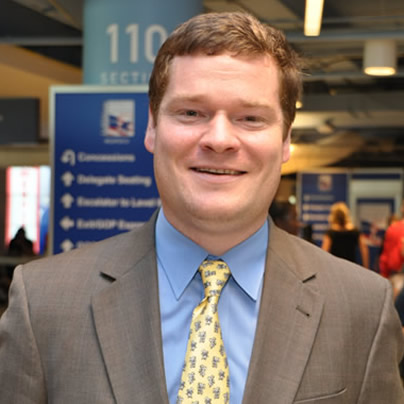
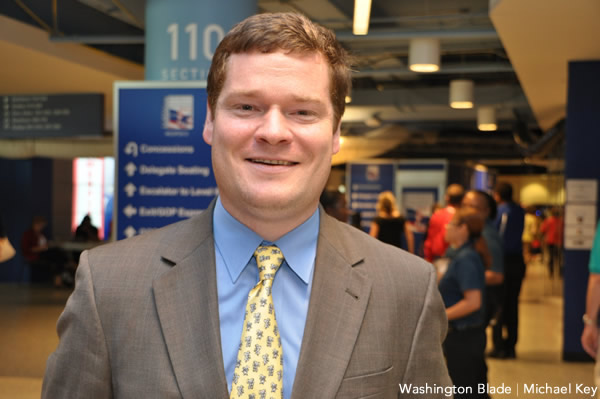
Patrick Mara at the 2012 Republican National Convention (Washington Blade photo by Michael Key)
Gay Democratic activist Peter Rosenstein raised eyebrows last week when he called on the LGBT community not to vote for pro-gay Republican candidate Patrick Mara in the April 23 special election for an at-large seat on the D.C. City Council.
In his political column in the Blade, Rosenstein reminded LGBT voters that Mara, while saying he personally supports LGBT rights, was a delegate at the Republican National Convention last summer for GOP presidential candidate Mitt Romney, who opposed nearly all LGBT rights initiatives.
“Mara tells anyone who will listen that he doesn’t agree with the Republican Party platform and personally favors marriage equality and full civil rights for the LGBT community and that he is pro-choice,” Rosenstein wrote. “In so doing, he asks us to overlook his active support for candidates and a party that don’t believe those things.”
But longtime gay Democratic activist and D.C. civic leader Joel Lawson, who’s supporting Mara, said Mara’s support for Romney doesn’t bother him and shouldn’t be a problem for others in the LGBT community who are considering voting for Mara.
“I’m a lifelong active Democrat,” Lawson told the Blade. “And the only ‘R’ I’m worried about is reform. And those attacks on Pat are just more nasty fighting that’s hurt D.C.”
Lawson added, “This race is between Pat Mara and business as usual, and Pat is the strongest [candidate] for reform.”
Political observers say people like Lawson – both gay and straight – appear to be part of a growing bloc of voters who are angry about the long list of ethical lapses that have surfaced in city politics over the past several years.
Among the concerns of these voters were the arrest and guilty pleas on corruption related charges by former D.C. Council Chair Kwame Brown and former Ward 5 Council member Harry Thomas, both Democrats, who were sentenced to time in jail.
The U.S. Attorney’s office continues to investigate illegal campaign finance practices uncovered in Mayor Vincent Gray’s 2010 election campaign. And the City Council last month voted to reprimand gay Council member Jim Graham (D-Ward 1), who was accused of violating city ethics rules by reportedly interfering with a city contract. Graham disputes allegations that he acted improperly on the contract matter.
Similar to most elections in D.C. over the past 20 years or longer, each of the seven candidates running in the special election – five Democrats, one Republican (Mara), and a Statehood Green Party candidate – are strong supporters of LGBT equality, including same-sex marriage.
The candidates include Democrats Michael Brown, a former Council member who lost his re-election bid last year to David Grosso (D-At-Large); Anita Bonds, chair of the city’s Democratic State Committee, which elected her as interim Council member until the special election is held; former Washington Post and Washington City Paper reporter Elissa Silverman, who most recently has worked as a budget analyst for the progressive think tank D.C. Fiscal Policy Institute; and local attorneys Paul Zuckerberg and Matthew Frumin, who operate D.C. law firms.
Also running is community activist and ex-offender advocate Perry Redd, who was nominated by the Statehood Green Party.
The Gay and Lesbian Activists Alliance is expected to rate each of the candidates on LGBT issues later this month based on their responses to a GLAA questionnaire that the group has been giving to candidates running for local office for more than 30 years. The Blade will report on the candidates’ detailed positions on LGBT issues when the GLAA questionnaire results are released.
The Gertrude Stein Democratic Club, the city’s largest LGBT political group, is scheduled to hold a forum for the Democratic candidates on March 21 at the Metropolitan Community Church of Washington. The club is also scheduled to vote on an endorsement at the forum. But club members say an endorsement is uncertain due to the group’s requirement that a candidate receive a 60 percent majority vote among members to earn the club’s backing.
With each of the candidates supportive on LGBT issues, activists following the campaign say the so-called “gay vote” could be driven by non-gay issues as well as name recognition and the perception of the candidates’ visibility in the LGBT community.
Brown and Mara have run for City Council seats in the past, and each has done well in precincts known to have high concentrations of LGBT residents at various times. Bonds, who has been active in city politics for many years, is less known to non-activists but has support from several key LGBT movers and shakers. Among them is David Meadows, a former Stein Club president, who now works on her Council staff.
Silverman, Redd, Frumin, and Zuckerberg are newcomers to electoral politics and must overcome a lack of widespread name recognition, political observers have said. Silverman, Frumin, and Zuckerberg told the Blade they have been longtime supporters of LGBT equality and, if elected, would push for city policies and laws that strengthen the ongoing quest to achieve full equality for LGBT city residents. Each said they would have voted for the city’s same-sex marriage law had they been on the Council when it came up for a vote in 2009.
Redd couldn’t immediately be reached for comment. Longtime Statehood Green Party leader and LGBT rights supporter David Schwartzman told the Blade that Redd is a strong supporter of LGBT equality, including same-sex marriage.
D.C. political consultant Chuck Thies is among the local political observers who believe Mara and Brown are the two frontrunners in the race. Thies told the Blade that gay Democratic activists may be worried about Mara because he has received a significant number of Democratic votes in two previous runs for a Council seat.
In a 2011 special election for an at-large seat, Mara came in second, just behind Vincent Orange, a Democrat with wide name recognition who won the eight-candidate race. Mara beat Democratic candidate Sekou Biddle, who was backed by most LGBT Democratic leaders.
In a development that surprised some gay Democratic activists, Mara won by large margins in at least seven of the 14 voter precincts with high concentrations of LGBT voters.
In the special election set for April 23, Mara has a solid bloc of the city’s Republican voters and could benefit by his Democratic opponents splitting the vote among each other while capturing a sizable portion of the Democratic vote as a perceived reform candidate, Thies said.
Mara’s appeal to Democrats this year surfaced at the Stein Club’s February meeting, when a resolution was introduced to allow Mara to participate in the club’s candidate forum on March 21, even though the club’s bylaws bar the club from endorsing a non-Democrat in races where Democrats are competing.
“Some of us thought it would be useful to the community to give him a chance to speak,” said Christopher Dyer, the Stein Club member and director of the city’s Office of GLBT Affairs under Mayor Adrian Fenty, who introduced the resolution.
The resolution lost by a wide margin, with many club members saying a Democratic group shouldn’t be giving a platform to a Republican candidate. However, longtime club members said the fact that such a resolution even came up suggests that Mara appeals to LGBT voters.
Thies called Frumin the dark horse candidate, who could be a strong competitor to Mara and Brown based on his ability to raise campaign funds. The most recent campaign finance reports filed with the city show he raised just under $72,000 in contributions and kicked in $10,628 of his own money, making him the best funded candidate in the race so far.
Mara has raised just over $20,000 and Silverman has raised a little over $36,000 as of the last finance reporting period. Brown and Zuckerberg had raised around $9,500 during the same reporting period, with Bonds raising $11,000. Redd came in last in fundraising, with just $900.95 as of the last reporting period ending Jan. 31.
Like most special elections, voter turnout is expected to be low, giving key voting blocs, including the LGBT vote, the ability to play a decisive role in who wins. And so far, the buzz within LGBT political circles has been over whether gay Democrats should remain faithful to their party or break ranks and vote for Mara.
“Mara will not win LGBT votes if the community holds him responsible for his work for, and support of, an ultra-conservative party and Romney/Ryan,” Rosenstein told the Blade.
Veteran gay Democratic activist John Klenert, who’s supporting Mara, said that to him, Mara’s strengths outweigh his support for Romney.
“This race comes down to a personal issue: that Pat will serve honestly, with integrity and strong ethics,” Klenert told the Blade. “This is about new blood for an ethically challenged City Council.”




District of Columbia
Center Arts Gallery celebration, auction to take place on Oct. 17
D.C. LGBTQ+ Community Center to mark event’s 10th anniversary

The D.C. LGBTQ+ Community Center is hosting its 10th anniversary celebration of the opening of its Center Arts Gallery on Saturday, Oct. 17, at the Center’s offices at 1827 Wiltberger St., N.W., from 6 – 9 p.m.
“For 10 years, the D.C. LGBTQ+ Community Center’s Arts Gallery has been more than a place where art is displayed,” a statement released by the center says.
“It has been a space where LGBTQ+ artists are seen, celebrated, and connected to community, and where their work has given expression to the stories of joy, resistance, grief, beauty, survival, courage, and imagination,” the statement adds.
It says those attending the event would have an opportunity to bid on donated artwork in an auction and to meet and interact with “the artists whose creativity has helped bring Center Arts Gallery to life, enjoy wonderful food and music, and celebrate a decade of LGBTQ+ artistic expression.”
But the statement posted on the LGBTQ+ Community Center’s website says free general admission tickets may have been sold out, with $75 VIP tickets still available. It says the proceeds from ticket sales will be used to help support the LGBTQ+ Community Center’s operations.
Attendees and others were also invited to an event after party at the LGBTQ bar and cafe Spark Social from 9-11 p.m. at 2009 14th St., N.W.

The Comings & Goings column is about sharing the professional successes of our community. We want to recognize those landing new jobs, new clients for their business, joining boards of organizations and other achievements. Please share your successes with us at [email protected].
Congratulations to Richard Garrett on being honored by Delaware Gov. Matt Meyer with the Order of the First State. Garrett is executive director of the Children’s Beach House, in Lewes, Del. Upon accepting the honor he said, “I am deeply honored to be recognized by Governor Meyer with the Order of the First State, but I hope this occasion also shines a light on children who are struggling in some of the same ways I struggled as a child and teenager. Perseverance, connection, patience, and the presence of caring adults made all the difference in my life. For 24 years, my greatest privilege has been helping Children’s Beach House create that same sense of belonging and possibility for children and families across Delaware. They are strong, smart, resilient, and resourceful—and they deserve every opportunity to discover just how much they are capable of becoming.”
He told the Blade, “In many ways, my own childhood helps explain why this work has been so deeply personal to me. I grew up in a family that struggled financially, and I had a speech impediment so severe that, as a young child, I often could not be understood without one of my siblings acting as an interpreter. Thankfully, I had strong parents and a mother who was an educator. She spent countless hours helping me practice consonant blends and trying to master the “R” and “S” sounds. Just as importantly, she understood that being around other children my own age would teach me things that no adult could. What made a difference in my life were competent, caring adults who built relationships with me and gave me the sense of safety and belonging I needed. People like Sister Kathleen Swan, OSF; Father Gerald M. Dunne, OSFS, Dr. Susan Cassidy and her husband, John Bronson, to name a few! In many respects, my story mirrors the work we do every day at Children’s Beach House. The children and families we serve are strong, smart, resilient, and resourceful. Sometimes what they need most is for someone to recognize those strengths, stand beside them, and give them the relationships and opportunities they need to flourish.”
Over the years Garrett has grown the Children’s Beach House’s annual budget from approximately $650,000 in 2003 to $4.5 million while strengthening impact, visibility, and organizational infrastructure. He raised $2.5 million in Delaware foundation capital grants, and established a $7 million endowment for the Margaret H. Rollins Center, a $1 million capital endowment, and increased the general operating endowment to $6 million.
In addition to all that Garrett is the founder and owner of Midway Motion and Fitness. He is also looking forward to the groundbreaking of Midway Pickleball in 2027. He is treasurer of the Community Foundation Board of Kiwanis Club of Coastal Delaware. He began his career as executive director of the Delaware County Children’s CAMP, Media, Pa.; and was director of Student Affairs for the Williamson Free School of Mechanical Trades, Media, Pa.
Garrett earned his bachelor’s degree in psychology from Neumann University, Aston, Pa.; and did his graduate studies in vocational education, Temple University.
District of Columbia
Physician: addiction doesn’t always look the way you think it does
Yngvild Olsen headed HHS’s Center for Substance Abuse Treatment during Biden-Harris administration
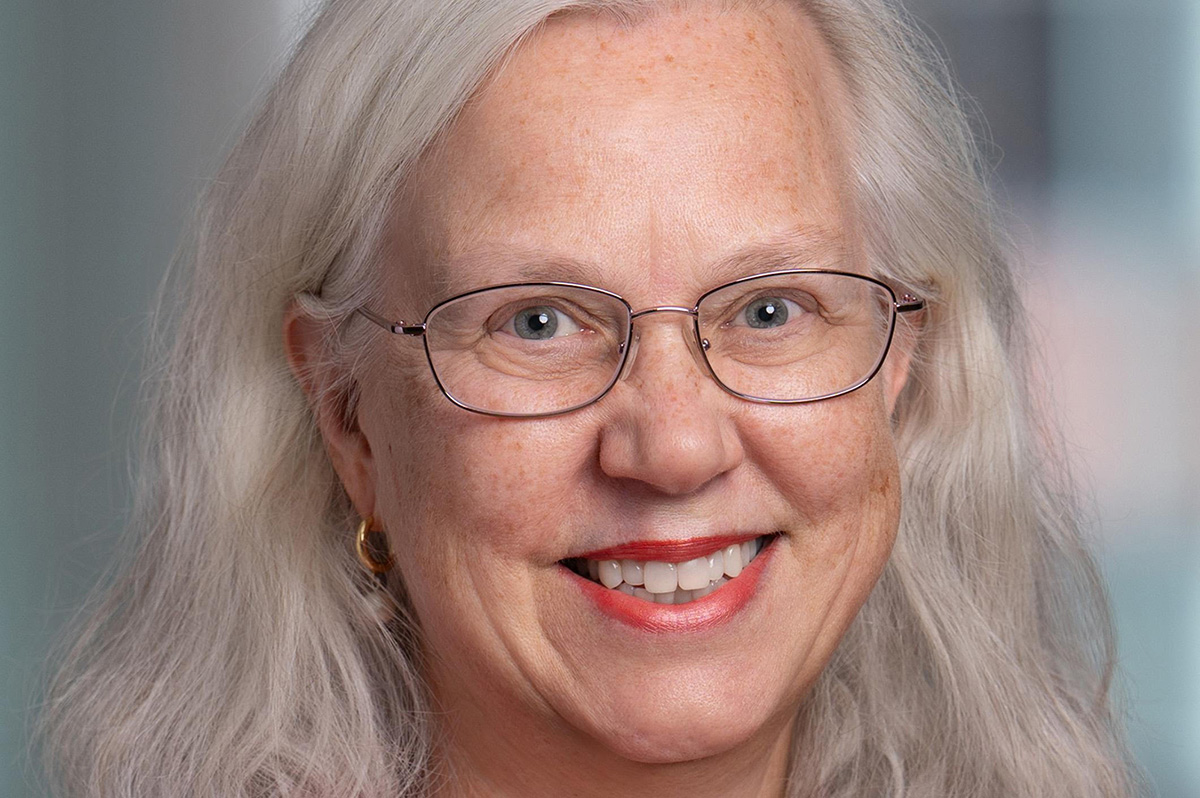
Many people think the telltale signs of drug addiction include sweating and vomiting. But a prominent addiction medicine physician says the best signals aren’t always so visible.
Dr. Yngvild Olsen says more accurate signs come from the brain, specifically the compulsion to keep using drugs, including opioids, despite damage to education, career and relationships.
While it may be harder to understand the true nature of drug addiction, it’s never been more important because of the increased fatality risk of even microscopic amounts of fentanyl, which can be found in many illegal drugs.
Olsen, who headed the Center for Substance Abuse Treatment at the Department of Health and Human Services in the Biden-Harris administration, has worked in addiction treatment for more than two decades. She is now a healthcare advisor with the law and professional consulting firm Manatt, Phelps & Phillips and a physician at the Institute for Behavior Resources/Reach Health Services in Baltimore.
Olsen met with Youthcast Media Group to discuss her career, the opioid epidemic and what to know about fentanyl. The physician, a graduate of Harvard Medical School and the John Hopkins Bloomberg School of Public Health, cited her field experiences as key in shaping her perspective on addiction treatment and recovery. This interview is edited for clarity and length.
What made you believe this work in addiction treatment is important?
I had a couple of experiences really early on in my career that very significantly shaped my interest in addiction and addiction medicine, and my belief that I had a role, and that I could really help people get better from that disease. So the first was during the summer between my first and second year in medical school. I spent the summer on the Eagle Butte and Pine Ridge reservations in South Dakota and really saw firsthand just the devastating impact that substance use — in that case, alcohol — had on not only individuals, but their families and whole communities, and just how profound that impact had been for people who had lost their lives, who had lost family members, who had physically, emotionally and spiritually negative impacts of just feeling very hopeless and and trying to find solace in their substance use, particularly their alcohol use, and doing that without really finding it. I think that was really the lesson that experience taught me.
What did you learn about treatment practices during your medical education? How was that helpful to your career?
When I was a resident in general primary care at Boston Medical Center, I was really fortunate to have a group of mentors who also were general internists, like I was training to be, who were very interested and focused on medical education and research in substance use. And so they modeled for me many of the interactions that we had with patients. I got to do a research study with one of them looking at smoking cessation among people with opiate use disorder, taking methadone. And really importantly, I got to spend a month with one of them at the Boston City Public Health Department’s Opioid Treatment Program, or what some people call a methadone clinic, because he was their medical director. I got to see people recover, and who had recovered, who had gotten their lives back together, gotten their families back together, had new families (or) businesses. It was unbelievably helpful to see that people could recover, that they did recover, and that I, as a physician, could be part of their treatment. I saw people get better, and recover, with medications like methadone and buprenorphine, and other services designed individually for them. That was really helpful and kind of a big eye-opening moment for me.
What factors contribute to addiction and why is it considered a complex disease?
People come into treatment for their addiction — or when they’re not in treatment, but are in an emergency department or on the street — with a lot of shame. They have a lot of shame about this disease that they have, that for so long, they were told, ‘Well, you know, you should just stop. Why can’t you just stop?’ Well, we know that addiction is a disease. It’s a complex disease that has lots of different factors related to it. So there’s a big genetic component that combines with environmental factors and other risk factors. For example, people have what’s called adverse childhood experiences. Some of these are if they grow up with lots of physical or sexual abuse or emotional abuse or have parents who are in jail. That’s really traumatic and so all those childhood experiences that increase stress are a big risk factor.
What is the easiest opioid to get addicted to?
It used to be heroin. That was a big problem, particularly in the Northeast and other parts of the country. That shifted to prescription opioids, beginning around the year 2000. So for about 10 years, it was really prescription opioids that were a big problem — people misusing them. And then it switched back to heroin. And then in about 2015, fentanyl came on the scene, and that really changed the game, given just how unbelievably potent fentanyl is, so it doesn’t take a lot to cause an overdose. Now there are all those other synthetic opioids, like the orphines and nitazenes and all those combinations of other substances, but fentanyl is really what’s still kind of driving a really big part of the overdose crisis.
Do LGBTQ individuals face heightened challenges when battling addictions? How do addiction specialists like you account for those challenges?
We certainly know that the prevalence of overdose and the challenges of substances is higher in the LGBTQ+ community. Where I see patients, we did a big LGBTQ+ training and had a grant to specifically provide services to that population. Where we were located, in Baltimore City, there is a big transgender community not that far from us. Particularly in the LGBTQ+ population, they have multiple stigmas. So it just compounds multiple stressors. And stress is a risk factor for substance use, and particularly a risk factor for recurrence of a substance use disorder. And so when you have all these negative factors building up in people, that can make it that much more challenging for people to find the services that they find meaningful and that are welcoming and supportive of them. So we tried very hard — and we still do — to make sure that we are a welcoming and safe space, because I think it is that safety that is really paramount.
What advice would you give someone worried about a friend or family member’s substance use?
There are two things. One is: I would talk to that person about your concerns and how that person’s personality changes or their behavior changes when they’re using or in withdrawal, and how that might be impacting their health and how they’re feeling. And then second: you can let them know that there are actual treatments that are really helpful, that can make them feel better and that can help them get back to who they were before they started using. It’s important not to be accusatory because … [people] have a lot of shame already, and so when somebody starts accusing them, that shame just gets worse. And a lot of times, people who have a substance use disorder or are using opioids won’t necessarily agree that they have a problem when you first start to talk to them. But talk to them again every time something happens and say, ‘I’m really worried about you because this now has happened and I see it as being tied to your substance use.’ And let them know that there are people who can help and that they could actually feel a lot better.
This work is part of a partnership between the Washington Blade Foundation and Youthcast Media Group, funded in part through a FY26 Community Development Grant from the Office of D.C. Mayor Muriel Bowser. Adrian Malone is a senior at Bard High School Early College DC, one of Youthcast Media Group’s journalism class partners. Shreya Jyotishi, YMG assistant manager of content and programming, is a former Washington Blade intern and 2026 graduate of American University.

Center Arts Gallery celebration, auction to take place on Oct. 17

Comings & Goings

‘Hidden in Plain Sight:’ The story of Odessa Madre

‘Governments that attack LGBTQ+ rights learn from each other’

Horror genre has evolved into space to explore queer identity

ICC unseals arrest warrants for Taliban officials accused of persecuting LGBTQ people, women

Physician: addiction doesn’t always look the way you think it does

Calendar: October 9-15

Solidarity beyond the parade: the actual cost of Pride

Essential queer horror classics for Halloween
-

 Afghanistan4 days ago
ICC unseals arrest warrants for Taliban officials accused of persecuting LGBTQ people, women
-
District of Columbia4 days ago
Physician: addiction doesn’t always look the way you think it does
-
Calendar4 days ago
Calendar: October 9-15
-
Opinions3 days ago
Solidarity beyond the parade: the actual cost of Pride