News
Organization for American States backs anti-discrimination resolution
Advocates applaud inclusion of LGBT-specific language
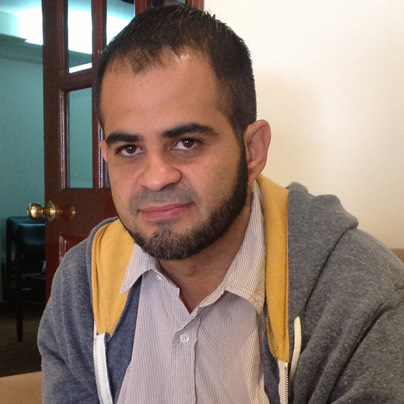
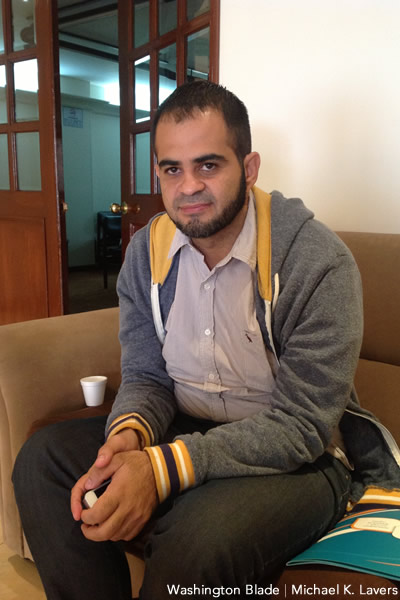
Wilson Castañeda of the Colombian LBGT advocacy group Caribe Afirmativo. attended the OAS meeting in Guatemala. (Washington Blade photo by Michael K. Lavers)
The Organization of American States on June 5 adopted an anti-discrimination resolution that includes sexual orientation and gender identity and expression.
“Every human being is equal under the law and has the right to equal protection against all forms of discrimination and intolerance in whatever aspect of public or private life,” it reads.
The resolution the OAS adopted during its annual meeting that took place in Antigua, Guatemala, also said member countries have an obligation to prevent “all acts and demonstrations of discrimination and intolerance.” These include hate and bias-motivated violence and using the Internet and other media to incite “hate, discrimination and intolerance” against marginalized groups.
OAS delegates approved a second resolution that calls upon the organization’s 35 member countries to promote and protect the human rights of those living with or affected by HIV/AIDS. They also approved a third resolution that urged nations to stop discrimination based on race.
Anti-LGBT discrimination and especially violence remain serious problems in the hemisphere in spite of recent advances on same-sex marriage and other issues in countries that include Brazil and Uruguay.
A report that Colombia Diversa, a Colombian LGBT rights group, released last month indicates 58 of the reported 280 LGBT Colombians who were murdered between 2011-2012 were killed because of their sexual orientation or gender identity and expression. A separate report from the Latin American and Caribbean Network of Transgender Women (REDLACTRANS) notes 61 transgender women in Colombia have been reported murdered between 2005-2011.
The Jamaica Forum for Lesbians, All-Sexuals and Gays (J-FLAG) said at least 30 gay men have been murdered in the Caribbean country between 1997 and 2004.
The U.S. State Department has spoken out against anti-LGBT violence in Jamaica and other countries that include Honduras and Perú.
The Jamaica Supreme Court later this month is scheduled to hear the first domestic challenge to the island’s anti-sodomy law. The Belize Supreme Court last month heard a case that gay advocate Caleb Orozco filed against the former British colony’s statute that criminalizes consensual same-sex sexual acts between adults.
Trinidad and Tobago and Barbados are among the nine other English-speaking Caribbean countries in which anti-sodomy laws remain on the books.
Wilson Castañeda Castro, director of Caribe Afirmativo, a Colombian LGBT advocacy group that works in cities along the country’s Caribbean coast, attended the OAS meeting in Guatemala.
He told the Washington Blade earlier this week his group welcomes the anti-discrimination resolutions.
“This has been a triumph for the region’s LGBT and Afro-descendent movement,” Castañeda said.
Jaime Parada Hoyl, who became the first openly gay political candidate elected in Chile last October when he won a seat on the municipal council in a wealthy enclave in Santiago, the country’s capital, described the resolutions to the Blade as “historic.”
District of Columbia
Mayor Bowser signs bill requiring insurers to cover PrEP
‘This is a win in the fight against HIV/AIDS’

D.C. Mayor Muriel Bowser on March 20 signed a bill approved by the D.C. Council that requires health insurance companies to cover the costs of HIV prevention or PrEP drugs for D.C. residents at risk for HIV infection.
Like all legislation approved by the Council and signed by the mayor, the bill, called the PrEP D.C. Amendment Act, was sent to Capitol Hill for a required 30-day congressional review period before it takes effect as D.C. law.
Gay D.C. Council member Zachary Parker (D-Ward 5) last year introduced the bill.
Insurance coverage for PrEP drugs has been provided through coverage standards included in the Affordable Care Act, known as Obamacare. But AIDS advocacy organizations have called on states and D.C. to pass their own legislation requiring insurance coverage of PrEP as a safeguard in case federal policies are weakened or removed by the Trump administration, which has already reduced federal funding for HIV/AIDS-related programs.
Like legislation passed by other states, the PrEP D.C. Amendment Act requires insurers to cover all PrEP drugs approved by the U.S. Food and Drug Administration.
Studies have shown that PrEP drugs, which can be taken as pills or by injection just twice a year, are highly effective in preventing HIV infection.
“I think this is a win for our community,” Parker said after the D.C. Council voted unanimously to approve the bill on its first vote on the measure in February. “And this is a win in the fight against HIV/AIDS.”
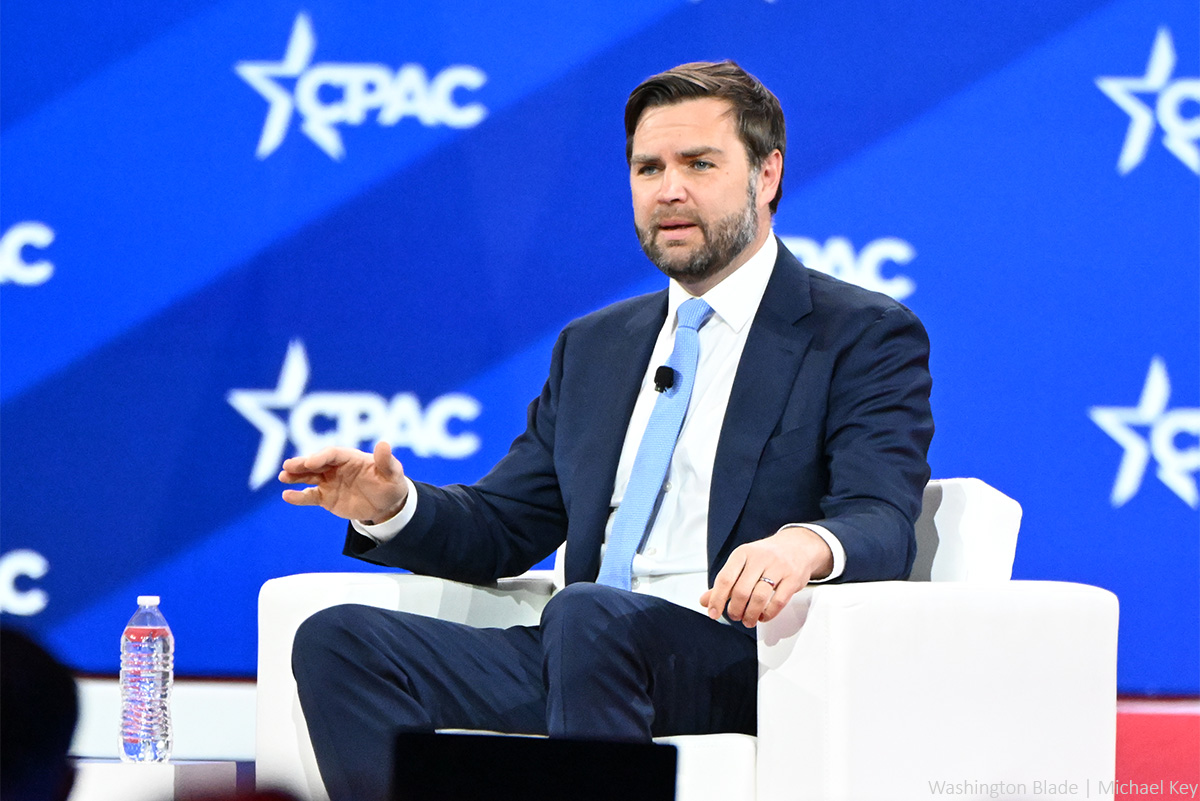
Vice President JD Vance and his wife, second lady Usha Vance, will visit Hungary next week.
An announcement the White House released on Thursday said the Vances will be in Budapest, the Hungarian capital, from April 7-8.
JD Vance “will hold bilateral meetings with” Hungarian Prime Minister Viktor Orbán. The announcement further indicates the vice president “will also deliver remarks on the rich partnership between the United States and Hungary.”
The Vances will travel to Hungary less than a week before the country’s parliamentary elections take place on April 12.
Orbán, who has been in office since 2010, and his Fidesz-KDNP coalition government have faced widespread criticism over its anti-LGBTQ crackdown.
The Associated Press notes polls indicate Orbán is trailing Péter Magyar and his center-right Tisza party.

President Donald Trump removed Attorney General Pam Bondi from her post Thursday, following growing criticism over how she and the Department of Justice handled a range of issues, including matters related to sex offender and Trump ally Jeffrey Epstein.
Trump announced Bondi’s removal on Truth Social, where he also said Todd Blanche will serve as acting head of the Justice Department.
“Pam Bondi is a great American patriot and a loyal friend, who faithfully served as my attorney general over the past year,” Trump wrote on the platform. “Pam did a tremendous job overseeing a massive crackdown on crime across our country, with murders plummeting to their lowest level since 1900.”
Trump was seen as recently as Wednesday with the now-former attorney general at a Supreme Court hearing on citizenship.
The decision contrasts with Trump’s previous public praise of Bondi, the 87th U.S. attorney general and former 37th attorney general of Florida, who served in that role from 2011-2019 before joining the Trump-Vance administration. He has frequently lauded her loyalty and said he speaks with her often. Bondi was also one of president’s defense lawyers during his first impeachment trial.
Privately, however, Trump had grown frustrated that Bondi was not “moving quickly enough” to prosecute critics and political adversaries he wanted to face criminal charges, according to multiple sources. The New York Times reported that her inability to charge former FBI Director James B. Comey and New York Attorney General Letitia James with any crimes is a large factor in the president’s choice to fire her from the government’s primary law enforcement agency.
The move comes as Trump has sought to minimize public turmoil within his administration, avoiding the perception of a revolving-door Cabinet that defined his first term.
Lee Zeldin, a former Republican congressman from New York who unsuccessfully ran for governor, has emerged as a leading contender to lead the Justice Department. He has been one of Trump’s most reliable allies.
“He’s our secret weapon,” Trump said of Zeldin in February during a White House event promoting the coal industry, adding, “He’s getting those approvals done in record-setting time.”
Bondi has also growing faced scrutiny from Congress.
The House Oversight Committee recently subpoenaed her to testify about the department’s handling of certain files, where she declined to answer key questions during a contentious House Judiciary Committee hearing in February.
The Tampa native has a long history of opposing LGBTQ rights through her roles in government. As Florida attorney general, she fought against the legalization of same-sex marriage, arguing it would cause “serious public harm,” pushing forward a legal battle that cost taxpayers nearly half a million dollars. She also asked the Florida Supreme Court to overturn a lower court ruling that found the state’s same-sex marriage ban unconstitutional.
More recently, Bondi established a “Title IX Special Investigations Team” within the Justice Department focused on restricting transgender women and girls from participating in women’s and girls’ sports teams and accessing facilities aligned with their gender identity. She also told Children’s Hospital of Philadelphia to turn over the medical records of anyone under 19 who received gender-affirming care.
Her removal follows Trump’s decision last month to oust another controversial female Cabinet figure, Kristi Noem.

Mayor Bowser signs bill requiring insurers to cover PrEP

JD Vance to travel to Hungary next week

Pam Bondi ousted as attorney general

VIDEO: Gay journalist detained for booing Trumps at ‘Chicago’ opening night

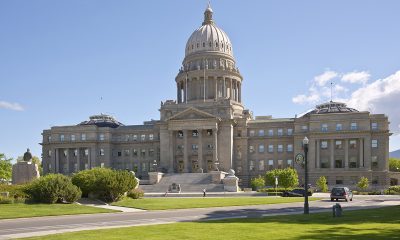
Idaho Gov. signs harshest anti-trans bathroom bill in the country

‘Out for McDuffie’ event held at D.C. gay bar

‘Jonah’ an undeniably compelling but unusual memory play

The Oscar-losing performance that’s too good to miss

Thousands attend ‘No Kings’ protests in D.C.