Local
DC trans group files for bankruptcy
T.H.E. seeks Chapter 11 protection; reports $566,000 in debt
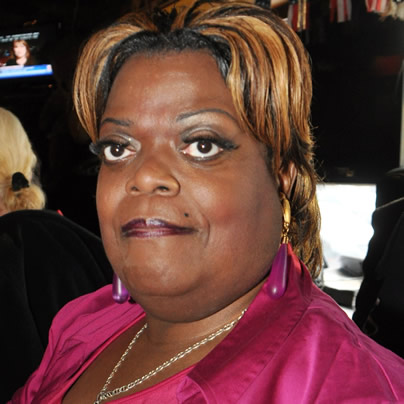
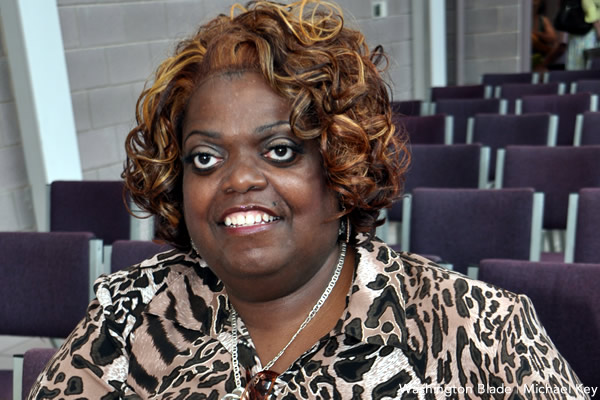
Transgender activist and one of DC trans group T.H.E.’s founders, Earline Budd, is owed $4,615 in back wages. (Washington Blade file photo by Michael Key)
Transgender Health Empowerment, which has been recognized as D.C.’s preeminent organization advocating for and providing services to the transgender community since 2004, filed for Chapter 11 bankruptcy on July 7.
The 56-page bankruptcy filing came two months after the D.C. government revoked or suspended most of its contracts and grants for T.H.E. The cut off in funds came after D.C. officials learned the IRS filed tax liens against the group seeking to recover more than $260,000 in unpaid payroll taxes, possibly including penalties, that accumulated since 2008.
D.C. Mayor Vincent Gray, who praised T.H.E.’s work on behalf of the LGBT community, said the city was forced to withdraw its funding for the group under a “clean hands” policy that bars city funding for vendors and service providers found to be in violation of the law, including federal and local tax laws.
LGBT activists familiar with the group have said it ceased most of its operations and laid off nearly all of its employees at the time the city cut off its funding for the group.
T.H.E.’s bankruptcy filing with the United States Bankruptcy Court for the District of Columbia shows it has total remaining assets of $37,009 and liabilities totaling $566,544.26.
The filing identifies the IRS as the single largest creditor, showing the group owes $264,247.91 in employee federal payroll taxes between 2008 and 2013. The filing shows T.H.E. owes the D.C. government $22,485 in employee withholding taxes and $15,663 in D.C. “unemployment” taxes.
The group owes the State of Maryland $8,695 in “employment taxes/withholding” for 2012 and 2013, according to the bankruptcy filing.
Under the U.S. bankruptcy law, a Chapter 11 filing allows a business or organization to obtain temporary relief from paying its creditors while it reorganizes its corporate structure and works out a plan with creditors to eventually repay the debt.
Records filed with the bankruptcy court show that a meeting of creditors is scheduled to take place at the court, located at 333 Constitution Ave., N.W., at 3 p.m. on Aug. 8.
In a press release issued on Wednesday, T.H.E. discussed its financial problems for the first time since news of its money problems surfaced earlier this year.
“Transgender Health Empowerment (T.H.E.), a non-profit group that has provided a wide range of services for D.C.’s TGLB (Transgender, Gay, Lesbian and Bisexual) HIV+ and homeless community since 2004 has been struggling with financial challenges that have prompted us to curtail some services and suspend others,” the press release says.
“Communicating with our community and clients is of utmost importance to the Board of Directors, along with overseeing solid organization recovery,” it says.
The release, however, makes no mention of the bankruptcy filing, saying only, “Our renewed goal is to protect the organization financially to ensure that programs and services that are being provided have adequate support and to ensure that the actions of those we entrust adhere to the policies and direction set by the Board of Directors.”
Although T.H.E. has not published the names of its board members since its website was shut down earlier this year, the bankruptcy filing identifies 11 people as current board members. Among those identified as board members in the filing is D.C. Council member Jim Graham (D-Ward 1).
However, Graham told the Blade on Tuesday that he is not now and has never been a T.H.E. board member. Instead, Graham said he has served on a T.H.E. advisory committee.
The filing identifies Rhonda Steward as interim chair of the board, Marjorie Borders as secretary and Rodney Pierce as treasurer. Gay Democratic activist Bradley Lewis is listed as a member of the board.
The T.H.E. press release, which appears to have been issued by the board, doesn’t mention the role the group’s executive director for over five years, Anthony Hall, will play in the reorganization.
Hall and other T.H.E. officials have declined to respond to requests by the Blade since May for an explanation of the root causes of the organization’s financial problems.
A document obtained by the Blade from the D.C. Department of Health through a Freedom of Information Act request, says the DOH decided in early May to discontinue its funding for T.H.E. after learning that the IRS had filed tax liens against the group and its financial prospects were grim.
The April 24 document, identified as a Programmatic Site Visit Report, says Hall told DOH officials during their visit to T.H.E.’s headquarters at 3339 10th Place, S.E., that much of the group’s financial problems stemmed from outstanding debts with the IRS and D.C. and Maryland tax offices related to unpaid payroll withholding taxes.
“This, he mentioned, was the result of incorrect filings of successive accountants,” the DOH report says. “He has since contracted with Wells Fargo Bank to manage the organization’s payroll and remit all withholdings and related tax obligations.”
But according to the report, “T.H.E. has no cash on hand and does not appear to have a realistic chance of working out a resolution with the IRS…Many of their staff has already been laid off and a limited few are volunteering to perform limited duties,” it says.
“Their clients are already impacted and have limited or no servicers…In all practicality, T.H.E. has already shut their doors and cannot even be paid were they to invoice further.”
The report recommended that all DOH sub-grants “be suspended immediately and appropriate providers identified to provide the services.”
Among the other creditors listed in the bankruptcy filing are 23 mostly former employees who are owed back wages ranging from between $3,000 and just over $5,000. Included among them are longtime transgender activist and one of T.H.E.’s founders, Earline Budd, who is owed $4,615 in back wages. Gay activist Brian Watson, who has served as a T.H.E. program officer, is owed $5,653, according to the bankruptcy filing.


District of Columbia
Mary’s House founder, CEO retires
Dr. Imani Woody played leading role in opening DC’s first home for LGBTQ seniors
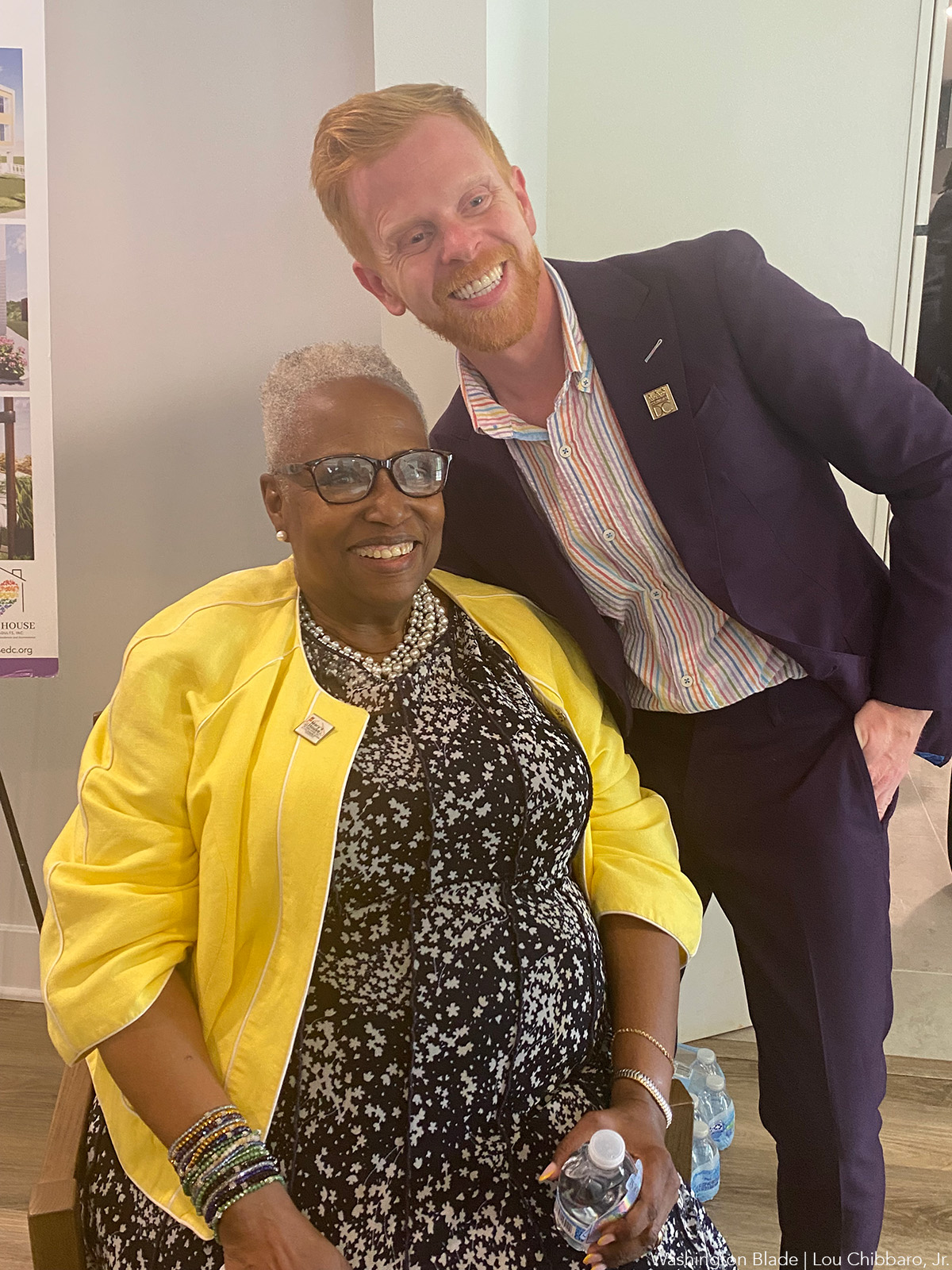
The board of directors for Mary’s House for Older Adults, DC’s first official home dedicated to providing affordable housing for LGBTQ seniors, announced on July 7 that its founding president and CEO, Dr. Imani Woody, has retired.
Woody, who holds a PhD in Human Services, is credited with playing a leading role over many years in arranging both city and private funding needed to construct and operate the Mary’s House three-story building located at 401 Anacostia Road, S.E., in the city’s Fort Dupont neighborhood.
The house, which opened in March 2025, with a grand opening ceremony held in May 2025, includes 15 single-occupancy residential units and more than 5,000 square feet of shared communal living space.
“It is with profound gratitude and hearts full of celebration that the board of directors of Mary’s House for Older Adults, DC (MHFOA) announces the retirement of our visionary founder, Dr. Imani Woody, from her role as president and CEO,” the Mary’s House board says in a statement.
“Dr. Woody’s journey with Mary’s House began with her vision and a kitchen table gathering of women with a bold, urgent, and loving vision: to create safe, affirming, affordable housing for LGBTQ/SGL older adults in Washington, DC,” the statement says.
It adds, “What started as a dream has grown into DC’s first affordable LGBTQ+/SGL affirming communal living space for adults 60 and over, a 15-room community residence at 401 Anacostia Road in Southeast Washington.”
The statement says Woody will continue to serve on Mary’s House board.
“The board will be sharing information about the leadership transition process in the coming weeks,” the statement continues. “We are committed to honoring Dr. Woody’s legacy by ensuring Mary’s House continues to thrive and grow in faithful service to LGBTQ/SGL elders experiencing housing insecurity and isolation.”
Maryland
Va., Md., advocates brace for next fight after Supreme Court sports ruling
Neither state has statewide ban on trans student athletes
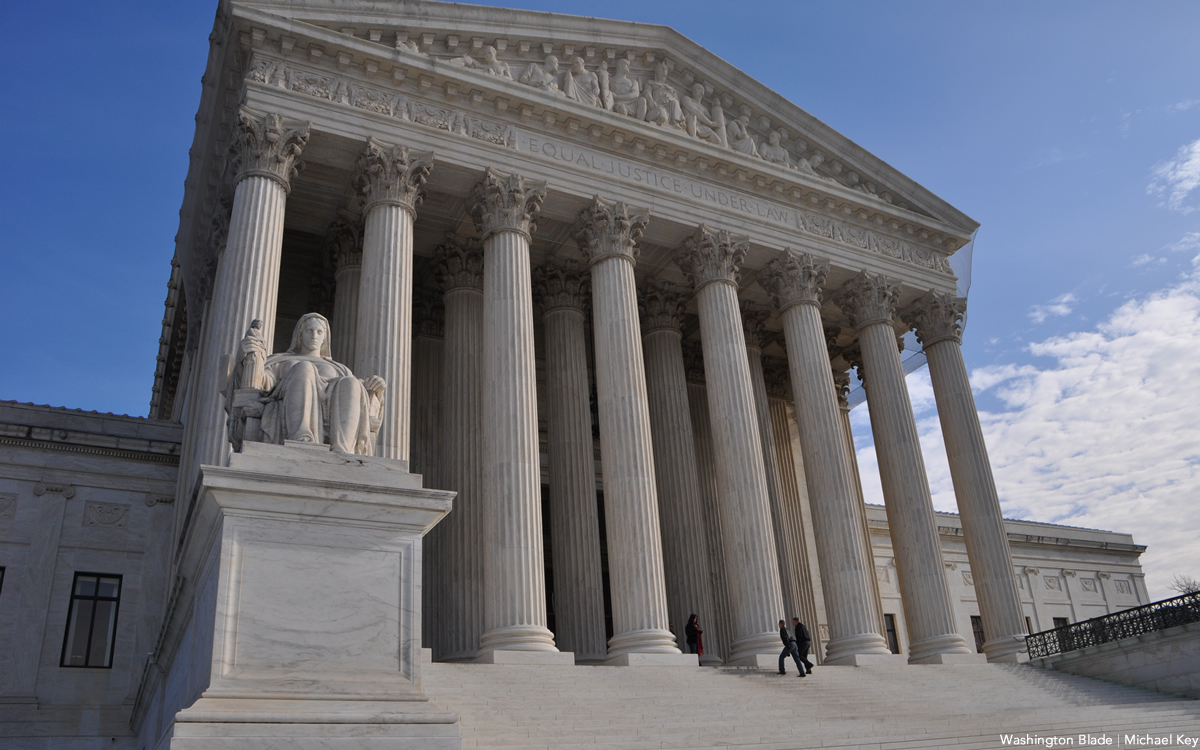
On June 30, the U.S. Supreme Court cleared the way for states to enforce laws barring transgender students from participating on school sports teams consistent with their gender identity, a decision LGBTQ advocates say could encourage additional restrictions across the country.
While neither Maryland nor Virginia currently has a statewide ban on trans student athletes, advocates say the decision could reshape future legislative battles and school policies throughout the region.
Directly following the case, attorneys for trans student athletes spoke out about the case and how detrimental it could be to students.
“This ruling is deeply harmful for transgender women and girls who only asked for the ability to participate in sports with their peers,” said Sasha Buchert, senior attorney and director of the Nonbinary and Transgender Rights Project for Lambda Legal, in a press release from the American Civil Liberties Union.
The next step is figuring out how states will move forward, specifically in Maryland and Virginia.
As of right now, neither state has bans on trans athletes in schools. The new Supreme Court decision also does not require states to enact bans, only that bans are allowed if states or school districts choose to enforce them.
According to the ACLU, 27 states have banned trans youth from participating in school sports since 2020. Most of these states also require sex testing, which the organization says is invasive for all female athletes.
Equality Virginia Executive Director Narissa Rahaman said that while she has heard a lot of frustration following the decision, people are ready to take action.
“Families, parents and youth have lived through disappointing changes to the Virginia Department of Education’s model policies for the treatment of transgender students, and the Virginia High School League’s decades-old policy that allowed transgender students an opportunity to play sports with their friends,” Rahaman said in a statement to the Washington Blade.
She believes they are not ready to give up this fight quite yet.
As of now, trans and nonbinary students are protected under Virginia law, and Rahaman wants that to continue.
“This ruling will likely embolden right-wing members of the General Assembly to pursue trans athlete bans, and we will continue to defeat every bill like we have the past five legislative sessions. Now is our time to be proactive,” Rahaman said.
She also calls upon Democratic Gov. Abigail Spanberger to defend trans youth in Virginia from what she describes as bullies and to continue to stand up to federal attacks on the trans community in general.
For trans students, Rahaman wants to ensure that they continue to know that they belong and have a place in school sports.
“To the transgender young people watching this decision unfold: you belong on your team, in your school, in your community, and here in Virginia. This ruling does not change that. A single Supreme Court decision cannot define your worth or your future,” Rahaman said.
For people who may be outside the community but want to help, she encourages them to speak with trans and nonbinary people in their community, befriend the families of youth to show their support, and continue to speak up on these issues when needed.
According to ACLU of Virginia, high schooler Eliza Munshi was told she could not compete on the girls’ track team because she was trans. To prove a point, she decided to compete with the boys.
She had previously competed on the girls’s track team before her Virginia school decided to enforce the ban demanded by President Donald Trump. With pink hair and pink makeup, she decided to continue her love for the sport alongside boys. According to Munshi, her entire community rallied for her.
“I did it to prove a point. I knew I could do it. I knew it wouldn’t phase me. My gender itself and that label has been the least important part of my transition: I want to look how I want to look. I want to dress how I want to dress. If you don’t like that, then that’s not my business,” Munshi said.
DOE has launched Title IX probe against Md. school districts
In the weeks leading up to the ruling, multiple Maryland school districts were included in a Title IX probe stating that not enforcing sex-based protections guaranteed by federal law. Currently, there have been no updates on the lawsuit or the district’s decisions.
According to the U.S. Department of Education, the federal probe is based on parent complaints that the school districts were violating a specific Trump-Vance administration addition to Title IX, stating it aligned the sex-based protections “with biological reality, not ideological fantasy.”
According to FreeState Justice, an LGBTQ advocacy group in Maryland, while this is a disappointing ruling to see, they will continue to fight for trans student-athletes in Maryland and want trans youth to know that they belong.
“Every young person deserves the opportunity to participate in school and community life without being singled out because of who they are. These decisions send a harmful message to transgender youth that they are somehow less deserving of that opportunity,” said Phillip Westry, the group’s executive director.
Westry wants to make sure the community knows that their commitment to the organization has not changed and will continue to provide the same legal services they have prior and to advance policy solutions, to ensure “every LGBTQ+ Marylander can live with dignity, safety, and equal opportunity.”
Another issue brought up by trans advocates is the issue of testing women to determine whether they are biologically female or not.
According to Human Rights Watch, as of 2023, World Athletics required cis women with increased testosterone levels to undergo medical procedures to have it reduced to avoid advantages. Other forms of “sex verification” may include genetic testing, screenings of an athlete’s anatomy or chromosomes.
However, this can become detrimental because not all women have ovaries, a uterus, or XX chromosomes, meaning cisgender women could potentially be included in these bans, depending on how the specific state plans to enforce them.
Maryland
Eastern Shore school board wants an 18-and-over rule for young adult books
Classics like ‘To Kill a Mockingbird’ and ‘Little Women’ might be off limits to most students

By LIZ BOWIE | Somerset County’s school board is considering barring students under the age of 18 from reading any young-adult literature in school libraries, essentially restricting all but 12th graders from checking out books written for teens and tweens.
The proposed policy also calls for the superintendent to discipline librarians if “adult” reading material appears in the children’s section.
The policy defines young adult as students over 18. “Young adults are not minors and books suitable for young adults shall be placed on a separate Young Adults library section to reflect age-appropriate literature,” a draft of the policy says.
The rest of this article can be read on the Baltimore Banner’s website.
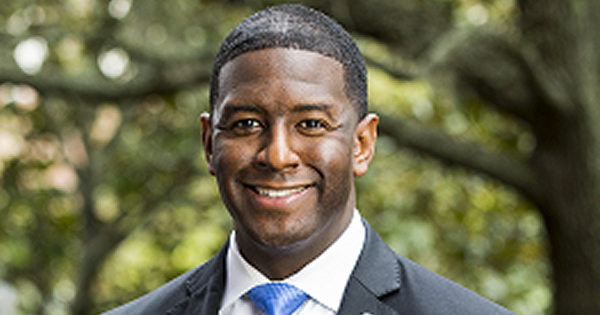
Former Fla. gubernatorial candidate Andrew Gillum arrested on drug charges

Dutch prime minister scheduled to open World Pride human rights conference

Philadelphia murder suspect remains at large

Mary’s House founder, CEO retires

Va., Md., advocates brace for next fight after Supreme Court sports ruling

‘My Favorite Sociopath’ debuts at Shepherdstown’s CATF

Under-the-radar Delaware beach towns smart buyers are targeting

In Trump’s divided America, Michael Weinstein’s AHF responds

Turkish authorities refuse to allow gay cruise to dock in country

When a church fears the rainbow
-

 Theater3 days ago
‘My Favorite Sociopath’ debuts at Shepherdstown’s CATF
-
Real Estate3 days ago
Under-the-radar Delaware beach towns smart buyers are targeting
-
Politics2 days ago
In Trump’s divided America, Michael Weinstein’s AHF responds
-
Turkey2 days ago
Turkish authorities refuse to allow gay cruise to dock in country