National
Remembering Sean Sasser
AIDS activist spent final year in D.C.; memorial is Saturday

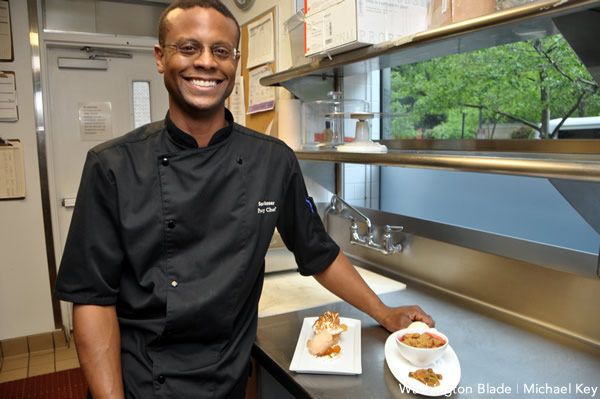
Sean Sasser working as a pastry chef at RIS, his last job. Sasser died Aug. 7. (Washington Blade file photo by Michael Key)
Sean Sasser memorial service
Saturday at 11 a.m.
National City Christian Church
5 Thomas Circle, N.W.
Michael Kaplan and his late partner Sean Sasser had a circuitous romantic life.
The two met in 1991 and worked together waiting tables at the same bar in Minneapolis. But both were dating other people at the time and several months later, Sasser moved to San Francisco, a move that would prove life altering. While there, he met, dated and eventually married Pedro Zamora, a romance memorably captured on MTV’s “Real World: San Francisco” during its third season in 1994.
Kaplan and Sasser met again in 1996 at a conference and dated for about two years, some of which was long distance. They were apart for several years but reconnected in 2006 and spent the last six years living together.
Sasser, a long-time AIDS activist and pastry chef, spent his final years in Washington with Kaplan. He died Aug. 7 of HIV-exacerbated mesothelioma, a rare lung cancer Kaplan says Sasser was likely exposed to while working with asbestos fixing up old houses in his native Detroit decades ago. Sasser, born Oct. 25, 1968, was 45.
A public memorial service is planned for Saturday at 11 a.m. at National City Christian Church at Thomas Circle in Washington. “Real World” cast members Judd Winick and Pam Ling will speak along with Phill Wilson, president and CEO of the Black AIDS Institute, and Douglas Brooks, chair of AIDS United’s Board of Trustees and a member of the President’s Advisory Council on HIV/AIDS.
Kaplan is the president and CEO of AIDS United. He spoke with the Blade at length this week about his relationship with Sasser.
After many years of working various jobs and each being in different cities at different times, Kaplan and Sasser moved to Washington last fall. Alarmed by a health scare in May, the two got married in June. Kaplan says it was a “long-term, committed serious relationship” in which “we both talked about and planned our futures together.” At one point in Oregon, the two were foster parents of a child named Alice who lived with them from the time she was 4 to 6.
Sasser had lived with HIV for 25 years; Kaplan for 20. Kaplan says Sasser “went quickly.”
“He probably lost 60 pounds in the last nine weeks of his life,” Kaplan says. “He was a real solid guy. On June 17, they confirmed that this thing in his lung was cancerous. By July, it was confirmed as stage four mesothelioma. He had one round of chemo, but it was just too aggressive. Doctors said he wasn’t strong enough for another round. And by Aug. 7 he was gone.”
Kaplan says he has “a strong network of friends” and is doing as well as can be expected.
“It’s a lot of change right now,” he says.
Sasser is survived by his mother, Pat Robinson Sasser, and a sister, Staci White. Both are expected to attend the service this weekend. Sasser’s father died a few years ago.
After Zamora’s death in November 1994 — just hours after the last episode of his season of “Real World” aired — Sasser, who’d been rejected by the Navy for an HIV-positive test, traveled widely speaking at colleges about HIV. He worked with Health Initiatives for Youth, GLAAD, Human Rights Campaign and the AIDS Alliance for Children Youth & Families. He was appointed by President Clinton to the Presidential Advisory Council on HIV/AIDS.
Kaplan says after about four years of AIDS advocacy work, Sasser was ready to return to his first love — cooking.
He says Sasser never mentioned to people he met that he’d been on “Real World,” but would confirm it if people recognized him and brought it up themselves. He had a few boxes of “Real World” mementos and a couple photos with President Clinton packed away. He took them with him each time he moved, but never unpacked them.
“He didn’t hide it, but he’d moved on,” Kaplan says. “In Portland especially, he’d really built up quite a place for himself as a pastry chef at a hotel there, The Nines. They had two restaurants and he oversaw a lot of banquets and that type of thing there. … He loved the precision of baking and training others how to do it.”
The topic of Zamora wasn’t taboo among them, Kaplan says, and Zamora’s name would come up occasionally. Kaplan recalls watching the 2008 biopic “Pedro” with Sasser and remembers him saying how “hard it is to see someone else portray you” (DaJuan Johnson played Sasser in the film).
Although Kaplan says Sasser would have been shocked that so many media outlets reported his death, he says Sasser “was quite aware of the visibility” his “Real World” appearances had afforded him.
“He definitely knew that it was a real landmark for this young, gay couple, two men of color with HIV, to be shown getting married,” Kaplan says. “For so many people, it was some of the first public faces of HIV they’d seen. They were the first face of many things as young, queer men of color. Sean totally understood the magnitude of that and never shunned it. He didn’t seek attention, but he knew that if having his face out there would make a difference, he was happy to do so.”
Kaplan says one thing that might surprise people about Sasser was his love of children. He mentored several kids affected by HIV in both Portland and Atlanta.
“If Sean had had his way, we would have had three kids and a house,” Kaplan says. “He loved music, he loved baking, he loved traveling and he loved children. He was an incredibly humble person and he was just all about living his life.”
Donations to the Sean Sasser Endowment Fund can be made at seansasserfund.aidsunited.org.





National
Man charged in Mall of America shooting plot inspired by Pulse massacre: report
Suspect exchanged hundreds of messages, pledged loyalty to ISIS
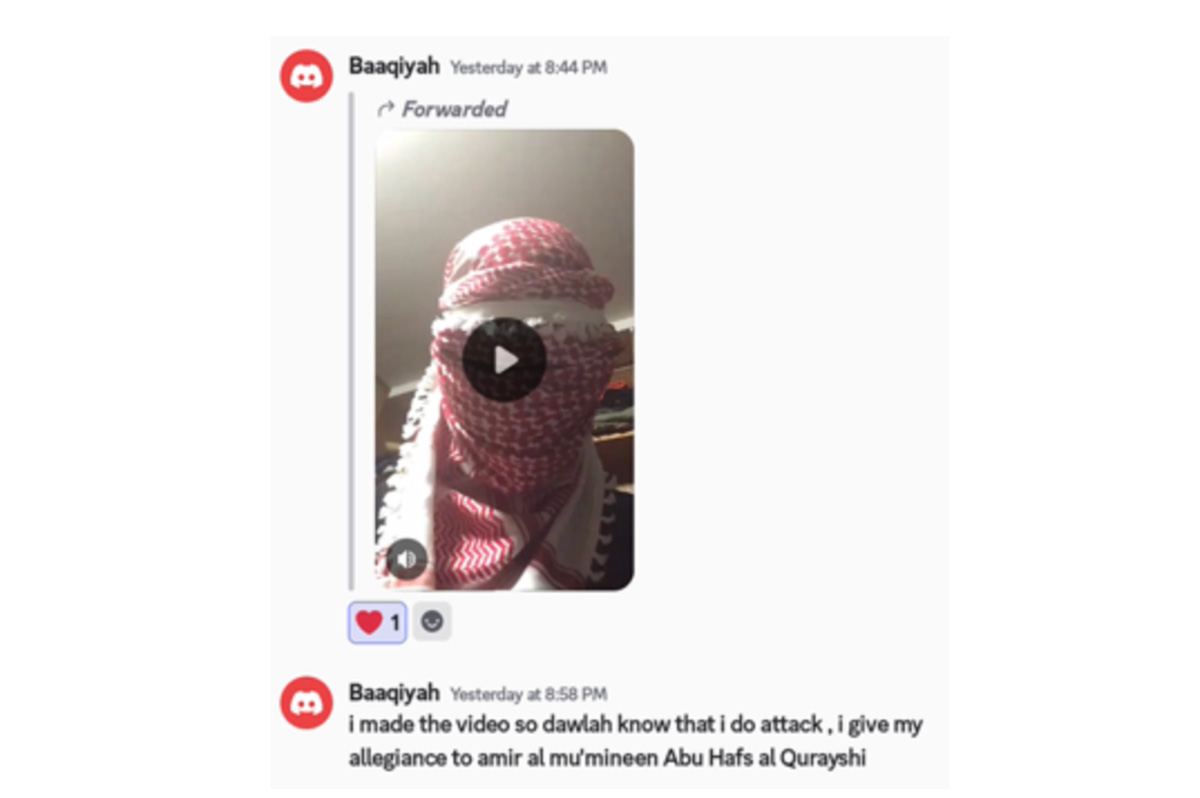
The U.S. Department of Justice charged Sheikhdoon Abdullahi Mohamud, 18, of Richfield, Minn., on Oct. 7 with one count of knowingly receiving a firearm and ammunition in order to commit a federal crime of terrorism. Mohamud allegedly planned to carry out a mass-casualty attack in support of ISIS, inspired in part by the Pulse nightclub massacre that took place on June 12, 2016 when then-29-year-old Omar Mateen murdered 49 people and wounded 58 – one of the deadliest mass shootings in U.S. history, and the deadliest targeting the LGBTQ+ community.
According to a DOJ statement release, Mohamud was arrested on Oct. 6 by the FBI, which had arranged to sell him an AK-47 assault rifle, magazines, and ammunition through an undercover FBI employee. Mohamud was arrested shortly after paying $600 in cash and taking possession of those items; he reaffirmed his intention to shoot people at the Mall of America during the transaction.
“Mohamud allegedly sought to carry out a mass-casualty shooting at the Mall of America, expressing a desire to emulate some of the most horrific ISIS-inspired attacks in the United States, including the atrocities at Pulse Nightclub and 2025 New Year’s Day attack in New Orleans,” said Assistant Attorney General for National Security John A. Eisenberg in the statement by the DOJ. “The National Security Division will continue to work closely with the FBI and Joint Terrorism Task Force to track down and prosecute ISIS-inspired terrorists in the United States.”
According to the complaint, beginning on or about December 2024, Mohamud had exchanged hundreds of messages through multiple social media and messaging apps with a confidential source, and expressed a desire to travel to Somalia to join a designated foreign terrorist organization to fight on their behalf.
The defendant stated many times that if he was unable to travel overseas because of a lack of funds, he planned to carry out a mass-casualty event in Minnesota in support of ISIS.
According to the DOJ, “In July 2026, Mohamud sent messages discussing his intent to carry out a mass-casualty shooting attack at the Mall of America because he claimed it was owned by Jews. He wrote that [he] wanted to kill 30 to 60 people so no one would go there.”
“During the course of his communications, Mohamud stated that he wanted to commit an attack similar to those of the Pulse Nightclub mass-shooting in Orlando, the Bondi Beach mass-shooting in Australia, and the New Year’s Day vehicle-ramming attack in New Orleans.”
This case is being prosecuted by Trial Attorney Ryan White of the National Security Division’s Counterterrorism Section and Assistant U.S. Attorney Benjamin Bejar for the District of Minnesota.
California
Calif. GOP gubernatorial candidate ad ‘disgusting attempt to exploit lesbian intimacy’
Activists, anti-LGBTQ religious leaders criticized Steve Hilton spot

Two women sit on a bed, a Pride flag hanging behind them. One is nervous; the other tells her to be calm and that she’ll do “all the work.” The music swells. The two hold hands and — fill out a ballot voting for Steve Hilton?
This is the new advertisement from the Hilton gubernatorial campaign that is drawing rebuke from both sides of the aisle, but for very different reasons.
Jorge Reyes Salinas, the communications director at Equality California, said the ad was an insult to the queer community.
“This ad is a disgusting attempt to exploit lesbian intimacy for political attention,” he said. The advertisement plays on media tropes that Salinas says “reduce lesbian and bisexual women … to sexual entertainment,” rather than showing them as well-rounded characters. “Any group of the LGBTQ+ community deserves the same dignity and respect as everyone else,” he said.
The ad is truly hyper-sexualized. It ends with one woman telling the other, “Now lick it.” The two pause and stare before she reveals an envelope to send the ballot, and large text pops up saying, “Just try it!”
Salinas characterized the ad as a desperate attempt to get attention from a candidate who is trailing far behind in the polls in heavily Democratic California. The Democratic candidate Xavier Becerra, who is endorsed by Equality California, holds a 25-point lead over Hilton according to recent polling by the UC Berkeley Institute of Governmental Studies.
Conservatives have also criticized the ad.
Influential evangelical Pastor Jack Hibbs thought the ad was distasteful and said, “lesbianism among college girls and some high school girls that right now is an actual pandemic of social ill.” Republican attorney general candidate Michael Gates said it undermines “the sanctity of the relationship between parents and their children.” This criticism is rather confusing because although the ad features two relatively young women, they both appear to be adults, not minors.
“The comments from Pastor Jack Hibbs should be criticized because there is nothing wrong with two women being attracted to each other,” Salinas said. “We’re calling out the ad’s stereotypes, while also rejecting the homophobia in the response to it … by other Republicans.”
The backlash from Hilton’s own party and supporters shows that an advertisement full of queer innuendo was ill-considered, considering the national GOP’s attacks on LGBTQ people in recent years. Hilton himself has been campaigning against transgender girls and women competing in school sports and using locker rooms that correspond with their gender identity. This context might be why Hilton’s political base responded to the ad just as poorly as the liberal voters he was attempting to court.
Hilton says the ad is part of a new series rolling out before Election Day, showing stereotypical California liberal archetypes voting for Hilton. He claims these ads are authentically filmed with real actors, as opposed to being A.I. generated, like many of his previous ads. One other advertisement has been released so far by the campaign showing a man at a spiritual retreat also being swayed to vote for Hilton, although it is notably absent of sexual innuendo.
Caleb Kaufman is a California Local News Fellow placed with the Los Angeles Blade. The California Local News Fellowship is a state-funded initiative to support and strengthen local news reporting. Learn more about it at fellowships.journalism.berkeley.edu/cafellows.
2026 Midterm Elections
Trump uses anti-trans slur against Democratic Senate candidate
President mocked Annie Andrews

President Donald Trump used an anti-trans slur against Democratic South Carolina Senate candidate Annie Andrews on Monday as he sought to rally support for Republicans in the state’s Senate race.
In a post on Truth Social, Trump attacked Andrews three times, referring to her as “trannie” while promoting U.S. Sen. Darline Graham (R-S.C.)’s campaign.
Andrews is running against Graham for a Senate seat in the solidly Republican state.
Earlier this year, Graham was specially appointed to the seat following the death of her brother, Lindsey Graham, who represented South Carolina in the Senate from 2003 to 2026.
Andrews, the Democratic nominee from the state, is a pediatrician that lives in Charleston with her three children. She told NBC News that she will “work with anyone to put South Carolina first.”
“As a mom and a pediatrician, I’m in this race to fight for my patients, my three kids, and South Carolina,” Andrews said, adding that “lowering costs and making life better for families across our state is going to take all of us working together.”
Andrews used the attention from the president’s attack to emphasize what she described as a focus on policy issues rather than the culture wars that have dominated much of the political debate.
“If you care more about your bills than the politics in Washington, this campaign is for you,” she added.
Trump’s remarks have drawn criticism from leaders on both sides of the aisle.
Senate Minority Leader Chuck Schumer (D-N.Y.) condemned Trump’s words Monday night on social media, calling his attacks on Andrews “despicable.”
“Annie Andrews is a mom and pediatrician who’s always put her community first — and she’s exactly who South Carolina needs representing them in the Senate,” Schumer said on X.
Former South Carolina Gov. David Beasley, a Republican, also criticized the president’s attack on Andrews, urging voters to “reject politics based on division and hate.”
“This is abhorrent. Elections don’t have to be about cruelty and lies. South Carolina deserves better,” Beasley wrote Monday night on X.
South Carolina has not elected a Democratic senator in nearly three decades.
Andrews’s campaign website does not mention her positions on LGBTQ issues.
The Washington Blade reached out to Andrews’s campaign for comment on Trump’s attack and her positions on transgender rights but did not hear back by time of publication.

Center Arts Gallery celebration, auction to take place on Oct. 17

Comings & Goings

‘Hidden in Plain Sight:’ The story of Odessa Madre

‘Governments that attack LGBTQ+ rights learn from each other’

Horror genre has evolved into space to explore queer identity

ICC unseals arrest warrants for Taliban officials accused of persecuting LGBTQ people, women

Physician: addiction doesn’t always look the way you think it does

Calendar: October 9-15

Solidarity beyond the parade: the actual cost of Pride

Essential queer horror classics for Halloween
-

 Afghanistan5 days ago
ICC unseals arrest warrants for Taliban officials accused of persecuting LGBTQ people, women
-
District of Columbia5 days ago
Physician: addiction doesn’t always look the way you think it does
-
Calendar5 days ago
Calendar: October 9-15
-
Opinions4 days ago
Solidarity beyond the parade: the actual cost of Pride