Arts & Entertainment
Sympathy for the devil?
Long-but-rich ‘Judas’ is bold, provocative


The cast of ‘The Last Days of Judas Iscariot.’ (Photo by Melissa Blackall; courtesy Round House)
‘The Last Days of Judas Iscariot’
Through June 14
Forum Theatre
Round House Theatre Silver Spring
8641 Colesville Road, Silver Spring, MD
$20-25
1-800-838-3006
Judas Iscariot: a name synonymous with betrayal.
Judas, of course, was the disciple who sold out Christ for 30 pieces of silver. Whether he did it for the cash or because he wanted to set off a rebellion against the occupying Roman army is debatable. Either way, he’s never been a popular guy.
In Stephen Adly Guirgis’ darkly comic “The Last Days of Judas Iscariot” (now at Forum Theatre), the follower-turned-traitor’s motives, character and possibilities of redemption are all put on trial. Set in a corner of purgatory called Hope, the proceedings are presided over by bigoted Judge Littlefield (Brian Hemmingsen) assisted by his callow bailiff (Thony Mena). The action pits tough and sexy Fabiana Aziza Cunningham (Julie Garner), a non-believing defense attorney who’s arguing that god’s mercy mandates her client’s release from eternal damnation, against oily prosecuting attorney Yusef El-Fayoumy (Scott McCormick) whom the judge simply addresses as Mr. El Fajita. The colorful litany of witnesses — a veritable who’s who of Biblical and historical types — include Mary Magdalene (Nora Achrati), Saint Peter (Eric Porter), a naughty Mother Teresa (Achrati again), Saint Monica from the hood (Alina Collins Maldonado) and a self-satisfied Sigmund Freud (Jesse Terrill).
Throughout the play, Judas (Maboud Ebrahimzadeh) lies catatonic center stage on a raised circular platform. Occasionally he rouses for flashbacks, showing him as a young and impetuous idealist on the playground and later as an embittered adult at Bathsheba’s Bar & Grill where a remorseful and very drunk Judas runs into Satan: “You wanna play the lute, sing Mary-Chapin Carpenter, that’s what heaven’s for,” warns the Gucci-clad prince of darkness. “You wanna rock? Hell’s the venue.”
At three hours, “Judas Iscariot” is long, but never dull. The script is all over the place moving from corny exchanges to raw humor to darker places. Fortunately the superb and diverse cast of local actors is more than up for it. Boldly staged by Vreeke, who’s gay, this production is a reprise of Forum’s fantastic “Judas Iscariot” from six years ago that was mounted at the now-shuttered H Street Playhouse. This time around, the venue has changed — Forum’s home at Round House Silver Spring’s large and chilly black box space (take a sweater) — but the production remains equally compelling.
Along with talented director Vreeke, many of the production’s original cast returned. Patrick Bussink makes a memorable cameo as a casual and quiet Jesus of Nazareth. Again, Jim Jorgensen plays Satan — happily hung over and deliciously evil. Frank Britton is back too as a badass, street smart Pontius Pilate who refuses to take the blame for just doing his job. (Britton was mugged and badly beaten by four men near the Silver Spring Metro Station after Monday night’s opening. He’s expected to return to the part soon.)
As with Guirgis’ other plays like “Our Lady of 121st Street,” “Jesus Hopped the ‘A’ Train” and “The Motherfucker with the Hat,” “Judas Iscariot” plumbs meaning from losers’ lives and gives a spot-on portraiture of urban street life. The humor is irreverent and the characters are delightfully foulmouthed. Yet, the work’s deeper meaning is never lost. There are quiet, moving moments too: the show opens with Judas’ sorrowful mother Henrietta (Annie Houston) recounting how she buried her son alone. Later Butch Honeywell (Frank B. Moorman), a Joe Six-pack with a bent for poetry, mourns not having been the husband and father he might have been. Like Judas Iscariot, his sadness comes from not being able to change what’s already been done.





Photos
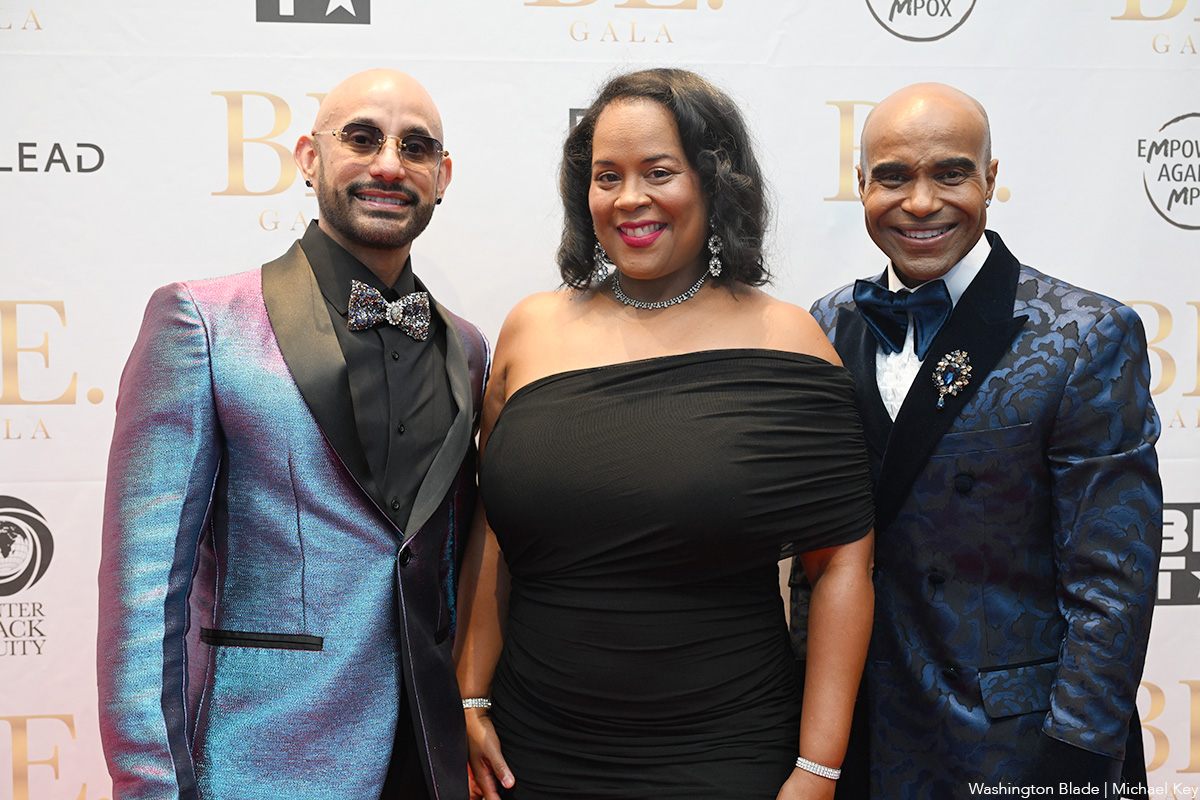
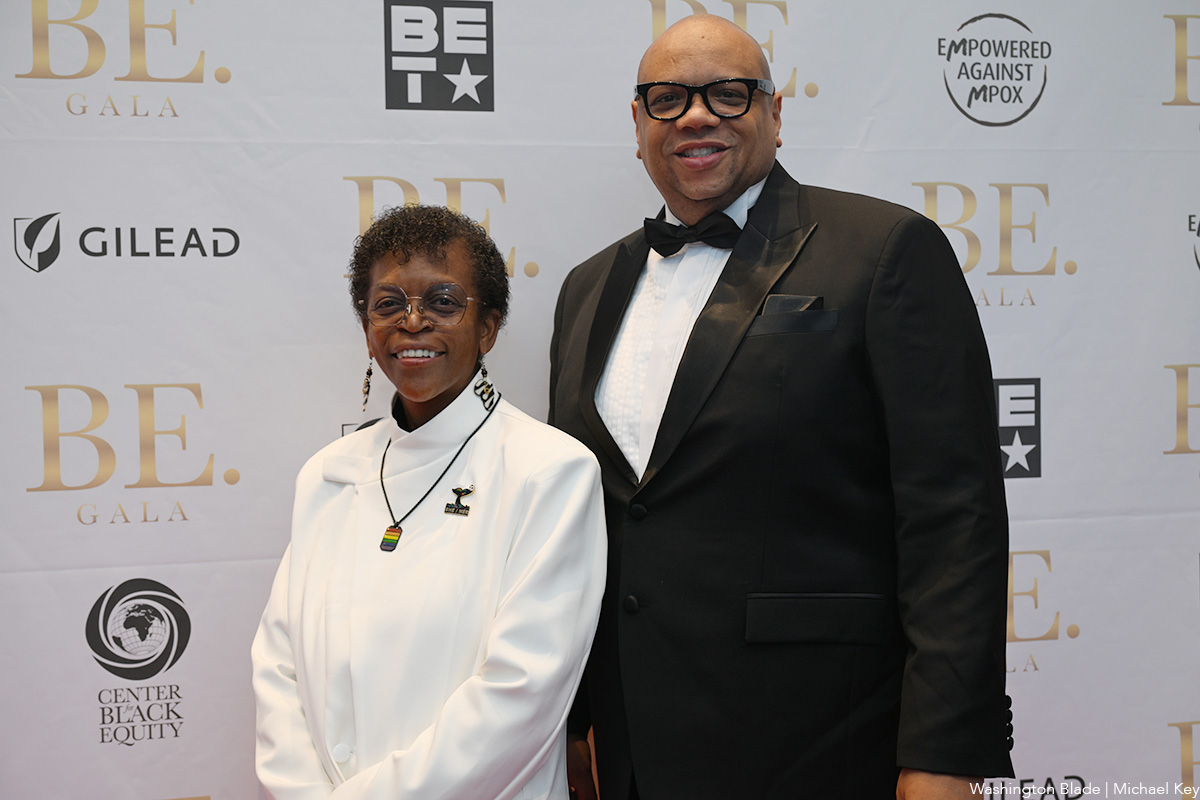
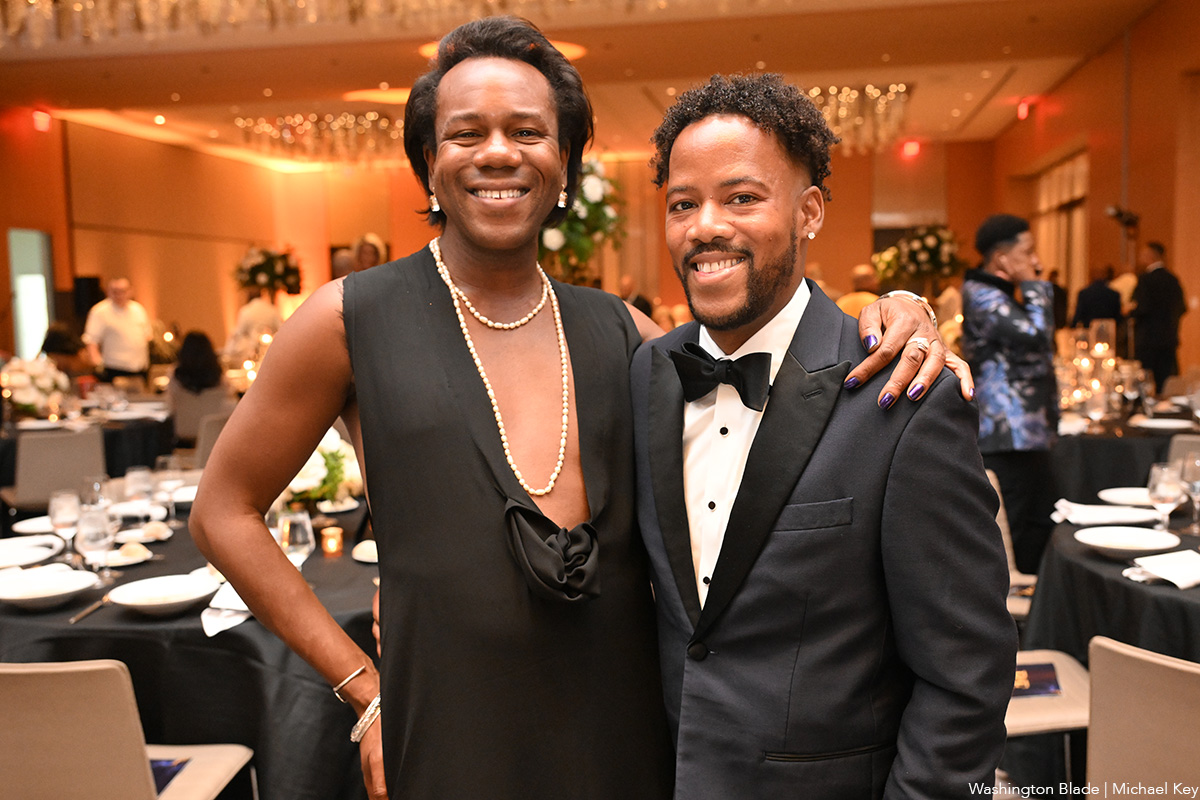
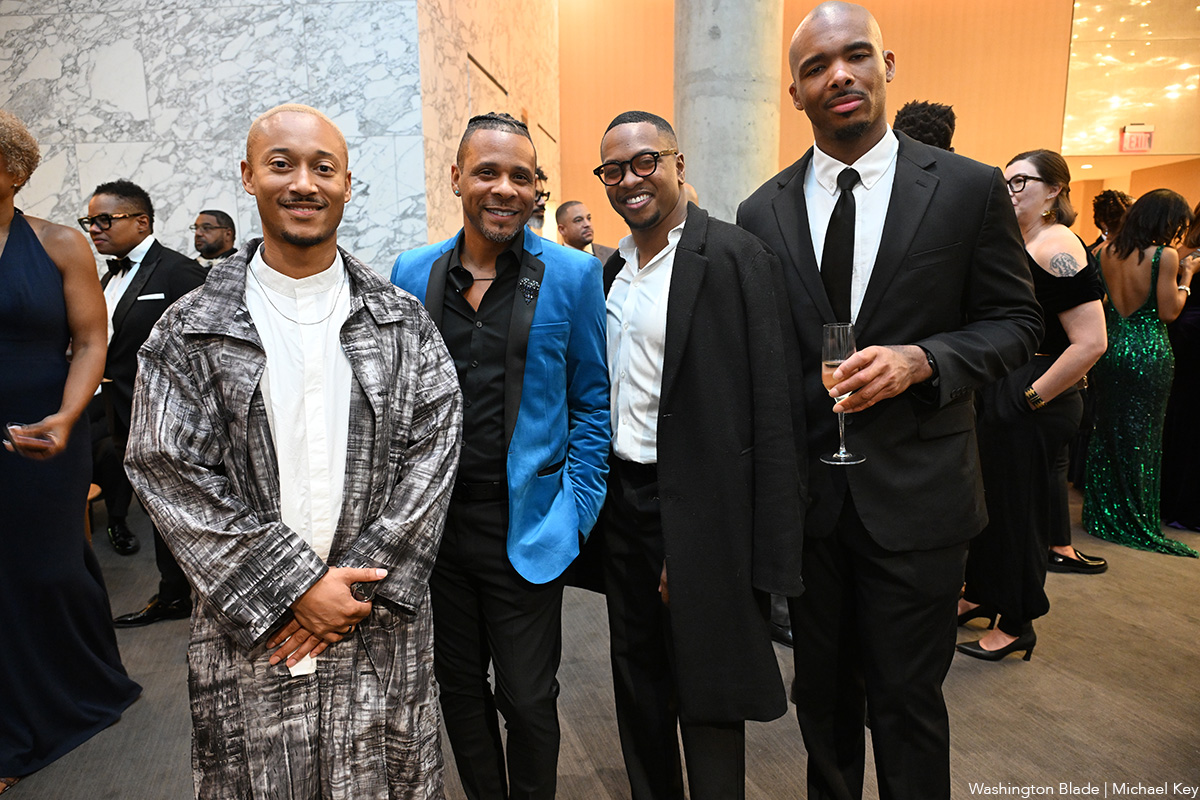
Center for Black Equity honors leaders, activists at BE. Gala
Miyake-Mugler, Oakes co-host annual awards ceremony

The Center for Black Equity held its annual BE. Gala at Conrad Washington, D.C. on Saturday, Oct. 5. Lolita Leopard Miyake-Mugler and Anthony Oakes co-hosted the awards ceremony.
Honorees included journalist and producer Justin Stewart; nonprofit leader Nikki Alexander; HIV advocate Marlene McNeese; the nonprofit organization FreeLux Project; actress Monroe Alise; public health advocate Tori Cooper; Manassas Park Vice Mayor Darryl G. Moore; Rev. Dr. Carmarion D. Anderson; Bishop Steven Sawyer; government relations professional Courtney Snowden; Senior Deputy Director of HAHSTA at D.C. Health, Clover Barnes; and Texas state Rep. Venton C. Jones.
The event was sponsored by Gilead.
(Washington Blade photos by Michael Key)


























Books
In ‘The Lost Brontë,’ a complicated lie can lead to danger
New book features sweetly romantic girl-meets-girl twist

‘The Lost Brontë’
By Catherine Friend
c.2026, Bywater Books
$22.95/335 pages
Mom always said to tell the truth.
One lie leads to another and another and you have to remember them all until pretty soon, you’re caught. Fibs are hard, mistruths are messy, even little white social lies can destroy trust. Worst of all, as in the new novel, “The Lost Brontë” by Catherine Friend, a complicated lie can lead to danger.

Though Lilianne Loxley was very young when she lost her parents, she understood that her uncle didn’t really want her. As time passed, though, Lily made herself useful to Uncle, writing and signing letters for him and she became a good companion, helping him with his collection of Brontë memorabilia. Uncle was a keen enthusiast.
She had no idea that his obsession was out of control and he was deeply in arrears. The day Lily learned of his debt was the day she learned that he’d agreed to send her to his debtor’s home to work off the money owed.
It was so sudden. One minute, Lily was at Loxley House, happy and loved by Uncle’s staff … and five hours later, she was at Crag Thorn Manor, home of Lord Bexton, who informed her that she’d be working on his ledgers – work that seemed routine, but Lily tackled it.
Uncle always did say she was headstrong.
But would headstrong be enough to survive, when she was restricted from most of the Manor, when she was forced to dine with Brexton and his slimy friend, or – the worst! – when Brexton told Lily that her next task was to forge a letter from Emily Brontë? And then an entire manuscript?
Lily struggled to do what was right. She had to get Uncle out of debt but this last order horrified her. Did she dare refuse Brexton’s orders and commit a crime? It was unthinkable!
The only brightness in the whole situation was Wren, the ladies’ maid assigned to Lily’s room. Wren was adorable with freckles and the sweetest smile. But with everything else happening at Crag Thorn Manner, could Lily act upon her feelings?
This time of year, you may come to crave dark, spooky stories, and “The Last Brontë” fits those needs perfectly with its Gothic deliciousness. Think: Daphne du Maurier-type, stormy-night squirms with a dangerously chaste, sweetly romantic girl-meets-girl twist for fun.
If it’s been awhile since you’ve read a Gothic novel, you’re in for a nice reminder of why you love them here. You can almost tick off the must-haves: a novel like this is nothing without a foreboding stone manor with damp walls; stone steps to a dank basement; a mysterious portrait; and a nearby bog, and author Catherine Friend gives readers every one of them. You’d be disappointed if there was no ghost, wouldn’t you? Ha. You can practically feel the cold blow through the attic, right? Yeah, it’s that kind of book.
If you’re a fan of the Brontës, you’ll like this novel. If you love Gothic mysteries or Victorian romances, ditto. “The Lost Brontë” is good, no lie.
The Blade may receive commissions from qualifying purchases made via this post.
Out & About
CAMP Rehoboth Block Party returns Oct. 18
Expect performances, vendors and more at annual celebration

CAMP Rehoboth will host its annual Block Party celebration on Sunday, Oct.18 at 11 a.m. on the second block of Baltimore Avenue in downtown Rehoboth Beach.
CAMP Rehoboth invites all community members to join in the festivities and to expect magnificent performances and dozens of vendors, including artists, craftspeople, non-profits, businesses, and more.
The event started in 2015 in celebration of CAMP Rehoboth’s 25th anniversary. This year, attendees can expect to shop sea glass art, pottery, jewelry, Pride merch, body care, clothing, and learn more about local non-profit causes and businesses.
Attendance is free. For more details, visit CAMP Rehoboth’s website.

Center for Black Equity honors leaders, activists at BE. Gala

In ‘The Lost Brontë,’ a complicated lie can lead to danger

CAMP Rehoboth Block Party returns Oct. 18

Essential queer horror classics for Halloween

Solidarity beyond the parade: the actual cost of Pride

10 years later, we still can’t shake Barry Jenkins’s ‘Moonlight’

‘Some Like It Hot’ a wild ride at renovated Bernard Family Theatre

D.C.’s LGBTQ homeless facilities face possible hit from Trump funding cuts

Trump uses anti-trans slur against Democratic Senate candidate

U.S. int’l trade negotiator, consultant James Bedore dies at 82
-

 Movies5 days ago
10 years later, we still can’t shake Barry Jenkins’s ‘Moonlight’
-
Theater5 days ago
‘Some Like It Hot’ a wild ride at renovated Bernard Family Theatre
-
District of Columbia5 days ago
D.C.’s LGBTQ homeless facilities face possible hit from Trump funding cuts
-
2026 Midterm Elections4 days ago
Trump uses anti-trans slur against Democratic Senate candidate