a&e features
A murky future for Phase 1
Owner mum on plans to reopen; staffers say they were fired
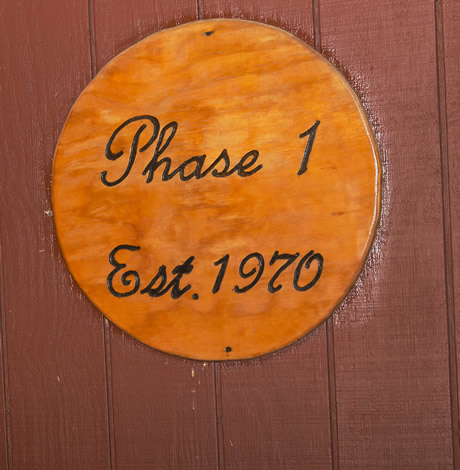
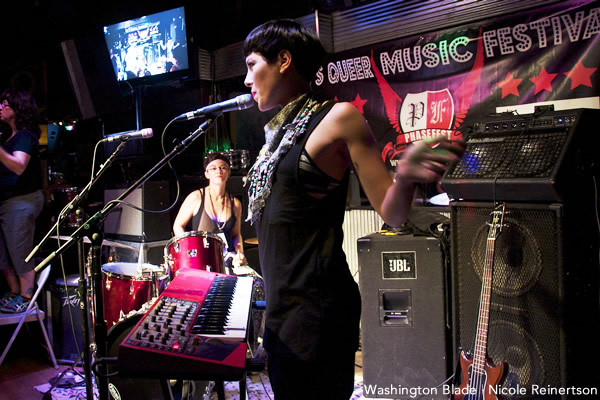
The future of Phase Fest is in question now that Phase 1 is closed. (Washington Blade file photo by Nicole Reinertson)
‘Phasepocalypse Now’
Feb. 6
Scandal DC
With DJ LezRage and DJ Deedub
the D.C. Kings Brolo and D.C. Gurly Show
Doors 9:30 p.m., performance 10
1811 14th St., N.W.
It’s the end of Phase 1 as we know it and nobody feels fine.
What is going on at the famed lesbian nightclub in D.C.’s Capitol Hill neighborhood that closed — ostensibly temporarily — last month?
The LGBT landmark, which has long boasted of being the oldest continually operating lesbian bar in the country, was open for New Year’s Eve and a few days thereafter but abruptly on Jan. 7 announced on Facebook that it “will be closed temporarily as we make some upgrades.”
Sounds reasonable enough on the surface, but the vagueness of the announcement, the fact that no details or target reopening date were given and nothing changed on its official website (phase1dc.com hasn’t been updated for months and there’s no sign on the door of the physical location indicating it’s closed) have led to rampant speculation among fans of the bar. The clincher, however, is that the entire staff was let go as well.
But it hasn’t stopped the party as the Scandal DC team, which just started staging in December what are said to be monthly events, is holding “Phasepocalypse: Now” on Feb. 6 at the Black Cat and using the official Phase 1 Facebook page to cross-promote it.
Angela Lombardi, who worked at Phase 1 for just over a decade and managed it for nine years, is part of the Scandal team (with Katy Ray) and says the event is needed because the Phase closed abruptly.
“Basically it’s just an excuse for all of us to get together and feel we have a little bit of home even if it’s not at Phase 1,” Lombardi says. “The (D.C.) Kings, the Gurly Show, all the original staff members will be there. It’s a chance for us all to feel a little better. Not just a selfish party for all of us to wallow but because there was too much good that was happening to just let it go.”
So is the location at 525 8th St., S.E. (not to be confused with Phase 1 Dupont, a spin-off club that was open occasionally in the old Badlands/Apex space off Dupont Circle) really being renovated — the exterior shows no signs of it so far — or will longtime owner Allen Carroll close the 45-year-old bar or perhaps wipe the slate clean and start over with an entirely new staff? Now that the initial shock of the closing has subsided, the city’s lesbian community is hungry for details.
The short answer is nobody knows. Carroll is laying low — he didn’t return a half-dozen voicemail messages left at multiple locations (including Ziegfeld’s/Secrets, which he also owns) over the course of nearly a week and neither did he respond to another Blade reporter in January who tried to reach him when initially writing of the bar’s closing.
People who’ve known Carroll for years such as Rick Rindskopf, former manager of the shuttered Remington’s, aren’t surprised.
“This is normal for him, not returning calls,” says Rindskopf, who knew Carroll years ago at the old Follies movie theater and at Ziegfeld’s. “He just doesn’t do it. Allen has always been somewhat secretive about what he’s doing and what’s going on. He has expressed to me the desire to retire at some point — he’s in his 70s after all — … but nothing Allen does or doesn’t do surprises me. … He just generally doesn’t share what’s going on.”
Carroll, who’s gay, and his late partner, Chris Jansen, opened Phase 1 in 1970. Veterans of the Marines and Air Force respectively, they worked at adjacent bars on Eighth Street, S.E., Joanna’s, a lesbian bar where Carroll worked, was closing so he and Jansen sensed an opportunity. For a time, they also ran the Other Side, a large lesbian club that eventually morphed into Ziegfeld’s/Secrets.
Carroll did speak to the Blade five years ago on Phase 1’s 40th anniversary in Feb. 2010 and said the bar has always been special.
“We had hard times and good times, but it felt like home,” he said in 2010. “We always held on. They always come in and always say, ‘We know to come back here.’ It’s a good feeling.”
But this is the first time Phase 1 has been closed this long at one time. Some fear the bar may just fade into the sunset with a whimper instead of a bang. Others shrug it off as sad but merely a sign of the times and point to the closing of San Francisco’s the Lexington Club, which shuttered in October. In the last five or so years, other historic lesbian bars like Sisters in Philadelphia, T’s Bar & Restaurant in Chicago, the Palms in West Hollywood and the Egyptian Club in Portland, have also closed. Those involved cited gentrification and the accompanying skyrocketing cost of doing business as factors.
“I actually didn’t want to talk to people at first, but now I’m at my pissed stage,” Lombardi says. “Basically the way he phrased things to us was that even though some of us had been there longer than 10 years, we weren’t doing a good enough job and that he’s going to come in and close down for renovations and basically fix the busted sound system that we’d been asking to have repaired for years, paint and whatever else. … He wouldn’t come out and say it, so I said, ‘Oh, so I’m fired,’ and he said, ‘Well, I don’t know,’ and blah blah blah, but yeah, that’s pretty much how it went down.”
Senait, a Phase 1 institution who also worked there for 10 years, got a similar call on Jan. 4 and says it was both shocking and hurtful. Lombardi says Carroll initially suggested she inform Senait, but Lombardi insisted Carroll call her himself.
“My opinion is it could have been done in a more professional way,” Senait says. “People lose jobs all the time, but he could have called us in and said this is what is happening but he didn’t have the courtesy to do that. He just called us on the phone and said, ‘I’m letting you go.’”
Senait says she thinks the renovations are legit, though Lombardi says, “My mind would be blown if it’s anything more than a coat of paint and repairs to the sound system.” Some have questioned why the renovations couldn’t have been done on the four days per week the bar was closed.
“He said he was sort of thinking, I don’t know, two weeks or something,” Senait says. “He was not very clear about the whole thing. I think he started doing some stuff last [week]. I don’t think he’ll shut it down. I think he will reopen.”
Lombardi says tensions have been brewing for a while. She traces it back to 2012 when Carroll moved her to the then-new Dupont location, which she says she had misgivings about even at the outset, mainly because she didn’t think D.C. had enough lesbians interested in nightlife to keep both the cavernous Dupont location and the original Phase both running indefinitely, a hunch that turned out to be correct.
“I felt crippled there,” Lombardi says. “He wouldn’t let me do anything.”
About four years ago, Lombardi started spending time in Chico, Calif., helping her brother run the Maltese, a straight bar that also hosts gay events. Though she’d invested years into the Phase and even, at one point, hoped to buy it from Carroll, she says she eventually started spending more time in California. Senait would manage Phase 1 when she was gone.
“I’ve known for the last two years that things at Phase weren’t secure and it wasn’t sustainable,” Lombardi says. “It really pains me to say it because when it was good, it was so good. I kind of had a feeling I might just be left out in the cold someday and sure enough, that’s exactly what happened.”
Ken Vegas (aka Kendra Kuliga), director and founder of the D.C. Kings, says that while the timing was a shock, he’d had a sense for “several years” that things were uncertain there. The Kings, who are celebrating their 15th anniversary in March, performed 180 consecutive monthly shows at Phase 1 starting in March 2000.
“It’s kind of like holding your breath,” Vegas says. “I’m not completely surprised that it went down. It sucks. A lot of my friends are people who worked there and they’re the people who are getting the effects of this decision . … But I’m still kind of stunned. Even if it does re-open, if the people who were staffing it there are not rehired, it’s not going to be the same. It wasn’t the four walls that made it the Phase, it was the people — Angela, Jasmine, Little Fitz (Erin Fitzgerald), Senait, Ellis — those were the people who showed up even when they knew they were probably only going to make $20 if they were lucky. They kept it open and made it a safe space anytime for the community to come in, have a drink and not feel judged. … It was a safe space for the Kings and the Gurlys to come share our art and feel completely at ease.” (The Kings have continued performing monthly — after the Feb. 6 event, they’ll be at the Lodge in Boonsboro, Md., in March.)
Even with the hurt feelings, Lombardi and Senait describe Carroll as family.
“I love Allen, he’s family even through all of this,” Lombardi says. “I will never take away what he did for this community or take it for granted. He gave me a life, he helped me discover who I am. That’s priceless, so even though things are ending on a rather bitter note, I love him and I hope the Phase will go on another 40 years. I just thought I’d be a part of it.”
Senait has similar feelings.
“He’s like a second father to me,” she says. “I have nothing against him. I want him to be successful. I love that bar. It was a second home to me, where I found myself as a gay person and became comfortable.”
They also agree that business was likely a strong factor in the decision. Senait says in recent years it, “hasn’t been that great, to be honest.” Many have written about how lesbian nightlife trends tend to differ from those of gay men and also how the evolutions of society, from meeting people online to broader acceptance at traditionally straight venues, have changed things.
“Things overall just aren’t as segregated as they once were,” Vegas says. “Back in the day, I really didn’t feel safe outside of a queer bar but now there’s less of a need because there’s less of a focus on that. It’s just one of the symptoms when you get equalized and get more acceptance, there becomes less of a need for a designated space for us to be gay. We can be gay anywhere we want. I can go out with my short hair and my outfit and my wife and we just act like our own little selves. We don’t get side eyes or feel insecure. We can be open in the grocery store, the coffee shop, wherever. With marriage legalized here now, there’s just much more acceptance to be openly queer.”
Though Lombardi was long celebrated for her vision and seemingly endless stream of parties and theme nights to get women in the doors, she says Phase finances had become harder in the last few years. Though monthly parties like BARE by LURe and the now-defunct She Rex always siphoned off patrons, the beauty of Phase 1, she says, was that there was always a lesbian-specific option even if there wasn’t a party happening any given night.
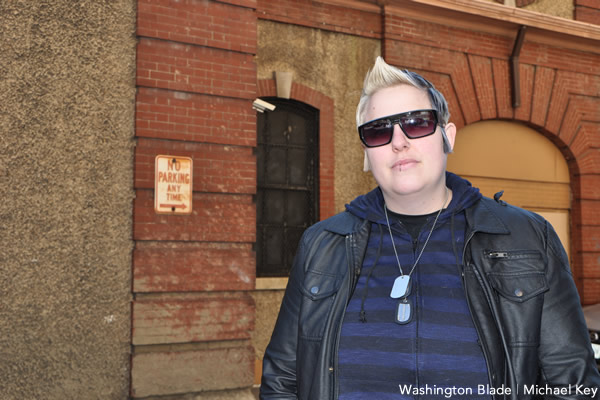
Angela Lombardi (Washington Blade file photo by Michael Key)
“We often got hit by whatever the new party was at the time so we had ups and downs but we made it through all the parties over the years,” she says. The fate of her brainchild, the nationally prominent, eight-year-old Phase Fest indie queer music festival, always held in September, is up in the air.
Her vision, had she had the opportunity, would have been to have a straight bar upstairs to essentially help bankroll Phase 1.
The changing neighborhood, too, was a factor. Though not gentrifying at the rapid pace of, say, Logan Circle/14th Street, N.W., property values there have steadily increased. Though Carroll owns the building (he does not own the Ziegfeld’s/Secrets location), property taxes for 2014 according to District records, were a whopping $31,836. Carroll paid penalties last year for late payments. Taxes for the property jumped significantly in recent years going from about $4,800 in 2006 to nearly $9,700 in 2007 and from nearly $9,600 in 2010 to more than doubling to nearly $23,000 in 2011, according to public D.C. tax records.
“I ran the Phase forever, I know it can’t afford to be on that block anymore, of course not,” Lombardi says.
She also says if Carroll hopes to make the bar successful with a new staff and minimal refurbishing, he’s in for a rude awakening.
“I’m sure he’ll reopen, have some kind of a 45th anniversary event,” she says. “He told me that’s what he’s going to do but if he thinks he’s going to just reopen, he’ll see pretty fast just what it takes to keep it going. It’s going to be pretty rough.”
If it does close, Rindskopf says people need a chance to say goodbye.
“People who’ve supported a bar for years deserve a little consideration,” he says. “I thought [the closing of] Remington’s was handled about as well as it could have been. It doesn’t sound like they’re getting that in this situation. … I believe in being fair to the customers, let alone the employees.”
Senait says even in the last few weeks, things have improved a bit and she and Carroll have spoken.
“My feelings were hurt, but I got over it,” she says. “He calls me now and then. We talked last Monday. This does seem out of character for him so I don’t know what’s going through his head. I don’t even know what kind of changes he’s looking for. He made it sound like he was looking for something different and that’s his choice, it’s his bar. I fully support him and want him to be successful, but I don’t ever want it to be shut down, period. Whether I’m working there or not, it’s there for every queer, lesbian, transgender person to feel safe in those walls. I don’t want that opportunity to go away for anyone. It was never just a bar — it was a community.”
Lombardi, as one might imagine, has mixed feelings.
“There are some of us — and this is how delusional we are — who even though we know there’s like a 95 percent chance it’s over for us, do I hang onto that five percent possibility that he’ll realize the mistake and say, ‘Come back.’ Yeah, I’m hanging onto that five percent.”
She also says even if it ends this way, Carroll still deserves tremendous thanks from the community, many of whom took the bar for granted in Lombardi’s opinion.
“I still have to give him incredible props,” she says. “He’s done more than fucking anyone else, more than any lady, more than anyone for our community and for that he deserves serious accolades. He kept it open through thick and thin. That’s his baby. That’s the bar that started it all for him and Chris. Allen has really fought for 45 years to keep those doors open.”
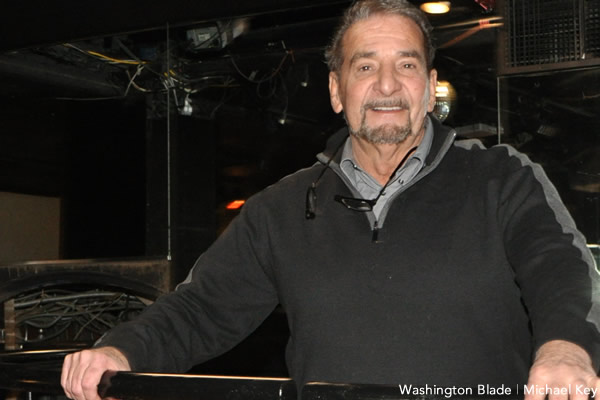
Allen Carroll (Washington Blade photo by Michael Key)

a&e features
Tickets on sale for chef Patrick O’Connell’s book launch event
Sept. 18 kickoff to feature José Andrés, Tom Sietsema

Acclaimed chef Patrick O’Connell is preparing to publish his new memoir, “Main, Middle & Gay” in September and he’s launching the book with an event on Sept. 18 at 6 p.m. at Lisner Auditorium featuring Chef José Andrés and former Washington Post food critic Tom Sietsema.
Tickets for the event go on sale Tuesday, July 21 at Ticketmaster; prices start at $55.
O’Connell, who’s gay, is the pioneering Michelin-starred chef and longtime proprietor of the Inn at Little Washington. He spoke with the Blade about the September event and the launch of his first memoir.
“I’ve known [Andrés and Sietsema] for more than 25 years and I have great respect for them,” O’Connell said. “I felt that it would allow us to add a different dimension rather than just have an interviewer. The chemistry will be fun and lively and unpredictable and exciting. I think we’re all different personalities and we’ll compliment each other.”
O’Connell has published cookbooks but this is his first memoir. The event will feature a short film that will highlight his work and the Inn.
“What I hope to do with the event is bring the book to life visually,” he said. “So we’re producing a short film that will be part of it. Most of the audience will not have read the book so it’ll give them a visual flavor of the book. It parallels the evolution of American cuisine over 50 years. It’s a rare perspective to be in the trenches for that long.”
The book’s title refers to the location of the garage on the corner of Main, Middle, and Gay streets in Washington, Va., where he launched his restaurant that became an international culinary destination.
The Blade will publish the rest of its wide-ranging interview with O’Connell in September in conjunction with the book’s release.
a&e features
The queer Asian comics building collective joy in D.C.
Spotlighting chaotic ways family, romance, identity take shape in their lives
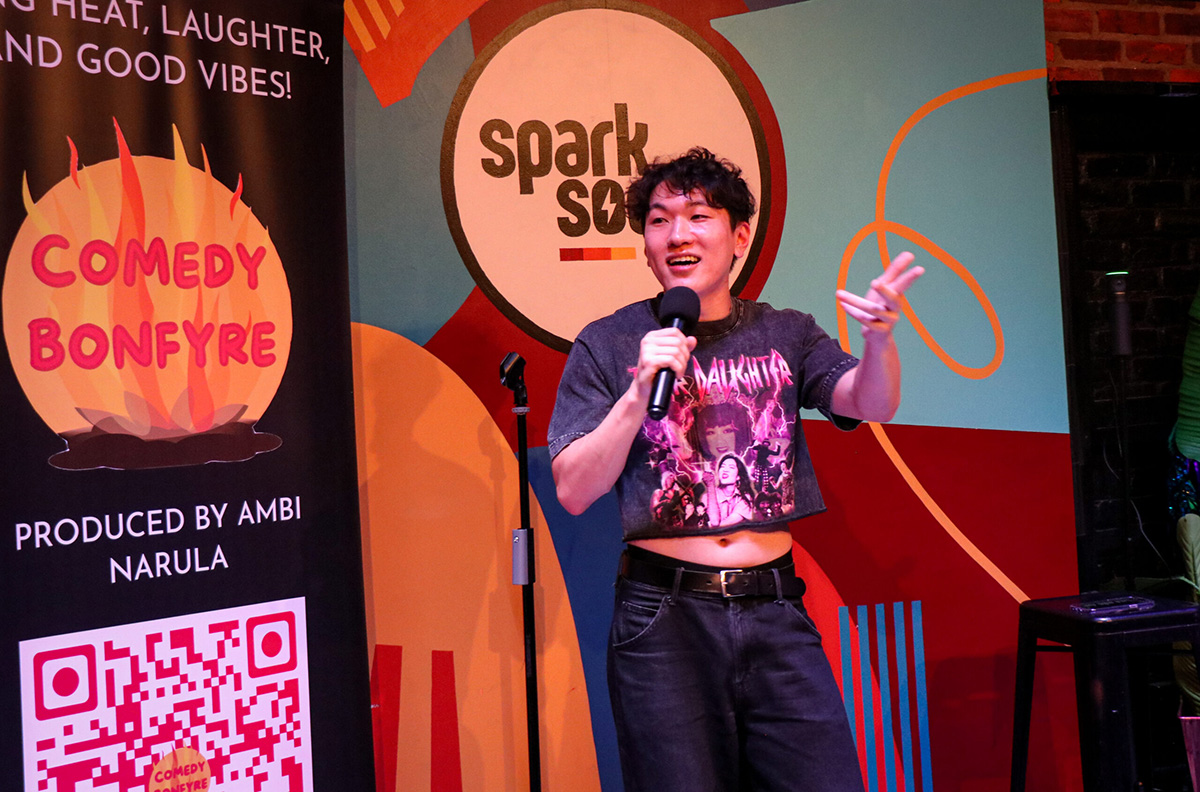
Kevin Chen’s family tombstone has room for four: him, his parents and his boyfriend. The arrangement might prove to be a little awkward.
“My boyfriend is 100% white, and my parents are 100% disappointed,” Chen confessed.
Jokes about family traditions and the untraditional ways they’re practiced earned a burst of laughs at the bar where Chen was opening for the Pride Comedy Special. The D.C. stand-up event, produced by Comedy Bonfyre last month, spotlighted queer Asian comics who shared the chaotic ways family, romance and identity take shape in their lives.
From candid oral sex takes to top surgery hypotheticals like “Where do the boobs go?”, the night highlighted the loud camaraderie of the queer Asian experience — one that sounds like a cacophony of snorts, cackles and belly laughs. While the comics say they are not quite a community, there’s more than enough shared material to bring them together.
“It was such a magical experience. I loved performing in a queer API lineup. It feels so validating,” Chen said after the show. “I’m wondering, ‘Is this how white men feel all the time?’”
Each performance evoked queer Asian joy through a medium that could use more of its presence.
According to Chen, who is based in D.C., it’s hard to say whether there is a true queer Asian comedy presence in his city. There are only a scattered “handful” of Asian comics, and people of color are underrepresented in queer comic circles, he said.
When Tarunika Anand, a nonbinary lesbian comic, first entered the mainstream D.C. comedy scene, they mostly encountered straight white men, describing the experience as “a culture shock.”
“I feel like sometimes a lot of queer spaces are really white, and then a lot of Asian spaces are really straight,” Anand said. “I don’t feel like I fit into either.”
But feeling marginalized didn’t stop these comics from honing their craft and creating spaces for others like them. Alex Kim, who headlined the special and is based in Brooklyn, runs the queer Asian comedy group Boba Gays, which began on WhatsApp and has since made its way to Lincoln Center.
Every Wednesday, Anand co-produces a free comedy show called Funny Side Up. The queer-led group focuses on inclusivity and showcasing new talent.
“It’s really beautiful to speak about your experience and your existence in a way that’s uplifting,” Anand said.
Family is a major throughline of their comedic repertoires.
Chen, for instance, shared that he identifies with jokes about having Asian immigrant parents and the expectations they pass down.
“You see me, you know this part about me, you know this experience intimately, and I can see the truth that you’re trying to wrap a joke around,” he said. “That hits even harder because that’s my truth too. I think that’s what makes good comedy.”
Anand had the audience at the special howling when they explained that their parents’ be-more-like-them comparisons didn’t end when they came out. Instead, the expectations took on a new form.
“Now, my parents want me to be the best gay,” Anand said. “They’re like, ‘Do you know Ellen DeGeneres?’”
Kim said he’s been trying to unlearn things from his Christian Korean mom. Yet he described a moment when he was getting ready for the club and realized he looked just like his mother getting ready for church.
“I’ve been finding it hard to escape her,” Kim said.
Mutual recognition also radiates through the different ways queer love can take shape. From singlehood to death-do-us-part commitments, the comics cover just about every corner.
Anand is holding out hope for settling down with “a nice, pretty, Indian girl.” They recently went through a breakup and said they felt they dodged a bullet.
“As a person of color, I just don’t think I should be with a Swiftie,” they said.
Chen, touching on what it’s like to be in a queer interracial relationship, said that meeting his white boyfriend’s baby nephew for the first time felt like he was forced to participate in a diversity, equity and inclusion training.
“The dad was like, ‘Please welcome Kevin. Be curious about his culture, his history, his foods,’” Chen joked.
Laughter is not the only reward for the comics.
To Anand, comedy is a space where they can say whatever they want. “It gives me a voice,” they said.
Nik Narain, a North Carolina-based trans and nonbinary South Asian comic who performed at the special, said meeting older trans comedians and taking the stage helped him feel reassured in his identity during his transition.
“Stand-up was a really cool way to process that onstage,” he said. “[It] became a way for me to repackage my thoughts.”
Queer Asians are still figuring out their place in the greater D.C. comedy scene. The group is small in numbers and many are still working toward a full-time comedy career. But Narain feels he’s already made it.
Narain is reluctant to pin it all on one moment. He feels that success is already peeking through in milestones — opening for celebrities, traveling to performances and self-producing shows.
“As long as I can keep doing this, I’m super happy,” he said.
This story was produced as part of the AAJA VOICES fellowship program, a student journalism project of the Asian American Journalists Association (AAJA).
a&e features
Mr. Henry’s celebrates 60 years of proud inclusivity
Capitol Hill staple remains ‘a caring community’
America’s 250th isn’t the only milestone birthday D.C. is celebrating this year.
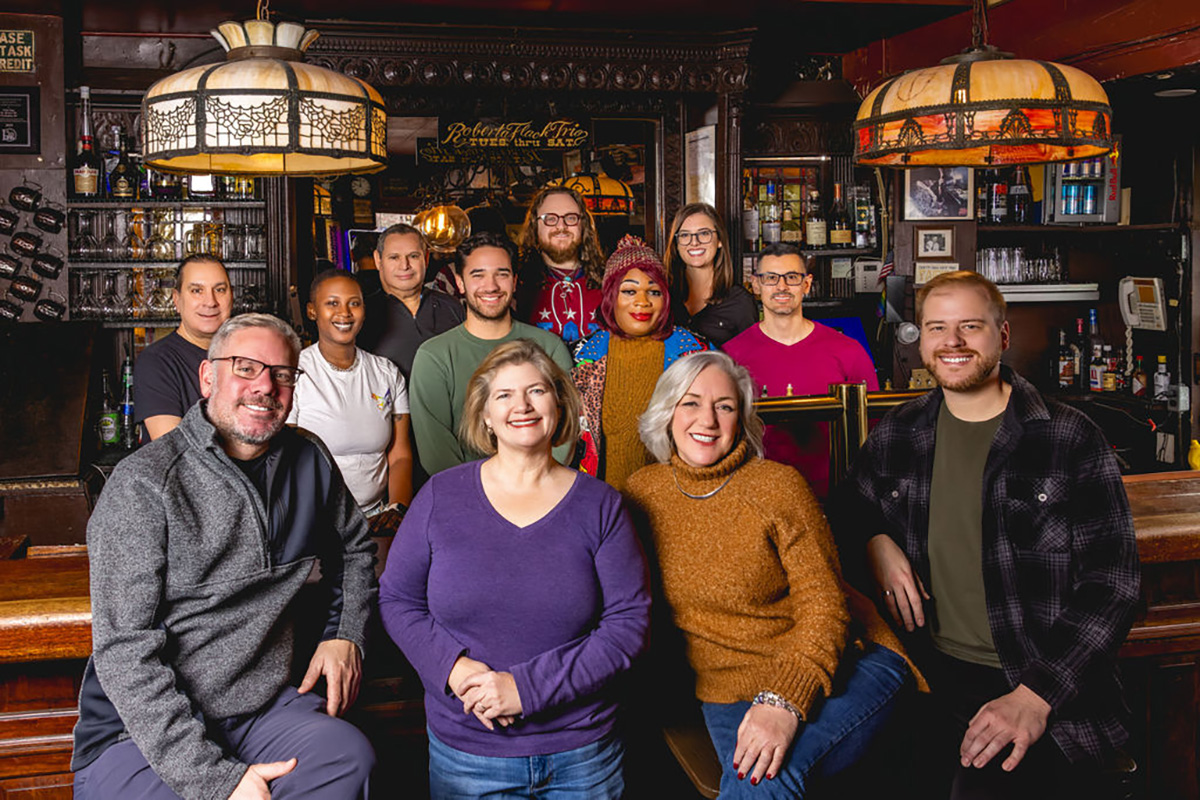
Beloved D.C. restaurant Mr. Henry’s, that Capitol Hill staple, celebrates its Diamond Jubilee all year long. Named for its original owner Henry Yaffe, the restaurant opened on a warm day 60 years ago in the summer of 1966 and has never looked back.
Yaffe took over what was then a country western restaurant, renovated the interior to his liking, and created an institution. Yet Yaffe had another goal. As a gay man, “he created Mr. Henry’s to be a place where everyone felt welcome — not easy in 1966 — and he succeeded,” says current owner Mary Quillian.
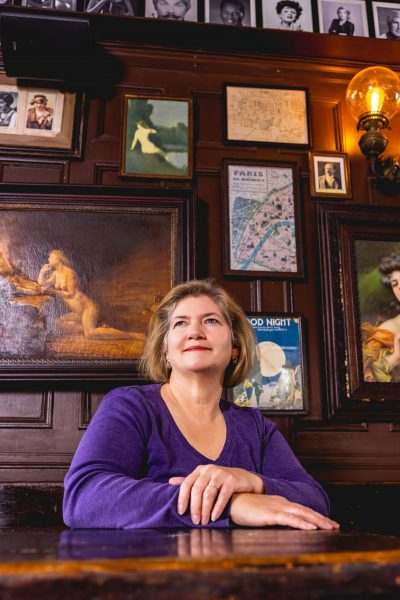
“Mr. Henry’s has long been a place the LGBTQ community has supported because they felt and still feel welcomed,” says Quillian. Even in the current administration, “the gay community and the diversity-minded community continue to come.”
Since then, Mr. Henry’s has changed hands, opened and closed its second floor, welcomed famed musical acts, and played host to politicians, date nights, breakups, and birthdays. But it still feels like home (and has a note in the National Trust for Historic Preservation) at 601 Pennsylvania Ave., S.E.
Its wood-paneled, Victorian-inspired art-filled décor in the downstairs dining room and bar serves American pub fare for lunch and dinner daily, with brunch on weekends (and a dog-friendly patio). Upstairs, Mr. Henry’s hosts live jazz performances and special events most nights, continuing a musical tradition that has defined the venue for decades. That upstairs bar has played host to names like Roberta Flack and Woody Allen.
Musician Kevin Cordt said that, “Mr. Henry’s has been a part of my life for more than 30 years. I started as a customer, then became a bartender and server, and now I have the good fortune to play trumpet at one of the best live music venues in Washington, D.C.”
Aaron Myers, executive director of the D.C. Commission on the Arts and Humanities, is also a supporter. “Not many cities can sport venues that have consistently served the community in the space of culture for more than 50 years, let alone can brag as the birthplace of culture defining talent.”
From the start, Yaffe promoted a rare yet celebrated combination of locals’ bar and soulful nightlife venue. Mr. Henry’s has attracted a diverse crowd at a time when such spaces were – and perhaps still are – uncommon, a diversity that is credited with helping protect the pub during the 1968 D.C. riots.
Longtime customer Evelyn Branic said, “Mr. Henry’s has been my ‘Cheers’ hangout since my wife and I moved to the Hill in 1987. I’ve experienced many iconic moments meeting politicians, reporters, civic activists, and neighbors engaging in spirited conversations. Whether political, LGBTQ, historians, neighbors, or out-of-towners, everyone could find a special place to be greeted as a friend.”
Its welcoming tables come dabbed with a bit of tea: In 1971, in a moment that has since become part of Capitol Hill lore, Yaffe lost the pub in a poker game to Larry Quillian. The Quillian family, recognizing the special role Mr. Henry’s played in the neighborhood, took over ownership, and committed to preserving its spirit. Today, Larry’s daughter Mary owns the bar, having given it a bit of a facelift for the bar’s 50th birthday, bringing in new tables and some fresh menu items.
For example, the menu has some of those dishes that regulars would riot if they disappeared. The Reuben and the hamburgers, the chili and in-house roasted turkey have never departed the menu. Dishes do evolve, says Quillen: they added wings about two decades ago.
In 2026, the restaurant is hosting monthly ticketed “decades” parties, celebrating each of the 10-year periods the restaurant’s been open, plus there were specials in June for Pride. The official 60th anniversary gala takes place Aug. 29, featuring performers, beverages, timeless favorite foods, swag – and the unveiling of a new cocktail.
Inclusive, eccentric, eclectic, Mr. Henry’s is looking forward to maintaining its centrality to diverse crowds in Capitol Hill. Battling inflation, rising menu prices, changing tastes, and thin margins, Quillian says that Mr. Henry’s has — and will always be — “a caring community for so many different folks. And THAT is why I am committed to keeping us going. Society needs places like Mr. Henry’s, now more than ever.”

LGBTQ ‘human rights crisis is unfolding in Puerto Rico’

Polish president vetoes same-sex relationship recognition bills

In the middle of the Bible Belt, a summer camp lets trans kids exhale

Tickets on sale for chef Patrick O’Connell’s book launch event