Sports
The Beckham effect
Soccer legend rewrote the book on masculinity
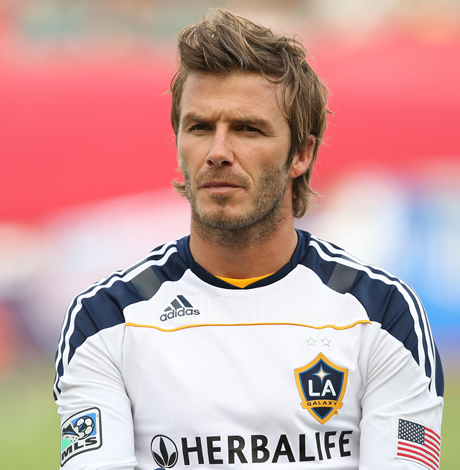
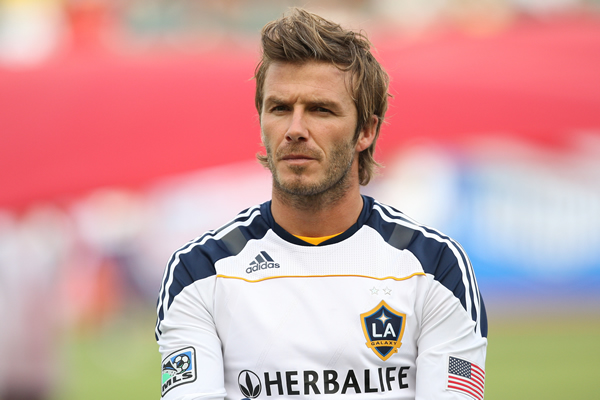
David Beckham in 2010. Sometimes straight public figures who exude comfort and confidence help curb LGBT stereotypes without intending to. (Photo by Photo Works; courtesy Bigstock)
The effect of David Beckham on Major League Soccer (MLS) in the United States is said to be incalculable. His impact ranged from increases in team expansion fees, television broadcast rights, merchandise sales to fan attendance. Those changes were felt by all MLS teams, not just the L.A. Galaxy for which he played from 2007 to 2012.
It has been two years since his last match as part of Paris Saint-Germain and his legacy continues to resonate. While sports icons before him like Michael Jordan and Andre Agassi showed the value of branding, Beckham took it a step further by showing a sensitive side to the sports hero.
His soccer career, the marriage to Victoria Beckham (Posh Spice) and the arrival of their four children, along with sponsorship deals with Adidas, Samsung, Pepsi, Gillette and H&M, brought Beckham to the front and center of international pop culture.
Is it possible that his presence has helped the LGBT sports movement?
Without standing up and calling himself a straight sports ally, did he further the public opinion of acceptance for LGBT athletes? Did his brand change the long-standing perception of masculinity in sports?
Yes, on all counts.
When Beckham began his career as a professional soccer player in 1992 at age 17 for Manchester United, the sport was known for its harsh and often hostile players such as Paul Gascoigne, also known as Gazza, who played from 1985 to 2004. He was a spectacular player defined by his off-field antics which included misbehaving in press conferences, public intoxication, temper tantrums and spousal abuse. Gascoigne’s outrageous behavior delighted soccer fans.
Enter David Beckham whose polished looks, good boy image and sensitivity coupled with his athleticism, toughness and sportsmanship ushered in a new perception of what kind of man can be successful in the jock culture of athletics.
Truett Vaigneur is a professor at City University of New York and was the producer of the educational film “The University Pool,” which explored the experiences of three former college athletes and the stigma of being gay in the jock culture of university athleticism. Vaigneur has also done extensive research for presentations at conferences and for academic journals on identity formation and masculinity in sports.
“David Beckham’s presence stimulated a new breed of athletes that are OK with showing a sensitive side,” Vaigneur says. “The masculine presentation of an athlete is fading and it is becoming OK to show personality traits that were once perceived as weakness.”
Vaigneur goes on to say, “Beckham’s image was protected by his heterosexuality; the fact that he wore a ponytail and modeled underwear brought about assimilation in the culture of sports. Any positive shift in the perception of what makes an athlete, whether they are gay or straight, is going to help the culture of athletics.”
During Beckham’s soccer career, the media often focused on the fact that he was a doting family man. He even cited the need to spend more time with his family as one of the factors for the timing of his retirement. He sometimes missed media events to stay home with his kids.
As for the impact on the LGBT sports community, there seems to be a blurring of the lines when it comes to defining an athlete. More and more straight athletes are stepping forward in support of accepting anyone who wants to play.
“Gay athletes don’t want to be called gay athletes, they want to be called athletes,” Vaigneur says. “We have approached a level in gay culture where gay men can stand up and say, ‘I am a man, not a gay man.’”


Sports
New IOC policy bans trans women from Olympics
New regulation to be in effect at 2028 summer games in Los Angeles
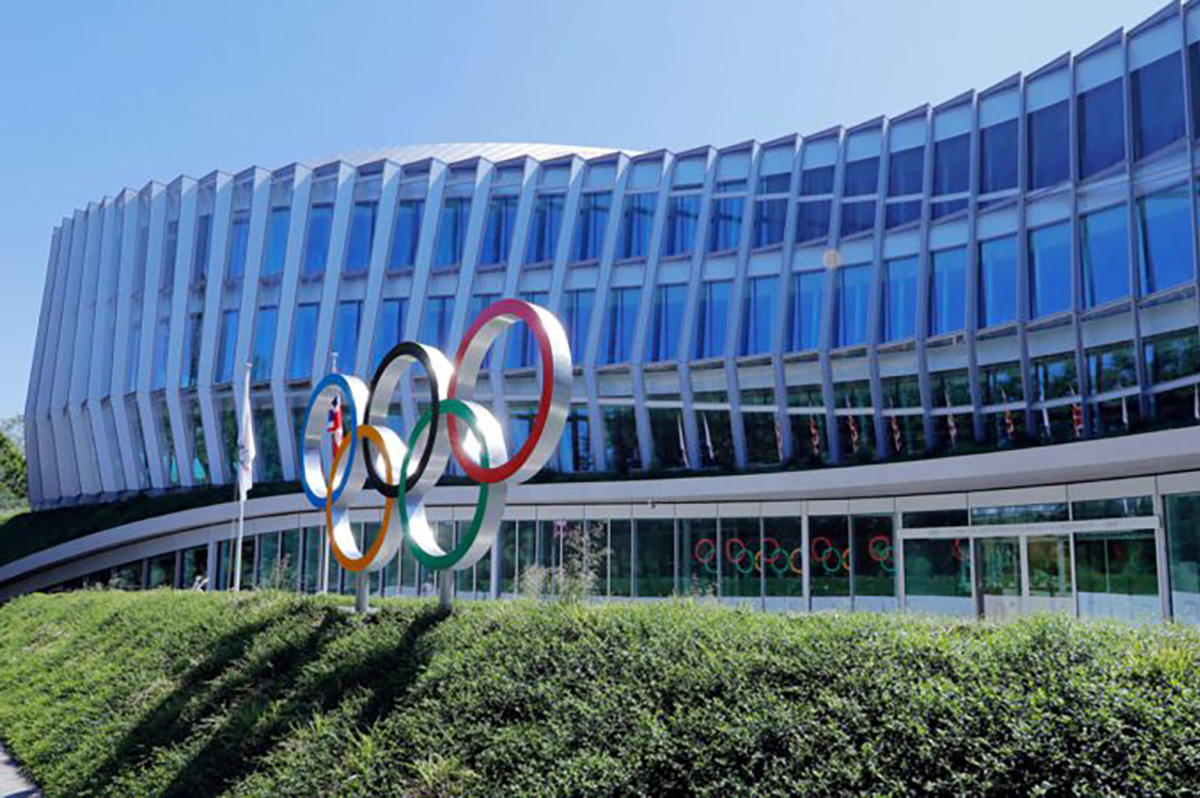
The International Olympic Committee on Thursday announced it will not allow transgender women from competing in female events at the Olympics.
“For all disciplines on the Sports Program of an IOC event, including individual and team sports, eligibility for any Female Category is limited to biological females,” reads the new policy.
The policy states “eligibility for the Female Category is to be determined in the first instance by SRY Gene screening to detect the absence or presence of the SRY Gene.”
“On the basis of the scientific evidence, the IOC considers that the SRY (sex-determining Region Y) Gene is fixed throughout life and represents highly accurate evidence that an athlete has experienced or will experience male sex development,” it reads. “Furthermore, the IOC considers that SRY Gene screening via saliva, cheek swab or blood sample is unintrusive compared to other possible methods. Athletes who screen negative for the SRY gene permanently satisfy this policy’s eligibility criteria for competition in the Female Category.”
The policy states the test “will be a once-in-a-lifetime test” unless “there is reason to believe a negative reading is in error.”
The new regulation will be in place for the 2028 Summer Olympics in Los Angeles.
“I understand that this a very sensitive topic,” said IOC President Kirsty Coventry on Thursday in a video. “As a former athlete, I passionately believe in the rights of all Olympians to take part in fair competition.”
“The policy that we have announced is based on science and it has been led by medical experts with the best interests of athletes at its heart. The scientific evidence is very clear: male chromosomes give performance advances in sport that rely on strength, power, or endurance,” she added. “At the Olympic Games, even the smallest margins can be the difference between victory and defeat. So, it is absolutely clear that it would not be fair for biological males to compete in the female category. In addition, in some sports it would simply not be safe.”
(Video courtesy of the IOC)
Laurel Hubbard, a weightlifter from New Zealand, in 2021 became the first trans woman to compete at the Olympics.
Imane Khelif, an Algerian boxer, won a gold medal at the 2024 Summer Olympics in Paris. Khelif later sued JK Rowling and Elon Musk for cyberstalking after they questioned her gender identity.
Ellis Lundholm, a mogul skier from Sweden, this year became the first openly trans athlete to compete in any Winter Olympics when he participated in Milan Cortina Winter Olympics in Italy.
President Donald Trump in February 2025 issued an executive order that bans trans women and girls from female sports teams in the U.S.
The U.S. Olympic and Paralympic Committee last July banned trans women from competing in female sporting events. Republican lawmakers have demanded the IOC ban trans athletes from women’s athletic competitions.
“I’m grateful the Olympics finally embraced the common sense policy that women’s sports are for women, not for men,” said U.S. Sen. Tom Cotton (R-Ark.) on X.
An IOC spokesperson on Thursday referred the Washington Blade to the press release that announced the new policy.
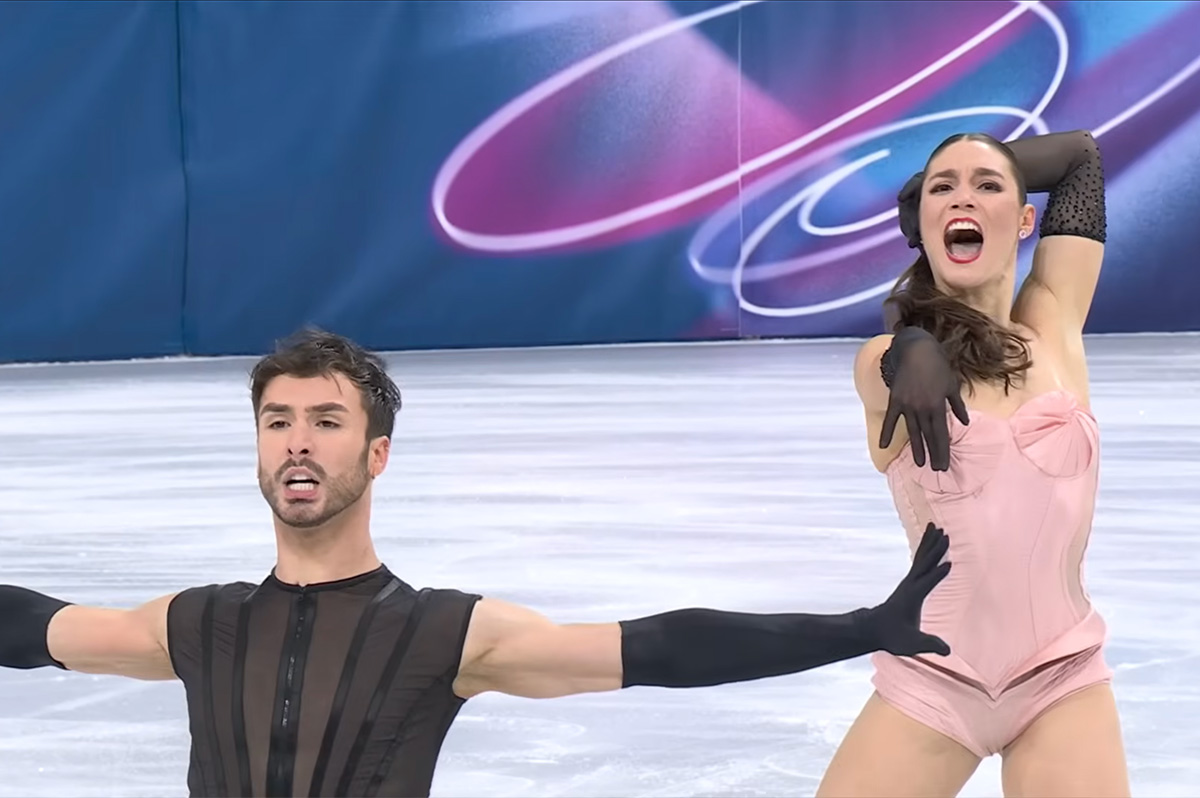
More than a dozen LGBTQ athletes won medals at the Milan Cortina Winter Olympics that ended on Sunday.
Cayla Barnes, Hilary Knight, and Alex Carpenter are LGBTQ members of the U.S. women’s hockey team that won a gold medal after they defeated Canada in overtime. Knight the day before the Feb. 19 match proposed to her girlfriend, Brittany Bowe, an Olympic speed skater.
French ice dancer Guillaume Cizeron, who is gay, and his partner Laurence Fournier Beaudry won gold. American alpine skier Breezy Johnson, who is bisexual, won gold in the women’s downhill. Amber Glenn, who identifies as bisexual and pansexual, was part of the American figure skating team that won gold in the team event.
Swiss freestyle skier Mathilde Gremaud, who is in a relationship with Vali Höll, an Austrian mountain biker, won gold in women’s freeski slopestyle.
Bruce Mouat, who is the captain of the British curling team that won a silver medal, is gay. Six members of the Canadian women’s hockey team — Emily Clark, Erin Ambrose, Emerance Maschmeyer, Brianne Jenner, Laura Stacey, and Marie-Philip Poulin — that won silver are LGBTQ.
Swedish freestyle skier Sandra Naeslund, who is a lesbian, won a bronze medal in ski cross.
Belgian speed skater Tineke den Dulk, who is bisexual, was part of her country’s mixed 2000-meter relay that won bronze. Canadian ice dancer Paul Poirier, who is gay, and his partner, Piper Gilles, won bronze.
Laura Zimmermann, who is queer, is a member of the Swiss women’s hockey team that won bronze when they defeated Sweden.
Outsports.com notes all of the LGBTQ Olympians who competed at the games and who medaled.
Sports
US wins Olympic gold medal in women’s hockey
Team captain Hilary Knight proposed to girlfriend on Wednesday
The U.S. women’s hockey team on Thursday won a gold medal at the Milan Cortina Winter Olympics.
Team USA defeated Canada 2-1 in overtime. The game took place a day after Team USA captain Hilary Knight proposed to her girlfriend, Brittany Bowe, an Olympic speed skater.
Cayla Barnes and Alex Carpenter — Knight’s teammates — are also LGBTQ. They are among the more than 40 openly LGBTQ athletes who are competing in the games.
The Olympics will end on Sunday.

Thousands attend ‘No Kings’ protests in D.C.

Blade contributor, husband exchange vows in D.C.

Ghanaian president welcomed to Philadelphia amid backlash over anti-LGBTQ bill

PHOTOS: ‘No Kings’ rally and march

‘Out for McDuffie’ event held at D.C. gay bar

Pa. House passes bill to codify marriage equality in state law

Introducing the Torchbearers Awards honoring queer, trans women and nonbinary people

A surtax would end this war quickly

New IOC policy bans trans women from Olympics

‘No Kings’ protests set for D.C.
-

 Pennsylvania4 days ago
Pa. House passes bill to codify marriage equality in state law
-
a&e features4 days ago
Introducing the Torchbearers Awards honoring queer, trans women and nonbinary people
-
Opinions4 days ago
A surtax would end this war quickly
-
Sports4 days ago
New IOC policy bans trans women from Olympics