Local
Marine biologist Kristian Fauchald dies at 79
Local LGBT advocate spent 35 years at Smithsonian

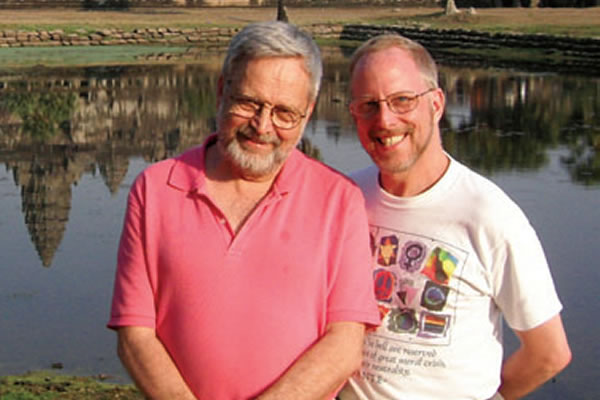
Kristian Fauchald (left) died at age 79 in April. He’s pictured here with his husband, Leonard Hirsch. (Photo courtesy Hirsch)
Kristian Fauchald, a marine biologist internationally recognized for his research on behalf of the Smithsonian Institution’s National Museum of Natural History and a longtime supporter of LGBT rights, died April 4 at George Washington University Hospital. He was 79.
His husband, Leonard Hirsch, said the cause of death was complications associated with the sudden onset of a bronchial and heart-related condition.
Fauchald most recently served as Research Zoologist Emeritus at the Smithsonian’s Natural History Museum, where he continued his life’s work of studying a family of ocean living worms known as Polychaetous Annelids.
During his tenure of more than 35 years at the Smithsonian, Fauchald traveled to oceans throughout the world collecting samples of the marine organisms he and his collaborators studied. His scientific papers and two books considered groundbreaking in his field have been credited with advancing the world’s knowledge of ocean ecosystems.
“He impacted people around the world and in this country, of course – students, scientists and LGBT folks,” Hirsch said. “He was a truly outstanding human being.”
Fauchald was born in Norway in 1935. He received Norway’s equivalent of bachelor and master’s degrees at the University of Bergen before moving to California in 1965, where he entered and completed a doctorate degree program at the University of Southern California at Los Angeles.
In 1969, he became assistant professor of biology at USC and a short time later he was appointed curator of marine annelids at the California-based Allan Hancock Foundation, according to a write-up on Fauchald’s career and life prepared by Hirsch and several of Fauchald’s friends.
The write-up by Fauchald’s friends says Fauchald moved to D.C. in 1979 to begin what became a 35-year association with the Smithsonian Institution’s Museum of Natural History. His first position there in 1979 was with the museum’s Department of Invertebrate Zoology.
“He also involved himself in the gay community in the District, initiating rap sessions at the Gay Community Center on Church Street,” the write-up says. “He was active in the early days of the D.C. Adventuring Group [a gay outdoors organization].”
Hirsch said he and Fauchald met in 1983 and became domestic partners in 2001. They bought and began renovating a house on Q Street, N.W. in 1984, the write-up says, “that became known as ‘gay central” for LGBT organizations and causes as well as a gathering place for the couple’s extended circle of friends they considered to be family.
Fauchald and Hirsch married in California in 2008.
Hirsch said that during his years at the Smithsonian, Fauchald played an important role in helping Hirsch carry out Hirsch’s duties as president of Federal GLOBE, an organization that represents LGBT federal employees.
“Beyond his own scientific research, Kristian was a mentor for many, and the Q Street home became a haven to a long list of biologists,” the write-up says. “His deep knowledge of worms and the breadth of philosophy constantly urged inquiry,” it says.
“He was always willing to listen, and the esteem with which he is held in the scientific community can be seen in the over 30 species named for him!” says the write-up by his friends.
In a recently published obituary for Fauchald in the scientific publication World Register of Marine Species, for which Fauchald was a founding editor, the publication printed the names of all of the species bearing his name, including the most recent one in 2013 called Chirimia fauchaldi Light.
In addition to Hirsch, Fauchald is survived by his brothers Jens and Per Fauchald of Norway along with their wives and his numerous nieces and nephews.
Smithsonian officials and Fauchald’s longtime associates and friends were expected to pay special tribute to him on July 1 when they celebrate International Polychaete Day, which falls on Fauchald’s 80th birthday. Polchaetes are a class of marine worms that Fauchald devoted much of his life to studying.




Rehoboth Beach
Officials raise troubling concerns about Rehoboth mayoral candidate Suzanne Goode
Homophobic emails, ‘aggressive’ behavior cited: ‘It just seems to be getting worse’

As Rehoboth Beach voters prepare to elect a new mayor on Aug. 8, some city officials and local residents are raising new concerns about the behavior of City Commissioner and mayoral candidate Suzanne Goode.
In addition to a history of troubling emails in which she has used homophobic language and criticized the city’s rainbow crosswalks, Goode is being accused of inappropriate behavior by a neighbor and a fellow Commissioner related to a dispute on the Nextdoor online platform.
The Blade spoke to City Manager Taylour Tedder, Commissioner Chris Galanty, and others about Goode’s behavior during her time as commissioner.
Goode was elected commissioner in August 2024. Fellow commissioner Susan Stewart, who is also running for mayor, criticized Goode’s behavior in a March 9, 2026 meeting, bringing up emails outlining Goode’s offensive conduct toward city staff.
In one email, Goode wrote to Rehoboth Beach City Solicitor Lisa Borin Ogden: “I am sorry that I learned from Google when you were first interviewed [in the] spring [of] 2025 that you are Jewish. My opinion of my fellow Jews declined significantly thanks to you since last summer. Actually would have thought you would have more compassion than the average person, based on your late brother. Except you don’t. I am sick of your haughty attitude toward me.”
In other emails, Goode questions why city officials encouraged CAMP Rehoboth and Clear Space Theatre to apply for grant funds. She has denigrated both institutions, referring to CAMP as a “questionable non-profit” and Clear Space as “second rate” with a “woke, drag queen bent” at times. She accuses Rehoboth’s LGBTQ community of displaying “their sex lives in public view” and fears physical violence from LGBTQ activists.
Goode disputed the claims and called for the city to remove Stewart’s remarks from the website.
The following statements were included in the emails sent by Goode:
• “Gays and theatre aficionados can donate as much as they like to these pet causes. Some taxpayers think the theatre is second-rate as community theatres go, and many dislike the RB emphasis on LGBTQ when heterosexuals don’t demand equivalent display of their sex lives in public view.”
• “Just because the LGBTQ community feels oppressed and discriminated against, that doesn’t mean that those who identify as LGBTQ are better able to recognize racial discrimination than someone like myself. It might surprise some of you to learn that I briefly dated an African American fellow college student.”
• “A performing arts and LGBTQ agenda isn’t appropriate for BOC spending when the city faces over $60M in debt.”
• “But there are some folks in town, who ironically have to remain in the closet (conservatives now have to do what gays had to do in the 20th century — ah, the irony) who object to the woke, drag queen bent of Clear Space at times. They have confided this in me, and thanked me for fighting for their tax dollars. Maybe I will regret speaking up, as some LGBTQ activist will attack me physically, even though I am a complete supporter of gay rights, and have as many gay male friends as female friends now that I live in RB with a large gay population.”
In the emails, Goode also referred to City Manager Tedder as “the mayor’s whore.”
Stewart told the Blade that the troubling behavior has since escalated.
Commissioner Chris Galanty spoke to the Blade about Goode’s behavior as commissioner and her issues with the rainbow crosswalks in town.
“Suzanne told me on two separate occasions that she didn’t like the rainbow crosswalks, and she said that she didn’t understand why they had to exist, and she didn’t understand why gay people had to advertise their sexuality, and she said straight people don’t have to do that.”
Galanty said that when he challenged her on this, she “moved very quickly to another topic.” He said that she has now shifted her perspective and is more concerned that the rainbow crosswalks are an issue of labor costs.
Goode told the Blade that, “Unfortunately, the rainbow crosswalks have potentially reduced the upkeep of the conventional crosswalks. But the rainbow crosswalks are attractive in and of themselves, and they do add to our recognition of Rehoboth’s longstanding status as a gay-friendly town.”
Accusations of “aggressive” behavior by Goode aren’t limited to emails. Last summer, Goode came to the home of Diana Jones, a property owner in Rehoboth Beach who is a neighbor of Galanty’s. Jones spoke to the Blade to share her experience with Goode.
Jones is active on Nextdoor, an online social network for neighborhoods. She said that she got involved on the platform during the time of the commissioners election last summer, in which her neighbor, Chris Galanty, was elected as commissioner.
Jones said that she made posts supporting Galanty. She said that someone posted a link of a lawsuit that involved Goode’s husband, Jeffrey Goode, who lost his race for commissioner last summer. Jones said that she reposted the link after it was taken down.
Jones said that the lawsuit was “very relevant to somebody who is running for city commissioner.”
Jones said that Suzanne Goode showed up at her house as a result of the post. Jones was out walking her dog nearby so Goode briefly spoke with Jones’s husband who was home.
“She came over to my house because she was saying I was doxing him,” said Jones. Jones said that Goode then found her as she was walking her dog and tried to talk to her about her Nextdoor posts, saying that she “brought up a very painful time in her life.”
Jones said that she has not had any communication with Goode since.
When asked for comment on the situation with Jones, Goode responded by saying “Diana Jones’s behavior toward me was despicable, and the way she has chosen to give her side of the story to news media says more about her than it will ever say about me.”
Galanty told the Blade that Goode came to his house in late June of this year when he was not home. She then called him about Jones.
“She relayed to me that she was having a disagreement with my neighbor on the Nextdoor platform, and she asked me to intercede with the neighbor,” said Galanty. “She said, ‘Please speak to her because I am frustrated with what she is saying. She needs to stop, and you need to say something to her.'”
Galanty said that Goode called him four times and texted him 32 times in the span of three and a half hours the next day.
Galanty said that he responded the next day, telling her that her behavior was inappropriate.
“Eventually it took a couple of weeks, but she apologized in her own way. She just said we just need to let it go.”
From his perspective as commissioner, Galanty said, “She likes to re-litigate things that have happened, six months ago, nine months ago. She likes to rehash issues that are in the past.”
“She can be really aggressive, and people are just really turned off by her,” said Galanty.
Tedder, who has accused Goode of creating a “hostile work environment,” told the Blade about his experiences working with Goode.
“She does not support the staff, and constantly tells us to resign,” said Tedder.
Tedder said that Goode texted City Solicitor Ogden at 7:45 a.m. on a Saturday, telling her to resign.
“Sometimes she does have good ideas. It’s just it gets so lost in these pages and pages of emails and thousands of emails that she sends,” said Tedder.
In regards to Goode’s behavior, Tedder said it has been going on since the beginning. “It just seems to be getting worse.”
Maryland
Advocates for trans students urge Md. to fight White House threats
Four school districts under federal investigation
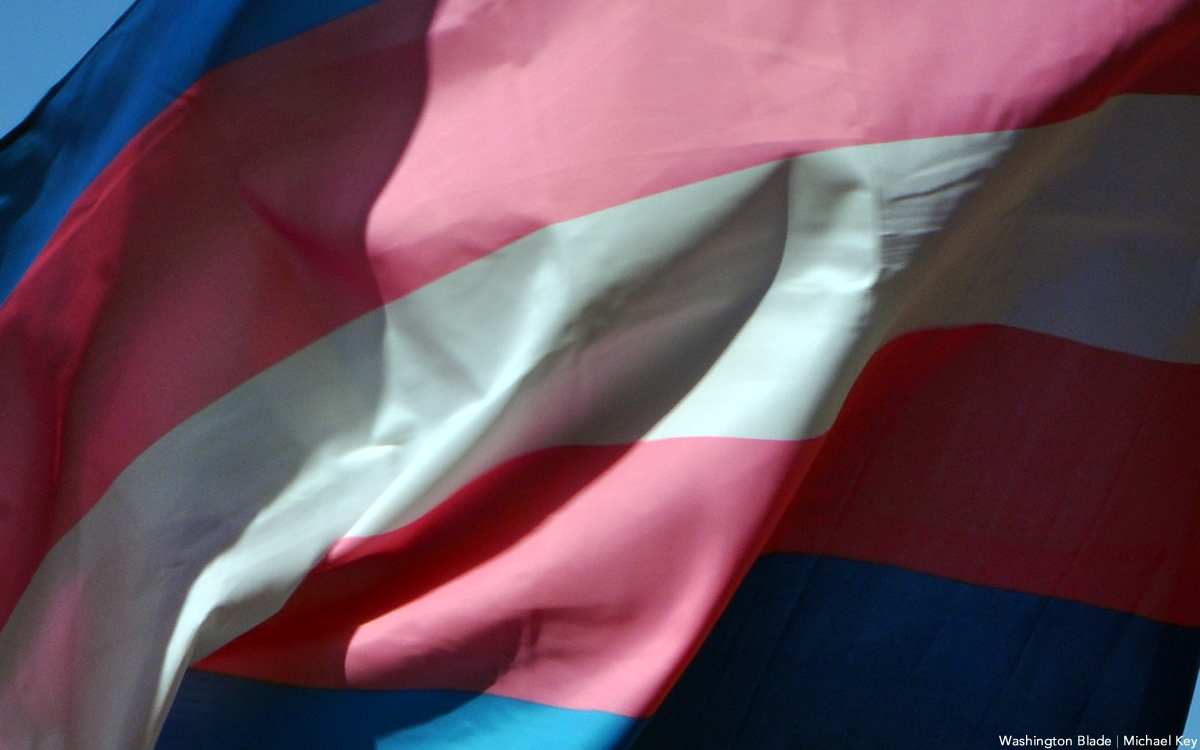
By JESSICA CALEFATI | Allies of transgender children are urging state education officials to fight back against the Trump-Vance administration, which has threatened to punish a growing number of Maryland school districts over local policies that affirm students’ gender identities.
The advocates testified Tuesday morning before the Maryland State Board of Education — one day after the U.S. Education and Justice departments alleged that Anne Arundel County’s school system violated federal student privacy law by withholding a student’s gender identity from their parents. A spokesperson for the district said Monday legal counsel had not yet reviewed the claims and that the district had no further comment.
School districts in Prince George’s, Montgomery, and Frederick Counties were already under investigation for allegedly violating Title IX, the civil rights law that prohibits sex-based discrimination. The federal government last month threatened to revoke funding from the districts because they allow trans students to use restrooms and locker rooms that align with their identities.
The rest of this article can be read on the Baltimore Banner’s website.
Maryland
White House threatens Anne Arundel schools over gender identity policy
District faces possible legal action or loss of federal funding

By JESSICA CALEFATI | The Trump-Vance administration on Monday threatened to punish Anne Arundel County’s school system with legal action or the loss of federal funding for allegedly withholding information about a student’s gender identity and transition from the child’s parents.
The U.S. Education and Justice Departments together determined that the suburban Maryland district treats students’ gender identities as confidential medical information that cannot be shared with parents, in violation of federal student privacy law, according to a news release. A federal lawsuit filed against the district earlier this month made similar claims.
“As a mother and a grandmother, it is unconscionable that any school district would hide the most sensitive information about children in their care from their own parents,” U.S. Secretary of Education Linda McMahon said in a statement. “This is not only an affront to basic moral principles, but also to parents’ rights under federal law.”
The rest of this article can be read on the Baltimore Banner’s website.

PHOTOS: Petal Release Party

Madonna headlines World Pride Music Festival in Amsterdam

Reggie White relishing first season as artistic director of Woolly Mammoth

PHOTOS: Amsterdam Pride Canal Parade

Amsterdam Pride Canal Parade draws hundreds of thousands

‘Heartstopper Forever’ delivers satisfying conclusion

Madonna to perform at World Pride in Amsterdam

BLADE ENDORSEMENT: Susan Stewart for mayor of Rehoboth Beach

PHOTOS: Lambda Legal in the Pines