
a&e features
WATCH: Gays do tricks to win Madonna tix
Blade, 107.3 team up for ‘Rebel Heart’ giveaway at Pride


(Washington Blade photo by Michael Key)
The Washington Blade and D.C.’s 107.3 FM teamed up at D.C.’s Capital Pride Festival on Sunday to give away 14 pairs of tickets to see Madonna’s upcoming “Rebel Heart” tour.





a&e features
How Orville Peck healed his inner child through ‘Street Fighter (2026)’
Famous singer discusses this new role, what it means as LGBTQ artist

When asked to think about Orville Peck, most people would immediately remember the man’s music, his time on Broadway, his many scintillating photoshoots or, of course, the ornate masks he wears throughout it all.
Most wouldn’t, at least before a few months ago, think about the long-lasting video game franchise, “Street Fighter.”
This historic fighting game doesn’t instantly mesh with the image that Orville has spent years developing. The country singer has garnered national acclaim through his four albums, sultry and often somber affairs that have earned him numerous awards and thousands of fans. Along with his voice, new listeners are intrigued by his masks; Peck always wears a face covering to protect his privacy and embody a distinctly queer flair in his work. These are only removed for very special occasions — such as his renowned turn as the Emcee in a Broadway revival of “Cabaret” — with even his recent centerfold in the sexy magazine Playgirl seeing Orville bare everything except his face.
The musician does all of this while being proudly gay, serving as one of the most notable queer celebrities we have today. This, combined with his dynamic career, has earned Peck legions of supporters, each one excited about whatever new project he decides to do next. And they were all completely shocked in early 2026 when Orville announced just what that project would be: starring in Kitao Sakurai’s live-action adaptation of the classic video game, “Street Fighter.”
“They didn’t know I grew up playing this game, so it was so cool!” Peck raved as he discussed the film with the Los Angeles Blade. For the less digitally-minded of us, “Street Fighter” is an immensely popular gaming franchise, with this decades-spanning series offering dozens of games filled with colorful characters players can fight as. The cast for this latest adaptation dropped earlier this year and included stars like Jason Momoa, David Dastmalchian, Callina Liang — and, of course, Orville Peck.
“Fighting games probably draw a lot of queer people in [because] you can choose which character speaks to you, and they belong there,” Orville explained. “They don’t have to prove themselves…they belong, and you can connect in that way, since maybe you didn’t belong or [feel] included,” Orville admitted that it’s a connection he’s experienced himself; the man spent many hours of his childhood playing “Street Fighter” with his brothers. And one of his favorite characters was Vega, the bullfighting, gorgeous assassin obsessed with his own appearance (and slashing his opponents to ribbons).
It’s why there was no question Orville would take on the role when it was first offered to him. This may seem like an easy choice for many viewers — both Peck and Vega wear a mask — but the singer stressed that his link to the character went far beyond just the physical. “Vega did carry this kind of queer-coded energy that queer fans of “Street Fighter” have always picked up on and related to. And I was encouraged to not stray away from that — they wanted that to be included.”
Vega serves as the loyal henchman of “Street Fighter”’s main villain, M. Bison, with the claw-wielding fighter filling his screen time with snarky humor, great action scenes, and a distaste for wearing a shirt. But Vega also serves as a vital contrast in the film by punctuating the hypermasculinity of the men around him. He shows that queerness and strength can go hand-in-hand, with Orville finding it so affirming to bring out that universal truth through his performance.
It was something that he enjoyed not only for his adult self, but for the younger version who loved nothing more than playing “Street Fighter” with his brothers, saying, “Being a little queer kid … I definitely did not feel at times that I was going to be welcomed into some things in life, right? Getting to be the only openly gay man in this film with a bunch of very heterosexual gentlemen running around, and then having my place next to them? I think that would be really encouraging and healing to little Orville, for sure.”
Orville went on about his amazing co-stars — he warmly referred to Callina Liang, who plays Chun-Li in the film, as ‘my sister’ — and the countless joys this role brought him. When asked whether he would return for a possible sequel, he emphasized, “We’re all so close as a cast now. Everybody loves and supports each other so much. I would 100% do it again, of course.” It’s a promising message for many queer viewers absolutely loving his turn as Vega, and it signals an uplifting development for the man himself.
Orville Peck’s entire career is dedicated to utmost authenticity, showing your truest self in a way that feels genuine and recognizing what that truth brings to yourself and others. In a movie filled with nonstop fighting and campy chaos, he still managed to channel that into every second of his time onscreen. And whether it be as Vega or whatever role he decides to take next, it’s a vital message that this musician — and, he will remind you now, actor — will always work hard to make the center of his work.
a&e features
Kramers celebrates 50 years as a cultural hub of D.C.
Milestone anniversary event planned for Oct. 22
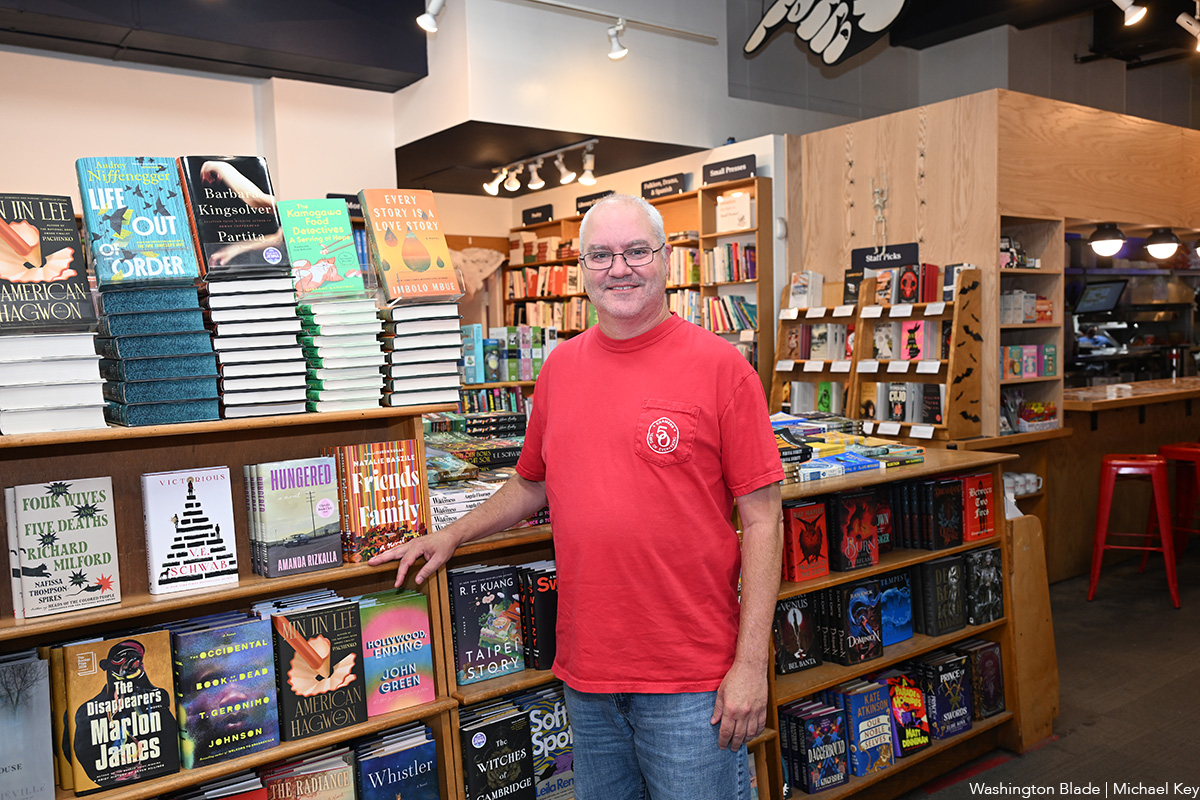
In a world of rapidly diminishing third-place spaces, Kramers – also known as Kramerbooks – is celebrating its 50th anniversary as a beloved cultural Washington, D.C. institution.
Founded in 1976 in the heart of Dupont Circle at the nation’s bicentennial, Kramers is a bookstore, café, restaurant, bar, corner store, gathering place, and multi-generational site for locals, visitors, readers, sippers, and noshers.
Originally owned by Bill Kramer, Henry Posner, and David Tenney, Kramers began first as a bookstore called Kramerbooks, and soon added its coffeeshop and rebranded as Kramerbooks & Afterwords Café. In 2016, the trio sold Kramers to Steve Salis, who expanded the bookstore and rebranded the eatery portion as All Day Café.
As Kramers turns 50, the beloved bookstore and café will honor its rich legacy this month with a milestone anniversary celebration, merchandise, and a look ahead to its next chapter as one of D.C.’s defining cultural gathering places.
The big community day is Oct. 24, bursting with community programs:
· Relume, a local woman-owned home goods and accessories brand, will offer custom book stamping for attendees;
· Aslin Beer Company will offer guests of age a curated on-site beer tasting;
· DuPont Little Flea Market will activate a small pop-up vintage market on site, offering a variety of vintage goods from various vendors;
· The store will partner with Everybody Wins DC, a nonprofit dedicated to advancing child literacy through volunteer-led reading and mentoring programs, donating 20% of all bookstore sales that day. Visit kramers.com to RSVP.
Finally, the shop is throwing a 50th anniversary celebration on Oct. 22, bringing together community leaders and longtime patrons for an event honoring the bookstore’s rich legacy and continued impact on the city.
The 50th anniversary excitement eclipses prior celebrations: for the store’s 20th anniversary, for example, the store gave away one free slice of “three truffle” chocolate cake to customers.
“Kramers has been part of the cultural heartbeat of Washington for 50 years, and that kind of legacy is incredibly rare,” said Salis, who is CEO of Catalogue hospitality, which also runs D.C. favorites like Ted’s Bulletin, Federalist Pig, Honeymoon Chicken, and Sidekick Bakery. “What makes it special is that it has never been just a bookstore — it’s a place where people gather, discover ideas, share meals, and feel connected to the city around them.”
Dupont Circle has always been a center of D.C.’s cultural legacy. The neighborhood continues to evolve, even today, as the Connecticut Avenue deckover project progresses, just outside the doors of Kramers. Just as the neighborhood has changed, Kramers has grown and evolved as well. But its identity as a center of curiosity and connection has remained the same.
Kramers was one of the first bookstores in D.C. – and the nation – to introduce a café on premises. For several years, Kramers would transport bagels from New York daily, unable to source bagels of quality locally. While today Kramers operates regular hours, generally 8 a.m.-10 p.m., for many years it was open 24 hours (literally an All Day Café) on the weekends, not closing its doors once to neighbors and friends. Kramers also branched out across the river, opening two short-lived spots in Arlington. Both are now closed.
Being located in D.C., Kramers has played host to plenty of celebrities: Barack Obama stopped by during his time in office; and Monica Lewinsky shopped there as well. Other celebs who have dropped by include Maya Angelous, Andy Warhol, and Toni Morrison.
In 2020, Salis – after suggesting that he might relocate Kramers from Dupont Circle – refreshed the restaurant, bringing in a new chef and a vibrant new menu with French influences and natural wine pours, plus menu favorites like Crab Deviled Eggs, Chicken & Waffles, and Goober Pie.
Salis recognized the challenges of operating a bookstore and café against the multitude of buffeting headwinds.
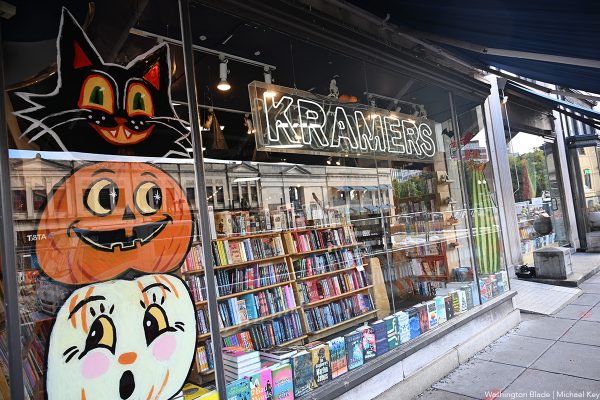
“The biggest challenge has been finding ways to evolve while protecting what makes Kramers unique. The bookstore landscape has changed dramatically, and the restaurant business has become increasingly competitive, with rising costs across the board,” he says. Kramers remains relevant by meeting customers where they are: selling a selection of “banned books,” hosting weekly book clubs and trivia nights, alongside poetry readings, writing workshops, and author talks. It even stays open late for special midnight-release parties, and now offers bookstore memberships for especially eager readers.
Kramers has endured because it’s more than the sum of its parts. Reflecting the diversity of the neighborhood, the curated books selection, and the creation of safe spaces for all kinds of readers, Kramers looks forward, Salis says, “to remain a cultural hub for D.C. for the next 50 years and beyond. We’re excited about continuing to grow and evolve while preserving the spirit that has made Kramers special for generations.”
a&e features
Bar Betsie, inviting and intimate, marks one-year anniversary
Not that a basic vodka-soda should ever dare to appear in print on the craft cocktail list at year-old Bar Betsie, but if it did, its name would be written in big black block letters, back-lit, on a marquee behind the 14-seat bar, with its ingredients – Tito’s, seltzer water – sitting visible on a shelf above.
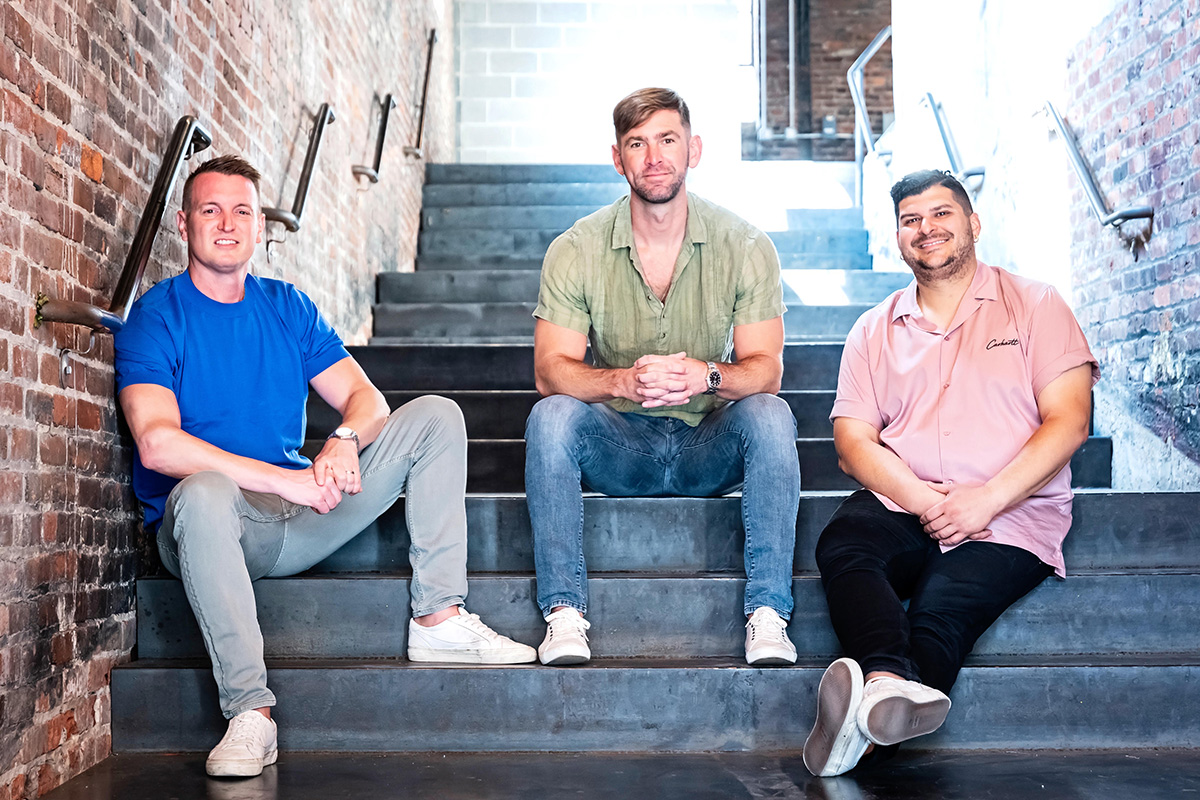
Inviting and intimate, and with that arresting visual representation of cocktail ingredients along the wall, Bar Betsie has brought its vibes-forward approach to a dynamic corner of bustling Union Market. The sophomore effort from owners JP Sabatier, Ralph Brabham, and Drew Porterfield, the trio took a different tack at Bar Betsie than at their other, older (though not by much) 14th Street bar, Jane Jane.
Bar Betsie allowed Sabatier, Brabham, and Porterfield to expand their creativity. The three first connected several years ago, when JP was manager of Maydan and Brabham and Porterfield owned Beau Thai and BKK Cookshop. Immediately hitting it off, they dreamed of opening a bar together and in 2021, it became a reality, in the form of Jane Jane.
Featuring a short list of craft, rotating cocktails and shareable bar snacks, Bar Betsie is Jane Jane’s “grittier, edgier” sister. While Jane is named after Porterfield’s mother, Bar Betsie gets its moniker from Sabatier’s mom.
“While Jane Jane is going on a field trip, Bar Betsie feels like you’re skipping school,” says Brabham. Bar Betsie brings more of a party vibe, he says. They landed in the Union Market neighborhood after thinking through what a second bar might feel like: not a carbon copy, but an atmosphere unique to its physical space and surroundings. Union Market and its transitional nature translates to the bar’s interiors: its mood lighting regardless of time of day, the crushed-velvet booths, the blood-red curved curtains to the bathrooms and kitchen, and the air of timeless mystique contrast to the elevated, buttoned-up cocktail bar that is Jane Jane. No one would bat an eye if a cabaret broke out on top of the bar. When in Bar Betsie, they say, it’s as if the warm lighting cuts through the vibe (and the stories) of 50-year-old cigarette smoke in the air.
They decided to make the cocktail menu more concise: 12 to 15 signature drinks at a time. Tequila and mezcal lead the program (again, a nod to mom Betsie, who prefers agave-based liquors). Drinks rotate seasonally (a cocktail flip is happening this month) and are developed committee-style to ensure that the whole team has input. The Clover Cult has been especially popular, with bluecoat gin, raspberry, vermouth, and lemon, but passed through a high-speed blender that whips the drink into a frenzy: it’s a “yummy, sweet cocktail with foam with a beautiful pink color,” says Brabham.
Beers feature locally brewed options, like from DC Brau and Atlas, alongside a wine program featuring skin-contact wines. And hewing to that party-forward vibe, there’s a host of shooters like the blackberry firing squad with tequila and lime.
As for the food, Bar Betsie has a true kitchen, allowing Sabatier to stretch his cheffy wings (he attended the Culinary Institute of America). Bar snacks are plentiful, including Buffalo chicken dip, a giant pretzel with beer cheese, and chicken tinga nachos that are “fucking delicious” says Raplh. “We’re aiming for food that’s snacky, salty, crunchy, and tasty to pair with the drinks.” Guest chefs show up on Sundays for kitchen cameos.
Since opening Bar Betsie, the trio has welcomed some additional acclaim. They’ve begun to set up activations with other bars; last month, they held a pop-up at new cocktail den Frank’s Wild Years, and there’s an upcoming collaboration with Death &Co, the famed bar in Blagden.
Bar Betsie occupies a unique place in the city’s pantheon of drinking destinations. All three owners are gay, and yet this (like Jane Jane) is not a gay bar.
“We never hide who we are,” say Brabham and Porterfield. “There’s always the recognition of the community we come from, and love, and want to celebrate.”
They want people to know who they are and what they stand for, showing that by being inclusive and open in their support of the community. They work to ensure that the staff is diverse and inclusive as well. They also dropped an exclusive Easter egg: behind the medicine-cabinet mirrors in the bathroom is a video screen playing footage of drag queens either getting ready, fixing, or removing makeup and wigs. “It’s a little IYKYK moment, something fun and true to who we are as a queer-celebrating and owned space,” they say.

Dawn Huggins reflects on year-long reign as Miss Adams Morgan

How Orville Peck healed his inner child through ‘Street Fighter (2026)’

DC Center celebrates a decade of its art gallery

Calendar: October 16-22

D.C. Mayor’s Office of LGBTQ Affairs celebrates 20th anniversary

‘Governments that attack LGBTQ+ rights learn from each other’
Center Arts Gallery celebration, auction to take place on Oct. 17

Horror genre has evolved into space to explore queer identity

Comings & Goings

‘Hidden in Plain Sight:’ The story of Odessa Madre
-

 Turkey4 days ago
‘Governments that attack LGBTQ+ rights learn from each other’
-
District of Columbia4 days ago
Center Arts Gallery celebration, auction to take place on Oct. 17
-
Arts & Entertainment5 days ago
Horror genre has evolved into space to explore queer identity
-
Local4 days ago
Comings & Goings