Sports
IOC’s new pro-LGBT policies called ‘a bunch of fluff’
Advocates skeptical after Kazakhstan, Beijing compete to host Olympics
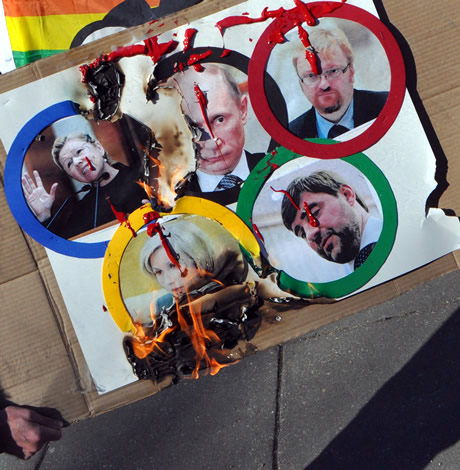
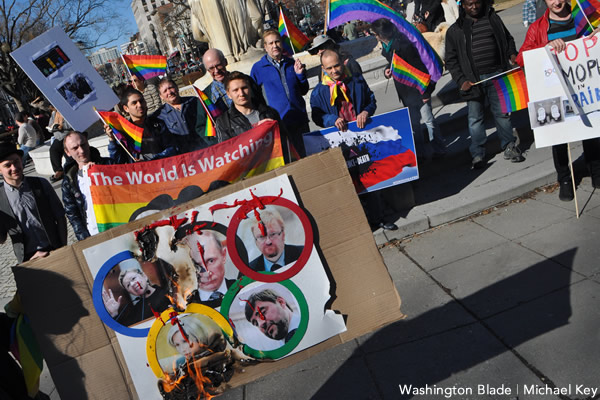
(Washington Blade photo by Michael Key)
Advocates remain largely skeptical of the International Olympic Committee’s efforts to strengthen its anti-discrimination provisions in the wake of the controversial 2014 Winter Olympics that took place in Russia against the backdrop of the country’s anti-LGBT rights record.
The IOC in December 2014 amended the Olympic Charter’s anti-discrimination clause known as Principle 6 to include sexual orientation. The organization, which is based in the Swiss city of Lausanne, a couple of months earlier added an anti-discrimination clause to its host city contract.
Human rights advocates sharply criticized the IOC’s decision late last month to award the 2022 Winter Olympics to Beijing. The Kazakh city of Almaty was a finalist to host the games, despite the fact that lawmakers in the former Soviet republic in February approved a bill that would ban the promotion of so-called gay propaganda.
Beijing won the games by a 44-40 vote margin.
“These policies are a bunch of fluff,” said Cyd Zeigler, Jr., co-founder of Outsports.com, an LGBT sports website, as he discussed the IOC’s expanded anti-discrimination provisions. “What matters is the cities they choose to be the hosts and the discriminatory countries that are allowed to participate. The Olympics just selected a country not just with huge LGBT issues, but human rights violations that are massive.”
“They almost picked a country that’s even worse,” he added.
A Russian-style bill that sought to ban the promotion of so-called propaganda to minors received final approval in the Kazakh Parliament shortly after IOC members visited the country in February. The Kazakhstan Constitutional Council in May struck down the measure, but a lawmaker has said he plans to reintroduce it.
A report that Human Rights Watch released a week before the IOC awarded the 2022 Winter Olympic games to Beijing notes the Kazakh propaganda bill “would have directly contravened” Principle 6 of the Olympic Charter.
“The IOC shouldn’t take its eye off the ball on ugly discrimination and human rights abuses for Olympic host contenders,” said Kyle Knight, a Human Rights Watch researcher who wrote the report, in a press release that announced it. “The IOC and the Kazakhstan government should publicly condemn anti-LGBT discrimination to signal that there is no place for homophobia in global sport or the countries that want to host Olympic games.”
Zhanar Sekerbayeva of the Kazakhstan Feminist Initiative earlier this month during a Skype interview from Amsterdam described the release of the Human Rights Watch report as a “very significant” moment.
Retired tennis player Martina Navratilova and other prominent sports figures in May expressed their opposition to Kazakhstan’s bid to host the 2022 Winter Olympics in a letter they wrote to IOC President Thomas Bach. Sekerbayeva noted Almaty-based advocates in an open letter to the IOC noted the former Soviet republic has what she described to the Blade as “a very bad homophobic situation.”
“We just tried to warn people in the committee that it may be a second Sochi,” Sekerbayeva told the Blade, referring to Kazakhstan’s bid to host the 2022 Winter Olympics. “Of course we didn’t want this.”
Chinese advocates with whom the Blade spoke were reluctant to discuss whether the Beijing games would have any impact on pro-LGBT efforts in their country.
“I have no idea about how the Winter Olympics will do anything to improve the overall human rights record,” said Xin “Iron” Ying, executive director of the Beijing LGBT Center. “We have never heard government officials talk about LGBT rights in China.”
“Maybe it will change in the next 10 years,” she added.
Another Chinese advocate said questions about whether the 2022 Winter Olympics would have a positive impact on the country’s LGBT rights movement “were too sensitive.”
Principle 6 to be applied in Beijing
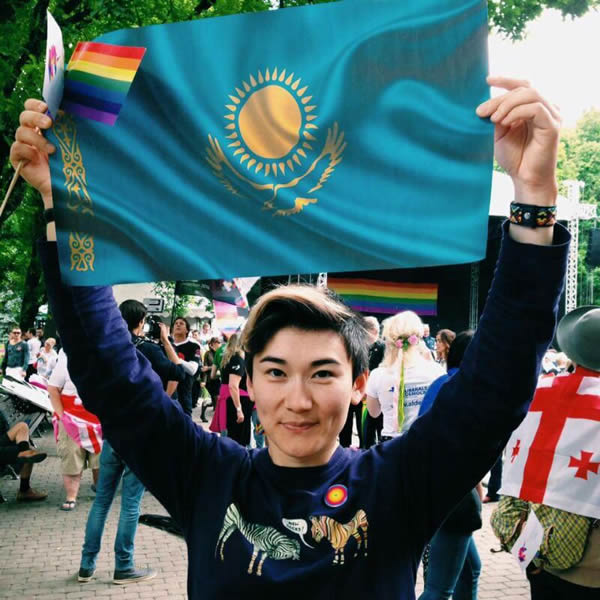
Zhanar Sekerbayeva of the Kazakhstan Feminist Initiative at EuroPride in Riga, Latvia, in June (Photo courtesy of Zhanar Sekerbayeva)
Russian President Vladimir Putin in June 2013 signed a broadly worded law that bans the promotion of so-called gay propaganda to minors.
LGBT rights advocates in the U.S. and elsewhere urged athletes to boycott the Sochi games over the controversial law, but Putin insisted that gays and lesbians attending the Olympics would not face discrimination. Bach said he had received repeated assurances from the Kremlin that LGBT athletes and spectators would be welcome in Russia.
Authorities in Moscow and St. Petersburg arrested more than a dozen people who protested the Kremlin’s LGBT rights record on the same day the games opened in Sochi. Russian police arrested Vladimir Luxuria, a transgender former Italian parliamentarian, twice in the Black Sea resort city after she publicly challenged the gay propaganda law during the Olympics.
Sekerbayeva noted to the Blade that the Kazakh government in its bid to host the 2022 Winter Olympics insisted that LGBT people did not face discrimination or harassment from the police in the former Soviet republic. She said people blamed LGBT rights advocates for the IOC’s decision to award the games to Beijing and not Almaty.
“We see how our society decided to blame us,” said Sekerbayeva.
Mark Adams, a spokesperson for the IOC, told the Blade in a statement that organizers of the 2022 Winter Olympics in Beijing have pledged that “for all games-related matters and for all participants, the Olympic Charter, including respect of Principle 6, will be fully applied.”
“The IOC is clear that sport is a human right and should be available to all regardless of race, sex or sexual orientation as stated in the Olympic Charter,” said Adams. “The games themselves should be open to all, free of discrimination, and that applies to spectators, officials, media and, of course, athletes. This has been upheld at all editions of the Olympic games.”
Maria von Känel, general manager of the Swiss Rainbow Families Association, told the Blade the decision to amend Principle 6 and add an anti-discrimination clause to the Olympics host city contracts shows that members of the IOC listened to LGBT rights advocates’ concerns in the wake of the Sochi games.
“It’s something powerful,” she said during a Skype interview from Zurich. “It’s visible, but I think it’s a start. Now we have to implement it.”
Sekerbayeva, like von Känel, welcomes the inclusion of sexual orientation in Principle 6. She nevertheless questioned why the IOC waited until after the Sochi games to amend the Olympic Charter’s anti-discrimination clause.
“I always wondered why we should wait for something very bad (to happen) and then we decide to have some decision,” said Sekerbayeva. “We did not want Sochi to go and have the Olympic games, but it did and we saw a lot of bad things, a lot of hate speech.”
“It’s better to (make these decisions) before such big events,” she added.
Zeigler made a similar point, noting Beijing hosted the 2008 Summer Olympics despite China’s human rights record.
“Forget about LGBT rights, they don’t care about human rights,” he told the Blade, referring to the IOC. “It’s irrelevant. They have a lengthy record to demonstrate that.”
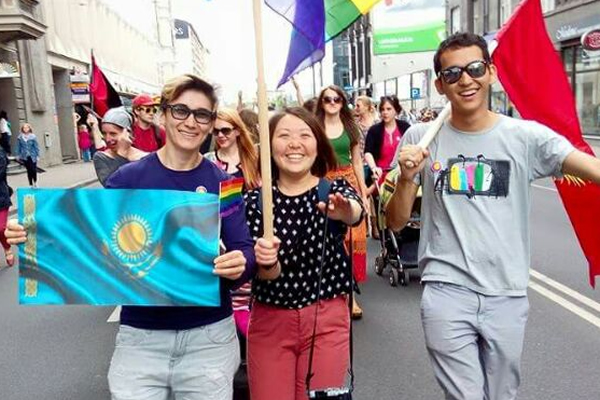
Zhanar Sekerbayeva of the Kazakhstan Feminist Initiative, left, and two LGBT rights advocates from Kyrgyzstan take part in EuroPride in Riga, Latvia, in June (Photo courtesy of Zhanar Sekerbayeva of the Kazakhstan Feminist Initiative)





Sports
New IOC policy bans trans women from Olympics
New regulation to be in effect at 2028 summer games in Los Angeles
The International Olympic Committee on Thursday announced it will not allow transgender women from competing in female events at the Olympics.
“For all disciplines on the Sports Program of an IOC event, including individual and team sports, eligibility for any Female Category is limited to biological females,” reads the new policy.
The policy states “eligibility for the Female Category is to be determined in the first instance by SRY Gene screening to detect the absence or presence of the SRY Gene.”
“On the basis of the scientific evidence, the IOC considers that the SRY (sex-determining Region Y) Gene is fixed throughout life and represents highly accurate evidence that an athlete has experienced or will experience male sex development,” it reads. “Furthermore, the IOC considers that SRY Gene screening via saliva, cheek swab or blood sample is unintrusive compared to other possible methods. Athletes who screen negative for the SRY gene permanently satisfy this policy’s eligibility criteria for competition in the Female Category.”
The policy states the test “will be a once-in-a-lifetime test” unless “there is reason to believe a negative reading is in error.”
The new regulation will be in place for the 2028 Summer Olympics in Los Angeles.
“I understand that this a very sensitive topic,” said IOC President Kirsty Coventry on Thursday in a video. “As a former athlete, I passionately believe in the rights of all Olympians to take part in fair competition.”
“The policy that we have announced is based on science and it has been led by medical experts with the best interests of athletes at its heart. The scientific evidence is very clear: male chromosomes give performance advances in sport that rely on strength, power, or endurance,” she added. “At the Olympic Games, even the smallest margins can be the difference between victory and defeat. So, it is absolutely clear that it would not be fair for biological males to compete in the female category. In addition, in some sports it would simply not be safe.”
(Video courtesy of the IOC)
Laurel Hubbard, a weightlifter from New Zealand, in 2021 became the first trans woman to compete at the Olympics.
Imane Khelif, an Algerian boxer, won a gold medal at the 2024 Summer Olympics in Paris. Khelif later sued JK Rowling and Elon Musk for cyberstalking after they questioned her gender identity.
Ellis Lundholm, a mogul skier from Sweden, this year became the first openly trans athlete to compete in any Winter Olympics when he participated in Milan Cortina Winter Olympics in Italy.
President Donald Trump in February 2025 issued an executive order that bans trans women and girls from female sports teams in the U.S.
The U.S. Olympic and Paralympic Committee last July banned trans women from competing in female sporting events. Republican lawmakers have demanded the IOC ban trans athletes from women’s athletic competitions.
“I’m grateful the Olympics finally embraced the common sense policy that women’s sports are for women, not for men,” said U.S. Sen. Tom Cotton (R-Ark.) on X.
An IOC spokesperson on Thursday referred the Washington Blade to the press release that announced the new policy.
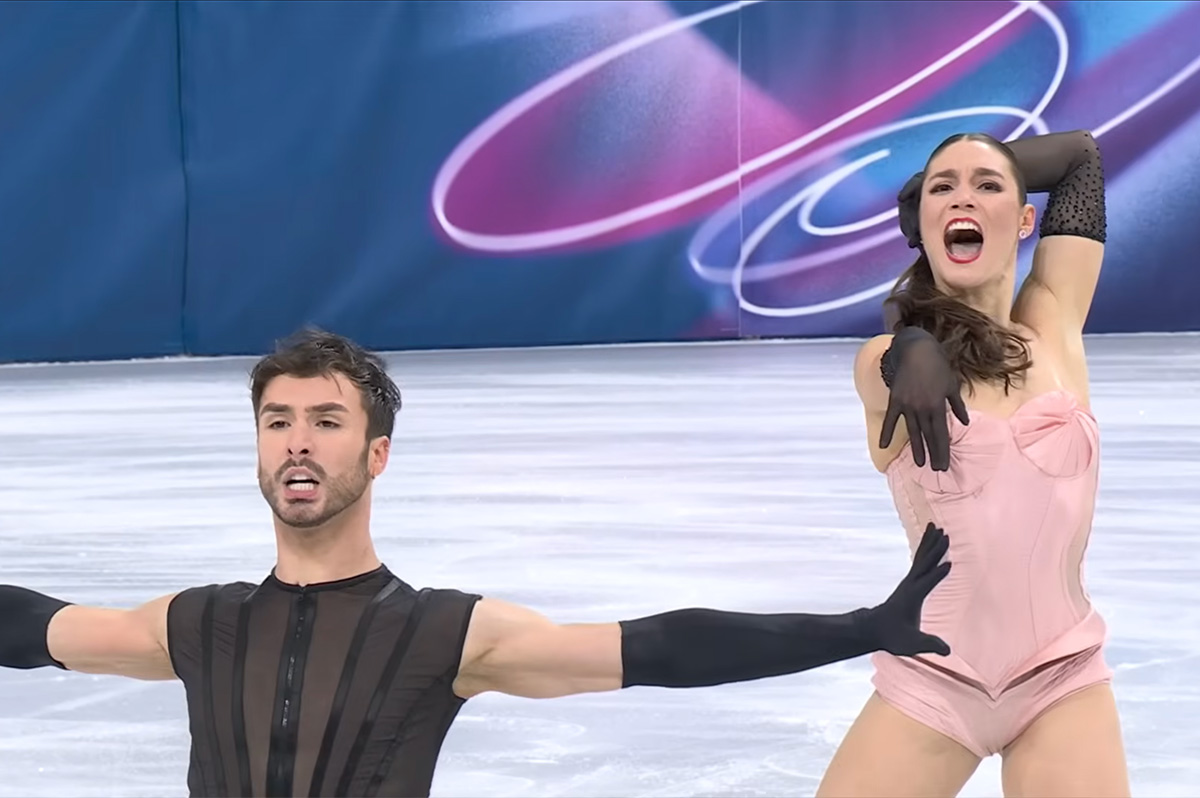
More than a dozen LGBTQ athletes won medals at the Milan Cortina Winter Olympics that ended on Sunday.
Cayla Barnes, Hilary Knight, and Alex Carpenter are LGBTQ members of the U.S. women’s hockey team that won a gold medal after they defeated Canada in overtime. Knight the day before the Feb. 19 match proposed to her girlfriend, Brittany Bowe, an Olympic speed skater.
French ice dancer Guillaume Cizeron, who is gay, and his partner Laurence Fournier Beaudry won gold. American alpine skier Breezy Johnson, who is bisexual, won gold in the women’s downhill. Amber Glenn, who identifies as bisexual and pansexual, was part of the American figure skating team that won gold in the team event.
Swiss freestyle skier Mathilde Gremaud, who is in a relationship with Vali Höll, an Austrian mountain biker, won gold in women’s freeski slopestyle.
Bruce Mouat, who is the captain of the British curling team that won a silver medal, is gay. Six members of the Canadian women’s hockey team — Emily Clark, Erin Ambrose, Emerance Maschmeyer, Brianne Jenner, Laura Stacey, and Marie-Philip Poulin — that won silver are LGBTQ.
Swedish freestyle skier Sandra Naeslund, who is a lesbian, won a bronze medal in ski cross.
Belgian speed skater Tineke den Dulk, who is bisexual, was part of her country’s mixed 2000-meter relay that won bronze. Canadian ice dancer Paul Poirier, who is gay, and his partner, Piper Gilles, won bronze.
Laura Zimmermann, who is queer, is a member of the Swiss women’s hockey team that won bronze when they defeated Sweden.
Outsports.com notes all of the LGBTQ Olympians who competed at the games and who medaled.
Sports
US wins Olympic gold medal in women’s hockey
Team captain Hilary Knight proposed to girlfriend on Wednesday
The U.S. women’s hockey team on Thursday won a gold medal at the Milan Cortina Winter Olympics.
Team USA defeated Canada 2-1 in overtime. The game took place a day after Team USA captain Hilary Knight proposed to her girlfriend, Brittany Bowe, an Olympic speed skater.
Cayla Barnes and Alex Carpenter — Knight’s teammates — are also LGBTQ. They are among the more than 40 openly LGBTQ athletes who are competing in the games.
The Olympics will end on Sunday.

A Sondheim masterpiece ‘Merrily’ rolls onto Netflix

ROSENSTEIN: Vote McDuffie for mayor of D.C.

New book celebrates 1970s dance music icons

Report: Grenell wants Russian ambassadorship