Arts & Entertainment
Karen Ocamb fired for being too old? LGBT activists fire back
Lesbian journalist ‘laid off’ in favor of Millennial content
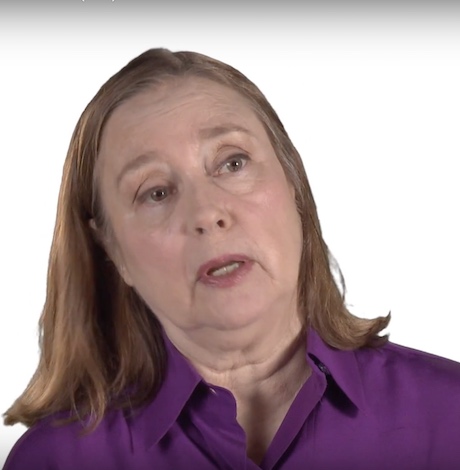
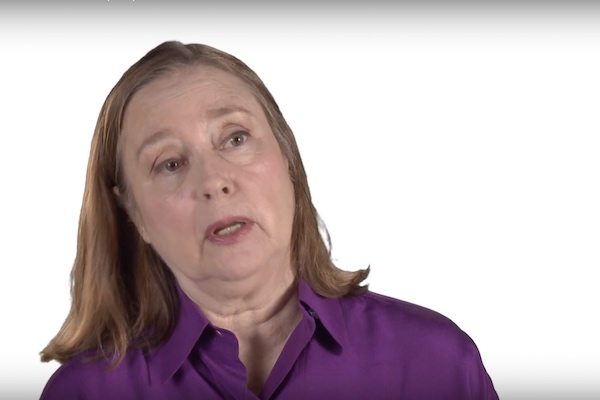
(Screenshot via YouTube)
Frontiers news editor Karen Ocamb was “laid off” back in February, after serving the LGBT journalism community since 1988, because she was considered too old, a new report suggests.
Bobby Blair, CEO of Multimedia Platforms International which owns Frontiers Magazine, a biweekly print and online magazine, intimated to PressPassQ the decision to fire Ocamb was based on age.
“Unfortunately, Karen fell where we realized we were moving toward a digital and Millennial audience, and we wanted to give the generation of Millennials a real shot at creating our content,” Blair told PressPassQ. “Karen did an incredible job and is very much missed. We would like to use her services in the future from time to time, if she would like to.”
Ocamb, 66, says the shift from print media to online changed the type of reporting she is known for.
“I’m an old-school journalist so it’s odd to have become a story,” Ocamb told PressPassQ. “However, I do recognize that my longevity and my institutional memory suggest that I might bring something unique and valuable to LGBT journalism. Nonetheless, no one is indispensable. I see my being laid off as a purely financial business decision, no matter what direction the new owners may choose.
“I think the kind of in-depth reporting I do changed fundamentally with confessional blogging, citizen journalism and short-attention-span tweeting of the news,” Ocamb continued. “In that glutted context, media outlets — LGBT and straight — are trying to get eyeballs, clicks, buzz in any way they can. I have been encouraged to see some trending back toward long form journalism — but who knows. It’s a rapidly changing media environment.”
LGBTQ Nation spoke to LGBT media figures about the impact of Ocamb’s dismissal who consider the decision ageist.
“It is astonishing to me that a publisher would say they basically fired someone so they could hire a younger person. How can we expect new generations to learn about our past if we do not have seasoned reporters producing content and educating younger LGBTQ people?” Mike Rogers, owner of Raw Story, told LGBTQ Nation.
“It’s very clear that Frontiers will not be the trusted publication we have known for years, and never benefit from Karen’s smarts and archival knowledge. It’s all about trust and expertise – which Karen Ocamb owns in giant measure,” Bob Witeck, president of Witeck Communications told LGBTQ Nation.



Movies
‘She’s the He’ brings gender-bending twist to teen comedy genre
Recreating raunchy nostalgia through a queer eye

No matter which generation you belong to, you have nostalgic memories of “teen comedy” movies from your adolescent years, even though you’re a little embarrassed about it today.
This is particularly true for the Gen X and Millennial crowd, who grew up with raunchy teen movies from “Fast Times at Ridgemont High” to “Porky’s” to “American Pie,” and have lived long enough to experience the shock of watching younger generations deploring them for the very raunchiness and toxic behavior that made them appealing to us in the first place.
These are exactly the type of films that are channelled in “She’s the He,” a SXSW hit and Independent Spirit Award nominee that hit VOD platforms on June 30, which strikes a nostalgic chord that conjures both the extreme “political incorrectness” and heartfelt sensitivity of the movies that inspired it – but updates the formula to add an edge that’s especially relevant in our current time.
In other words, it recreates the “raunchy teen comedy” genre through a queer eye (with a focus on the fine points of gender identity), and it’s every bit as messy, awkward, inappropriate, and “cringey” as you might hope it to be.
Written and directed by trans/nonbinary filmmaker Siobhan McCarthy, it’s a movie that might result in mixed feelings from many audiences over a story that centers on two cis-male high school seniors, Ethan (Misha Osherovich) and Alex (Nico Carney), who pretend to “come out” as trans together as a way to get close to girls.
Actually, it’s mostly Alex’s scheme to gain “access” to his crush, Sasha (Malia Pyles), and quell the rampant rumors that he and lifelong BFF Ethan are gay, reasoning that being “trans” would technically make them girls, too. It works, incredibly, in the beginning, but as a burgeoning friendship with nonbinary Forest (Tatiana Ringsby) distracts Alex from his rampant teen hormones, Ethan begins to realize that she really is trans, after all. What started out as a juvenile ploy suddenly becomes a complicated mess, and the two best friends must try to navigate their way out of it; unfortunately, Alex can’t stop scheming for sex and Ethan is struggling with the prospect of coming out to her transphobic mother (Suzanne Cryer), and needless to say, it puts a strain on their friendship. Meanwhile, there’s a whole locker room full of testosterone-charged jocks who want in on the scam themselves.
If all that sounds incredibly problematic to you, you’re not wrong – it definitely is. The entire premise, with all its nonconsensual shadiness and its hormone-driven gaslighting, seems like enough to trigger calls for “cancellation” from both sides of our divided social mediaverse; add to that the fact that the whole thing is played for laughs, as a crass and foul-mouthed sex farce about high school kids, and the movie opens itself up to an even greater level of pearl-clutching.
Like most of those teen raunch-fests of earlier generations, however, “She’s the He” is doing it all on purpose. McCarthy’s wildly “inappropriate” movie is not just some cheap sexploitation comedy, but a savagely campy assault on the attitudes and expectations of the very people that might be offended by it.
As McCarthy says in their director’s notes for the film, “By taking conservative talking points at face value and playing out their worst fears on screen, ‘She’s the He’ seeks to undermine and defang these harmful ideas while satirizing the very media that has fueled this fear-mongering.”
Among the most obvious “conservative talking points” their movie lampoons is the whole obsession around gender and bathrooms (it is, after all, a story about two cis males who essentially disguise themselves as trans so that they can get into the girl’s locker room), but there are a whole lot of others, too: the excessive concern over pronouns, the obsession over genitalia, the assumption that gender identity and sexuality are somehow synonymous, the sexed-up male fantasy of what happens between girls when they’re behind closed doors – all the typical exaggerated tropes are there, and exaggerated even further for full effect. In fact, it’s the film’s not-so-subtle subversion of the “male gaze” through a queer and feminist lens that might be its most satisfying flourish, underscoring the already absurd parody provided by Alex’s single-minded (and hilariously “incel”-ish) prioritization of his sex drive above all other considerations.
Yet what really raises “She’s the He” above the level of the crude humor it deploys has nothing to do with making fun of people, nor is it even about pushing against uptight social boundaries around sexual and/or gender expression; all the irreverent zaniness is wrapped around a deeper story about friendship, love, and growth, a journey of self-discovery and finding the courage to embrace who you really are. And at the center of it is a transgender nonbinary actor in the leading role – in itself a bold challenge to rigid expectations – with not just the talent, but the grace, nuance, and bravery to play it with full authenticity. Osherovich earned a well-deserved nomination for Best Breakthrough Performance at this year’s Independent Spirit Awards, and they’re the heart of the film.
In fact, it might be McCarthy’s deliberate choice to cast their film entirely with actors who identified in some way as queer that fuels its transgressive energy and keeps it feeling “real” even when it’s at its most ludicrously excessive. They make for a great ensemble of players, but naturally there are standouts: co-star Carney (who is also a successful standup comic, known for mining his own transmasculine experience for laughs) does a great job as Alex, endearingly unconcerned and frequently clueless about his shortcomings as he single-mindedly pursues the loss of his virginity, and his chemistry with Oserovich makes them a winning pair whenever they share the screen; Cryer brings a dose of needed maturity to the mix, while also conveying the struggle of a mom trying to navigate her child’s coming out; Pyles and Ringsby both bring the intelligence and depth to undercut our expectations of their characters; comedian Aparna Nancherla earns plenty of chuckles as a teacher haplessly trying to keep up with all the changing identities (and pronoun protocols) of her students; and knowing that the school’s entire male sports team is played by transmasculine actors adds a delicious flavor to the movie’s overall parody of conventional gender presentation that helps make its climactic “locker room showdown” scene all the more hilarious.
It’s worth noting that “She’s the He” is targeted mainly for Gen Z audiences – it’s their generation’s turn to put their stamp on the genre, after all – but older audiences needn’t feel left out; there’s plenty here that should feel universal enough for any age to enjoy; and if you’re afraid it will be too extreme, rest assured: the most shocking thing about it is that it might be the sweetest teen sex comedy you’ll ever see.
Considering they’ve been making them for decades, that’s saying a lot.
Nominations for the 78th Primetime Emmy Awards are here — and they are so, so queer!
With the year we’ve seen in LGBTQ media, this isn’t very surprising; whether it be jaw-dropping new series or the ends of fan-favorite classics, every month offered a new project or performer for queer audiences to fall in love with. There were some pleasant surprises — and shocking snubs — with these nominations that have left the many TV fanatics in our community excited, hopeful that their favorite actor or series can take home at least one award at this year’s ceremony.
Will this be the gayest Primetime Emmy Awards that the Television Academy has ever seen? Let’s take a look at some of the biggest, absolutely queerest nominations for this year and find out!
Leading the pack (and making history) for queer television is “Hacks,” with the final season of this HBO Max comedy earning a massive 25 nominations — breaking “Schitt’s Creek”’s record for the maximum number of nominations for a comedy series’ final season! Following an established comedienne (Jean Smart) and her bisexual, thoroughly Gen Z comedy partner (Hannah Einbinder), the series has been applauded for not only its portrayals of queer identity but also for how it showcases the generational divide in a way anyone can laugh at. Smart and Einbinder are both nominated for Outstanding Lead Actress and Outstanding Supporting Actress, respectively, with their fellow performers Meg Stalter, Paul W. Downs, Kaitlin Olson, and more also earning nominations for their time on the show. These, along with the numerous nominations for “Hacks”’ writing, directing, and all-around production, make it one of the most nominated programs at this year’s Emmys.
And this isn’t the only sapphic program being celebrated at this year’s awards! When “Pluribus” premiered, it took the (thankfully non-hive-minded) world by storm; it follows a lesbian author (Rhea Seehorn) who becomes one of the only people left with autonomy when an alien virus takes over the Earth. Seehorn — who offers an impeccably bitter performance as protagonist Carol Sturka — is being honored with an Outstanding Lead Actress nomination, with the show itself receiving 18 nominations overall in categories ranging from Outstanding Supporting Actor to Casting for a Drama. One extremely fun, thoroughly queer fact about these nominees: the actresses behind both of Carol’s onscreen love interests, Karolina Wydra and Miriam Shor, have earned their first Emmy nominations ever due to their work on the series!
While these queer TV shows are earning massive praise, the Emmys also made sure to honor the LGBTQ+ and ally celebrities who’ve graced our screens this year.
When he isn’t exciting audiences all over the world in “Heated Rivalry,” Connor Storie was making viewers laugh on “Saturday Night Live,” a hosting spot which earned him a nomination for Guest Actor in a Comedy. And though Jeff Hiller (who is coming off a 2025 Emmy win for “Somebody, Somewhere”) has proven to be one of the best parts of new hit “Widow’s Bay,” it was his turn as a mind-controlled, bicycle-short-wearing drone in “Pluribus” that earned the openly gay actor an Outstanding Guest Actor in a Drama nomination. Along with these, the always immaculate Zendaya received a nomination for Outstanding Lead Actress for her role as queer recovering drug addict Rue in “Euphoria,” and long-time ally Claire Danes will be competing for Lead Actress in a Limited Series for her role as troubled lesbian writer Aggie Wiggs in “The Beast in Me.”
When it comes to scripted television, the 2026 Emmy Nominations are filled with nominations for queer performers and stories alike. But, to the shock of nobody who loves nothing more than a good confessional and shocking table flip, there was one category where queer performers absolutely dominated: Reality Television.
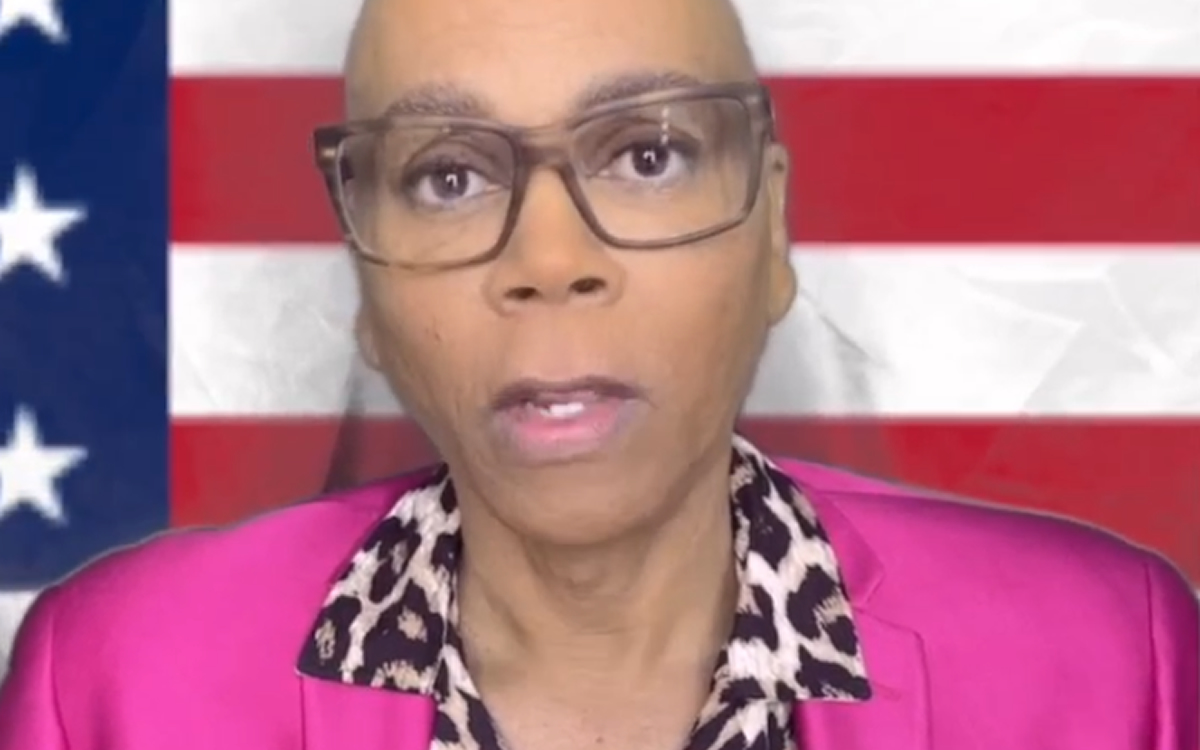
The Outstanding Host for a Reality/Competition Program is one of this year’s most competitive categories — and not just because four of the five nominees are queer! The hilarious RuPaul Charles and Alan Cumming have both received nominations in this category, with their shows “RuPaul’s Drag Race” and “The Traitors” also being nominated for Best Reality Competition Program. They’re joined by lesbian heartthrob Kristen Kish, who, for the third year in a row, has been nominated for Outstanding Host right alongside her series, “Top Chef,” for Best Reality Program!
And, finally, making her debut in the world of Emmy nominations is Ariana Madix, who just earned her first nomination for Outstanding Host thanks to her work on “Love Island USA”! An alum of reality TV herself, her guiding sexy singles along the path to love has helped this reality series take the country by storm. An openly bisexual host — who has stated that she wants her own show to be more queer — she joins this amazing group of leaders helping to innovate this genre today.
While these are some of the biggest LGBTQ+ nominees at this year’s Emmys, they don’t include the countless queerr editors, writers, costume designers, and more who have also been nominated in the ceremony’s 100+ categories. They all deserve a huge round of applause for their tireless work this year, and each of them should remember that they’ve each won just by being nominated.
And even if they don’t take home that illustrious trophy, in the words of a particular Queen of Drag who’s nominated for Outstanding Reality Host, always remember: losing is the new winning!
You can watch the 78th Primetime Emmy Awards on Sept. 14 at 8 p.m. EST on NBC and Peacock.
a&e features
Mr. Henry’s celebrates 60 years of proud inclusivity
Capitol Hill staple remains ‘a caring community’
America’s 250th isn’t the only milestone birthday D.C. is celebrating this year.
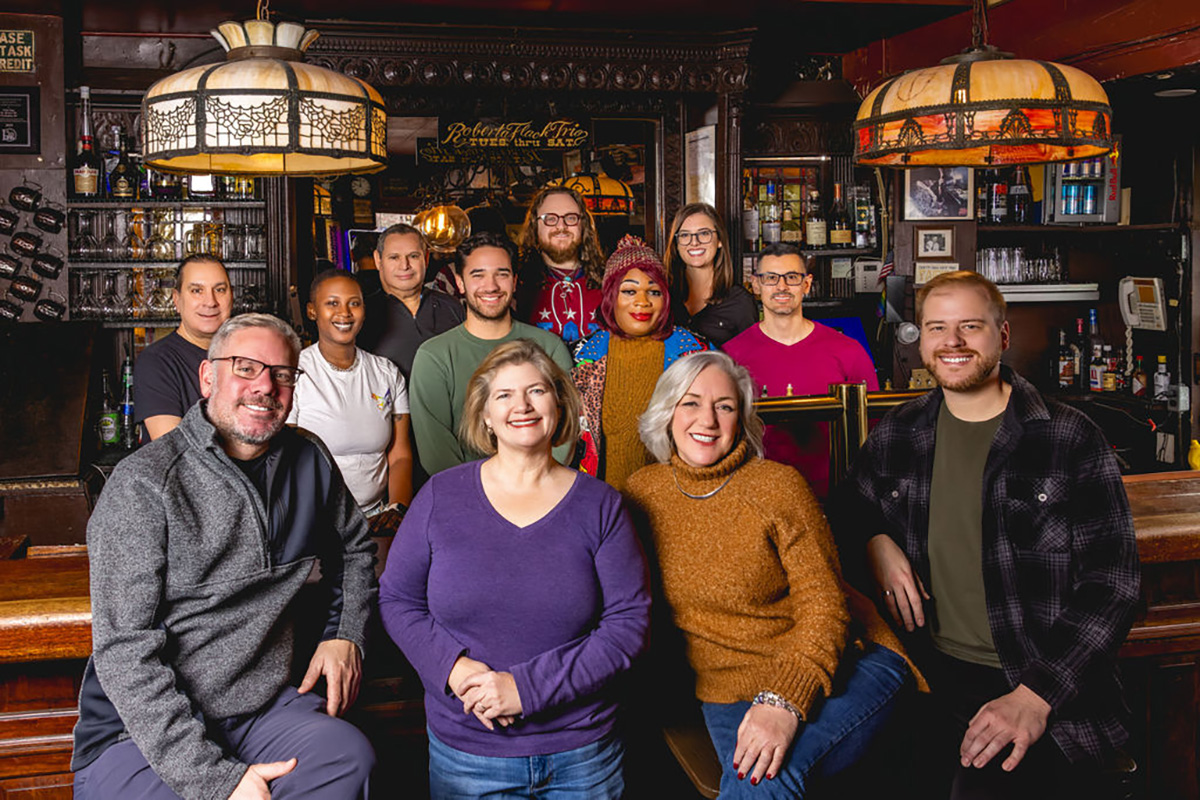
Beloved D.C. restaurant Mr. Henry’s, that Capitol Hill staple, celebrates its Diamond Jubilee all year long. Named for its original owner Henry Yaffe, the restaurant opened on a warm day 60 years ago in the summer of 1966 and has never looked back.
Yaffe took over what was then a country western restaurant, renovated the interior to his liking, and created an institution. Yet Yaffe had another goal. As a gay man, “he created Mr. Henry’s to be a place where everyone felt welcome — not easy in 1966 — and he succeeded,” says current owner Mary Quillian.
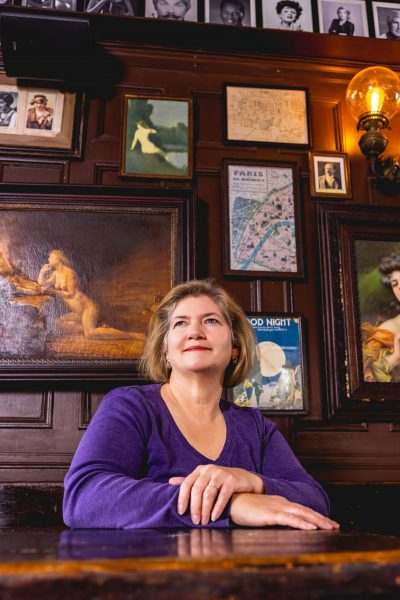
“Mr. Henry’s has long been a place the LGBTQ community has supported because they felt and still feel welcomed,” says Quillian. Even in the current administration, “the gay community and the diversity-minded community continue to come.”
Since then, Mr. Henry’s has changed hands, opened and closed its second floor, welcomed famed musical acts, and played host to politicians, date nights, breakups, and birthdays. But it still feels like home (and has a note in the National Trust for Historic Preservation) at 601 Pennsylvania Ave., S.E.
Its wood-paneled, Victorian-inspired art-filled décor in the downstairs dining room and bar serves American pub fare for lunch and dinner daily, with brunch on weekends (and a dog-friendly patio). Upstairs, Mr. Henry’s hosts live jazz performances and special events most nights, continuing a musical tradition that has defined the venue for decades. That upstairs bar has played host to names like Roberta Flack and Woody Allen.
Musician Kevin Cordt said that, “Mr. Henry’s has been a part of my life for more than 30 years. I started as a customer, then became a bartender and server, and now I have the good fortune to play trumpet at one of the best live music venues in Washington, D.C.”
Aaron Myers, executive director of the D.C. Commission on the Arts and Humanities, is also a supporter. “Not many cities can sport venues that have consistently served the community in the space of culture for more than 50 years, let alone can brag as the birthplace of culture defining talent.”
From the start, Yaffe promoted a rare yet celebrated combination of locals’ bar and soulful nightlife venue. Mr. Henry’s has attracted a diverse crowd at a time when such spaces were – and perhaps still are – uncommon, a diversity that is credited with helping protect the pub during the 1968 D.C. riots.
Longtime customer Evelyn Branic said, “Mr. Henry’s has been my ‘Cheers’ hangout since my wife and I moved to the Hill in 1987. I’ve experienced many iconic moments meeting politicians, reporters, civic activists, and neighbors engaging in spirited conversations. Whether political, LGBTQ, historians, neighbors, or out-of-towners, everyone could find a special place to be greeted as a friend.”
Its welcoming tables come dabbed with a bit of tea: In 1971, in a moment that has since become part of Capitol Hill lore, Yaffe lost the pub in a poker game to Larry Quillian. The Quillian family, recognizing the special role Mr. Henry’s played in the neighborhood, took over ownership, and committed to preserving its spirit. Today, Larry’s daughter Mary owns the bar, having given it a bit of a facelift for the bar’s 50th birthday, bringing in new tables and some fresh menu items.
For example, the menu has some of those dishes that regulars would riot if they disappeared. The Reuben and the hamburgers, the chili and in-house roasted turkey have never departed the menu. Dishes do evolve, says Quillen: they added wings about two decades ago.
In 2026, the restaurant is hosting monthly ticketed “decades” parties, celebrating each of the 10-year periods the restaurant’s been open, plus there were specials in June for Pride. The official 60th anniversary gala takes place Aug. 29, featuring performers, beverages, timeless favorite foods, swag – and the unveiling of a new cocktail.
Inclusive, eccentric, eclectic, Mr. Henry’s is looking forward to maintaining its centrality to diverse crowds in Capitol Hill. Battling inflation, rising menu prices, changing tastes, and thin margins, Quillian says that Mr. Henry’s has — and will always be — “a caring community for so many different folks. And THAT is why I am committed to keeping us going. Society needs places like Mr. Henry’s, now more than ever.”

Gay Fla. Democrat Elijah Manley sees opportunity in Trump’s second term

Ron Singer, owner of popular Mount Vernon gay bar Leon’s, dies

Egyptian authorities refuse to allow gay cruise to dock in country

‘She’s the He’ brings gender-bending twist to teen comedy genre

Supreme Court ruling on trans athletes is a public health story

‘My Favorite Sociopath’ debuts at Shepherdstown’s CATF

Under-the-radar Delaware beach towns smart buyers are targeting

In Trump’s divided America, Michael Weinstein’s AHF responds

Turkish authorities refuse to allow gay cruise to dock in country

When a church fears the rainbow
-

 Theater5 days ago
‘My Favorite Sociopath’ debuts at Shepherdstown’s CATF
-
Real Estate5 days ago
Under-the-radar Delaware beach towns smart buyers are targeting
-
Politics4 days ago
In Trump’s divided America, Michael Weinstein’s AHF responds
-
Turkey4 days ago
Turkish authorities refuse to allow gay cruise to dock in country