Galleries
Baltimore Museum exhibit ‘Queer Interiors’ features trans-curated domestic depiction
Local artists present queer bedroom space featuring movie quilt; it runs through Aug. at BMA
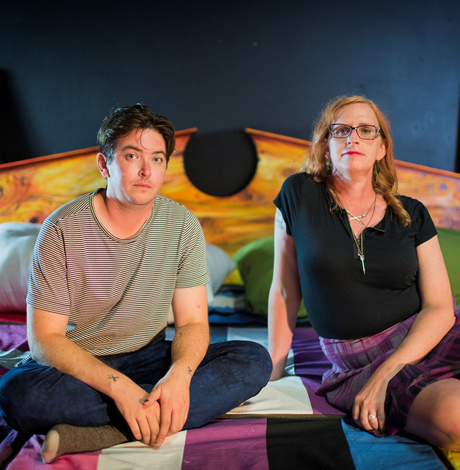
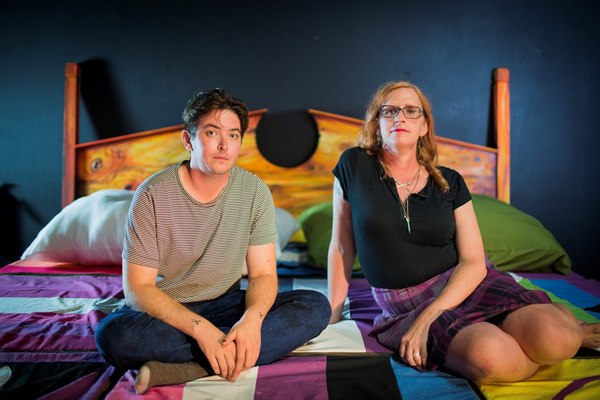
Jaimes Mayhew, left, and Rahne Alexander. (Photo by Jill Fannon; courtesy BMA)
Bedrooms can be private spaces, but “Queer Interiors,” an exhibit at the Baltimore Museum of Art (10 Art Museum Dr., Baltimore), has opened one bedroom to the public that intimately explores the LGBT community.
“Queer Interiors,” which runs through August, is part of BMA’s Commons Collaboration series centered on the theme “Imagining Home.” Transgender artists Jaimes Mayhew and Rahne Alexander heard about the project and decided to create a bedroom centered on queerness.
The exhibit features “Identity Shelves,” a display that holds personal artifacts from various people’s homes, and the “LGBTQUI Home Movie Quilt,” that features a video project of changing photographs of individuals from Baltimore’s LGBT community. The movie quilt is designed similarly to Baltimore’s album quilts and the iconic AIDS Quilt. The most eye-catching piece is a giant bed with a wooden headboard that visitors are invited to sit on.
The room is designed to look like an everyday bedroom and for Alexander, the concept of ordinary was her inspiration for the exhibit, which was originally named “Queer Quotidian,” a word meaning ordinary.
“For many years I worked in a retail environment where, for a lot of people, I was the first or only trans person they had real interactions with,” Alexander says. “As that happened, it became clear to me that was one of the better forms of activism I had ever engaged in. Just providing that kind of connection, a very ordinary and mundane kind of thing. There’s a huge power in that. So that’s something that really fueled our proposal.”
As for why the pair chose a bedroom as the focal point, Mayhew says its a place of contention for the LGBT community.
“Rahn and I started talking about what it means to queer a home,” Mayhew says. “The bedroom obviously is where a lot of laws are made about queer bodies and what we are and aren’t allowed to do.”
Alexander and Mayhew pitched the idea to BMA in February, 2016 and their project was accepted by April. With funding from the museum, they transformed the space near the Joseph Education Center into a queer bedroom.
The “LGBTQUI Home Movie Quilt” was one of the more collaborative pieces in the exhibit. Alexander and Mayhew asked for submissions from the Baltimore community to create the quilt. Alexander says they wanted to take advantage of technology to create an exhibit that differentiated from other queer exhibits.
“Everything that is in this exhibit is modular from the identity shift shelf, to the quilt to the bed,” Alexander says. “So the idea was to try to create a more broadband depiction than we’ve seen before to make the museum a more queer-friendly space.”
Alexander says she’s received feedback from members of the LGBT community who have said the exhibit “resonates with me in a phenomenal and fundamental way.” Mayhews thinks LGBT people may not learn anything new about their community, since they are a part of it, but hopes they will benefit from seeing an LGBT exhibit in the museum.
For Mayhews, it’s also important for the non-LGBT community to get educated when they visit.
“If you’re queer-identified and savvy of some of the language than you may or may not learn something from the exhibit but might walk away feeling represented in some kind of way,” Mayhew says. “But I also think it’s really important for those visitors who are not LGBT- identified to learn something from it and feel more depth and understanding of every day life of (LGBT) people.”
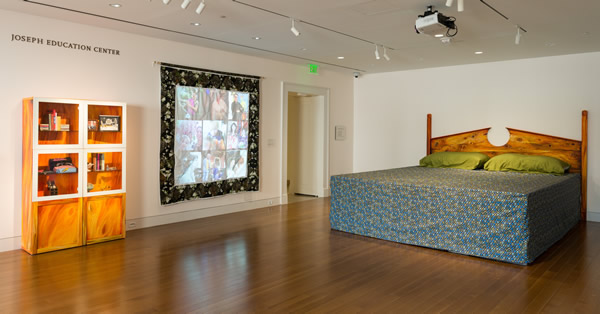
The ‘Queer Interiors’ exhibit at the Baltimore Museum of Art. (Photo courtesy BMA)




Galleries
BMA celebrates enduring influence of Henri Matisse
Exhibit features iconic works juxtaposed with gay artist’s paintings inspired by French legend
The Baltimore Museum of Art is on a roll.
After landing the coveted Amy Sherald “American Sublime” exhibit (through April 5) when the National Portrait Gallery attempted to censor her work, the BMA is debuting a breathtaking and thought-provoking new exhibit, “To See This Light Again” featuring master works by Henri Matisse paired with new paintings by Louis Fratino, who is inspired by the French modernist legend.
Fratino, who’s gay, was born in Annapolis and studied at Baltimore’s Maryland Institute College of Art. As an art student, he found himself spending lots of time in the BMA’s Matisse galleries, the largest collection of his works in the world, encompassing more than 1,600 paintings, drawings, and illustrations. At just 33, Fratino has enjoyed a “meteoric” rise in the art world, according to BMA Director Asma Naeem, who introduced Fratino at an event previewing the exhibit last week. This is Fratino’s first major U.S. exhibition, but he was featured in the 2024 Venice Biennale and his paintings can be found at the Rhode Island School of Design Museum, the Whitney Museum of American Art, and elsewhere.
The exhibit aims to explore Matisse’s lasting influence by juxtaposing his works with Fratino’s.
“It’s the idea that art manifests a kind of attention or a vision for your life, that it can be a beautiful life despite certain circumstances that may be happening around you,” Fratino said in a statement released by the BMA. “In Matisse’s case, he lived through the First and Second World Wars. Painting can confirm that life is beautiful and that it’s worth looking at.”
The influences are apparent, from the use of light and pattern to the choice to focus on everyday objects and subjects. And the exhibit is unabashedly queer with male couples depicted in a couple of paintings. Fratino told the Blade that as an out gay man, it was important to embrace that visibility.
He describes a “joy of looking” at the male form, just as Matisse portrayed female figures that often celebrated the tradition of painting nudes.
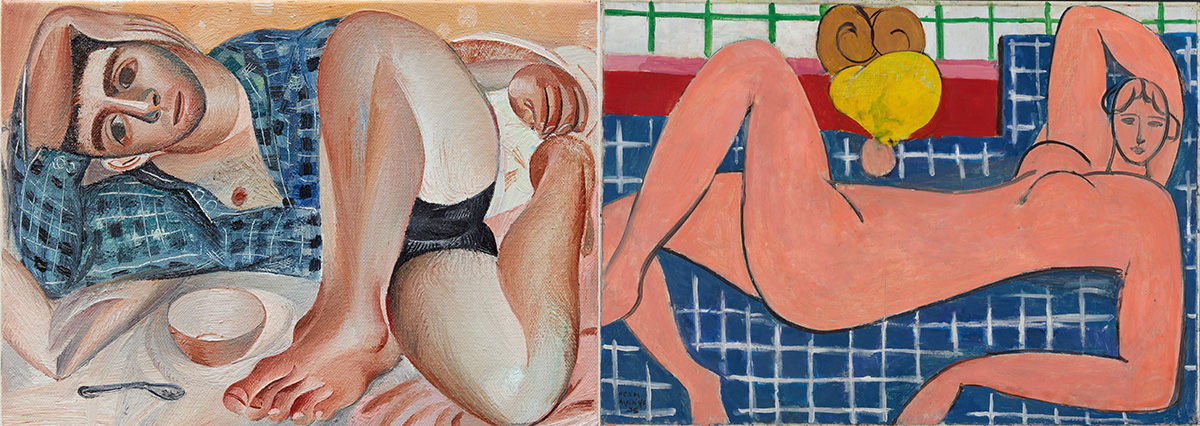
In “Tom,” Fratino captured his subject in casual repose that includes a bowl and spoon in the foreground. It is presented alongside Matisse’s iconic “Large Reclining Nude.” Tom’s checkered shirt echoes the blue and white grid background of the Matisse work and both figures are holding casual, relaxed poses.
“Fratino and Matisse: To See This Light Again” runs through Sept. 6 at the Baltimore Museum of Art (artbma.org.)
For Matisse lovers, the BMA has another exhibit debuting March 29 titled, “Matisse in Vence: The Stations of the Cross” featuring more than 80 drawings revealing how the artist “shaped his late‑career masterpiece, the Stations of the Cross mural, for the Chapel of the Rosary in Vence, France.”
Galleries
Blockbuster Amy Sherald exhibit opens in Baltimore
Artist has emerged as LGBTQ hero after refusing to cave to censorship
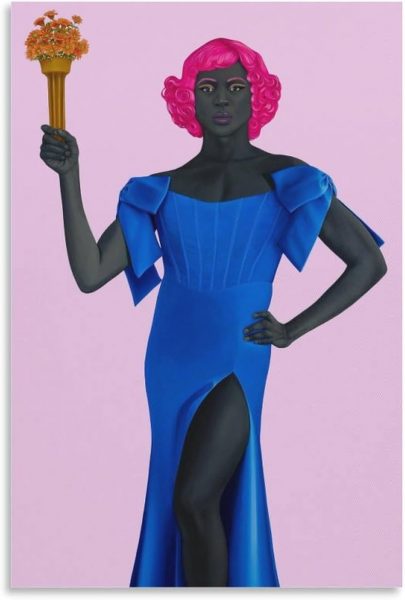
Artist Amy Sherald has emerged as a hero in the LGBTQ community following her controversial decision to pull her blockbuster new exhibit “American Sublime” from the National Portrait Gallery in D.C. and move it to Baltimore after Smithsonian officials sought to censor her painting “Trans Forming Liberty.”
That painting depicts transgender model Arewà Basit as the Statue of Liberty, which conflicts with President Trump’s war on DEI and his efforts to erase transgender people from the American narrative.
Sherald issued a statement over the summer that the Smithsonian had “concerns” about the painting. “These concerns led to discussions about removing the work from the exhibition,” Sherald said in the statement. “While no single person is to blame, it is clear that institutional fear shaped by a broader climate of political hostility toward trans lives played a role.”
She said the Smithsonian had proposed including a video in the exhibit that would “contextualize” the painting and likely include anti-trans views. It was then she announced her decision to pull the exhibit entirely and move it to the Baltimore Museum of Art, a major coup for the museum.
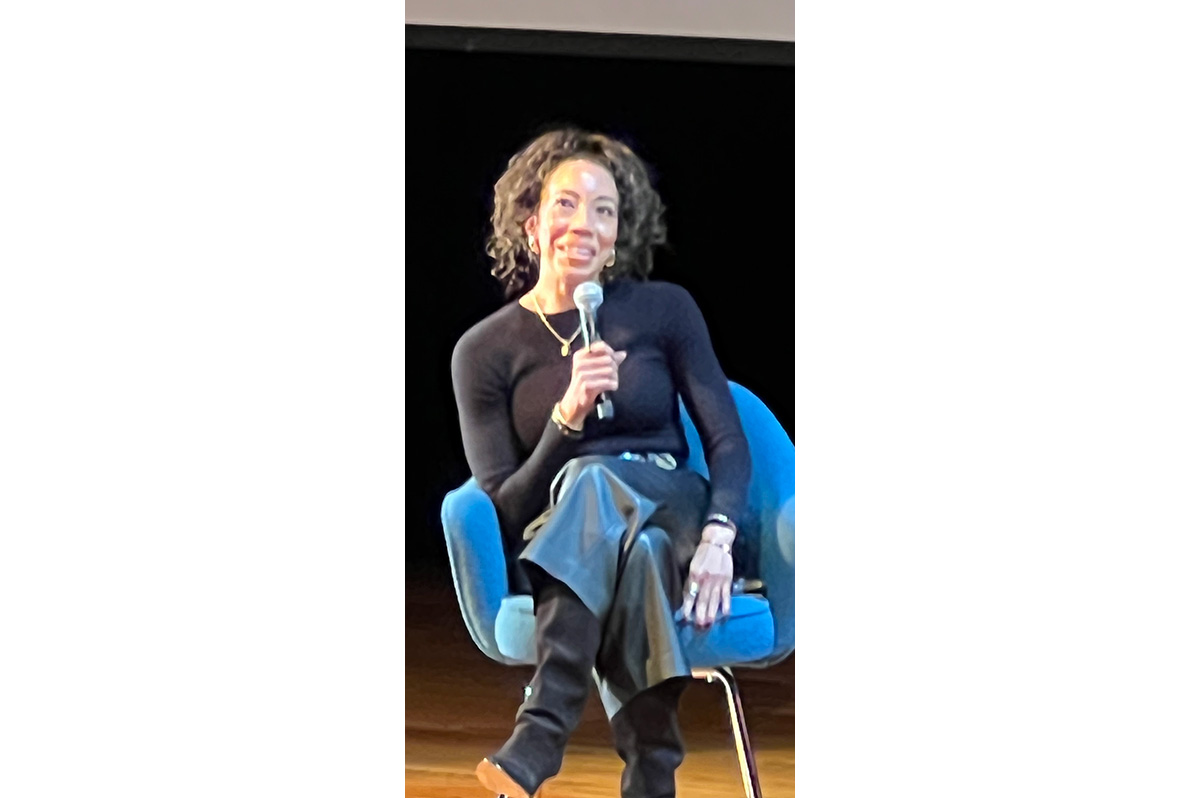
Sherald studied at Baltimore’s Maryland Institute College of Art, which she described as “the best decision I ever made,” during a sold out Q&A on Nov. 2 moderated by the BMA’s director, Asma Naeem. Unfortunately, the subject of censorship and the last-minute decision to move the exhibit to the BMA didn’t come up during the discussion. But Naeem rightly described Sherald as “one of the most important painters of our time.”
“American Sublime,” billed as a mid-career retrospective, features 38 of Sherald’s paintings, including her portraits of former first lady Michelle Obama and Breonna Taylor, along with “Trans Forming Liberty.”
Sherald and Naeem joked throughout the breezy hour-long conversation and reminisced about spending time at MICA and in Baltimore. The artist said she still finds inspiration and even potential portrait subjects in grocery stores and on the streets of Baltimore and New York, where she now lives. Many of the portraits in the exhibit were painted in Baltimore.
Although Sherald and Naeem kept it light and avoided discussing censorship, the one serious and non-negotiable subject Sherald addressed was the paramount importance of integrity. Her insistence on the integrity of the work and the inclusion of trans representation in the exhibit brought her to the difficult decision to pull her work from the Smithsonian. It was a bold and inspiring move in a time when so many public figures, CEOs, and politicians have shown a disappointing and dangerous lack of integrity in the face of an administration that seeks to subvert the Constitution and erode the First Amendment. Sherald stands as a powerful symbol of resistance and, yes, integrity in these dark times. Her refusal to cave to authoritarian impulses and blatant censorship will be remembered for years to come. The nation’s top tech CEOs and congressional leaders should see this exhibit and learn from her brave example.
“American Sublime” is open now through April 5 at the Baltimore Museum of Art and requires a paid ticket for entry. (Admission is free on Thursday evenings and free on Jan. 15 and Feb. 19. The museum is closed Mondays and Tuesdays.) For more information and tickets visit artbma.org.
Galleries
New gallery opening in D.C.
Dandelion Collective exhibition features works by John Von Sauerhoff

Dandelion Collective, a new space in Columbia Heights for LGBTQ healers and artists, will open on Saturday, Aug. 24 with an opening reception at 2 p.m. at 3417 14th St., N.W.
This first exhibition features the incredible, ethereal artwork of John Von Sauerhoff. His stunning pop surrealist paintings will transport you to another world.
More information is available at dandelioncollectivedc.com/art-gallery.

Over 2,000 turn out for Hands Around the Kennedy Center protest

Furries take over the Metro

A roundup of fall events not to be missed

Activists protest outside Turkish Embassy in D.C.

Republican challenger misgenders McBride during forum, forced to leave

Acclaimed Chef Patrick O’Connell’s memoir reveals the arc of a life well lived

78th annual Emmy Awards recapped

LGBTQ issues, attacks on Democrats dominate unusual RNC midterm convention

Hands Off the Arts to form ‘human chain’ around Kennedy Center

Advocate, Out parent company adds Trump supporter to board, prompting outrage
-

 a&e features5 days ago
Acclaimed Chef Patrick O’Connell’s memoir reveals the arc of a life well lived
-
Arts & Entertainment4 days ago
78th annual Emmy Awards recapped
-
2026 Midterm Elections5 days ago
LGBTQ issues, attacks on Democrats dominate unusual RNC midterm convention
-
District of Columbia5 days ago
Hands Off the Arts to form ‘human chain’ around Kennedy Center