Advice
Wedding attire debate triggers chain reaction of resentment
‘I don’t know how we lost our ability to agree and just get along’
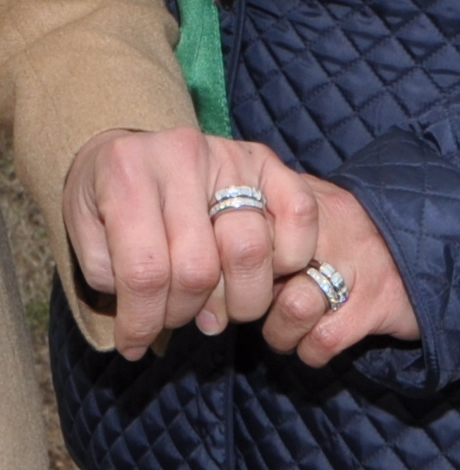

Michael,
My wife and I got married last August. We were such a happy couple until the wedding. Our friends used to say they were going to get diabetes from being around us because we were so gooey. Now we are arguing way too often.
And it really started with the wedding, over a ridiculous disagreement. Were we both going to wear white dresses? Jen had her heart set on that, but I thought it was a dumb lesbian cliché and wore a tux (which I guess is another dumb lesbian cliché but more my style). I felt Jen’s anger and disappointment during the whole wedding.
Since then all sorts of things set us off. What route to take when we visit her parents? Can you please turn down the TV volume? Whose turn it is to change the cat litter? Please don’t look at your phone when I’m talking to you. How should we celebrate our first anniversary (which we don’t actually feel like doing anymore)? Why do you have that tone in your voice?
The problem is, sometimes I do have a tone in my voice. She’ll seem angry at me and then I’m on edge and angry at her. She’ll seem pissed off and I get fed up and don’t want to keep being conciliatory. Probably if you asked her, she’d say I start it. And sometimes I’m sure I do. I don’t want to be angry, but I don’t want to always have to say “yes” to keep the peace.
I think we’re both miserable that things are going so badly after less than a year. I don’t know how we lost our ability to agree and just get along. We used to always see things the same way and now it sometimes feels like we hate each other.
I’m beginning to wonder if this relationship is doomed, though everything seemed so wonderful at the beginning. Do other couples go through things like this and survive? If so, how do we get to the other side?
Michael replies:
Most couples are really gooey when they first get together. The idyll of new love renders us starry-eyed, gives us butterflies and leaves us feeling so blissful that we are happy to think everything the other person says and does is wonderful. We feel super connected and it’s easy to be on the same page all the time.
This gooey period is a great stage, because it creates a loving foundation on which to build a relationship.
But it’s just a stage. After a while, you find that you can’t always agree. You’re two different people and sometimes you’re going to have very different opinions. This is where you two now are.
Your anger at each other is a waste of energy. If you want to stay happily married, you should instead strive to embrace, with some humor, that you will sometimes disagree with each other over matters both small and profound.
This will require giving up the fantasy that you should always be able to agree, and giving up the belief that something is wrong if you don’t.
It will also require accepting that you aren’t right: you just have a different opinion from your spouse. Trust me on this: if you are trying to prove that you’re right, then you’re trying to prove that she’s wrong. And once you start down that road, it’s all downhill.
So in place of browbeating each other in an effort to get your way when you want two different things, take on the never-ending challenge of figuring out what you might do instead.
Do you agree to go along with what Jen wants? Do you stand your ground, even if it means that she stays home while you go to that movie she doesn’t want to see, or you skip her family reunion because you can’t stand her parents? And what happens when you disagree over a really big issue like what city to live in?
I can’t give you a rule book for how to resolve any of these scenarios, but here are some guiding principles: if you and Jen want to build a strong relationship that can tolerate your not always seeing eye to eye, you will both need plenty of generosity. You’re also going to have to accept that sometimes you will be disappointed in each other’s choices. That’s life.
Your first move, regardless of what Jen does, could be to stop being so wedded to your own positions. While there will be times that it is important that you do not yield, save that for more important matters than cat litter.
Michael Radkowsky, Psy.D. is a licensed psychologist who works with LGBT couples and individuals in D.C. He can be found online at michaelradkowsky.com. All identifying information has been changed for reasons of confidentiality. Have a question? Send it to [email protected].





Advice
Dry January has isolated me from my friends
Is it possible to have social life without alcohol?

Dear Michael,
Some of my friends and I decided to do Dry January.
The six of us are a posse, we’ve been friends for years. Many boyfriends and even a husband or two have come and gone but we get together all the time and travel together.
I think we all agreed that drinking is too big a part of our social lives and thought we’d give Dry January a shot.
So … I am feeling better and it’s only been three weeks.
I’ve actually lost a little weight, and it’s nice not to wake up with a hangover four mornings a week. I’m pushing 40 and no surprise, my body feels relieved.
But, I’m also the only one of us who is still doing it.
Which means they are all going out and I am not. So I am feeling lonely.
I could join them in going out but first of all, I don’t really want to hang out with them when they’re drunk and I’m trying to be alcohol free; and also, there’s a part of me that is afraid I will give in to temptation and have a drink. And then it will be back to business as usual.
But, I spent this past weekend, and every night this week, alone.
All of this has me thinking: what do I do in February? I really don’t want to start drinking again.
But, if I don’t, how do I stay part of my friend group? If they’re buzzed (or drunk) and I’m not, am I still going to fit in?
I’m disappointed in my friends. We were all in this together, I thought, but one thing after another came up for them.
Some special event where “everyone was drinking,” a work dinner where “I didn’t want to deal with everyone’s questions about why I wasn’t drinking,” “too much work stress not to have a martini,” etc. In the end they were all laughing about it and now they’re basically poking fun at me and essentially betting how long I will last. That doesn’t feel good. It’s like the whole thing was a whim or a joke to them.
Also, heavy alcohol use is pretty typical of our community. If I’m not drinking then how do I have a social life?
Appreciate your thoughts.
Michael replies:
It can be hard to be different. For example, to be gay in a straight world, or not to drink in a world where alcohol plays such a big part.
I’m a believer in living in a way that respects whom you actually are. This means doing what you think is important to do, even when there are consequences you don’t like. Only you can decide the boundary where the consequences of your living with integrity become intolerable.
Yes, many gay men drink a lot. So if you decide you don’t want to hang out where alcohol is involved, you will be reducing your options for socializing.
Some possibilities:
- Discuss this situation with your friends. Ask them if they’re willing to spend some time with you and without alcohol. (Not all the time — that would be way too much to ask, given that they clearly enjoy drinking.) Perhaps if you explain why your request is important to you, they’ll be willing to lean in your direction at least some of the time. That they’re now mocking you for not drinking suggests I am a bit too optimistic about this possibility. But who knows? And, what have you to lose by asking?
- See if you can tolerate hanging out with people who are drinking without picking up a drink yourself, and if you can actually enjoy such interactions.
- Start looking for some new friends. There are, in fact, lots of gay men in this world whose social lives don’t revolve around alcohol (or other substances.)
On a separate but related note: given your fear that you will start drinking again, and your concerns about navigating life without alcohol, might you consider Alcoholics Anonymous to get some support?
I’ve seen AA and other 12-step groups help many friends and clients, and I think they work in two main ways.
First, attending meetings gives you support and a feeling of community. You’ll meet others who are working to be sober, hear their stories and share your own struggles with them. You’re likely to feel less alone in your effort to stop drinking, learn tools for staying sober, and make friends you can reach out to when you’re feeling vulnerable. You’ll also have a sponsor, your guide and advocate in the program, whom you talk with regularly.
Second, the program lays out “12 steps” of recovery that are a path to greater self-awareness and personal growth. Like good psychotherapy, the steps give you a framework for looking at your behavior patterns and taking responsibility for yourself.
If you are intrigued, the best way to learn more is to attend several 12-step meetings. There are many in our area, including gay groups (for example, the Triangle Club.) As I mentioned, if you do get involved in AA, a side benefit is that you’re likely to make some new friends who share your desire to build a life without alcohol.
Of course, making new friends does not have to mean cutting off your posse. But if you’re changing in ways that make them less of a great fit, it would be great to find some new folks who might be more on your wavelength to connect with.
Michael Radkowsky, Psy.D. is a licensed psychologist who works with couples and individuals in D.C., Maryland, Virginia, and New York. He can be found online at michaelradkowsky.com. All identifying information has been changed for reasons of confidentiality. Have a question? Send it to [email protected]

Dear Michael,
I keep getting rejected on the apps. I don’t want to put myself out there anymore.
I don’t understand gay men. I think they behave really badly.
Guys stop replying in the middle of a text conversation and then un-match me. Guys don’t show up when we make a plan to meet. After a date or even a hookup that it seems clear we both enjoyed, I never hear from the guy again.
I am a pretty good looking and successful guy. I’m not a model or a billionaire but I’m sincerely wanting to date and eventually share a life with someone.
Unfortunately, everyone I am meeting, even if they say they have similar aspirations for a partner, acts like they’re looking over my shoulder for something better, and drops me for I-don’t-know-what reason.
I don’t have a lot of trust in the sincerity of gay men.
I know I sound bitter but I’ve been at this for a while and it keeps happening.
I know there’s a saying that if it keeps happening to you, you must be the problem. Logically that makes sense.
Except, I think this keeps happening so often and so predictably that it’s not me. These people hardly know me. It’s more along the lines of, if everything about me isn’t exactly what they want, or some little thing that I say, think, or do offends them, they vanish.
I’m lonely, but what’s out there is awful. Maybe it’s best to not keep trying.
If you have a different way of seeing it that’s honest, not just some fluff to make me feel better and be hopeful, please enlighten me.
Michael replies:
I agree with you, there is a lot of this kind of behavior out there. I hear stories similar to yours all the time. Though people do find great relationships online, relying on apps to meet a partner can be tricky.
Hookup apps have little to do with any kind of real connection. Often, they don’t even have much to do with sex. For a lot of people, they’re more about trying to fill up some kind of emptiness and seeking validation. They also, obviously, objectify men, which is the opposite experience of what you’re seeking.
And dating apps lend themselves to a sort of takeout menu concept of dating. You get to specify exactly what you’re looking for—a little of this, a lot of that, please omit something else—and then believe you should get what you ordered. As if that really exists. And when something isn’t just what you wanted, forget it.
But life doesn’t work that way. Nor do people: You can enter the exact criteria for the man of your dreams, but he will surprise you or let you down at times in some major ways. That’s how it goes. Part of being in a relationship is accepting that we all have to deal with imperfection.
All that said, hordes of people are going to keep using all sorts of apps and keep looking for “perfect” partners and keep ditching perfectly fine guys for the most minuscule of reasons.
But that doesn’t mean that you have to stay on the apps if it’s demoralizing you and leaving you hopeless.
Before you sign off, perhaps you would like to have some fun and be creative. Just for example, you could write in your profile that you’re interested in meeting a guy who isn’t looking for perfection and is looking for a decent soul rather than a set of stats. You still might encounter a lot of guys who ghost you for no apparent reason, but you also might have some luck finding a sincere someone with relationship goals that are similar to yours.
Another, complimentary strategy: Toughen up your attitude to stop letting let these rejections get under your skin. They have little to do with who you are (unless you are oblivious to some major issue about yourself), so you needn’t take them personally. In other words, expect this to keep happening; and when it does, laugh and keep moving forward.
I understand you are feeling like giving up on gay men in general. Keep in mind that while there are a lot of reasons why many gay men focus more on sex and less on commitment, that isn’t true across the board. In my work over the years, I have met many gay men who are looking for what you’re seeking. You could strive to be hopeful that if you keep looking, you are likely to cross paths with some of them.
And where you look may play a role.
Whether or not you stay on the apps, I suggest you seek additional ways to meet a potential boyfriend. Before apps existed, people did find other ways to meet romantic partners, and these ways do still exist. I know that this path is not an easy one. The whole dating endeavor isn’t easy. But difficult is not impossible.
There are social and activity groups for gay men that are organized around some sort of shared interest. They aren’t overtly sexual, so often attract people who are interested in and looking for a deeper connection. Even if you don’t meet a boyfriend there, you might make some like-minded friends, and one thing may lead to another in all sorts of ways.
There’s also plenty you can do as a human being (not simply as a gay man) in the offline world that might interest and even uplift you, where you just might meet a man you like. Again, you might also simply make some friends, and through having a bigger social life, might ultimately meet your guy.
Simply put: Don’t let yourself feel like or be a victim. Don’t keep putting yourself in miserable situations. And figure out what it means for you to do your best to make what you’d like to happen, happen.
Michael Radkowsky, Psy.D. is a licensed psychologist who works with couples and individuals in D.C., Maryland, Virginia, and New York. He can be found at michaelradkowsky.com. All identifying information has been changed for reasons of confidentiality. Have a question? Send it to [email protected].
Advice
How to cope when a partner gives you the silent treatment
Punishing behavior brings up memories of parent’s mistreatment

Michael,
My wife and I met less than two years ago and we were crazy about each other from the start. We wanted to spend life together so we just went for it. Maybe this wasn’t the most well-thought out decision on either of our parts but we thought that love conquers all.
But lately we’ve been arguing. The stuff we’re fighting about is never such a big deal: chores, or spending, or wanting to do different things on the weekend. But when I don’t want to go along with Michelle’s point of view, she gets angry and shuts down. Sometimes she stops talking to me for as long as a few days.
This is painful for me. My mom used to pull this stunt when I was a kid and she was mad at me. She also cut me off when I came out. We’re still estranged.
Michelle has a whole different take on this. She says I am being “mean” to her (when I don’t go along with what she wants) and this is painful, and she has to “take a break” to cool off.
I know she comes from a volatile family. She has told me there was a lot of screaming in her house, and she barely has a relationship with her parents as a result. So I get that she’s sensitive to conflict.
But I don’t think I’m being mean to her by standing up for what I want — certainly not enough to warrant her giving me the silent treatment.
We got married to have a great life together. We often do but I can’t live with someone who just shuts me out when she’s annoyed with me.
If I became a doormat and went along with everything she wants and never pushed back or complained, maybe she wouldn’t shut down. But I don’t want to do that.
I’d appreciate some ideas to improve the situation. I don’t want a divorce but I also don’t want to keep being mistreated.
Michael replies:
You can think of marriage — or any serious relationship — as a gym where you have ongoing opportunities to become an increasingly resilient person in the face of the ongoing challenges that an intimate relationship poses.
Your task here is to shift your focus toward figuring out how to handle yourself well, even in the awful circumstance of getting the silent treatment.
Michelle is not under an obligation to behave as you’d like her to. You can certainly ask her to stop withdrawing when she’s angry at you. But that doesn’t mean she is going to honor your request.
I well understand that Michelle’s punishing behavior is bringing up painful memories of your mother’s mistreatment. But if she doesn’t change her behavior, you have to find a way to live with Michelle as she is, with as much equanimity as you can muster, for as long as you choose to be married to her. If she does not change and you find her behavior to be unbearable, you can leave.
Every time she shuts down, Michelle is handing you an opportunity to figure out how you, yourself, can deal with feeling hurt and let down, rather than depending on someone else to behave as you’d like her to, or not upset you, or soothe you. Being in charge of your own mood rather than letting someone else press your buttons is a great skill to get better at.
I’m not going focus on what techniques you might use to soothe yourself — that’s a different column (or even better, a number of therapy sessions). That said, knowing that Michelle’s behavior comes from her history might help you to take it less personally. And, simply keeping in mind that living with a difficult spouse is unavoidable and worth getting better at may help you to quiet yourself down.
Another challenge that your marriage is pushing you to work on: Discerning when you can be generous, and when it is important to have a boundary. Of course, I understand that you don’t want to be a doormat by going along with whatever Michelle says and wants. But is it possible that she has a point, in that you could stand to lean more in her direction?
None of us get to have everything the way we want when we are in a relationship (much less in life). Figuring out the interplay between generosity and boundary is complicated. It often involves considering what is important to your partner; and deriving joy from her getting some of what is important to her, not only from your getting what you would like. And of course, it also involves figuring out what is most important to you.
If you set a boundary thoughtfully, because something is important to you, and Michelle doesn’t like it, you’re being handed an opportunity to get better at tolerating disappointment. Being a disappointment to your partner, and being disappointed in your partner, are both unavoidable parts of marriage: We’re all different, and at times will make choices that the other person really does not like.
If we make our decisions from a place of integrity rather than whim, entitlement, anger, or “whose turn it is”, and strive to honor the choices that our partners make from a place of integrity, this often makes the disappointment easier to bear.
Of course, it would be great if Michelle would join you in working to become a more solid and resilient spouse. As I mentioned earlier, you can’t persuade her to do so. But you can certainly tell Michelle what you are working on and ask her to consider how she, too, might use your relationship difficulties as a challenge to grow.
It isn’t easy to have such a conversation without sounding condescending. You are better positioned to do so when you are walking the walk, not just talking the talk. One good rule of thumb is to put you and your partner in the same boat, making it clear that you see the two of you as facing the same challenges, rather than positioning yourself in a superior position. Another is to initiate the conversation when you are both calm, rather than in the middle of a fight or when you’re getting the silent treatment.
One more point: If Michelle is willing, I’d suggest that you propose couples therapy as an opportunity for you two to collaborate on building a consistently loving relationship where neither of you lets your reactivity run the show.
Michael Radkowsky, Psy.D. is a licensed psychologist who works with couples and individuals in D.C. He can be found online at michaelradkowsky.com. All identifying information has been changed for reasons of confidentiality. Have a question? Send it to [email protected].

Supreme Court rules against Colo. law banning conversion therapy for minors

Thousands attend ‘No Kings’ protests in D.C.

Blade contributor, husband exchange vows in D.C.

Ghanaian president welcomed to Philadelphia amid backlash over anti-LGBTQ bill

PHOTOS: ‘No Kings’ rally and march

Introducing the Torchbearers Awards honoring queer, trans women and nonbinary people

New IOC policy bans trans women from Olympics

‘No Kings’ protests set for D.C.

Border to border: modern slavery and human trafficking in refugee movements across East Africa

Celebrate cherry blossoms the drag way
-

 a&e features5 days ago
Introducing the Torchbearers Awards honoring queer, trans women and nonbinary people
-
Sports5 days ago
New IOC policy bans trans women from Olympics
-
District of Columbia5 days ago
‘No Kings’ protests set for D.C.
-
Opinions5 days ago
Border to border: modern slavery and human trafficking in refugee movements across East Africa