Sports
D.C.-based gay rugby team draws diverse players
Local players Joshua Street, Shane Hickey find camaraderie in Washington Scandals
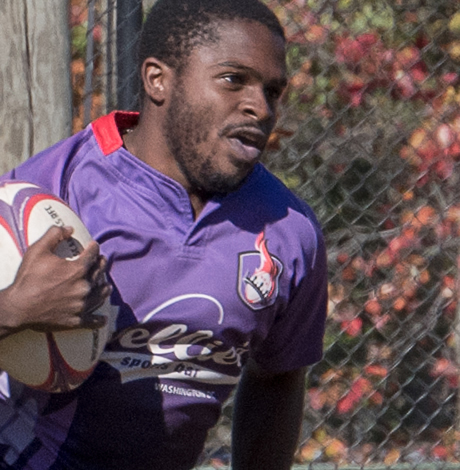
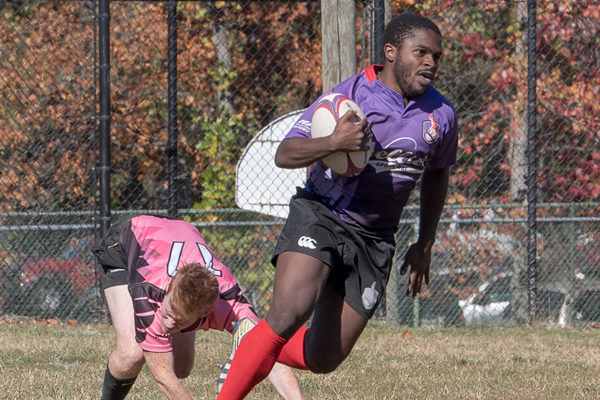
Joshua Street (Photo by Eric Brown)
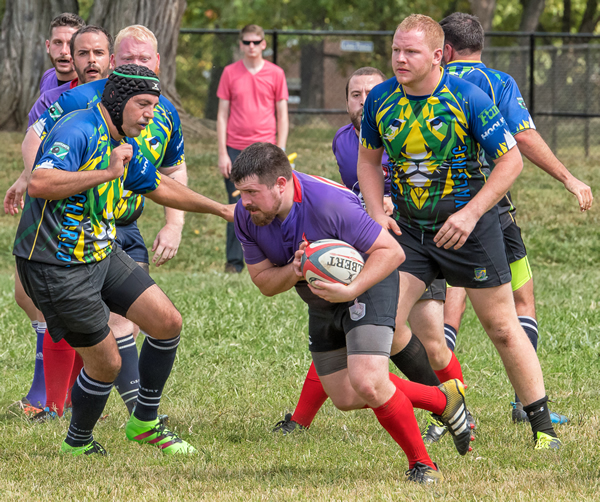
This week in the continuing spotlight series on the LGBT sports community in Washington, we visit with two gay rugby players from the Washington Scandals.
The Scandals were formed in 2013 and have carved out a niche playing in weekend matches along with traveling to tournaments along the Eastern Seaboard. Next year they will attend their first match overseas when they journey to Bingham Cup 2018 in Amsterdam.
After graduating from Georgetown University, Joshua Street found himself settling into the routine of life after college. Work, gym and then home. It was a pattern he was looking to change.
He had heard good things about the Washington Scandals and signed up to play when he saw them at Capital Pride in 2016. He went through their conditioning first and then had an eye-opening visual at his first practice.
“I saw this really big guy tackle a small guy and I immediately wondered if a theater major should be attempting to fit into this culture,” Street says. “The team was super supportive and assured me that when I was ready, they would get me there.”
Street, who works in insurance and risk management, was born in Texas and grew up in Surinam, and Antigua and Barbuda with his Southern Baptist missionary parents. His athletic endeavors consisted of intramural soccer and volleyball.
His first rugby match with the Scandals was in Toronto and he says that it was a good learning experience and crash course into the sport of rugby.
“I tested everything that the Scandals had taught me, especially that you have to push through obstacles whether they are mental or physical,” Street says. “It was very satisfying to be able to put what I had learned in practice into a game situation and amazing to think that I was a rugby player.”
Since that first match in Toronto, Street has settled into the rugby community and has traveled with his teammates to Charleston, Philadelphia, Charlotte and Baltimore. He’s social chair for the Scandals and loves the way the gay rugby community pushes each other in a game then gets together socially afterwards.
“There is always trepidation before a game because you know you are going to take some hits. All the nerves end up falling away because all these cogs are in motion and working as a team,” Street says. “I have found what I was looking for with the Scandals by getting out of that daily routine and finding an incredible support system.”
As a young kid in Liverpool, N.Y., Shane Hickey tried multiple sports including cross-country running but never found one that he fell in love with. He took a break from sports activities while attending Georgetown University where he was active on the school newspaper.
His path changed after a Scandals player told him he looked like someone who could play rugby. He signed up to play in September of 2013 and found himself smitten.
“My first practice was on a Thursday and my first match was two days later. It was trial by fire and I fell in love immediately,” Hickey says. “Realizing that I had so much more to learn was both a thrill and a rush.”
Hickey, who works in interlibrary services at American University, wasn’t sure if he could handle the sport at first but after years of playing, he has found happiness in being part of the rugby community. He’s a co-captain and is in his third year as a Scandals board member.
“This environment creates a space that allows people to learn about themselves which is one of the reasons I continue to be involved,” Hickey says. “Playing other teams who are just like us is amazing and our tournaments and matches become weekend events.”
Hickey has also traveled extensively with the Scandals and says he will continue with the team even if he ever gets to a point where he can’t play anymore. He’s taking courses to become certified as a referee.
“I love rugby and I love the brotherhood. It has made me a lot more confident as a person and has become a huge focus in my life. All rugby, all the time,” Hickey says. “Another plus has been that the team has exposed me to the LGBT community.”
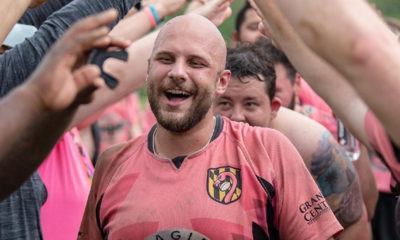
Shane Hickey (Photo by Eric Brown)



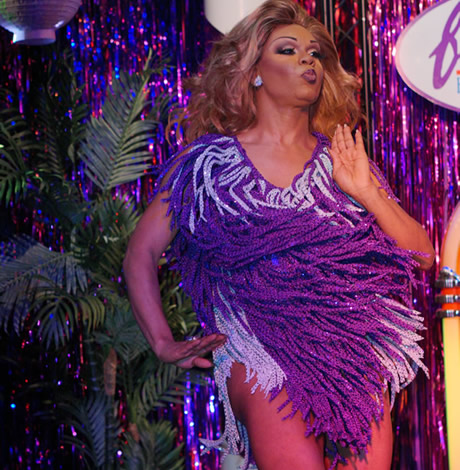

Iran and Egypt on Friday faced off during the World Cup’s “Pride Match” in Seattle.
Iran is among the handful of countries in which consensual same-sex sexual relations remain punishable by death. Discrimination and persecution based on sexual orientation and gender identity is commonplace in Egypt.
Friday’s match coincided with Pride weekend in Seattle. The Egyptian Football Association and the Football Federation Islamic Republic of Iran both objected to playing in the “Pride Match.”
Egypt and Iran tied 1-1.
FIFA, for its part, allowed Pride flags inside the stadium during the match.
“The FIFA World Cup 2026 is an inclusive event that welcomes people from all backgrounds,” a FIFA spokesperson told the Washington Blade in a statement. “Fans of all sexual orientations and gender identities are welcome at matches and events. General statements of human rights, including rainbow flags and other flags representing sexual orientation and gender identity, are permitted under the FIFA World Cup 2026™ Stadium Code of Conduct and may be displayed inside stadiums provided they are used in a manner consistent with the code.”
Human Rights Watch welcomed FIFA’s decision to allow Pride flags inside the stadium. Outright International, a global LGBTQ and intersex rights group, distributed Pride flags in Seattle on Friday, which was Pride Match Day.
“Visibility matters,” said Outright International Executive Director Maria Sjödin. “Pride is now being celebrated in more than 100 countries, including this weekend in Seattle. For many LGBTIQ people, seeing a Pride flag in public is a reminder that they are not alone, and that their rights and dignity are recognized.”
FIFA President Gianni Infantino earlier this year told Die Weltwoche, a Swiss magazine, that “there will be no ‘Pride Match’ at the (FIFA) World Cup.”
“There will be a FIFA World Cup match in Seattle, and on the same day, events organized by external organizations will be taking place in the city,” said Infantino. “But that has nothing to do with the match itself.”
Peter Tatchell, a long-time LGBTQ activist from the U.K. who is director of the Peter Tatchell Foundation, was among those who traveled to Seattle for Friday’s match. Tatchell accused FIFA of not vetting World Cup teams — specifically Iran, Egypt, Saudi Arabia, Ghana, Senegal, Qatar, Tunisia, Morocco, Iraq, Uzbekistan, and Algeria — over whether they would allow gay players.
“FIFA is protecting LGBT+ visibility in the stands while failing to protect LGBT+ players on the pitch,” said Tatchell.
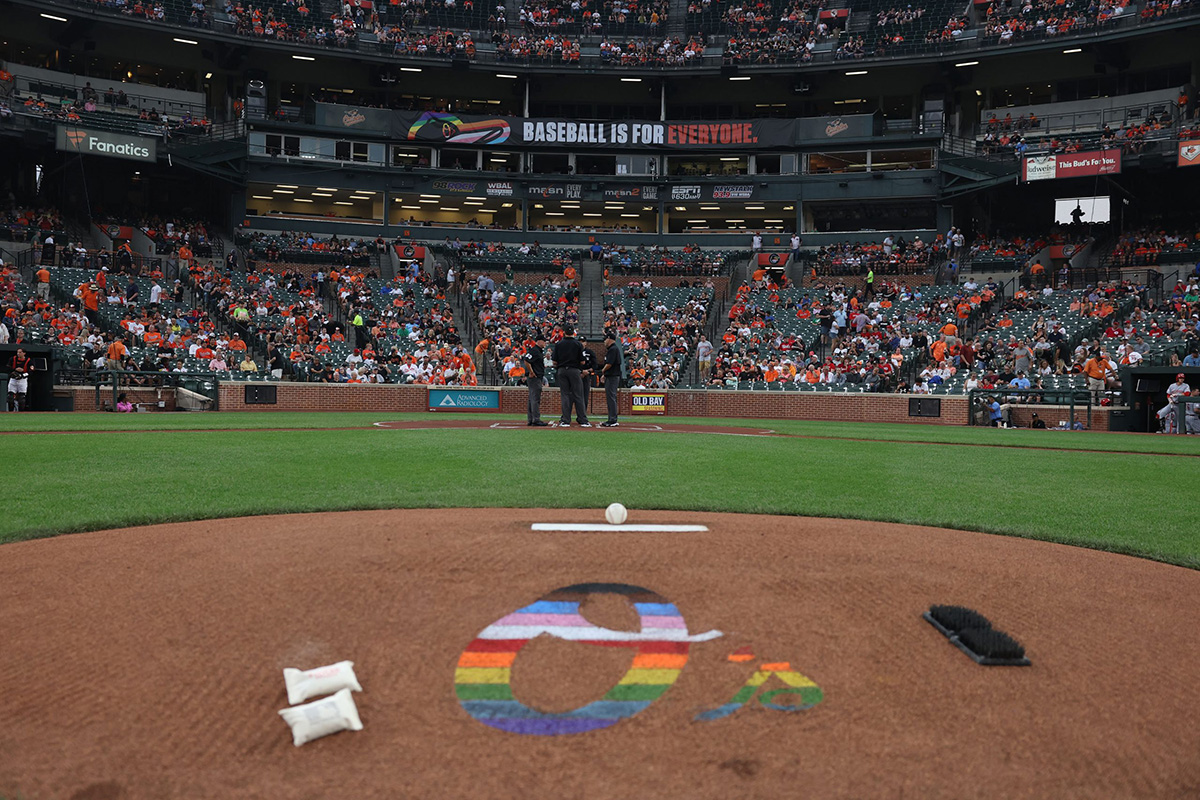
The Baltimore Orioles will take on the Washington Nationals on Friday, June 26 at 7 p.m. for Pride Night at Oriole Park.
The first 15,000 fans will receive an exclusive Pride Night Orioles jersey. The Washington Blade is a media sponsor of this event.
To purchase tickets, visit Orioles.com/Tickets.
Sports
Minor league team in York, Pa., forfeits Pride Night game after some players refuse to wear special jersey
City is roughly 20 miles north of Md. border
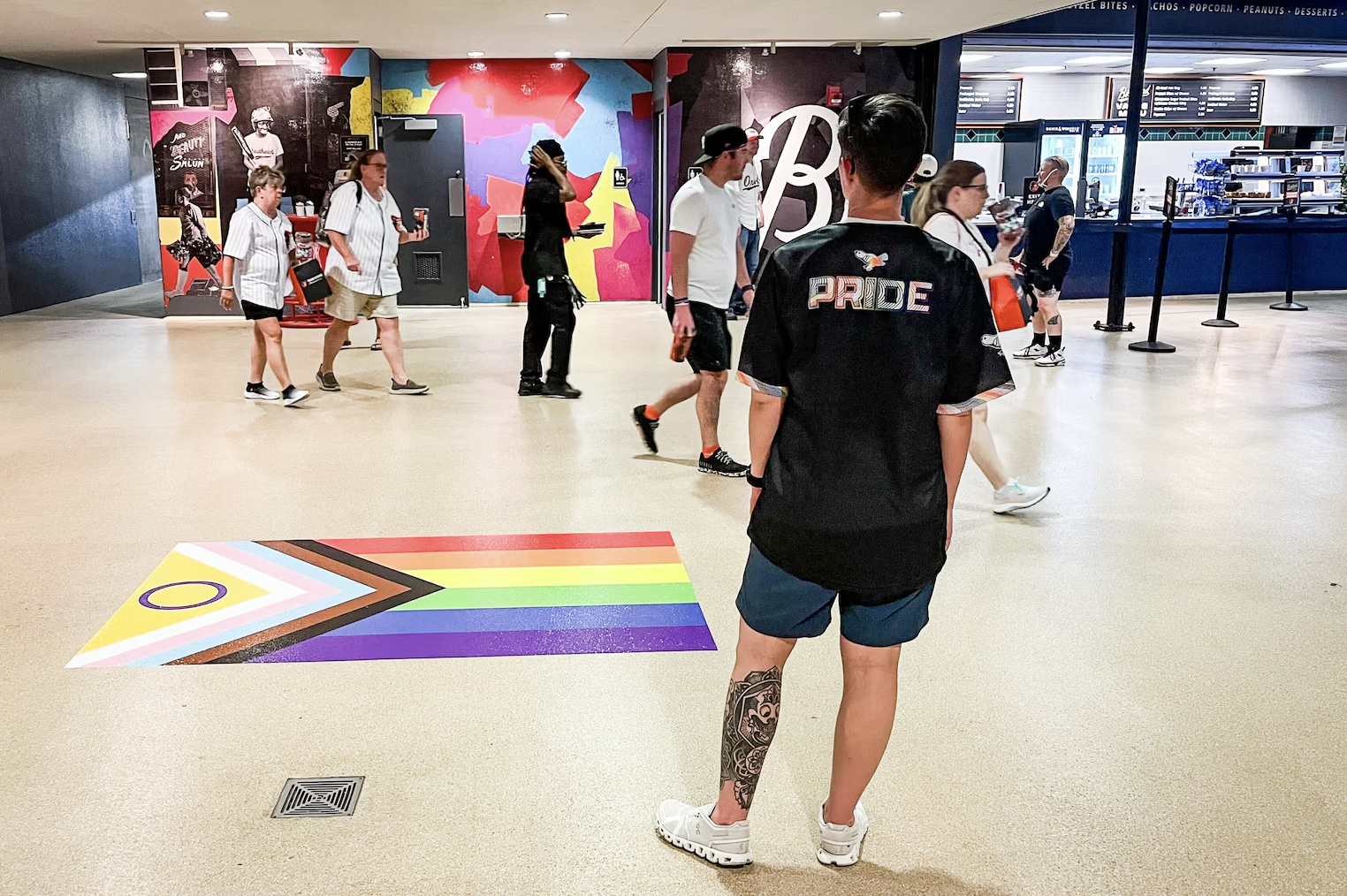
An independent minor league baseball team says it is forfeiting a game because some of its players refused to wear a special Pride Night jersey.
The Atlantic League Pro Baseball’s York Revolution were planning to hold their 11th annual Pride Night event Thursday for a game against the Southern Maryland Blue Crabs.
But the Revolution announced the day of the game that it wouldn’t be played. York is about 20 miles north of the Maryland line. The Blue Crabs play in Waldorf.
The rest of this article can be found on the Baltimore Banner’s website.

‘Transcendent’ a tough but important read

SMYAL receives $25,000 award for ‘courageous acts’

Queen Camilla meets with JK Rowling

Ethereal ‘Camp’ a moody allegory for queer shame

D.C. queer faith leaders commit to exist, resist, persist

Supreme Court upholds state laws banning trans athletes from sports teams

Longtime Blade staffer Stephen Rutgers steps down after 14 years

‘Girlfriends’ wanted for murder in Silver Spring arrested in Ohio

EXCLUSIVE: Pressley rips State Department over LGBTQ rights rollbacks abroad

PHOTOS: Frederick Pride Festival
-

 U.S. Supreme Court5 days ago
Supreme Court upholds state laws banning trans athletes from sports teams
-
District of Columbia5 days ago
Longtime Blade staffer Stephen Rutgers steps down after 14 years
-
Maryland5 days ago
‘Girlfriends’ wanted for murder in Silver Spring arrested in Ohio
-
Massachusetts5 days ago
EXCLUSIVE: Pressley rips State Department over LGBTQ rights rollbacks abroad