a&e features
Versace series draws controversy, familial renouncing
New Ryan Murphy FX project explores final days of gay designer
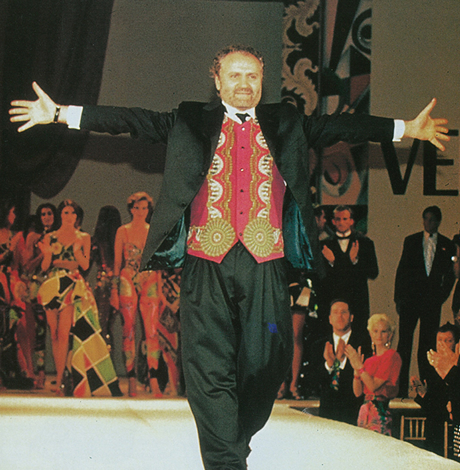
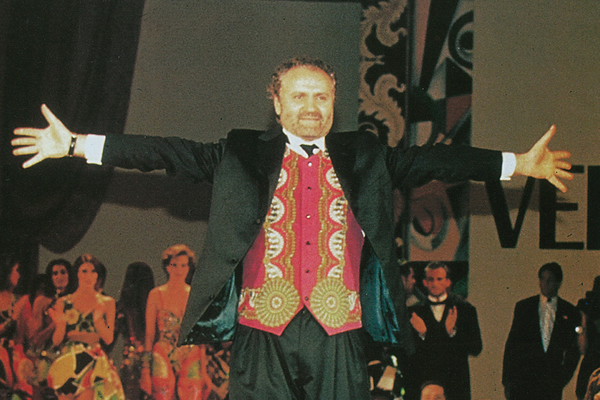
Gianni Versace on the runway in 1991. (Photo courtesy Michael Anketell)
The family of murdered fashion designer Gianni Versace is not happy with gay producer Ryan Murphy’s latest endeavor, “American Crime Story: the Assassination of Gianni Versace,” a nine-episode anthology that premiered last week on FX. In particular, they are angry that the series suggests Versace was HIV-positive when he was murdered by gay hustler Andrew Cunanan on the steps of his South Miami Beach mansion on July 15, 1997.
The family says that they had no involvement with the series and consider it a “work of fiction,” adding that Maureen Orth’s 452-page book upon which the series is based (“Vulgar Favors: Andrew Cunanan, Gianni Versace and the Largest Failed Manhunt in U.S. History”) “is full of gossip and speculation” and “second-hand hearsay that is full of contradictions.”
One example: “Orth makes assertions about Gianni Versace’s medical condition based on a person who claims he reviewed a post-mortem test result, but she admits it would have been illegal for the person to have reviewed the report in the first place (if it existed at all),” the family says.
“In making her lurid claims, she ignores contrary information provided by members of Mr. Versace’s family, who lived and worked closely with him and were in the best position to know the facts of his life.”
Orth says she conducted 400 interviews, including with Miami Detective Paul Scrimshaw who told the Vanity Fair contributor that he reviewed Versace’s autopsy results. “I had to know whether Gianni Versace was HIV-positive or not, and I was able to find out from autopsy results that he had tested positive for HIV,” Scrimshaw told Orth.
Orth writes that Versace kept his HIV status secret to not endanger a proposed public offering of stock in his fashion empire, estimated at $1.4 billion. Versace signed an agreement with Morgan Stanley to manage the initial offering in the United States on July 10, 1997. He was murdered five days later. “The consequences to his business would be incalculable. Certainly the public offering would be jeopardized,” she writes.
Murphy defended his series to Entertainment Weekly.
“The Versace family has said it’s a work of fiction — it is not a work of fiction,” Murphy says, adding that the book, “has been discussed and dissected and vetted for close to 20 years.” Orth “is an impeccable reporter and we stand by her reporting. Our show is based on her reporting so, in that way, it is not a work of fiction, it’s a work of non-fiction obviously with docudrama elements. We’re not making a documentary.”
But both the Los Angeles Times and the New York Times book reviewers reported that Orth was wrong about Versace’s HIV status.
In an April 11, 1999 review for the New York Times, then-Washington correspondent Frank Bruni writes that “the breadth and thoroughness of Orth’s research are often staggering,” but “Orth often loses her footing.”
“When Cunanan was found on a houseboat there, dead from a gunshot to his head, just eight days after Versace’s murder, the case was pretty much closed. An autopsy showed that Cunanan had not contracted HIV, disproving some speculation about what triggered his spree,” Bruni writes.
In her March 24, 1999 column, the L.A. Times senior fashion writer Valli Herman-Cohen notes that Orth is a fourth-generation Californian married to ‘Meet the Press’ moderator Tim Russert.
“Her book claims that Versace was HIV positive, which the Versace family has repeatedly denied. During the manhunt, police were testing a theory that Cunanan killed Versace in revenge for transmitting AIDS to him. … But as it turned out, according to the medical examiner, Cunanan was HIV negative.
Apparently rumors had circulated in South Beach that Versace had AIDS when he appeared gaunt, weak and emaciated in 1995. A Versace associate told Orth that by the end of that year, the designer “could barely walk half a block.” But his health improved six months before his murder, Orth writes, because he was taking the miracle new AIDS medication.
“My time with Gianni which was well over a year,” Michael Anketell tells the Los Angeles Blade. Anketell founded the California Fashion Industry Friends of People Living with AIDS benefit that honored Versace in 1991 at the Century Plaza Hotel. “I saw him with great stamina when in the throes of his work, but when I visited him in Milano he seemed quite tired and frail. Just my observation. We had great talks about L.A. and my coming of age in La La Land. He was fascinated by the famous people I had come to know and how serendipitous life can be.”
Anketell and a steering committee launched the fashion show fundraisers in 1987 to benefit AIDS Project Los Angeles. Even though designer Perry Ellis had died of AIDS, it was hard to get people to turn out. With a few exceptions such as Elizabeth Taylor and Bette Midler, “Hollywood was as squeamish about the whole issue of AIDS as was the rest of the country,” Anketell writes in his book “Heavenly Bodies: Remembering Hollywood and Fashion’s Favorite AIDS Benefit.” “Finally, because fashion and entertainment are so integrally part of people’s lives, it can also be easy to forget that, first and foremost, they are industries and, like businesses, do not want to be associated with any issue that might offend any segment of their potential customer base.”
The Versace show was the fifth benefit for APLA and by 1991, Hollywood had stepped up. But this was the “first full-blown retrospective of his career,” Anketell says. “It was a big deal. People flew in from all over the world” to honor the designer who dressed and was close friends with Princess Diana, Elton John, Cher, George Michael and created that famous red jacket Michael Jackson wore in “Thriller.”
Since this was to benefit people with HIV/AIDS, the designers were responsible for 50 percent of the budget and the whole look of the show. Versace’s team designed the entire ballroom, flying in a backdrop from the La Scala opera house that looked like an Italian garden, using Versace fabric for tablecloths and lampshades. Elizabeth Taylor dropped by during rehearsals and walked out with an armful of clothes, Anketell says.
“Gianni’s brother Santo told me not to worry about money. They would pay for everything,” he says. That included flying in the Fab Five top supermodels — Cindy Crawford, Naomi Campbell, Christy Turlington, Linda Evangelista and Claudia Schiffer, all of whom donated their time.
There were hitches, of course. When it was announced that Versace would be the honoree, Cher’s manager called Anketell to say she wanted to be a presenter. However Cher had stiffed Anketell in 1989 in the show honoring Bob Mackie. Though there was a whole segment devoted to the singer’s Mackie outfits, Cher failed to show up until the middle of the benefit when she came in a motorcycle jacket and torn jeans to underscore a tiff.
Anketell nervously agreed to have Cher present Versace at the tribute.
“We were getting ready for her to go out and she caught a glimpse of herself in the mirror and she thought she looked fat. She refused to go out,” he says.
Anketell quickly resorted to plan B, made his way through his bodyguards to get to Sylvester Stallone and asked him to introduce his close friend Versace. But by the time they got backstage, Cher changed her mind and decided to go on after all.
“They got into a tiff, she pushed him and he fell over. He isn’t a tall man and he wore lifts,” Anketell says. But he got up, brushed himself off, cast aside the remarks prepared for Cher and winged it.
“Gianni was like a brother to him — this Italian brotherhood,” Anketell says. “To hear Stallone talk from his heart, he always plays the macho man and here he was at an AIDS benefit introducing one of his closest friends. It was quite moving.”
“Gianni could never understand why we chose him to be honored instead of Armani,” Anketell says. “It was because of his grace and how open he was about being gay.”
Anketell says he was devastated to hear about Versace’s murder.
“I can’t explain how much grief I felt. I worked with Gianni for over a year on the show. I was a guest in his house,” says Anketell, who is now battling cancer. “And when someone you know dies so unexpectedly — this unpreparedness washes over you. I couldn’t talk for a couple of days. It was just such a shock.”
“Young people don’t understand what it was like for us during those days” Anketell says. He hopes Ryan Murphy’s series will get people interested in the Gianni Versace he knew.





a&e features
Ryan Murphy’s ‘Monster’ vilifies the lesbian
Netflix show promotes stereotype that queer women are dangerous
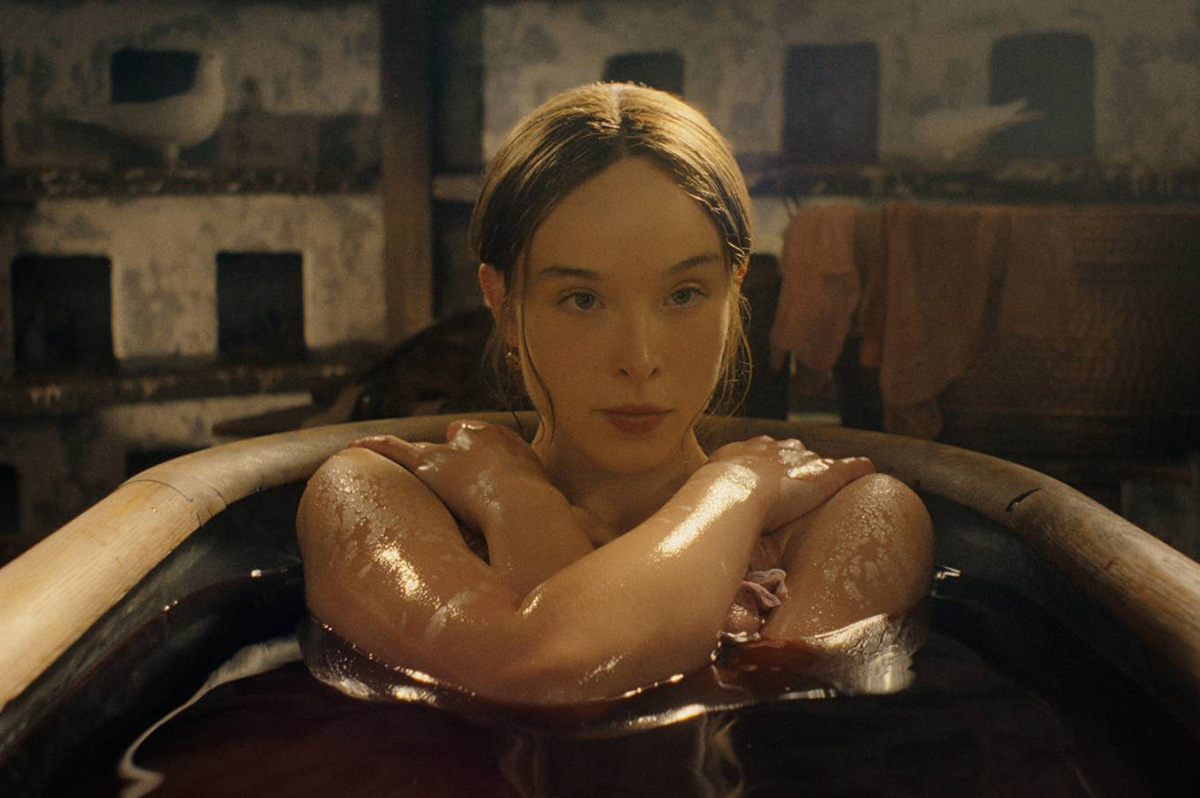
Ryan Murphy’s “Monster: The Lizzie Borden Story” just premiered on Netflix and became the most watched show on the platform. Murphy and his series are deeply controversial. The past three seasons have focused on convicted killers Jeffrey Dahmer, Lyle and Erik Menendez, and Ed Gein, and have garnered considerable criticism for sensationalizing real-life trauma, exploiting victims for entertainment, and glorifying the perpetrators.
But his newest season centers on Lizzie Borden, the white, affluent Massachusetts woman still referenced today in nursery rhymes who was never convicted of killing her parents Andrew and Abby Borden. As with Murphy’s other seasons, the show plays fast-and-loose with real-life history, instead turning a real-life crime into a psychosexual spectacle.
In real life, Lizzie was found not guilty by an all-male jury in the highly publicized 1892 trial, largely due to a lack of evidence including blood on her clothing and a murder weapon. Her initial statement contradicted her later testimony but her defense team argued that the morphine a doctor repeatedly gave her likely caused her confusion. But despite the fact that Lizzie was acquitted in court, she was ostracized by her community during her life and has been branded a murderer ever since.
Murphy’s highly fictionalized retelling of Lizzie’s story leans into this accusation not only that Lizzie murdered her father and stepmother with an axe but that she was successful in covering it up with the help of the maid Bridget Sullivan. Murphy not only concocts a sapphic relationship between Lizzie and Bridget, pinning the idea of killing Lizzie’s parents on the widely traveled woman who dyes her hair and is repeatedly called a lesbophobic slur by Lizzie’s stepmother, but also portrays Lizzie as an inspiration to Aileen Carol Wuornos, a woman who killed seven men who solicited sex and was also in a relationship with a woman.
Further, Murphy’s retelling creates a false ending to Lizzie’s story. While in real life, Lizzie and her sister Emma buy a house called “Maplecroft” and live there for the rest of their lives, Murphy instead imagines Bridget returning sporadically for romantic rendezvous with Lizzie and eventually moving back in with her and marching together for women’s right to vote. In real life, Bridget left town immediately after providing testimony and lived in Montana until she died.
Lesbophobia is at the heart of this retelling of Borden’s story. Despite the fact that Murphy depicts Lizzie and Bridget having sex and possibly getting married or at least promising themselves to one another wearing flower crowns, there is no evidence that Lizzie and Bridget had any romantic or sexual relationship. If they did have a relationship, it would likely have been hidden and any evidence destroyed, but records show that Lizzie herself refused to call Bridget by her real name, instead referring to her as “Maggie,” the name of their previous maid. It was only Lizzie’s stepmother Abby who called Bridget her real name. In Murphy’s retelling, it’s Lizzie’s stepmother Abby who refuses to learn or use Bridget’s actual name and treats her with disdain along with her stepdaughter.
Some people online argue that we are witnessing Lizzie’s story retold through Wuornos’s perspective, so adding in elements of child abuse and sapphic relationships would make sense, but there is no record that Wuornos ever visited Lizzie Borden’s home, or that she was inspired by Borden throughout her life. Instead, Murphy and his co-creator Ian Brennan use (or I would say exploit) Wuornos as a thematic device to make broad stereotypes about female rage across generations. In doing so, they conflate two real-life examples of violence to sapphic individuals.
Depicting a lesbian relationship in this way is not progress, nor is it fruitful representation today. As sapphic shows are increasingly cut and cancelled, Murphy’s inclusion just reinforces the lesbophobic and sexist stereotype that lesbians and queer women are “dangerous” to straight women and abet or incite violence against men and a family unit. At a time when anti-LGBTQ+ legislation and real-world violence and murder of LGBTQ+ people, especially queer and trans people of color, is exploding, stories that frame murder of a family unit as germinating from a sapphic relationship feed into far right narratives.
They further the myth popularized by far right leaders (including those in the highest echelons of government) that LGBTQ+ people are dangerous, a threat to heterosexual norms and family life, despite the data showing that children of same-sex parents have above average health and well-being according to research by the University of Melbourne.
Today, many LGBTQ+ people feel they have to be (or are forced to be) idealized versions of themselves in order to stave off anti-LGBTQ+ stigma, policing and violence. These “acceptable” behaviors and appearances are rooted not only in cisgender, heterosexual norms but also white supremacy, colonialism, xenophobia, and ableism. It is respectability politics that tell us how we can and should behave (including those perpetuating in the wider LGBTQ+ community) and push LGBTQ+ people to assimilate into a society governed by queerphobic normativity.
I hope it’s clear that I’m not trying to argue that we cannot and should not have shows that depict queer women who kill, or at the very least queer women who are unethical or morally complex. We need these depictions because they ask difficult questions and they reference how some LGBTQ+ people can be and are unethical. In fact, several public LGBTQ+ figures are associated with employee abuse and exploitation, ableism, and fat phobia.
But when Lizzie’s sapphic identity is invented to drive the story along, arguably to generate interest (especially straight men’s interest) in this spectacle of historical slop, it’s not a story that invites discourse and dimensionality, it’s one that collapses Lizzie, Wuornos, and queer women’s identities and relationships to plot devices. It objectifies and fetishizes queer women, arguably committing violence against not only Lizzie but also Wuornos.
And when there is so little representation of sapphic relationships on mainstream television or streaming platforms, it makes this the vast majority of representation that queer girls and women will see of themselves first, and that the straight public will see. Historians will know that Murphy’s depiction of Lizzie’s life is wrong, but many viewers will not and may not go digging for the truth.
Why not focus on the stories of bisexual, lesbian, and queer women who really existed, shared their identities (sometimes covertly, sometimes not), and had long-term partners? In fact, “Boston marriages” were common in this time period and referred to women living together when sexual and romantic relationships between women were illegal, partially because penal systems didn’t know how women could have sex with one another and didn’t want to put the idea in “impressionable” women’s minds. Why not focus on these stories instead of creating a fictionalized account? We have always existed; we do not need to invent relationships.
Murphy’s depiction of Lizzie Borden is deeply problematic. Lesbophobia is not the only issue at the heart of Murphy’s drama, but it merits a broader discussion about how mainstream media routinely hurt queer women and is part of perpetuating queerphobic violence, and what we all lose in the process.
a&e features
Writing a play about Lincoln leads down a rabbit hole to a closet
As LGBT History Month arrives, new hints that our greatest president was gay
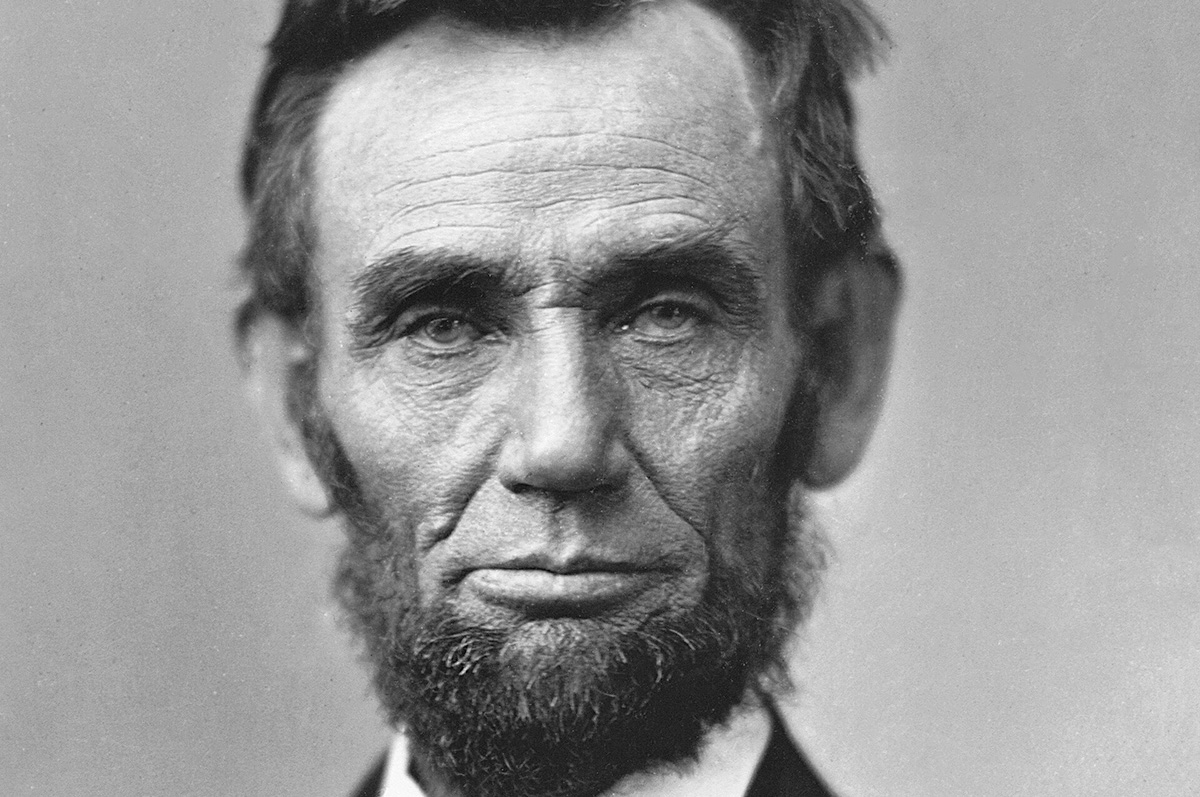
Abraham Lincoln treasured poetry and it turns out his particular favorites were pretty queer, but I never would have detected that if I hadn’t decided to write a stage comedy about his sex life. In my research for the play, I stumbled across what I believe is new evidence that Lincoln and Joshua Speed were lovers. The remarkable thing is that the evidence has been sitting in plain sight for more than 150 years.
The rabbit hole swallowed me in 2019, when C.A. Tripp’s revolutionary biography “The Intimate World of Abraham Lincoln” somehow fell into my hands. I was embarrassingly late to the Lincoln-was-gay party—Tripp’s book had come out 14 years earlier—and the wonderful-to-me news that Lincoln played for my team started me plotting out a play, because I was pretty sure if I didn’t know this, lots of people didn’t and inquiring minds want to know, and the young queers of America should be told that they have yet another genius over whom to kvell.
Historians and myth makers alike—often it’s hard to tell the difference—have always painted Abe straight, and now that it’s in question they’ve gotten peevish and insistent because, c’mon, bro, everybody knows that in the 19th century all the guys were writing each other gushingly romantic letters and sharing a bed every night for four years. Meanwhile, the Queer Studies crowd assures us that they, the inventors of homosexuality, had not yet invented it, so it couldn’t be that.
But what kind of play to write? I wanted to put at least two of his lovers into it, and no playwright with any sense of drama would omit Abe’s mad, physically abusive, spendthrift wife Mary. To get all of them in the same place at the same time meant bedroom farce. Keeping one’s lovers from knowing about each other is the keystone of bedroom farce and why the sets have so many doors. Speed, the great love of Lincoln’s life, who often visited the White House during the Civil War, would arrive while Lincoln’s wartime lover Army Captain David Derickson was there, too, and Abe would conceal them from each other and from Mary, who is suspicious and dangerous and prone to striking her husband. I also folded in Lincoln’s writing of the Emancipation Proclamation, which in the play is helped along by an invented Black housekeeper, who has suspiciously 20th-century opinions and a shiny new invention: the animatronic steampunk Lincoln robot. “The Loves of Lincoln” finally had its world premiere on June 19 of this year in Memphis, Tenn., where it was nominated for the best new original play of the 2025–26 season, and lost. Now we’re getting to the part about Lord Byron. Wait for it. It’s coming. We’re still setting the scene.
A cute, redheaded, gay Broadway producer told me the play would be stronger with a different kind of ending and for once a producer’s note was spot on—the play needed a final confrontation between Lincoln and Speed over love and slavery. The Speeds had dozens of slaves—lots more than Mary Todd Lincoln’s family, who had a few themselves. To write the scene I needed to know more than I did about the Speed-Lincoln relationship during the war. Speed was helping Lincoln keep the border state of Kentucky in line, but on the other hand his great wealth depended on slavery.
Time for some research. Enter “Your Friend Forever, A. Lincoln: The Enduring Friendship of Abraham Lincoln and Joshua Speed” (2016, Columbia University Press) by Charles B. Strozier, a “psychobiographer” who does the usual somersaults to explain away Lincoln’s behavior as straight because writing gushingly romantic letters to other guys and sleeping in the same bed for four years was absolutely not gay in the 19th century, which is proved by the fact that all the guys were doing it. Which kind of made me want to build a time machine and stop off in 19th-century Illinois on my way to ancient Greece. And then, suddenly, sitting there quietly on page 45, like a dangling thread on a cardigan begging to be pulled, was the interesting datum that Joshua lent his gangly, athletic bedmate books, among them Joshua’s “favorite”: Lord Byron.
The same Lord Byron who cut a swath a kilometer wide across the comely young men of Greece? The notorious libertine and sodomite—that Lord Byron? Well, yes, and it’s not hard to draw a line straight from there to Lincoln’s closet (coincidentally, one of the doors in The Loves of Lincoln leads into a closet—“Why is my husband always in the closet?”), but for some reason, up to now, no one I know of has drawn that line.
Understand, just reading Byron does not make Josh and Abe homosexuals. Byron was a big seller and lots of straight men read him, though perhaps not while gazing dreamily into each other’s eyes (Joshua’s wide and blue, Abe’s a melancholy gray), and OK we don’t know that’s exactly how it went down, but we do know other interesting things thanks to William Herndon.
Bill was a clerk in Speed’s general store, the store Speed and Lincoln slept above, and later the junior partner in Lincoln’s Springfield law practice. Herndon worshipped Lincoln. After the assassination he interviewed pretty much every significant person in Lincoln’s life, in what Strozier called one of the first oral history projects in America. Naturally, he interviewed Speed, who reported Lincoln’s passion for the poetry of Byron. The sexual significance of the connection between Speed, Byron, and Lincoln has up to now been ignored by all biographers—even the queer ones, like Tripp, who tried and did make the case for Lincoln’s homosexuality. Speed told Herndon he had introduced Lincoln to Byron: “I don’t think he had ever read much of Byron previous to my acquaintance with him.” Lord Byron’s poetry was a stew of intense male friendship, forbidden sexuality, secrecy, alienation, and erotic misbehavior, and in the wake of his scandalous divorce his name had for years been a transatlantic byword for transgressive sexuality. Byron also became, alongside Burns, Milton and Shakespeare, one of Lincoln’s four favorite writers.
Here’s where things get juicy. Speed said that, in particular, “Lincoln loved The Bride of Abydos.” Byron wrote the poem in the wake of his travels through the Ottoman Empire, which was partly what we today would call sex tourism. The poem’s beautiful young hero Selim is extremely feminized, conceals his true identity from his girlfriend (whom everyone thinks is his sister but they’re cousins), and only later reveals that he has a secret double life—in the case of the poem, as the leader of a band of pirates. Now there’s a secret life with an All-Male Cast. We’ll let you supply the pirate joke that goes right here.
It gets better. Herndon’s admittedly fragmentary notes from the Speed interview also specifically bring up Byron’s “To Inez,” the extraordinary lyric in “Childe Harold” in which a man tells a woman that her beauty gives him no pleasure, that her eyes scarcely charm him, and that she must not attempt to discover his “secret woe” or “unmask” his heart. The subtext that leaps off the page, given that Byron was, as the actor Michael Redgrave described himself to his son, “to say the least of it, bisexual,” is that the speaker is in the closet. In the last stanza, he begs her not to pry:
What is that worst? Nay, do not ask—
In pity from the search forbear:
Smile on—nor venture to unmask Man’s heart,
and view the Hell that’s there.
So, queer-coded Byronic poetry formed an important part of Lincoln’s imaginative world, and Speed remembered that fact nearly 30 years later, and told it to Herndon almost as if leaving literary breadcrumbs for posterity. As far as I have been able to determine, no previous Lincoln biographer or scholar of Lincoln’s sexuality has examined the queer implications of the Byron poems Speed specifically remembered Lincoln reading. Why has this been missed?
All of this would be meaningless if Speed and Lincoln didn’t understand that Byron was a lover of men, but I assert that they would have. Lincoln was a discerning reader with a famously penetrating, tenacious mind that wouldn’t let go of a thing until he understood it thoroughly—and a huge fund of worldly knowledge. He was by this time in the Illinois Legislature, had campaigned all over the state, and lawyers often encounter the seamy side of life, whether they seek it out or not. Furthermore, although Byron’s indisputable affairs with men weren’t explicitly documented in 19th century biographies and periodicals as they are today (the conventions and laws of the time all but guaranteed euphemism), rumors of Byron’s “unnatural” conduct crossed the Atlantic even during his lifetime. Articles repeatedly referred to an unnamed, horrifying, or “unnatural” offense, a “peculiar enormity,” and conduct violating the “ban of nature.” In 19th century usage, “unnatural crime” was a familiar euphemism for sodomy, while phrases like “peculiar enormity” and “ban of nature” invited readers to imagine sexual offenses too scandalous to name. Why use the words at all if readers weren’t going to get the point? American readers had easy access to Byron biographies and memoirs, including Thomas Medwin’s “Conversations of Lord Byron” and Thomas Moore’s enormously influential “Letters and Journals of Lord Byron,” while American periodicals discussed the Byron memoir burned by his friends and the salacious suspicions around its contents. Lincoln and Speed would certainly have understood that one of the unmentionable sexual accusations surrounding Byron was man-on-man action.
Lincoln’s love of Byron’s queer-coded writings, fostered by Speed, “proves” little on its own, but a lot when added to the rest of the evidence. And it’s part of an even bigger story: reversing the erasure of queerness from history and documenting that many of humankind’s greatest achievements are thanks to queer individuals. Both Lincoln and Speed had beards, literal and metaphorical—they didn’t want their secret spilled while they were alive. But then again, I like to think that when Joshua Speed told William Herndon of Lincoln’s love for those poems, he imagined a day when their love could be decoded and celebrated. Come to think of it, that day is today.
a&e features
Acclaimed Chef Patrick O’Connell’s memoir reveals the arc of a life well lived
Overcoming obstacles to serve everyone from Jerry Falwell to Queen Elizabeth
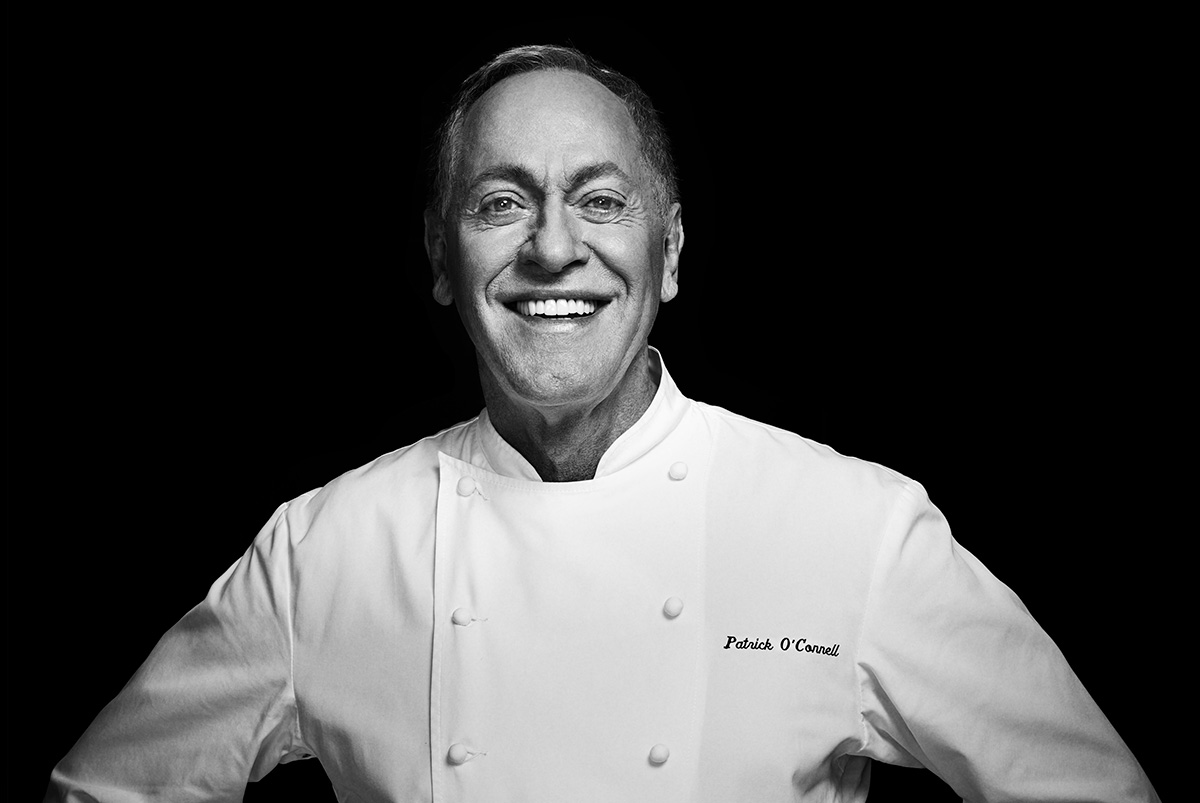
Renowned three-Michelin-star Chef Patrick O’Connell says food and wine hold a unique ability to bring people together. Indeed, he has served everyone from right-wing zealot Jerry Falwell to Britain’s Queen Elizabeth during his decades at the beloved Inn at Little Washington in rural Virginia.
O’Connell’s compelling new memoir, “Main, Middle & Gay” is out Sept. 15 from Celadon Books and offers a deeply personal account of how he transformed his love of food and affinity for the finer things into an iconic inn and restaurant that draws diners from around the world nearly 50 years after it opened in 1978.

O’Connell is launching the book with an event on Sept. 18 at Lisner Auditorium featuring Chef José Andrés and former Washington Post food critic Tom Sietsema. He met Andrés just after Andrés began to work in D.C. and was “on fire with ideas.”
“We sat next to each other at Charlie Trotter’s restaurant and the meal went on for hours and we had a natural rapport,” O’Connell told the Blade in a recent interview. “The chemistry will be fun and lively and unpredictable and exciting. I think we’re all different personalities and we’ll compliment each other.”
O’Connell said he’s excited to hold the event at Lisner.
“I studied theater at Catholic University and transferred to GWU so it’s a coming home party and Lisner has been there since I was a kid and it was always like D.C.’s Carnegie Hall. It feels like going home to my old stomping grounds.”
O’Connell hopes to bring the book to life visually at the event and he has produced a short film that will be screened.
The book traces the self-taught O’Connell’s remarkable journey from rural paperboy and short-order cook to proprietor of one of the world’s most celebrated restaurants and Relais & Châteaux hotels. Along the way we learn about the many challenges he faced — from distrustful and homophobic local residents in Washington, Va., to an expensive, public “divorce” from his longtime romantic and business partner, Reinhardt Lynch.
“It parallels the evolution of American cuisine over 50 years,” he said. “It’s a rare perspective to be in the trenches for that long.”
O’Connell writes candidly about his relationship with Lynch. The two opened the restaurant together — O’Connell running the kitchen and Lynch handling the business. But O’Connell’s accolades and growing notoriety led to jealousy that triggered a protracted falling out and dissolution of both their personal relationship and business partnership. Lynch, as recalled by O’Connell, attempted to secretly sell his 50 percent of the business but ultimately agreed to sell his stake back to O’Connell for a reported $17.5 million. “The Washington Post ran with it as a salacious celebrity divorce story and included all the financial details,” he writes.
After taking full control of the Inn just as the recession of 2008 hit, O’Connell writes of the scrutiny of guests who assumed Lynch’s absence would lead to a slip in quality. “The place couldn’t be just as good as ever. It would have to be better.”
What happened next proved a royal opportunity as Queen Elizabeth visited Virginia to commemorate the 400th anniversary of the founding of the state and O’Connell was asked to cater a reception. This chapter is filled with juicy details and behind-the-scenes anecdotes about the pressures of cooking for the Queen. The subsequent media attention proved lucrative for the Inn and photos of the Queen’s visit still hang in the Inn.
There are references to O’Connell’s sexual orientation throughout the book and he doesn’t shy from addressing his long relationship with Lynch or the resistance the couple encountered when they settled in sleepy Washington, Va.
“I didn’t realize that I was walking into a prejudiced hornet’s nest that I wasn’t fully prepared for and there was a great deal of hostility in part because they didn’t understand anything about what we were attempting to do here so everything about us and our desire to run a fine restaurant was foreign to them,” O’Connell told the Blade. “The irony of a place opening in the center of town of 150 people and at that time the word ‘gay’ wasn’t used here. It was as if they didn’t have space in their consciousness for such a thing. We were regarded as counter culture people.
“The restaurant became a success almost overnight and the locals couldn’t understand what the buzz was about,” O’Connell continued. “They thought food is food and why would anyone drive 60 miles out here for food. They became resentful of the ‘outsiders’ who came. Two outsiders were opening a restaurant and drawing other outsiders out here to a place where there weren’t many jobs. There was resentment on many levels by some — not all. They thought it would go away.”
But O’Connell said he never made his sexuality the focus of his work. Rather, he wanted to use food to bring people of all backgrounds together.
“I never made a point or attempted to make that a central focus on my work,” he said. “I felt that I had found my spot in the universe where I belonged, I loved living here, it was a sanctuary.”
O’Connell’s insistence that everyone is welcome has sometimes created tension and negative press, as when President Trump presented him with a National Humanities Medal that brought criticism from some progressives.
“We see a fascinating clientele here; we don’t judge and we’re not political,” he said. “When people come they are entitled to our hospitality.”
One of those people was televangelist and notorious homophobe Jerry Falwell, who made a reservation at the Inn years ago. O’Connell’s instruction to the staff was to treat Falwell like any other guest.
“We have an image of someone who maybe we would think would be hostile or judgmental and they often surprise us,” O’Connell said. “We held our breath and here’s Falwell working the tables and saying this is the best meal I’ve ever had, aren’t these two guys great and we thought he’s doing PR for us and he’s supposed to be the devil.”
O’Connell said he sees that dynamic play out night after night at the Inn. One of the most conservative national Republican figures, he said, is a regular and Vice President JD Vance dined at the Inn recently. Focusing on the food and hospitality for all constitutes O’Connell’s brand of activism.
“Food does bring people together,” he said. “And you’re doing your part in erasing preconceived judgements.”
He said he and his team did more to advance understanding and acceptance by focusing on hospitality than if “we were out marching.”
As evidence, he said, there are more and more gay couples moving to the area and the town’s mayor, Joe Whited, is gay.
“We’re the biggest employer in the county and largest taxpayer,” he added. “The Inn pays the town almost $1 million per year and property values are getting to be like Palm Beach. And that wasn’t a goal it was a byproduct of doing something as well as it could be done.”
But the book isn’t hagiography. O’Connell revisits traumatic events, like childhood bullies who attacked him for wearing a Little Red Riding Hood costume for Halloween and a sexual assault he endured as a young teenager aboard a bus.
“I don’t know why I couldn’t call out for help or try to make the man stop,” O’Connell writes of the incident. “I didn’t want to call attention to the situation and felt completely implicated. Once it began there was no stopping it.”
Interestingly, O’Connell told the Blade that one of the things he learned in writing the book is how little he’s changed since childhood.
“People tend to lock away a lot of childhood memories for good reason and in a book you’re reliving them and bringing them to life,” he said. “And my revelation is that I don’t think I’ve changed much since I was six and I think most people’s identity is pretty developed in their very early years and their personality is clear. What amused me most is I’m doing the same things now that I did in miniature as a five and six year old.”
As for popular TV shows about the restaurant business, O’Connell says he doesn’t watch them.
“It’s fake,” he said. “There are much more colorful characters and it’s much more exciting in real life. Nobody seems capable of capturing that. So maybe this [book] will have the effect of doing that and showing what it takes.”
O’Connell said the books and stories he most enjoys reading are those that start in childhood and carry through until late in life. He has certainly delivered that in “Main, Middle & Gay,” a moving, fearless memoir filled with the unexpected and natural drama that revisits a uniquely American life.
The Blade may receive commissions from qualifying purchases made via this post.

Evan Low is not the leader the Victory Fund needs at this moment

Transgender woman elected to Brazilian Chamber of Deputies

Lula, Flávio Bolsonaro to face off in second round of Brazilian presidential election

The financial realities facing LGBTQ+ first-time buyers

‘Merrily’ is for Sondheim super fans, the uninitiated, and anyone in between

Meet the LGBTQ candidates running for U.S. House, Senate

Vote now! Best Of LGBTQ DC readers’ choice awards

Gay Va. couple hopeful voters will enshrine marriage equality in state constitution

Victory Fund board investigates former staffers’ allegations against CEO Evan Low

LGBTQ community must vote in big numbers
-

 2026 Midterm Elections5 days ago
Meet the LGBTQ candidates running for U.S. House, Senate
-
Arts & Entertainment5 days ago
Vote now! Best Of LGBTQ DC readers’ choice awards
-
Virginia4 days ago
Gay Va. couple hopeful voters will enshrine marriage equality in state constitution
-
LGBTQ Non-Profit Organizations4 days ago
Victory Fund board investigates former staffers’ allegations against CEO Evan Low