Arts & Entertainment
Gus Kenworthy to headline DNC’s annual LGBTQ gala
The Olympic freeskier declined to attend the White House athlete reception

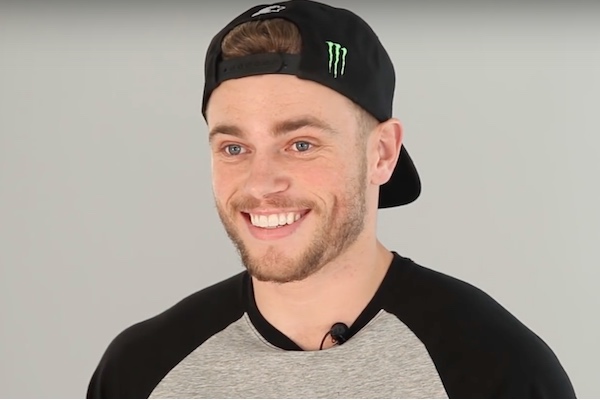
Gus Kenworthy (Screenshot courtesy of YouTube)
Olympic freeskier Gus Kenworthy will attend the Democratic National Committee’s 19th annual LGBTQ gala as a special guest on June 25 in New York City.
“I couldn’t be more excited to join the DNC at their LGBTQ Gala this Pride season,” Kenworthy said in a statement. “Over the last year, the Trump-Pence administration has pushed our community to the sidelines, attacking us for who we are and who we love. It’s time we take a stand against this administration by electing representatives this upcoming November who actively support and believe in equality for everyone.”
DNC Chair Tom Perez added, “Gus has been a tireless advocate for his community, standing up to hate and a Trump-Pence administration that has repeatedly attacked and demeaned LGBTQ people. The 2017 elections were a landmark moment for the LGBTQ community. Not only did we elect the first openly transgender state legislator, but LGBTQ candidates broke barriers from Palm Springs and Seattle to Minneapolis and New York. This year, we want to celebrate that success and refocus the LGBTQ community on just what is at stake in the coming 2018 midterms. With the help of people like Gus, Democrats will win up and down the ballot, from the school board to the Senate.”
Kenworthy, along with fellow out Olympian Adam Rippon, declined to attend the April 27 athlete reception at the White House.
“All US Olympians and Paralympians are invited to visit the White House and meet the President after the Games. Today is this year’s visit and USOC spokesperson says he’s never seen so many athletes turn down their invites. The resistance is real,” Kenworthy tweeted.
All US Olympians and Paralympians are invited to visit the White House and meet the President after the Games. Today is this year’s visit and USOC spokesperson says he’s never seen so many athletes turn down their invites. The resistance is real. https://t.co/6mKJGicWDS
— Gus Kenworthy (@guskenworthy) April 26, 2018
Kenworthy was quick to defend his decision to not attend the reception and noted that he and Rippon didn’t receive government funding while on the U.S. Olympic team.
“To those saying @Adaripp and I shouldn’t get gov’t funding since we skipped the White House visit: WE DON’T! Absolutely $0. The US is one of the only countries that doesn’t pay a penny to it’s Olympic team to train/ compete. All money comes from sponsors and private donations…” Kenworthy tweeted.
To those saying @Adaripp and I shouldn’t get gov’t funding since we skipped the White House visit: WE DON’T! Absolutely $0. The US is one of the only countries that doesn’t pay a penny to it’s Olympic team to train/ compete. All money comes from sponsors and private donations…
— Gus Kenworthy (@guskenworthy) April 28, 2018






Movies
10 years later, we still can’t shake Barry Jenkins’s ‘Moonlight’
Landmark queer film returned to theaters this past weekend
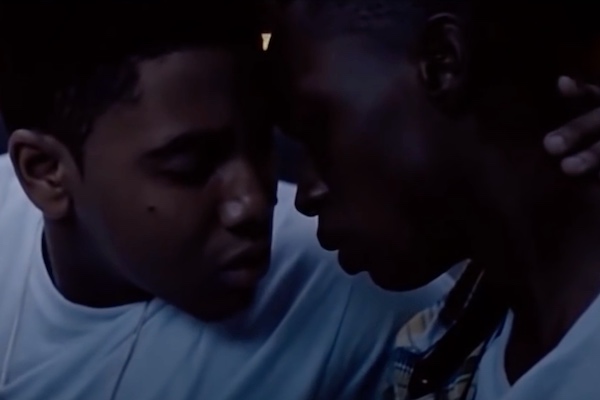
It all started back at the Telluride Film Festival, where “Moonlight” had its world premiere in 2016, kicking off a successful awards season run. It instantly became the year’s critical darling, and it wound up winning three Academy Awards, including Best Picture, Best Adapted Screenplay (for Jenkins), and Best Supporting Actor (for Mahershala Ali.)
But there’s a world where an independently made film like “Moonlight,” featuring an all-Black cast with mostly unknown actors, and a story exploring how queerness intersects with toxic masculinity and race, gets easily overlooked. The fact that the film won Best Picture on Hollywood’s biggest stage not only cemented its place in film history, but helped the story reach more Black and queer people.
Adapted from Tarell Alvin McCraney’s unproduced, autobiographical play “In Moonlight Black Boys Look Blue,” Jenkins follows a boy named Chiron, introduced to the audience as Little, over the course of three pivotal moments in his upbringing. Set in Miami, the film tracks Chiron’s days as an outcast struggling to make it through elementary school, to his first sexual encounter with another boy, to his adult days making a living as a drug dealer. Chiron suffocates while living with his abusive, drug-addicted mother (Naomie Harris) and eventually finds refuge and safety in the home of surrogate parents Juan (Ali) and Teresa (Janelle Monáe) as he struggles to reckon with his queerness.
Jenkins’s images instantly became iconic: Juan holding Little in the ocean, a moment reminiscent of a young boy’s baptism; Chiron resting his head on Kevin’s (André Holland) shoulder as the two reconcile their love for one another; Little looking back at the audience as the waves crash.
The film mainly features locals from Miami. One of the smartest choices Jenkins and his casting director, Yesi Ramirez, made when shaping out Chiron’s journey was casting three different actors (Alex Hibbert, Ashton Sanders, and Trevante Rhodes) to play the character as he physically comes of age. Jenkins deliberately never had the three actors meet despite portraying the same character — quite the atypical approach to casting.
“I wanted [that decision] to be a comment on the way of the world we live in, and how society has this effect on these young men who grow up in a community like the one depicted in the film,” Jenkins said in a Creative Screenwriting interview in February 2017. “To me, the best way to show that was to illustrate this change in the character, and what happens to the people who are playing him at each stage.”
In the decade since “Moonlight”’s release, dozens of filmmakers cite Jenkins as one of their biggest influences, including Joe Talbot (“The Last Black Man in San Francisco”). And you can see his film’s footprints all over “Nickel Boys, If I Go Will They Miss Me” and “Waves,” all films that use evocative imagery to tell grounded, Black-led stories.
To date, “Moonlight” remains the lowest-budget film to ever win Best Picture, made for a mere $1.5 million dollars. It was also the first film that A24, the indie distributor that was still building a name for itself back in 2016, fully financed and produced itself. “Moonlight” went on to gross over $60 million at the global box office, largely thanks to the Oscars platform.
In our current political and media landscape under the Trump-Vance administration, “Moonlight” has the potential to save even more lives. In the early days depicted in Chiron’s upbringing, he is taught to live with shame, to keep his head down at school. It’s all about survival. But by the end of the film, Chiron reconnects with Kevin and finds himself remembering all the emotions he felt after being touched by a man for the first time. It’s a small step, a small embrace, but a crucial one for Chiron to start coming to terms with himself.
Jenkins still gets emotional when watching scenes back from the film now. Speaking with Vanity Fair at this year’s Telluride Film Festival, where “Moonlight” screened for its 10th anniversary, Jenkins admitted he was a “crying mess” when revisiting the last 15 minutes of the film earlier in the year.
“Maybe over the next few months I’ll get some more understanding of it, but I think it was just how meaningful it was that we created this thing,” Jenkins said. “It’s not about the film itself, but just how meaningful it was that we actually did it.
In the decade since “Moonlight”’s release, Jenkins went on to direct another acclaimed film, “If Beale Street Could Talk,” and recently made “Mufasa: The Lion King.” He’s set to return to his more independent roots with “Be My Baby” starring Zendaya, which will also be distributed by A24, and an Alvin Ailey biopic. The Oscar winner continues to mentor emerging filmmakers and writers through the Sundance Labs, visiting colleges around the country to teach what he learned from making his breakout film.
Now that “Moonlight” is back in theaters, it’s the perfect opportunity for queer and Black people to experience this tender, intimate, nuanced film on the big screen. It’s a modern classic with the potential to continue making people feel seen and embraced for every aspect of their identity.
Theater
‘Some Like It Hot’ a wild ride at renovated Bernard Family Theatre
Exhilarating show brimming with fun, feeling, and focus on gender exploration
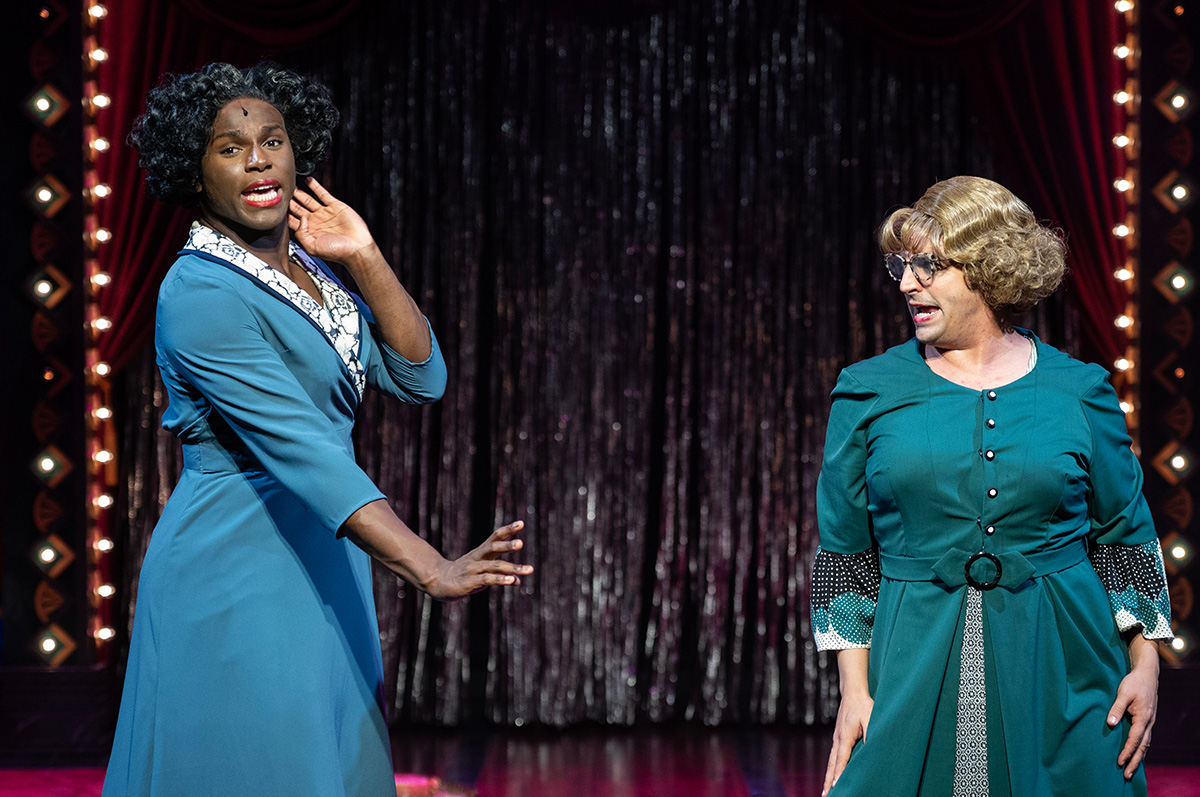
“Some Like It Hot”
Through Nov. 8
Olney Theatre Center
2001 Olney-Sandy Spring Rd.
Olney, Md.
Olneytheatre.org
There’s reason to celebrate at Olney Theatre Center. Currently, they’re debuting their renovated Bernard Family Theatre while inaugurating the soaring new space with a regional premiere of “Some Like It Hot,” the musical adaptation of Billy Wilder’s classic 1959 comedy.
Toying with this cinematic gem took some cojones, but it works.
The film and the Tony Award-winning musical share similar plot lines: After witnessing a mob hit, Chicago musicians Joe and Jerry need to leave town. So, they don dresses, join Sweet Sue and Her Society Syncopators all-female band, and board a train headed for warmer climes (Southern California). As Josephine and Daphne, they experience new slants on romance, gift giving, and the male gaze. It’s funny and illuminating.
Helmed by out artistic director Jason Loewith, OTC’s exhilarating production is brimming with fun, feeling, and the musical’s focus on Black identity and gender exploration (recreated for Broadway by writers Matthew López /Amber Ruffin, and songwriting team Marc Schaiman/Scott Whittman).
OTC’s Loewith embraces it all while masterfully bringing together big dance numbers, romantic interludes, slapstick, and what’s more, he makes it look easy.
It’s 1933, deep in the Great Depression, and no-nonsense bandleader Sweet Sue (the excellent Ashleigh King) sets the speakeasy scene with “What Are You Thirsty For?” (not an unusual inquiry during the Prohibition era).
Away from Chicago at San Diego’s glamorous Coronado Hotel, matters become further complicated for Joe (Jacob Tischler) as he pursues the band’s irresistibly unreliable Sugar Kane, sensitively played by the talented Montria Walker. (A couple of her songs, including “A Darker Shade of Blue,” describe a rural Georgia, Jim Crow backstory.)
Meanwhile, Daphne (nonbinary actor Tavis Kordell) is learning a new love language with impish root beer fortune heir Osgood Fielding III (terrific out actor Edward Juvier).
Drinking in a Mexican cantina not far from the hotel, Osgood tenderly serenades Daphne with “Fly, Mariposa, Fly,” a romantic number about metaphorically spreading wings, and transformation. The beloved’s powerful reply number “You Coulda Knocked Me Over with a Feather” is filled with emotional revelation.
In its examination of gender fluidity and self-discovery, the musical isn’t an indoctrination. Instead, audiences accept what’s happening on stage, and soon they’re seduced and painlessly invested in the characters’ wellbeing.
Frank Labovitz’s intelligent costume design is brimming with storytelling. Joe and Jerry’s quick change from guys to girls isn’t flashy — at first. It’s all drab colors, modest hem lengths…street clothes pulled from the Great Depression. Later it’s showbiz silver sequins.
An adept and marvelous actor, Tishler does double duty as the straight and funny man. Even when dolled up for gigs, his Josephine destroys the look with men’s black socks, the dowdy wig, and cockeyed glasses, hilariously setting up a running gag of how Joe, as Josephine, looks so much older than the other girls in the band.
For “Some Like It Hot,” Karla Puno Garcia’s wide-ranging choreography style ranges from those early 1930s flapper flicks (think the young manic Joan Crawford) to something more elegant, Joe and Sugar dancing à la Fred and Ginger in the show’s dreamy number “Let’s Dance the World Away.” Another highlight is the second act’s penultimate number “Tip Top Trouble,” a wild but meticulously staged, gloriously gender bending, sixteen-person, cops and robbers chase sequence.
Top notch music director Christopher Youstra reliably delivers Marc Shaiman’s swinging, 1920s and 30s-inspired score played by a mostly hidden 10-piece band and mimed onstage by Sue’s lively Syncopators.
And in meeting the specialness of the challenge, scenic designer Ryan Douglass transforms the newly renovated theater into a good club setting featuring a colorful inlaid thrust stage surrounded by cabaret tables where just several short yards ahead of Row C, a contented couple is served a bottle of Champagne while settling in before the show starts.
Today, the Bernard Family Theatre with its raftered ceiling and industrial vibe suggests past and promise for the future.
For now, experience the revamped wild ride in a wonderfully redone space.
Photos
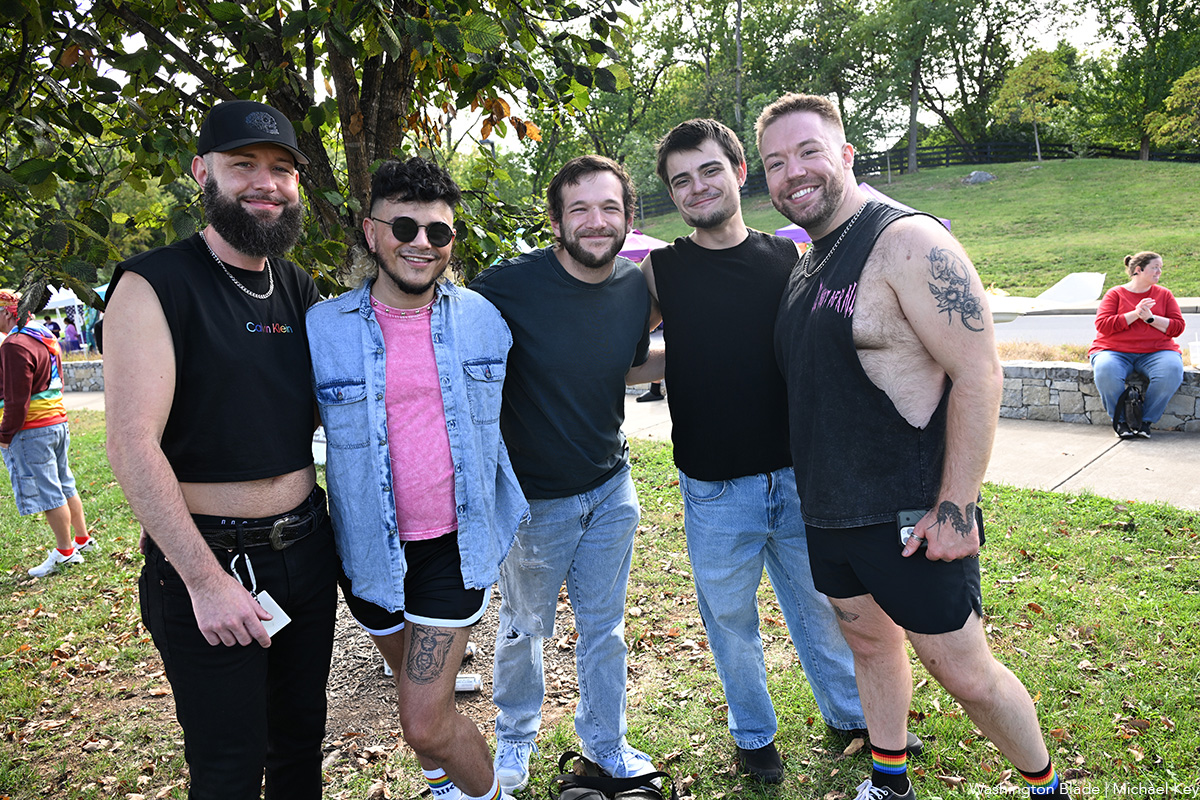
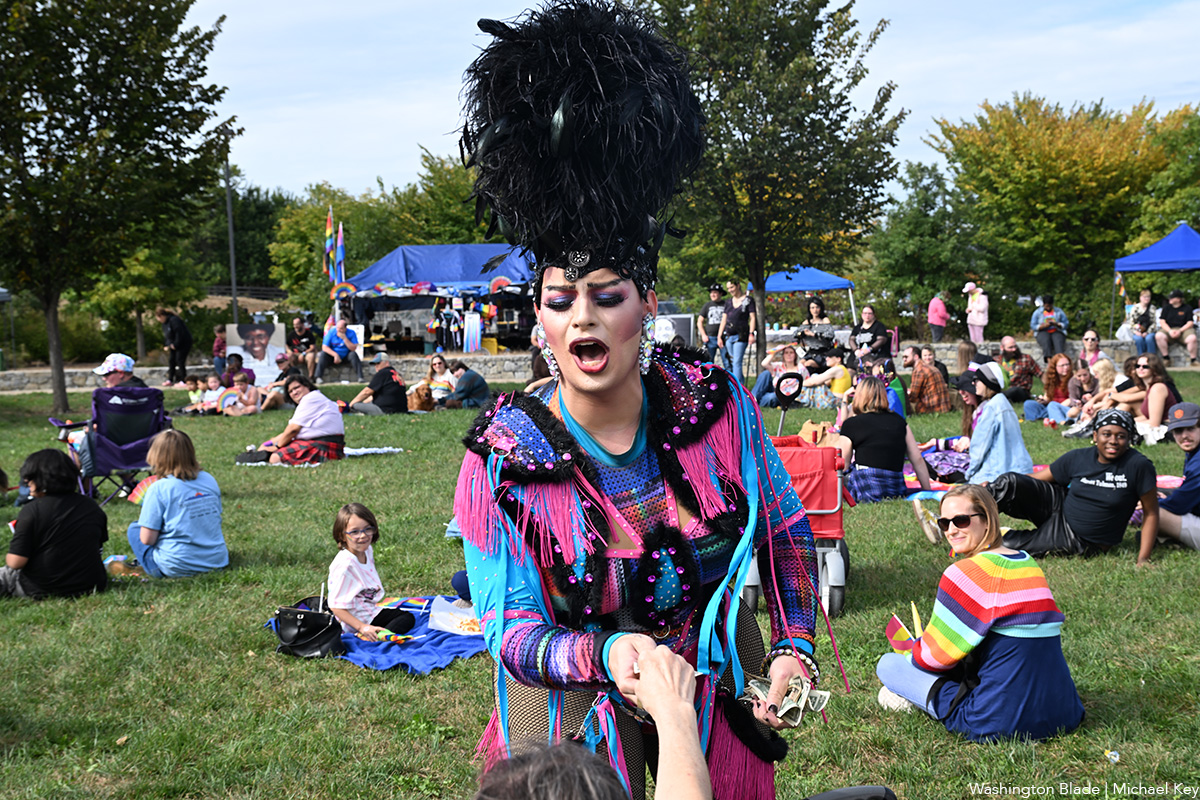
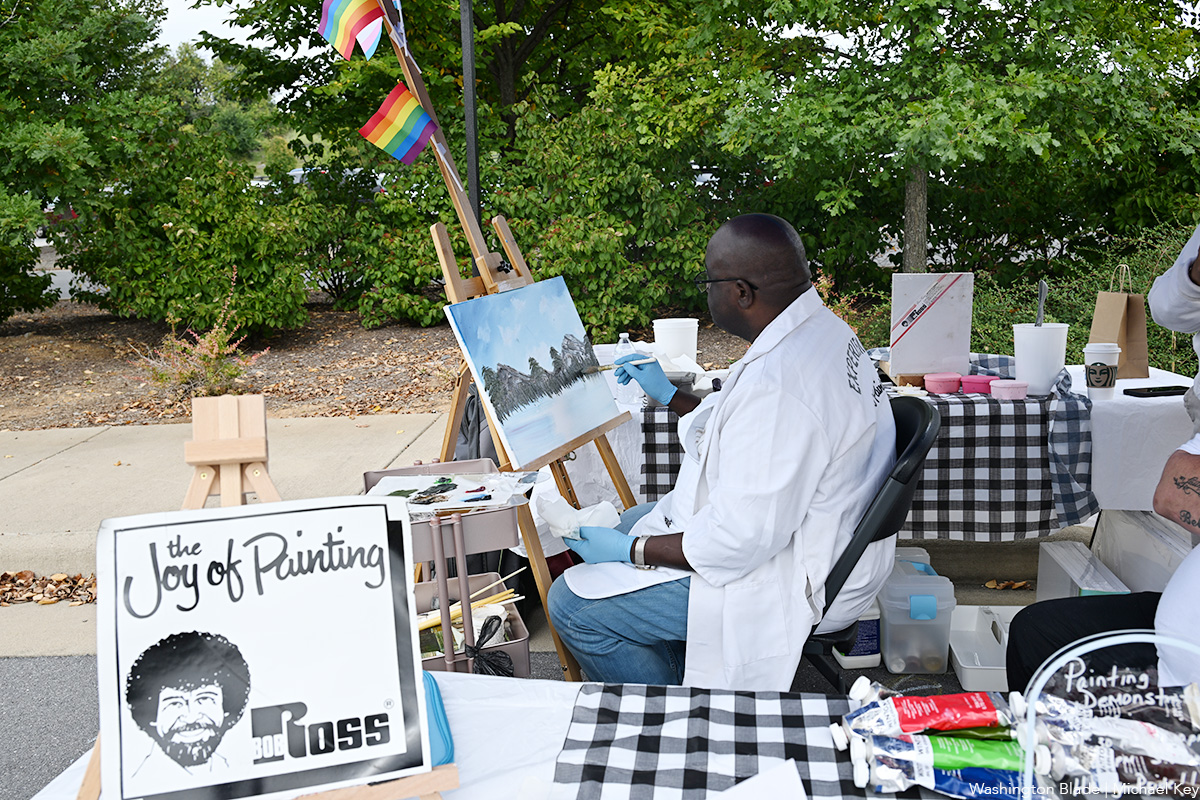
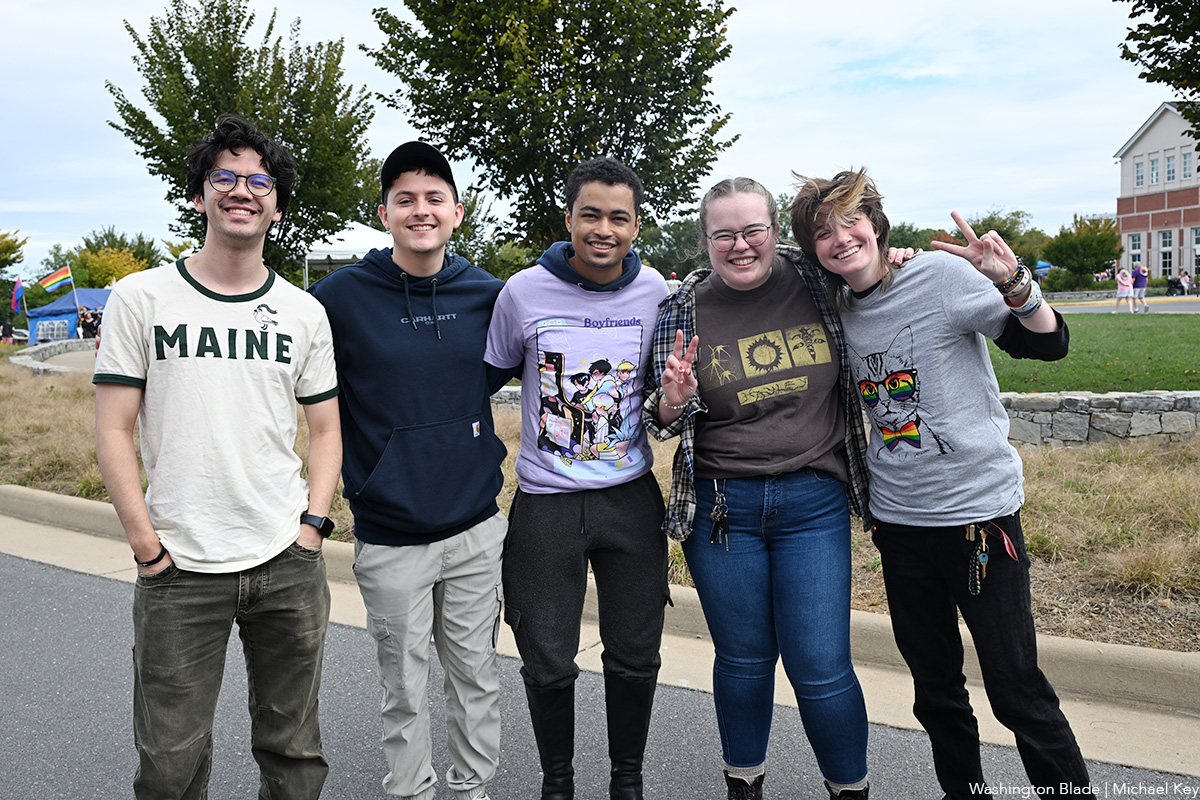
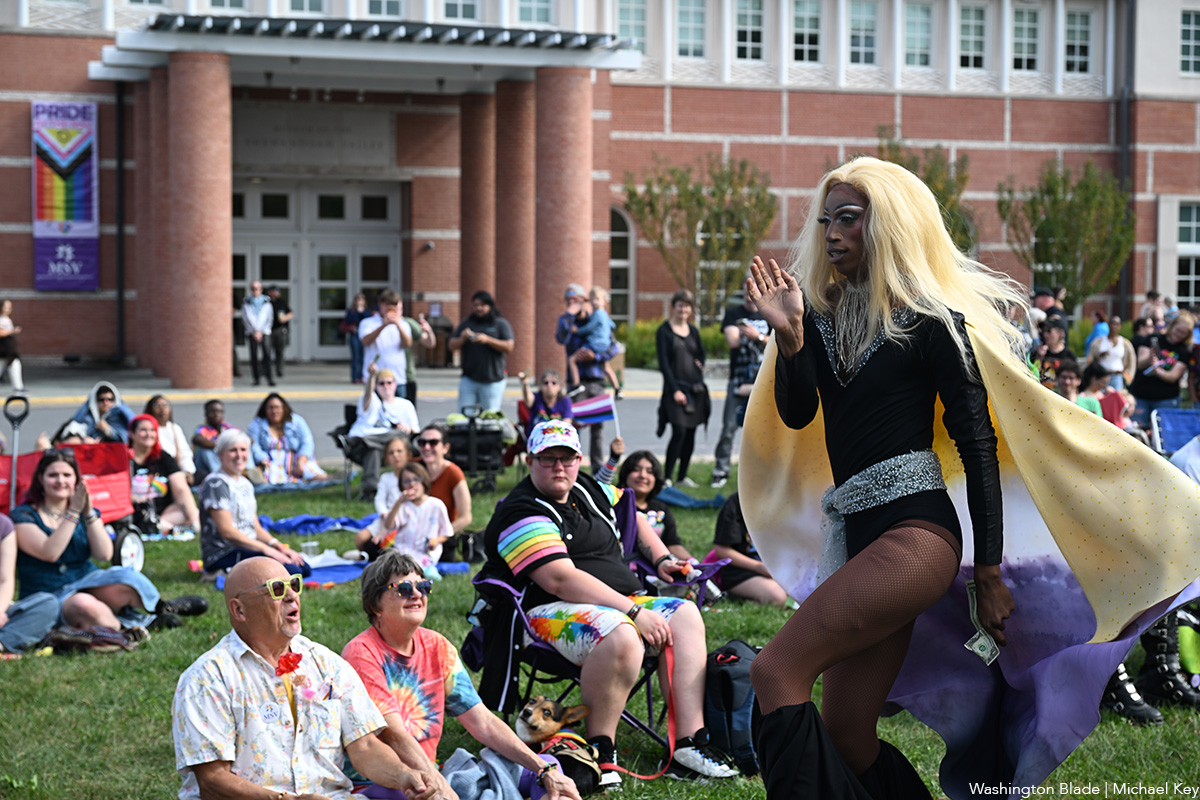
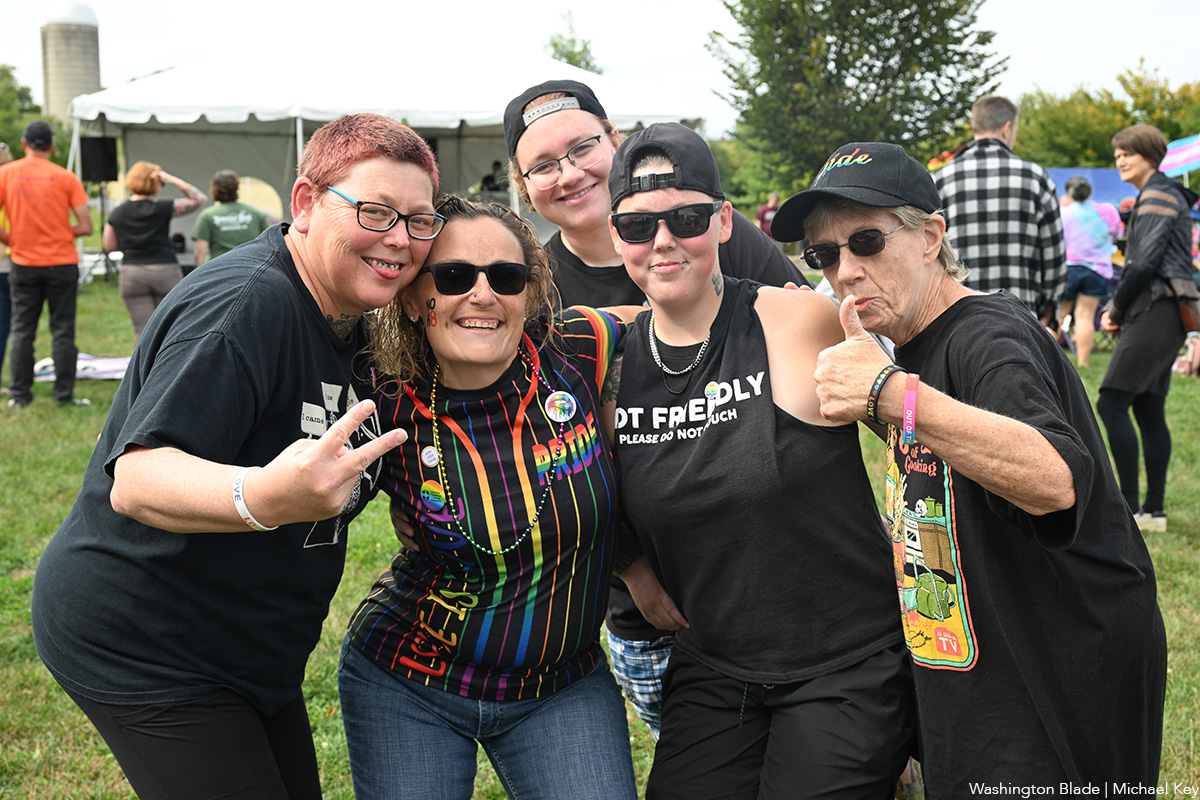
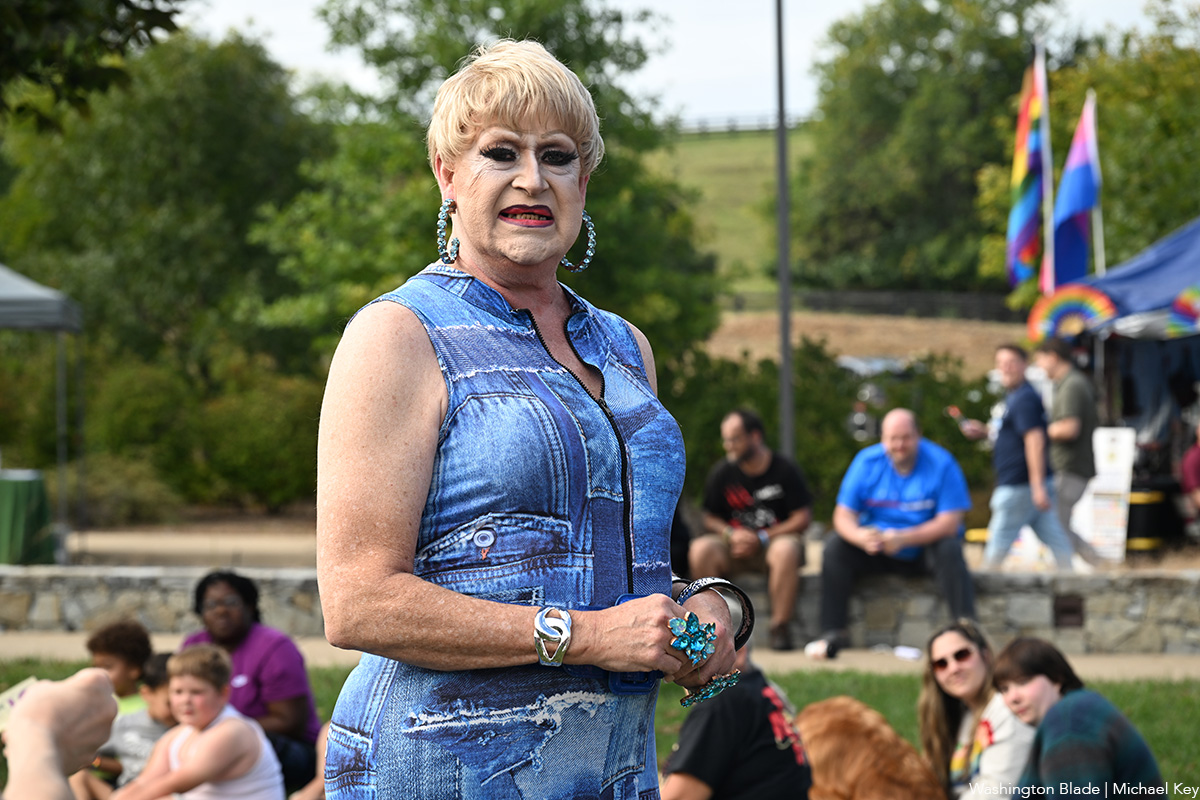
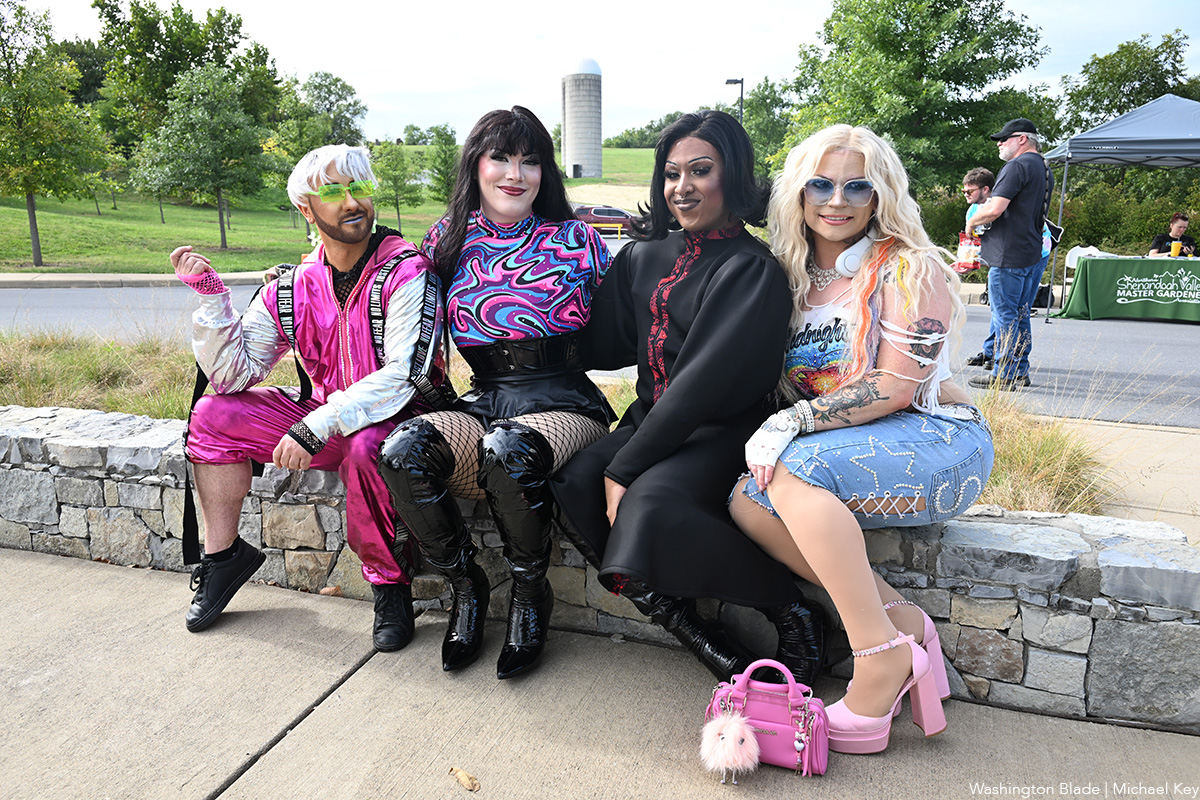
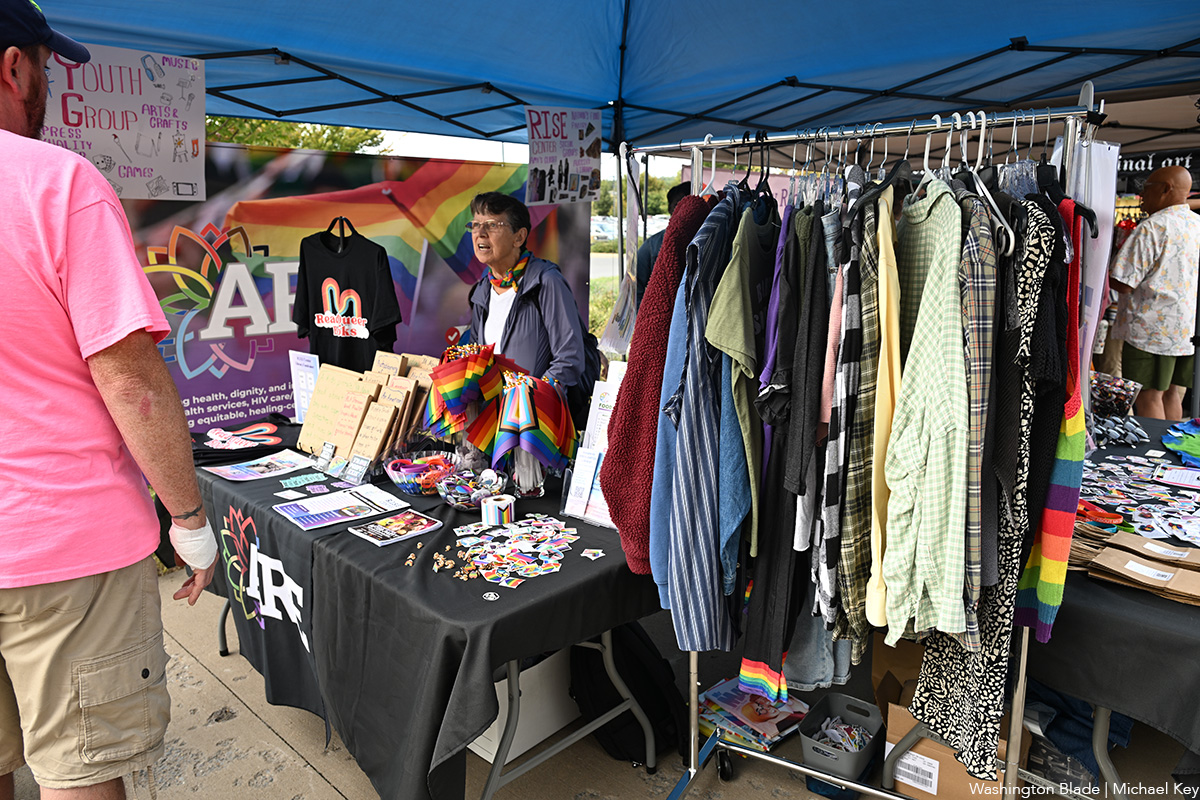
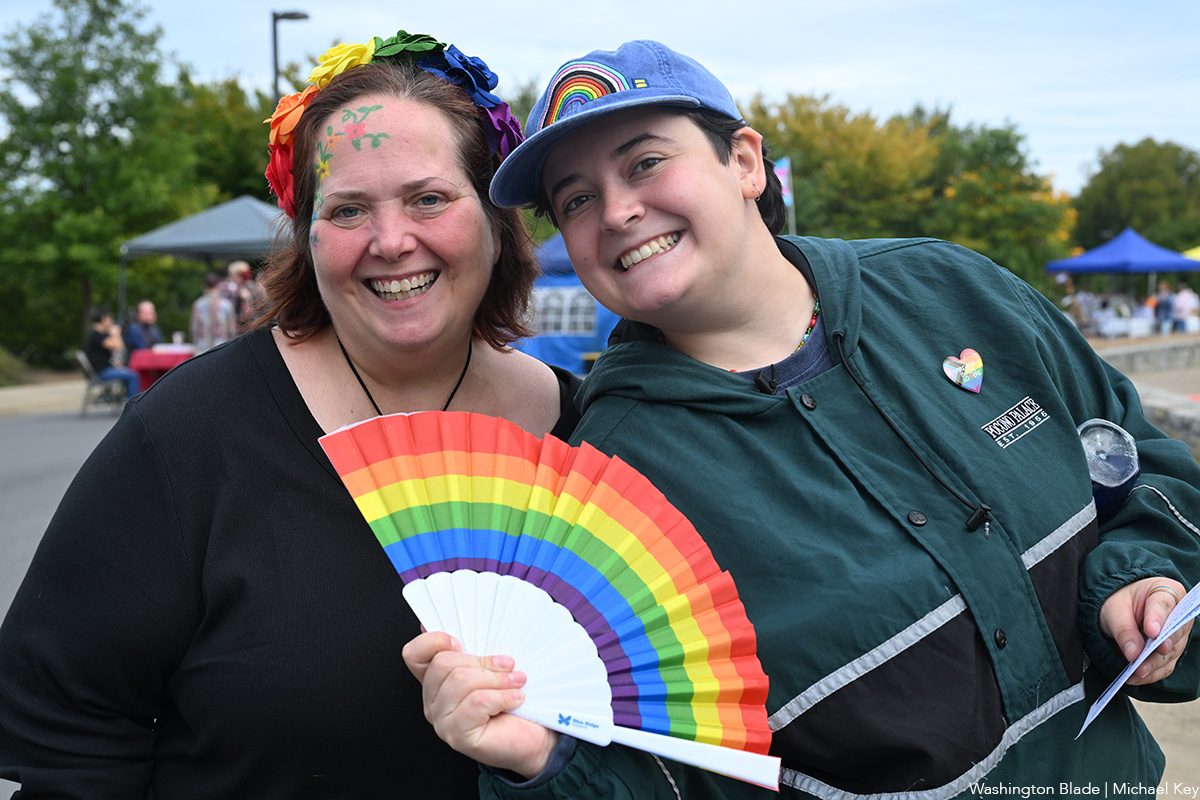
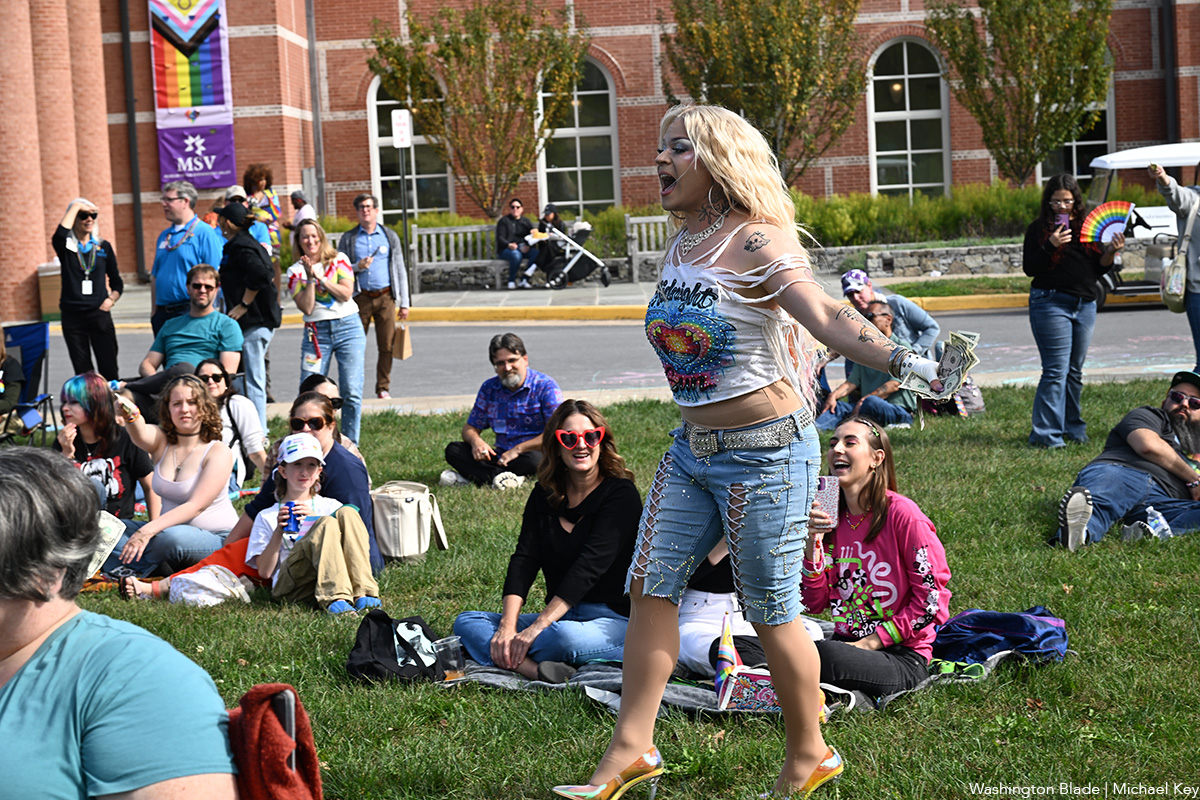
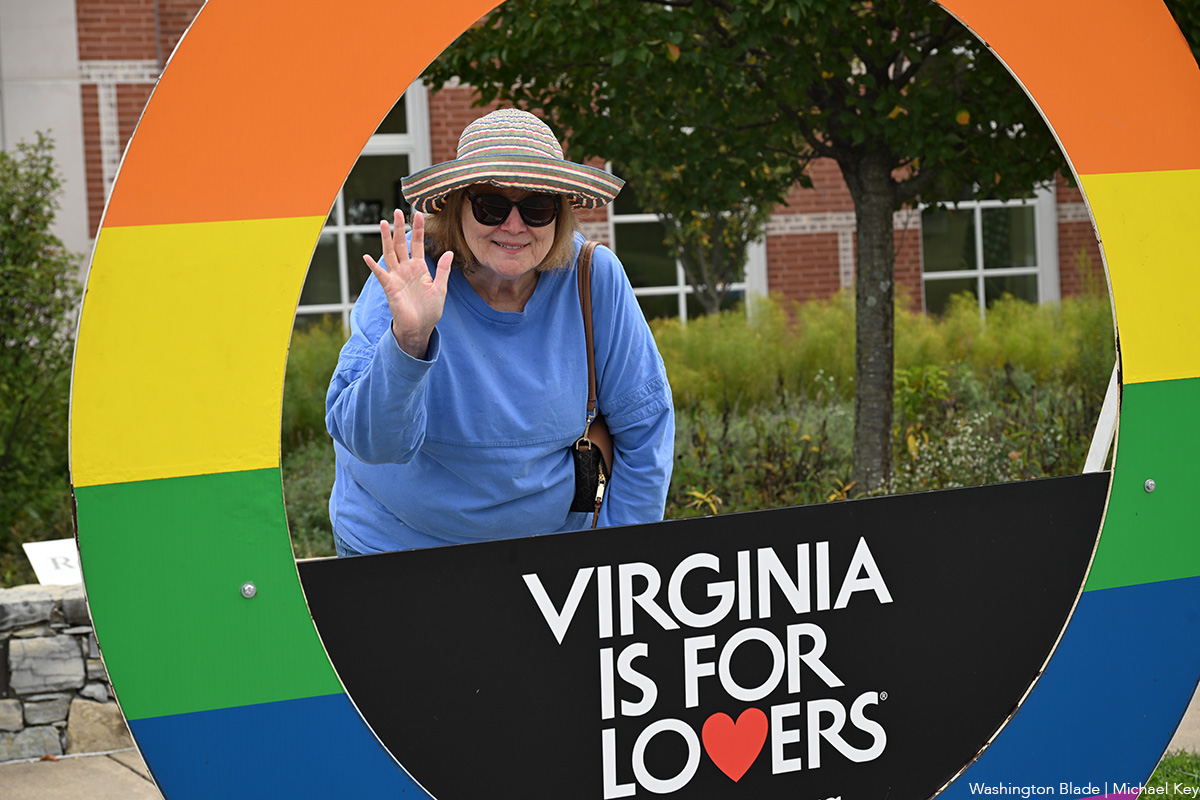
PHOTOS: Winchester Pride
Annual LGBTQ celebration held at the Museum of the Shenandoah Valley
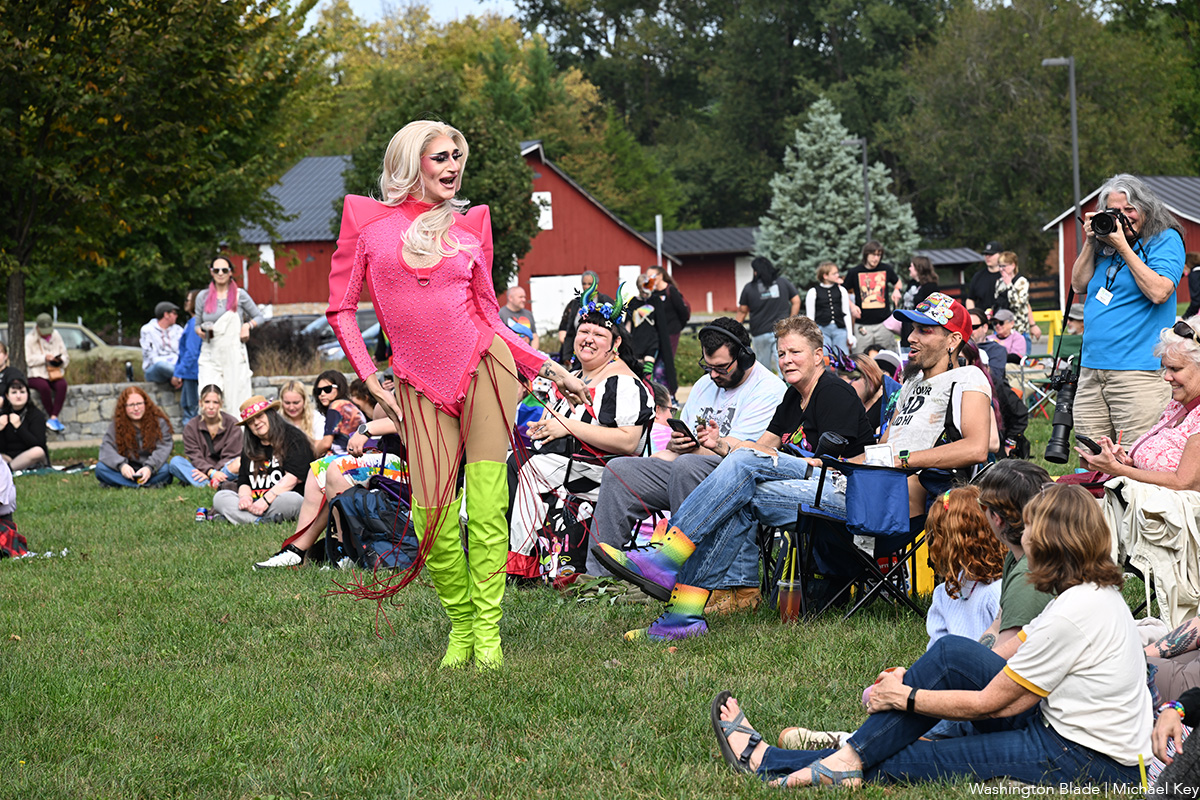
The 2026 Winchester Pride Festival was held at the Museum of the Shenandoah Valley in Winchester, Va. on Saturday, Oct. 3.
(Washington Blade photos by Michael Key)







Trump uses anti-trans slur against Democratic Senate candidate

D.C.’s LGBTQ homeless facilities face possible hit from Trump funding cuts

10 years later, we still can’t shake Barry Jenkins’s ‘Moonlight’

‘Some Like It Hot’ a wild ride at renovated Bernard Family Theatre

Bessent says Trump chose him for his qualifications, not his sexuality

Eliot Glazer’s new book an engaging collection of essays

Equality Chamber hosts Pride in Business Expo and Profits & Pours

Learn more about Virginia’s queer history

Lula, Flávio Bolsonaro to face off in second round of Brazilian presidential election

‘Merrily’ is for Sondheim super fans, the uninitiated, and anyone in between
-

 Books3 days ago
Eliot Glazer’s new book an engaging collection of essays
-
Out & About3 days ago
Equality Chamber hosts Pride in Business Expo and Profits & Pours
-
Out & About3 days ago
Learn more about Virginia’s queer history
-
Brazil3 days ago
Lula, Flávio Bolsonaro to face off in second round of Brazilian presidential election