Arts & Entertainment
Elisabeth Hasselbeck prayed after hearing Rosie O’Donnell had a crush on her
The comedian says there were ‘underlying lesbian tones’
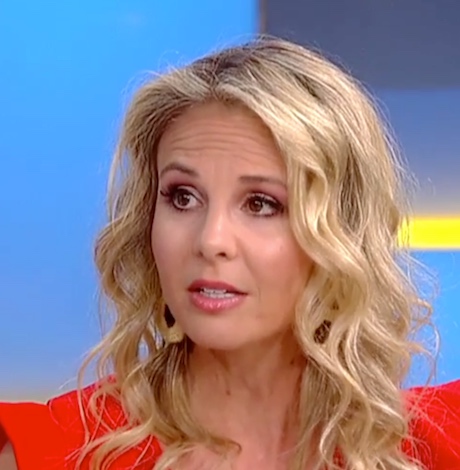
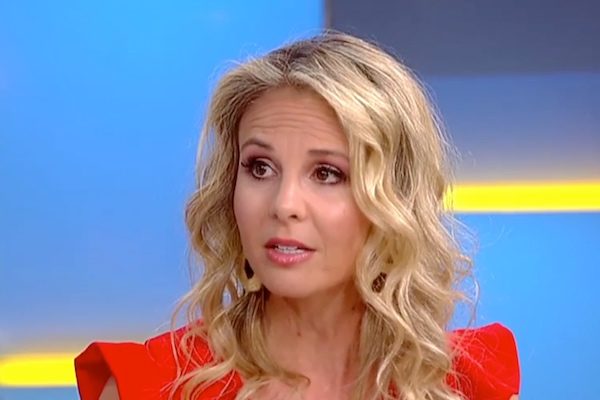
Elisabeth Hasselbeck says she “immediately started praying” after hearing that Rosie O’Donnell had a crush on her when they were co-hosts on “The View.”
In O’Donnell’s new memoir “Ladies Who Punch: The Explosive Inside Story of ‘The View,'” O’Donnell revealed she once had a “little bit of a crush” on Hasselbeck but that it wasn’t sexual.
“Not that I wanted to kiss her. I wanted to support, raise, elevate
Hasselbeck appeared on “Fox & Friends” on Tuesday and called O’Donnell’s comments “disturbing.”
“I’ll be very honest. I read it and I immediately started praying. Because I’m like, how am I going to handle this in my old self would be another
She continued: “I think what she said was reckless, untrue and, not only insulting, disturbing when it comes to how she felt about somebody in the workplace. If you replace what Rosie said and you take her name out and you put in ‘Reuben’ or ‘Robert’ then we would be in a situation where you would see the objectification of a woman in the workplace. That’s disturbing because where we may be really against that when it comes from a man to a woman, you don’t get a pass because you’re a lesbian objectifying a woman in the workplace. You just don’t.”
O’Donnell also noted in her book that there were “underlying lesbian tones on both [of their] parts” and hinted it was because Hasselbeck is a former softball player.
“There are not many, in my life, girls with such athletic talent on sports teams that are traditionally male that aren’t at least a little bit gay,” O’Donnell wrote.
Hasselbeck felt O’Donnell was stereotyping women who play sports.
“I think her casting a stereotype on female athletes and what she said … that all female athletes are a little bit gay … I would say this directly to her, and I would say, ‘That’s an unfair stereotype and it seems selfish in a way and I think that it’s untrue,'” Hasselbeck says.
Ultimately, Hasselbeck says she forgives O’Donnell despite her “disturbing” and “offensive” remarks.
“I can handle that with the grace of God because I need grace and I need forgiveness,” Hasselbeck says. “So Rosie, I think it was disturbing to read those things and it was offensive to me, but I forgive her. I totally forgive you, Rosie. I really hope that we can be at peace and that we can both hold our beliefs in one hand and hold each other’s hand in the other and still have a relationship that’s at peace.”
O’Donnell responded on Twitter that she’s “sorry” Hasselbeck “got scared.”
hey eh – my crush on u was not sexual – sorry u got scared – ❤️surely u recall b4 it all went wrong – i never objectified u – i did find u fantastic – broadway shows – my pool -we were friends once ❤️ god love ya kid – i always did #hasselbeck #raminSUX
— ROSIE (@Rosie) March 26, 2019
Hasselbeck and O’Donnell’s infamously butted heads on “The View”during an argument about the Iraq War in 2007.

Books
Eliot Glazer’s new book an engaging collection of essays
From growing up gay to turning down ‘Queer Eye’
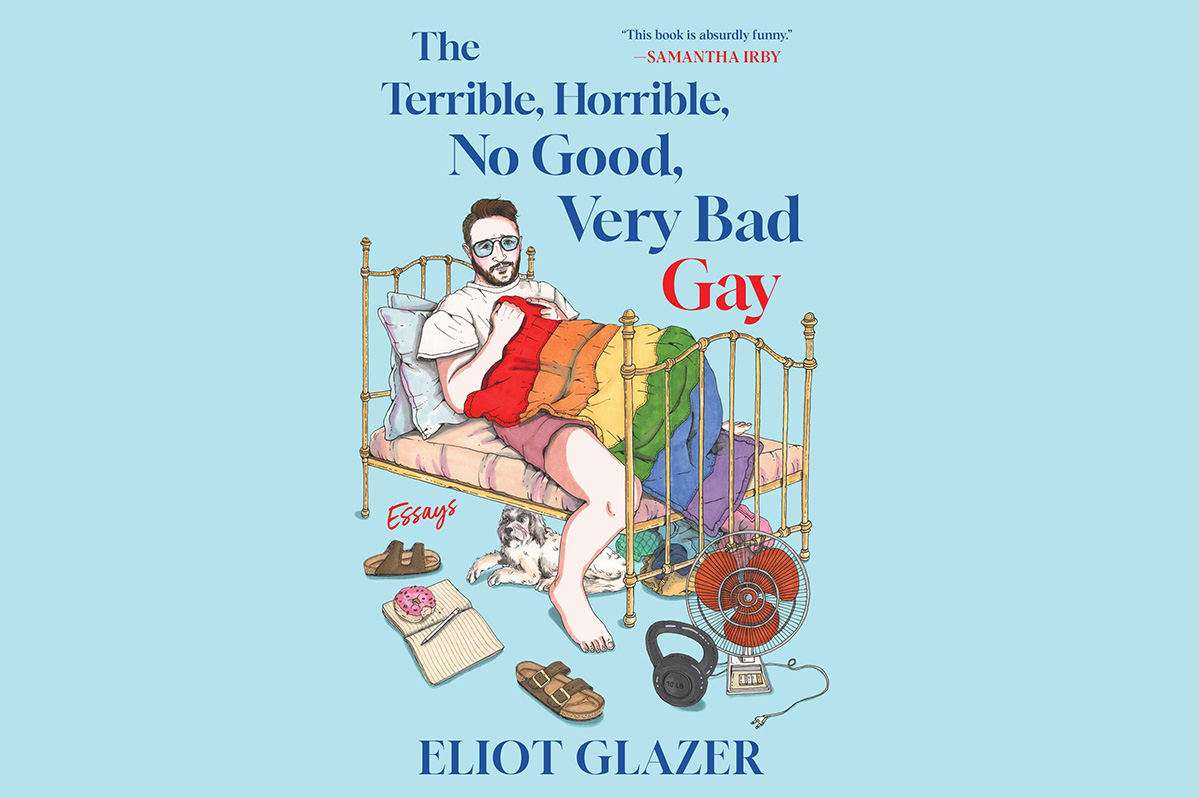
“The Terrible, Horrible, No Good, Very Bad Gay: Essays”
By Eliot Glazer
c.2026, Gallery Books
$28.99/240 pages
You try and you try.
Once, twice, you go back at that thorny issue, the dream you have, the punchline that’s not hitting quite right. Sometimes, time is all you need to make it better, or a new approach, or a second look. And then there are days when you actually get things right, as in “The Terrible, Horrible, No Good, Very Bad Gay” by Eliot Glazer, and it’s all good.

Throughout his life, Eliot Glazer has made mistakes. And it’s OK, everybody trips and falls now and then. In his case, though, he’s perfectly willing to document his failures, foibles, and whoopsies in this book.
He writes of his mother, Sandi, “a Queens-born balabosta” who wouldn’t tolerate laziness in herself or Glazer. He found work as soon as he was legally able to do so, and he had many jobs throughout high school. He was a gardener, ice cream scooper, camp counselor, golf caddy, chocolatier, telemarketer, and video store clerk. The one that fit him best, however, was working at Talbots, a department store for older women, where he found his people.
Even with all those jobs, he was a theater kid in his time off, little though it was. Back then, he was just a boy growing up on Long Island but swagger was important, so swagger he did. He still appreciates a good Broadway show, even the silliest ones.
Glazer says that he had just recently come out when gayness exploded on TV with “Will & Grace” and “Queer Eye for the Straight Guy,” with which he was obsessed. It helped him feel not othered, he says. Producers of the reboot asked him to be a second-generation Eye, but Glazer turned them down, though he thinks he’d have been good at it.
The show helped him with love of décor. His unexpected advisory skills came naturally, through age and wisdom and learning that wild partying isn’t really so much fun.
As for finding love, well, that’s a long, boy-meets-boy-meets-boy story…
So you’re looking for something to easily pick up and put down, something that speaks to your inner impatience? You’ll find that in “The Terrible, Horrible, No Good, Very Bad Gay,” a book that’s practically meant for you to skip around and you don’t have to read everything.
Essays can be like that, which is nice, even refreshing. Author Eliot Glazer is entertaining enough to make things work, engaging enough to keep it moving, and funny enough to make you want more of what he has to say. He’s open with his life and, despite his fame, his writing isn’t lofty; you can expect stories that’ll make you snort and ones with spice, but also some surprisingly tender moments that soften this book in a way that’s just right.
Readers who want a quick, mostly light book to finish will find something appealing in this collection of essays. If you don’t mind a bit of non-linearity and you need a laugh, “The Terrible, Horrible, No Good, Very Bad Gay.” is worth a try.
The Blade may receive commissions from qualifying purchases made via this post.
Out & About
Equality Chamber hosts Pride in Business Expo and Profits & Pours
Entrepreneurs, business leaders, professionals to meet at Mayor’s Office of LGBTQ Affairs

The Equality Chamber of Commerce is bringing together LGBTQ+ entrepreneurs, business leaders, professionals, advocates, and community partners on Thursday, Oct. 15 at 2:30 p.m. at the D.C. Mayor’s Office for LGBTQ Affairs (899 N. Capitol Street, NE).
This is an afternoon and evening focused on one essential question: How do we build businesses and a business community that can thrive? The Pride in Business Expo and Profits & Pours with Stephanie will create a powerful forum for connection, practical knowledge, and economic opportunity at the Mayor’s Office of LGBTQ Affairs. The Pride in Business Expo, taking place from 4-7 p.m., brings the region’s LGBTQ+ business community together to showcase businesses, build relationships, discover resources, and create new opportunities.
Out & About
Learn more about Virginia’s queer history
‘The Remarkable Visibility of Hannah Nokes’ event scheduled for Wednesday
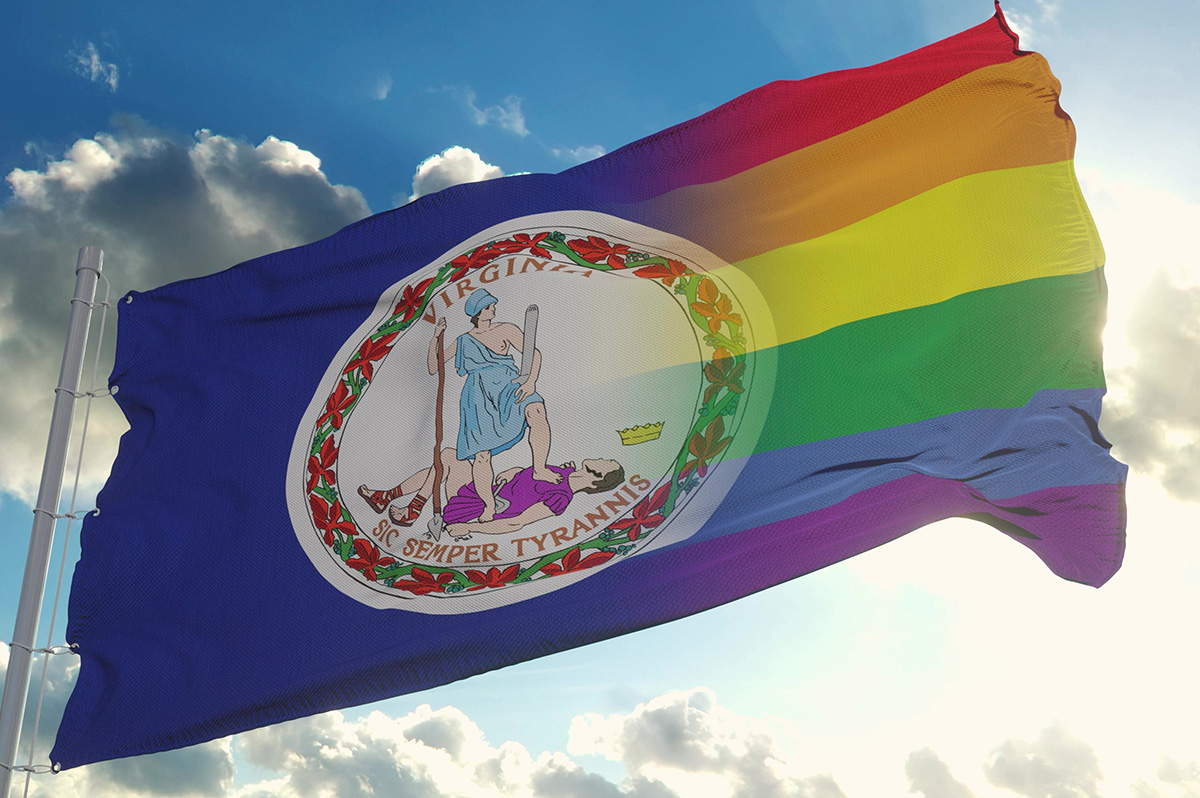
Queer Virginia Contributor Amy Bertsch will host “The Remarkable Visibility of Hannah Nokes” on Wednesday, Oct. 14 at 6 p.m. at Sprouse Rare Book Room inside the Kate Waller Barrett Branch Library (717 Queen St., Alexandria, Va.).
Amy will share the story of Hannah Nokes, an African-American transgender woman who made headlines in 1933 when she testified in a high-profile murder trial. Learn about Nokes’s life, her place in history, and the broader social context of her remarkable story. Her story is among those featured in the book “Queer Virginia: New Stories in the Old Dominion.”
Register at the Alexandria Library website.

Eliot Glazer’s new book an engaging collection of essays

Equality Chamber hosts Pride in Business Expo and Profits & Pours

Learn more about Virginia’s queer history

Annapolis Pride arrives this weekend

Calendar: October 2-8

529 openly LGBTQ candidates running in Brazilian election

Ana Brnabić becomes world’s first openly lesbian head of state

Meet the LGBTQ candidates running for U.S. House, Senate

Vote now! Best Of LGBTQ DC readers’ choice awards

Gay Va. couple hopeful voters will enshrine marriage equality in state constitution
-

 Brazil5 days ago
529 openly LGBTQ candidates running in Brazilian election
-
Serbia4 days ago
Ana Brnabić becomes world’s first openly lesbian head of state
-
2026 Midterm Elections4 days ago
Meet the LGBTQ candidates running for U.S. House, Senate
-
Arts & Entertainment4 days ago
Vote now! Best Of LGBTQ DC readers’ choice awards