News
SERVE Act seeks to aid trans troops discharged under Trump ban
Gay troops expelled under ‘Don’t Ask’ also covered
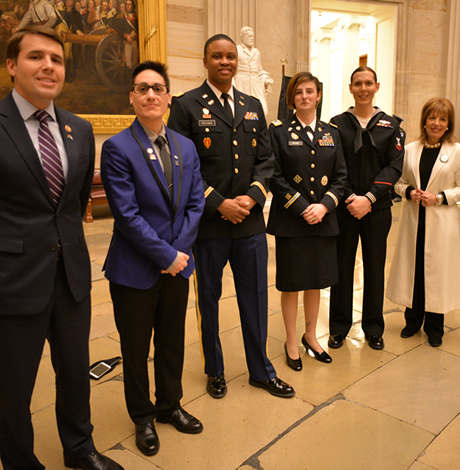
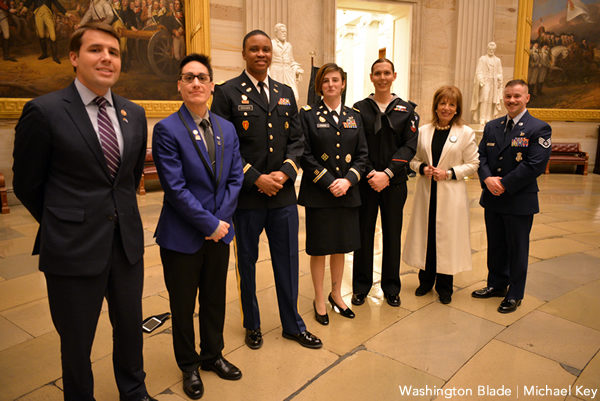
In the wake of the Trump administration implementing its ban on transgender military service, Rep. Chris Pappas (D-N.H.) has introduced legislation in the U.S. House that seeks to ensure service members discharged under the policy are eligible for care from the Department of Veterans Affairs.
The Securing the Rights our Veterans Earned Act, or SERVE Act, requires the VA to provide health benefits to these troops if they obtain an “Other Than Honorable” or “Entry-Level Separation” discharge because of their gender identity.
Further, the legislation ensures coverage to gay veterans expelled under the now defunct policy of “Don’t Ask, Don’t Tell” who haven’t had their discharge papers corrected.
Pappas, who’s gay and a co-chair of the LGBT Equality Caucus, said a statement the legislation would aid LGBT veterans as LGBT advocates continue the fight to lift the transgender ban and expedite the process for upgrading the papers for discharges under “Don’t Ask, Don’t Tell.”
“As we work to improve care for veterans and combat the national crisis of veteran suicide, we cannot forget the more than 15,000 transgender service members and veterans whose benefits may be at risk because of this administration’s discriminatory transgender ban and those left behind by ‘Don’t Ask, Don’t Tell’ in years past.” Pappas said. “As we fight to reverse this Administration’s backwards ban, I am proud to introduce legislation that will help protect our LGBTQ veterans and ensure they are able to access the care they need. It’s the least we can do given their selfless service to our country.”
The original co-sponsors of the bill are Reps Joseph Kennedy III (D-Mass.), chair or the Congressional Transgender Task Force, Reps. Jackie Speier (D-Calif.), Gil Cisneros (D-Calif.), Anthony Brown (D-Md.), Kathleen Rice (D-N.Y.) and Mike Levin (D-Calif.).
“The bias and bigotry of this president should not be used to deny health care to any LGBTQ veteran who has served this nation,” Kennedy said in a statement. “By passing the SERVE Act, we will protect transgender veterans until the day we overturn this cruel, misguided ban on transgender troops.”
The Department of Veterans Affairs currently has a policy against payment for gender reassignment surgery. A Democratic aide said the SERVE Act wouldn’t change the care VA currently offers, but instead simply extend those benefits to those being denied that care because of their discharge status.
Andy Blevins, executive director of the newly formed Modern Military Association of America, commended lawmakers for introducing the SERVE Act in a statement.
“Introduction of this Act signals to our nation’s LGBTQ veteran community that our nation’s Congressional leadership stands alongside them and their honorable service,” Blevins said. “We applaud Congressman Pappas and the cohort of leaders that signed on to co-sponsor this tremendous piece of legislation; we look forward to working alongside each of them as we solidify equitable treatment and conditions for all of our nation’s deserving veterans.”
A Senate companion to the legislation isn’t yet introduced.




Florida
DeSantis signs emergency bill that restores Fla. ADAP funding
Temporary funds to last through June 30
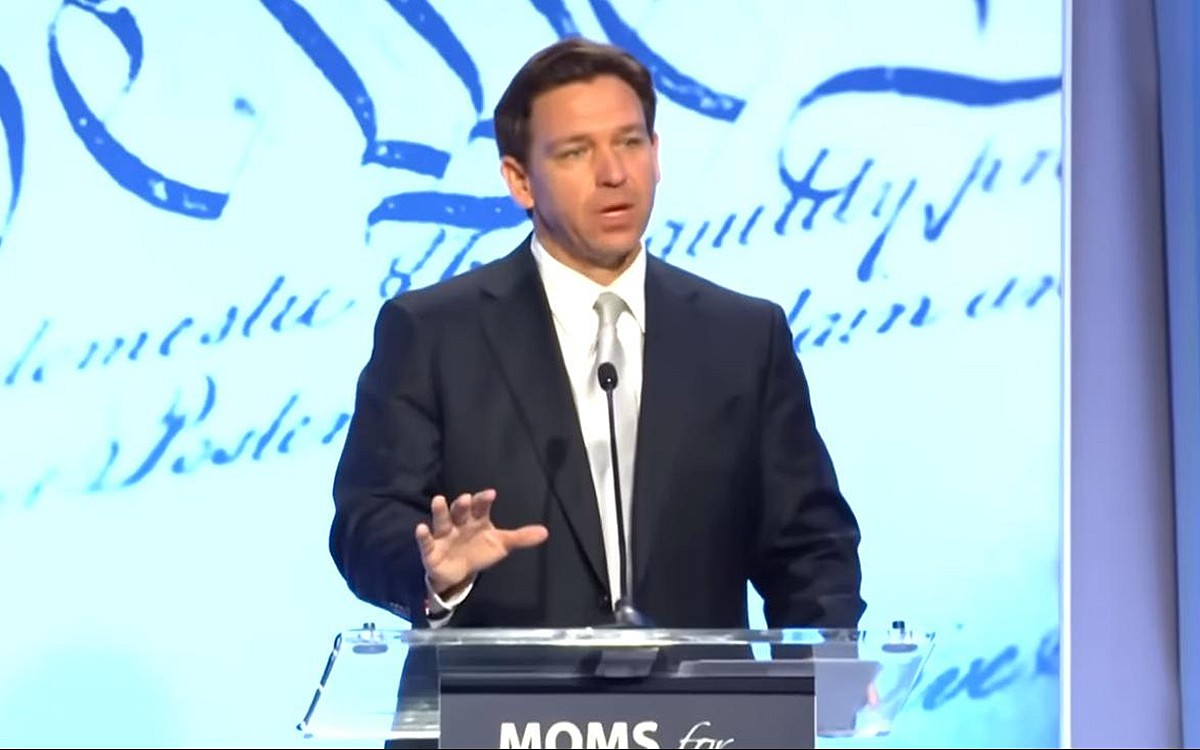
After the Florida Department of Health made huge cuts to the AIDS Drug Assistance Program in January, Republican Gov. Ron DeSantis has signed emergency legislation restoring HIV access to more than 12,000 Floridians.
Two months ago, as the Washington Blade reported, the Sunshine State cut the vast majority of those in ADAP by shifting the income levels required for eligibility — without following standard procedure when changing government policy outside of legislative or executive action.
The bill, signed by DeSantis on Tuesday, passed both chambers of the Florida Legislature unanimously and appropriates $30.9 million in emergency bridge funding through June 30, 2026. It restores Florida’s ADAP income eligibility to 400 percent of the Federal Poverty Level — the level it was prior to the January cuts. The legislation also requires the FDOH to submit detailed monthly financial reports to legislative leadership beginning April 1.
Under the old policy, eligibility would have been limited to those making no more than 130 percent of the federal poverty level, or $20,345 per year.
“For 10 weeks, 12,000 Floridians living with HIV did not know if they could fill their next prescription. Today, they can,” Esteban Wood, director of advocacy and legislative affairs at AIDS Healthcare Foundation, said in a statement.
The detailed reports now required to be sent to legislative leadership must include all federal revenues and expenditures, including manufacturer rebates; enrollment figures by county and insurance status; prescription utilization by drug class; and any projected funding shortfalls. This is the first time the Legislature has required this level of financial transparency from the program.
DeSantis signed the legislation one day after a Leon County Circuit Court judge denied AIDS Healthcare Foundation’s request for an injunction to block the significant changes the DeSantis administration is making to the program, which it claims faces a $120 million shortfall for calendar year 2026.
AIDS Healthcare Foundation, a national organization focused on protecting and expanding HIV healthcare access and prevention methods, filed a lawsuit over the change in eligibility, arguing the Florida Department of Health did not follow the laid out path for formally changing policy and was acting outside established procedures.
Typically, altering eligibility for a statewide program requires either legislative action or adherence to a multistep rule-making process, including: publishing a Notice of Proposed Rule; providing a statement of estimated regulatory costs; allowing public comment; holding hearings if requested; responding to challenges; and formally adopting the rule. According to AIDS Healthcare Foundation, none of these steps occurred.
The long-term structure of ADAP will be determined by the 2026–2027 fiscal year state budget, something that lawmakers have until June 30 to finish.
India
Menaka Guruswamy celebrated as India’s first openly LGBTQ MP
Constitutional lawyer elected to Rajya Sabha on March 9
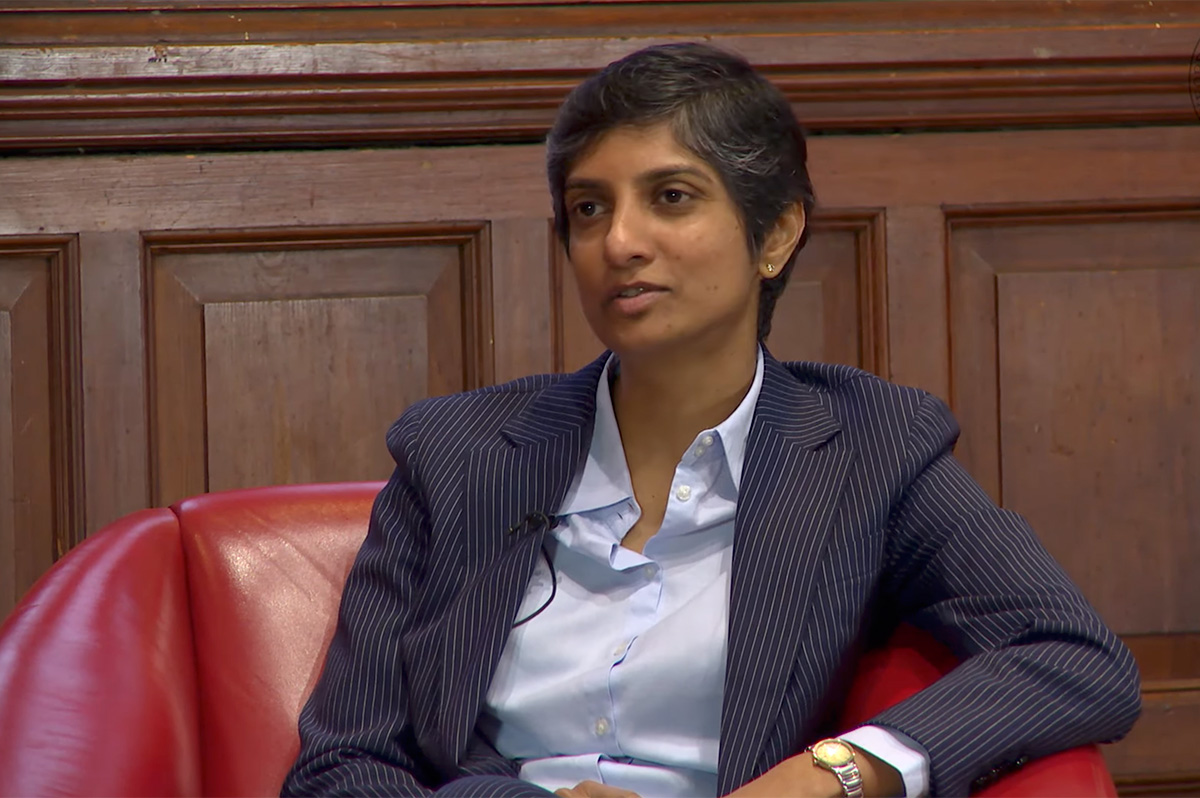
India’s LGBTQ community has found renewed hope in the election of Menaka Guruswamy, a lawyer who has argued before the Supreme Court, as the country’s first openly LGBTQ MP.
Guruswamy was declared elected unopposed to the Rajya Sabha, the upper house of Parliament, on March 9, representing West Bengal. The All India Trinamool Congress, the regional party that governs the state, nominated her.
Guruswamy is a constitutional lawyer who studied at Oxford University, Harvard Law School, and the National Law School of India University. She has argued several significant cases before the Supreme Court and is widely known for her work on constitutional law, civil liberties, and LGBTQ rights.
Guruswamy was part of the legal team that successfully challenged Section 377 of the Indian Penal Code, a colonial-era law that criminalized consensual same-sex sexual relations, which the Supreme Court struck down in 2018. She has also written and spoken extensively on issues of democracy, rights and institutional accountability.
Ankit Bhupatani, a global diversity, equity and inclusion leader and LGBTQ activist, welcomed Guruswamy’s election.
“This is significant not because Parliament needed a queer person, but because a queer person needed Parliament,” Bhupatani told the Washington Blade.
India has seen LGBTQ representation in elected office at the state and local levels, though it has remained limited.
In 1998, Shabnam Mausi was elected to the Madhya Pradesh Legislative Assembly from the Sohagpur constituency, becoming one of the first openly transgender people to hold public office in India. Mausi’s election marked a rare moment of visibility for trans people in the country’s political system, where representation has historically been sparse. Since then, a small number of openly trans candidates have contested and, in some cases, won local and state elections, but no openly LGBTQ person had been elected to Parliament before Guruswamy.
Guruswamy and her partner, Arundhati Katju, who is also a lawyer, were part of the legal team that played a central role in the Section 377 decision.
Representing one of the plaintiffs, the two lawyers helped frame the case around constitutional guarantees of equality, dignity, and privacy. The Navtej Singh Johar v. Union of India ruling marked a watershed moment for LGBTQ rights in India.
“For too long, we have fought our battles only in courtrooms and on streets. Now, there is a seat at the table where laws are written,” said Bhupatani. “Whether that seat produces change depends entirely on how it is used. Representation without substance is decoration. But as a beginning, yes. This matters.”
Guruswamy later represented the plaintiffs in the Supreme Court’s 2023 marriage equality case, Supriyo v. Union of India, which a 5-judge panel heard in the spring of 2023.
Along with other lawyers representing same-sex couples, she advanced arguments rooted in constitutional guarantees of equality, dignity, and personal liberty. The Supreme Court in a 3-2 decision on Oct. 17, 2023, declined to recognize same-sex marriage — holding that such a change falls within Parliament’s domain — but did acknowledge LGBTQ people face discrimination. The Blade previously reported the ruling underscored the court’s view that it could interpret the law, but could not create a new legal framework for marriage rights.
Bhupatani said Guruswamy’s election should not be seen as an immediate shift toward legislative action on LGBTQ rights, cautioning that such expectations may not align with political realities. He said her presence in Parliament could help sustain the issue in a way it has not been before, even as broader legal change is likely to take time.
“What she can do is keep the question alive inside Parliament in a way that it hasn’t been before,” Bhupatani said. “Legislative change in India on social questions usually takes longer than advocates want and shorter than skeptics predict. The 377 decriminalization seemed impossible until it wasn’t. Partnership rights will follow the same pattern eventually.”
Bhupatani added that while Guruswamy’s election may influence the pace of change, it does not, on its own, constitute a broader political movement.
“One person in Parliament, however extraordinary, is not a movement. She is an opening,” he said. “The 2023 ruling created a responsibility. Guruswamy’s election creates an opportunity to fulfill it from inside. Whether opportunity becomes outcome is entirely a question of human will.”
Guruswamy has served as a visiting faculty member at leading American institutions that include Yale Law School, Columbia Law School, and New York University School of Law. She has also worked with international organizations, advising the U.N. Development Fund for Women in New York and the U.N. Children’s Fund in both New York and South Sudan.
According to her professional profile, Guruswamy has been involved in a range of significant cases before the Indian Supreme Court that include matters related to bureaucratic reform and accountability.
One case is connected to the AgustaWestland helicopter deal, an investigation into alleged bribery in a multimillion-dollar defense procurement contract; litigation arising from the Salwa Judum case, in which the court examined the state-backed use of civilian militias in counterinsurgency operations in central India; and cases involving the implementation of the Right to Education Act, a law guaranteeing free and compulsory education for children between the ages of six and 14.
More recently, Guruswamy represented the All India Trinamool Congress in legal proceedings challenging searches conducted by India’s Enforcement Directorate, a federal agency responsible for investigating financial crimes, including money laundering and violations of foreign exchange laws. The searches were carried out at the offices of the Indian Political Action Committee, or I-PAC, a political consulting firm that provides data-driven campaign strategy and election management services to political parties. The case raised questions about the scope of investigative powers and the use of federal agencies in politically sensitive matters.
Guruswamy’s engagement with LGBTQ rights has extended beyond courtroom advocacy into public constitutional discourse.
On July 11, 2018, during hearings in the Section 377 case, she argued the criminalization law could not be justified on the basis of “social morality,” describing it as subjective and incompatible with constitutional guarantees, and framing the case as one fundamentally about “our humanity.” The Thomas Jefferson Foundation Medal in Law at the University of Virginia in February 2023 recognized Guruswamy and Katju for their work on LGBTQ rights.
Guruswamy has not responded to the Blade’s multiple requests for comment about her election.
District of Columbia
Gay priest credited with boosting church support for LGBTQ Catholics
Fr. Tom Oddo’s biographer speaks at Dignity Washington event
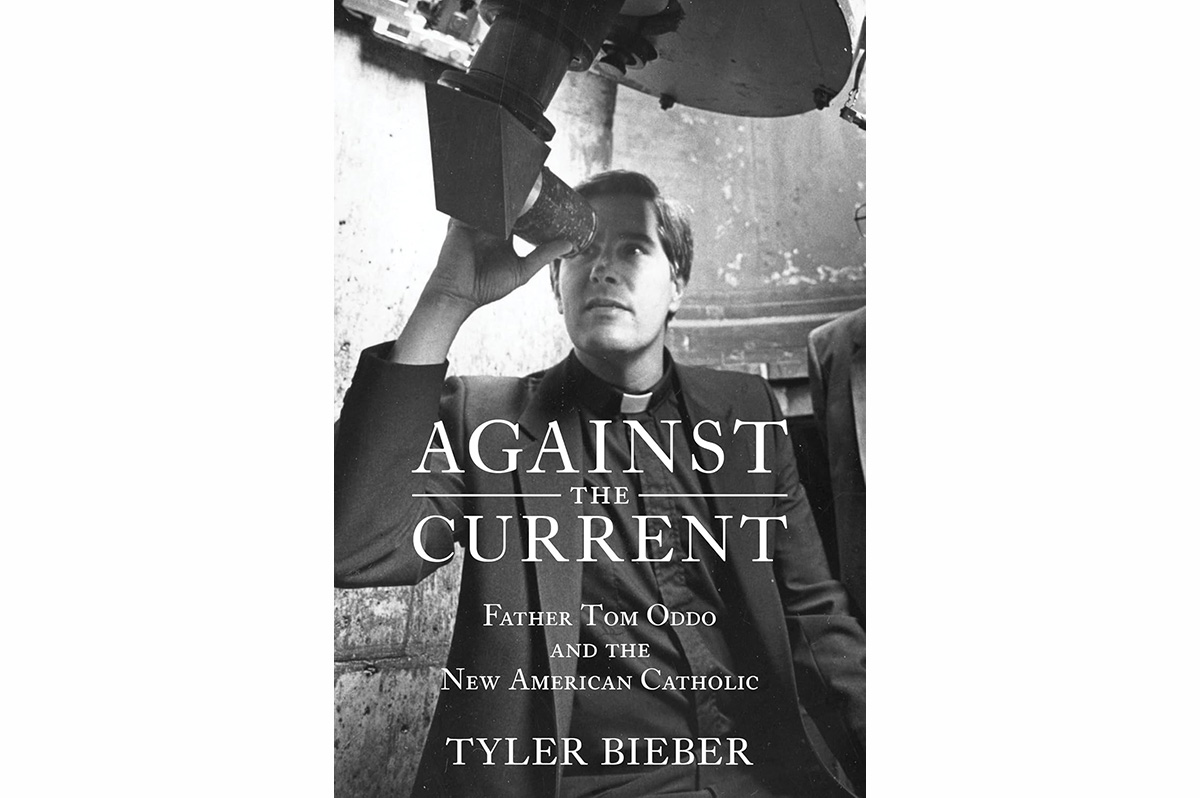
The author of a biography of a U.S. Catholic priest said to have advocated for support by the Catholic Church of gay Catholics in the early 1970s has called Father Thomas ‘Tom’ Oddo a little known but important figure in the LGBTQ rights movement.
Tyler Bieber, author of the recently published book “Against The Current: Father Tom Oddo And the New American Catholic,” told of Oddo’s life and work on behalf of LGBTQ rights at a March 22 talk before the local LGBTQ Catholic group Dignity Washington.
Among Oddo’s important accomplishments, Bieber said, was his role as a co-founder of the national LGBTQ Catholic group Dignity U.S.A. in 1973 at the age of 29.
But as reported in the prologue of his book, Bieber presented details of the sad news that Oddo died in a fatal car crash in 1989 at the age of 45 in Portland, Ore., where he was serving as the highly acclaimed president of the University of Portland, a Catholic institution.
“He was a major figure in the gay rights movement in the 1970s, an unsung hero of that movement,” Bieber told Dignity Washington members, who assembled for his talk in a meeting room at St. Margaret Episcopal Church near Dupont Circle, where they attend their weekly Catholic mass on Sundays.
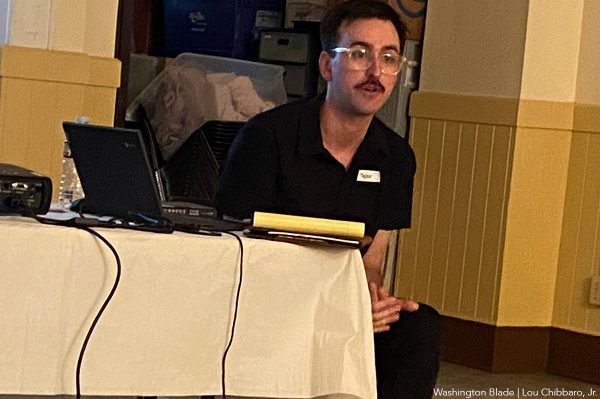
“And Dignity U.S.A. saw intense growth in membership and visibility” during its early years under Oddo’s leadership, Bieber said. “The story of Father Tom and his contemporaries is a story largely untold in the history of the gay rights movement, but one worth knowing and considering,” he said.
As stated in his book, Bieber told the Dignity Washington gathering Oddo was born and raised in a Catholic family on Long Island, N.Y., and attended a Catholic high school in Flushing Queens. It was at that time when he developed an interest in becoming a priest, according to Bieber.
After studying at the University of Notre Dame and completing his religious studies he was ordained as a priest in 1970 and began his work as a priest in the Boston area, Bieber said. It was around that time, Bieber told the Dignity Washington audience, that gay Catholics approached Oddo to seek advice on how they should interact with the Catholic Church. It was also around that time that Oddo became involved in a group supportive of then gay Catholics that later became a Dignity chapter in Boston.
In a development considered unusual for a Catholic priest, Bieber said Oddo in 1973 testified in support of gay rights bill before a committee of the Massachusetts Legislature and collaborated with then Massachusetts gay and lesbian rights advocate Elaine Noble.
In 1982, at the age of 39, Oddo was selected as president of the University of Portland following several years as a college teacher in the Boston area, Bieber’s book states. It says he was seen as a “vibrant and capable administrator who delivered real results to his campus,” adding, “His magnetism was obvious. One student described him as ‘John Kennedyesque’ to the university’s student newspaper.”
Bieber said that although Oddo was less active with Dignity U.S.A. during his tenure as UP president, he continued his support for gay Catholics and what is now referred to as LGBTQ rights.
“For those that knew him prior to his term at UP, though, he represented something greater than an accomplished university administrator and educator,” Bieber’s book states. “He was a new kind of priest, a gay man living and ministering in a world set loose from tradition by the Second Vatican Council,” the book says.
It was referring to the Vatican gathering of worldwide Catholic leaders from 1962 to 1965 concluding under Pope Paul VI that church observers say modernized church practices to allow far greater participation by the laity and opened the way for sympathetic consideration of gay Catholics.

DeSantis signs emergency bill that restores Fla. ADAP funding

Menaka Guruswamy celebrated as India’s first openly LGBTQ MP

Trans-led HIV clinic in Portsmouth struggles amid funding cuts

D.C. goes gaga for Gaga

Gay priest credited with boosting church support for LGBTQ Catholics

‘How We Survived’ panel set for March 25

Calendar: March 21-26

PHOTOS: Capital Stonewall Democrats 50th anniversary

‘Inherit the Wind’ isn’t about science vs. religion, but the right to think