a&e features
Character actor Leslie Jordan on his pony obsession, TV hits and misses and his dream threesome
‘Will & Grace’ actor returns to D.C. for Pride-week standup show June 5
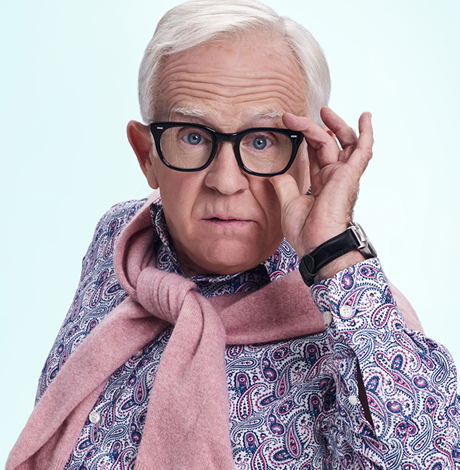
Washington Blade presents:
Leslie Jordan EXPOSED
Wednesday, June 5
7 (sold out) and 9 p.m.
Union Stage
740 Washington St., S.W.
$45 ($60 with meet and greet)
Actor/comedian Leslie Jordan returns to Washington for another Blade-sponsored stand-up show Wednesday, June 5. The “Sordid Lives”/“Will & Grace” Southern sissy spoke by phone two weeks ago from his Los Angeles home.
He doesn’t wait for a question — just starts things off with some bad news.
LESLIE JORDAN: I got this television series, which by the way, got canceled today.
WASHINGTON BLADE: Ohhhh
JORDAN: I’m gutted
BLADE: I’m so sorry.
JORDAN: I don’t care so much except the money was so good. I really liked that. I’m sure other things will come along, but it’s a political move. Twentieth Century Fox was bought by Disney and this new guy came in and it was really weird, he picked up only really dramas. And guess what’s going on in our place? (“WWE) SmackDown,” that wrestling show.
BLADE: How did you hear?
JORDAN: (Series creator) Charlie (Day) called me, who’s just so adorable. He did “It’s Always Sunny in Philadelphia,” he created the series and wrote it. First he sent me an e-mail and said, “Be ready because it’s probably going to happen.” Then he called us each personally which I thought was very sweet. … I don’t know, there’s a chance it could be picked up by another network so you just roll with the flow.
BLADE: How did you like working with (“Cool Kids” co-star) Vicki (Lawrence)?
JORDAN: We glommed on to one another from the moment we met. We’d met at the airport before in Puerto Vallarta and she said, “Oh, I remember,” and I thought, “She doesn’t remember me.” (Laughs) She was my best friend and is my best friend still. She’s more upset about it than I am, I think. But yeah, we got along so well. She’s exactly like you think she would be. It was so interesting on that show because all four of us (Jordan and Lawrence co-starred with David Alan Grier and Martin Mull) had such history in the industry. … It was kind of a companion piece to Tim Allen’s show (“Last Man Standing”) and I always forget, he’s just rabidly Republican so it’s a very conservative audience and we followed them with all kinds of shenanigans. We had gay people, gay people kissing.
BLADE: How did you feel it was going?
JORDAN: Well I knew there were some problems with the direction only because the network was there so much and I kind of thought at first well, maybe it’s because it’s a new show but oh my god, we would have rewrites right up until and even in front of our audience. But they did that on “Will & Grace” too, so I didn’t think that much about it. But then I think Charlie Collier, who’s the new person at Fox, he wanted to put his own stamp on things, so there’s that. I don’t think we did anything bad or wrong.
BLADE: How long is it usually in sitcoms from the night you tape until it airs?
JORDAN: The rule of thumb is you want about five in the can but we didn’t shoot in the same order they aired. We try to stay about five ahead so you can gauge the audience reaction. It’s a really interesting process for me, ‘cause I’ve been on other shows from the beginning but not where I was one of the lead lead leads.
BLADE: Do you prefer sitcoms to single camera?
JORDAN: My schedule on “Cool Kids” was the easiest schedule I ever have. You know, on “American Horror Story,” we did like 14-hour days. And we’d have big stars like Lady Gaga who could only give us one day so we had to get all her stuff in. That’s the difference between multi-cam, which was “The Cool Kids.” We’d be out in the woods in Malibu trying to make it look like it was Virginia. I don’t know how those people like (“American Horror Story” mainstay) Sarah Paulson do it. She’s such a trooper. She’s been doing it for years, all these 14-hour days. I don’t know how they do it.
BLADE: What do you do when you have downtime between shots?
JORDAN: I’m a big napper, which is funny because I don’t nap at home. Or I like to watch. I don’t mind sitting there on the set watching the other actors. I’d rather do that than sit in my trailer. I know people who watch TV, read a book. I read, but mostly on my way to work. And of course I’m a big yapper. Sometimes I have to go to my trailer because I just talk until I’m exhausted.
BLADE: Have you ever seen one of those big reclining boards they have on sets?
JORDAN: The only time I’ve ever seen that was on “The Help,” of all places. I haven’t done many costume dramas but on “The Help,” they had Jessica Chastain, who was kind of unknown then, I mean she’d done a couple movies, but she wasn’t anything like she is now, they had her in this gorgeous dress and she requested that. She couldn’t sit down so they just hung her up there like a bat. But yeah, it’s like a board where you have to put your arms up. I said, “You look so pretty hanging there.” She said, “I don’t want to wrinkle my dress.” I said, “God, you’re a trooper.” I’d wrinkle that dress, I couldn’t care less. Make ‘em steam it. (laughs)
BLADE: Have you ever spilled something just before a shot?
JORDAN: A hundred times. I’ll tell you what the worst is, you have to go pee real fast and you say, “I’ll be back in two seconds,” then you dribble. Then everybody’s looking and they take a hair dryer out (laughs). But I’m notorious. At lunch break when I’m on these shows, the costumers will come take my clothes off and put me in a T-shirt because I’m just notorious. When I was a little boy, I’d come home and my mom would say, “Oh, spaghetti, green beans …,” she knew everything I’d had because it was all over me.
BLADE: Tell us about your new live show.
JORDAN: I’m so proud of it, I think it’s the best of all my shows. I tell about each of my previous ones and within the journey of telling about all that and how it was when I first got to Hollywood, this wonderful kind of journey comes out about acceptance. I’m really proud of it. The last time I was in D.C. was the weekend of that devastating occurrence at the club in Orlando, you remember that? Oh honey, it was Pride weekend but that Sunday morning I was taken to the White House, they invited me, the Washington gay choir and Ty Herndon was there, because our ex-president and his lovely first lady wanted a gay presence there so I have this wonderful story and I end the show telling about that weekend.
BLADE: You were in our parade three years ago, and threw the first pitch at Night OUT plus your show. How was D.C. for you last time?
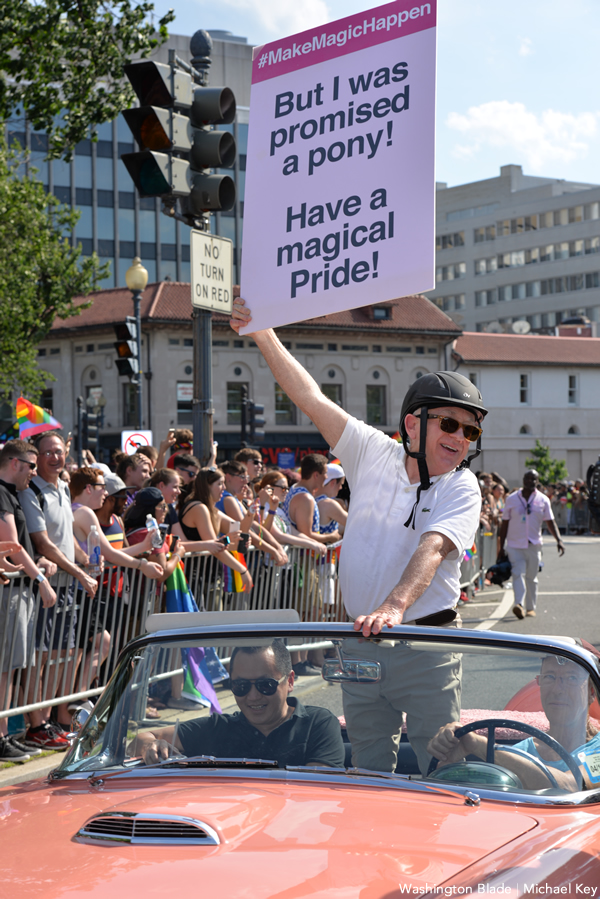
JORDAN: It was wonderful. The only thing was I wanted to ride a pony and they thought I was kidding. I showed up in my riding gear. I said, “Where’s the pony,” they said, “Oh we thought you were kidding.” I said, “Does it look like I’m kidding?” So I went to Kinkos and made a little sign that said, “I was promised a pony.” If you look at the pictures, it’s me in the back of a car in a riding outfit. Nobody knew what the fuck was going on.
BLADE: Have you done many Pride events?
JORDAN: So many over the years, I love it. I’ve been the grand marshal I can’t even tell you how many times. My favorite was years ago in Nashville, this was like 20 years ago. I said, “Y’all must be brave in Nashville, Tennessee, with all those rednecks,” and they said, “We do have a wonderful parade. It’s nothing like y’all get in L.A. It’s mainly a baton-twirling sissy and two lesbians.” I thought, “Well, that’s all you need for a parade — a baton-twirling sissy and two lesbians.” (laughs)
BLADE: Are you staying for the parade this year?
JORDAN: No, I have to get back to L.A. because I’m hosting an Actors Fund event for Lily Tomlin the night of the Tonys.
BLADE: Last time we talked you said things had dried up after you won your Emmy and that’s what led to your stage show, but lately you’ve been doing a lot of TV. How did you get hot again?
JORDAN: Well I’ve been able to balance the two really, really well. The TV stuff, I have no control over. It truly is just things falling into my lap but I have to be available for it. The year before we did “Cool Kids” (2017) I did 44 venues, which I love because of the immediate response of the audience. But you have to balance it because all the money’s in TV, you just can’t beat the money so that allows me to go on the road and I do really well. … Now to have done a full year on a show, that’s got to help my TV profile. Something’s gotta give here. I’m 64, I’ve been at it a long time. If you can get a series on the air for about four seasons, you’re set. It’s all gravy from there. But they’ve already called me for “Will & Grace” next season, they want to book me again for that. In a way I’ve done everything I really set out to do, so from here on out it’s all just fun.
BLADE: How many “Will & Grace” episodes have you done since it came back?
JORDAN: Let me see, I’ve done three. One was a Christmas episode where you barely saw me but then I did a hilarious one last season where they named the wall after me because I gave so much money to the Republican party and then Karen wants her name on the wall and we got rolled over to Mexico and put in those cages (laughs). But anyway, it was wonderful. But (co-creator) Max (Mutchnick) had called me and asked if I wanted to come back. I said, “Of course, but you killed me.” He said, “Don’t worry, we’ll figure something out,” so they ended up just kind of dropping that finale because it was just too much going on there. I didn’t do the first one, they were already like five in by the time I was there so they’d had their little reunion, but … Megan Mullally gave me the sweetest compliment. She said, “I never lost Karen Walker, but tonight bantering with you, I believe Karen Walker is truly back.” I thought that was sweet.
BLADE: What do you think of this trend of rebooting so many classic shows? Especially the ones like “Dynasty” or “MacGyver” they do with new casts?
JORDAN: I wonder why with all these platforms now, people aren’t open to new ideas. It’s harder now. My friend Del Shores and I come up with these ideas all the time and go to pitch’ em and they just stare at us. Maybe we’re just too old and it’s just kids running the shows now. Of course, you wanna bring stuff back but it gets a little ridiculous after a while.
BLADE: What’s something you like and don’t like about the way the industry has evolved in let’s say the last 10 years or so?
JORDAN: I like the way in which gay characters are portrayed, I really like that. It’s been a long journey since I got here in 1982. It was very wink-wink. You’d go out at night to the gay bars and see every producer and casting director in town, then you’d see them on the job and it was very wink-wink, very different than it is today. What I don’t like about the industry today is there seems to be no sense of history. I got so upset the other day because somebody online, a TV critic, called our show “The Cool Kids” a snoozefest and I wanted to write him and say I would love for you to come to 20th Century Fox to stage 17 and see the 80-odd people who come in sometimes at 4 o’clock in the morning to create this snoozefest. The four leads on that show have more combined TV history than you would if you worked the rest of you entire life. It’s so casual and easy to critique and everybody’s a critic now. I wanted to say, “Young man, you need to respect your elders.” (laughs)
BLADE: Last time we talked you were excited about having lost weight. Have you kept it off?
JORDAN: No, I’m fat as a pig. I went over to the equestrian center, I wanted to ride a pony, they have a beautiful pony there, and they said, “No, you’re too fat.” I gained more weight on this “Cool Kids,” but no, I’m gonna try to get it off. But I’m not trim at all. I’m as big as Dallas and half of Fort Worth.
BLADE: What happened?
JORDAN: The catering on “The Cool Kids” was ridiculous. They’d come to me and say, “Leslie, there’s this little Asian lady over there cooking rice balls,” and I’d go, “We just had tacos.” It was like being in a food mall. The food was constant, so I’ve got to get that off. I mean I’m not fat, fat. I’ve gained about eight pounds, but on me, I’m like a little beach ball with arms.
BLADE: Who’s your dream threesome?
JORDAN: I think Eddie Redmayne is adorable. Oh, I don’t know, I’m so old I don’t even think about that anymore (laughs). My biggest crush has always been Mark Harmon. I’ve known him 20-30 years and he just gets better and better looking. Same with George Clooney. I did a series with George a hundred years ago. So that’s a funny threeway — Mark Harmon, Leslie Jordan and George Clooney.




a&e features
Award-winning D.C. chef reaching new culinary heights
Anthony Jones of Marcus DC competing on ‘Top Chef’
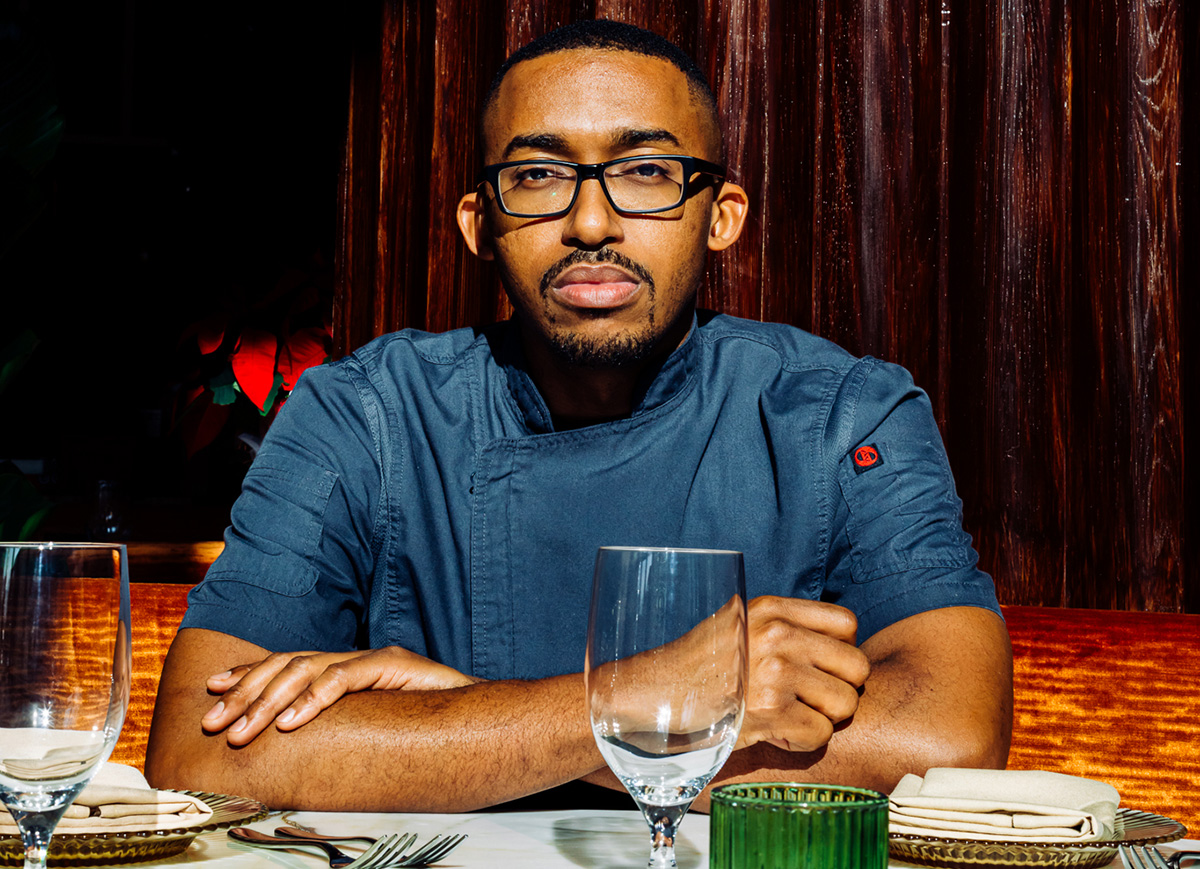
In Anthony Jones’s kitchen, all sorts of flags fly, including his own. Executive chef at award-winning restaurant Marcus DC, Jones has reached culinary heights (James Beard Award semifinalist for Emerging Chef, anyone?), yet he’s just getting started.
Briefly stepping away from his award-winning station, Jones took a moment under a different set of lights. Recently, he temporarily gave up his post at the restaurant for a starring small-screen slot on the latest season of “Top Chef,” which debuted in March. (The show airs weekly on Bravo and Peacock).
Before his strategic slice-and-dice competition, however, Jones, who identifies as gay, draws from his deep DMV roots. In the years before “Top Chef” and the top chef spot at Marcus, he was born and raised in Sunderland, Md., in southern Maryland, near the Chesapeake.
Early memories were steeped in afternoons on boats with his dad bonding over fishing, and wandering the garden of his great-grandparents spread with fresh vegetables and a few hogs. “It was Southern, old-school ethics and upbringing,” he said. “Family and food went hand in hand.” Weekends meant grabbing bushels of crabs, dad and grandma would cook and crack them. Family members would host fish fries for extra cash. In this seafood-heavy youth, Jones managed time to sneak in episodes of the “OG” Japanese “Iron Chef” show, which helped inspire him to pursue a career in the kitchen.
Jones moved to D.C. after graduating from college, ending up at lauded Restaurant Eve, and met famed chef Marcus Samuelson, who brought him to Miami to be part of the opening team for Red Rooster Overtown. After three years, Jones moved back to D.C., where he ran Dirty Habit, reinventing and reimagining the menu, integrating West African flavors and ingredients.
Samuelson, however, wouldn’t let a talent like Jones stay away for too long. Pulling Jones back into his orbit, Samuelson elevated Jones to help him open his namesake restaurant Marcus DC, which has been named a top-five restaurant by the Washington Post. Since then, Jones has been nominated as a semifinalist for the RAMMYs Rising Culinary Star in 2026 and won the Eater DC’s Rising Chef award in 2025.
Samuelson’s Marcus is a tour de force interpreting the Black Diaspora on the plate, from the American South to West Africa, along with his signature “Swedopian” touches. Yet it’s Jones who has deeply informed the plate, elevating his own story to date. Marcus DC is primarily a seafood restaurant, which serves Jones well.
“Where I’m from is seafood heavy, and as I’ve progressed in my career, I’ve moved away from meat.” Veggies and fish are hero dishes. His own dish, Mel’s Crab Rice, was not only lauded by the Washington Post, but is framed by his youth carrying home the crustaceans from Mel’s crab truck. It’s a bowl of Carolina rice, layered with pickled okra, uni béarnaise, and crab. Jones also points to a dish on the opening menu, rockfish and brassica, paying respect to a landmark D.C. institution, Ben’s Chili Bowl. Jones reverse engineered a favorite bowl of chili that’s seafood instead of meat forward, leveraging octopus and rockfish along with different riffs of cauliflower: showing his intellectual, creative, and cultural sides.
While “Top Chef” is showing Jones’s spotlight side, he also lets his identity show at work. “In the kitchen, I make sure we’re inclusive. We don’t tolerate discrimination. Everyone that’s here should feel confident to express themselves. There are so many different flags in the kitchen.”
Jones says that he didn’t fully express his gay identity until fairly recently. He felt reluctant coming out to certain family members, “you’re scared to tell them about being different,” he says, and while that anxiety ate at him, “I’m lucky and fortunate to have unconditional love and that weight off my shoulders.”
Today, “I’m me all the time, Monday to Sunday. I’m honest with people, and my staff is honest with me.”
“Being a chef is hard,” he says, “and being a chef of color is even more difficult.”
Yet his LGBTQ identity is a juggling act, he says. “I need to keep that balance, because once someone finds out something about you, their opinion can change, whether you want it or not.”
Being on a whole season of TV cooking competition, however, might mean millions more might have an opinion of him (Jones has appeared on TV already, on an episode of “Chopped”). To prepare, he says, “I’ve just kept a level head. It’s just an honor to be on top chef with amazing people happy to be there.”
Plus, this season is set in the Carolinas, and Jones attended Johnson & Wales University in Charlotte, N.C. “It’s a full story of my life, now a monumental moment for me.”
Jones also recently was nominated for a James Beard Foundation Award. “JBF has been a north star, a dream for so long. I always had this goal on my wall.”
Being at the top spot at Marcus DC, making waves through his accolades, and cooking on Bravo means that Jones is highly visible. “I think that if someone has a similar background to me, and can see our story, trajectory, and success, they can have more ability to be themselves. This is my goal.”
Back at Marcus, Jones has plenty up his chef’s white’s sleeves. A new spring menu is in the works. He’ll be launching a new tasting menu “dining experience,” he says, and has plans to work on more events and collaborations with chefs and friends to bring in new talent and share the culinary wealth.
a&e features
Introducing the Torchbearers Awards honoring queer, trans women and nonbinary people
Meet the Legends and Illuminators lighting new paths
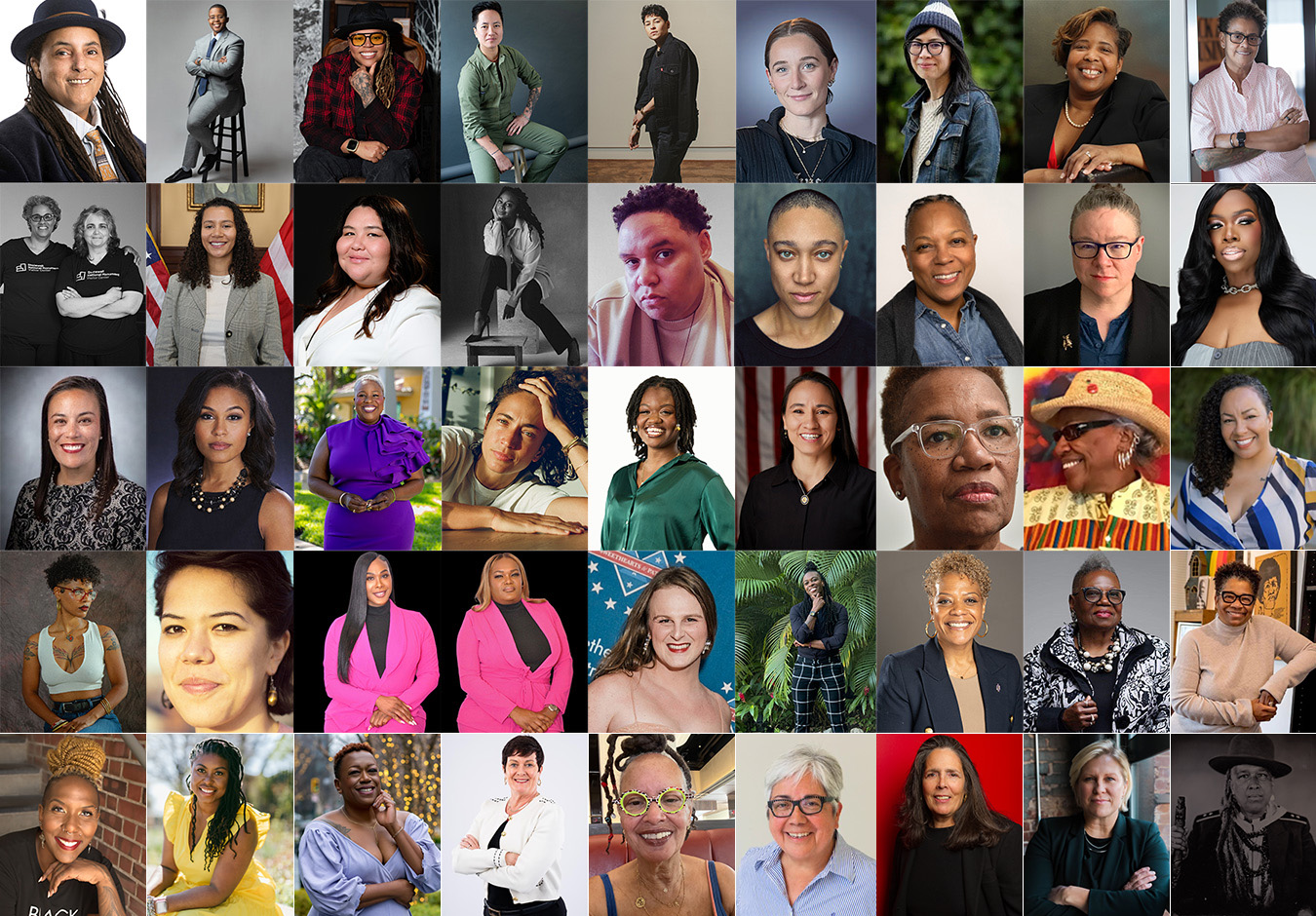
The Torchbearers Awards are more than recognition—they are a continuation of legacy. They honor the quiet architects of progress in our community: those who organize, advocate, build, and protect, often without fanfare but always with purpose. Rooted in a belief in intentional recognition, this honor names those who carry our movements forward—those who make room for others, who remind us that change is both generational and generative. In a time marked by uncertainty and challenge, these leaders push forward with courage, clarity, and an unwavering commitment to expanding opportunity and equity.
This year’s honorees reflect the full breadth of our community, spanning generations, backgrounds, identities, and industries. From Legends, with decades of leadership and having created pathways for others, to Illuminators, who are lighting new paths with creativity and innovation, each Torchbearer represents the power of intergenerational leadership and the strength found in our diversity. They are organizers, advocates, artists, policy leaders, healers, and changemakers whose lived experiences shape a shared vision for equity and liberation.
This award is our love letter to queer and trans women and nonbinary people who carry the flame when it would be easier to let it dim. To those who consistently show up, who use their voice and visibility and stand firm, often without recognition, so that others may live more freely and fully. The Torchbearers Awards celebrates not just what has been done, but the enduring spirit, responsibility, and collective care that ensure the work continues, and that the flame is always passed forward.
Co-Creators of the Torchbearers Awards: Shannon Alston, June Crenshaw, Heidi Ellis
Torchbearers Awards Advisory Board: Aditi Hardikar, Lesley Bryant, Jasmine Wilson-Bryant, Stephen Rutgers
ILLUMINATOR AWARDEES
- Representative Sharice Davids (she/her), (D, KS-03)
— U.S. House of Representatives - Greisa Martinez Rosas (she/her/ella)
— Executive Director, United We Dream - Paola Ramos (she/her)
— Journalist & Correspondent - Meagan A. Fitzgerald (she/her)
— Journalist & Correspondent - Jessica L. Lewis (she/her)
— Founder / Producer, Play Play DC - Savannah Wade (she/her)
— Founder, OAR Agency - Suhad Babaa (she/her)
— Filmmaker/ Former Executive Director of Just Vision - Ashlee Davis (she/her)
— Global Head of Inclusive Outcomes, Ancestry - Jazmine Hughes (she/her)
— Journalist and Former Editor at New York Times Magazine - Queen Adesuyi (they/she)
— Policy Advisor & Organizer, ReFrame Health & Justice - Michele Rayner, Esq. (she/her)
— Civil Rights Attorney, State Representative (Florida House of Representatives) - Gaby Vincent (she/her)
— Sports/Cultural Commentator and Community Leader - Jenny Nguyen (she/her)
— Founder & Owner, The Sports Bra - Denice Frohman (she/her)
— Independent Artist, Poet / Performer - Vida Rangel (she/her)
— Founder, Our Trans Capital - Roxanne Anderson (they/them)
— Executive Director, Our Space - Ann Marie Gothard (she/her)
— Co-Founder & President, Pride Live (Stonewall National Monument Visitor Center) - Diana Rodriquez (she/her)
— Co-Founder & CEO, Pride Live (Stonewall National Monument Visitor Center) - Wendi Cooper (she/her)
— Founder / Executive Director, Transcending Women - Toya Matthews (she/her)
— City of San Antonio, Texas - Mayor Gina Ortiz Jones (she/her)
— Sports/Cultural Commentator and Community Leader - Charity Blackwell (she/her)
— Poet, LGBTQ Advocate & Community Leader - Wilhelmina Indermaur (she/her)
— Director of Communications, Tyler Clementi Foundation - Em Chadwick (she/her)
— CMO, For Them & Autostraddle - Kylo Freeman (they/he)
— CEO, For Them & Autostraddle
LEGEND AWARDEES
- Sheila Alexander-Reid (she/her)
— Executive Director, PHL Diversity, Philadelphia Convention & Visitors Bureau - Cassandra Cantave Burton (she/her)
— Interim Director of Thought Leadership & Senior Research Advisor, AARP - leigh h. mosley (she/her)
— Photographer / Educator, PhotoFlo Photography - Jenn M. Jackson, PhD (they/them)
— Assistant Professor of Political Science; Author & Columnist, Syracuse University - Jordyn White (she/her)
— COO, Washington Prodigy / VP of Leadership Development & Research, HRC Foundation - AJ Hikes (they/them)
— Deputy Executive Director, ACLU - RaeShanda Lias (she/her)
— Digital Creator, RL Lockhart - Donna Payne-Hardy (she/her)
— Educator, EEO Specialist, Founder of NBJC, Former Leader at the Human Rights Campaign - Courtney R. Snowden (she/her)
— Principal, Blueprint Strategy Group - Gaye Adegbalola (she/her)
— Musician & Activist, Musician / Inductee of the Blues Hall of Fame - Cheryl A. Head (she/her)
— Independent Author, Novelist (Crime Fiction) - Letitia Gomez (she/her)
— The American LGBTQ+ Museum, Board Chair - Lynne Brown (she/her)
— Publisher, Washington Blade - Shay Franco-Clausen (She/Her/Ella/Queen)
— Political Strategist and Organizer - Melissa L. Bradley (she/her)
— Founder & Managing Partner, New Majority Ventures - Meghann Burke (she/her)
— Executive Director, NWSL Players Association - Victoria Kirby York, MPA (she/they)
— Director of Public Policy & Programs, National Black Justice Collective - Joli Angel Robinson (she/her)
— CEO, Center on Halsted - Jeannine Frisby LaRue (she/her)
— CEO, Moxie Strategies - Alice Wu (she/her)
— Film Director (Saving Face, The Half of It) / Screenwriter - Storme Webber (she/her)
— Interdisciplinary Artist / Educator, University of Washington - Kim Stone
— CEO of the Washington Spirit, Washington Spirit - Mickalene Thomas
— American Visual Artist, Mickalene Thomas Studio - Erika Lorshbough (any/they/she)
— Executive Director, interACT - J. Gia Loving (she/ella)
— Co-Executive Director, GSA Network
a&e features
D.C. springs back to life with new, returning events
Cherry blossoms, Rehoboth season kickoff, and more on tap
Longer and warmer days are back meaning: It’s time to get out of the house and enjoy Washington D.C.’s many events. Below are a few to check out this spring.
The National Museum of Women in the Arts will host “Making their Mark: Works from the Shah Garg Collection” until Sunday, July 26. This exhibition illustrates women artists’ vital role in abstraction, considers historical contributions, formal and material breakthroughs and intergenerational relationships among women artists over the last eight decades. For more details, visit. NMWA’s website.
Art in the Attic will host a pop-up on Saturday, March 14 at 6 p.m. at 1012 Madison St., Alexandria, Va. There will be a variety of vendors selling products across different modes of art. For more details, visit Eventbrite.
Play Play will host “Indoor Recess – The art of play” on Sunday, March 15 at 2 p.m. This event will embody classic recess energy, including opportunities to build and experience community and connections through games, movement, art stations, and creative freedom. Tickets are $12.51 and can be purchased on Eventbrite.
Spark Social will host “Gay Bar Crawl on U Street” on Friday, March 20 at 7:30 p.m. This will be a fun night out in gay D.C. with other gay people, whether you’re visiting D.C., new to the area, or just looking to expand your social circle. Many crawlers have formed lasting friendships and even romantic relationships after just one night out. Tickets are $35.88 and are available on Eventbrite.
Creative Suitland Arts Center will host “EFFERVESCENT: House of Swann” on Saturday, May 30 at 7 p.m. This will be a gay, good time where we will celebrate love, joy, wellness, and visibility for the LGBTQIA+ community. Tickets start at $17.85 and can be purchased on Eventbrite.
SWAG Works DC will host “Unapologetically Her” on Saturday, March 14 at 2 p.m. at 701 E St., S.E. This event is a powerful celebration of womanhood, resilience, creativity, and self-expression in honor of Women’s History Month. This all-women exhibition highlights the diverse voices, stories, and artistic perspectives of women who create boldly, live authentically, and stand confidently in their truth. This event is free and more details are available on Eventbrite.
9:30 Club will host “Gimme Gimme Disco: A Dance Party Inspired by ABBA” on Saturday, March 14 at 6 p.m. There will also be a “Donna Summer Power Hour – The Queen of Disco” segment during this event. It’ll be one hour of music with no skips. Tickets are available on 9:30 Club’s website.
Harder Better Faster Stronger will host “Heated Rivalry Rave” on Friday, March 20 at 9 p.m. at Howard Theatre. This event is open to all ages. Tickets are available on the theater’s website.
CAMP Rehoboth hosts its 25th annual Women’s+ FEST, April 9-12 in Rehoboth Beach, Del. Entertainers include headliner Mina Hartong, a comedian, storyteller, and founder of Lez Out Loud; and singer Yoli Mayor. There are dances, dinners, pickleball, and much more. Details and tickets at camprehoboth.org.
Also in Rehoboth Beach, the Washington Blade’s 19th annual Summer Kickoff Party is set for Friday, May 15 featuring Ashley Biden, who will accept an award on behalf of her brother Beau. State Rep. Claire Snyder-Hall will also speak. More speakers and the venue to be announced soon.
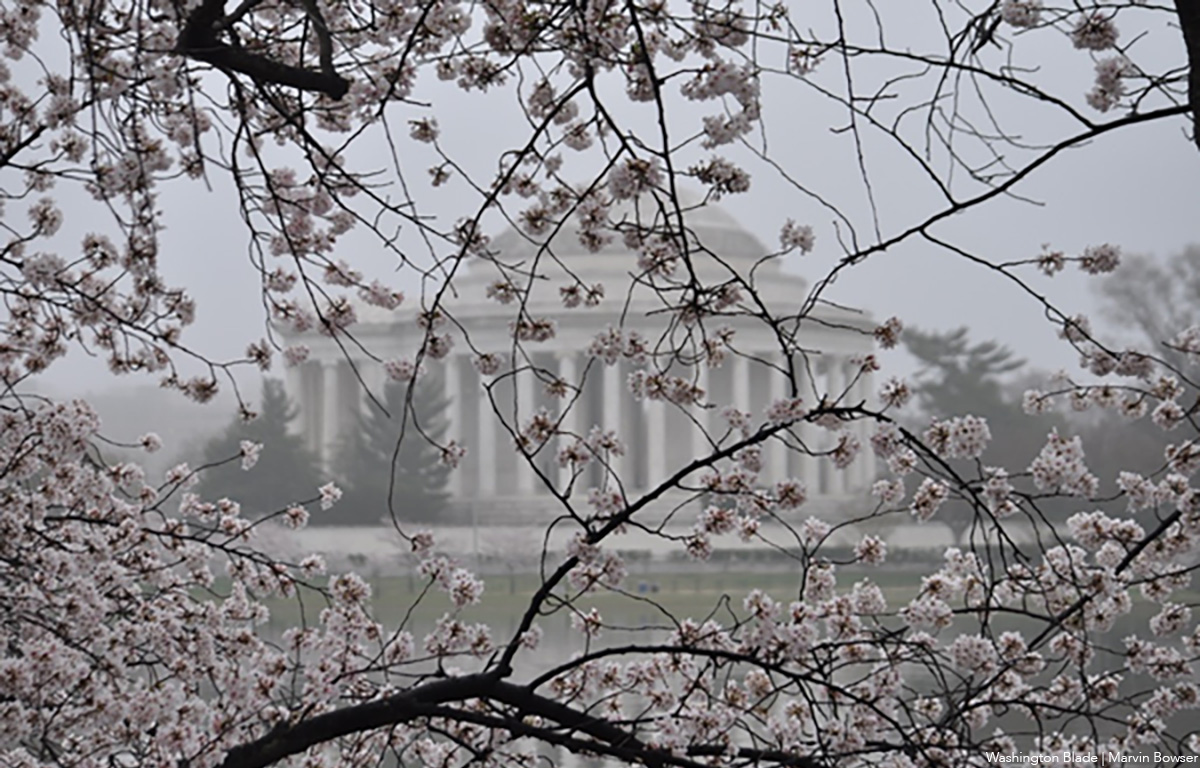
The annual D.C. Cherry Blossom Festival kicks off March 21 at DAR Constitution Hall and culminates with Petalpalooza on April 4, the day-long, outdoor street party with music and art, stretching across Navy Yard, and ending with fireworks over the Anacostia River.

Mayor Bowser signs bill requiring insurers to cover PrEP

JD Vance to travel to Hungary next week

Pam Bondi ousted as attorney general

VIDEO: Gay journalist detained for booing Trumps at ‘Chicago’ opening night

Idaho Gov. signs harshest anti-trans bathroom bill in the country

‘Out for McDuffie’ event held at D.C. gay bar

‘Jonah’ an undeniably compelling but unusual memory play

The Oscar-losing performance that’s too good to miss

Thousands attend ‘No Kings’ protests in D.C.