Connect with us

National

Gay son of Straight Pride rally organizer working to cancel event

The event is scheduled for Aug. 24 in Modesto, Calif.
Published

on

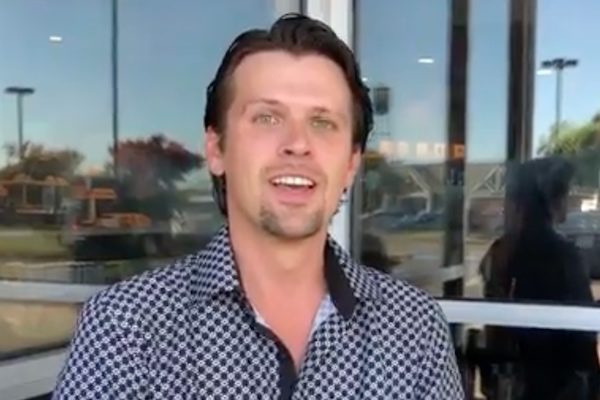
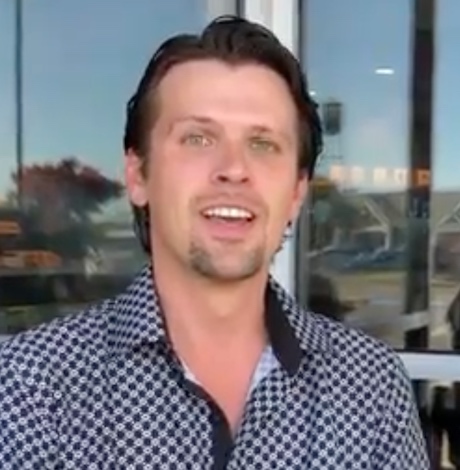
Matthew Mason. (Screenshot via YouTube)

Matthew Mason, the openly gay son of a woman organizing a Straight Pride event in Modesto, Calif., is working to have the event canceled.

The Straight Pride event is scheduled for Aug. 24 at Graceada Park’s Mancini Bowl.

Matthew, 28, is the adopted son of co-organizer Mylinda Mason. He is planning to speak with the Modesto city council next week to ask them to deny organizers a permit for Graceada Park. Mason is also planning a candlelight vigil before the meeting.

“We don’t want hate in Modesto,” Matthew told the Modesto Bee. “I am making sure Modesto is not a place for hate speech.”

City spokesman Thomas Reeves told the Modesto Bee the council is still waiting to hear from organizers if a parade will be included in the event. Reeves also noted that city staff, not the council, approves park reservations.

Matthew says he expects the event “will have a small, pitiful turnout—they are a fringe group.” However, organizers have planned on an estimated 500 attendees.

Mylinda says “intolerance does not come from our side.”

“We are more than happy to see they are going to have a candlelight vigil. We are not happy they are going to try to shut down our side and deny us peaceable assembly. It’s obvious we have two opposing views. It’s the other side that wants the opposing view shut down. It’s not our side,” Mylinda told the Modesto Bee.

Matthew shared that he became estranged from his mother when he came out at 19.

Mylinda claims that the separation is due to Matthew’s feelings and not her own.

“I would say it’s heartbreaking,” Mylinda says of their estrangement. “Any parent feels this way.”
Advertisement
FUND LGBTQ JOURNALISM
SIGN UP FOR E-BLAST

National

Trans women in state prisons on being targeted by Trump

Uncloseted Media spoke with five incarcerated trans women in state prisons

Published

on

(Design by Sophie Holland)

Uncloseted Media published this article on Dec. 3.

Editor’s Note: This article includes references to topics such as rape, sexual assault, and violence. Reader discretion is advised.

By HOPE PISONI | Being a transgender woman in prison has always been hard for Lexie Handlang. At 38 years old, she’s a writer for the Prison Journalism Project and is currently working on a kids’ fantasy book starring a young trans girl and her friend who encounter a mysterious magical being.

Handlang has been incarcerated in men’s prisons in Missouri for 11 years, where she says she’s experienced a great deal of violence and discrimination.

She says her fears today are at an all-time high. After Trump passed an executive order on his first day in office that rolled back a suite of the scant and hard-won rights of trans women in federal prisons, Handlang remembers prison staff gleefully gloating.

“Transgenders don’t exist no more.”

“It’s not a thing.”

“I’m not gonna call you by your preferred pronouns.”

“I’m gonna call you ‘sir.’”

The executive order, titled “Defending Women from Gender Ideology Extremism and Restoring Biological Truth to the Federal Government,” includes a mandate requiring trans women to be housed in men’s prisons and a ban on the use of federal funds for gender-affirming care.

The following month, the Bureau of Prisons issued a memo banning gender-affirming items like chest binders and undergarments and requiring staff to refer to incarcerated people by their “legal name or pronouns corresponding to their biological sex.”

While the order does not apply to state prison systems, Uncloseted Media spoke with five trans women incarcerated in three different states who say Trump’s crackdown has created a trickle-down effect. They say it has produced a climate where staff are ramping up their mistreatment of trans women, federal grants for prisons are at risk as the Trump administration feuds with states, and anti-trans propaganda is turning fellow prisoners against them.

“There’s a lot of wardens who’ve been waiting for this — the discrimination has increased and it’s not anything new,” says Kenna Barnes, advocacy manager at Black and Pink, a nonprofit focused on prison abolition and the rights of incarcerated trans people. “It’s happening in every faction of the carceral system, and they are getting very emboldened, and this is a cue for them.”

Escalating attacks

Even though the Trump administration can’t force anti-trans policies on state prisons, they have still been pushing for them. In April, the Department of Justice pulled $1.4 million in funds from Maine’s Department of Corrections, the bulk of which had been allocated to support a substance use treatment program for all incarcerated people. The funding was pulled in retaliation for continuing to allow a trans woman, Andrea Balcer, to be housed in the women’s section of the Maine Correctional Center.

“You asked my feelings on being in the center of this feud between Trump and Maine — I am not in the center, I am underneath the feet of these two giants colliding, a mecha and a kaiju if you will,” Balcer, 24, told Uncloseted Media in a phone interview from the prison. “So I am not so much the center as I am collateral damage.”

Balcer was transferred to the women’s section of the prison in November 2023 due to concerns about her safety in men’s prisons, which are notoriously dangerous for trans women.

She spends much of her time playing Pathfinder, a role-playing game based on Dungeons & Dragons, and has been trying to start a group to host discussions on paganism and monthly full-moon rituals.

Balcer says she tries to keep a low profile and was getting along fairly well with her fellow prisoners after a period of adjustment.

But that changed when Attorney General Pam Bondi bullied her on Fox and Friends by calling her a “giant, 6-foot-1, 245-pound guy” and claimed that funding cuts “will protect women in prisons.” Balcer says some women at the facility turned on her and started to parrot Bondi’s rhetoric about a “man in a woman’s prison.”

“The cultural backlash has been astounding,” she says. “And it’s not that I don’t understand these women — I 100 percent understand their position. Things that have helped them and things that have done so many good things for them are being taken away, and they’re angry, as they have every right to be. But they can’t take out their anger on the people who quite frankly deserve it, [so] they take out their anger on the people that are the indirect cause of this.”

While Balcer says things have slightly improved since Maine successfully appealed the funding cuts, life is still much harder under Trump 2.0.

And she’s not the only trans woman who has a target on her back. Michelle Kailani Calvin was housed at the Central California Women’s Facility since the state’s Transgender Respect, Agency and Dignity Act — which she advocated for — passed in 2021. The act allowed trans women to be housed in women’s facilities.

Calvin, 54, was one of several trans women whose photos were included in a consequential advertisement for Trump’s 2024 campaign, which criticized Kamala Harris for supporting gender-affirming surgery in California prisons and included the infamous slogan “Kamala’s for they/them, not you.”

Difficulty accessing gender-affirming care

While gender-affirming surgeries in prison are still legally accessible in California, Calvin told Uncloseted Media via a phone call from CCWF that she has found it “very difficult … to get any kind of care” since Trump’s reelection.

She says she was scheduled for facial feminization surgery and a revision to her bottom surgery earlier this year to address complications including pain, bladder leakage and intense bleeding. Staff kept delaying them, however, claiming that she hadn’t passed a psychiatric evaluation and that she had a “dirty” toxicology report. According to Calvin, the substance that had been flagged was prescription gabapentin.

Calvin believes this foot-dragging is due to the Trump administration’s threats to cut funding, as they did with Maine.

“This is the game that the institution plays. Instead of just saying, ‘We’re not giving you a surgery because Trump ain’t giving us our money,’” she says.

Emboldened staff

Beyond having limited access to health care, Calvin says trans women face emboldened staff in Trump’s new America. In her case, this has involved increased scrutiny: After three years of no rule violations, she says she was hit with five in the span of four months.

She says several of those cases were provoked by abuse from guards. In one instance, which was documented in a report reviewed by Uncloseted Media, a guard forcefully removed her from her wheelchair and slammed her on the ground after he squeezed her shoulder without consent. She was later written up for resisting an officer.

And in March, the prison began investigating Calvin on allegations that she had assaulted her partner, who is also incarcerated. This led the prison to file a case with the California Department of Corrections and Rehabilitation’s Departmental Review Board to have her moved to a men’s prison.

Calvin says that numerous advocacy groups then sent letters to CDCR calling on them to reject the push. One lawyer, Jen Orthwein, wrote that “claims made against Ms. Calvin were submitted long after the alleged event by unnamed confidential informants, with no supporting documentation or medical evidence” and that the alleged victim “has indicated that the accusations are entirely false.” Uncloseted Media also spoke with the alleged victim from the prison where she is housed, and she affirmed that “Michelle never hurt me or any other female.”

“[The prison] feels like the Trump administration’s gonna have their back on whatever that they do, so they’re taking more bolder chances to isolate us or send us back to a men’s facility,” says Calvin.

While Calvin is still at a women’s facility, not everyone has been so lucky. CDCR recently proposed new guidelines that explicitly create a process for trans women to be transferred back to men’s prisons if they have “two or more serious Rules Violation Reports within a 12-month period.” Kelli Blackwell, 58, told Uncloseted Media on a phone call from CCWF that at least three trans women have been transferred to men’s prisons since 2024, which we confirmed on the California Incarcerated Records and Information Search website.

Blackwell is hopeful she’ll get released soon. With that in mind, she got her dentistry license and is set to earn a degree in sociology next spring. She also has a partner living with her in the women’s facility. But with increased scrutiny from CDCR and pressure from the Trump administration, she fears that a transfer to a men’s prison could disrupt all of that.

“You have trans women here that’s actually had the surgery, had the vaginoplasty — they’re still finding ways to send them back to a men’s prison,” she says.

In an email, CDCR said that they are “committed to providing a safe, humane, respectful and rehabilitative environment for all incarcerated people.” They also noted that the department “has a detailed process for patients seeking gender-affirming care, including hormonal treatment.”

Support systems have become ‘useless’

Trans women in prison are also losing the little support they had. Patricia Trimble, a 66-year-old trans woman, writer and advocate, has been incarcerated in men’s facilities in Missouri since 1979. While in prison, she’s pursued paralegal studies at Platt Junior College, theology at St. Louis University and business at Central Methodist University.

She’s used her education to advocate for herself, often through the Transgender Committee, a group of staff members required by law at each Missouri prison. The committee is meant to help the prison “make informed recommendations regarding the health and safety of transgender and intersex offenders.”

However, Trimble says that since the start of the year, the committee has become “absolutely useless.”

“At one point in time, I could sit down with the Transgender Committee … and we would discuss things that make the prison safer, and they were receptive,” Trimble told Uncloseted Media on a phone call from the Southeast Correctional Center.

“Since Trump, there are no conversations like that. When I go to the Transgender Committee, the deputy warden just kinda looks at me with that smile on her face like ‘you ain’t gettin’ nothing here, and I already know what you’re gonna ask, so let’s just go through the motions and then you can go away.’”

Trimble says this makes every issue harder to fight. In a recent incident, she tried to get transferred after being housed with a transphobic cellmate who would “bully” and “constantly pick on” her.

Trimble says that even though there were empty cells in her wing, she was sent back and forth between the Transgender Committee, case workers and her unit manager before getting approved to move into one of them. While she had the know-how to stand up for herself, most people don’t.

Even with her experience in advocacy, she says staff have been harder than usual on her. Earlier this year, after advocating for gender-affirming surgery, she says the prison put her on a call with a doctor who said she “will not be filing a report recommending any further treatment.”

“She had the audacity to tell me that she finds that I no longer suffer from gender dysphoria,” Trimble says. “And I just kinda laughed and said, ‘Okay, I guess we’re done here,’ and I got up and left.”

In an email, the Missouri Department of Corrections wrote that they do not “tolerate unprofessional conduct by staff,” and that “no changes [have been] made to policies pertaining to transgender residents of Missouri state prisons after the 2024 election.”

The danger of men’s prisons

While life in the women’s facilities is far from perfect, the people we spoke with say it’s worth fighting to stay.

According to a 2016 analysis by the Williams Institute at UCLA, 37 percent of incarcerated trans people — the overwhelming majority of whom are housed in prisons that do not match their gender identity — had experienced sexual assault within a one-year period, compared to just over 3 percent of cis people.

Blackwell says physical violence at the men’s prison, often spurred by gang activity, is “structured” and “can get you killed.” Calvin says she was raped multiple times at the men’s prison, and Trimble recounted numerous instances when guards strip-searched her in the presence of men.

Handlang says she’s experienced extreme abuse by guards at the men’s prison: “They went in my cell and they were ripping up pictures of family, trying to get me to react, ripping up my clothes, ripping up my bras, ripping up panties, destroying my makeup.” When she tried to fight back, she says “they went off camera and they broke my ankle and my foot and stomped on me and punched on me.”

As threats continue to escalate, and Trump’s policies continue to trickle down, Trimble fears she could lose the few rights she has left.

“I know that all it would take is a phone call from Trump or one of Trump’s surrogates to the governor, and the governor simply signs an executive order and everything we’ve got is taken away and we would end up having to go to court again,” she says. “If the governor wanted to, he could make our lives a lot worse with just a stroke of the pen.”

Fighting back

In the face of all these horrors, these women are advocating for themselves and caring for their trans sisters.

Handlang says that this often involves the most basic gestures: listening to their troubles, teaching them how to do their makeup and helping them buy hygiene products.

Calvin and Blackwell are still working to defend and uphold the trans-inclusive bills they helped pass, and Trimble has used her years of experience to work with legal advocacy groups to get support for things like name changes and to pressure the state to address mistreatment.

“If you’re going to be an advocate or an activist … it can never be about you,” Trimble says. “It’s about our boys and girls that are suffering in this oppressive system.”

Continue Reading

National

Victory Institute to honor Biden at D.C. conference

Former president to receive award on Friday

Published

on

Then-President Joe Biden speaks on the South Lawn of the White House on World AIDS Day 2024 with AIDS Memorial Quilt panels in the background. (Washington Blade photo by Michael Key)

The LGBTQ+ Victory Institute on Friday will honor former President Joe Biden at its annual International LGBTQ+ Leaders Conference in D.C.

Biden will receive the Chris Abele Impact Award in recognition of what the Victory Institute described as “his historic role in championing LGBTQ+ rights and for his leadership in achieving the most LGBTQ+ inclusive administration in U.S. history.” Biden will be the award’s third recipient.

“President Biden has shown unwavering commitment to ensuring LGBTQ+ people can participate fully and openly in our democracy,” said Victory Institute President Evan Low in a press release. “From appointing a record number of LGBTQ+ leaders to reversing harmful policies and expanding civil rights protections, his administration set a new and necessary standard for what inclusive governance looks like.”

“And now, we’re seeing LGBTQ+ elected officials lead the way on everyday issues that are important to most Americans like groceries, housing, and lowering the costs of healthcare,” he added. “This award honors not only his achievements, but also the real impact these changes have had on LGBTQ+ Americans across the country.”

The conference will take place Dec. 4-6 at the JW Marriott Hotel in Downtown Washington, where more than 700 elected LGBTQ+ political leaders and human rights advocates are expected to attend.

Notable officials slated to participate include Massachusetts Gov. Maura Healey; Maine Gov. Janet Mills; Michigan Attorney General Dana Nessel; Hawaii Attorney General Anne Lopez; Arizona Attorney General Kris Mayes; U.S. Reps. Mark Takano (D-Calif.) and Robert Garcia (D-Calif.); Maine House of Representatives Speaker Ryan Fecteau; Mississippi state Sen. Fabian Nelson; San Antonio Mayor Gina Ortiz Jones; San Diego Mayor Todd Gloria; West Hollywood (Calif.) Mayor Chelsea Byers and Providence (R.I.) Mayor Brett Smiley.

Transgender Spanish Sen. Carla Antonelli, former U.S. Ambassador to Bosnia and Herzegovina Eric Nelson, and Robert Biedroń, a gay member of the European Parliament from Poland, are slated to attend. Earlene Budd, a longtime trans activist in D.C., and D.C. Councilman Zachary Parker (D-Ward 5) are also expected to participate.

Michael K. Lavers contributed to this story.

Continue Reading

National

Faith leaders denounce anti-transgender attacks

‘You are holy. You are sacred. We love you.’

Published

on

(Photo by nito/Bigstock)

This past Trans Awareness Week, 10 heads of diverse religious traditions issued a statement proclaiming that transgender, intersex, and nonbinary people are worthy of love, support, and protection. Led by Rev. Dr. Sofía Betancourt, president of the Unitarian Universalist Association, representatives from the Universal Fellowship of Metropolitan Community Churches, The Fellowship of Affirming Ministries, the Union for Reform Judaism, the Presbyterian Church, the Christian Church (Disciples of Christ), The Episcopal Church, the United Church of Christ, and Reconstructing Judaism called out the violent and systemic persecution of trans, nonbinary, intersex, and queer people–proclaiming that their faith and their humanity urged them to affirm that trans, intersex, and quere people are “sacred” and “holy.”

Their statement comes at a critical time. Over the past three months, Trump and his Cabinet’s anti-trans rhetoric has only intensified, with a report released late September by journalist Ken Klippenstein in which national security officers leaked that the FBI is planning to classify trans people as “extremists.” By classifying trans people as “Nihilistic Violent Extremists,” far-right groups would have more “political (and media) cover,” as Abby Monteil reports for them, for anti-trans violence and legislation. 

While the news is terrifying, it’s not unprecedented – the fight against trans rights and classification of trans people as violent extremists was included in Project 2025, and in the past several weeks, far-right leaders’ transphobic campaign has expanded: boycotting Netflix to pressure the platform to remove trans characters, leveraging anti-trans attack ads in the Virginia governor’s race and banning professors from acknowledging that trans people exist. In fact last month, two Republican members of Congress called for the institutionalization of trans people

It seems that the government shutdown was predicated, at least partially, on Trump’s own anti-trans policies that were attached as riders in the appropriations bill. 

It’s a dangerous escalation of transphobic violence that the Human Rights Campaign has classified as an epidemic. According to an Everytown for Gun Safety report published in 2020, the number of trans people murdered in the U.S. almost doubled between 2017 and 2021. According to data released by the Gun Safety report from February 2024, 34 percent of gun homicides of trans, nonbinary, and gender expansive people remain unsolved

As Tori Cooper, Director of Community Engagement for the Transgender Justice Initiative for the Human Rights Campaign Foundation, this violence serves a purpose. “The hate towards transgender and gender expansive community members is fueled by disinformation, rhetoric and ideology that treats our community as political pawns ignoring the fact that we reserve the opportunity to live our lives full without fear of harm or death,” Cooper said.

The faith leaders came out in this statement to affirm that it is their spiritual and human imperative to call out this escalating violence and protect trans, nonbinary, intersex, and queer people. The leaders acknowledge that historically and today, religion is used as a weapon of hate to degrade and deny the human dignity of LGBTQ+ peoples. The Supreme Court is hearing Chiles v. Salazar, a case about the constitutionality of a Colorado ban of conversion therapy for minors, with the majority of conversion therapy practices being faith based. And despite the Supreme Court declining to hear a case challenging the constitutionality of same-sex marriage conferred in Obergefell v. Hodges, efforts to end marriage equality remain ongoing with Katy Faust’s End Obergefell movement

“During a time when our country is placing their lives under increasingly serious threat,” the statement reads, “there is a disgraceful misconception that all people of faith do not affirm the full spectrum of gender – a great many of us do. Let it be known instead that our beloveds are created in the image of God – Holy and whole.”

The faith leaders argue that commendation of LGBTQ peoples and religiously motivated efforts to deny their dignity and rights is not the belief of all faith communities, and far-right Christian nationalist communities and others who uphold homophobia and seek to exact it writ large in the United States do not speak for all faith leaders. 

This is a critical piece of the statement and builds on historical precedence. During the 1980s AIDS crisis, when far-right Christian leaders like Jerry Falwell, one of the founders of the Moral Majority, stated that HIV was “God’s punishment” for LGBTQ+ people and indicative of a broader moral decline in America, affirming faith communities came out to affirm the dignity and divinity of queer people. As funeral homes and churches refused to prepare the dead and bury them, some faith communities stepped up to say that these homophobic leaders do not speak on behalf of all people of faith. 

In 1985, the United Church of Christ General Synod urged its member congregations to claim and declare themselves “Open and Affirming,” in order to express their welcome and support for LGBTQ+ people, and two years later, the Church of the Brethren issued a statement titled “A Call to Compassion” where conference members urged member congregations to speak out boldly against discrimination, provide direct care to people with HIV/AIDS, and actively educate themselves and others to stop the spread of fear and prejudice surrounding the disease.

Just one year later, the Evangelical Lutheran Church in America Church Council issued a statement, “AIDS and Church’s Ministry of Caring,” which outlined the ways in which welcoming, ministering to and advocating on behalf of people with HIV/AIDS is critical to their mission. Even the US Conference of Catholic Bishops, which earlier this month banned gender-affirming care at Catholic hospitals, issued a statement in 1987 calling discrimination against people with HIV/AIDS “unjust and immoral,” and denouncing the label of “innocent” or “guilty” patients.

Thus, the faith leaders’ statement this past week builds on a rich history of faith communities fighting the stigma that far-right faith groups perpetuate about LGBTQ+ people and committing to action. What sets this latest statement apart is its decidedly interfaith heart, which speaks to the history of the Pride Interfaith Service in Washington, DC that was first started by a group of faith leaders and lay people who gathered at the AIDS Memorial quilt. 

As the statement reads, “Our scriptures vary, but they share a common conviction. As we make justice our aim we must give voice to those who are silenced. Our shared values, held across many faiths, teach us that we are all children of God and that we must cultivate a discipline of hope, especially in difficult times. As such, we raise our voices in solidarity to unequivocally proclaim the holiness of transgener, nonbinary, and intersex people, as well as the recognition of the entire spectrum of gender identity and expression.”

The statement ended by arguing that they need to call out the violence they are witnessing. Their silence, they argue, would be in compliance and reinforce the idea that homophobic religious leaders and lay people speak on behalf of all people of faith. Their statement is not only words, however, it is a written promise affirming the dignity and holiness of queer people but also to protect them in the face of increasing violence and persecution. 

“When people of faith and conscience stay silent in the face of oppression, we are all made less whole. When people of faith and conscience speak out against that which violates the sacred in its own name, we have the power to stay the hand of sin. Transgender, nonbinary, and intersex people are vulnerable today,” the statement concluded. 

“Our faiths, our theologies, and our practices of prophetic witness call on us to say with one voice to transgender people among us: ‘You are holy. You are sacred. We love you. We support you, and we will protect you.’”

Continue Reading

Popular