
Advice
ADVICE: Gay guy chose the straight life but affair has him questioning it
Closet case wanted to have his cake and eat it too — how’d that work out for ya dude?

Michael,
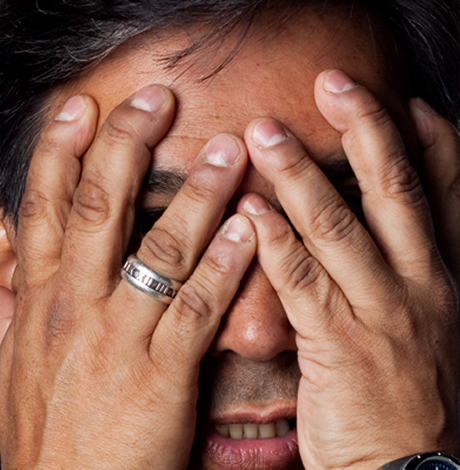
I’m a 42 year-old man and am in a mess. I’m married to a woman, father of two children and I’m realizing I’m gay. I’ve been having a relationship with a guy I met online for the last few months and I’m falling in love.
I always knew I was attracted to men but wanted to have a normal life like everyone else. When and where I was growing up, being gay wasn’t accepted and I didn’t want to face a life of ostracism. Also I wanted to have a family. I dated girls hoping I would stop thinking about guys, but I never stopped fantasizing.
I’ve been happy with Rachel overall and I wouldn’t have missed being a dad for anything. But I am feeling so much more passion and love with Chris. Plus, the sex is amazing, so much better than anything I ever experienced with a woman. Every time I’ve had sex with a woman, I’ve really been fantasizing about guys.
For about 25 years I’ve been telling myself I’m bisexual but I don’t think that’s the case anymore.
If Rachel finds out she will be furious and I’m worried she’ll poison our kids against me. A few years ago she found some gay porn on my laptop. She sort of accepted I was “curious” and maybe a little bi but I promised I would never act on it. But I think she has been suspicious ever since.
On the other hand, I don’t want to spend the rest of my time hiding or being in a sham marriage. And Chris is pressing me to leave Rachel because he doesn’t want to be “the other woman.” I’m afraid he’ll leave me if I don’t leave Rachel. But then I go in a circle because of the kids issue. I’m so scared to make a move that could hurt my relationship with them.
I don’t see any clear way out and I’d be grateful for your expertise.
Michael replies:
Yes, you are in a mess, and you have a lot of work to do on yourself.
Here are a few points to consider:
First, I’m struck by how little regard or empathy you have for your wife. Your focus is on avoiding her wrath and keeping her clueless so that you can have things your way, rather than considering the kind of marriage you’re giving her. She’s married to a guy who promised he would not have sex with men and then begins an affair with a guy he met online. I’m not telling you that you shouldn’t have sex with men, but what about her right to honest dialogue about all this?
Second, I’m struck by how much your decision-making is driven by fear. You don’t want to tell your wife you’re gay because she might poison the kids against you. Conversely, you might tell your wife because otherwise Chris will leave you.
I’m not saying any of this to slam you. I want to get you thinking about how you want to treat others, about how honest you want to be, about how you make your choices and about accepting the consequences of your choices.
Let’s go way back to your decision to date girls and get married.
True, it was a lot more difficult to be gay in the 1990s than it is today. But while there was far less acceptance then, there were plenty of out and visible gay people. We’re talking the 1990s, not the 1950s.
So I’m wondering what’s up with your telling yourself this story. My hunch is that you haven’t wanted to struggle with the harder road in life. You’ve wanted to give yourself an out.
Problem is, there are often consequences to taking the (seemingly) easy road, and now you’re facing them.
If you want to be with Chris and don’t want to be with Rachel, it would be kind to do her the favor of letting her know you aren’t really into her so that she doesn’t squander the rest of her life in a sham marriage. Yes, there may be consequences to your being honest, though if you have a good relationship with your children, you may stand a good chance of staying connected to them.
Speaking of squandering, consider that you may in large part be squandering your own life, lying, living in fear and pretending to be someone you’re not. The path out of your “mess” is to figure yourself out, to take the time to consider who you want to be and to define the values by which you want to live.
We’re talking about you constructing a self for the first time, by challenging yourself to live with integrity. You’ve taken the first step on this road by telling yourself the truth. Good luck going forward.
Michael Radkowsky, Psy.D. is a licensed psychologist who works with LGBT couples and individuals in D.C. He can be found online at michaelradkowsky.com. All identifying information has been changed for reasons of confidentiality. Have a question? Send it to [email protected].





Advice
Help, I’m trapped in a sexless marriage
The closer you are, the less comfortable it can feel to be frankly sexual

Dear Michael,
I’m in a sexless marriage.
My husband hasn’t been interested in sex in a long time. It’s not something he has wanted to work on. He says he just isn’t that interested.
I love him a lot. At first I pushed him to address it. There were no physical causes, he said (doctor checked testosterone). He just wasn’t interested. It didn’t matter that I wanted to have sex. He was OK with me having sex with other people.
I tried that and I didn’t like it a bit. To me the most important part of sex is that I actually love the person I am with. Sex with someone I didn’t know felt meaningless and empty to me. I felt disgusted, and disgusting, when I would hook up.
I didn’t want to leave my husband, I loved him and wanted to spend my life with him. So I accepted the situation. I wasn’t going to beg.
After a while I stopped missing sex. I (like him) am getting older.
I hear disparaging remarks from friends and the community at large about people who “settle” for relationships without sex. That they’re “just roommates.” This is hurtful to me. We are deeply committed life partners.
But sometimes I wonder, did I settle? Should I, as a gay man, be unwilling to have a sex-free life? If it’s OK with me, am I even really a gay man?
Michael replies:
Even if you are fine with the status quo, I’d suggest a few actions to take. Not because I want to push you to resurrect your sex life, but because there may be something going on that could improve your lives if addressed.
Visit your physician (as your husband evidently already has). Look into possible side effects of any medications either of you are on. Consider if there could be an undiagnosed or untreated mood disorder, such as depression, contributing to low desire (not to mention general unhappiness in life).
Another lens through which to look at your situation: The closer two people are, the less comfortable it can feel to be frankly sexual with each other.
For one thing, the more your partner means to you, the more you may fear rejection if you reveal sexual feelings and desires that might upset or even shock your partner. For another, as couples get closer over time, sex may start to feel like too much closeness, and avoiding sex may be a way to create some space. Simply put, too much emotional closeness can be a desire killer.
If these points resonate with you and your husband, my recommendation is that you find a couples therapist to work with, who has good grasp of desire issues.
All that said: If you are fine with your relationship as it is, then your job is to hold onto your own positive beliefs about yourself and your relationship. Please don’t let anyone — other gay men, close friends, whomever — shame you, or pressure you into behaving in ways that you yourself do not respect.
Being gay is a sexual and affectional orientation. You and your husband love each other and want to be spending your lives together. If that is “enough” for the two of you, then, great! There is no problem. A lot of people (and organizations, and movements) want to tell others how they should think, feel, act, and live. Guess what? You don’t have to listen to any of them.
Coming out takes a lot of work and a lot of courage. You do it because you want to live an honest and genuine life, respecting who you are. You, and you alone get to decide what is right for you. Hold steadfast to that. It isn’t easy to maintain self-respect when others around you question or demean aspects of your life, but if you know what is best for you, that is your challenge.
Michael Radkowsky, Psy.D. is a licensed psychologist who works with couples and individuals in D.C., Maryland, Virginia, New York, and all PSYPACT states. He can be found online at michaelradkowsky.com. All identifying information has been changed for reasons of confidentiality. Have a question? Send it to [email protected].
Advice
I’m 66, he’s 27. Is it love or am I being played?
What to do when your friends don’t trust your boyfriend
Dear Michael,
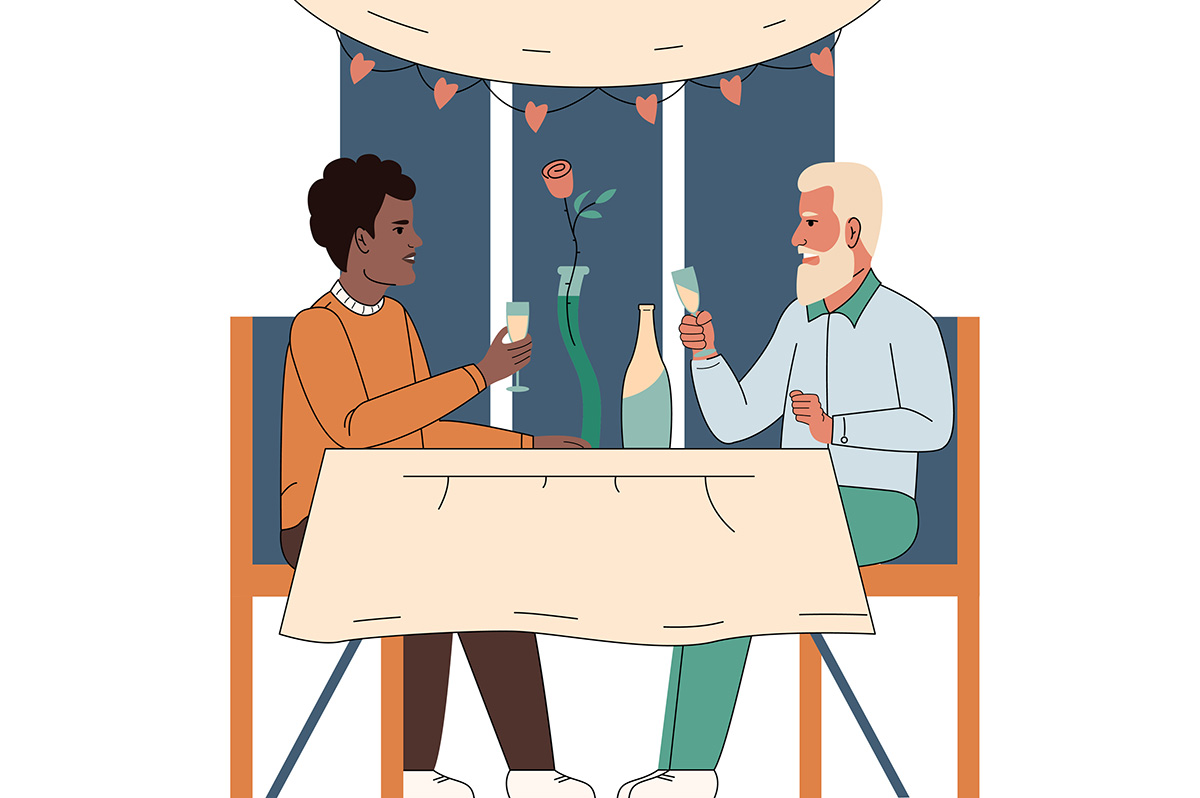
I’m 66, Peter is 27. I’m retired, financially comfortable. He’s a grad student.
We met last summer at the beach and started dating. Now we’re living together. I want this to be forever, and Peter says he does too.
The problem: Some of my friends are telling me that Peter is taking me for a ride.
I know all the cliches about older gay men thinking they’re in a loving relationship when the truth is they’re just some young guy’s sugar daddy. But I don’t feel old. And I think I have a grip on reality.
I do support Peter financially now, but he is eventually going to have a job. And if I didn’t pay for things, there’s no way he could share my life in terms of travel, dining out, etc. I want to have fun with him and am happy to foot the bill.
My friends say there’s no way he could be attracted to anything but my money. But I take great care of myself and look good. We don’t have the greatest sex life but I think it’s pretty hot. Peter says he is attracted to older guys.
And there’s much more to our relationship than sex. Despite the age difference, I think we are kindred spirits, and Peter says he feels the same. We both like travel, talking about politics, have similar taste in books and movies and TV shows. Lots of common interests.
I can deal with the age/money criticisms, but there’s some other stuff I’m more worried about.
One of my friends says he saw Peter making out with someone much younger over the summer. That worries me. I asked Peter about it and he said it wasn’t true.
Peter does go out, solo, because he can stay up a lot later than I want to. My party-till-dawn days are over. He says he’s just dancing and hanging out with friends. I want to believe him.
One night he didn’t come home and it unsettled me. He told me it just got too late so he crashed at a friend’s place. I thought of asking the friend about it but I didn’t want to seem like I was spying on Peter, and I also was afraid that the friend would say this didn’t happen. If it didn’t, then what? Do I break up with him for lying and cheating? I really don’t want to be old and alone. I can’t tell if my friends are making me paranoid or if I am being played.
Michael replies:
Obviously, I can’t know if Peter is telling you the truth or not. But I can give you some pointers on dealing with trust in a relationship. The main person to focus on trusting is yourself.
Do you trust your own sense of whether or not Peter is being honest with you? If not: What would it take for you to do so? Could you let yourself see things that you are currently not wanting to let yourself see? What is now stopping you from seeing him accurately?
You describe many ways in which you think the two of you are compatible. How about in terms of values? Do you respect Peter’s character? Can you get a good read on whether he is just telling you what you want to hear in order to stay in the relationship, or giving you an honest representation of where he really stands?
I understand that you’re afraid of finding out that Peter is lying to you, and that you don’t want to have to deal with ending the relationship. Given the possible ramifications, that makes sense. But do you want to let your fear stop you from keeping your eyes open?
When we decide to see things not as they are, but as we wish they were, or tell ourselves that what we see isn’t what we’re seeing, we end up getting hurt. And we do a great disservice to ourselves by discrediting our own internal witness, making it difficult to trust both ourselves and other people.
Only you can decide which would be preferable: Living with someone whom you don’t trust to be honest with you, or being alone.
In considering this possibility, keep in mind that none of us have a guarantee that we won’t be hurt in our relationships. In fact, it’s pretty much certain that at times we will be. Partners do break each other’s hearts, sometimes deliberately, sometimes not. That in itself is no reason to end a relationship.
But being with someone who is purposely deceiving you doesn’t sound that appealing.
Our relationship difficulties often give us possibilities to grow. Your fears about Peter’s infidelity are an opportunity for you two to have some conversations about how important you each think honesty is in a relationship; and what risks you are willing to take in order to have an honest relationship.
People are often afraid to speak the truth because of the possible consequences. But if you don’t speak up, you can easily wind up in a hollowed-out relationship where neither of you is willing to address what is really going on with each of you. That is the opposite of intimacy.
And, having a standard where each of you is forthcoming would avoid the minefield of a distrustful relationship where one of you is the detective and one of you is the suspect. That dynamic creates an imbalanced relationship and often leads to the watched partner wanting to get away with things.
Bottom line: Are each of you interested enough in an intimate relationship to be consistently honest with each other, even if your partner may not like what you say? And to do your best to respond thoughtfully to your partner’s honesty, even when he tells you something that you do not want to hear?
Michael Radkowsky, Psy.D. is a licensed psychologist who works with couples and individuals in D.C., Maryland, Virginia, New York, and all PSYPACT states. He can be found online at michaelradkowsky.com. All identifying information has been changed for reasons of confidentiality. Have a question? Send it to [email protected].
Advice
We’re getting married but our parents object
Will their disapproval and shortcomings derail our hopes for a happy life?

Dear Michael,
My girlfriend and I are getting married! We’re really excited, but we’ve got some big concerns as well.
All of our parents have had multiple marriages. I think 10 between the four of them. So we don’t have much in the way of role models for a successful marriage.
Also, we don’t have any parental support. Except for one of my ex-stepmothers whom I’m close to, none of our parents are happy that their daughter is getting married to another woman. That’s an understatement. Religious objections, moral objections, being angry that we’re “embarrassing them,” these are some of the things we’ve been told.
We do have some supportive siblings and step-siblings, which is great, although they’re getting pushback from parents about attending our wedding.
Given all this, what suggestions do you have for how we can make a go of our marriage? The divorce rate is over 50 percent for everyone. With all this baggage, we’re worried that we have even less of a chance. Thank you.
Michael replies:
First, congratulations!
Regarding your lack of family support: I’m sorry that you both have to deal with so much criticism, disdain, and judgment. Please don’t let your parents’ negativity influence your own views of yourselves and your relationship. Focus instead on the love and caring you will get from friends, community and the family who are present on your big day (I hope your siblings are brave enough to make it!). Being the recipients of that support is one of the sweetest parts of getting married.
Don’t worry about the high divorce rate. While some couples really shouldn’t stay married, lots of people get divorced because they don’t know what is required to have a good marriage, or don’t put in the effort to do so. That does not have to be your fate.
Similarly, your parents’ terrible track record doesn’t mean you have to repeat their marital histories. The skills to have a strong marriage are learnable.
To that end, here are the best tips I can offer the two of you:
- If you want a loving marriage, be a loving partner. Don’t snipe, sulk, or do the silent treatment when you’re mad. Unconditional love is largely a myth. Even our dogs won’t love us if we are mean to them.
- Don’t spend much time or effort focusing on what your spouse is doing wrong or how she is letting you down. Doing so leads to resentment and feeling like you’re a powerless victim. Instead, ask yourself what your own contribution is to the problem, and what you can do to make things better. You don’t have much power over your partner, but you have a lot of power over yourself.
You can certainly ask your spouse for what you’d like from her, but don’t expect to always get it. And don’t base your own wellbeing or good behavior on what your partner does or doesn’t do.
- Because any two people are always different in some important ways, there is no way that you both can always want the same things, or think the same way, or have the same priorities. Accept this! There has to be room for each of you to be an individual, not only part of a couple.
- Be generous as often as you can be, and have a boundary when it’s important for you to have one.
- When your spouse states that she has a boundary, respect it. Do not push her to back off from something that is important to her.
- Don’t keep score, including how much more you do or how often you don’t get your way. Instead, work together to have a collaborative marriage where you work together to make decisions and get things done.
- Strive not to weigh the relationship down with neediness. Once we’re grownups, it’s mainly our own job to soothe ourselves. You don’t want to burn out your partner’s empathy.
Of course you can ask for a hug, love, reassurance, support, advice, and a shoulder to cry on when you’re down. Just aim be the first person you turn to when you’re upset, and do your best to keep your own mood steady.
- Do not wait for your significant other to go first. Not on planning a date, not on apologizing, not on loading the dishwasher or cleaning the bathroom. If you wait for her to make the first move, you will have a resentful relationship where nothing good ever happens.
Keeping these principles part of your operating system, even — and especially — at those moments when your spouse isn’t doing her best, will go a long way toward helping you build and maintain a loving and happy marriage.
Michael Radkowsky, Psy.D. is a licensed psychologist who works with couples and individuals in D.C., Maryland, Virginia, New York, and all PSYPACT states. He can be found online at michaelradkowsky.com. All identifying information has been changed for reasons of confidentiality. Have a question? Send it to [email protected].

Top Lebanese newspaper calls for decriminalization of homosexuality

Turkey’s anti-LGBTQ crackdown overshadows UN climate conference

Ruby Corado files motion for early release from prison

Gay VIDA Fitness shooting victim remembered

Gay man named Venezuelan foreign minister

Free HIV/STI testing on Nov. 18

Calendar: November 13-19

LGBTQ community responds with support after shooting at gay-owned VIDA Fitness

Barcelona to host WorldPride in 2030