a&e features
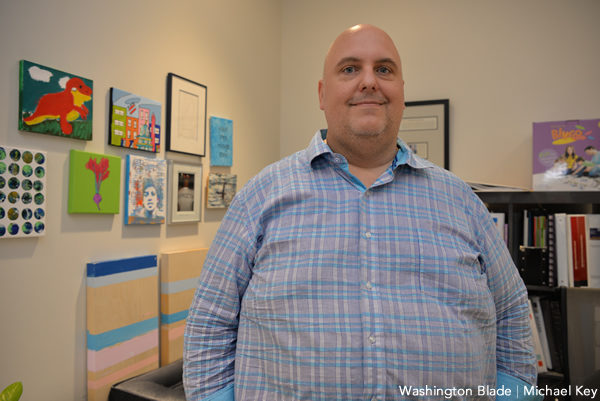
Center director David Mariner reflects on 20 years in Washington
Longtime gay D.C. community leader heading to Rehoboth with new husband
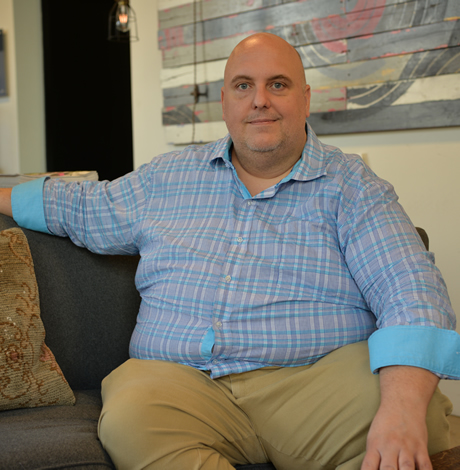
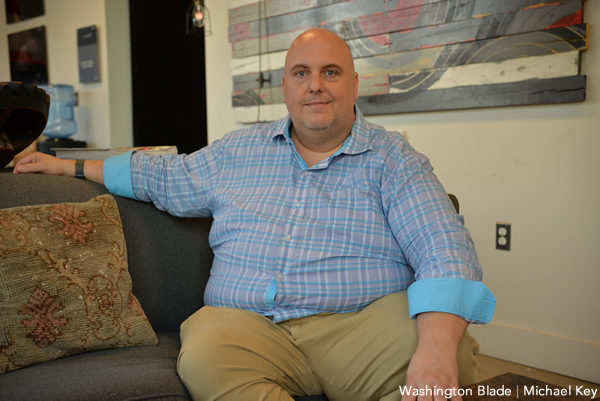
David Mariner began in 2008 as a volunteer and then a part-time employee when the D.C. Center for the LGBT Community had a small office suite in the American Dental Association’s building on 14th Street, N.W. next to Thomas Circle.
Mariner, who soon became the Center’s executive director, recalls that the center’s volunteer treasurer told him back then that the organization had about $2,000 in the bank.
Now, a little over 10 years later, the D.C. Center operates in a comfortable suite of offices in the city’s Reeves Municipal Center building at 14th and U Streets, N.W. with an annual budget of $442,000 and an expected 2020 budget that Mariner says will reach the half-million dollar mark.
The Corning, N.Y., native, who moved to Washington in 1999 after graduating from college at Furman University in Greenville, S.C., departs Monday for a similar job at CAMP Rehoboth in Rehoboth Beach, Del., with his husband of one week, Khusan. He spoke to the Blade this week about his decade-plus at the D.C. Center.
WASHINGTON BLADE: When did you start at the D.C. Center?
DAVID MARINER: I began working at the D.C. Center in 2008. I volunteered for the first few months, and then they brought me on part time. When I started volunteering, they did not have the budget to hire me, but we worked up to that.
BLADE: What were things like back then?
MARINER: When I started Jim Marks (gay activist and former Washington Blade feature writer) was our treasurer. And other than a grant to work on crystal meth, which we were doing collaboratively with other organizations, we had about $2,000 in the bank, and for the first few months I would always ask Jim where we were money wise, and he would always say we have about $2,000.
BLADE: And where was the Center located at that time?
MARINER: At that time we had a suite at the American Dental Association Building on 14th Street, near the Green Lantern.
BLADE: That was the first office the Center had when you began working there?
MARINER: Uh-huh. We had no full-time staff when I started, and now we will soon have a team of six or seven people in October. So we’re going to have the biggest and most robust team we’ve ever had at the Center.
BLADE: So when did you begin as the full-time executive director?
MARINER: That was January 2009, one year later.
BLADE: Can you tell a little about how the Center has changed since that time? You’ve been credited with helping to grow it quite a bit.
MARINER: We have a $47,000 grant from the Department of Aging and Community Living, which is the first time DACL has ever funded an LGBT group, which is exciting. The grant expands our social support network for LGBTQ older adults. We will continue having regular lunches and weekly coffee socials for LGBTQ older adults and expand into other programming, including yoga. We will also have a part-time case manager on site to support our LGBTQ older adults. One of the things we’ve asked for is for the Mayor’s Office of LGBTQ Affairs to get to 20 housing vouchers for LGBTQ seniors. And I still don’t know where that stands, but a case manager like the one we will have is really important in helping older adults utilize those vouchers.
BLADE: Was there one other place the Center moved to before moving to the current location at the Reeves Municipal Building at 14th and U Street, N.W.?
MARINER: In 2009, we moved out of the American Dental Association Building at 1111 14th Street, Suite 350 and moved into the Whitman-Walker Space at 1810 14th Street, N.W., where Doi Moi is now. JBG Properties gave us the opportunity to stay there at a very reasonable rent knowing they were planning to demolish the building. When JBG moved forward with demolishing that space, we moved to another JBG property 1308 U Street N.W., in June of 2010. We encouraged the city to release an RFP for vacant space at the Reeves Center. There is still a lot of unused space at the Reeves Center including a hair salon that has not been touched for many years. We submitted our application with others that included a convenience store and a restaurant. At one point after our RFP was accepted there was a proposal for the city to trade the Reeves Center. Ultimately those plans fell apart. However, the future of the Reeves Center is still up in the air.
BLADE: Since moving into the Reeves Center the D.C. Center appears to have grown considerably. What do you see as your accomplishments there?
MARINER: Well when I visited other community centers through my consulting, what I loved most about them is how they created a space for everyone in the community, and how easy it was for community members to organize and support each other because they had a space to gather. I really wanted the D.C. Center to be a place where everyone felt welcome, which is difficult in a city that is so often divided. And I wanted it to be a space where we could work together to make D.C. better for everyone. Some of the work I’m most proud of is not the work I did, but the work community members did. The D.C. Center just made it easier by supporting their work. So for example, I’m very proud that D.C. for Marriage was a program of the Center, and (marriage equality leader) Michael Crawford and others did such amazing work creating marriage equality in D.C. long before it was nationwide. I’m proud of Daniel O’Neal, who worked on HIV prevention when we saw an increase in new HIV cases among younger gay/bi/trans men, and I’m really proud of the work Eddy Ameen and the Youth Working Group did holding forums and advocating for more beds for homeless LGBTQ Youth. As you remember, the Youth Working launched a petition for more beds for homeless LGBTQ youth when there were only a handful of beds. That has thankfully changed. And of course I’m proud of the fact that the D.C. Center is filled with activities almost every evening we are open. Many of our meetings at the D.C. Center are peer-facilitated support groups. There are 18 different peer-facilitated support groups that meet at the D.C. Center including our newest, which is for LGBTQ military members and first responders. In an era where trans people and people living with HIV are being pushed out of the military, I’m very excited we can offer this service
BLADE: What is the D.C. Center’s current budget?
MARINER: Our current 2019 budget is $442,000 and next year we will surpass the half million mark. That includes about $190,000 in government grants, $60,000 in private foundation grants and generous community support that comes through monthly donors, special events and our professional partners.
BLADE: What was your vision for the Center when you started and how much of that were you able to make happen?
MARINER: A lot of the goals that I set for myself when I started at the D.C. Center have been met. And 11 years is a long time to be with any organization. For me, I wanted to build an LGBTQ community center that I knew would last after I left and I believe that we’ve done that. I’m really proud of the work that I’ve done, but I’m ready for a new adventure and I’m ready to see what someone will bring to the D.C. Center when they take over.
BLADE: Will your new endeavor in Rehoboth Beach bring some changes in your personal life?
MARINER: Personally, this year has had some changes for me as I’ve gotten married. And I’m excited to be moving to Rehoboth with Khusan and be able to get a bigger place to live and for us to have a new beginning together. We’ve been together for two years
BLADE: How did you and Khusan meet?
MARINER: Khusan and I met at Trade (the D.C. gay bar) in August 2017, and got engaged in Key West, Fla., on July 13, 2019, and then we got married this past Friday, Sept. 20. Christopher Dyer was our officiant and it was a very small gathering of friends.
BLADE: How did you find out about the job opportunity at CAMP Rehoboth?
MARINER: I saw the Rehoboth job posting through CenterLink, the national association of LGBT Centers, and it felt like a great fit and a great opportunity. I applied and went to Rehoboth for two different interviews and got a chance to meet the team there. I had the opportunity to meet the board of directors and staff, and they are truly an amazing group of people, and Rehoboth itself is simply a very special place for the LGBTQ community.
BLADE: What if any new projects to you expect to be working on when you begin your new job in Rehoboth?
MARINER: Well I think the first task at hand for me when I get to Rehoboth is to really learn more. There are so many programs that CAMP Rehoboth offers and so many amazing volunteers and supporters that I want to learn from. Obviously there is a lot of overlap between what different LGBT Centers do across the country, but CAMP is also a unique place that I need to learn more about. One thing that is going to be unique for me is having a (U.S.) Senator and Representative that can vote, and I’m really looking forward to learning more about local politics. Obviously I could not be more excited that (transgender rights advocate) Sarah McBride is running for office, and CAMP has always played a role not just in Rehoboth, but in the state of Delaware. I’m excited to learn more about how we can support students in our area, and how we can best support LGBTQ older adults as well. I’m also excited to make some connections between D.C. and Rehoboth. For example, I know there are LGBTQ youth experiencing homelessness who’ve never had a day at the ocean. And being so close to the ocean, I would love to have some D.C. visitors. So I’ve already started some of those conversations with local organizations about visiting.
BLADE: Do you have any thoughts about carrying on the legacy of the late Steve Elkins, who co-founded CAMP Rehoboth and served as executive director for over 25 years before his death last year?
MARINER: Steve Elkins had such a profound impact on Rehoboth and the entire state of Delaware. The entire team at CAMP Rehoboth continues that legacy. I was impressed when I recently visited Rehoboth for the Sundance weekend and met so many elected leaders and community leaders who are deeply invested in CAMP and our future. Much like D.C., I believe that those of us who are fortunate enough to live in parts of our country that are LGBTQ supportive, have a responsibility to move the ball forward in the quest for full equality, and there is still much work to do.
BLADE: What can you say about the selection of your successor at the D.C. Center and what that person will be dealing with in the next few years?
MARINER: The board of directors is working with our friends at CenterLink to conduct a job search. I believe there has recently been a renewed focus on LGBTQ advocacy locally in D.C. and I very much hope to see that continue. This includes passing the LGBTQ Older Americans and Older People Living HIV legislation, the Bella Evangelista and Tony Hunter Gay and Trans Panic Defense Bill, and the bill to Decriminalize Sex Work in D.C. I know the D.C. Rainbow Caucus (of LGBT Advisory Neighborhood Commissioners) and others will continue to push for more local funding and I hope to see that happen. And if we are pushed out of our current space at the Reeves Center, I hope to see at least twice as much space in our new home, as we continue to grow.




a&e features
Introducing the Torchbearers Awards honoring queer, trans women and nonbinary people
Meet the Legends and Illuminators lighting new paths
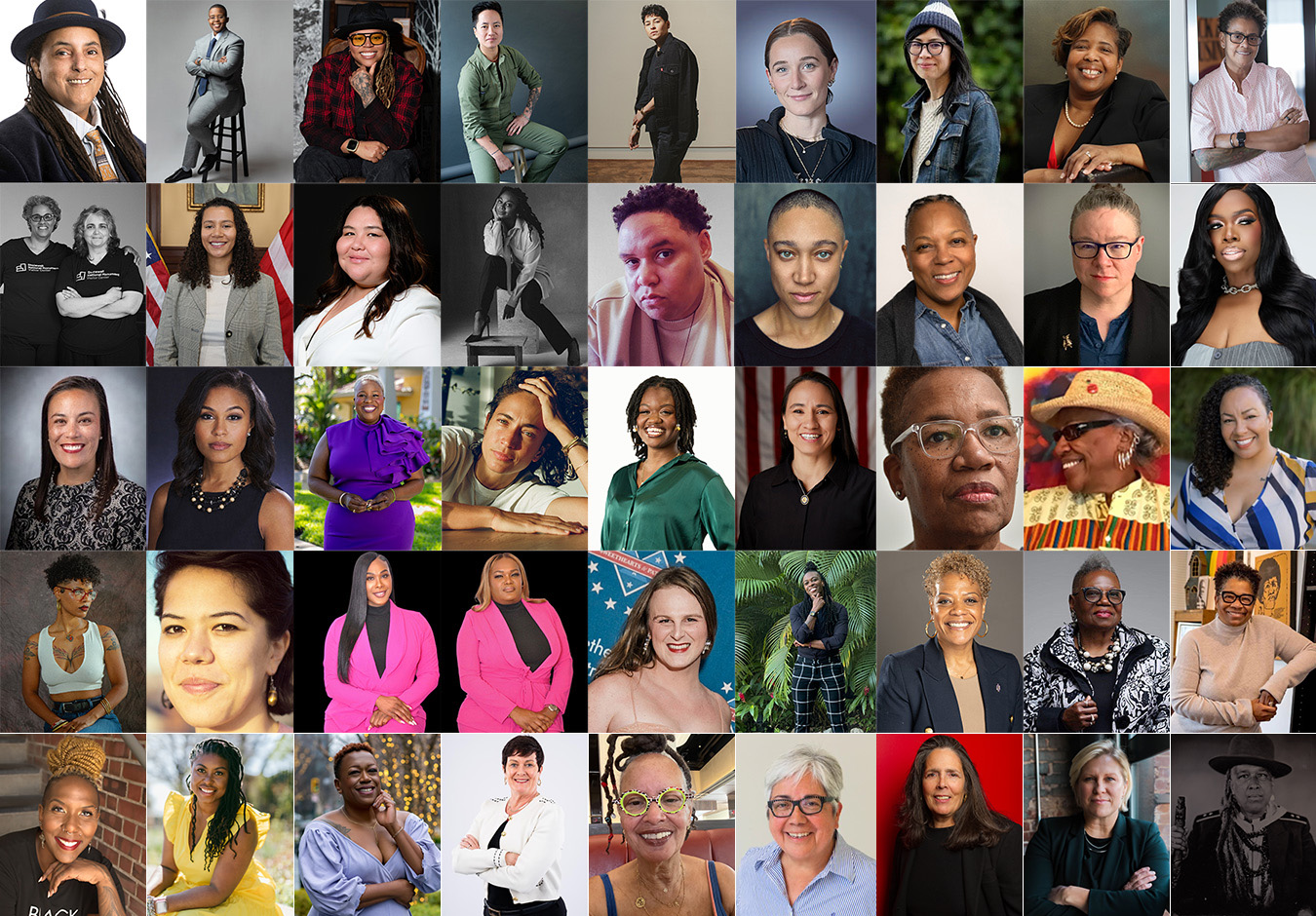
The Torchbearers Awards are more than recognition—they are a continuation of legacy. They honor the quiet architects of progress in our community: those who organize, advocate, build, and protect, often without fanfare but always with purpose. Rooted in a belief in intentional recognition, this honor names those who carry our movements forward—those who make room for others, who remind us that change is both generational and generative. In a time marked by uncertainty and challenge, these leaders push forward with courage, clarity, and an unwavering commitment to expanding opportunity and equity.
This year’s honorees reflect the full breadth of our community, spanning generations, backgrounds, identities, and industries. From Legends, with decades of leadership and having created pathways for others, to Illuminators, who are lighting new paths with creativity and innovation, each Torchbearer represents the power of intergenerational leadership and the strength found in our diversity. They are organizers, advocates, artists, policy leaders, healers, and changemakers whose lived experiences shape a shared vision for equity and liberation.
This award is our love letter to queer and trans women and nonbinary people who carry the flame when it would be easier to let it dim. To those who consistently show up, who use their voice and visibility and stand firm, often without recognition, so that others may live more freely and fully. The Torchbearers Awards celebrates not just what has been done, but the enduring spirit, responsibility, and collective care that ensure the work continues, and that the flame is always passed forward.
Co-Creators of the Torchbearers Awards: Shannon Alston, June Crenshaw, Heidi Ellis
Torchbearers Awards Advisory Board: Aditi Hardikar, Lesley Bryant, Jasmine Wilson-Bryant, Stephen Rutgers
ILLUMINATOR AWARDEES
- Representative Sharice Davids (she/her), (D, KS-03)
— U.S. House of Representatives - Greisa Martinez Rosas (she/her/ella)
— Executive Director, United We Dream - Paola Ramos (she/her)
— Journalist & Correspondent - Meagan A. Fitzgerald (she/her)
— Journalist & Correspondent - Jessica L. Lewis (she/her)
— Founder / Producer, Play Play DC - Savannah Wade (she/her)
— Founder, OAR Agency - Suhad Babaa (she/her)
— Filmmaker/ Former Executive Director of Just Vision - Ashlee Davis (she/her)
— Global Head of Inclusive Outcomes, Ancestry - Jazmine Hughes (she/her)
— Journalist and Former Editor at New York Times Magazine - Queen Adesuyi (they/she)
— Policy Advisor & Organizer, ReFrame Health & Justice - Michele Rayner, Esq. (she/her)
— Civil Rights Attorney, State Representative (Florida House of Representatives) - Gaby Vincent (she/her)
— Sports/Cultural Commentator and Community Leader - Jenny Nguyen (she/her)
— Founder & Owner, The Sports Bra - Denice Frohman (she/her)
— Independent Artist, Poet / Performer - Vida Rangel (she/her)
— Founder, Our Trans Capital - Roxanne Anderson (they/them)
— Executive Director, Our Space - Ann Marie Gothard (she/her)
— Co-Founder & President, Pride Live (Stonewall National Monument Visitor Center) - Diana Rodriquez (she/her)
— Co-Founder & CEO, Pride Live (Stonewall National Monument Visitor Center) - Wendi Cooper (she/her)
— Founder / Executive Director, Transcending Women - Toya Matthews (she/her)
— City of San Antonio, Texas - Mayor Gina Ortiz Jones (she/her)
— Sports/Cultural Commentator and Community Leader - Charity Blackwell (she/her)
— Poet, LGBTQ Advocate & Community Leader - Wilhelmina Indermaur (she/her)
— Director of Communications, Tyler Clementi Foundation - Em Chadwick (she/her)
— CMO, For Them & Autostraddle - Kylo Freeman (they/he)
— CEO, For Them & Autostraddle
LEGEND AWARDEES
- Sheila Alexander-Reid (she/her)
— Executive Director, PHL Diversity, Philadelphia Convention & Visitors Bureau - Cassandra Cantave Burton (she/her)
— Interim Director of Thought Leadership & Senior Research Advisor, AARP - leigh h. mosley (she/her)
— Photographer / Educator, PhotoFlo Photography - Jenn M. Jackson, PhD (they/them)
— Assistant Professor of Political Science; Author & Columnist, Syracuse University - Jordyn White (she/her)
— COO, Washington Prodigy / VP of Leadership Development & Research, HRC Foundation - AJ Hikes (they/them)
— Deputy Executive Director, ACLU - RaeShanda Lias (she/her)
— Digital Creator, RL Lockhart - Donna Payne-Hardy (she/her)
— Educator, EEO Specialist, Founder of NBJC, Former Leader at the Human Rights Campaign - Courtney R. Snowden (she/her)
— Principal, Blueprint Strategy Group - Gaye Adegbalola (she/her)
— Musician & Activist, Musician / Inductee of the Blues Hall of Fame - Cheryl A. Head (she/her)
— Independent Author, Novelist (Crime Fiction) - Letitia Gomez (she/her)
— The American LGBTQ+ Museum, Board Chair - Lynne Brown (she/her)
— Publisher, Washington Blade - Shay Franco-Clausen (She/Her/Ella/Queen)
— Political Strategist and Organizer - Melissa L. Bradley (she/her)
— Founder & Managing Partner, New Majority Ventures - Meghann Burke (she/her)
— Executive Director, NWSL Players Association - Victoria Kirby York, MPA (she/they)
— Director of Public Policy & Programs, National Black Justice Collective - Joli Angel Robinson (she/her)
— CEO, Center on Halsted - Jeannine Frisby LaRue (she/her)
— CEO, Moxie Strategies - Alice Wu (she/her)
— Film Director (Saving Face, The Half of It) / Screenwriter - Storme Webber (she/her)
— Interdisciplinary Artist / Educator, University of Washington - Kim Stone
— CEO of the Washington Spirit, Washington Spirit - Mickalene Thomas
— American Visual Artist, Mickalene Thomas Studio - Erika Lorshbough (any/they/she)
— Executive Director, interACT - J. Gia Loving (she/ella)
— Co-Executive Director, GSA Network
a&e features
D.C. springs back to life with new, returning events
Cherry blossoms, Rehoboth season kickoff, and more on tap
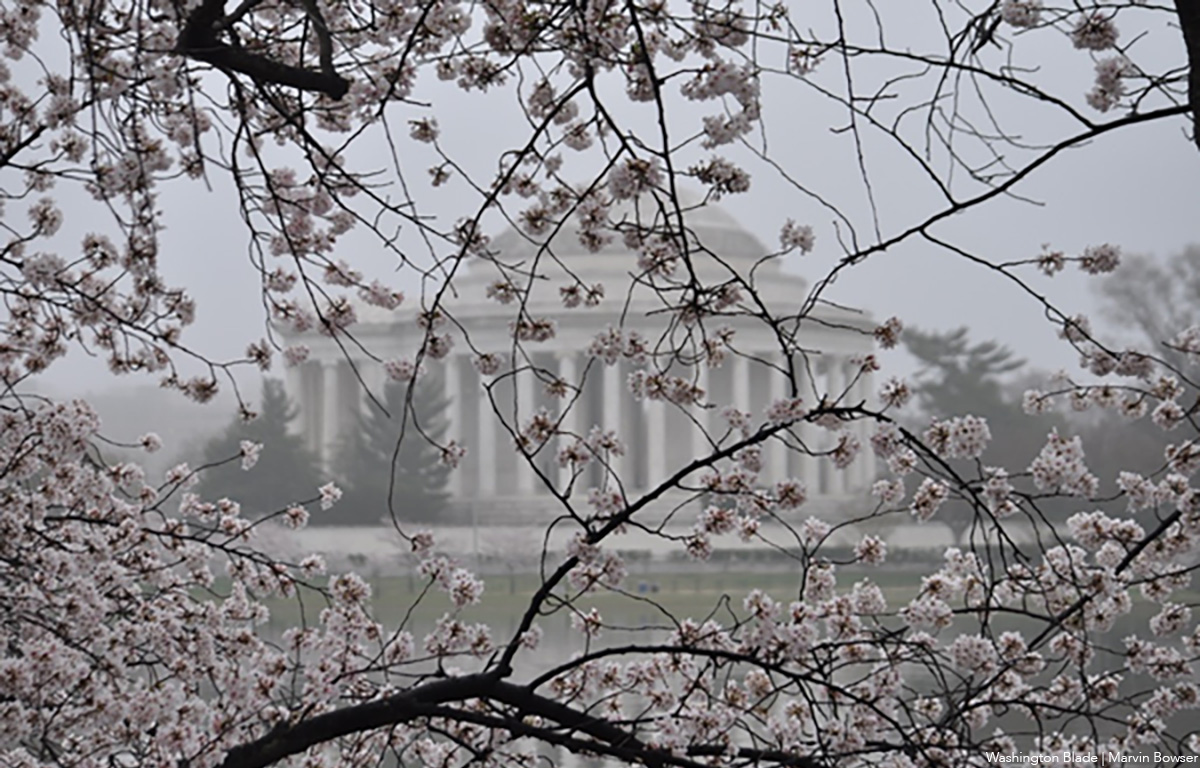
Longer and warmer days are back meaning: It’s time to get out of the house and enjoy Washington D.C.’s many events. Below are a few to check out this spring.
The National Museum of Women in the Arts will host “Making their Mark: Works from the Shah Garg Collection” until Sunday, July 26. This exhibition illustrates women artists’ vital role in abstraction, considers historical contributions, formal and material breakthroughs and intergenerational relationships among women artists over the last eight decades. For more details, visit. NMWA’s website.
Art in the Attic will host a pop-up on Saturday, March 14 at 6 p.m. at 1012 Madison St., Alexandria, Va. There will be a variety of vendors selling products across different modes of art. For more details, visit Eventbrite.
Play Play will host “Indoor Recess – The art of play” on Sunday, March 15 at 2 p.m. This event will embody classic recess energy, including opportunities to build and experience community and connections through games, movement, art stations, and creative freedom. Tickets are $12.51 and can be purchased on Eventbrite.
Spark Social will host “Gay Bar Crawl on U Street” on Friday, March 20 at 7:30 p.m. This will be a fun night out in gay D.C. with other gay people, whether you’re visiting D.C., new to the area, or just looking to expand your social circle. Many crawlers have formed lasting friendships and even romantic relationships after just one night out. Tickets are $35.88 and are available on Eventbrite.
Creative Suitland Arts Center will host “EFFERVESCENT: House of Swann” on Saturday, May 30 at 7 p.m. This will be a gay, good time where we will celebrate love, joy, wellness, and visibility for the LGBTQIA+ community. Tickets start at $17.85 and can be purchased on Eventbrite.
SWAG Works DC will host “Unapologetically Her” on Saturday, March 14 at 2 p.m. at 701 E St., S.E. This event is a powerful celebration of womanhood, resilience, creativity, and self-expression in honor of Women’s History Month. This all-women exhibition highlights the diverse voices, stories, and artistic perspectives of women who create boldly, live authentically, and stand confidently in their truth. This event is free and more details are available on Eventbrite.
9:30 Club will host “Gimme Gimme Disco: A Dance Party Inspired by ABBA” on Saturday, March 14 at 6 p.m. There will also be a “Donna Summer Power Hour – The Queen of Disco” segment during this event. It’ll be one hour of music with no skips. Tickets are available on 9:30 Club’s website.
Harder Better Faster Stronger will host “Heated Rivalry Rave” on Friday, March 20 at 9 p.m. at Howard Theatre. This event is open to all ages. Tickets are available on the theater’s website.
CAMP Rehoboth hosts its 25th annual Women’s+ FEST, April 9-12 in Rehoboth Beach, Del. Entertainers include headliner Mina Hartong, a comedian, storyteller, and founder of Lez Out Loud; and singer Yoli Mayor. There are dances, dinners, pickleball, and much more. Details and tickets at camprehoboth.org.
Also in Rehoboth Beach, the Washington Blade’s 19th annual Summer Kickoff Party is set for Friday, May 15 featuring Ashley Biden, who will accept an award on behalf of her brother Beau. State Rep. Claire Snyder-Hall will also speak. More speakers and the venue to be announced soon.
The annual D.C. Cherry Blossom Festival kicks off March 21 at DAR Constitution Hall and culminates with Petalpalooza on April 4, the day-long, outdoor street party with music and art, stretching across Navy Yard, and ending with fireworks over the Anacostia River.
a&e features
‘Queer Eye’ star Dorriene Diggs on life before and after appearing on hit show
Emotional January episode highlighted 40-year love affair with partner

Dorriene Diggs, 70, whose 40-year relationship with her domestic partner, Diane until Diane’s passing in 2020, the couple’s tense relationship with their respective parents, and Dorriene’s current living arrangement with her straight sister Jo, were the focus of a final season episode of the popular TV series “Queer Eye.”
In a recent interview with the Washington Blade, Diggs told of how her appearance on the show has impacted her life. She elaborated on the many aspects of her life experiences that she told to the five “Queer Eye” co-hosts who interviewed her and her sister in their D.C. home.
Although her parents and her partner’s parents, who have since passed away, were not accepting of their relationship, Diggs has said most of her family members at this time reacted positively to her appearance on the show.
“They loved it,” she told the Blade. “Yes, everybody that saw the show called me and said they loved the show, they really enjoyed themselves watching it.”
Through an arrangement with D.C.’s Rainbow History Project, the “Queer Eye” show featuring Diggs and her sister was presented in a special screening on a large video screen at the D.C. History Center in January.
“Dorriene, a 70-year-old Black lesbian living in Washington, D.C., had spent decades building a life with her partner while navigating silence within her own family,” a “Queer Eye” statement announcing the episode on Diggs states.
“The Fab Five did not arrive to introduce Dorriene to herself, but to help ensure her story was finally heard in full,” the statement says.
Blade: Can you tell us how your appearance on the “Queer Eye” program came about? How did they find out about you?
Diggs: You know, I still don’t have all the details. I think it was my niece, Missy. And she knows somebody there from “Queer Eye.”
Blade: So, did you first learn about it when someone from “Queer Eye” contacted you?
Diggs: No, the “Queer Eye” guy knocked on my bedroom door and started talking. I was in my bedroom watching television and the next thing I know my door opened up and there was Karamo [Karamo Brown, one of the “Queer Eye” co-hosts] with his big black cowboy hat on, opening the door grinning. … They contacted Jo first. And when they came here, they realized there was a gay woman in the house, too. Because my name was not mentioned at first. After they came here, they learned about me, because when Missy reached out to them, she reached out to them about Jo. But that doesn’t bother me. This was all about Jo in the beginning, and not me. … They started talking to me and Jo. And he said, Dorriene, ‘you’ve done so much for so many people, it’s time for someone to do something for you.’ That’s what they said. He said, ‘this is the day we’re doing it for you.’
And so, they put me and my sister up in a hotel for a week. They gave us a personal driver to take us anywhere we wanted to go. And then they took us to a bunch of places. We didn’t know why they were doing all of this. We had no idea that they were renovating the house and renovating our bedrooms. We had no idea.
Blade: What was your reaction when you saw the home renovation?
Diggs: It was amazing. And they bought us all new complete wardrobes – clothes, shoes. But most of the stuff they got me I gave away to a women’s shelter. But it was so nice. Actually, to meet the guys. I’ve been watching the show for 10 years. I have watched it from the beginning. And actually, it brought me and my sister closer – really. We’re closer now than we’ve ever been. She’s my baby sister – not the baby, but next to the baby. She’s the younger one.
Blade: What has been the reaction to your appearance on the show? Do more people now recognize you?
Diggs: Yes, yes. I’m getting phone calls and it’s almost like I’m a celebrity. And I don’t want people to make a fuss over me. All the things I did I did from the heart. I really did. And I don’t want people to think I’m more than I am. I’m just a good Christian woman that believes in giving back.
And I do. God gives me help giving. That’s what I do. And I don’t want anything in return from anyone. You know, because I know what it means to not to have. I know what it means to go to bed hungry, with no food. Going to school with holes in your shoes. I know that. I know that feeling. I’ve been there. And I promised myself as a kid I would never live like this again. And when I got bold enough to leave home, I left home at 14, and I moved in with a drag queen. Damen was his name.
Blade: Did your appearance on the show change your life and your relationship with your sister?
Diggs: Yeah, yeah, it actually did. We are actually closer now than we’ve ever been. Because, like I said, I moved away from home early and I never went back. My parents had a problem with my lifestyle. They really did. My mom looked at me with such hatred. When I was old enough to say goodbye, I never looked back. And to come back around now in the last few years after Diane died, that’s when I came back here.
And at one point I stayed with my nephew Todd and his wife – but he got killed in a car accident. I couldn’t stay at his house anymore. So, then I called Jo and told her I need to get out of here. And without hesitating she came and picked me up and brought me to her home. And I’ve been here ever since.
Blade: Can you tell a little about when it came about and how you met your partner?
Diggs: We lived on 18th Avenue in condos. I just bought one. Hers was above mine. I bought the bottom one. When my brother came over, she was getting out of her car. She was driving a Vega. And I turned to my brother and I said – this is the God’s honest truth – I said Keith, that’s the woman I’m going to spend the rest of my life with. Just like that. And he started laughing. He said, girl you’re crazy. I said I know I’m crazy, Keith, but I’m telling you that woman right there is who I’m going to spend the rest of my life with.
Blade: And when was that?
Diggs: It was 1980 actually. And then I started going to the laundry room to do my laundry. So I started talking to her. She said, ‘I’m not speaking to you.’ Isaid ‘why not?’ She said ‘because you’re nothing but a female gigolo.’ And I said I’m not dating anymore. I’m waiting for you. ‘No, you’re too fast for me.’ I said, ‘well, I’m not giving up.’
And I didn’t give up. So, I was playing an album one day and she knocked on the door and asked what I was playing, I think. I said you liked that. She said yeah. I said OK, I’ll bring it upstairs and we can listen to it together. So, when I went up there to her apartment that day and whenever I went up there, I never left.
Blade: So, your partner’s name was Diane?
Diggs: Yes, Ruth Diane Robinson. But she hated the name Ruth. So, the only people who called her Ruth were at work, the people she worked with. Everybody else called her Diane.
Blade: And how many years were you together?
Diggs: Forty. Forty years together
Blade: And where were you living with her most of the time?
Diggs: We lived in Hagerstown the longest, Hagerstown, Md. And so, if Diane hadn’t died I probably still would have been in our house in Hagerstown.
Blade: Can you tell me a little about what you were doing career wise during those years?
Diggs: I do computers. I used to do computers. And before that I cooked. I love to cook like my mom. And then I wanted to do something else. So, I taught myself computers. I taught myself how to build computers and stuff. So, then I got my own computer business called Ida One Computer Consulting. And so, we helped build computers for people.
Blade: Around when was this, in the 1980a or 1990s?
Diggs: Yes, in the 1980s. I think I stopped I would say around ’96, when I stopped. Because we both said we were going to retire at 55. And we did. We both retired at 55. And then she started diabetes. Every day I had to give her an injection because she was afraid of needles. She couldn’t give it to herself. So, I had to give her an injection every day One time, I don’t remember when, she had a mild stroke. And I had to take care of her. I’ve always taken care of her. And I don’t regret it. I never regretted it. It’s taking care of the one you love.
Blade: When was it that she passed away?
Diggs: In 2020. I found her on the kitchen floor.
Blade: How did your family and your extended family react to your relationship with Diane?
Diggs: Well, her family, oh my God, they hated me – her mother the worst. Because I put a stop to them treating her really bad. I told her mother – I said never in my life – my mother raised me well. Never disrespect someone’s mother. I said but this time I’m going to disrespect you because you are going to start treating Diane like you ought to. This is a wonderful woman and you and your son and you it’s always about your son. You never, ever say anything good about your daughter.
I said it isn’t going to happen again. You’re never going to disrespect her again. I said you take a damn good look at her because you’ll never see her again. I meant that. I grabbed Diane. I said it’s time to go. They don’t care about you.
Blade: Can you tell a little about your family?
Diggs: Yeah, I’m a triplet sister. So, it’s Dorriene, Chorine, and Chrissy — we are the triplets. So, my mom had a set of twins and a set of triplets within nine months. One of the twins died at birth. So, the other twin is Margaret.
Blade: So then how did your family react to you and Jo being on “Queer Eye”?
Diggs: Most of my family really had no problem with it.
Blade: Were you out to them?
Diggs: Oh yeah. I was never in the closet. I didn’t give a damn what people felt about me, sweetheart. I really didn’t. I didn’t care. Because I was going to be me. And for people who didn’t like it, I wasn’t living for them, I was living for me. I’ve always been out. I had a brother who was also gay, Marvin. God rest his soul, too. But he stayed in the closet. He was in the closet until he was about 55 years old.
But everything I said on the show was the truth – my account. The things that I went through with family … You can’t tell me how I felt. If they try to make mom and dad out as perfect, they weren’t perfect. They were the worst parents. That’s my account of it.
So yes, everything I said on that interview was the truth. That’s one thing people who know me know – I do not lie.
Blade: What are some of the things you like to do these days?
Diggs: I’m a sports lover. I love sports. So, my baseball season is getting ready to get started. Baseball is my favorite sport. Yes, I love baseball. I like the statistics of it. And watching the guys. I wish they had a women’s professional baseball team, honestly. … I’m a D.C. sports fan. The Wizards, the Nationals, the Mystics, the Caps. … And see, I’m a diehard Redskins fan and I refuse to call them the Commanders. They’re the Redskins. They will always be the Redskins to me. I love my sports teams.
Blade: Can you tell a little about the history of the house where you and Jo now live and where they did the filming of the “Queer Eye” show?
Diggs: Jo had a house on 17th Street, I think it was Northeast because it was over there by H Street, N.E. And I think somebody wanted to buy her house. I don’t know why she moved. So, she found this house. Because she wanted to buy something where she could buy a house straight out. She didn’t want a mortgage on another house.
Blade: What are your thoughts on being on the last season of “Queer Eye?”
Diggs: Yeah, we were the last ones. We took it out with a bang, me and Jo. That was it.
Blade: Can you say how you and Jo appearing on the show impacted your life?
Diggs: I don’t know. I’m the same person. I’ve been getting calls from people saying I saw you on the show. And friends who I haven’t seen in years have been calling. … So yeah, the show, people I haven’t seen and talked to in years have been calling. I think that’s a good thing.

Kristi Noem ‘devastated’ as husband’s alleged fetish spending surfaces

Colo. activists condemn SCOTUS conversion therapy ruling

Is Ghana’s selective justice a human rights contradiction?

Supreme Court ruling against conversion therapy bans could affect Md. law

Glisten report details hostile climate for LGBTQ students

‘Out for McDuffie’ event held at D.C. gay bar

The Oscar-losing performance that’s too good to miss

‘Jonah’ an undeniably compelling but unusual memory play

Ghanaian president welcomed to Philadelphia amid backlash over anti-LGBTQ bill

PHOTOS: ‘No Kings’ rally and march
-

 District of Columbia2 days ago
‘Out for McDuffie’ event held at D.C. gay bar
-
Movies3 days ago
The Oscar-losing performance that’s too good to miss
-
Theater3 days ago
‘Jonah’ an undeniably compelling but unusual memory play
-
Ghana2 days ago
Ghanaian president welcomed to Philadelphia amid backlash over anti-LGBTQ bill