Sports
All Stars series finale: Federal Triangles Soccer Club
Spotlight series concludes with two athletes who find meaning, community in soccer
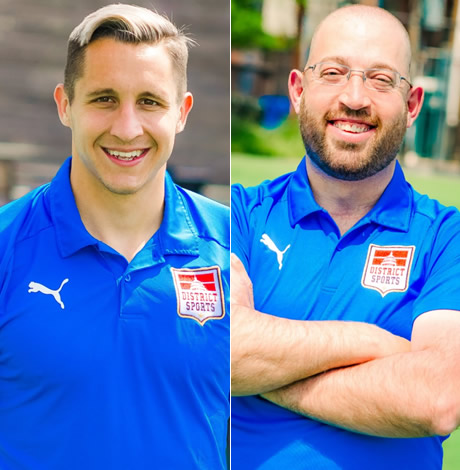
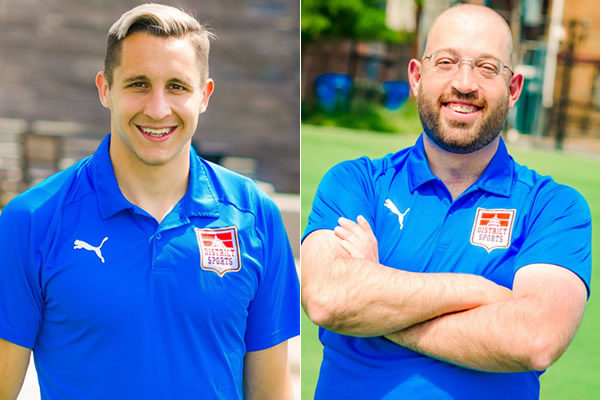
This week we wrap up the Washington Blade All Star series with two Federal Triangles Soccer Club players who are thriving as both players and leaders for their club.
The Feds host the Summer of Freedom League every summer and three tournaments throughout the year. In addition, their athletes travel to out-of-town tournaments and play in a variety of straight leagues in the area.
When Scott Teribury joined the club in 2013, he was touted as one of the best rookies to come along in years. Teribury grew up on military bases mostly in northern Virginia and competed in wrestling and soccer. He also ran cross country and track for his high school. During his collegiate years at Christopher Newport University, he played intramural soccer.
After five years of playing in leagues and tournaments for the Feds, Teribury became captain of the Triangles’ Rainbow Unicorns in fall, 2018. The Unicorns play 11v11 full-field soccer in the D.C. Premier League and are a team of gay Feds players competing in a straight league.
“As captain, I am responsible for organizing, scheduling, equipment, recruiting and making sure people show up,” Teribury says. “It’s important to foster the right atmosphere because this is not a recreational team, it is a competitive team.”
The Rainbow Unicorns are also one of the Feds travel teams and many of the players, including Teribury, serve as captains in the Feds’ Summer of Freedom League.
Teribury plays soccer four nights per week in a mix of different types of leagues ranging from the Premier League to co-ed to competitive pick-up.
“I have always enjoyed playing soccer, especially the team aspect of it,” Teribury says. “I want to continue playing until my body says I can’t play anymore.”
Along with representing the club at annual tournaments, Teribury has played with the Feds at the Gay Games in Cleveland and Paris. Somewhere in his spare time he has also played Stonewall Dodgeball, D.C. Gay Flag Football and Stonewall Kickball, but the LGBT soccer community is where he feels most at home.
“It really is about a sense of community. I grew up playing soccer with straight people and it is great to be in a space where you can be yourself and play the sport you love,” Teribury says. “This is how I met all of my best friends.”
Zach Straus grew up in Topeka, Kan., and started playing soccer at age 3 with his parents serving as coaches to him and his two brothers. His childhood and high school years were filled with Olympic Development Program camps, state qualification programs and high level travel teams.
“My parents viewed it as a safer sport than say football,” Straus says. “Plus I was always promised a free grape soda after every game. I grew to love the sport honestly though.”
While playing high school soccer, he was recruited to a local men’s Hispanic league.
“It was culturally different and an invaluable lesson to see a different way of playing and approaching the sport,” Straus says. “These were adults who found playing soccer the highlight of their week. It was the most significant thing I have ever been involved in.”
Straus played club soccer through his years at the University of Kansas and in 2006, he signed on as a free agent with an Atlanta team to compete in the Chicago Gay Games.
“It was transformative not to have to edit my behavior and I realized my heteronormativity was bullshit,” Straus says. “There was a whole world out there and I had to do something about it. I was tired of feeling alone.”
He made a list of cities with LGBT soccer teams and landed in D.C. in 2007 to join the Federal Triangles. With no job lined up, he spent all of his savings to travel with the Feds to Argentina for the International Gay and Lesbian Football Association world championships.
His employment path in D.C. led to the straight nonprofit District Sports where he is director of operations for about 7,500 adult soccer participants.
“We attempt to bring a level of consideration in our operations that is more community based,” Straus says. “We run our programs so others like youth soccer and pick-up soccer still have a space to play.”
His skills from District Sports have led to an organizational role with the Feds’ Summer of Freedom League where he creates schedules, recruits referees and obtains permits.
Straus says his soccer career as a player is waning, but he is still playing and occasionally fills in with the Division 1 team. He represented the Feds at the Paris Gay Games last year and points to the 2016 IGLFA World Championships in Portland as a career highlight.
“I scored the game-winning goal for the Federal Triangles in the championship match at Providence Park. To play on a professional pitch in a gay soccer game was so meaningful to me. It was validating,” Straus says. “The Federal Triangles have been a big part of my development as a person.”
Straus says his human thesis would read: a gay man working in sports but not working completely in gay sports.
“I try to think how we can do better in my sport and not be dominated by straight white athletes. We are looking to include all kinds of people including those who want to participate who have not had access,” Straus says. “I feel like as a gay man playing sports, I am more willing to listen.”



Sports
New IOC policy bans trans women from Olympics
New regulation to be in effect at 2028 summer games in Los Angeles
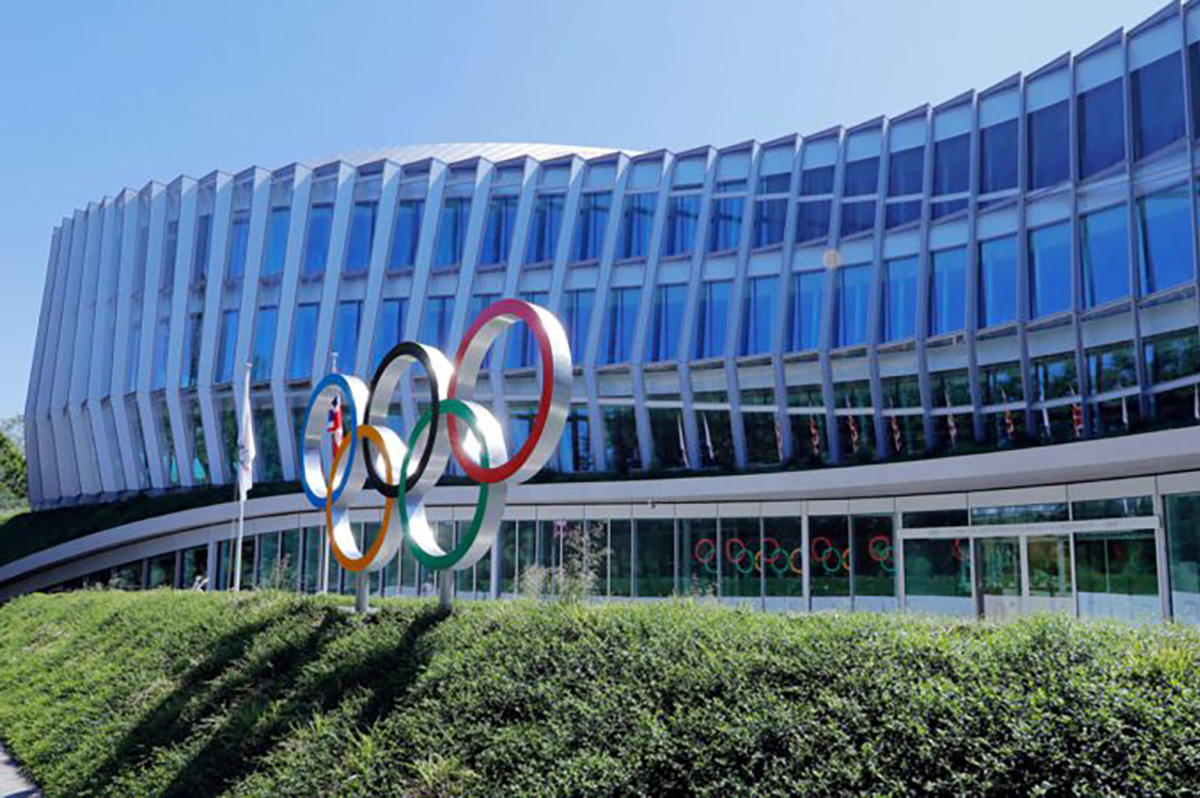
The International Olympic Committee on Thursday announced it will not allow transgender women from competing in female events at the Olympics.
“For all disciplines on the Sports Program of an IOC event, including individual and team sports, eligibility for any Female Category is limited to biological females,” reads the new policy.
The policy states “eligibility for the Female Category is to be determined in the first instance by SRY Gene screening to detect the absence or presence of the SRY Gene.”
“On the basis of the scientific evidence, the IOC considers that the SRY (sex-determining Region Y) Gene is fixed throughout life and represents highly accurate evidence that an athlete has experienced or will experience male sex development,” it reads. “Furthermore, the IOC considers that SRY Gene screening via saliva, cheek swab or blood sample is unintrusive compared to other possible methods. Athletes who screen negative for the SRY gene permanently satisfy this policy’s eligibility criteria for competition in the Female Category.”
The policy states the test “will be a once-in-a-lifetime test” unless “there is reason to believe a negative reading is in error.”
The new regulation will be in place for the 2028 Summer Olympics in Los Angeles.
“I understand that this a very sensitive topic,” said IOC President Kirsty Coventry on Thursday in a video. “As a former athlete, I passionately believe in the rights of all Olympians to take part in fair competition.”
“The policy that we have announced is based on science and it has been led by medical experts with the best interests of athletes at its heart. The scientific evidence is very clear: male chromosomes give performance advances in sport that rely on strength, power, or endurance,” she added. “At the Olympic Games, even the smallest margins can be the difference between victory and defeat. So, it is absolutely clear that it would not be fair for biological males to compete in the female category. In addition, in some sports it would simply not be safe.”
(Video courtesy of the IOC)
Laurel Hubbard, a weightlifter from New Zealand, in 2021 became the first trans woman to compete at the Olympics.
Imane Khelif, an Algerian boxer, won a gold medal at the 2024 Summer Olympics in Paris. Khelif later sued JK Rowling and Elon Musk for cyberstalking after they questioned her gender identity.
Ellis Lundholm, a mogul skier from Sweden, this year became the first openly trans athlete to compete in any Winter Olympics when he participated in Milan Cortina Winter Olympics in Italy.
President Donald Trump in February 2025 issued an executive order that bans trans women and girls from female sports teams in the U.S.
The U.S. Olympic and Paralympic Committee last July banned trans women from competing in female sporting events. Republican lawmakers have demanded the IOC ban trans athletes from women’s athletic competitions.
“I’m grateful the Olympics finally embraced the common sense policy that women’s sports are for women, not for men,” said U.S. Sen. Tom Cotton (R-Ark.) on X.
An IOC spokesperson on Thursday referred the Washington Blade to the press release that announced the new policy.
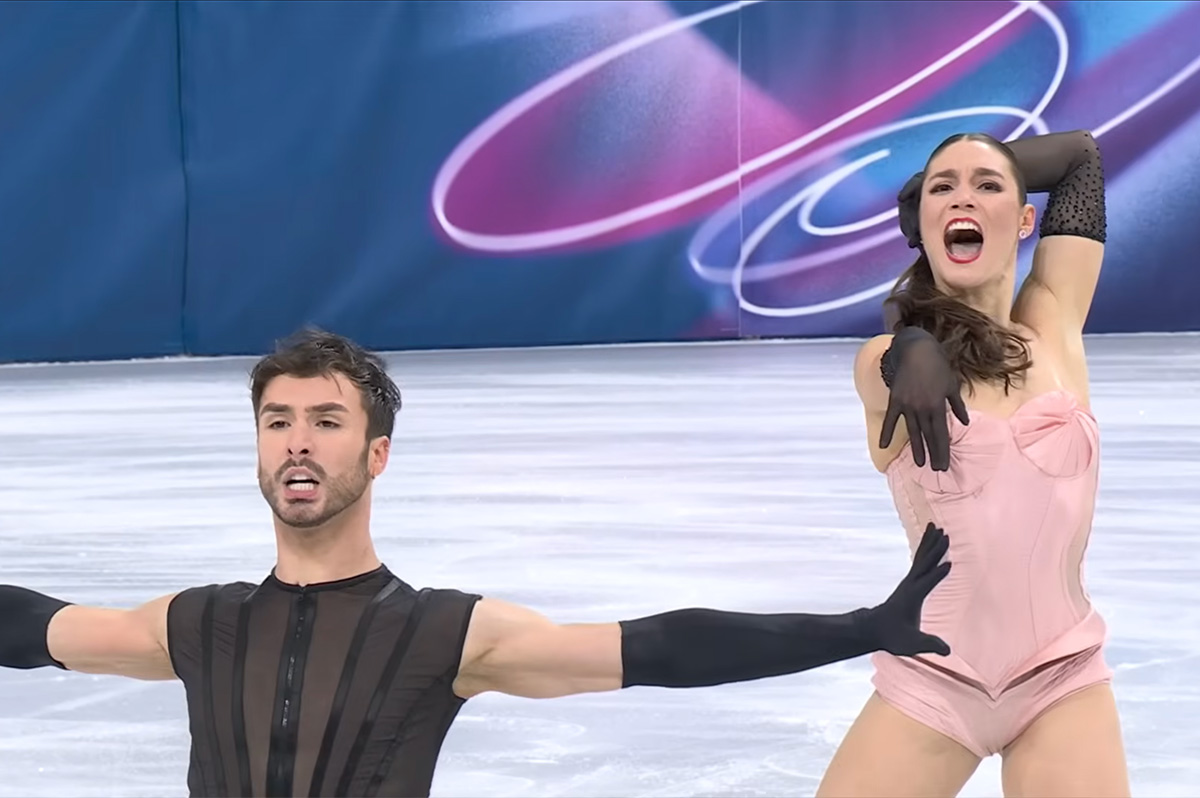
More than a dozen LGBTQ athletes won medals at the Milan Cortina Winter Olympics that ended on Sunday.
Cayla Barnes, Hilary Knight, and Alex Carpenter are LGBTQ members of the U.S. women’s hockey team that won a gold medal after they defeated Canada in overtime. Knight the day before the Feb. 19 match proposed to her girlfriend, Brittany Bowe, an Olympic speed skater.
French ice dancer Guillaume Cizeron, who is gay, and his partner Laurence Fournier Beaudry won gold. American alpine skier Breezy Johnson, who is bisexual, won gold in the women’s downhill. Amber Glenn, who identifies as bisexual and pansexual, was part of the American figure skating team that won gold in the team event.
Swiss freestyle skier Mathilde Gremaud, who is in a relationship with Vali Höll, an Austrian mountain biker, won gold in women’s freeski slopestyle.
Bruce Mouat, who is the captain of the British curling team that won a silver medal, is gay. Six members of the Canadian women’s hockey team — Emily Clark, Erin Ambrose, Emerance Maschmeyer, Brianne Jenner, Laura Stacey, and Marie-Philip Poulin — that won silver are LGBTQ.
Swedish freestyle skier Sandra Naeslund, who is a lesbian, won a bronze medal in ski cross.
Belgian speed skater Tineke den Dulk, who is bisexual, was part of her country’s mixed 2000-meter relay that won bronze. Canadian ice dancer Paul Poirier, who is gay, and his partner, Piper Gilles, won bronze.
Laura Zimmermann, who is queer, is a member of the Swiss women’s hockey team that won bronze when they defeated Sweden.
Outsports.com notes all of the LGBTQ Olympians who competed at the games and who medaled.
Sports
US wins Olympic gold medal in women’s hockey
Team captain Hilary Knight proposed to girlfriend on Wednesday
The U.S. women’s hockey team on Thursday won a gold medal at the Milan Cortina Winter Olympics.
Team USA defeated Canada 2-1 in overtime. The game took place a day after Team USA captain Hilary Knight proposed to her girlfriend, Brittany Bowe, an Olympic speed skater.
Cayla Barnes and Alex Carpenter — Knight’s teammates — are also LGBTQ. They are among the more than 40 openly LGBTQ athletes who are competing in the games.
The Olympics will end on Sunday.

Minimal version of ‘Streetcar Named Desire’ heading to Dupont Underground

Comings & Goings

An effort to increase the number of psychiatrists of color

Calendar: April 10-16

BLUF leather social set for April 10 in Rehoboth
Tenn. lawmakers pass transgender “watch list” bill

Vance speaks at Orbán rally in Hungary

Amendments to India’s transgender rights law criticized

White House ends protections for trans students in multiple school districts

LGBTQ groups condemn Trump’s threat to destroy Iranian civilization
-

 Tennessee4 days ago
Tenn. lawmakers pass transgender “watch list” bill
-

 Hungary5 days ago
Vance speaks at Orbán rally in Hungary
-
India5 days ago
Amendments to India’s transgender rights law criticized
-
The White House5 days ago
White House ends protections for trans students in multiple school districts