Real Estate
The case of the neglected colonial
Stalking a house under renovation in my neighborhood


During the stay-at-home order, people worked remotely, applied for D.C. grants and Small Business Administration loans, ordered takeout, and binge watched everything on Netflix, Hulu and Prime. They cut their own hair, became kitchen table dog groomers, learned how to Zoom, and relied on Randy Rainbow, Sarah Cooper and TikTok videos for comic relief.
Me, I became a house stalker.
There’s a house on my block that I’ve been staring at for the four-and-a-half years I have lived there. Full disclosure: I have never been inside. (I’m a stalker, not a trespasser.)
The house was first listed in the fall of 2013 and after three contracts, two price drops and five years, it finally sold to an investor in August 2018. The owner took three dumpsters of trash out of the house and did nothing more before putting the house back on the market. It sold six months later for $100,000 more than he had paid for it. Nice work if you can get it.
Now, let’s talk taxes. D.C. has three classes of residential property: $0.85 per $100 for residential and certain multi-family homes, $5.00 per $100 for vacant properties and $10.00 per $100 for blighted properties. There can be other permutations, but that discussion is for another day.
Suffice it to say that property taxes were levied at the vacant rate in 2017 and then at the blighted rate in 2018, resulting in a whopping tax bill of $34,000 per year.
I’m speculating that the new owner, also an investor, applied for an 18-month exemption available for vacant properties that are on the market for sale, thereby reducing his tax liability to one-tenth of what it had been in 2018.
To meet the exemption requirements, the house went back on the market only a month later for – wait for it – $300,000 more than he paid. Nine months later the price was lowered by $50,000, still vastly overpriced considering no renovations had been made. Finally, in late April (presumably in the last months of the owner’s tax exemption), things began to happen.
The first thing I noticed was the delivery of roof trusses. A few days later someone installed a few replacement slates on the tile roof. Next, a red truck arrived, a small one that would become a familiar sight in the neighborhood.
In early May, the real fun began. Another dumpster had appeared in the driveway (the roof trusses had been relocated to the back of the property) and I realized that I had developed a Facebook following with the saga of the house.
From a real estate standpoint, having a dumpster in your neighborhood is a good thing. It means someone is renovating or upgrading their home, which is good for property values. In fact, my neighborhood has two whole-house renovations going on my street alone. But when 1-800-toilets brings in the portable toilet and the Home Depot truck arrives with lumber and drywall, it’s time for a celebration.
Starting with old appliances and lumber, the dumpster began to fill up and by mid-May, a truck came to pick it up. I happened to be at my front door and stood there conspicuously watching it make a 36-point turnaround on a narrow street without driving over my lawn. No pressure.
The next day, I awoke to find not only a new dumpster in the driveway but also a backhoe on the front lawn. I watched as the front landscaping was dug out close to the house, as if someone were going to install a French drain to keep water out of the basement. In fact, they installed window wells with protective covers.
The most beautiful part of the home’s exterior was revealed in late May when the contractors removed an ugly metal awning from over the front door. There, hidden away for years, was gorgeous arched brick work that was prominent in houses of the 1940s framing the entrance.
We did have a little scare in the neighborhood when the contractors hit a gas line, but thanks to observant neighbors, Washington Gas was on it like Jumpin’ Jack Flash.
I continue my diligent observation, but now that the contractors have begun working on the inside, my house stalking has been intermittent. But don’t worry. I’m sure there will be more to the saga.
In fact, I may write a screenplay. I’ll need a working title and since “Rear Window” and “Disturbia” have already been taken, I’m thinking “Valerie Blake: House Stalker.” Susan Sarandon can play me in the movie.
Valerie M. Blake is a licensed Associate Broker in D.C., Maryland, and Virginia and Director of Education & Mentorship at RLAH Real Estate. Call or text her at 202-246-8602, email her via DCHomeQuest.com, or follow her on Facebook at TheRealst8ofAffairs.



Real Estate
Introducing Next-Generation Assisted Living & Memory Support.
Now Available in Tysons: Kokua at The Mather

We have good news for those seeking assisted living or memory support for a loved one: a fresh, hospitality-driven approach to care is now available in the heart of Tysons, Virginia. Kokua at The Mather opened in fall 2025 and provides residents with collaborative care as well as everyday possibilities for creativity, purpose, and connection.
For a limited time, Kokua is welcoming new residents with exclusive move-in incentives.
“Kokua is a Hawaiian word meaning ‘To extend help to others without expecting anything in return,’” explains Brandon Davidson, Administrator. “If you’re seeking support for a loved one, Kokua is worth a closer look. We take an individualized approach to care, with evidence-based practices provided by a dedicated, interdisciplinary team.”

LIMITED-TIME OPPORTUNITY
“At Kokua, we focus on the individual. We blend care with our research-driven approach to deliver personalized wellness tailored to residents’ needs and preferences,” says Davidson.
Residents enjoy the freedom to choose from enriching programs, meaningful social opportunities with experiences such as sensory walks, meditation, acupuncture, Reiki, songwriting workshops, poetry readings, Sensory Symphony Swim, and more.
Assisted Living in Ādar
Ādar means “respect”, and Kokua delivers. Comfortable residential living is combined with caring assisted living services, enabling residents to remain as independent as possible. Each one-bedroom apartment home (ranging in size up to nearly 900 square feet) offers generous space and thoughtful design, complemented by assistance with daily living tasks and emergency response systems for peace of mind.
Memory Support in Miran
Miran means “peaceful”—another pillar in the Kokua way of life. Private suites are designed for those with mild to moderate Alzheimer’s disease, dementia, or similar cognitive conditions. “Our person-centered approach embraces individual strengths and needs, with an interdisciplinary team that includes a staff member in attendance 24 hours a day to assist with event reminders and activities of daily living,” says Davidson. “Residents have access to a variety of opportunities to connect, express, and explore their potential through social events, wellness programs, creative arts, and more.”
Kokua offers the next generation of care in these areas, with a commitment to highly personalized service.

INSPIRED AMENITIES & BOUTIQUE SERVICE
Nestled in a lively urban neighborhood, Kokua incorporates biophilic design that brings the outside in to enhance health and wellbeing.
Throughout Kokua, residents enjoy a collection of thoughtfully designed spaces and top-shelf hospitality in an upscale community. Beautifully appointed gathering spaces create flexible opportunities for wellness, connection, and everyday enjoyment. A spacious outdoor terrace, demonstration kitchens, art and music studios, and more are used for an array of programs and are available to residents and their visitors. Multiple restaurants offer chef-prepared cuisine with flexible, open-hour service.
“Here at Kokua, we’re offering the next generation of care in Ādar and Miran, and it’s available to the public for a limited time,” says Davidson. Now is an ideal time to explore the personalized care and quiet luxury that Kokua at The Mather has to offer.
For more information, download a brochure at www.themathertysons.com/kokua. To schedule a visit or for additional details, contact Kokua at [email protected] or (571) 282.3650.
Real Estate
Honey, have we been priced out of gay paradise?
Rehoboth remains more accessible than many queer beach destinations
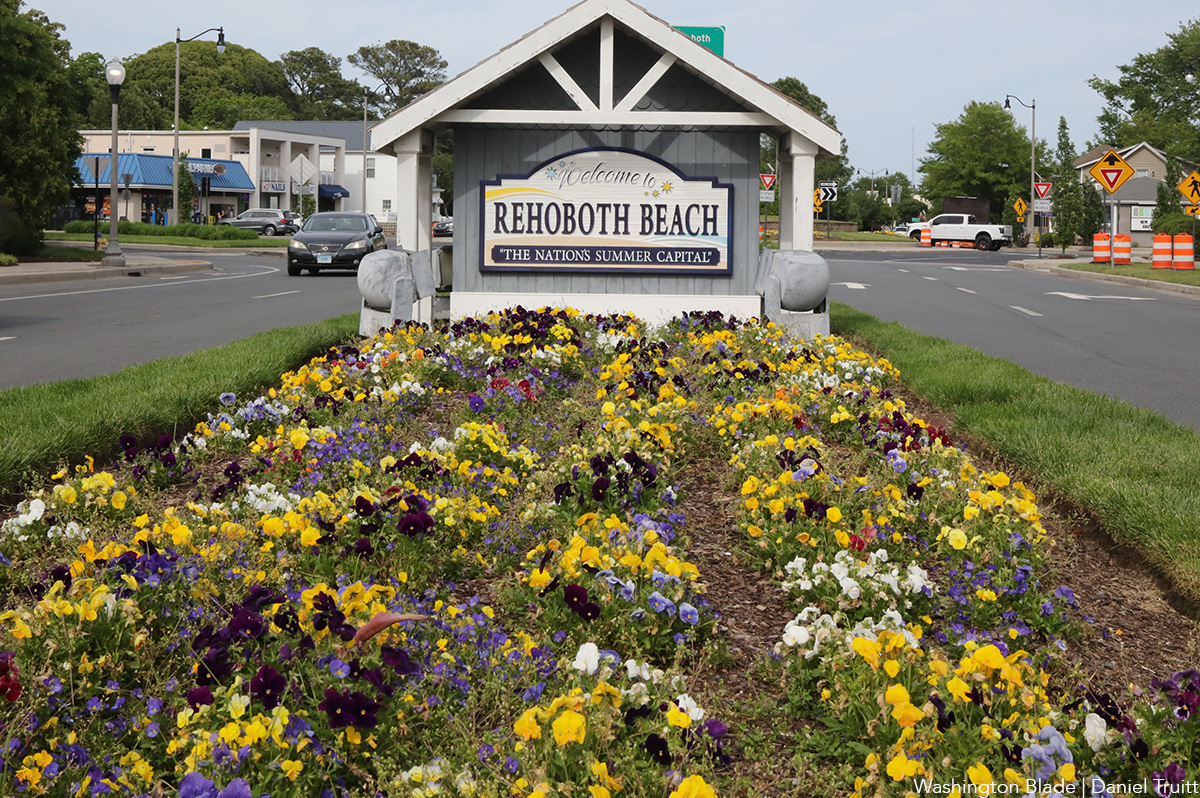
Let’s set the scene, darlings. It’s a scorching July Saturday. You’ve got a trunk full of rosé, a playlist that slaps harder than a “RuPaul’s Drag Race” elimination, and a group chat blowing up with your people en route to Rehoboth Beach — the Delaware beach town that has been the LGBTQ community’s summer headquarters for decades. Sun, sand, Poodle Beach, drag shows, and the kind of easy, breezy freedom that only comes from being surrounded by your tribe.
Now imagine pulling up to a “FOR SALE” sign on that charming two-bedroom cottage two blocks from the boardwalk — the one you’ve been eyeing for years — and seeing the price tag: $1.97 million. Honey, put the rosé down. We need to talk.
Nation’s Summer Capital Has a Spending Problem
Rehoboth Beach has long worn the nickname “The Nation’s Summer Capital” like a crown, owing to the annual migration of Washingtonians — and increasingly, Philadelphians and New Yorkers — who descend on its 27 miles of Atlantic coastline every summer. For the LGBTQ community in particular, Rehoboth has never been just a beach town. It has been a sanctuary, a second home, a place where you can hold your partner’s hand on the boardwalk without a second thought. But the real estate market? She is not reading the room.
According to Redfin data, the median sale price of a home in Rehoboth Beach recently hit $1.96 million — a jaw-dropping 106% increase year over year, and a figure that sits 127% above the national median. The price per square foot has climbed to $1,160, up nearly 27% in the same period. Gag.
So Who IS Buying Right Now?
Let’s not be dramatic — people are still buying in Rehoboth. They’re just a specific kind of people. According to neighborhood data, the per capita income in Rehoboth Beach runs around $118,239, equating to a household income of nearly $473,000 for a family of four. About a third of the workforce telecommutes, many in high-earning, white-collar professions. And more than 68% of residents hold a college degree, compared to a national average of under 22%.
If you want to buy a median-priced home in Rehoboth today with a standard 25% down payment, you’d need to bring nearly half a million dollars to closing — and then cover about $4,000 a month in ongoing expenses.
Still, the market isn’t quite the frenzy it was at peak pandemic frenzy. Homes are sitting on the market for an average of 88 days as of early 2026 — up significantly from the frantic bidding wars of a few years ago, when a listing might vanish before you could refresh Zillow a second time. Sellers are (slowly) getting the memo that buyers have limits.
Have Your Beach House (and Airbnb It, Too)
Many LGBTQ buyers have discovered a savvy workaround to Rehoboth’s sticker shock: buy a property, rent it during peak season, and let your summer visitors essentially pay your mortgage.
The numbers surprisingly support this strategy. The Rehoboth Beach short-term rental market currently has around 928 active listings, with hosts averaging $400 per night and annual revenues of approximately $39,689. The busiest month, predictably, is July — when guests book an average of 96 days in advance (so yes, those summer reservations your friends keep missing out on are being snapped up in April).
The key is making your property stand out in a crowded market. Properties accommodating eight or more guests dominate the Rehoboth STR market (nearly half of all listings), so that five-bedroom house with a game room suddenly starts to look like a business plan. At the same time – keep in mind that location, location, location honey – that is also so valuable. Even a two-bedroom condo close to the beach will also rent favorably well and get those numbers needed to make the most sense to your pockets.
This method allows you to have a second home, enjoy it, have friends enjoy it, and also helps recoup some of the overhead so the overhead and increase in overall purchase price is a bit more manageable.
What It All Means for Our Community
Rehoboth has always been more than real estate. It is one of the few places on the East Coast where LGBTQ people have, for decades, built an actual physical community — businesses, organizations, gathering spaces, neighborhoods — not just a social scene. CAMP Rehoboth, Poodle Beach, the Blue Moon (which, after some drama, was recently sold to new owners who pledged to keep it a queer-affirming space — phew), and countless gay-owned restaurants and shops form an ecosystem that attracts our community every summer precisely because the roots run deep.
But ecosystems require people — year-round residents, small business owners, artists, service workers — not just wealthy second-home owners. When prices rise to the degree they have in Rehoboth, the people who sustain that community can no longer afford to stay. It’s a pattern playing out in LGBTQ neighborhoods from San Francisco’s Castro to New York’s Chelsea, and it’s worth watching closely here.
The good news? Rehoboth remains more accessible than many comparable queer beach destinations. Provincetown, Mass. — the other iconic LGBTQ beach town on the Eastern seaboard — regularly sees median home prices north of $1.5 million with far less inventory and a significantly smaller footprint.
And Delaware’s tax structure does the community a quiet but important favor: no state sales tax, among the lowest property tax rates in the country, and relatively favorable income tax treatment for retirees. These aren’t glamorous talking points, but they matter when you’re running the numbers on whether your beach house dream can actually pencil out.
The Bottom Line, Babe
Can our community still afford Rehoboth? The honest answer is: it depends on what you mean by Rehoboth.
If you mean a single-family home within walking distance of Poodle Beach with an ocean view and a wraparound porch — prepare to spend north of $1.5 million, need a household income pushing six figures annually, and move fast when something comes to market.
If you mean a condo or townhome in the greater Rehoboth area – or a property you plan to rent out in peak season to offset costs — there are still real pathways in.
And if you mean belonging to a community, showing up every summer, taking up space on that beach, supporting LGBTQ-owned businesses, and making sure Rehoboth’s queer identity doesn’t get washed away by the luxury market tide — well, that part doesn’t have a price tag.
It just requires showing up. So pack the car. Bring the rosé. The beach is still ours.
Have a real estate question or Rehoboth market tip? Reach out to [email protected] for LGBTQ-friendly real estate resources in the Rehoboth area.
Real Estate
The rise of accidental landlords
How changing market conditions are impacting property management
Why are there more “accidental landlords” renting out their properties in the Washington, D.C., metro area?
The answer, according to The New York Times and other sources, is the current state of the real estate market. A growing number of accidental landlords are emerging as homeowners rethink their options in a challenging sales market. Rather than accept lower offers than they feel their properties deserve, many are choosing to rent instead of sell.
This shift reflects both financial caution and changing market dynamics, where holding onto an asset and generating rental income can seem more appealing than locking in a perceived loss.
A Market in Transition
The D.C. housing market remains fundamentally strong, but it has clearly shifted from the frenzied seller’s market of prior years. Inventory has increased significantly, and according to Redfin, active home listings in the Washington, D.C., metro area have increased significantly, with reports indicating a rise of roughly 33% to 50% year-over-year in late 2025 and early 2026.
This surge in inventory, coupled with falling demand, has shifted the market in favor of buyers, with roughly 22% more homes for sale than interested buyers. At the same time, homes are taking longer to sell. Buyers are still active, but they’re more selective, more price-sensitive, and less likely to engage in bidding wars.
This combination of rising inventory and longer selling timelines has created a key tension: sellers are no longer guaranteed the price they want. What’s a homeowner to do? Rent.
Why Homeowners Are Choosing to Rent
Rather than reduce their asking price, many homeowners are choosing to hold onto their properties and rent them out. National data confirms this shift. According to a report from Zillow, the share of rental listings made up of homes that failed to sell has climbed to near-record levels, with these accidental landlords accounting for a growing portion of rental supply. The number of these homeowners nationwide is at a three-year high.
The underlying psychology is simple: most sellers are not under immediate pressure to sell. And instead of accepting what they perceive as a discounted price, they opt to generate rental income and wait for more favorable market conditions.
For many homeowners, renting offers a way to “pause” the sales process without exiting the market entirely.
The Ripple Effect on the Rental Market
This influx of accidental landlords is reshaping the rental landscape. And this could be you!
- This trend is increasing rental supply. When unsold homes are converted into rentals, they add inventory to a market that has already seen new apartment deliveries and multifamily expansion. This is one reason rent growth has cooled in recent months, with national increases slowing to modest levels.
- Additionally, it is changing the type of available rental housing. Accidental landlords are more likely to offer single-family homes, townhouses, or condos; properties that differ from traditional apartment stock. Zillow notes that single-family homes make up the largest share of these rentals now.
For renters in D.C., this means more choices, particularly in neighborhoods where rental inventory was previously limited.
Operational Challenges for Accidental Landlords
While renting may seem like a straightforward fallback strategy, many accidental landlords quickly discover that property management is a complex, operationally intensive business. Some of the most common challenges include:
- Tenant screening and leasing compliance. D.C. has robust tenant protections and rent control regulations, particularly for older multifamily buildings. One wrong step can create legal complications home owners are not prepared for.
- Maintenance and repairs. Deferred maintenance can quickly erode profitability and tenant satisfaction. And tenants do have the power to cut into your monthly profit when certain livability standards are not met.
- Cash flow management. Not all rental income covers mortgage payments, especially for owners with higher interest rates.
- Regulatory compliance. Licensing, inspections, and rent stabilization rules can create administrative burdens.
In short, many homeowners underestimate the complexity involved in the transition from owner-occupant to landlord. What begins as a temporary strategy can evolve into a long-term operational commitment.
Property Management Firms Are Stepping In
As a result, property management companies across the D.C. metro area are seeing increased demand, particularly from first-time landlords. These owners often lack the infrastructure, systems, and expertise required to manage a rental property effectively. Professional management firms provide an array of solutions including marketing and leasing services, tenant screening and placement, rent collection and financial reporting, maintenance coordination, and compliance with D.C.’s evolving regulatory environment. For accidental landlords, outsourcing these functions can turn a reactive decision into a more structured investment strategy.
Green Renting: A Strategic Advantage in D.C.’s Rental Market
One often overlooked opportunity for accidental landlords—especially in Washington, D.C.—is the growing demand for “green renting.”
Energy efficiency is no longer just a lifestyle preference. For many renters, particularly in a high-cost city like D.C., it is a financial decision. Utility costs in the District can be significant, especially during peak summer and winter months. Properties that offer lower monthly energy expenses immediately stand out in a competitive rental market.
Installing solar panels, where feasible, can meaningfully reduce or even offset tenant electricity costs. For renters comparing similar properties, the difference between a standard utility bill and a reduced or stabilized energy cost can be a deciding factor. This is particularly true in D.C., where tenants are often highly-informed, environmentally-conscious, and sensitive to total monthly living expenses, not just base rent.
For landlords, the benefits extend beyond tenant appeal. Solar installations can help reduce vacancy, support longer lease terms, and create a premium perception that differentiates a property from competing listings. In some cases, landlords may also benefit from local incentives, tax credits, or increased property value tied to energy improvements.
In a market where many accidental landlords are competing on similar housing stock—single-family homes, condos, and townhouses—energy efficiency can become a key differentiator. It is not just about sustainability; it is about positioning a property to perform better financially.
A Local Market With Unique Dynamics
Washington, D.C., is a housing market shaped by federal employment, policy changes, and macroeconomic uncertainty. Recent developments, including fluctuations in the federal workforce and return-to-office mandates, have influenced both housing supply and demand. In some cases, these shifts have contributed to increased listings and more cautious buyer behavior. At the same time, D.C.’s high cost of entry continues to support rental demand. This dual dynamic creates ideal conditions for the rise of accidental landlords. Are you ready for this seismic shift?
Scott Bloom is owner and Senior Property Manager of Columbia Property Management.

Ghanaian lawmakers approve anti-LGBTQ bill

‘The Stranger’ queers an existentialist classic

Nine Russian LGBTQ groups deemed ‘extremist’ banned

D.C. Pride flag raising ceremony set for June 1

Still marching: Rev. Troy Perry and the ongoing fight for liberation

Bree Fram’s congressional campaign ends but her fight continues

Peppermint made her mark on ‘Drag Race.’ Now, her advocacy is front and center

From Media Matters to massive queer ragers: the rise of Tara Dikhof

Why this Black Pride, I ranked Janeese Lewis George #1 for D.C. mayor

Kenyan High Court issues landmark transgender rights ruling
-

 2026 Midterm Elections4 days ago
Bree Fram’s congressional campaign ends but her fight continues
-
Celebrity News4 days ago
Peppermint made her mark on ‘Drag Race.’ Now, her advocacy is front and center
-
Opinions4 days ago
Why this Black Pride, I ranked Janeese Lewis George #1 for D.C. mayor
-
a&e features4 days ago
From Media Matters to massive queer ragers: the rise of Tara Dikhof