Opinions
A hero passes; may RBG rest in peace
Justice spent lifetime fighting for equality
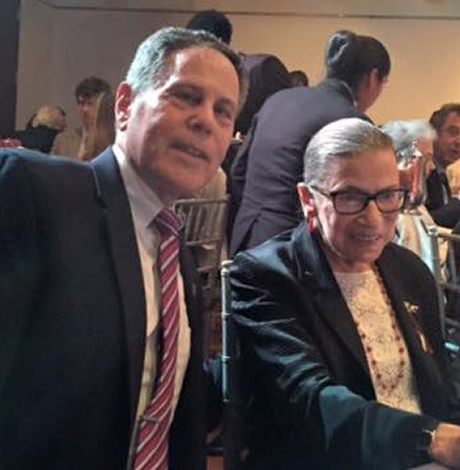
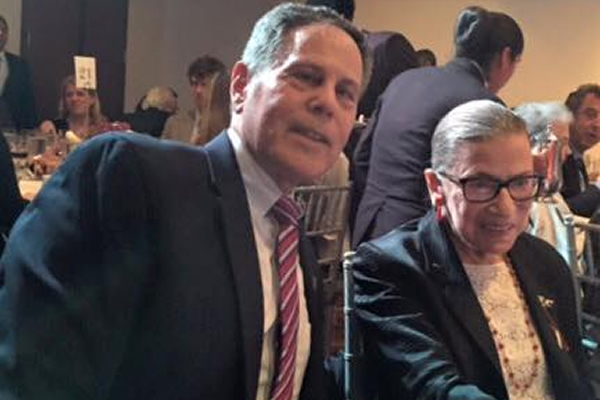
Ruth Bader Ginsburg; a hero, an icon, a brilliant woman whose life was spent fighting for equality. I first learned of RBG when working for Bella S. Abzug (D-N.Y.) another brilliant woman and leader in the women’s movement. As a gay man, I owe much to both of them for fighting and speaking out for my rights.
RBG was a scholar on the front lines of the woman’s movement. Ginsburg understood discrimination against women from personal experience. According to Wikipedia “At age 21, she worked for the Social Security Administration office in Oklahoma, where she was demoted after becoming pregnant with her first child.” Then “in the fall of 1956, Ginsburg enrolled at Harvard Law School, where she was one of only nine women in a class of about 500 men.” It was reported “The Dean of Harvard Law invited all the female law students to dinner at his family home and asked the female law students, including Ginsburg, “Why are you at Harvard Law School, taking the place of a man?” Ginsburg transferred to Columbia Law School and became the first woman to be on two major law reviews.” After graduation “At the start of her legal career, Ginsburg encountered difficulty in finding employment. In 1960, Supreme Court Justice Felix Frankfurter rejected Ginsburg for a clerkship position due to her gender.”
From 1961 to 1963, Ginsburg was a research associate at Columbia and in 1963 became a professor at Rutgers Law School. Even there she encountered discrimination “informed she would be paid less than her male colleagues because she had a husband with a well-paid job.”
Ginsburg began to fight back. First, she co-founded the Women’s Rights Project at the ACLU then becoming its general counsel. She was to argue six major cases in front of the Supreme Court of which she won five.
In 1980 Jimmy Carter nominated her to a seat on the U.S. Court of Appeals for the District of Columbia. Then in 1993 she was nominated to a seat on the Supreme Court by Bill Clinton. The story goes she was not on Clinton’s original list of people to consider but Hillary Clinton knew her and asked Bill to add her to his list. After he met and talked with her she became his choice. Hillary understood “By the time she sat on the Supreme Court, she had already wiped over 200 discriminatory laws off the books.” At the age of 86 Ginsburg spoke of her fame and “while referencing her popular nickname, ‘the Notorious R.B.G,’ saying that it was beyond her ‘wildest imagination; that people of all ages would want to take selfies with her.’”
Well I was one of those people and fortunate to have met her a number of times. The first when she spoke at the David A. Clarke School of Law at the University of the District of Columbia on whose Board of Trustees I served. I was mesmerized by her speech. She took some questions after the speech before joining us for tea. One reporter asked her a fairly dumb question to which she responded politely, in essence telling him it would behoove him to do his research before he asked questions in the future so he would sound smarter. The next time we were sitting at the same table at an event hosted by the Shakespeare Theatre Company where she was a regular attendee. She was a theater lover and good friend of their artistic director, Michael Kahn. The last time we spoke and I had the chance to thank her for all she had done for so many of us was when she officiated at Michael Kahn and Charles Mitchem’s wedding. She did this before the Supreme Court recognized marriage equality. When pronouncing Michael and Charles Husband and Husband she said she did so as a justice of the court because it was right, and under the laws of the District of Columbia which had recognized the right of same-sex couples to marry.
The fight over replacing her on the court will be epic and may influence the election. Clearly Trump and “Moscow Mitch” and a raft of hypocritical Republicans won’t recognize her final wishes as reported, “My most fervent wish is that I will not be replaced until a new president is installed, Ginsburg said in a statement dictated to her granddaughter, Clara Spera.”
But for today let us just remember and mourn this great woman who will forever have a place of honor in our history.
Peter Rosenstein is a longtime LGBTQ rights and Democratic Party activist. He writes regularly for the Blade.



Eswatini
The emperor has no clothes: how rhetoric fuels repression in Eswatini
King Mswati III’s anti-LGBTQ comments can have deadly consequences
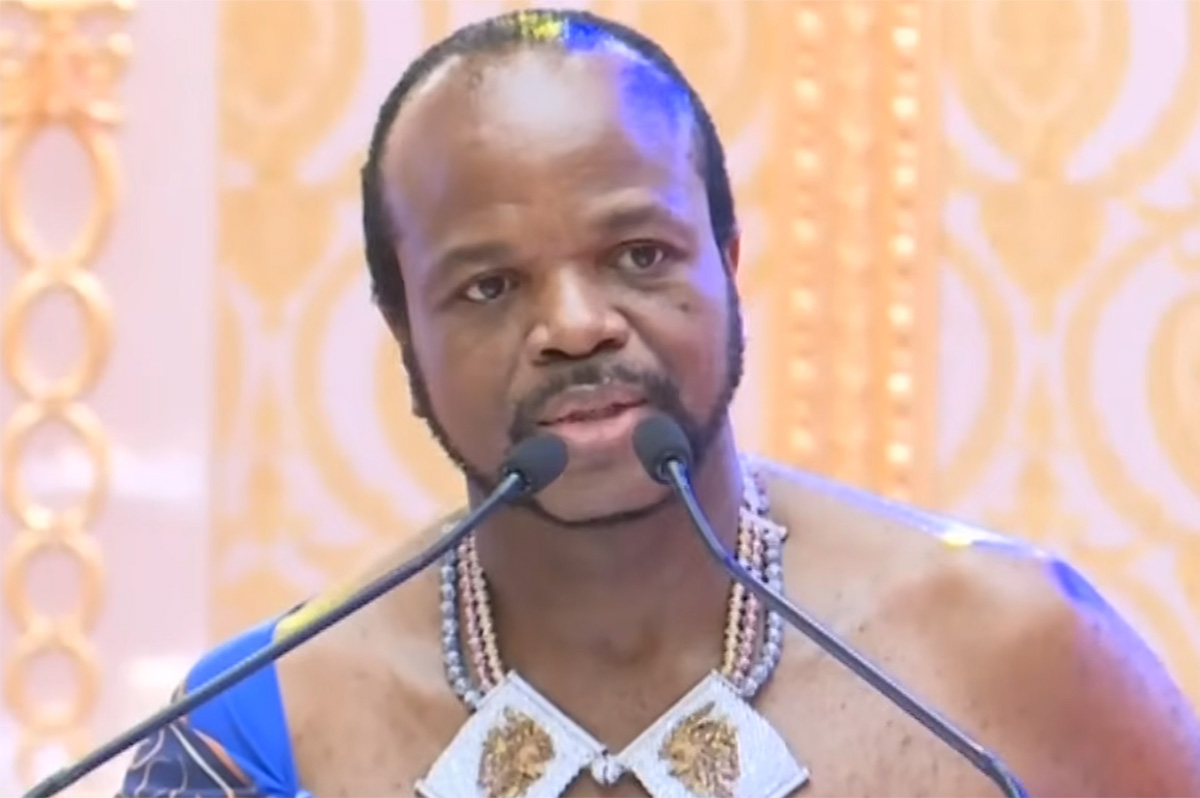
In an absolute monarchy, the words spoken by the sovereign can swiftly become a baton striking a citizen. When King Mswati III speaks, his words do not simply drift into the air as political “opinion”; they often quickly turn into, sometimes violently, state policy. This reflects the reality of Eswatini, where the right to freedom of expression, including the right to hold dissenting political views, is increasingly being systematically eroded by the very voice that claims to uphold “traditional values.”
To understand the current crisis facing the LGBTIQ+ community in Eswatini, one must view it through the lens of a broader strategy: the weaponization of culture to justify the erosion of democratic institutions, the rule of law, and human rights protections. As observed across Africa, from the streets of Harare and Dar es Salaam to the parliamentary courtrooms of Dakar and Kampala, African leaders are increasingly using the marginalised as an entry point to dismantle civil society. In Eswatini, this strategy has manifest its most brutal expression in the king’s recent harmful rhetoric concerning sexual orientation and gender identity.
The danger of the king’s words lies in how the state apparatus interprets them as a divine mandate for persecution. Recently, we have seen this “Rhetoric-to-Policy Pipeline” operate with chilling efficiency. Shortly after the Minister of Education made public vitriol against the existence of LGBTIQ+ students, reports emerged of children being expelled from schools. In a country where the king is culturally and traditionally called the “ingwenyama” (the lion), the bureaucracy acts as his pride; when leadership suggests that a particular group is “un-African” or “deviant,” the machinery of the state, along with the emboldened segments of the public, moves to purge that group from society.
For an openly gay man who has dedicated most of his adulthood to advancing equality and dignity for all, especially marginalized communities, these are not merely policy changes; they pose existential threats. When a powerful leader speaks, they offer a moral shield for the dogmatist and a legal roadmap for the policeman. In Eswatini, where political parties are banned, and the “tinkhundla” system (constituency-based system) — a system that systematically silences dissent and favors those aligned with the sovereign — is celebrated as the sole “authentic” form of governance, any identity that falls outside the narrow, state-defined “tradition” is seen as treason. By branding LGBTIQ+ rights as “ungodly” and essentially unwelcome in Eswatini, the monarchy effectively views the mere existence of queer Swazis as a subversive act against the crown.
The most harrowing example of this pattern is the assassination of human rights lawyer Thulani Maseko in January 2023. Maseko’s murder did not happen in isolation. It followed a period of heated rhetoric directed at those calling for democratic reforms. The king had publicly warned those demanding change that they would face consequences. On the evening after the king had said, “[t]hese people started the violence first, but when the state institutes a crackdown on them for their actions, they make a lot of noise blaming King Mswati for bringing in mercenaries,” Maseko was shot dead at his home in front of his family.
The parallel here is unmistakable. When the king targets the LGBTIQ+ community with his words, he is aiming at the most vulnerable. If a world-renowned human rights lawyer can be silenced following royal condemnation, what chance does a queer youth in a rural area stand when the king’s words reach the local chief or school head? This is what I call “Chaos as Governance”: a state where the law is replaced by the monarch’s whims, leaving the population in a constant cycle of managed chaos that renders collective opposition nearly impossible. Despite strong condemnation from the organization I founded, Eswatini Sexual and Gender Minorities (ESGM), recent reports already suggest growing support for the rhetoric shared by the king, indicating treacherous weeks and months ahead for ordinary queer people in Eswatini.
The monarchy’s defense of these actions is almost always based on “African tradition.” As Mswati has shown, the ban on political parties and the suppression of minority rights are framed as a return to indigenous governance, the “tinkhundla” system. But we must ask: whose culture is being defended? Is it a culture that historically valued communal care and diverse social roles, or is it a modern, imported authoritarianism cloaked in the robes of the ancestors?
When he uses his platform at the “sibaya” (traditional gathering) to alienate a segment of his own people, he is not engaging in dialogue; he is delivering a monologue of exclusion. This weaponized version of culture serves a dual purpose. First, it offers a “neocolonial” defense against international criticism, portraying human rights as a foreign threat. Second, it creates an internal enemy, the “terrorist” political dissident or the “immoral” LGBTIQ+ person, to distract from the fact that nearly two-thirds of the population live below the poverty line. In contrast, the royal family resides in obscene luxury, acquiring fleets of expensive vehicles.
The silence of Eswatini’s neighbors worsens its situation. The Southern African Development Community (SADC), a regional organization ostensibly committed to democracy and human rights, has repeatedly allowed Mswati to evade accountability. By agreeing to remove Eswatini from the Organ Troika agenda at the king’s request in 2024, SADC sent a message to every authoritarian in the region. If you conceal your repression behind the guise of tradition, we will not intervene.
The call for freedom of expression, including LGBTIQ+ rights, is a fundamental human right vital for safety and dignity. It demands that a child should not be expelled from school because of who they are. It insists that a lawyer should not be murdered for expressing their beliefs. It states that a king’s word should not be a death sentence. We must resist the “politics of distraction” that portrays the fight for minority rights as separate from the fight for democratic reform. The dissolution of political parties in Burkina Faso, the attack on lawyers in Zimbabwe, and the criminalization of advocacy in Senegal, Tanzania, and Uganda are all parts of the same pattern. They reflect a leadership class that fears its own people.
It is time for the African Union and SADC to decide whether to uphold the ideals of their lofty charters or to prioritize political convenience across Africa. For the people of Eswatini, improving livelihoods and human development can only occur when the king’s words are limited by a constitution that protects every citizen, regardless of whom they love or how they pray. Until then, the chaos is not a failure; it is the purpose. The monarch’s word may be law today, but the universal right to dignity is the only law that will endure. We must demand an Eswatini, and by extension, an Africa that seeks to improve the lives of its people, and where the “lion” protects all his people, rather than hunting those he deems “unworthy” of the shade.
Melusi Simelane is the founder and board chair of Eswatini Sexual and Gender Minorities. He is also the Civic Rights Program Manager for the Southern Africa Litigation Center.
Opinions
ROSENSTEIN: Vote McDuffie for mayor of D.C.
A pledge to fight antisemitism, Islamophobia, homophobia

Kenyan McDuffie is the right person to lead our city forward in these difficult times. We are different from other cities, and Kenyan understands that. We don’t have a state to bail us out, and we don’t control all our own destiny. We are 700,000 strong, who don’t have a vote in Congress, don’t control our courts, or our national guard. We have Home Rule, but it’s not absolute. Congress kept the right to review our legislation and budget.
Recently, we found out how destructive that is. So, we need a mayor who will fight for our rights, all of our rights. The rights of immigrants, Latinos, the LGBTQ community, Black residents, women, Asians; all whose rights may still be at risk. Kenyan will fight for full statehood but understands the tightrope the D.C. mayor must walk to keep us from losing more control.
McDuffie said, “leadership is measured by delivering results, not rhetoric.” From his days as a union mail carrier, serving D.C. neighborhoods door-to-door, to his work as a civil rights attorney in President Obama’s Department of Justice, to his service as a citywide lawmaker, he has approached every challenge with the same values: stand up for working people, fix broken systems, and demand accountability from those in power.
As he has committed to, “focusing on delivering what matters most to D.C. families: lowering the cost of living, expanding opportunity in every ward, and strengthening public safety with a government that answers to all D.C.” Kenyan believes every resident deserves to live in a safe and affordable home recognizing housing remains one of the largest costs for D.C. families. On the Council he authored laws expanding the supply of affordable housing, helped direct hundreds of millions of dollars to preserve and build more affordable homes across the city. As mayor he is committed to expanded home purchase and down payment assistance programs for first-time homebuyers, and District employees. Providing additional resources for housing providers to preserve and expand existing affordable housing stock, while overseeing the responsible use of taxpayer dollars dedicated to building more. He is committed to creating more family-sized units in affordable housing developments to prevent displacement of longtime residents and ensuring families of all sizes have access to safe, affordable, homes. He will streamline the process for regulatory approvals prioritizing growth, and modernize zoning to increase supply, and lower per-unit construction costs.
Kenyan is committed to expanding access to childcare and early learning, recognizing D.C. families face the highest childcare costs in the nation. He understands affordability begins at birth, which is why he helped secure funding for birth-to-three, and early learning providers. He knows strong early childhood systems support both parents’ workforce participation, and children’s long-term success. As mayor, Kenyan will expand the Local Child Tax Credit to help families cover childcare costs. He will provide incentives to employers to help expand their employees’ childcare benefits, and repurpose District-owned space, to reduce providers’ costs and expand subsidized care in neighborhoods that have been historically underserved and neglected. He supports more mixed-use project development incorporating family amenities, including childcare centers. He will secure updated zoning to allow more high-quality home-based and neighborhood childcare options. Kenyan will work to provide more District-supported early learning, and out-of-school-time programs. Programs that will consider working family schedules, including non-traditional hours.
Kenyan has always supported strong public traditional and charter schools, both essential to our children’s success, and to a thriving, inclusive, D.C. economy. He secured millions each year for school and recreation center modernizations, nonprofit youth sports programs, and ensured our children are able to have safe passage to and from school and recreational activities. He supports Career and Technical Education (CTE) programs, which better align with workforce needs, industry demand, and good-paying career opportunities. He will expand access to these programs for students in every ward. As mayor, Kenyan is committed to expanding access to reliable out-of-school-time programming across all wards, strengthening literacy, classroom quality, and responsible technology integration in vocational training, CTE programs, and career academies for high-demand sector jobs. He is committed to programs to reduce chronic absenteeism with measurable public dashboards, and full access for children who need appropriate special education, mental health, and school health services. He believes while preparing students for college, schools must also help them prepare for good-paying careers should they choose not to go to college. Kenyan understands all this must happen if we are to close the large racial wealth gap in our city.
Kenyan understands how dependent our city is on its “Arts, Culture, Nightlife, Sports, and Entertainment Economy” and will work to reinvigorate all of those sectors, making sure our residents are fully prepared for jobs in each of them.
Kenyan McDuffie is best able to defend Home Rule and shield residents from harmful federal overreach. As a Council member, he always stood strong for civil rights and local autonomy. He understands how Donald Trump and the Republican Congress, have repeatedly interfered in our self-governance. As a former prosecutor, and civil rights trial attorney, Kenyan is ready to fight for all D.C. and has said he will make clear on Day One: “Enough is Enough.” He understands how to do this without putting us in more jeopardy. He has said he will issue a day-one directive ending MPD cooperation with ICE. He will make sure there is a civil right-to-counsel protection program for immigrant families. He will bolster the Mayor’s Office of Legal Counsel for constitutional challenges, working closely with the District’s Attorney General. He will strengthen the mayor’s office with regard to federal advocacy efforts, to fight for statehood. Until we win that fight Kenyan will work to expand legislative and budget autonomy and defend home rule. Kenyan has authored pioneering laws that reformed D.C.’s juvenile justice system, created a public health framework for violence prevention and intervention, and improved police accountability. His record demonstrates accountability and opportunity go hand in hand. He will work to right-size MPD through smart recruitment, home purchase assistance, and he will invest in community safety programs. He will expand the cadet program to build a pipeline of D.C. residents who want to go into law enforcement. He will work to modernize the 911 and 311 systems for faster response and transparency. And he will add more neighborhood-based prevention pilots to take an “All hands-on deck” approach to crime.
For all these reasons and more, I support Kenyan McDuffie. One of those more, is his response to the growing antisemitism, Islamophobia, transphobia, and homophobia, in the country. Kenyan said, “Leadership matters in moments like this. As your next mayor, I will bring people together across all lines of difference. I will engage with every community in this city, especially when it is not easy, or politically convenient. Washington must be a city where every resident — regardless of faith, race, gender, or identity — feels safe, respected, and heard.” That is the kind of city I want Washington, D.C. to be, and why I urge everyone to cast their vote for Kenyan McDuffie for Mayor.
Peter Rosenstein is a longtime LGBTQ rights and Democratic Party activist.
Tensions between the U.S. and Cuba are rising again. This is not new, but the current moment feels different. Recent measures from Washington aim to further restrict the Cuban government’s financial channels, limit its sources of revenue, and apply pressure to key sectors of the economy. This is not symbolic. It is a deliberate policy.
From the U.S. perspective, the message is clear. The goal is to force change that has not happened in more than six decades. There is also a domestic political dimension, shaped by sectors of the Cuban exile community that have long demanded a tougher stance. All of this is part of the landscape.
But that is only one side.
On the Cuban side, the response follows a familiar script. The government speaks of external aggression, economic warfare, and a tightening embargo. Each new measure becomes an opportunity to reinforce that narrative and close ranks. There is no room for public self-criticism. The blame always points outward.
Meanwhile, life on the island follows a different logic.
The energy crisis Cuba is facing today did not begin with these recent measures. It has been building for years. The electrical system is deteriorated, poorly maintained, and increasingly unreliable. Blackouts are not new. What has changed is how severe and how constant they have become.
For years, oil entered Cuba, especially from Venezuela. There were supply agreements. There were resources. And yet, the daily life of ordinary Cubans did not improve. Electricity remained unstable. Fuel was rationed. Transportation was still a daily struggle.
So the question is not new.
If the oil was there, why didn’t anything change?
Where did those resources go?
Where is the money that was generated?
Today, restrictions on oil are often presented as the main cause of the current crisis. They are not. They make an already fragile situation worse, but they do not fully explain it.
There is a deeper, longer story that cannot be ignored.
The same applies to Cuba’s international medical missions.
For years, they were presented as acts of solidarity. And in many cases, they were. Cuban doctors worked in difficult conditions, saving lives and supporting health systems abroad. That is real.
But they also functioned as one of the Cuban state’s main sources of income.
Many of these professionals did not receive the full salary for their work. A significant portion was retained by the government. In some cases, they had little or no control over the money they generated.
And there is a harsher reality.
If a doctor chose not to return to Cuba, that income often did not reach their family. It was withheld.
Today, several countries are reevaluating or canceling these agreements. Once again, the official response is to point outward. But the same question remains.
Is this the loss of international cooperation, or the collapse of a system built on control over its own professionals?
Inside Cuba, the conversation sounds very different.
People are not speaking in geopolitical terms. They are talking about survival. About getting through the day. About blackouts, food shortages, transportation problems, and a life that keeps getting harder.
Some see the new U.S. measures as a form of pressure that could lead to change. Not because they want more hardship, but because they feel the system does not change on its own. There is a deep sense of stagnation.
But that sense of expectation exists alongside a harsh reality.
Sanctions do not hit decision-makers first. They hit ordinary people. The ones standing in line. The ones losing food during power outages. The ones who cannot move because there is no fuel.
That is the contradiction.
The Cuban government calls for international solidarity. And it receives it. Countries send aid. Organizations mobilize. Public voices defend the island.
But another question is also present.
Does that aid actually reach the people?
The lack of transparency in how resources are distributed is part of the problem. Because this is not only about what enters the country, but about what actually reaches those who need it.
Reducing Cuba’s reality to a dispute between two governments avoids the core issue.
There are shared responsibilities, but they are not equal.
The U.S. exerts external pressure with real economic consequences. That cannot be denied. But inside Cuba, there is a system that has had decades to reform, to respond, to open, and it has not done so.
That part cannot continue to be ignored.
I write this as a Cuban. From what I lived. From what I know. From the people who are still there trying to make it through each day.
Because at the end of the day, beyond what governments say or decide, the reality is something else.
Cuba today is under more pressure, yes. But it has also spent years carrying problems that no one has seriously confronted.
And as long as that remains the case, it does not matter what comes from outside. The problem is still inside.

Minimal version of ‘Streetcar Named Desire’ heading to Dupont Underground

Comings & Goings

An effort to increase the number of psychiatrists of color

Calendar: April 10-16

BLUF leather social set for April 10 in Rehoboth
Tenn. lawmakers pass transgender “watch list” bill

Vance speaks at Orbán rally in Hungary

White House ends protections for trans students in multiple school districts

LGBTQ groups condemn Trump’s threat to destroy Iranian civilization

Report: Grenell wants Russian ambassadorship
-

 Tennessee4 days ago
Tenn. lawmakers pass transgender “watch list” bill
-

 Hungary5 days ago
Vance speaks at Orbán rally in Hungary
-
The White House5 days ago
White House ends protections for trans students in multiple school districts
-
Iran4 days ago
LGBTQ groups condemn Trump’s threat to destroy Iranian civilization