a&e features
GLAAD Media Awards celebrate progress
Niecy Nash hosts livestream featuring ‘Glee’ reunion
For obvious reasons, Hollywood’s 2021 “Awards Season” has been a little different. Constrained by COVID and foregoing the usual swanky galas and glamorous stage extravaganzas, the entertainment industry has been limited to making the public presentations of its annual honors via virtual livestreams that look pretty much the same as the Zoom meetings and Facetime chats of which we’ve all become so weary.
These shows, though they try hard to generate excitement, can’t help but feel a bit perfunctory. We can easily forgive all this, of course. Everyone, including us, has to make the best of a not-so-great situation, and making sure that “the show goes on” is a big part of maintaining a positive, forward-looking attitude as we all push through the current crisis; and besides, there’s a satisfaction that comes with watching our favorite celebrities fumble through the same awkward gaffes and technical glitches we’ve all become so used to – it turns an event that is normally synonymous with the words “Hollywood elite” into an egalitarian reminder that even movie stars like to sit on the couch in their sweats. Still, that same equalizing effect also serves to highlight the relative absurdity of building up so much importance, so much pomp and hyperbole, over awards shows in the first place. It’s enough to make watching even a show like the Oscars an empty experience.
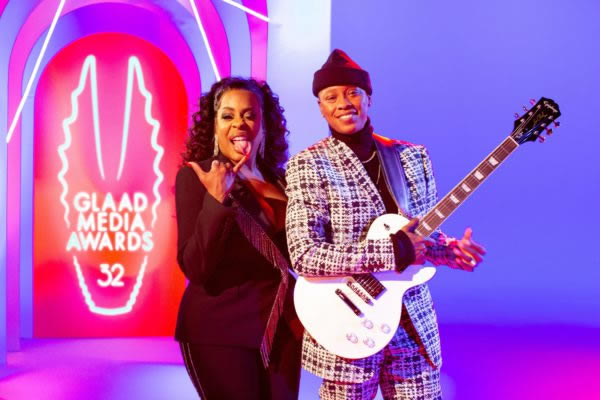
The GLAAD Media Awards, however, are not the Oscars. While most big entertainment awards are focused (in theory, anyway) on artistic excellence, the GMAs are interested in something with a little more real-world impact – the fair, accurate, and inclusive representation of LGBTQ people and issues in the media – and that difference helped to make the livestream of its 32nd annual presentation, which took place April 8, a surprisingly engaging 90 minutes of screen time.
Of course, it helped that the production was slick, polished, and tightly orchestrated, and that numerous winners had already been announced so that the show could be streamlined into an hour-and-a-half. It was a show that had the self-assuredness that comes from being pre-recorded (or at least, well-rehearsed); and while this may have eliminated the spontaneity that often makes for some of the best highlights in awards shows like this, it also allowed show producers to put together something that felt like a cohesive presentation instead of an awkward work-from-home staff meeting where everyone involved would rather be doing something else.
Unsurprisingly, GLAAD – the world’s largest LGBTQ media advocacy organization, which has been holding the media accountable for its treatment of queer people and issues for nearly four decades – turned the situation into an opportunity to highlight the incredible progress that continues to be made in an uphill fight that is still far from over. Tastefully but assertively, the show threaded key talking points into the festivities; threads highlighting diversity, intersectionality, and the uptick in percentages of youth identifying somewhere on the LGBTQ spectrum were picked up and echoed throughout in speeches from hosts, presenters and winners alike.
A few highlights:
Host Niecy Nash took immediate command of the proceedings, setting a jovial tone and leaning into her status as a “new member” of the community. Nash came out (“came into myself,” as she prefers to say) as LGBTQ and married her wife, musician Jessica Betts, in 2020, and joked about the ongoing process of figuring out her own place on the spectrum by admitting she didn’t know how things would have turned out if “that guy from ‘Bridgerton’” had come along first. Later in the livestream, Betts appeared to sing her song, “Catch Me,” giving Nash the opportunity to introduce her wife’s performance – an undeniably magical moment.
JoJo Siwa, who also came out in 2020, presented the award for Outstanding Children’s Programming to “The Not-Too-Late Show with Elmo.” After her exuberant introduction, in which she acknowledged “the best, most amazing, wonderful girlfriend in the entire world” and proclaimed “Love is awesome…. you can be in love with whoever you want to be in love with and it should be celebrated,” the award was accepted by Elmo himself – another tear-inducing moment in which the progress made in queer acceptance was thrown into stark relief.
Presenting the award for Outstanding Film – Wide Release, USWNT and Orlando Pride Stars Ashlyn Harris and Ali Krieger spoke out in support of trans athletes, saying “Trans students want the opportunity to play sports for the same reason other kids do: to be a part of a team where they feel like they belong.” The award went to “Happiest Season,” the Hulu-produced Christmas romance centered on a lesbian couple played by Kristen Stewart and Mackenzie Davis – again, underscoring the leaps made in LGBTQ inclusion in mainstream entertainment.
Accepting the award for Outstanding Variety or Talk Show Episode for “A Little Late With Lilly Singh: Lilly Responds to Comments About Her Sexuality,” Lilly Singh highlighted the importance of representation by saying, “you know, in other cultures like South Asian culture…there is still a stigma attached to being your true authentic self. I always think that if I was younger and I saw someone on TV who looked like me, that was out and proud about it, maybe I would’ve gotten here faster…I just want to say to everyone at home that looks like me: I am out. I am loud. I am proud. I love myself. And the journey to get here was tough, but it was so worth it. So I want to say that I see you. I recognize you. You are valid. You are beautiful. Nothing about you needs to change.”
The “Gay Geek” contingent received some validation when the award for Outstanding Television Series – Drama went to “Star Trek: Discovery.” Accepted by series stars Wilson Cruz, Anthony Rapp, Ian Alexander, and Blu del Barrio, the win was a much-deserved acknowledgement that the Gene Roddenberry-created franchise has always pushed the boundaries of social acceptance in its content, as well as an uplifting reminder of the power of popular fiction to help us imagine – and aspire to – the better world we want to build.
There were some drawbacks and disappointments, of course – most notably, perhaps, the much-touted “Glee” reunion, in which the stars of the breakthrough Ryan Murphy series came together via virtual conference to pay tribute to departed castmate Naya Rivera and the legacy of her character, Santana Lopez. Die-hard fans may have found satisfaction in seeing this beloved ensemble “together” again, and the spirit in which it happened was unquestionably sincere; even so, the obvious “edited highlights” quality of the segment fell far short of the excitement that might have been made possible by having them unite for a musical number for old time’s sake. Let’s hope for a “do-over” in 2022.
Also unfortunate was the “by the way” status relegated to many of the winners that had been previously announced, especially the electrifying Michaela Cole-created “I May Destroy You,” the HBO show exploring the grey areas of consent in an era hyperaware of “rape culture,” which won for Outstanding Limited or Anthology Series. And while the focus may not have been on glamour, it might still have been fun to see (for example) the fabulous outfit singer Sam Smith might have worn in lieu of baggy sweats had he been able to accept his award for Outstanding Music Artist in person instead of from his living room.
As for who all the winners were, a complete list can easily be found on the GLAAD website, or you can even watch the full presentation on YouTube. Their names deserve to be known, and their accomplishments celebrated.





a&e features
The mastery of love
The world knows Eric Anderson as Billy Porter’s partner, but in Rehoboth Beach, he has a story entirely his own
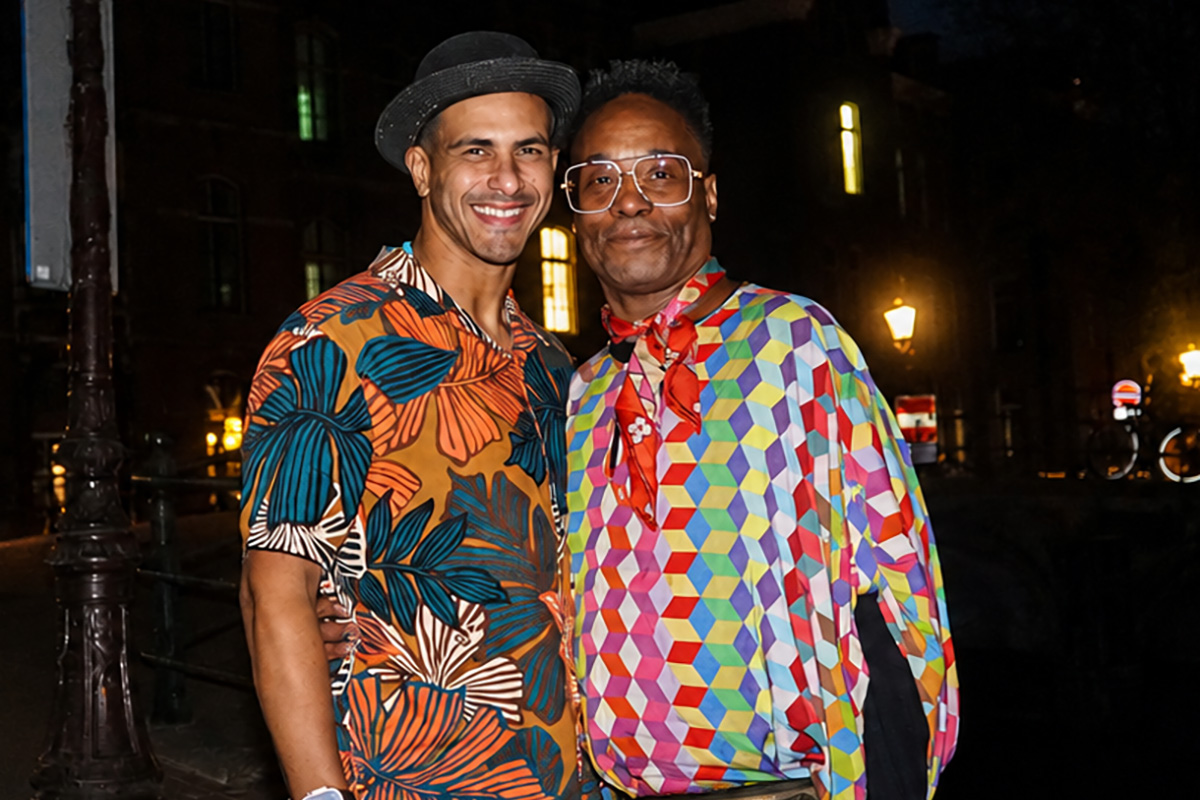
The world knows Eric Anderson as Billy Porter’s partner. In Rehoboth Beach, Del., he has a life — and a story — entirely his own.
My first time with Eric Anderson was hot — very hot. Before he arrived, I sat waiting, overthinking everything. When he finally appeared in a loose-fitting T-shirt and purple shorts, I understood why he attracts attention. Eric is the kind of man who changes the energy of a room simply by entering it.
After a quick hello, we got right to it. Techno pulsed through the room as Eric told me how to move, where to place my hands, when to breathe. My heart pounded. My muscles ached. I bent, twisted, and stretched while sweat ran down my back and burned my eyes. I didn’t bother wiping it away.
To be clear, Eric and I were not alone. Five other people were with us — and the yoga studio at SoulFire Collective in Rehoboth Beach was heated to 87 degrees.
“If you are always racing toward the next moment, what happens to the one you’re in?” Eric asked, opening his power yoga class and inviting us to leave whatever had followed us through the door and surrender to the present. Surrender did not come easily. At 58, I’ve done enough yoga to know the difference between discomfort and imminent death. Halfway through Eric’s relentless flow, the distinction began to blur.
A playlist of techno and remixed pop — including “Live Like You Were Dying” — carried us from one demanding pose to the next. Eric moved among the mats with the energy of a nightclub DJ and the calm of someone who trusted our bodies to go further than our minds believed possible. Nearly an hour later, when the music softened and I collapsed onto my back in savasana, he laid a cool cloth across my forehead. I exhaled — relieved, and maybe a little disappointed, that my first time with Eric was over.
At the end of my mat, a handwritten note congratulated me on my first class and invited me back — a small benediction after the storm. Then Eric closed the class by repeating the question with which he’d opened. For a man whose relationship with actor and singer Billy Porter has drawn him unexpectedly into the public eye, it sounded less like a yoga mantra than a personal creed.
The next time I meet Eric, there is air conditioning and caffeine. We are at Starbucks, where I deliberately order the largest drinks available, as though volume alone might buy me more time. He chooses a matcha, and I order herbal tea. My heart is pounding again, faster than the soft rock drifting from the speakers above us. Although I’ve already spent more than an hour with Eric, I know almost nothing about the man I’m about to interview.
Neither, it seems, does anyone else.
Celebrity outlets offer a handful of biographical details: a Rehoboth Beach teacher and yoga instructor with a master’s degree from Columbia University. Gay publications have been less restrained. One introduced him as Billy Porter’s “total hot stud,” called him “a snacc,” and praised his ability to “rock a Speedo.” Queerty distilled Eric’s identity to five words: “Porter is dating a teacher.”
All of it tells me how the world sees him. None of it tells me who he is.
I know from our text exchanges that Eric is slammed for time. He is scheduled to travel to New York later that day and fly to WorldPride Amsterdam the following afternoon. Billy is among the headliners for the opening-night Unity Concert and is also slated to perform at the Wedding Party XXL alongside KI/KI, Bimini, and the Vengaboys. Eric still has to pack. This, I’m beginning to understand, is part of loving someone famous: there is almost always an itinerary, another city, and a specific time and place Billy needs to be. Even here, with two untouched drinks between us, the clock is ticking.
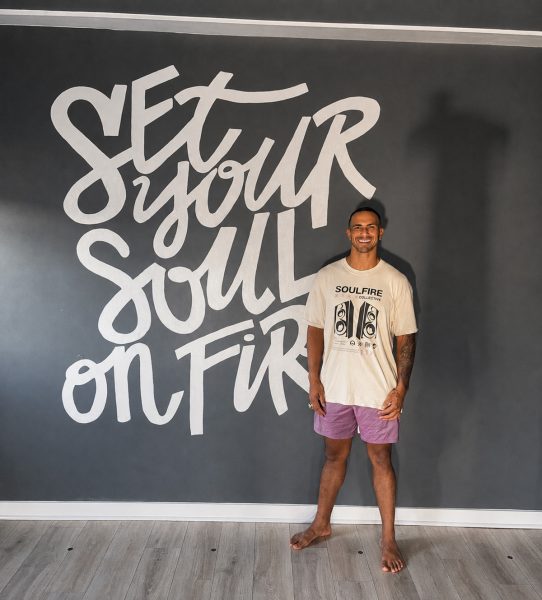
As soon as we sit down, I open my laptop, ready to get to work. My mind is focused on the list of questions I’ve prepared, and I’ve already anticipated the shape of most of his responses. Then I look up and see Eric sitting perfectly still, smiling, and taking in the moment. He hasn’t even taken a sip of his matcha yet.
I quietly close my laptop and breathe.
Within minutes, the interview softens into a conversation.
Eric earned a bachelor’s degree in history from the University of Delaware and a master’s in public school leadership from Teachers College, Columbia University. He began his career teaching mathematics before moving into school administration, eventually serving as vice president of the Charter School of Wilmington and head of school at Sussex Academy. Today, he teaches mathematics and social studies in the Cape Henlopen School District. He also coaches soccer and leads yoga classes at SoulFire Collective in Rehoboth Beach.
His return to the classroom was deliberate. Eric knows some people assumed there must be a story behind his leaving administration—that he had done something wrong or that teaching represented a demotion.
“I want to make it clear that I went back to teaching by choice,” he says.
As a child, Eric played school. Teaching has always felt natural to him, less like an occupation than an expression of who he is. Administration was different.
“It felt like work,” he says. “It wasn’t where my passion was, and it didn’t bring me joy. Going back into the classroom was simply me choosing joy.”
The more Eric talks, the clearer it becomes that teaching is not merely a job but a vocation. His mother is white and his father is Black, and growing up biracial was not always easy. “I saw the best and the worst of both,” he tells me. Those experiences helped shape his desire to become a teacher — to be the kind of person who could make a meaningful difference in a young person’s life.
Just then, Eric glances over his shoulder and locks eyes with someone across the room. He waves and flashes what is quickly becoming his signature smile. My first thought is that someone has recognized him as Billy Porter’s partner.
I’m wrong. It’s one of his former students.
Inevitably, our conversation turns to love — and to Billy. I’ve made it clear that I’m here to write about Eric, not Billy Porter. But separating the two entirely would be as artificial as defining Eric only by their relationship. Billy is now an essential part of his story.
Eric met Billy at a Christmas party hosted by mutual friends who had been trying to introduce them all night. It wasn’t easy — the party was crowded, and the two men never quite crossed paths. Eric stayed for the afterparty, where a friend nudged him and nodded toward the room: Billy was looking his way. Romance never crossed his mind.
Eventually, they started talking. Eric has never had much patience for small talk, and he wasn’t interested in cataloging which celebrities Billy knew. He skipped it entirely and went straight for the deeper questions — what Billy believed, how he saw the world, what mattered to him. They ended up at the kitchen table, trading life philosophies until 5 a.m.
What struck Eric most wasn’t the conversation’s length. It was its depth. Billy wasn’t who he expected. Neither was the conversation. By the time the sun was coming up, Eric was less surprised that they’d talked all night than by how much, it turned out, they had in common.
They had dinner the following evening, and Billy invited Eric to spend the weekend with him in New York. There, Billy took him to see Nicole Scherzinger in “Sunset Boulevard.” Right before the show started, he casually introduced Eric to a friend named Katy. Back in their seats, Eric asked how Billy knew her.
“BITCH,” Billy replied, “that is Miss K-A-T-Y P-E-R-R-Y!”
For all the glamour surrounding their courtship, Eric describes the foundation of their relationship in decidedly spiritual terms. His favorite book is don Miguel Ruiz’s The Mastery of Love, which explores how fear, expectation, and the need for approval can distort relationships. Its philosophy closely resembles Eric’s own.
On the surface, Eric and Billy inhabit different worlds. Eric is a deeply spiritual teacher rooted in a small coastal Delaware town. Billy is a celebrated actor and performer whose larger-than-life persona commands stages around the world. But when I ask Eric how the relationship works, he doesn’t hesitate.
“I know that I can be my authentic self with him, and he can be his with me,” he says. “We love each other unconditionally.”
The words could sound rehearsed. Coming from Eric, they don’t.
The red carpets, famous faces, and international travel are not what matter most.
“It’s all about the people,” he explains. “I love Billy’s family and friends, and he loves mine.”
Authenticity surfaces repeatedly in our conversation — not as an abstract ideal, but as Eric’s determination to trust what feels right for him, even when other people may not understand it. I tell him about growing up in Pittsburgh and spending much of my life trying to fit the person I was into the person the world expected me to be. Eric listens intently, then pauses before responding.
“Fuck the system.”
It is blunt, funny, and entirely consistent with the man sitting across from me. Dating Billy may have dramatically increased the number of strangers who have opinions about Eric, but it hasn’t increased the number whose opinions matter to him. He is remarkably unconcerned with what people he doesn’t know think — or say — about him. The attention is new. His response to it is not.
For Eric, authenticity isn’t about asking the world for permission to be yourself. It’s about deciding that permission was never the world’s to give.
That instinct—to look inward rather than outward for permission — predates Billy.
Eric initially turned to yoga for a practical reason: he wanted to improve his physical performance on the soccer field. It didn’t take long for him to realize that something else was happening. Yoga was strengthening his body, but it was also grounding him.
Over time, the physical practice became inseparable from the mental one. The poses, the heat, even the strength required to hold his body in place became less important than learning how to quiet the noise around him, stay present, and listen to himself. The man who had pushed me through an hour of sweat and discomfort wasn’t simply teaching people how to move their bodies. He was asking them to practice something he had learned to do himself.
That sense of being grounded has become particularly important in a relationship that often requires two people to live very different lives. Eric is quick to point out that he and Billy have separate careers, separate ambitions, and goals entirely their own. Neither expects the other to abandon an individual life simply because they have chosen to build a relationship together.
When Billy left for London to star in “Cabaret,” distance became part of their routine. They FaceTimed every day, a practice they continue whenever they are apart.
“I tell Billy everything,” Eric says.
Being authentic with Billy doesn’t require the two men to become more alike. If anything, the opposite seems true. They are comfortable following their own career paths, living separate lives when circumstances require it, and giving each other the freedom to pursue what matters individually. Then they come back together — not because either has put his own life on hold, but because they have chosen to share those lives with each other.
When we finally look at the time, nearly 90 minutes have passed. Eric still needs to pack. New York is waiting, Amsterdam after that, and somewhere there is undoubtedly an itinerary telling Billy exactly where he needs to be and when.
But for a while, neither of us was racing toward the next moment.
We were fully inside the one we were in.
a&e features
What ‘Queer Eye for the Straight Guy’ can still teach us
Producer David Collins on lasting impact of hit series
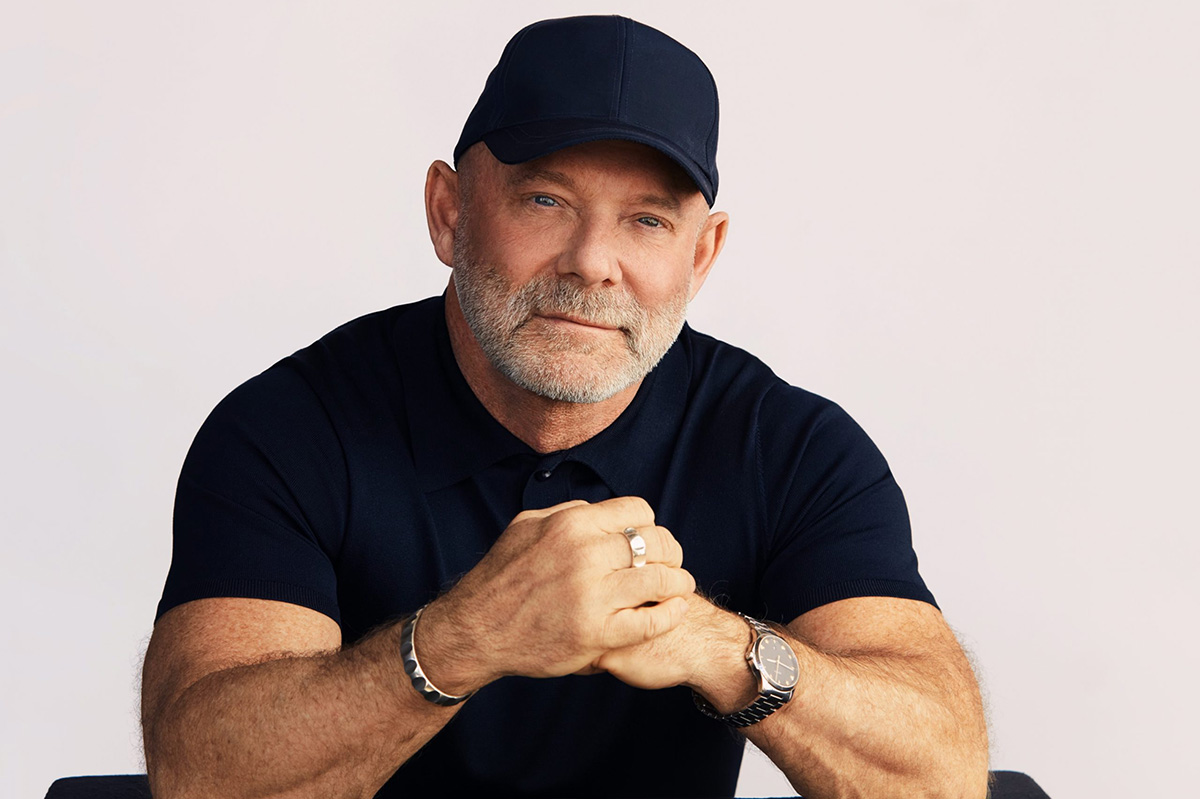
It’s hard to imagine where LGBTQ+ television would be without “Queer Eye for the Straight Guy,” the trailblazing reality series that premiered in 2003.
Each episode of this Emmy-winning show saw a group of gays converge on a struggling man — the titular straight guy — and offer nonstop wit while organizing his endlessly messy life. This program about a group of homosexual helpers took the world by storm, furthering the love of gay television begun by shows like “Will and Grace” but bringing it into the growing medium of reality TV. Of course, it wasn’t perfect; “Queer Eye for the Straight Guy” often cast its experts less as multi-faceted queer folks and more as sources of early 2000s gay jokes. But despite these pitfalls, it’s undeniable that the original program explored the realities of being gay in a way audiences had never seen before. It was a monumental piece of LGBTQ+ representation, and its success is largely owed to the man who fought to get this show made: producer David Collins.
Collins spoke with the Blade from his Los Angeles home, where he’s spent the past few years living with his husband and his two daughters. David spoke fondly of his many years in the industry, detailing how it feels to be such a huge part of LGBTQ+ history. He explained, however, that he didn’t initially set out to alter how queer people were seen on television. “I never went out to make gay television,” said the producer. “I went out to tell great stories.”
“I’m a hillbilly from Ohio, and I thought I was going to be an editor,” David laughed, looking back on his career. “I interned at the Cincinnati Film Office, and I showed up to work my very first day, and the film commissioner was like, ‘Get to the airport right now and pick [someone] up. Don’t talk to them.’ Well, I ended up picking up Jodie Foster.” Collins raved about this car ride that changed his life, with the pair becoming friends and Foster pushing him to become a producer who puts their own media out into the world. Eventually, he did just that, and after learning about the wild new genre that was reality TV, he pitched a series to Bravo: “Queer Eye for the Straight Guy.”
“I was obsessed with Esquire magazine, and they had five categories: fashion, grooming, interior design, culture, food, and wine. So I gave them each a gay, and the Fab Five were born!” Collins said, describing how viewers quickly fell in love with the concept and earned the program four seasons and an Emmy for Outstanding Reality Program. He spoke about how proud he felt creating a show that centered real gay people, not characters in a story, remembering, “To stand in the middle of Times Square and look up and see this massive billboard with the original Queer Eye guys…it wasn’t even a dream come true, because it wasn’t a dream I had even fathomed.”
With his series, people were watching actual gay men and learning the realities of a queer culture that had always been portrayed as a danger to society. Collins tearfully recounted hearing about queer people using the show as a way to connect with their family, saying, “What I’m most proud of that’s come out of Queer Eye [are] the conversations that that series has allowed to have people around their kitchen tables with little boys in Ohio like me who were scared to death that they were going to burn in hell because their pastor was telling them that they were a sinner.”
Now, for all of its trailblazing, the program wasn’t wholly positive; the show’s focus on the central ‘straight guy’ meant it rarely delved into the lives of its Fab Five. Collins regretted that lack of depth but understood that earlier audiences weren’t accustomed to such a nuanced look into queerness — that would have to wait for the reboot.
When “Queer Eye” came out in 2018, audiences were introduced to not only a new Fab Five, but a whole new format (that didn’t rely on a straight person). Now, the series would assist queer folks and allies alike, spotlighting these individuals as well as the queer experts helping them improve their lives. The show has been applauded for its amazing makeovers, but where it truly stands out is its representation, offering a look into individuals across the country and the struggles — along with the immense joys — of being queer in America today.
Fans were disappointed to hear that “Queer Eye” would be ending after its 10th season, but David stressed that they wouldn’t have to be sad for long. “What I will say to you is this: hang tight,” he teased. “There’s yet another version of ‘Queer Eye’ to come, and we’re working on that now.” In the meantime, Collins is continuing his work with new shows like the “House of Stassi,” a series centered on “Vanderpump Rules’”prolific waitress. He’s excited about these new projects, but emphasized that his heart will always belong to “Queer Eye for the Straight Guy” and all that it continues to do for viewers 19 years after its finale.
“It’s not about your new outfit or your new couch or your new whatever. It’s about your humanity,” said Collins, speaking about the core lesson he hopes people take away from the Queer Eye franchise. “It’s about seeing yourself. It’s about dignity. It’s about how confidence breeds success.”
A valuable message that queer folks can benefit from even more now than they did in 2003. And, while it’s unclear just what lies ahead for this franchise, one thing is for sure: “Queer Eye for the Straight Guy” helped people everywhere understand the power that exists within our queerness. It’s a truth that has impacted countless pieces of LGBTQ+ television today, and it’s one that Collins promises to keep alive through whatever hit show he creates next.
a&e features
Jason DePuy on coping with homophobia in ‘Big Brother’ house
First drag queen contestant on CBS show fought to stay positive
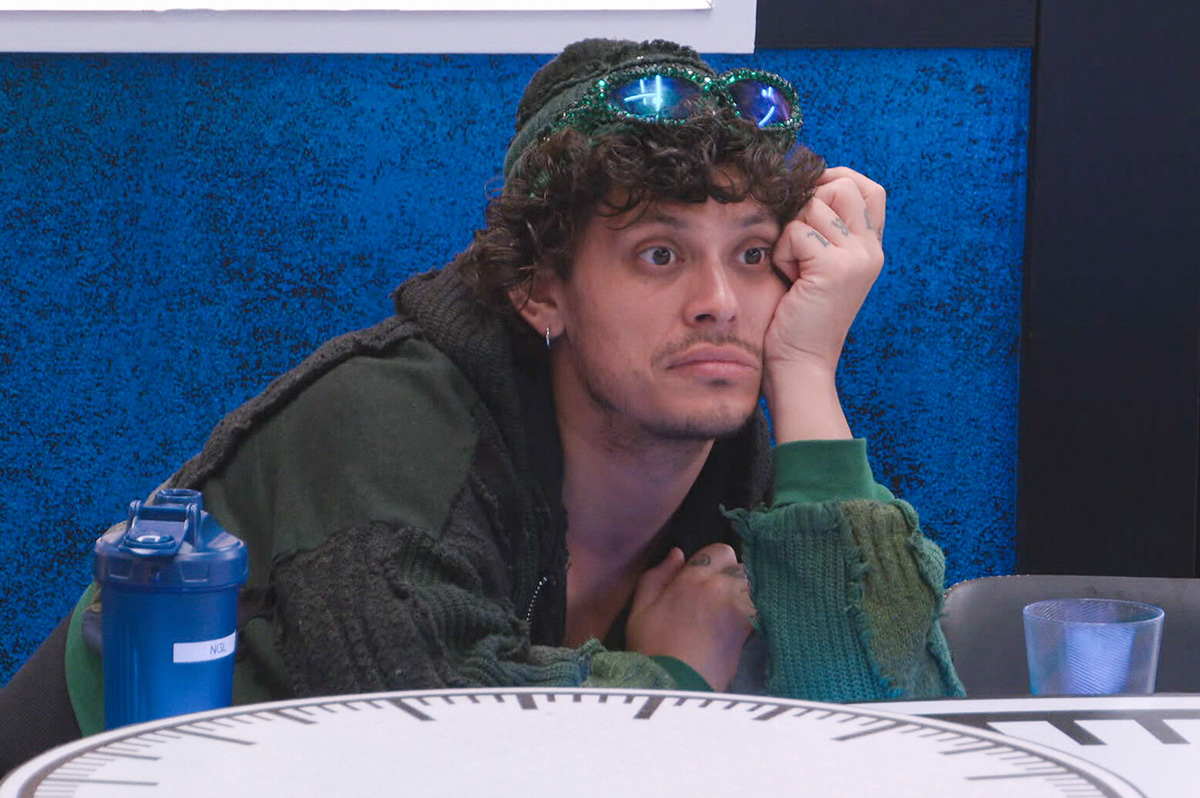
One week after Jason DePuy (known as Salina EsTitties on “RuPaul’s Drag Race”) was bullied and eventually evicted from CBS’s “Big Brother” house, the queer drag performer is still emotionally processing his feelings.
During his 24 days in the reality TV competition, DePuy often had a rough time, with fellow cast member Kamuela “Kamu” Kirk making homophobic comments and feeling isolated.
In a conversation with Head of Household Rick Devens, Kirk left viewers upset when he said, “Bro, miss me with the drag stuff. Miss me. I’m still an MMA guy, and I have an image to uphold.”
Former “Big Brother” contestant Frankie Grande called his words ‘homophobic’ and ‘gross.’ Another comment, where Kirk said he wanted to end DePuy’s career, also received strong backlash online.
Now that he is out of the house, DePuy has been shocked and deeply touched by the love from “Big Brother” fans and former contestants. We chatted with DePuy for this Blade exclusive.
“To know that my community was rallying for me outside the house was the most wonderful thing. Seeing how much people were just wanting to shower me with love was incredible. Even my friends, I went to say hi and give them a hug, and they’re like, ‘Uh, uh, come here.’ They had to hold me and let me know America was feeling for me in a way that I had no idea.”
He added: “To see that reality was just overwhelming, and I couldn’t ask for more.”
Known as a messy player in the house, DePuy often had to fight to stay positive and stand up for himself.
“No one was coming to my rescue. In real life, it’s easy to block people, but in the house, I didn’t have that luxury, so I had to find it within myself to learn how to speak up for myself in a way that wasn’t nasty or biting. I didn’t attack anyone personally, which is what I was the most proud of.”
DePuy acknowledged he has had a history of putting his foot in his mouth when it came to certain “Drag Race”moments, being in the public eye, and making a fool of himself. “I’ve learned my lessons; to see how I handled myself in the ‘Big Brother’ house was amazing.”
While DePuy has been sober for 14 and a half years and has a strong spiritual foundation, in the Big Brother house, he often felt like he couldn’t communicate what he was feeling.
“As a queer person, a person of color, a drag queen, I have to be very careful about how I move. I don’t have the luxury or privilege to just act a certain way or say a certain thing. I have to be very careful; I’m representing me. But who I am is a Latino, a person of recovery, a drag queen, a queer person in the community. I know that there’s a lot of pressure that comes with that. I felt it was safer for me to sit there and just breathe than try to do anything crazy.”
He continued: “I couldn’t speak to the personal attack that was happening in the house, because in my mind I was like, ‘no, this is a game, and I have to play it, put that aside.’”
Not only can viewers watch the episodes, but they can also watch the live feeds of what’s happening. Seeing the fans’ social media posts from people who had watched the episodes and the live feeds also contributed to DePuy realizing that his feelings of discomfort were valid.
“To know that I wasn’t delusional in those moments, that others could see what was happening, has been a lot to take in. Fans and friends let me know the comments made went beyond the game…I’m like, ‘Oh, so my instincts were correct.”
One of the most poignant moments on the live feeds occurred when DePuy was crying, alone in his room, and said how he missed his gay community.
“I really missed my friends. I missed my queer community. We’re so colorful. We’re so loud. We’re so vibrant. We speak off the cuff, and we’re very truthful and honest with how we speak, and it’s fun. We have fun lingo.”
DePuy had to censor his expressions in the house. “Because I can say one thing, but it can mean something different to straight people than it does with my queer brothers and sisters. So, there was a sense of code-switching that I had to do. I had to even put aside some of my queerness in a way sometimes to fit in.”
DePuy was thrilled to be the very first drag queen to ever be cast on the show.
“I’m honored to have been chosen. There’s a million drag queens out there, and to know that I was a contender to come in the house and not even be in drag was like a wow for me. I’m over here in Hollywood, running around these streets with a wig and heels just to make a dollar to survive, and I have to rely on drag to do that. And then to be offered this opportunity and be given the privilege to say, ‘hey, you don’t have to put on the wig for you to be valuable here,’ is just insane to me.”
Prior to his shows, DePuy has been hustling for 15 years, flipping burgers and doing drag at night.
“That has been my life these past since I was 17. So it’s been a long journey; the opportunity to do this out of drag is a very big blessing. I’m honored and grateful to be the representation of my community.”
If you missed Jason on “Big Brother: Unlocked,” the episode can be seen on CBS.com. He will be back on the show for the finale.

‘Thelma and Louise’ remains landmark of unspoken queer rebellion

Comings & Goings

LGBTQ Military Happy Hour set for Sept. 15

Calendar: September 11-17

Multi-billion-dollar 9/11 Victim Compensation Fund to continue until 2090

Iceland implements gender-neutral blood donor rules

Anti-science, anti-LGBTQ movements go hand in hand

Everton Blair makes history as first openly gay congressman from Ga.

Chris Pappas wins NH Democratic Senate primary

Mujer trans salvadoreña es encontrada sin vida
-

 Iceland5 days ago
Iceland implements gender-neutral blood donor rules
-
Commentary5 days ago
Anti-science, anti-LGBTQ movements go hand in hand
-
Georgia5 days ago
Everton Blair makes history as first openly gay congressman from Ga.
-
2026 Midterm Elections4 days ago
Chris Pappas wins NH Democratic Senate primary