
Local
Activists end Nellie’s protests, but continue boycott
Concerns over ‘anti-Black’ practices of bars voiced at community listening session
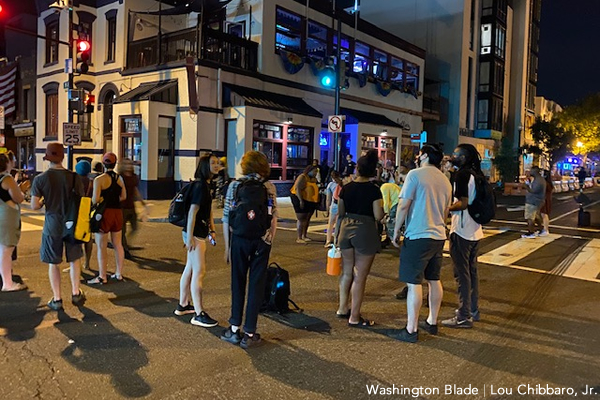
LGBTQ activists who have organized weekly Friday night protests outside D.C.’s Nellie’s Sports Bar since June announced at an Aug. 26 Community Listening Session that they would discontinue the protests after 11 consecutive weeks, but they are continuing to ask the community to boycott Nellie’s.
Nellie’s, a gay bar located at 9th and U Streets, N.W., became embroiled in controversy when one of its security guards pulled a Black woman by her hair down a flight of stairs during a June 13 brawl between customers and security officers that broke out during the night of the city’s LGBTQ Pride celebration.
The action by the security guard, which was captured on video taken by one of the customers on their phone, went viral on social media, prompting LGBTQ activists and others to demand that Nellie’s take appropriate action to review its security procedures
Nellie’s issued an apology for the incident the following day and announced it had fired the private security company whose employee, who is Black, dragged Keisha Young, 22, down the stairs. Nellie’s also announced it would temporarily close for business to assess what had happened and develop plans for reopening as a safe space for all members of the community.
It has since reopened and has been operating despite the weekly Friday night protests, although protest organizers say fewer customers have been showing up at the bar than prior to the start of the protests.
The activists that organized the protests said they have learned from longtime customers of the bar that Nellie’s staff and management allegedly have a long history of racial bias toward the bar’s Black customers.
Andrew Kline, an attorney representing Nellie’s, told the Washington Blade on Tuesday that he and Nellie’s owner Doug Schantz would have no comment on the Community Listening Session or the allegations by the protesters at this time. In July, following requests by the protesters, Schantz issued an apology to Young, which he had not done earlier, and said he had arranged for his employees to undergo training aimed at addressing the concerns raised by protesters.
He has since hired Ruby Corado, founder and CEO of D.C.’s LGBTQ community services center Casa Ruby, to arrange for the staff training and advise him on community outreach efforts.
But several of the protesters, including Makia Green, who serves as co-conductor of the Black-led community defense group Harriet’s Wildest Dreams, said Schantz last week appeared to display a disrespect for the protesters and for Young by declining to show up in person for the Aug. 26 Community Listening event to which he was invited. The official name of the event released by organizers was the Boycott Nellie’s Community Listening Session.
The session was held at D.C.’s Eaton Hotel at 1201 K St., N.W. and was live-streamed on Facebook. Schantz informed the organizers that he was attending the event online. But under the Facebook Live format, he and others viewing the event online could only submit written messages and could not speak or be seen on video like other online meeting platforms such as Zoom.
Organizers of the Listening Session, in which about 35 people showed up in person at one of the Eaton Hotel’s meeting rooms, said Schantz did not submit any comments other than to say he was watching the event live on Facebook.
The Listening Session, which lasted a little over two hours, included a panel of speakers including moderator Iris Jacob, a trained facilitator with the local group Social Justice Synergy; Preston Mitchum, an attorney and board co-chair of the local group Collective Action for Safe Spaces (CASS); and Makia Green and NeeNee Taylor, local activists who are both affiliated with Harriet’s Wildest Dreams.
Green recounted at the Listening Session what activists and others who witnessed the June 13 incident in which Young was dragged down a flight of stairs at Nellie’s that security guards appeared to have incorrectly believed Young was among a group of customers that brought their own bottle of liquor into the bar in violation of the bar’s longstanding policy. Green said Young, a college student, was not part of the group that brought in the liquor bottle and had arrived at Nellie’s minutes before the incident began.
Witnesses have said the altercation broke out after a Nellie’s employee arranged for security guards to order those believed to have brought in the liquor to leave the bar. Minutes before the security guard is seen on the video dragging Young down the stairs, Young is seen on the video punching one or more men at the top of the stairs.
Green told the Listening Session that Young was attempting to help her male cousin, who Green said was being attacked and beaten by others during the fight that broke out.
Green and the other panelists who spoke at the Listening Session noted that organizers arranged for the weekly Friday night protests outside Nellie’s to be carried out as block parties, with DJ’s playing music and some participants dancing in the street in front of the bar. They said their aim was to create a “safe space” for Black LGBTQ people to celebrate who they are that they have not been able to do in Nellie’s and other D.C. gay bars, which the panelists said have displayed a bias toward “Black queer” customers.
The city’s Alcoholic Beverage Regulation Administration, which issues liquor licenses to bars and restaurants announced shortly after the Nellie’s incident that it had opened an investigation into the incident and found Nellie’s may have violated the D.C. liquor law in its handling of the fight. The city’s Alcoholic Beverage Control Board referred the case to the Office of the D.C. Attorney General to further investigate whether Nellie’s violated city laws in its response to the fight on its premises.
Spokespersons for the liquor board and the Attorney General’s office didn’t immediately respond to a Blade inquiry about whether the investigations were completed and reached a determination on who was at fault in the Nellie’s incident.
Mitchum, one of the panelists at the Listening Session last week, said organizers have decided not to schedule another such session at this time.
“Overall, the event went well,” Mitchum told the Blade in a statement. “It was a safe space curated by Black queer and nonbinary organizers and activists to speak about the history of anti-Black racism at Nellie’s and other queer bars in D.C. and across the country,” he said.
“Attendees also shared their personal experiences navigating majority-white queer spaces, namely bars and clubs,” he said, adding, “Though I am disappointed that Doug did not show up in-person to meet the activists, organizers, and attendees, we hope he listens to us clearly and takes action to crate safe spaces for all, not just the acceptable few.”
The Community Listening Session can be viewed here.



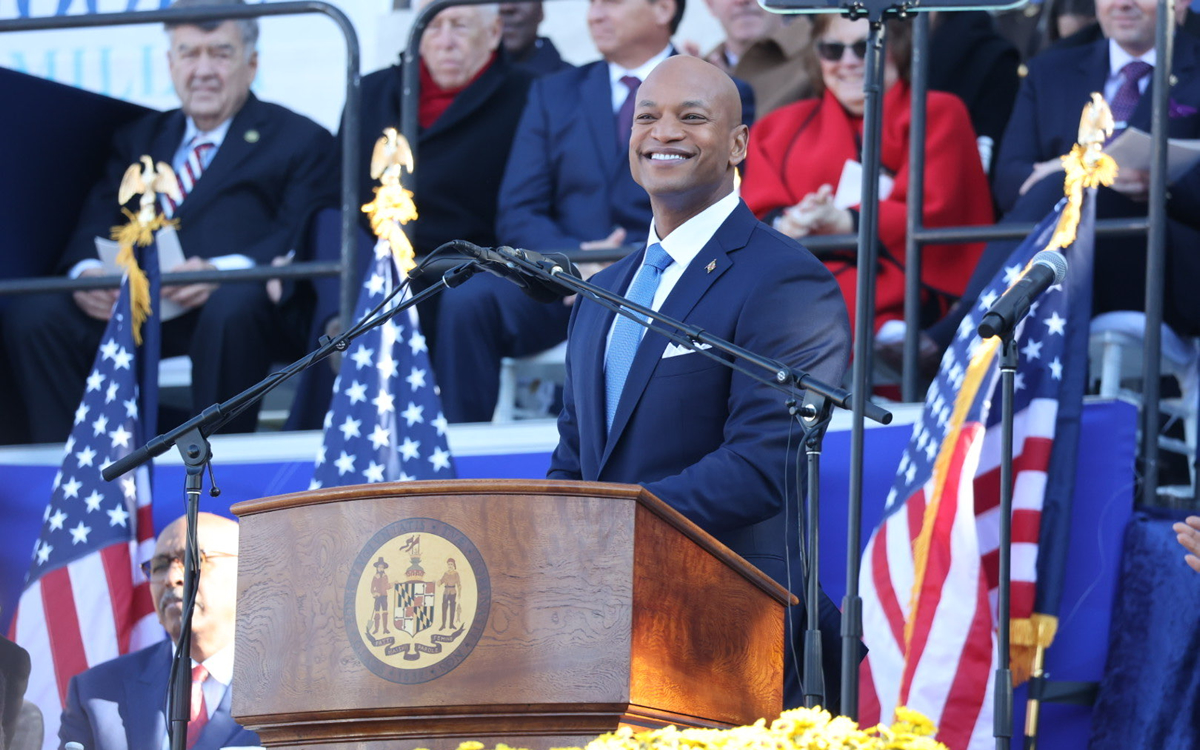
Maryland Gov. Wes Moore on Thursday signed a bill that seeks to combat efforts to ban books from state libraries.
House Bill 785, also known as the Freedom to Read Act, would establish a state policy “that local school systems operate their school library media programs consistent with certain standards; requiring each local school system to develop a policy and procedures to review objections to materials in a school library media program; prohibiting a county board of education from dismissing, demoting, suspending, disciplining, reassigning, transferring, or otherwise retaliating against certain school library media program personnel for performing their job duties consistent with certain standards.”
Moore on Thursday also signed House Bill 1386, which GLSEN notes will “develop guidelines for an anti-bias training program for school employees.”
District of Columbia
Catching up with the asexuals and aromantics of D.C.
Exploring identity and finding community
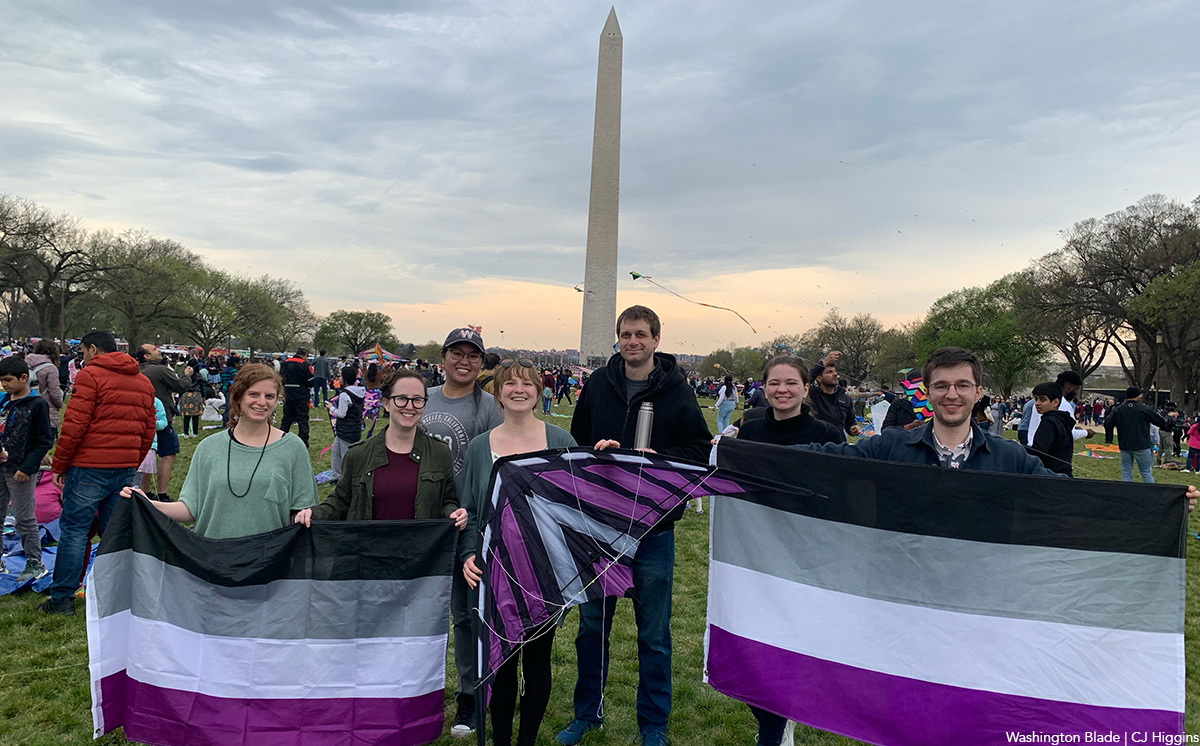
There was enough commotion in the sky at the Blossom Kite Festival that bees might have been pollinating the Washington Monument. I despaired of quickly finding the Asexuals and Aromantics of the Mid-Atlantic—I couldn’t make out a single asexual flag among the kites up above. I thought to myself that if it had been the Homosexuals of the Mid-Atlantic I would’ve had my gaydar to rely on. Was there even such a thing as ace-dar?
As it turned out, the asexual kite the group had meant to fly was a little too pesky to pilot. “Have you ever used a stunt kite?” Bonnie, the event organizer asked me. “I bought one. It looked really cool. But I can’t make it work.” She sighed. “I can’t get the thing six feet off the ground.” The group hardly seemed to care. There was caramel popcorn and cookies, board games and head massages, a game of charades with more than its fair share of Pokémon. The kites up above might as well have been a coincidental sideshow. Nearly two dozen folks filtered in and out of the picnic throughout the course of the day.
But I counted myself lucky that Bonnie picked me out of the crowd. If there’s such a thing as ace-dar, it eludes asexuals too. The online forum for all matters asexual, AVEN, or the Asexual Visibility and Education Network, is filled with laments: “I don’t think it’s possible.” “Dude, I wish I had an ace-dar.” “If it exists, I don’t have it.” “I think this is just like a broken clock is right twice a day type thing.” What seems to be a more common experience is meeting someone you just click with—only to find out later that they’re asexual. A few of the folks I met described how close childhood friends of theirs likewise came out in adulthood, a phenomenon that will be familiar to many queer people. But it is all the more astounding for asexuals to find each other this way, given that asexual people constitute 1.7% of sexual minorities in America, and so merely .1% of the population at large.
To help other asexuals identify you out in the world, some folks wear a black ring on their middle finger, much as an earring on the right ear used to signify homosexuality in a less welcoming era. The only problem? The swinger community—with its definite non-asexuality—has also adopted the signal. “It’s still a thing,” said Emily Karp. “So some people wear their ace rings just to the ace meet-ups.” Karp has been the primary coordinator for the Asexuals and Aromantics of the Mid-Atlantic (AAMA) since 2021, and a member of the meet-up for a decade. She clicked with the group immediately. After showing up for a Fourth of July potluck in the mid-afternoon, she ended up staying past midnight. “We played Cards against Humanity, which was a very, very fun thing to do. It’s funny in a way that’s different than if we were playing with people that weren’t ace. Some of the cards are implying, like, the person would be motivated by sex in a way that’s absurd, because we know they aren’t.”
Where so many social organizations withered during the pandemic, the AAMA flourished. Today, it boasts almost 2,000 members on meetup.com. Karp hypothesized that all the social isolation gave people copious time to reflect on themselves, and that the ease of meeting up online made it convenient as a way for people to explore their sexual identity and find community. Online events continue to make up about a third of the group’s meet-ups. The format allows people to participate who live farther out from D.C. And it allows people to participate at their preferred level of comfort: while many people participate much as they would at an in-person event, some prefer to watch anonymously, video feed off. Others prefer to participate in the chat box, though not in spoken conversation.
A recent online event was organized for a discussion of Rhaina Cohen’s book, “The Other Significant Others,” published in February. Cohen’s book discusses friendship as an alternative model for “significant others,” apart from the romantic model that is presupposed to be both the center and goal of people’s lives. The AAMA group received the book with enthusiasm. “It literally re-wired my brain,” as one person put it. People discussed the importance of friendship to their lives, and their difficulties in a world that de-prioritized friendship. “I can break up with a friend over text, and we don’t owe each other a conversation,” one said. But there was some disagreement when it came to the book’s discussion of romantic relationships. “It relegates ace relationships to the ‘friend’ or ‘platonic’ category, to the normie-reader,” one person wrote in the chat. “Our whole ace point is that we can have equivalent life relationships to allo people, simply without sex.” (“Allo” is shorthand for allosexual or alloromantic, people who do experience sexual or romantic attraction.)
The folks of the AAMA do not share a consensus on the importance of romantic relationships to their lives. Some asexuals identify as aromantic, some don’t. And some aromantics don’t identify as asexual, either. The “Aromantic” in the title of the group is a relatively recent addition. In 2017, the group underwent a number of big changes. The group was marching for the first time in D.C. Pride, participating in the LGBTQ Creating Change conference, and developing a separate advocacy and activism arm. Moreover, the group had become large enough that discussions were opened up into forming separate chapters for D.C., Central Virginia, and Baltimore. During those discussions, the group leadership realized that aromantic people who also identified as allosexual didn’t really have a space to call their own. “We were thinking it would be good to probably change the name of the Meetup group,” Emily said. “But we were not 100% sure. Because [there were] like 1,000 people in the group, and they’re all aces, and it’s like, ‘Do you really want to add a non-ace person?’” The group leadership decided to err on the side of inclusion. “You know, being less gatekeep-y was better. It gave them a place to go — because there was nowhere else to go.”
The DC LGBT Center now sponsors a support group for both asexuals and aromantics, but it was formed just a short while ago, in 2022. The founder of the group originally sought out the center’s bisexual support group, since they didn’t have any resources for ace folks. “The organizer said, you know what, why don’t we just start an ace/aro group? Like, why don’t we just do it?” He laughed. “I was impressed with the turnout, the first call. It’s almost like we tapped into, like, a dam. You poke a hole in the dam, and the water just rushes out.” The group has a great deal of overlap with the AAMA, but it is often a person’s first point of contact with the asexual and aromantic community in D.C., especially since the group focuses on exploring what it means to be asexual. Someone new shows up at almost every meeting. “And I’m so grateful that I did,” one member said. “I kind of showed up and just trauma dumped, and everyone was really supportive.”
Since the ace and aro community is so small, even within the broader queer community, ace and aro folks often go unrecognized. To the chagrin of many, the White House will write up fact sheets about the LGBTQI+ community, which is odd, given that when the “I” is added to the acronym, the “A” is usually added too. OKCupid has 22 genders and 12 orientations on its dating website, but “aromantic” is not one of them — presumably because aromantic people don’t want anything out of dating. And since asexuality and aromanticism are defined by the absence of things, it can seem to others like ace and aro people are ‘missing something.’ One member of the LGBT center support group had an interesting response. “The space is filled by… whatever else!” they said. “We’re not doing a relationship ‘without that thing.’ We’re doing a full scale relationship — as it makes sense to us.”
CJ Higgins is a postdoctoral fellow with the Alexander Grass Humanities Institute at Johns Hopkins University.
District of Columbia
Bowser budget proposal calls for $5.25 million for 2025 World Pride
AIDS office among agencies facing cuts due to revenue shortfall
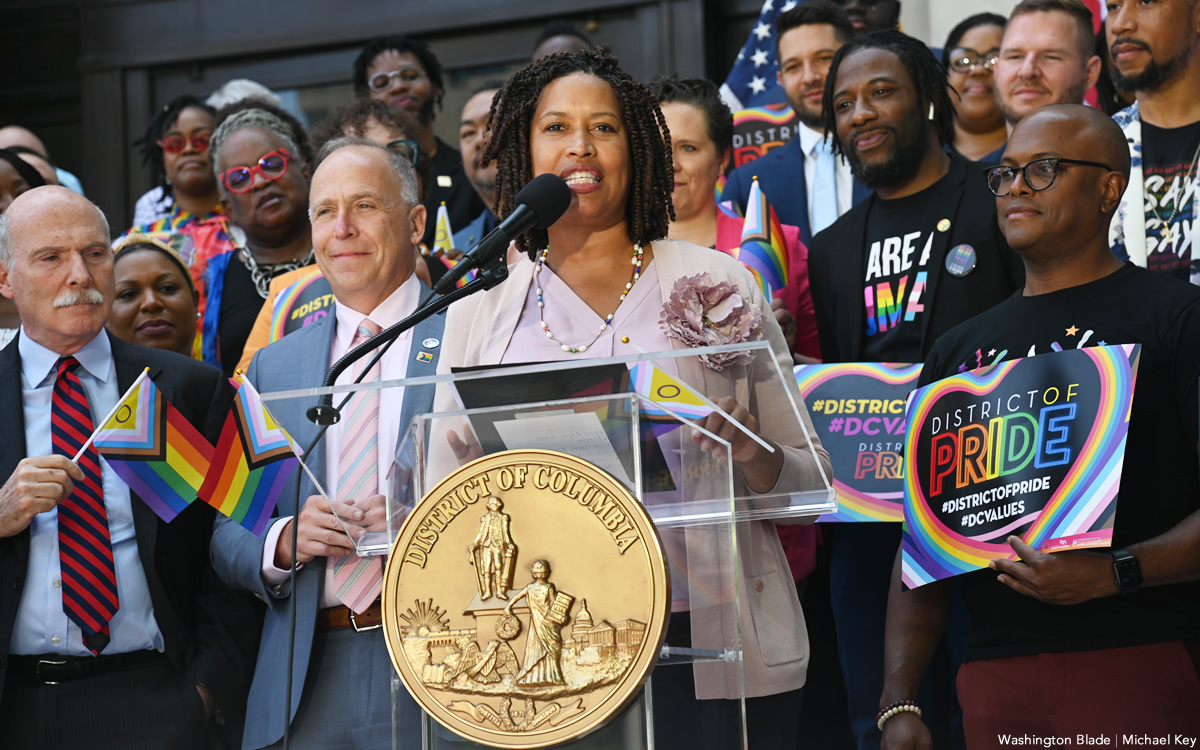
D.C. Mayor Muriel Bowser’s proposed fiscal year 2025 budget includes a request for $5.25 million in funding to support the June 2025 World Pride celebration, which D.C. will host, and which is expected to bring three million or more visitors to the city.
The mayor’s proposed budget, which she presented to the D.C. Council for approval earlier this month, also calls for a 7.6 percent increase in funding for the Mayor’s Office of LGBTQ Affairs, which amounts to an increase of $132,000 and would bring the office’s total funding to $1.7 million. The office, among other things, provides grants to local organizations that provide services to the LGBTQ community.
Among the other LGBTQ-related funding requests in the mayor’s proposed budget is a call to continue the annual funding of $600,000 to provide workforce development services for transgender and gender non-conforming city residents “experiencing homelessness and housing instability.” The budget proposal also calls for a separate allocation of $600,000 in new funding to support a new Advanced Technical Center at the Whitman-Walker Health’s Max Robinson Center in Ward 8.
Among the city agencies facing funding cuts under the mayor’s proposed budget is the HIV/AIDS, Hepatitis, Sexually Transmitted Disease, and Tuberculosis Administration, known as HAHSTA, which is an arm of the D.C. Department of Health. LGBTQ and AIDS activists have said HAHSTA plays an important role in the city’s HIV prevention and support services. Observers familiar with the agency have said it recently lost federal funding, which the city would have to decide whether to replace.
“We weren’t able to cover the loss of federal funds for HAHSTA with local funds,” Japer Bowles, director of the Mayor’s Office of LGBTQ Affairs, told the Washington Blade. “But we are working with partners to identify resources to fill those funding gaps,” Bowles said.
The total proposed budget of $21 billion that Bowser submitted to the D.C. Council includes about $500 million in proposed cuts in various city programs that the mayor said was needed to offset a projected $700 million loss in revenue due, among other things, to an end in pandemic era federal funding and commercial office vacancies also brought about by the post pandemic commercial property and office changes.
Bowser’s budget proposal also includes some tax increases limited to sales and business-related taxes, including an additional fee on hotel bookings to offset the expected revenue losses. The mayor said she chose not to propose an increase in income tax or property taxes.
Earlier this year, the D.C. LGBTQ+ Budget Coalition, which consists of several local LGBTQ advocacy organizations, submitted its own fiscal year 2025 budget proposal to both Bowser and the D.C. Council. In a 14-page letter the coalition outlined in detail a wide range of funding proposals, including housing support for LGBTQ youth and LGBTQ seniors; support for LGBTQ youth homeless services; workforce and employment services for transgender and gender non-conforming residents; and harm reduction centers to address the rise in drug overdose deaths.
Another one of the coalition’s proposals is $1.5 million in city funding for the completion of the D.C. Center for the LGBTQ Community’s new building, a former warehouse building in the city’s Shaw neighborhood that is undergoing a build out and renovation to accommodate the LGBTQ Center’s plans to move in later this year. The coalition’s budget proposal also calls for an additional $300,000 in “recurring” city funding for the LGBTQ Center in subsequent years “to support ongoing operational costs and programmatic initiatives.”
Bowles noted that Bowser authorized and approved a $1 million grant for the LGBTQ Center’s new building last year but was unable to provide additional funding requested by the budget coalition for the LGBTQ Center for fiscal year 2025.
“We’re still in this with them,” Bowles said. “We’re still looking and working with them to identify funding.”
The total amount of funding that the LGBTQ+ Budget Coalition listed in its letter to the mayor and Council associated with its requests for specific LGBTQ programs comes to $43.1 million.
Heidi Ellis, who serves as coordinator of the coalition, said the coalition succeeded in getting some of its proposals included in the mayor’s budget but couldn’t immediately provide specific amounts.
“There are a couple of areas I would argue we had wins,” Ellis told the Blade. “We were able to maintain funding across different housing services, specifically around youth services that affect folks like SMYAL and Wanda Alston.” She was referring to the LGBTQ youth services group SMYAL and the LGBTQ organization Wanda Alston Foundation, which provides housing for homeless LGBTQ youth.
“We were also able to secure funding for the transgender, gender non-conforming workforce program,” she said. “We also had funding for migrant services that we’ve been advocating for and some wins on language access,” said Ellis, referring to programs assisting LGBTQ people and others who are immigrants and aren’t fluent in speaking English.
Ellis said that although the coalition’s letter sent to the mayor and Council had funding proposals that totaled $43.1 million, she said the coalition used those numbers as examples for programs and policies that it believes would be highly beneficial to those in the LGBTQ community in need.
“I would say to distill it down to just we ask for $43 million or whatever, that’s not an accurate picture of what we’re asking for,” she said. “We’re asking for major investments around a few areas – housing, healthcare, language access. And for capital investments to make sure the D.C. Center can open,” she said. “It’s not like a narrative about the dollar amounts. It’s more like where we’re trying to go.”
The Blade couldn’t’ immediately determine how much of the coalition’s funding proposals are included in the Bowser budget. The mayor’s press secretary, Daniel Gleick, told the Blade in an email that those funding levels may not have been determined by city agencies.
“As for specific funding levels for programs that may impact the LGBTQ community, such as individual health programs through the Department of Health, it is too soon in the budget process to determine potential adjustments on individual programs run though city agencies,” Gleick said.
But Bowles said several of the programs funded in the mayor’s budget proposal that are not LGBTQ specific will be supportive of LGBTQ programs. Among them, he said, is the budget’s proposal for an increase of $350,000 in funding for senior villages operated by local nonprofit organizations that help support seniors. Asked if that type of program could help LGBTQ seniors, Bowles said, “Absolutely – that’s definitely a vehicle for LGBTQ senior services.”
He said among the programs the increased funding for the mayor’s LGBTQ Affairs office will support is its ongoing cultural competency training for D.C. government employees. He said he and other office staff members conduct the trainings about LGBTQ-related issues at city departments and agencies.
Bowser herself suggested during an April 19 press conference that local businesses, including LGBTQ businesses and organizations, could benefit from a newly launched city “Pop-Up Permit Program” that greatly shortens the time it takes to open a business in vacant storefront buildings in the downtown area.
Bowser and Nina Albert, D.C. Deputy Mayor for Planning and Economic Development, suggested the new expedited city program for approving permits to open shops and small businesses in vacant storefront spaces could come into play next year when D.C. hosts World Pride, one of the word’s largest LGBTQ events.
“While we know that all special events are important, there is an especially big one coming to Washington, D.C. next year,” Bowser said at the press conference. “And to that point, we proposed a $5.25 million investment to support World Pride 2025,” she said, adding, “It’s going to be pretty great. And so, we’re already thinking about how we can include D.C. entrepreneurs, how we’re going to include artists, how we’re going to celebrate across all eight wards of our city as well,” she said.
Among those attending the press conference were officials of D.C.’s Capital Pride Alliance, which will play a lead role in organizing World Pride 2025 events.

Md. governor signs Freedom to Read Act

The rise of virtual home tours

Round House explores serious issues related to privilege

Successful open relationships take effort

Ed Bailey brings Secret Garden to Project GLOW festival

Catching up with the asexuals and aromantics of D.C.

State Department releases annual human rights report

Argentina government dismisses transgender public sector employees

Maine governor signs transgender, abortion sanctuary bill into law

Bowser budget proposal calls for $5.25 million for 2025 World Pride
-
 District of Columbia3 days ago
Catching up with the asexuals and aromantics of D.C.
-
 State Department5 days ago
State Department releases annual human rights report
-
 South America3 days ago
Argentina government dismisses transgender public sector employees
-
 Maine4 days ago
Maine governor signs transgender, abortion sanctuary bill into law