Commentary
Coming out is a life-long process
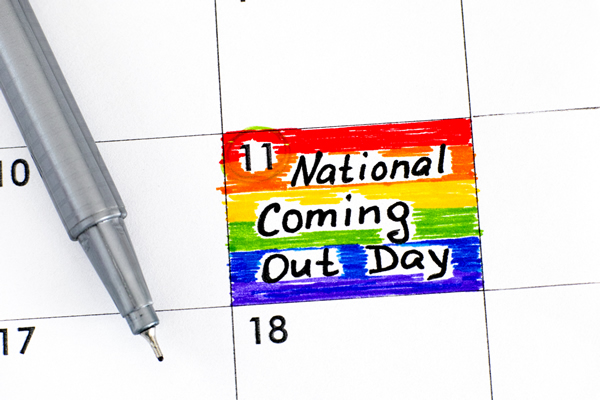
Oct. 11 is National Coming Out Day
“Tell me about your coming out,” my 30-something friend Seth recently said to me.
“It was more than a day!” I joked.
National Coming Out Day (NCOD) is on Oct. 11. The holiday, celebrated yearly on Oct. 11, was first observed on Oct. 11, 1988.
That date was the one-year anniversary of the 1987 queer rights march in Washington, D.C. More than half a million people were at the march, which was a turning point in the LGBTQ+ rights movement.
Robert H. Eichberg, a psychologist who died in 1995, and gay rights activist Jean O’Leary, who died in 2005, co-founded NCOD.
Things have progressed so far for us queers since then. We can marry and serve in the military. We’re parents, cops, athletes, teachers and preachers.
In this era of marriage equality, it’s tempting to wonder: What is all the fuss about coming out?
But, a reality check shows that coming out still matters.
A quick look through the news headlines reveals why staying in the closet is so hurtful and how unsafe it can still be to come out as LGBTQ+.
If you’re of a certain age, you likely cried your eyes out when you watched the Disney movie “Old Yeller.” Who could forget the scene when the young boy Travis (played by Tommy Kirk shoots “Old Yeller” because his dog has rabies? In 2019, the Library of Congress added
”Old Yeller” to the National Film Registry.
Kirk died on Sept. 28 at 79 at his Las Vegas home. Despite Kirk’s popularity with fans, Disney didn’t renew his contract because he was gay.
“I was caught having sex with a boy at a public pool in Burbank,” Kirk told the gossip columnist Liz Smith. “We were both young, and the boy’s mother went to Walt.”
In the 1960s, there was no way that an out actor would have had a chance in Hollywood.
I wish I could say that everything’s changed since Disney fired Kirk. But, this isn’t the case.
In August, Jamel Myles, a fourth grader in Denver killed himself, the Denver Post reported. His mother told the Post that her son, who’d come out to her as gay, took his own life because he’d been bullied for a year.
“We are deeply committed to our students’ well-being,” a Denver Public Schools spokesman said in a statement.
Unfortunately, Jamal’s story is far from unique. Nationwide, many LGBTQ+ students in the U.S. have been bullied. Nearly half (43 percent) of transgender youth have been bullied, according to the 2019 Youth Risk Behavior Surveillance survey. Nearly a third (29 percent) of trans youth, 21 percent of gay and lesbian youth and 22 percent of bisexual youth have attempted suicide, the survey reports.
Life is far more dangerous for queer folk in many places worldwide from Hungary to Ghana.
You could respond to this grim news by going to bed, staying under the covers—tucked in the closet.
But that would let homophobia and transphobia have the right of way. It would deny us the chance to joyfully, proudly, defiantly celebrate who we are.
Studies have shown that knowing us can help alleviate prejudice.
Family members, friends and colleagues may still feel uncomfortable around us because of our sexual orientation or gender identity.
But, it’s hard to hate your non-binary 10-year-old granddaughter on Christmas morning. Or your gay buddy at the gym.
One of my fondest memories is when I came out to my Aunt Manci. I worried that she wouldn’t accept my girlfriend. I needed have been anxious. “You’re lucky,” she said, “she loves you.”
Coming out is a process that lasts a lifetime—from deciding if you want to be out in the third grade to ensuring that your loved ones won’t erase your queerness from your obituary.
Coming out can be arduous. But, it’s liberating! Let the revels begin! Happy National Coming Out Day!
Kathi Wolfe, a writer and a poet, is a regular contributor to the Blade.






Commentary
The cost of speaking one’s mind
Colombian artist José Miel’s recent comments on Pride, LGBTQ community sparked controversy
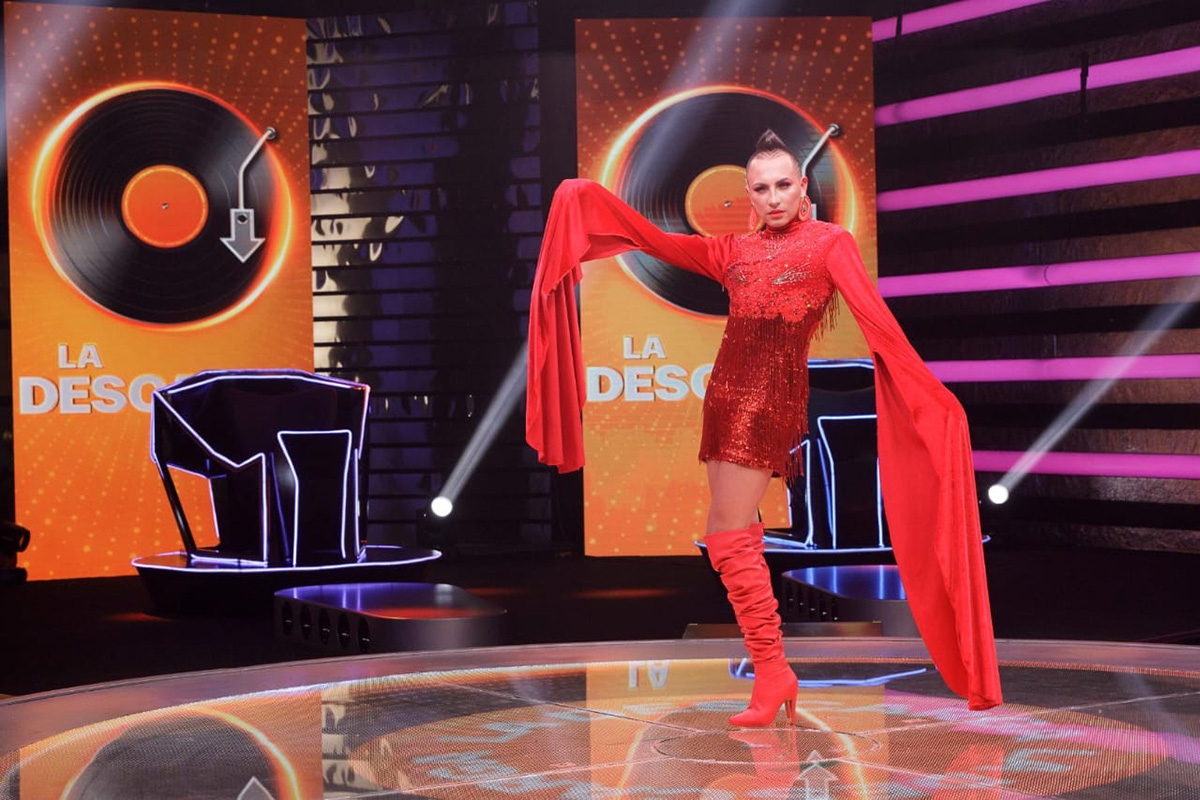
Colombian artist José Medina, known professionally as José Miel, 34, originally from Bogotá, is going through one of the most complex moments of his public career. Following his exit from “La casa de los famosos Colombia,” his name has been placed at the center of a controversy that has gone beyond the realm of entertainment and into a broader terrain: the debate over freedom of expression, diversity, and the limits of dissent within a society that defines itself as inclusive.
Miel is not an improvised figure. His trajectory in music, acting, and television reflects a sustained process of training, work, and exposure across different platforms. He participated in “Yo me llamo” (2019) and “La Descarga” (2022), establishing himself as a versatile artist within the Colombian entertainment industry. His career has been built through effort, in an industry that does not guarantee permanence without discipline.
However, the recent focus is not on his artistic work, but on his statements.
On March 15, the program “La Red” on Caracol Televisión released an interview on its digital platforms in which the singer spoke openly about the difficult moment he is facing, stating that his words — referring to comments he made after leaving “La casa de los famosos” — “cost him dearly.” His opinions on Pride, inclusive language, and the LGBTQ acronym triggered an immediate and polarized reaction.
From that moment on, the debate moved beyond the content of his words and opened another angle that cannot be overlooked.
Miel is known for the precision, firmness, and clarity with which he expresses his ideas. He is not an improvised artist, neither in discourse nor on stage. However, amid this controversy, a question also arises — one that deserves consideration from a journalistic standpoint:
What was the intention of the journalist, commentator, or media outlet that posed the questions leading to these statements?
This is not about shifting responsibility for what was said, but about understanding the context in which it occurred. At a moment in his career marked by multiple opportunities and projects, Miel’s responses placed him at the center of a controversy with real consequences.
In that sense, it is worth asking whether these were genuine questions within an open dialogue, or whether they followed a more provocative line, aimed at generating headlines or exposing the interviewee in a sensitive terrain.
This is not a minor question.
In media environments where every word can be amplified, the role of the one asking the questions is also part of how the story is constructed.
Within this context, this outlet held a phone conversation with the artist this Wednesday in order to gather his position directly. What follows are his responses to three central themes: the consequences of his words, his identity, and his call for respect.
Regarding the personal cost of expressing his opinion, Miel was clear:
You are now paying a high price for speaking your mind.
Do you regret having spoken out, or do you still believe your voice is non-negotiable?
Response:
“I believe that as human beings we all know that giving an opinion on any topic will bring problems. That’s the problem with society: it doesn’t respect other people’s opinions, because many think they are always right, and that’s not the case. Everyone has their reasons, everyone has their opinions, and those must be respected — even if you disagree.
What I expressed was an opinion without discrimination, without harming anyone, without stepping on anyone. And yet the opposite has been done to me: I’ve been trampled on, harmed, threatened, sent very ugly messages, harassed, hate coming from everywhere.
I knew what I was getting into. I knew what could happen. But I am proud of myself. I am proud of my conviction, and I will defend it until the end, because I truly believe in what I said. I do not regret it.”
When addressing his stance on labels, Pride, and how he defines himself, the artist stated:
You say you don’t identify with certain expressions of Pride or with the acronym.
So how do you define who you are, without labels or molds?
Response:
“Well, I don’t identify with Pride marches because they don’t represent me at all. They would represent me if they were respectful and appropriate, because many families attend — children, grandparents, parents … everyone is there.
And it’s quite disrespectful to see many people — not all, I emphasize — exposing their bodies, wearing very little clothing, drinking alcohol, intoxicated, using drugs. I don’t think that’s the way I would seek respect and equality.
I don’t like the term LGBTIQ+ community or all the letters that keep being added, because I feel that these acronyms make people discriminate more. I understand why they exist, because I know that what is not named does not exist, but I feel it is not the right way.
To me, everyone is part of society. We are human beings.
I don’t have labels or molds. I am a man, I am homosexual, and that’s it. The fact that I wear makeup or more feminine clothing is part of my artistic work, part of the stage. My everyday life is completely different.”
Finally, when referring to the reactions he has received, Miel insisted on a point that runs throughout his position:
You speak about respect, yet you’ve received attacks even from within the same community. What do you say today to those who call for inclusion but do not respect when someone thinks differently?
Response:
“I realized that the same community discriminates against itself. Many gay people have written to support me, telling me how brave I am, that they think the same way but don’t dare to speak.
To those who disagree with my opinion, I say: respect it, even if you don’t like it. You can express your opinion because we live in a free country, but do it with arguments, from your perspective, without stepping on others.
Because that is not the way.
I understand the struggles, I understand what is being sought, but I feel that if other ways of fighting were heard, many things could be achieved through respect and equality.
Everyone is free to think and say what they want — but always with respect. It’s that simple.”
Beyond his statements, what the artist is currently facing was also exposed in the March 15 interview on “La Red.” In that space, Miel described in his own words what he called a “string of problems”: constant harassment on social media, direct threats, hate messages, canceled performances, loss of contracts, and stalled projects due to external pressure and boycott warnings.
This situation not only highlights the media impact of his words, but also the material consequences that expressing an opinion can have in today’s digital environment.
His statements also drew reactions from the political sphere. Colombian Congressman Mauricio Toro wrote on social media:
“Hate and discrimination are learned. Sometimes they are so deeply rooted that they turn against oneself. José Miel, neither you nor I have anything to hide or to be ashamed of. Being free and loving without fear is the greatest thing you can experience as a human being.”
However, this position was also criticized. A significant number of users — even those who do not agree with the artist’s statements — have insisted that his right to express his views must be respected, pointing to a growing tension between inclusive discourse and tolerance for dissent.
The case of José Miel goes beyond a media controversy. It reflects a broader reality: the difficulty of sustaining respect when opinions do not align, even within spaces that promote diversity.
In a context where social media amplifies every stance, reactions to difference become immediate and, in many cases, disproportionate.
Beyond individual positions, what happened raises a deeper question:
Is it possible to speak of inclusion if we are not capable of respecting difference?
The philosopher Voltaire left behind an idea that remains relevant:
“I disagree with what you say, but I will defend to the death your right to say it.”
That is the point.
Because if a society is not capable of upholding the right of others to express themselves — even when it is uncomfortable — then it is not building inclusion; it is merely managing agreement.
And in that scenario, the case of José Miel stops being an isolated episode.
It becomes a test.
A test of how far we are willing to go in respecting others when they do not think like us.
Support does not mean agreement.
In this case, support means something more basic and more necessary: defending the right to exist, to think, and to express oneself without being destroyed for it.
Botswana
Lorato ke Lorato: marriage equality, democracy, and the unfinished work of justice in Botswana
High Court considering marriage equality case
As Botswana prepares for the resumption of a landmark marriage equality case before the High Court on July 14–15, the country finds itself at a critical constitutional crossroads.
At first glance, the matter may appear to be about whether two women, Bonolo Selelelo and Tsholofelo Kumile, can have their love legally recognized. At its core however, this case is about something far more profound: the dismantling of patriarchy, the decolonization of law, and the integrity of Botswana’s constitutional democracy.
Beyond marriage: a question of power
Marriage, as a legal institution, has never been neutral. It has historically functioned as a mechanism for regulating women’s bodies, sexuality, and social roles within a patriarchal order. To deny LBQ (lesbian, bisexual, and queer) women access to marriage is not merely to exclude them from a legal benefit, it is to reinforce a hierarchy of relationships, where heterosexual unions are deemed legitimate and all others invisible. This case therefore challenges the very foundations of who gets to love, who gets to belong, and who gets to be protected under the law.
As feminist scholars have long argued, patriarchy is sustained through institutions that appear ordinary but are deeply political. The law is one such institution. And it is precisely here that this case intervenes: by asking whether Botswana’s legal system will continue to uphold exclusion, or evolve to reflect the constitutional promise of equality.
A constitutional journey: Botswana’s courts and human dignity
This is not the first time Botswana’s courts have been called upon to affirm the dignity of LGBTQI+ persons. Over the past decade, the judiciary has built a progressive body of jurisprudence grounded in equality, nondiscrimination, and human dignity.
In Attorney General v. Rammoge and Others (Court of Appeal Civil Appeal No. CACGB 128-14, 2016), the Court of Appeal upheld the right of LEGABIBO to register as an organization. The court affirmed that:
“The refusal to register the appellant society was not only unlawful, but a violation of the respondents’ fundamental rights to freedom of association.”
This was followed by the ND v. Attorney General of Botswana (MAHGB-000449-15, 2017) case, where the High Court recognized the right of a transgender man to change his gender marker. The court held:
“Gender identity is an integral part of a person’s identity … and any interference with that identity is a violation of dignity.”
In Letsweletse Motshidiemang v. Attorney General (MAHGB-000591-16, 2019), the High Court decriminalized same-sex activity, declaring sections of the Penal Code unconstitutional. Justice Leburu powerfully stated:
“Human dignity is harmed when minority groups are marginalized.”
This decision was affirmed by the Court of Appeal in Attorney General v. Motshidiemang (CACGB-157-19, 2021), where the court emphasized:
“The Constitution is a dynamic instrument … it must be interpreted in a manner that gives effect to the values of dignity, liberty, and equality.”
These cases collectively establish a clear principle: the Constitution of Botswana protects all persons, not just the majority.
The marriage equality case now asks a logical next question: If LGBTQI+ persons are entitled to dignity, identity, and freedom from criminalization, why are their relationships still denied recognition?
Decolonizing the law: What is truly ‘UnAfrican’?
Opponents of marriage equality often argue that homosexuality is “unAfrican.” This claim, while politically powerful, is historically inaccurate. Same-sex relationships and diverse gender identities have existed across African societies long before colonial rule. What is foreign, however, are the laws that criminalize these identities.
Botswana’s anti-sodomy laws were inherited from British colonial legal systems, not from indigenous Tswana culture. As scholars of African history have demonstrated, colonial administrations imposed rigid Victorian moral codes that erased and suppressed existing sexual diversity. To claim that homosexuality is unAfrican, while defending colonial-era laws, is therefore a contradiction.
A truly decolonial approach to the law requires us to ask: Whose morality are we upholding? And whose history are we erasing?
Marriage equality, in this sense, is not a Western imposition: it is part of a broader project of reclaiming African dignity, plurality, and humanity.
Democracy on trial: the question of separation of powers
This case also raises important questions about the health of Botswana’s democracy.
Following the 2021 Court of Appeal decision affirming the decriminalization of same-sex relations, Botswana witnessed public demonstrations, including marches led by groups such as the Evangelical Fellowship of Botswana (EFB), opposing the judgment and calling for the retention of discriminatory laws.
While public participation is a cornerstone of democracy, these events raise deeper concerns about the separation of powers. Courts are constitutionally mandated to interpret the law and protect fundamental rights, even when such decisions are unpopular. When judicial decisions grounded in constitutional principles are publicly resisted on moral or religious grounds, it risks undermining the authority of the courts and the rule of law itself.
Democracy is not simply about majority opinion: it is about the protection of minority rights within a constitutional framework.
Botswana is not a theocracy
It is also important to clarify a recurring misconception: Botswana is not a Christian nation.
Botswana is a secular constitutional democracy and more accurately, a pluralistic society that recognizes and respects diversity of belief, culture, and identity. The Constitution does not elevate one religion above others, nor does it permit religious doctrine to dictate legal rights. The law must serve all citizens equally, regardless of faith.
To frame marriage equality as a threat to Christianity is therefore misplaced. The question before the courts is not theological, but constitutional: Does the exclusion of same-sex couples from marriage violate the rights to equality and nondiscrimination?
Love, equality, and the future of justice
At its heart, this case is about love, but it is also about power, history, and justice. It asks whether Botswana is prepared to move beyond colonial legal frameworks and patriarchal norms, and to embrace a future grounded in equality, dignity, and inclusion.
It asks whether the Constitution will continue to be interpreted as a living document, one that evolves with society, or remain constrained by outdated moral assumptions. Ultimately, it asks whether Botswana’s democracy can hold true to its founding promise: that all persons are equal before the law.
As the High Court prepares to hear this case in July 2026, the nation has an opportunity to affirm not only the rights of two individuals, but the broader principle that love, in all its diversity, deserves recognition, and protection.
Lorato ke lorato.
Love is love.
Justice, if it is to mean anything at all, must make space for it.
Nozizwe is the CEO of LEGABIBO (Lesbians, Gays and Bisexuals of Botswana)
I recently lost my dog, Argo.
He was a pit bull, big, sweet, endlessly cuddly, and for 15 years he was my constant. The kind of presence you stop consciously noticing until they’re gone and the quiet hits you all at once. Pit bulls have a reputation. Argo never got the memo. He just loved people, completely and without condition, from the moment he met them until his last day.
I wasn’t prepared for what happened next.
My phone filled up. Instagram lit up. Texts came in from people I hadn’t heard from in months, in some cases years. Hugs from neighbors. Messages from colleagues. Condolences from people I’d lost touch with, some through nothing more than the slow drift of busy lives in a busy city, and some honestly through small tiffs and misunderstandings that neither of us ever bothered to resolve.
And sitting with all of that love pouring in, I found myself asking a question I wasn’t expecting: Why has it taken this long?
We do this in D.C. We get caught in our heads, our calendars, our ambitions. We let weeks turn into months. We let a small misunderstanding calcify into distance because nobody wants to be the first one to reach out, nobody wants to seem like they need something. We perform resilience so well that sometimes the people who care about us most don’t know we need them.
And then something breaks open, a loss, a moment of real vulnerability, and suddenly people show up. And you realize the connection was always there. It just needed permission.
Argo gave people permission. Even in dying, he did what he always did when he was alive. He brought people together.
I’ll be honest with you about where I’ve been lately. As I’ve climbed the entrepreneurial ladder, something quietly shifted. People stopped seeing Gerard. They started seeing a title, a resource, someone who could give them something or who owed them something. A character. Not a person. And when most of your day is spent inside other people’s problems and crises, you can start to feel it, a slow creep of cynicism that you don’t even notice until one day you realize you’ve gone numb.
And I’m not alone in that. Look around. We just watched innocent people die while those in power looked us in the face and called it something else. We watched people erupt over a 10-minute halftime performance like it was the greatest threat to our country. Everywhere you look there is something designed to make you angry, or exhausted, or both. Anger and numbness have become survival strategies. I understand it. I’ve lived it.
But here is what Argo reminded me.
The world is not what the loudest voices say it is. The world is what shows up when something real happens. And what showed up for me, after losing my sweet boy, was people. Caring, loving, present people who put down whatever they were doing to reach out to a friend. Some of them I hadn’t spoken to in too long. Some of them I’d had friction with. All of them showed up anyway.
That is the world. That is what it actually is underneath all the noise.
I think we’ve forgotten that. Or maybe we haven’t forgotten it, maybe we’re just so tired and overstimulated and battle-worn that we’ve stopped letting ourselves feel it. Because feeling it requires vulnerability, and vulnerability feels dangerous right now. It’s easier to scroll. It’s easier to stay mad. It’s easier to keep a wall up and call it wisdom.
Argo spent 15 years showing me a different way. He never met a stranger. He never held a grudge. He never saved his love for people who deserved it on paper. He just gave it, freely, every single time. Not a reward. Not a transaction. Just the most natural thing in the world.
Grief burns off everything that isn’t essential and leaves only what matters. What’s left for me is this: the world is full of good people. You may be surrounded by more of them than you know. And if you’ve gone numb, or angry, or so busy surviving that you’ve stopped connecting, I want you to know that the feeling can come back. It came back for me.
Reach out to someone today. Close a distance you’ve let grow. Tell someone they matter. Not because everything is perfect, but because connection is how we survive when it isn’t. Living disconnected, mad and closed off isn’t living at all. It’s a slower kind of dying.
Death came to teach me how to live. I hope this saves you some time.
Gerard Burley, also known as Coach G, is founder and CEO of Sweat DC.

D.C.’s affirming congregations to mark Holy Week, Easter

Trans activists gather on National Mall for Transgender Day of Visibility

The cost of speaking one’s mind

Senegalese president signs bill that further criminalizes homosexuality

Md. lawmakers reaffirm legislative priorities

Celebrate cherry blossoms the drag way

Lorato ke Lorato: marriage equality, democracy, and the unfinished work of justice in Botswana

Japanese Supreme Court to consider marriage equality

The outrage economy is not the LGBTQ community

Trump tells Fox News he won the ‘gay vote’ — but polls tell a different story
-

 Out & About5 days ago
Celebrate cherry blossoms the drag way
-
Botswana5 days ago
Lorato ke Lorato: marriage equality, democracy, and the unfinished work of justice in Botswana
-
Japan5 days ago
Japanese Supreme Court to consider marriage equality
-
Opinions5 days ago
The outrage economy is not the LGBTQ community