
World
Bulgarian LGBTQ community center attacked
Ultranationalist presidential candidate accused of leading attack
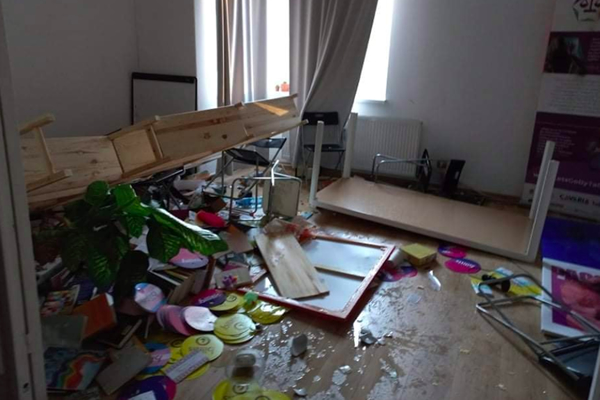
A Bulgarian LGBTQ rights group says the leader of an ultranationalist political party who is running for president led an attack against their offices and community center on Saturday.
The Bilitis Foundation in a series of tweets said “a group of about 10 men and women stormed” the Rainbow Hub, a community center it runs in Sofia, the Bulgarian capital, with the GLAS (Gays and Lesbians Accepted in Society) Foundation. at around 5:30 p.m. local time (11:30 a.m. ET).
Around 5.30 p.m. a group of about 10 men and women stormed in the Rainbow Hub which is managed by @BilitisLGBTI and GLAS foundation, hitting our colleague Gloriya in the face, and vandalizing the space, smashing equipment and furniture. (read ⬇️)
— Bilitis Foundation 🏳️🌈 (@BilitisLGBTI) October 30, 2021
The Bilitis Foundation said the attack took place during a “trans community gathering.”
The assailants, according to the Bilitis Foundation, vandalized the office and struck Gloriya Filipova, the group’s project coordinator, in the face. The Bilitis Foundation said Boyan Rasate, who leads the Bulgarian National Union and is “”well-known for his LGBTI-phobic actions and statements,” masterminded the attack.
“All I ever aimed for was creating safer spaces for our community,” tweeted Filipova after the attack. “Yesterday my biggest fear came true: Our community center was destroyed and I got punched in the face. I’m sure that we have enough love to heal, but this really hurts. It is time for the BG (Bulgarian) institutions to act.”
All I ever aimed for was creating safer spaces for our community. Yesterday my biggest fear came true: our community center was destroyed and I got punched in the face. I’m sure that we have enough love to heal, but this really hurts. It is time for the BG institutions to act. https://t.co/z4RZB0d0Vl
— Gloriya Filipova (@GloriyaFilipova) October 30, 2021
ILGA-Europe has condemned the attack and urged Bulgarian authorities “to publicly condemn the attacks, investigate and sanction the attackers.” EuroPride is among the other organizations that have expressed support for the Bilitis and GLAS Foundations.
BREAKING: As the Rainbow Hub in Sofia was running a trans event this afternoon, nationalist thugs forced their way in and attacked the organisers and guests, and trashed the venue. We stand with @BilitisLGBTI and GLAS Foundation and all the community in Bulgaria. pic.twitter.com/gaCL0zePeG
— EuroPride • EPOA (@EuroPride) October 30, 2021
Bulgaria is a Balkan country that borders Serbia, North Macedonia, Greece, Turkey, Romania and the Black Sea.
The Bilitis Foundation in a tweet notes it, along with AllOut, less than two weeks ago submitted to the Bulgarian Justice Ministry a petition with more than 8,000 signatures that demands the country’s Criminal Code include hate crimes based on sexual orientation and gender identity. The Bulgarian Constitutional Court on Oct. 27 ruled the word “gender” only applies to the “biological sense.”



Israel
LGBTQ ally tapped to form new Israeli government
Gadi Eisenkot was Benjamin Netanyahu’s main rival in Oct. 27 elections

Israeli President Isaac Herzog has tapped Gadi Eisenkot to try and form a government after the country’s Oct. 27 elections.
Eisenkot was the Israel Defense Forces’ chief of staff from 2015-2019. He was a minister in Prime Minister Benjamin Netanyahu’s Cabinet after the Oct. 7, 2023, attacks — Eisenkot’s son, IDF Master Sgt. Gal Meir Eisenkot, died in combat in the Gaza Strip roughly two months after Hamas militants attacked Israel.
The International Criminal Court in 2024 issued arrest warrants for Netanyahu; former Israeli Defense Minister Yoav Gallant; former Hamas leader Yahya Sinwar; Mohamed Diab Ibrahim al-Masri, the head of Hamas’s military wing known as the Qassam Brigades; and Ismail Haniyeh, chair of the Hamas Political Bureau, after it accused them of committing war crimes and crimes against humanity in Gaza and Israel.
The Israeli government has strongly denied it has committed genocide in Gaza.
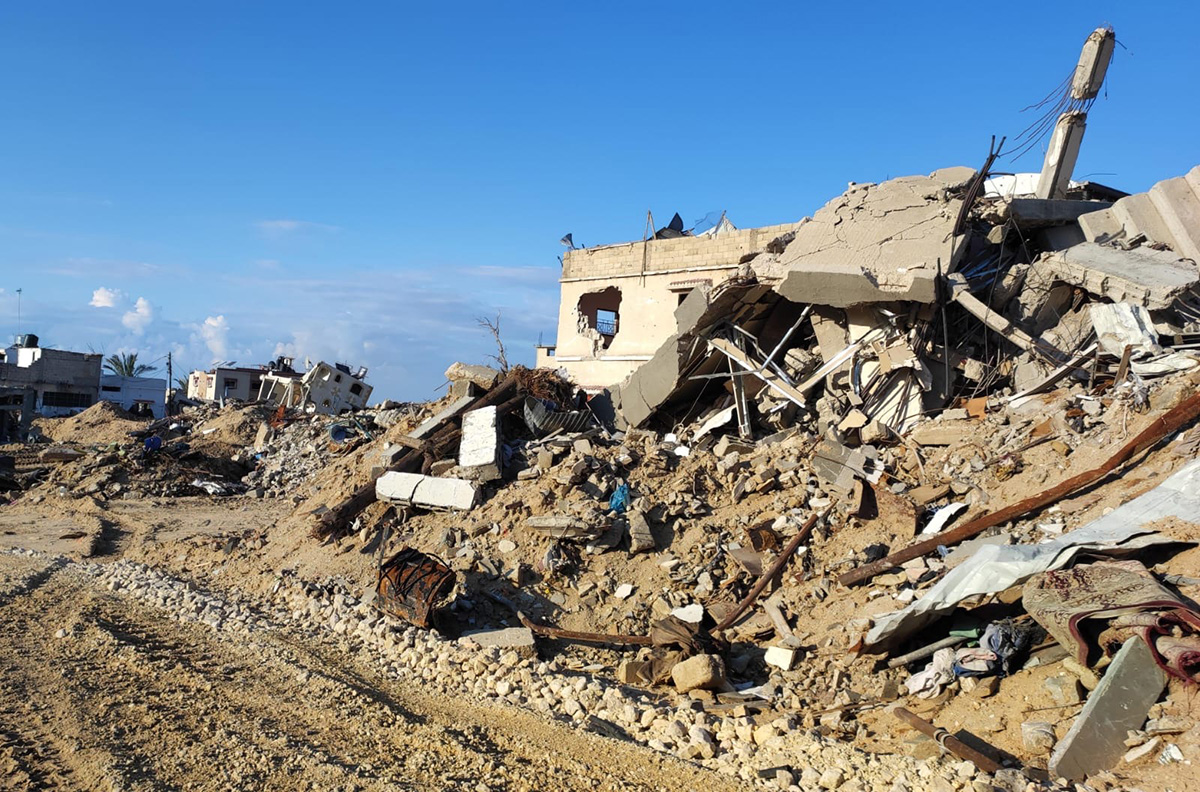
An Israeli airstrike on a compound in Khan Younis, a city in southern Gaza, on July 13, 2024, killed killed Deif, one of the alleged Oct. 7 masterminds. Israel less than three weeks later assassinated Haniyah in Tehran, the Iranian capital. IDF soldiers on Oct. 16, 2024, killed Sinwar in Rafah, a city in southern Gaza.
Gadi Eisenkot resigned in 2024. He founded Yashar!, a centrist party that means “Straight!” in Hebrew, in 2025.
Gadi Eisenkot was the main opposition candidate in the Oct. 27 elections.
Netanyahu, who chairs the right-wing Likud party, and his allies lost their majority in the 120-member Knesset.
The Likud bloc has 53 seats in the Knesset, compared to the 48 seats the Yashar! coalition has. Arab-led parties that could prove pivotal to Gadi Eisenkot’s efforts to form a government have 19 seats.
The new Knesset was sworn in on Tuesday.
Three MKs —Amir Ohana of Likud, Eitan Ginzburg of the center-right Beyachad party, and former Ramat Gan Mayor Israel Zari, a Yashad! member who is a former spokesperson for the Aguda, an Israeli LGBTQ rights group — are openly gay.
Ohana in 2022 became the Knesset’s first openly gay speaker and is the country’s first out Cabinet minister. The Knesset on Nov. 17 is scheduled to vote on who will will succeed Ohana in the post.
Gadi Eisenkot has six weeks to form a government. Herzog will then tap Netanyahu, who remains Israel’s caretaker prime minister, if Gadi Eisenkot fails. Another election could take place if neither man can form a new government.
Gadi Eisenkot’s party supports LGBTQ legislative package
Yashar!’s website states the “LGBT community is an integral part of Israeli society.”
“Its members bear the burden and are full partners in civic duties; but are not equal in rights and are exposed to violence, hatred, and incitement,” it reads.
The Yashar! website further states “the right to security is the right of every person,” but notes “those who serve, donate, and pay taxes feel threatened or discriminated against due to their sexual orientation and/or gender identity” and it “is a reality that cannot be accepted.” The party also says it “advocates for the right of every person to choose their lifestyle and to have equal rights as a citizen of the country, regardless of their sexual orientation or gender identity.”
“We will ensure that members of the LGBT community are safe in the public sphere, enjoy equal rights under the law, and receive all the social services that every citizen is entitled to by law,” it says.
Yashar! also supports the Sagi Laws for Equality, a package 10 legislative proposals that would expand rights to LGBTQ Israelis. They are named in honor of Sagi Golan, an IDF major who Hamas militants killed on Oct. 7 in Be’eri, a kibbutz that is near the Israel-Gaza border.
His fiancé, Omer Ohana, with the support of Israeli advocacy groups, successfully lobbied Israeli lawmakers to amend the country’s Bereaved Families Law to recognize LGBTQ widows and widowers of fallen servicemembers. A ban on so-called conversion therapy, stronger hate crimes and nondiscrimination laws, and civil marriage equality are among the other proposals in the Sagi Laws for Equality package.
The Aguda promoted it ahead of the Oct. 27 elections.
“Yashar! is committed to promoting equal rights for members of the LGBT community,” says Yashar! on its website, while reiterating its support of the legislative package to “restore the personal security of members of the LGBT community, to end existing discrimination in legislation, and to provide the necessary government responses in education, health, welfare, and all areas of life.”

Trinidad and Tobago
British appellate court strikes down Trinidad and Tobago sodomy law
Jason Jones challenged ruling that recriminalized homosexuality in Commonwealth country
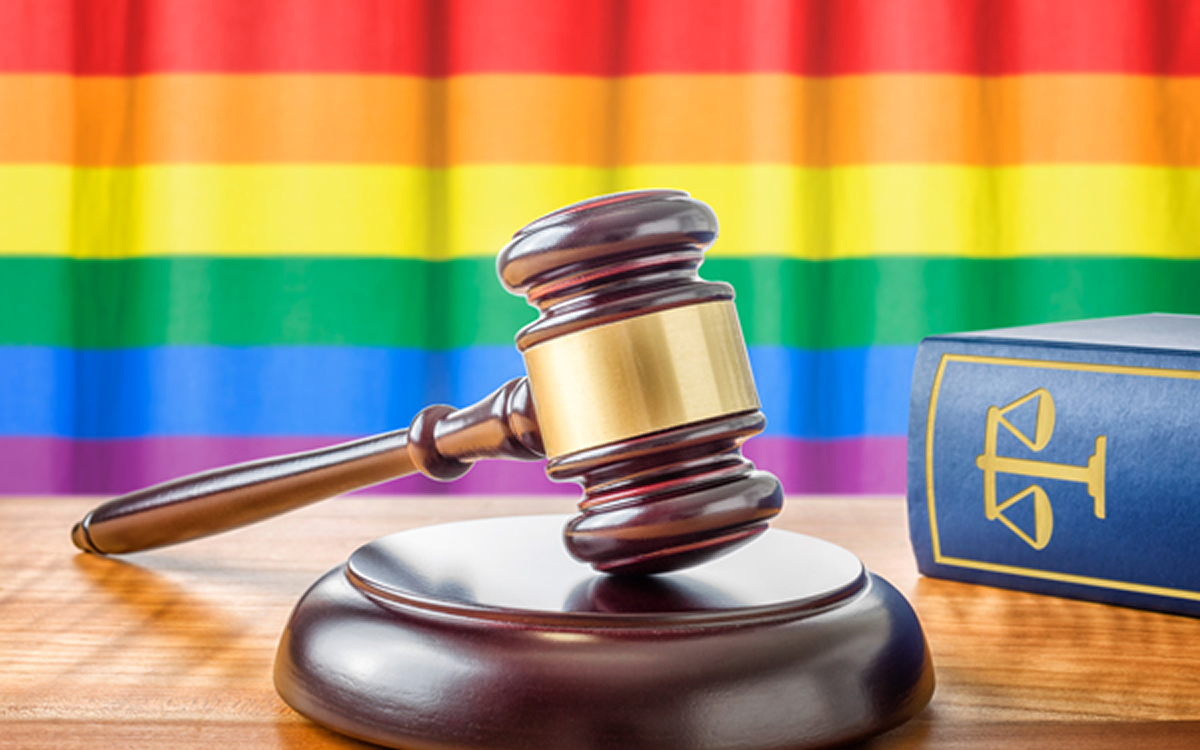
A British appellate court on Tuesday struck down a Trinidad and Tobago law that criminalizes consensual same-sex sexual relations.
Jason Jones, an LGBTQ activist from Trinidad and Tobago who currently lives in the U.K., in 2017 challenged Sections 13 and 16 of the country’s Sexual Offenses Act.
High Court Justice Devindra Rampersad in 2018 found them unconstitutional. The country’s government appealed the ruling, and the Trinidad and Tobago Court of Appeal in 2025 overturned it in a 2-1 ruling.
Jones appealed the decision to the Privy Council, an appellate court for British territories that can also consider cases from Commonwealth countries. (King Charles III is not Trinidad and Tobago’s head of state, but the country remains part of the Commonwealth.) The Privy Council heard the case in July.
“I won,” Jones told the Washington Blade. “Nobody believed it was possible and made the impossible possible.”
Antigua and Barbuda, St. Kitts and Nevis, Barbados, and Dominica are among the countries that have decriminalized consensual same-sex sexual relations in recent years. (All four Caribbean nations are former British colonies.)
The Inter-American Commission on Human Rights in 2021 issued a decision that said Jamaica must repeal its colonial-era sodomy law. The Jamaican Supreme Court in 2023 ruled against a gay man who challenged it.
A judge on St. Vincent and the Grenadines’s top court in 2024 dismissed two cases that challenged the country’s sodomy laws.
U.N. Commissioner for Human Rights Volker Türk in his statement that celebrated the Trinidad and Tobago ruling urged other Caribbean countries to decriminalize consensual same-sex sexual relations.
“This would align with the strong regional trend of repealing outdated and harmful colonial laws and with the principle of equal treatment for everyone, regardless of who they are or whom they love,” he said.
Botswana
Botswana’s marriage equality case and the politics of family values
High Court heard same-sex couple’s litigation last week

Last week, the High Court heard the case of Bonolo Selelo and Tsholofelo Kumile, whom the Department of Civil Registration refused to register and recognize their marriage. Supported by LEGABIBO as the third applicant, the applicants challenge the refusal to register their intended marriage and the constitutionality of provisions of the Marriage Act that exclude same-sex couples from civil marriage.
The case raises questions about equality, dignity, nondiscrimination, and the extent to which the law can exclude people from a fundamental civil institution because of whom they love. The hearing highlighted a bigger struggle of religion, gender, reproduction, and who makes up a family in Botswana.
But as I followed the proceedings and reflected on the arguments advanced, I kept returning to a question that goes beyond interpreting the Marriage Act. Why does the possibility of two women of age getting married consensually provoke such a strong response from people who are not being asked to marry them?
This is not a question about whether religious organizations are entitled to hold their beliefs. They are. It is about what happens when those beliefs determine the civil rights of people who do not share them and when religious arguments become the basis for deciding which families deserve recognition and protection under the law. For me, this is where the marriage equality case becomes much bigger than marriage. It becomes a conversation about power.
When marriage becomes a battleground
One thing that stood out in this case was the language used to defend what opponents describe as the proper or traditional understanding of marriage. The Evangelical Fellowship of Botswana, House of Prayer and Transformation, and the Dingwetsi Association of Botswana oppose recognizing same-sex marriages in Botswana.
Their arguments are grounded in Christian beliefs, customary understandings of marriage and concerns about the implications of recognizing same-sex unions. The state has also argued that the existing legislation does not provide for marriage between people of the same sex.
Marriage is presented as a “holy” institution that is under threat. The heterosexual family becomes something that must be protected. A particular Christian understanding of marriage is elevated into a standard that should govern everyone, including people who do not subscribe to Christianity. Suddenly, two adult women asking for access to civil marriage are no longer simply two people seeking legal recognition. They are portrayed as a “challenge” to religion, culture, tradition, procreation, and the African family values. We can even take it a step further to say that they are destabilizing the walls of patriarchy.
What exactly is being threatened by allowing two consenting adults to enter into a civil marriage? How does recognizing their relationship prevent a heterosexual couple from marrying? Why should the legal recognition of one family require excluding another?
The argument is not merely that the Evangelical Fellowship of Botswana, House of Prayer and Transformation, and the Dingwetsi Association of Botswana believe same-sex marriage is inconsistent with their Christian faith. It is that this belief must affect the legal status of people outside that faith and the protections available to them as citizens. That is where the discussion shifts from religious conviction to this group’s exercise of public power over everyone.
The politics of religion and the anti-gender movement
I have become increasingly interested in how opposition to LGBTIQ+ rights is connected to a wider set of anti-gender and anti-human rights narratives across Africa. The anti-rights actors are a group of globally coordinated actors pushing rollbacks on sexual and reproductive health rights, comprehensive sexual education, LGBTIQ+ rights and civic space across multiple countries at once. They frame these narratives as “protecting the African child and African family values,” “preserving African family sovereignty,” and “restoring the moral fabric of society.” These translate into restrictive laws, hate speech, misinformation, disinformation, and harassment of sexual and gender minorities. The language sounds familiar because it appeals to concerns that matter to people. But how these values are interpreted, who gets to define them, and whose rights matter in the process?
In anti-gender politics, the concept of gender is often presented as a threat to biological sex, the family and social order. Dr Haley McEwen’s article, “Nuclear power: the family in decolonial perspective and ‘pro-family’ politics in Africa,” published in “Development Southern Africa” in 2017, examines how the heteronormative nuclear family functions as a colonial and political construct. She writes that “in centering the importance of the ‘nuclear family’ model and heterosexuality, pro-family discourses exceptionalize the family as a social institution capable of carrying the lion’s share of responsibility for ensuring the (re)production and maintenance of healthy and prosperous societies. This discourse resonates with neoliberal efforts to deflect responsibility for social and economic policy away from the state and towards individuals. In positioning the heterosexual nuclear family unit as the custodian of a ‘moral,’ healthy and economically thriving society, the state is able to outsource its responsibility towards its citizenry.” In this framing, defending the family becomes a justification for restricting the rights of people whose relationships do not fit a prescribed model.
The marriage equality case in Botswana sits within this broader contest over who gets to define gender, sexuality, and family life. We should be careful not to assume that every religious objection is part of a coordinated anti-gender movement. Nor should we treat religious communities as a single political bloc. But we should recognize the overlap between arguments that defend one supposedly natural family structure and broader efforts to limit the recognition of sexual and gender diversity.
Perhaps one of the most revealing aspects of debates about marriage equality is the appeal to procreation and biological complementarity. This push seeks to redefine marriage, who it is for and its purpose. That marriage is between a man and a woman because their biological differences make reproduction possible. From this perspective, marriage’s purpose is closely tied to the possibility of producing children.
If the ability to reproduce is what makes a marriage legitimate, what happens to heterosexual couples who cannot have children? What about couples who are infertile, older couples or people who marry and decide not to have children? Are their marriages less deserving of legal recognition? Yet when same-sex couples seek marriage equality, reproduction is suddenly presented as the defining feature of the institution.
Marriage is also a legal relationship that creates rights, responsibilities, and protections between spouses. It provides a framework for property ownership, inheritance, maintenance, next-of-kin recognition, and family security. These protections matter whether a couple has biological children or not.
It takes a village
We must realize that reproduction is not the same thing as parenting and biological connection is not the only basis on which families are formed. In Botswana, children are commonly raised by grandparents, aunts, uncles, siblings, and the community. Some children grow up in households where one parent is absent. After all, it takes a village.
When religious arguments enter the courtroom
The Evangelical Fellowship of Botswana, House of Prayer and Transformation, and the Dingwetsi Association of Botswana’s presence in this case also raises an important question about the relationship between faith and the constitutional state. Religious organizations are entitled to participate in litigation, make arguments, and express their views. Their participation is not, in itself, evidence of wrongdoing. In a constitutional democracy, people must be free to disagree about difficult questions.
But participation in a legal process does not automatically mean a party’s arguments should determine the outcome. A court must consider the law, the Constitution, the rights at stake, and the arguments presented by all parties. It must distinguish between a religious conviction and a constitutional justification for restricting another person’s rights. That distinction matters because civil marriage and religious solemnization are not identical questions.
Recognizing a same-sex civil marriage does not require every religious institution to change its doctrine. Nor does it require every person to approve of same-sex relationships. It asks whether the civil law should deny a couple the legal status and protections available to other couples because of the sex of the people they wish to marry.
Bradley Fortuin is a human rights activist. This article was first published in The Botswana Guardian newspaper.

LGBTQ advocates look to new Congress for path forward on federal protections

LGBTQ ally tapped to form new Israeli government

LGBTQ advocates among hundreds named to Lewis George transition committees

PHOTOS: Capital Stonewall Democrats Victory Lap

Chris Pappas’s election to the Senate is a proud moment for N.H., the country

Out actor on his 25-year love affair with ‘Mamma Mia’

Comings & Goings

Epic ‘La bola negra’ delivers powerful romance for the ages

Kim Kardashian gets the bio treatment in new book